


A cancer diagnosis changes everything. It changes how you think about time, about your body, about what a good day looks like. And if you’re in active treatment — managing chemotherapy, radiation, or surgery — the side effects can sometimes feel as brutal as the disease itself. Nausea that won’t quit. Pain that spikes unexpectedly. An appetite that disappears. Sleep that stopped working months ago.
Pennsylvania’s medical marijuana law was written with this exact reality in mind. Cancer is one of the original qualifying conditions under the Medical Marijuana Act (Act 16, 2016), and the language is deliberately broad: “cancer, including remission therapy.” That last phrase — remission therapy — is one of the most important and most overlooked parts of the law. It means your legal access to medical cannabis doesn’t end when active treatment does.
This page gives you an honest account of what medical cannabis can and cannot do for cancer patients, what the leading clinical guidelines actually say, which symptoms have the strongest evidence, a critical warning about immunotherapy that most websites ignore, and exactly how to get your PA MMJ card whether you are in active treatment, remission, or anywhere in between.
Does Cancer Qualify for Medical Marijuana in Pennsylvania?
Yes — and broadly. Under Pennsylvania’s Medical Marijuana Act, any cancer diagnosis qualifies, including but not limited to:
- Breast cancer
- Lung cancer
- Colorectal cancer
- Pancreatic cancer
- Prostate cancer
- Ovarian and cervical cancer
- Leukemia and lymphoma
- Brain and CNS tumors
- Skin cancers including melanoma
- Head and neck cancers
- Any other cancer at any stage
There is no requirement that cancer be advanced, terminal, or treatment-resistant. A diagnosis alone is sufficient to qualify under the law.
“Including remission therapy” — what this actually means: Pennsylvania’s qualifying condition language specifically extends to remission therapy, meaning patients who have completed active cancer treatment and are now in remission still qualify. This covers chemotherapy-induced peripheral neuropathy (CIPN) that persists for months or years after treatment ends, fatigue and sleep disruption that outlast active therapy, anxiety about recurrence, and any ongoing symptoms related to cancer history or treatment.
This is clinically significant. Studies show that 47% of patients with chemotherapy-induced neuropathy still report significant symptoms six years after treatment. The law recognizes that cancer’s burden does not end with remission.
- Source: Pennsylvania Department of Health – Medical Marijuana Program
- Source: Pennsylvania Medical Marijuana Act – Act 16 of 2016
What Cancer Patients Are Actually Using Medical Marijuana For
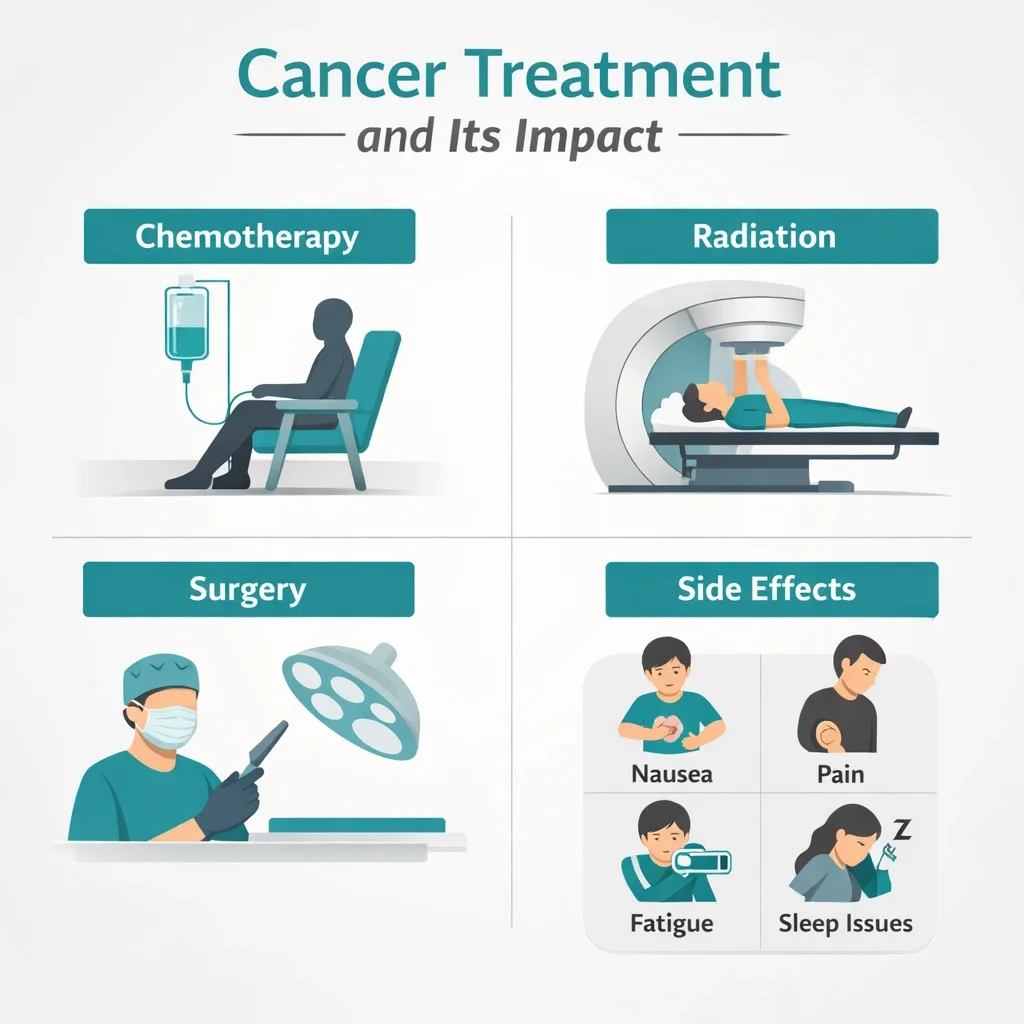
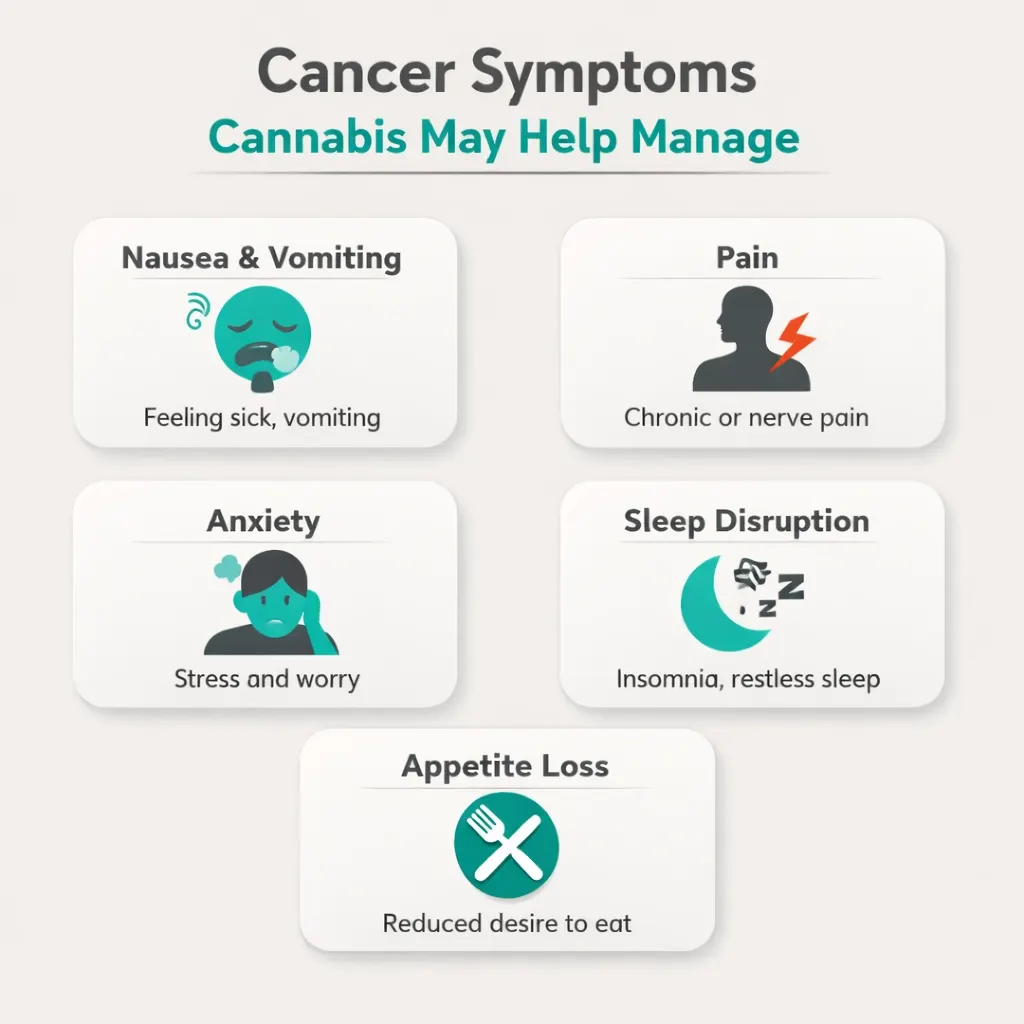
Before getting into the clinical evidence, it helps to understand why cancer patients are seeking medical cannabis in the first place. A survey study of 163 cancer patients published in 2024 found they primarily used medical cannabis to promote sleep (53%), relieve pain (47%), reduce anxiety (46%), and improve appetite (46%). Roughly 29% expressed interest in cannabis as a potential direct cancer treatment.
That last finding — the hope that cannabis might treat the cancer itself — deserves an upfront answer: the current clinical evidence does not support cannabis as a direct anti-cancer treatment in humans. The 2024 American Society of Clinical Oncology (ASCO) guideline on cannabis explicitly recommends against cannabis as a cancer-directed treatment outside of clinical trials. Preclinical (lab and animal) studies have shown cannabinoids can induce apoptosis and inhibit tumor growth in cancer cell lines, and this research is genuinely exciting — but it has not translated into proven human efficacy. Patients who use cannabis hoping it will treat their tumor directly, rather than manage symptoms, are operating on evidence that doesn’t yet exist in humans.
Where the evidence is more robust is symptom management. That is the appropriate clinical frame for medical cannabis in oncology, and it is where the rest of this page focuses.
What the Leading Guidelines Say: ASCO 2024 and MASCC 2023
Two major oncology organizations published updated cannabis guidelines in 2023–2024. Both are worth understanding before you talk to a certifying physician, because their nuanced positions are often misrepresented in both directions — oversold by cannabis advocates, dismissed by oncologists resistant to the conversation.
ASCO 2024 Guideline
The American Society of Clinical Oncology released its comprehensive cannabis guideline in May 2024, based on a review of 13 systematic reviews and five additional primary studies. Key positions:
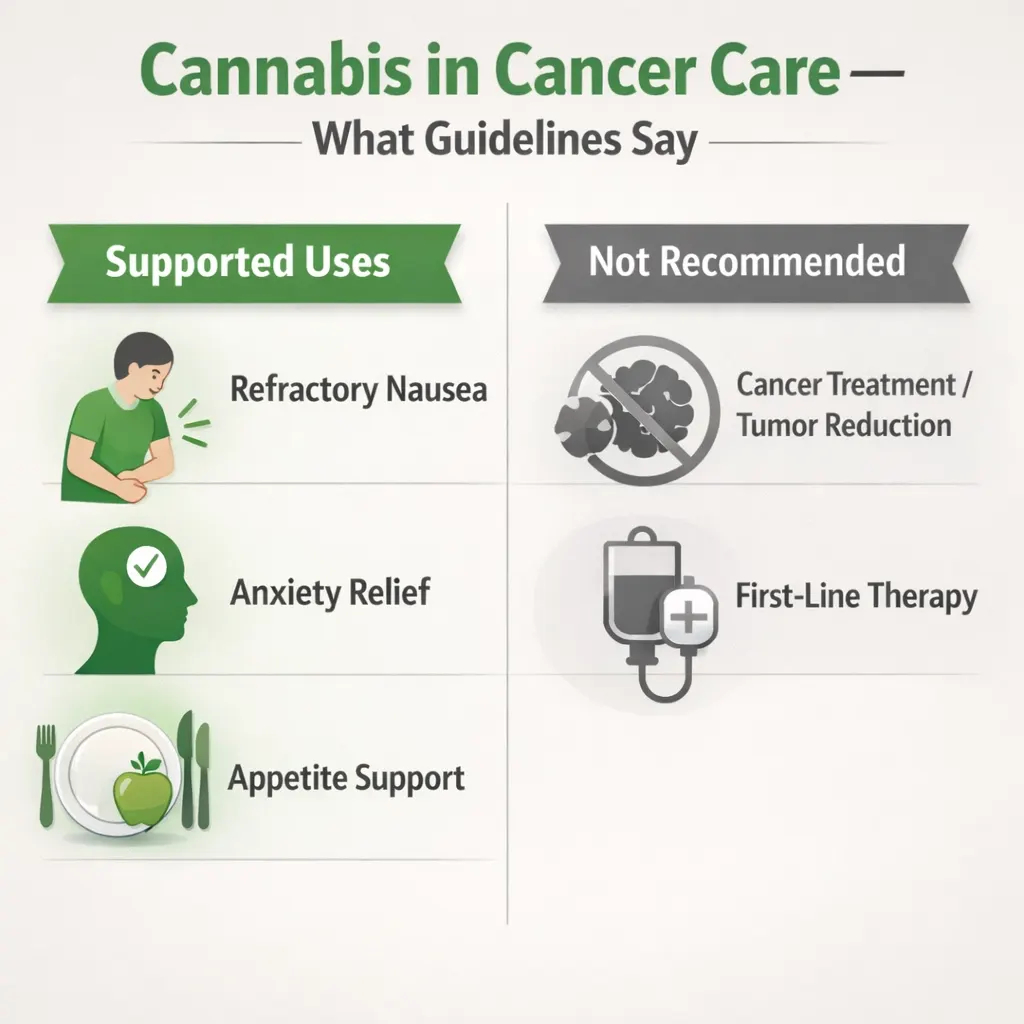
- Cannabis and/or cannabinoids may improve refractory CINV (chemotherapy-induced nausea and vomiting) when added to guideline-concordant antiemetic regimens — specifically when standard antiemetics have not adequately controlled symptoms
- ASCO weakly recommends dronabinol and nabiximols for refractory CINV specifically — meaning when first-line and second-line antiemetics haven’t worked
- ASCO recommends against cannabis for cancer-directed (anti-tumor) treatment outside of clinical trials
- ASCO does not recommend for or against cannabis for cancer pain — finding the evidence insufficient rather than negative
- ASCO recommends open, non-judgmental communication between oncologists and patients about cannabis use
The certainty of evidence across most outcomes was rated “low or very low” — reflecting the difficulty of conducting rigorous cannabis trials rather than negative findings.
MASCC 2023 Guideline
The Multinational Association for Supportive Care in Cancer published complementary guidelines in 2023. MASCC does not recommend cannabis as a primary treatment for cancer-related pain, given limited benefit evidence. For psychological symptoms including anxiety, insomnia, and depression, MASCC notes that some studies suggest benefit but evidence is insufficient for formal recommendation.
What these guidelines mean practically for PA patients: The formal guidelines are conservative because they apply population-level evidence standards. Individual patients often respond meaningfully to cannabis for symptoms where population-level trials show modest effects — because individual response variance is enormous. The guidelines support a conversation, not a prohibition.
- Source: ASCO – Cannabis and Cannabinoids in Adults with Cancer: Guideline (2024)
- Source: Cannabis Evidence – ASCO and MASCC Guidelines Summary
The Evidence, Symptom by Symptom
Chemotherapy-Induced Nausea and Vomiting (CINV) — Strongest Evidence
This is the most clinically established area for cannabis in oncology and the one with the longest history. Dronabinol (synthetic THC, brand name Marinol) and nabilone have been FDA-approved for chemotherapy-induced nausea since 1985 and 1985 respectively — making this the oldest regulatory acknowledgment of cannabinoid medicine in the United States.
A 2023 systematic review of 98 studies covering cancer symptom management, published in Current Oncology Reports (Springer), found cannabinoids produced statistically significant reductions in pain and anxiety compared to baseline values, with nausea showing a strong trend toward improvement.
A June 2024 systematic review in the Journal of Cancer Survivorship analyzed 32 studies covering 1,889 patients. Of 22 studies comparing cannabinoids to (now-outdated) antiemetic therapies, 12 found significant benefit. Critically, only one study used modern triple or quadruple antiemetic prophylaxis as the comparison — and that study did show benefit of cannabinoids over modern standard care. The review concluded that evidence is insufficient to recommend cannabinoids when modern antiemetics are already being used optimally, but that for patients whose CINV is refractory to standard regimens, cannabis remains clinically relevant.
An Australian phase II/III randomized controlled trial (Grimison et al., 2024) in the Journal of Clinical Oncology enrolled patients with CINV inadequately controlled by standard antiemetic regimens. The complete response rate (no vomiting, no rescue medication at 0–120 hours) was 25% with oral THC:CBD versus 14% with placebo — a clinically meaningful difference in a population where current treatments were already failing.
The practical takeaway: Cannabis for CINV is not a first-line treatment. It is a meaningful option for the subset of patients — a real and substantial group — whose nausea is not adequately controlled by ondansetron, dexamethasone, and the newer NK1 receptor antagonists. If your CINV is being managed adequately with standard medications, cannabis may add little. If it isn’t, it is worth the conversation with your oncologist.
- Source: Springer Current Oncology Reports – Cannabinoids for Cancer Symptom Palliation: 98-Study Meta-Analysis (2023/2025)
- Source: Journal of Cancer Survivorship – Cannabinoids for CINV: Systematic Review, 32 Studies (2024)
- Source: Journal of Clinical Oncology – Grimison et al.: Oral Cannabis Extract for CINV Phase II/III RCT (2024)
Cancer Pain — Mixed but Meaningful Evidence
Cancer pain is heterogeneous — it can be nociceptive (from tumor pressure or tissue damage), neuropathic (from nerve involvement), or mixed. Cannabis does not perform equally across all pain types, and the clinical literature reflects this.
A 2023 Cochrane review of cannabis for cancer pain found that for opioid-refractory, moderate-to-severe cancer pain specifically, there was moderate-certainty evidence of limited benefit. This is the most rigorous finding and should be stated clearly.
The 98-study meta-analysis in Current Oncology Reports (2023/2025) found statistically significant pain reductions from baseline values. The 2024 ASCO guideline did not recommend for or against cannabis for cancer pain, citing insufficient evidence — which is a neutral position, not a negative one.
Where cannabis may have particular value is as an opioid-sparing adjunct. Multiple studies have shown that cannabis combined with opioids can maintain or improve pain control at lower opioid doses — reducing opioid side effects including constipation, sedation, and the long-term risks of opioid tolerance. For cancer patients already on significant opioid regimens, this is a clinically meaningful consideration that their oncologist and palliative care team should be part of.
The practical takeaway: Cannabis is not a reliable replacement for opioids in moderate-to-severe cancer pain. Its greatest value in cancer pain may be as a complement to opioid therapy, allowing lower opioid doses and potentially improving overall quality of life — particularly for patients with neuropathic pain components where cannabis has stronger evidence.
- Source: Cochrane – Cannabis for Cancer Pain (2023)
- Source: NCI – Cannabis and Cannabinoids (PDQ) – Health Professional Version
Chemotherapy-Induced Peripheral Neuropathy (CIPN) — The Remission Therapy Case
This is the single most important symptom category for understanding why “including remission therapy” matters so much in Pennsylvania’s qualifying language.
CIPN — numbness, tingling, burning pain, weakness in the hands and feet in a classic “stocking-and-glove” distribution — affects 30–40% of patients receiving platinum-based drugs, taxanes, vinca alkaloids, and bortezomib. According to the ASCO clinical oncology education book, 47% of CIPN patients still report significant bothersome symptoms six years after treatment ends. Oxaliplatin-induced neuropathy can actually worsen for 2–3 months after stopping chemotherapy (the “coasting” phenomenon) before improving. For many patients, it never fully resolves.
ASCO’s own CIPN management guideline notes that only duloxetine has evidence for treatment of established CIPN — and its effect size is modest. Medical cannabis is not formally recommended for CIPN by ASCO, but preclinical research in the JNCI Monographs has shown cannabinoids can both prevent and reverse CIPN in rodent models. The endocannabinoid system is directly involved in nociceptive processing in the peripheral nerves damaged by chemotherapy. For PA cancer survivors in remission whose CIPN is not adequately managed by duloxetine or other agents, a trial of cannabis is a reasonable clinical consideration under Pennsylvania’s “remission therapy” qualifying language.
- Source: ASCO Educational Book – Care After Chemotherapy: CIPN, Cannabis, and Mindfulness
- Source: JNCI Monographs – Cannabinoids and Cancer Chemotherapy-Associated Adverse Effects (2021)
- Source: Annals of Palliative Medicine – Chronic CIPN: Living with Neuropathy After Cancer Treatment (2025)
Appetite Loss and Cachexia
Appetite loss and the resulting weight loss (cachexia) are serious complications, particularly in advanced and metastatic cancer. Dronabinol (synthetic THC) has been studied for cancer-related cachexia, but randomized trials have generally found it underperforms megestrol acetate (the standard appetite stimulant) for weight gain and appetite as a primary outcome.
That said, whole-plant cannabis with THC affects appetite through the well-documented endocannabinoid mechanism in the hypothalamus, and patient-reported appetite improvement is one of the most consistent findings across observational cancer cannabis studies. The 98-study meta-analysis found a trend toward appetite improvement that did not reach statistical significance in the pooled analysis. For patients who cannot tolerate or have failed megestrol, or who are managing multiple symptoms simultaneously, cannabis is a reasonable addition for appetite support.
Anxiety, Sleep, and Quality of Life
The 98-study meta-analysis found statistically significant reductions in anxiety compared to baseline values. Sleep had a trend toward improvement that fell short of significance in the pooled analysis. These findings track with real-world experience: cancer patients consistently report anxiety and sleep disruption as areas where cannabis provides meaningful subjective benefit, even when clinical measures are inconclusive.
For cancer patients — where the psychological burden of diagnosis, treatment, recurrence fear, and existential uncertainty is enormous — these are not minor outcomes. Quality of life and psychological wellbeing are legitimate treatment targets, and the fact that clinical trials struggle to capture them doesn’t diminish their importance to the person living with cancer.
The Immunotherapy Warning Every Cannabis-Using Cancer Patient Needs to Read
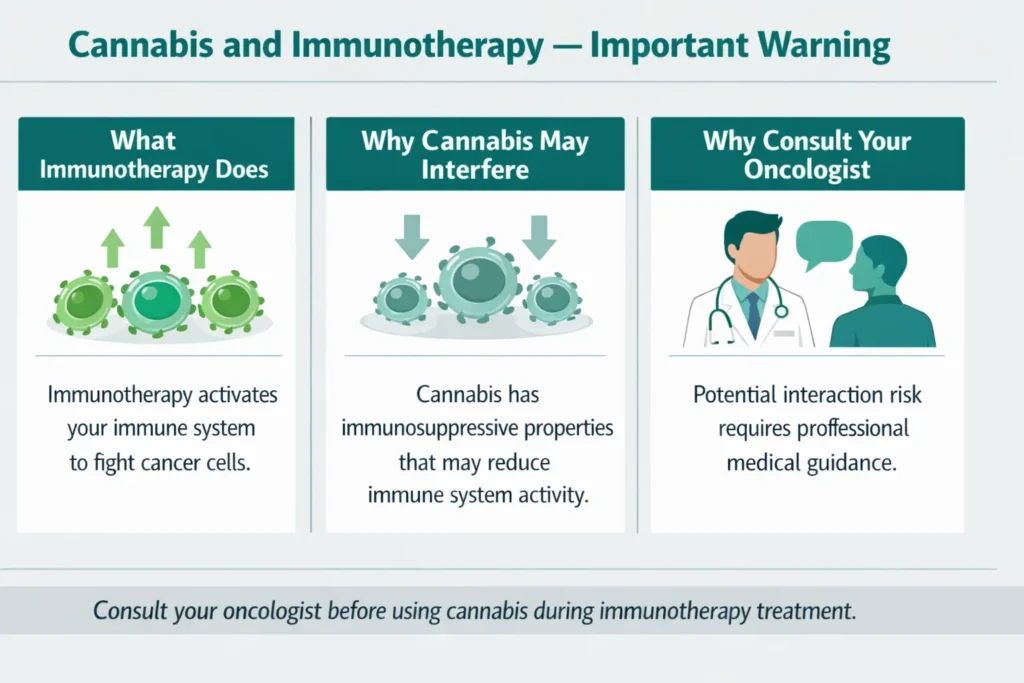
This is the section that the majority of medical marijuana websites — including the large national platforms — do not include. It may be the most clinically important information a cancer patient on this page can read.
If you are receiving immune checkpoint inhibitor (ICI) immunotherapy — including drugs like pembrolizumab (Keytruda), nivolumab (Opdivo), ipilimumab (Yervoy), or atezolizumab (Tecentriq) — you must discuss cannabis use with your oncologist before starting. This is not a general precaution. There are specific biological reasons for concern, and the evidence, while contested, is significant enough that ASCO and MASCC both flag it.
Cannabis has well-established immunosuppressive properties via CB2 receptor activity. Immune checkpoint inhibitors work by activating the immune system to attack cancer cells. The theoretical concern: cannabis may suppress the very immune activation that immunotherapy is trying to generate.
Two Israeli studies (Bar-Sela et al., 2020 and a related retrospective) found cannabis use during ICI immunotherapy correlated with significantly worse outcomes — shorter time to tumor progression and lower overall survival. These findings were alarming and were cited in both the ASCO and MASCC guidelines. However, a 2024 reanalysis published in Cancers (Piper et al.) found multiple statistical errors and unverifiable analyses in both original studies, calling their conclusions into question. A separate 2024 retrospective study in multiple solid malignancies found no significant difference in overall survival between cannabis users and non-users on ICI therapy.
Where this leaves patients: The science is genuinely unresolved. The National Cancer Institute funded a $3.2 million multi-site observational study (University at Buffalo, Thomas Jefferson University, Oregon Health and Science University) launched in 2023 specifically to answer this question — which tells you how seriously the research community takes it. Until that data exists, oncologists at major cancer centers are increasingly flagging this as an open question rather than a settled concern.
The practical guidance is simple: if you are on immunotherapy, tell your oncologist you are using or considering using medical cannabis before starting. Do not withhold this information. CBD in particular, because of its lower CB2 agonist activity compared to THC, may represent a lower-risk option — though this too has not been formally established.
- Source: PMC – Immunotherapy and Cannabis: A Harmful Drug Interaction or Reefer Madness? (Piper et al., 2024)
- Source: ASCO – Cannabis and Cannabinoids in Adults with Cancer: Guideline (2024)
- Source: University at Buffalo – $3.2M NCI Grant to Study Cannabis and Immunotherapy (2023)
Drug Interactions for Cancer Patients: What to Tell Your Oncologist
Cancer patients typically take complex regimens where pharmacokinetic interactions matter. CBD — found in many cannabis products — is a potent inhibitor of several CYP450 enzymes that metabolize chemotherapy agents and supportive care medications.
CYP3A4 inhibition: CBD significantly inhibits CYP3A4, which metabolizes a large number of chemotherapy drugs including certain taxanes, vinca alkaloids, and many tyrosine kinase inhibitors. This can increase plasma levels of these drugs, potentially worsening toxicity. If your regimen includes drugs metabolized by CYP3A4, discuss with your oncologist.
CYP2C9 inhibition: CBD inhibits CYP2C9, which affects warfarin metabolism. Patients on anticoagulants — common in cancer patients due to thromboembolism risk — need INR monitoring if they use cannabis.
Opioid interactions: CBD inhibits CYP3A4 and CYP2D6, which metabolize many opioids. This can increase opioid plasma levels, potentially increasing sedation and respiratory depression at the same dose. This is the flip side of the opioid-sparing benefit — it requires monitoring and potentially adjusted dosing.
Corticosteroids: Frequently used in cancer treatment both as antiemetics and for tumor-related inflammation. CYP3A4 inhibition by CBD can increase steroid exposure.
Bring a complete, current medication list to your physician certification appointment. Your certifying physician will review interactions — and so should your oncologist. These are conversations, not automatic disqualifiers.
- Source: PMC – Review of Medicinal Cannabis Products in Palliative Care: Drug Interactions
- Source: NCI – Cannabis and Cannabinoids (PDQ)
What PA-Approved Cannabis Products Work Best for Common Cancer Symptoms
Pennsylvania’s approved forms include oils and tinctures, capsules and pills, vaporizable dry leaf (vaporizer only — smoking is not permitted), liquid solutions including metered-dose inhalers, dermal patches, and topicals.
For CINV: Onset timing matters. Inhalation (vaporized dry leaf) provides the fastest onset — useful for acute nausea spikes — but is not appropriate for patients with respiratory compromise or certain head/neck cancers. Oral formulations (tinctures, capsules) have delayed onset (30 min–2 hours) but longer duration — more suitable for anticipatory nausea or as scheduled dosing around chemotherapy. THC-dominant formulations are generally more effective antiemetics; CBD alone has limited antiemetic evidence.
For pain: Balanced THC:CBD formulations (1:1 ratio) are generally most studied and best tolerated for chronic cancer pain. THC provides the primary analgesic effect; CBD may moderate THC’s psychoactive side effects and has anti-inflammatory properties.
For CIPN (remission patients): Topical formulations have shown some utility for localized neuropathic symptoms and avoid systemic effects and drug interactions — a meaningful advantage for patients on ongoing medications. Oral or tincture formulations are typically needed for more diffuse CIPN.
For anxiety and sleep: CBD-dominant formulations at lower doses are preferred for anxiety — high-THC products can worsen anxiety in some patients. For sleep, lower-dose THC in the evening is often recommended for sleep-onset difficulties, though high-dose THC can disrupt sleep architecture.
Your dispensary pharmacist is your most practical guide to current product inventory. Tell them specifically whether you are in active treatment or remission, which symptoms you’re targeting, and any concurrent medications.
How to Get Your Pennsylvania Medical Marijuana Card for Cancer
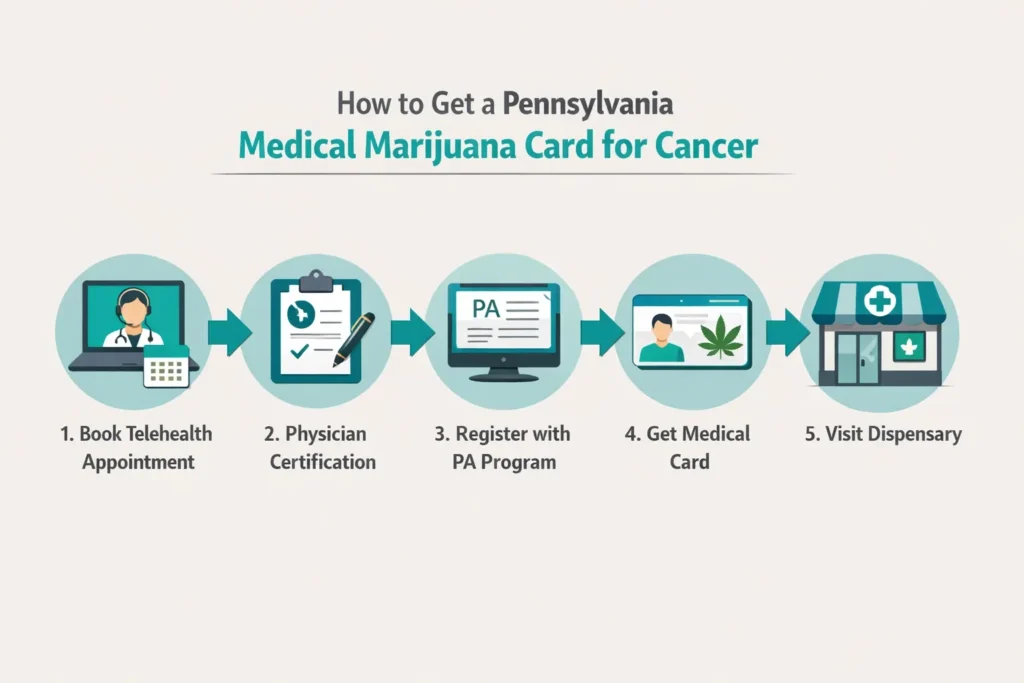
Step 1 — Physician Certification (Same-Day Telehealth)
Schedule a telehealth appointment with a PA DOH-registered medical marijuana physician. The evaluation typically takes 10–15 minutes. You do not need your oncologist’s approval or involvement — any PA-registered physician who has a continuing care relationship with you can certify you. Have documentation of your cancer diagnosis available: an oncology report, imaging result, or pathology record. For remission patients, your diagnosis records are what matters — there is no requirement that cancer be currently active.
Bring a complete medication list, including all chemotherapy agents if in active treatment, targeted therapies, immunotherapy, supportive medications, and any supplements. This is particularly important given the drug interaction considerations above.
Step 2 — State Registration
After your certification is issued, register at the PA Medical Marijuana Program Patient Registry (patientportal.mmapinc.com). You will need your certification, a valid Pennsylvania driver’s license or state-issued ID, and payment of the $50 annual fee. Fee waivers are available for patients enrolled in Medicaid, PACE/PACENET, CHIP, SNAP, or WIC.
Step 3 — Visit a Licensed PA Dispensary
Use the PA DOH dispensary locator to find a licensed dispensary. Your temporary approval is issued immediately upon successful registration. Tell the dispensary pharmacist that you have cancer and describe specifically which symptoms you are targeting — they will advise on appropriate products and starting doses for your situation.
Caregiver registration
If your treatment affects your ability to visit a dispensary independently — due to fatigue, immunosuppression, or mobility — Pennsylvania allows you to designate up to two caregivers who can purchase cannabis on your behalf. Caregivers must register separately with the PA program and pass a background check.
Other Qualifying Conditions
- Amyotrophic Lateral Sclerosis (ALS)
- Autism
- Crohn’s Disease
- Damage to the nervous tissue of the central nervous system (brain-spinal cord) with objective neurological indication of intractable spasticity, and other associated neuropathies
- Epilepsy
- Glaucoma
- Positive status for Human Immunodeficiency Virus or Acquired Immune Deficiency Syndrome (HIV/AIDS)
- Huntington’s Disease
- Inflammatory Bowel Disease (IBD)
- Intractable Seizures
- Tourettes
- Chronic Hepatitis C
- Multiple Sclerosis
- Neuropathies
- Parkinson’s Disease
- Post-traumatic Stress Disorder (PTSD)
- Severe chronic or intractable pain of neuropathic origin or severe chronic or intractable pain
- Sickle Cell Anemia
- Neurodegenerative diseases (i.e., Alzheimer’s Disease)
- Terminal illness
- Dyskinetic and spastic movement disorders
- Opioid use disorder for which conventional therapeutic interventions are contraindicated or ineffective, or for which adjunctive therapy is indicated in combination with primary therapeutic interventions
- Anxiety Disorder
Frequently Asked Questions
Q: I finished chemotherapy two years ago and I’m in remission. Do I still qualify?
Q: My oncologist doesn’t know I’m considering medical marijuana. Do I have to tell them?
Q: Will cannabis help shrink my tumor?
Q: I’m on pembrolizumab (Keytruda). Is cannabis safe for me?
Q: Does medical marijuana cost anything beyond the card fee in Pennsylvania?
Cancer Support Resources in Pennsylvania
American Cancer Society – Pennsylvania (cancer.org) provides the most comprehensive patient-facing information on marijuana and cancer. Their guide is updated regularly and includes the ASCO guideline context.
Penn Medicine Abramson Cancer Center (pennmedicine.org/cancer) — one of the country’s leading NCI-designated comprehensive cancer centers, with integrative oncology programs that include cannabis counseling.
UPMC Hillman Cancer Center (upmc.com/services/cancer) — Pennsylvania’s other major NCI-designated cancer center, with locations throughout western Pennsylvania.
National Cancer Institute – Cannabis and Cannabinoids (PDQ) at cancer.gov provides the most authoritative, regularly updated summary of the clinical evidence for oncology professionals and patients.
NOTE: A cancer diagnosis does not mean resigning yourself to whatever symptoms come with treatment. Pennsylvania’s medical marijuana program exists specifically to give you legal access to a therapy that, for the right symptoms, has meaningful evidence behind it. The evidence is strongest for refractory nausea, genuinely relevant for pain and anxiety, and practically important for the remission patient still living with CIPN two years after treatment ended.
What it is not is a cure, a tumor-fighter, or a risk-free decision — particularly if you are on immunotherapy. That conversation belongs with your oncologist, informed by the same research that guides this page.