
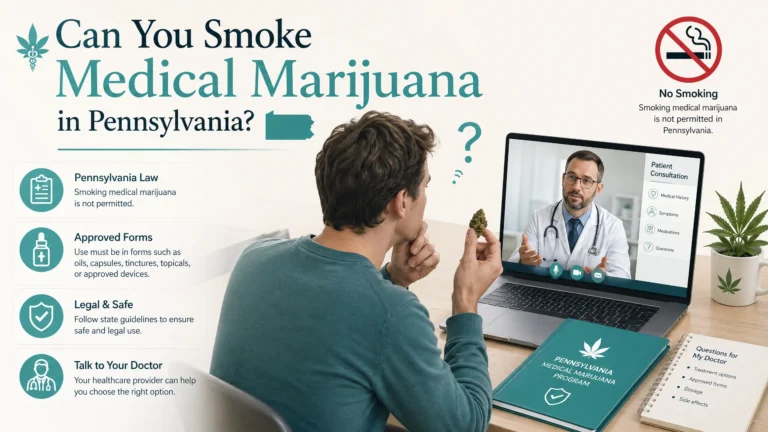

Can you smoke medical marijuana in PA?
This is one of the most common questions new patients ask and the answer surprises many people.
No. Even if you have a valid Pennsylvania medical marijuana card, smoking cannabis is explicitly prohibited under Pennsylvania state law. It has been since the very beginning of the program in 2016.
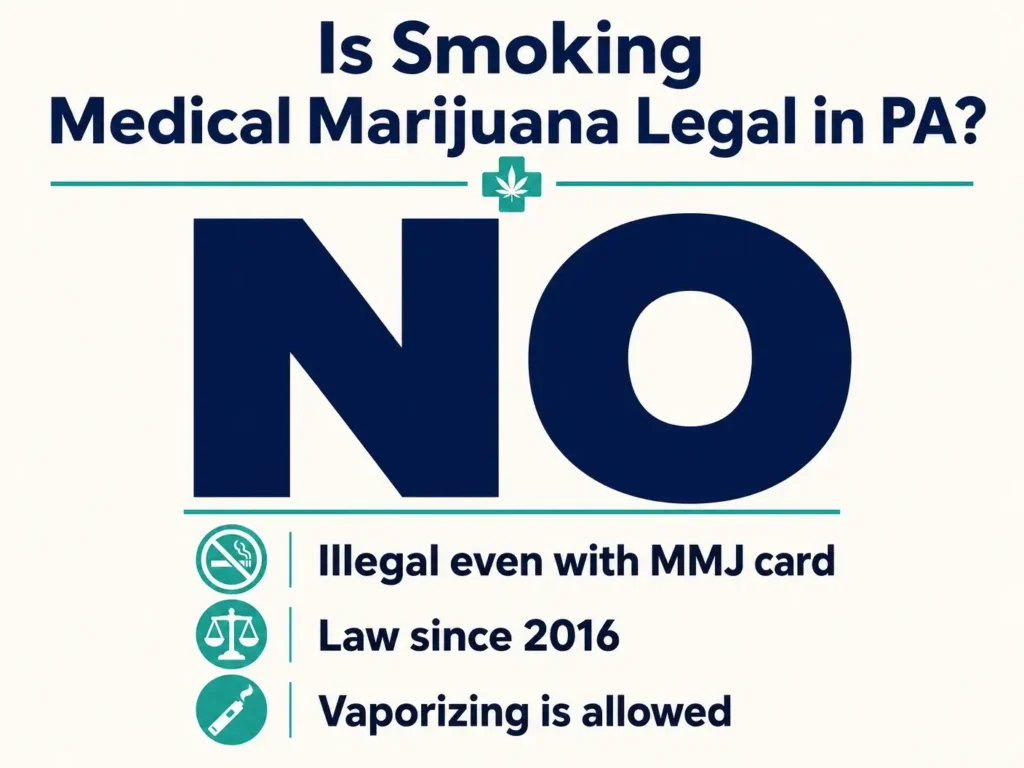
But here is the important distinction most guides gloss over: you absolutely can consume cannabis flower in Pennsylvania. You just cannot combust it with a flame.
Vaporization of cannabis flower is fully legal for registered patients and once you understand the difference and the options available, the practical impact of the smoking ban is far smaller than most new patients fear.
This guide covers everything Pennsylvania MMJ patients need to know about how they can and cannot consume cannabis, where they can use it, what happens if they break the rules, and every legal consumption method available at PA dispensaries.
Why Pennsylvania Banned Smoking Medical Marijuana from Day One
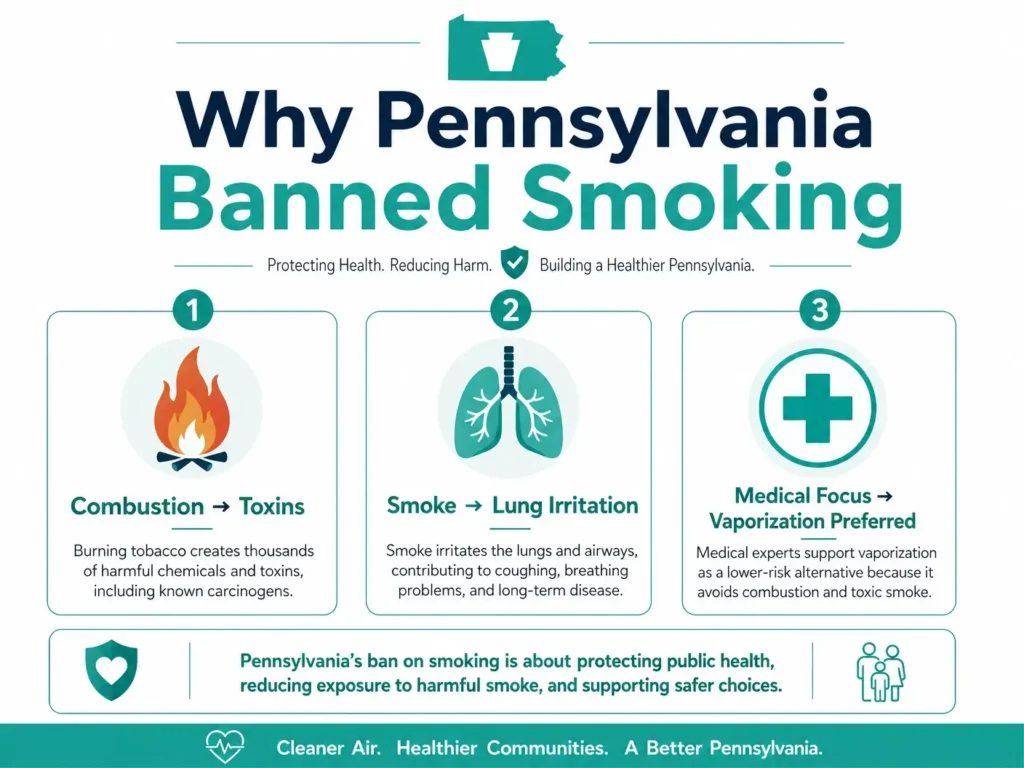
Understanding why Pennsylvania drew this line helps make sense of a rule that many patients find frustrating. When Governor Tom Wolf signed the Medical Marijuana Act (Act 16) on April 17, 2016, the law was deliberately designed with a medical, not recreational, framework in mind.
The Pennsylvania legislature and Department of Health took the position that smoking is inherently a recreational consumption method with documented respiratory health risks, while vaporization and other delivery methods align more clearly with a clinical, patient-focused treatment model.
Specifically, the health rationale for the smoking ban rests on the distinction between combustion and vaporization:
Combustion — burning cannabis with a flame, produces smoke containing carbon monoxide, carcinogens, and particulate matter similar to tobacco smoke.
According to the American Lung Association, cannabis smoke contains many of the same toxins and carcinogens as tobacco smoke, and regular smoking is associated with bronchitis, respiratory infections, and chronic lung irritation.
Vaporization — heating cannabis to temperatures between 320°F and 430°F without igniting it, releases cannabinoids and terpenes as a vapor without producing combustion byproducts.
Research published in Harm Reduction Journal found that vaporization significantly reduces exposure to combustion toxins compared to smoking, while delivering comparable cannabinoid levels.
Pennsylvania regulators chose vaporization as the approved inhalation method to align the program with a medical harm-reduction framework. The smoking ban was not an oversight, it was a deliberate policy choice that has remained intact through every amendment to the Medical Marijuana Act since 2016.
As the Allegheny County Bar Association’s medical marijuana FAQ states directly: “Act 16 specifically prohibits ‘smoking’ medical marijuana products. It permits ‘vaporization’ and ‘nebulization.'”
The Exact Legal Line — Combustion vs. Vaporization Explained
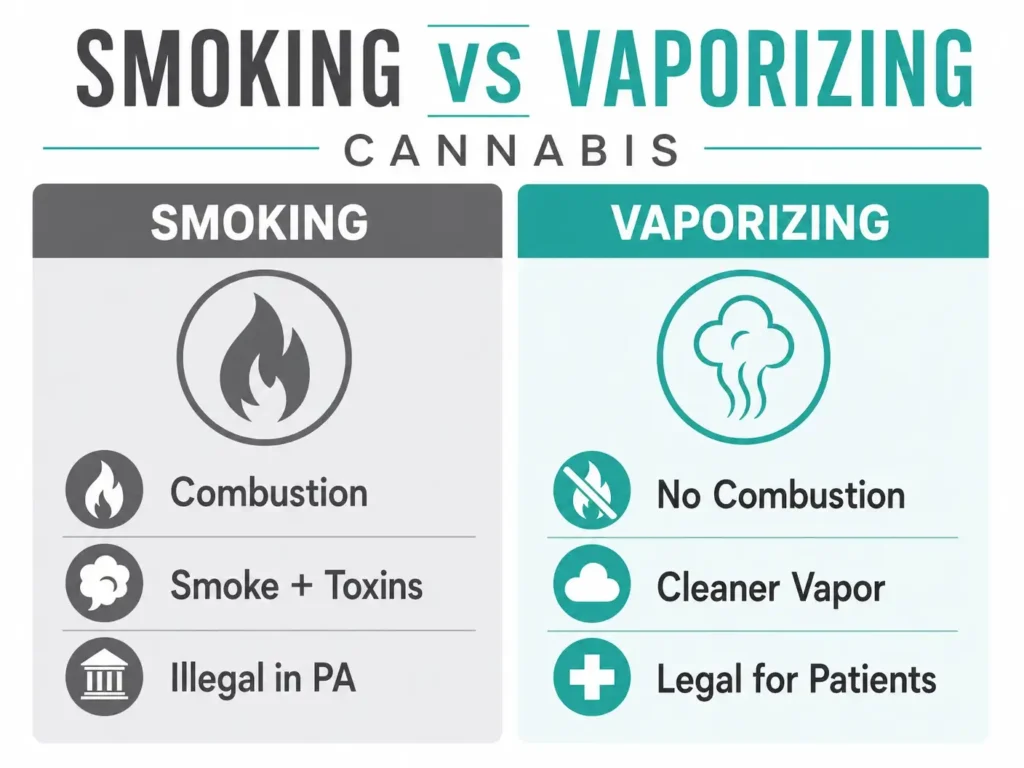
This distinction is critical for every Pennsylvania MMJ patient to understand precisely because the legal line is drawn at combustion, not at flower.
What is prohibited:
- Lighting cannabis flower with a flame — joints, blunts, spliffs
- Smoking flower in a pipe, bong, or bowl using combustion
- Any method that burns the cannabis rather than heating it
What is fully legal:
- Vaporizing cannabis flower using a dry herb vaporizer (no combustion)
- Vaporizing cannabis concentrates using a vape pen or dab device
- All other approved consumption methods (tinctures, capsules, topicals, troches)
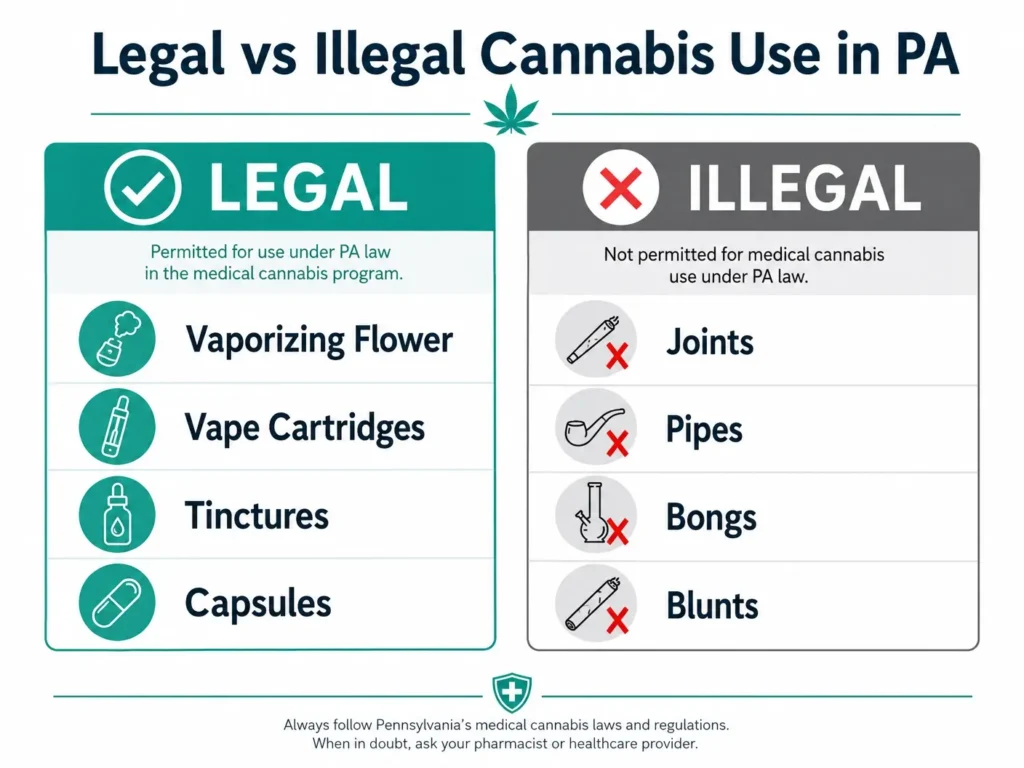
The key word is combustion. The moment you ignite cannabis with a flame, you have crossed from legal vaporization into illegal smoking, regardless of whether you have a valid medical marijuana card.
As criminal defense attorney Patrick Nightingale, quoted by the Philadelphia Inquirer, stated: “Smoking marijuana, even if one is a registered medical cannabis patient, is illegal in Pennsylvania and can result in a misdemeanor ‘small amount’ charge or simple possession depending on the total amount possessed.”
Pennsylvania dispensaries can and do legally sell cannabis flower. Patients can legally purchase that flower.
They just cannot legally combust it with a flame. The flower must be consumed in a dry herb vaporizer, a device designed to heat cannabis to the point of vaporization without burning it.
What Happens If You Smoke Your Medical Marijuana in PA?
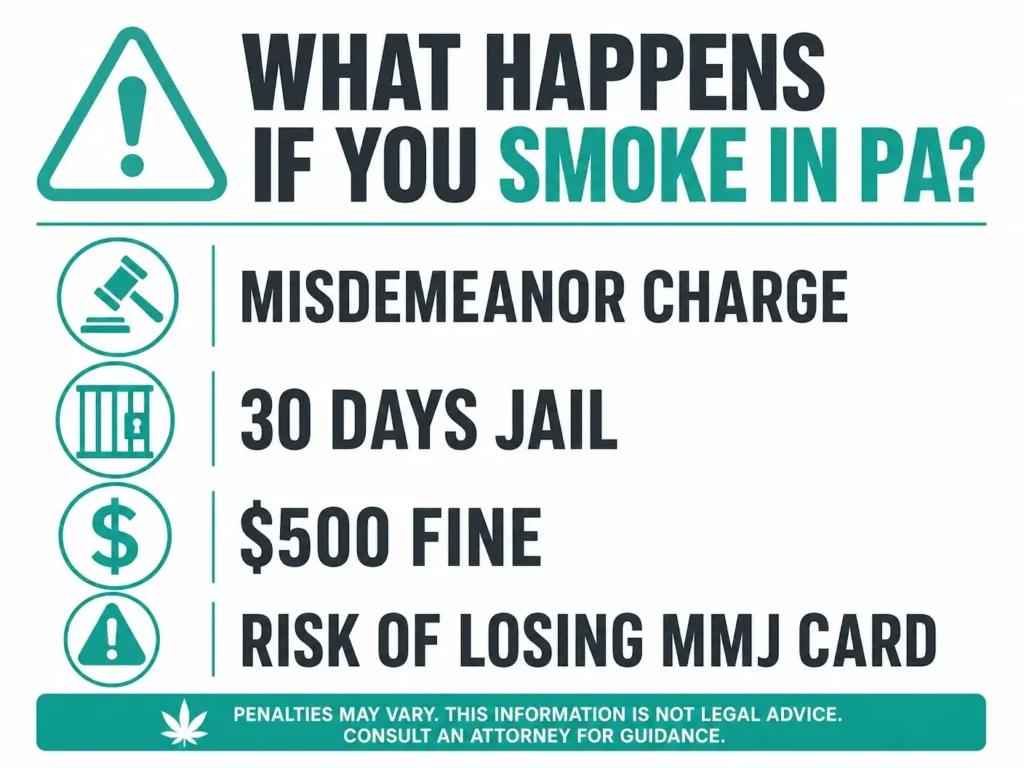
This is where patients need to understand the real stakes. Smoking medical marijuana in Pennsylvania exposes you to two distinct legal risks:
Risk 1 — Criminal Misdemeanor Charge
Smoking cannabis — even dispensary-purchased cannabis, crosses your legally purchased medical marijuana into illegal territory. According to Patrick Nightingale’s patient rights guide, a patient caught smoking cannabis could face:
- A misdemeanor “small amount” possession charge or simple possession, depending on the quantity
- Up to 30 days in jail and a $500 fine for a first offense
Your medical marijuana card does not protect you from these charges when the consumption method itself is illegal.
The card authorizes possession of dispensary-purchased cannabis, it does not authorize every possible method of using that cannabis.
Risk 2 — Loss of Your Medical Marijuana Card
Beyond criminal charges, violating the program’s consumption rules can put your patient registration at risk. As Patrick Nightingale explains: “If you are caught smoking cannabis, you may face penalties or even lose your medical marijuana card.”
Loss of your card means losing access to the entire legal dispensary system, which for patients managing serious conditions like chronic pain, anxiety, or cancer is a meaningful consequence.
Practical Reality — Enforcement Inconsistency
In practical terms, law enforcement cannot always distinguish between someone vaping cannabis flower in a dry herb vaporizer and someone smoking it from a pipe or joint.
The visual distinction isn’t always obvious to officers on the street. This creates a gray area in enforcement but it is a gray area that still carries real legal risk, and one that patients should not rely on as protection.
The safest approach: use approved consumption methods, consume in private, and keep your product in its original dispensary packaging.
The Paraphernalia Trap Patients Don’t Expect
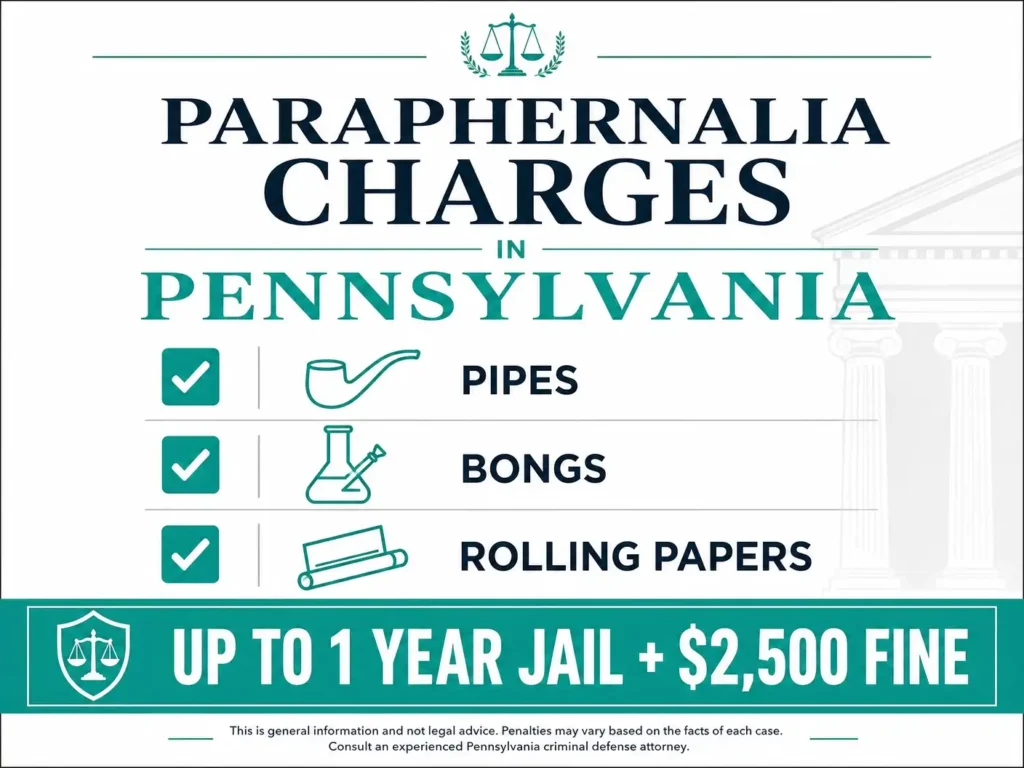
Here is something most guides never mention and it can turn a smoking violation into two separate criminal charges.
If you are caught smoking medical marijuana in Pennsylvania using a pipe, bong, bowl, rolling papers, or any similar device, you may face not just a possession charge but also a separate paraphernalia charge.
Under 35 P.S. § 780-113(a)(32), possession of drug paraphernalia is a misdemeanor carrying:
- Up to 1 year in jail
- Up to $2,500 in fines
Items that qualify as paraphernalia in this context include:
- Pipes and bowls of any kind
- Bongs and water pipes
- Rolling papers
- Blunt wraps
A registered medical marijuana patient caught smoking from a glass pipe could face both a possession/consumption violation and a paraphernalia charge simultaneously, doubling the legal exposure from what might have seemed like a minor infraction.
The solution is straightforward: use a dry herb vaporizer purchased from a legitimate retailer. These devices are specifically designed for legal vaporization and are not classified as drug paraphernalia.
Every Legal Consumption Method Available to PA Patients
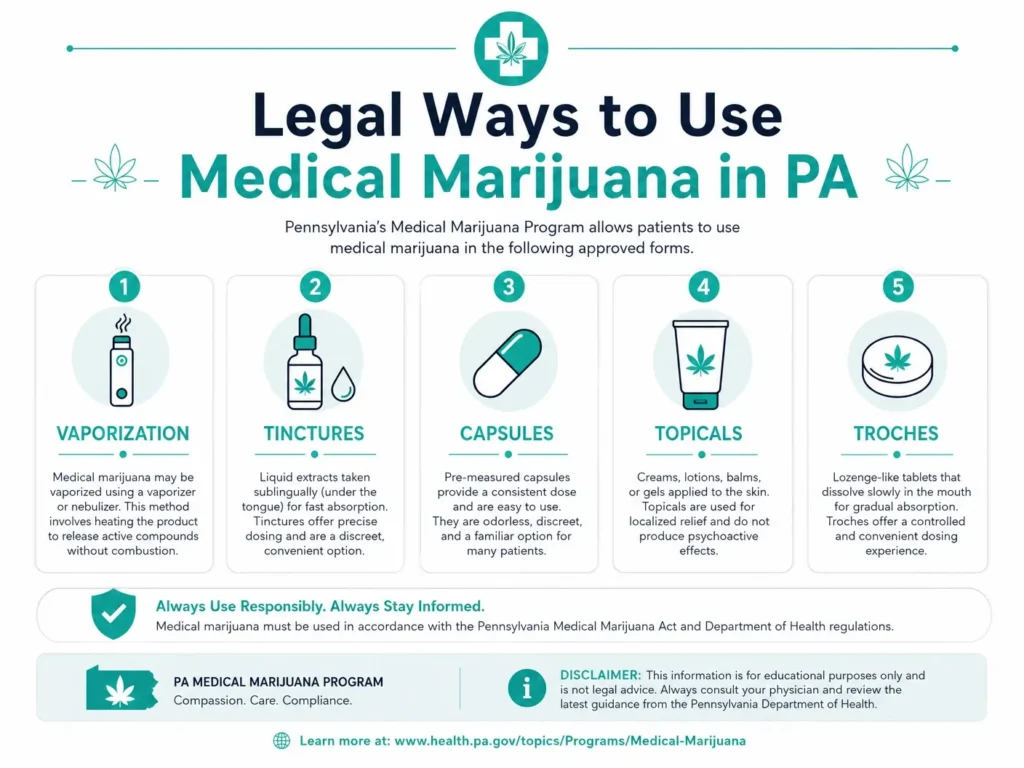
Pennsylvania offers a wider range of legal consumption options than many patients realize. Here is every method currently approved under the Medical Marijuana Act:
Vaporization — Inhalation Method
The primary legal inhalation method for PA patients. Includes:
- Dry herb vaporizers — devices that heat cannabis flower without combustion. Both portable and tabletop models are available
- Vape cartridges — pre-filled cartridges containing cannabis oil, used with a compatible vape pen battery
- Concentrate vaporizers — devices designed for wax, shatter, live resin, and other cannabis concentrates
- Disposable vape pens — self-contained vaporizer units available at dispensaries
Tinctures — Sublingual Method
Cannabis tinctures are liquid extracts typically administered under the tongue (sublingually) for fast absorption into the bloodstream, or mixed into food and beverages.
According to RISE Cannabis, tinctures were among the original approved product forms under Act 16 from 2016. Onset typically 15–45 minutes.
Capsules and Softgels — Oral Method
Cannabis oil in pill or softgel form, swallowed and absorbed through the digestive system. Onset is slower (1–2 hours) but effects are typically longer lasting.
This form is popular among patients managing chronic conditions who prefer a familiar, discrete format.
Topicals — Transdermal Method
Creams, lotions, balms, gels, and ointments infused with cannabis. Applied directly to the skin for localized relief.
Topicals generally do not produce psychoactive effects because cannabinoids typically do not cross the blood-brain barrier when applied to skin, making them appropriate for patients seeking pain and inflammation relief without impairment.
Troches — Buccal/Sublingual Method
Troches (pronounced “TRO-keez”) are medicated lozenges designed to dissolve slowly in the mouth, either under the tongue or against the cheek.
As Terrapin Care Station explains, troches absorb through mucous membranes in the mouth, giving them a faster onset than swallowed capsules while remaining fully legal under Pennsylvania law.
Troches are particularly important to understand because many patients wonder why PA allows these but not traditional edibles, covered in the next section.
Nebulization — Specialized Medical Method
Act 16 specifically permits nebulization alongside vaporization. A nebulizer converts liquid cannabis extract into a fine mist that is inhaled through a mouthpiece, similar to an asthma nebulizer.
This method is primarily used for patients with specific respiratory or absorption needs where standard vaporization is not ideal. It is not commonly available at most dispensaries but remains a legally approved option.
Vaporizing Flower — Your Practical Guide to Getting Started
Many patients who are used to smoking find the transition to vaporization feels daunting at first. It is actually straightforward once you understand the basics.
How Dry Herb Vaporization Works
A dry herb vaporizer heats ground cannabis flower to a temperature between approximately 320°F and 430°F, hot enough to activate and release cannabinoids (THC, CBD) and terpenes as vapor, but below the combustion point (approximately 451°F) where burning begins.
The result is a vapor, not smoke that is inhaled and absorbed through the lungs.
What to Look For in a Dry Herb Vaporizer
Temperature control: Look for precise temperature control rather than just low/medium/high settings.
Different cannabinoids and terpenes vaporize at different temperatures, lower temperatures (320–360°F) produce lighter, more flavorful vapor with less THC; higher temperatures (380–430°F) produce denser vapor with more complete cannabinoid activation.
Heating method:
- Conduction vaporizers — heat the cannabis through direct contact with a heated surface. Faster heat-up time, but less even heating
- Convection vaporizers — pass hot air through the cannabis. More even and efficient extraction, generally better vapor quality
Session vs. on-demand: Session vaporizers heat for a set period and require finishing the loaded cannabis in one session. On-demand vaporizers heat instantly when you inhale and cool when you stop, making them more efficient.
Popular options at various price points:
- Budget ($50–$100): Arizer ArGo, DynaVap M (manual, butane-free flame heating)
- Mid-range ($100–$200): Storz & Bickel Mighty+, Arizer Solo 2
- Premium ($200–$500+): Volcano Hybrid (tabletop), Pax 3
All of these are available at licensed electronics and vaporizer retailers. They are not paraphernalia, they are legal medical devices designed for vaporization.
Tips for Getting Started
- Grind your flower — a medium-fine grind maximizes surface area for even vaporization
- Start at lower temperatures — 340–360°F is a good starting point for new users; increase gradually
- Draw slowly — vaporizer hits are drawn more slowly than smoking; a 5–10 second steady draw is typical
- Clean regularly — residue buildup affects vapor quality and device performance
What About Edibles? The PA Rules That Confuse Everyone
Pennsylvania’s rules around edibles are genuinely confusing and the confusion comes from the fact that some edibles are legal and others are not.
Illegal in PA: Traditional edibles, gummies, chocolates, cookies, brownies, infused beverages are not approved for sale at Pennsylvania dispensaries.
As Terrapin Care Station’s PA cannabis law guide explains: “Products like infused gummies, chocolates, baked goods, or any food items containing THC are not approved for sale or use under current Pennsylvania medical cannabis laws.”
Legal in PA:
- Troches (lozenges) — legal because they absorb through mucous membranes, not digestion
- Tinctures mixed into food — a patient may mix a tincture into food or drink at home to facilitate ingestion, as this is considered a permitted delivery method
- Capsules and softgels — swallowed products in pill form are legal
Why the distinction? The Medical Marijuana Act draws the line at products specifically designed as food, gummies, cookies, chocolate. The rationale involves dosing consistency and the risk of accidental ingestion by children.
Troches and capsules are more pharmaceutical in nature, discrete, measured doses that resemble medicine rather than food.
If recreational legalization passes in Pennsylvania through bills like SB 120, this distinction may change, some proposed legislation includes provisions for regulated edible products. But under the current medical program, the edibles prohibition remains.
Where Can You Legally Consume Medical Marijuana in PA?
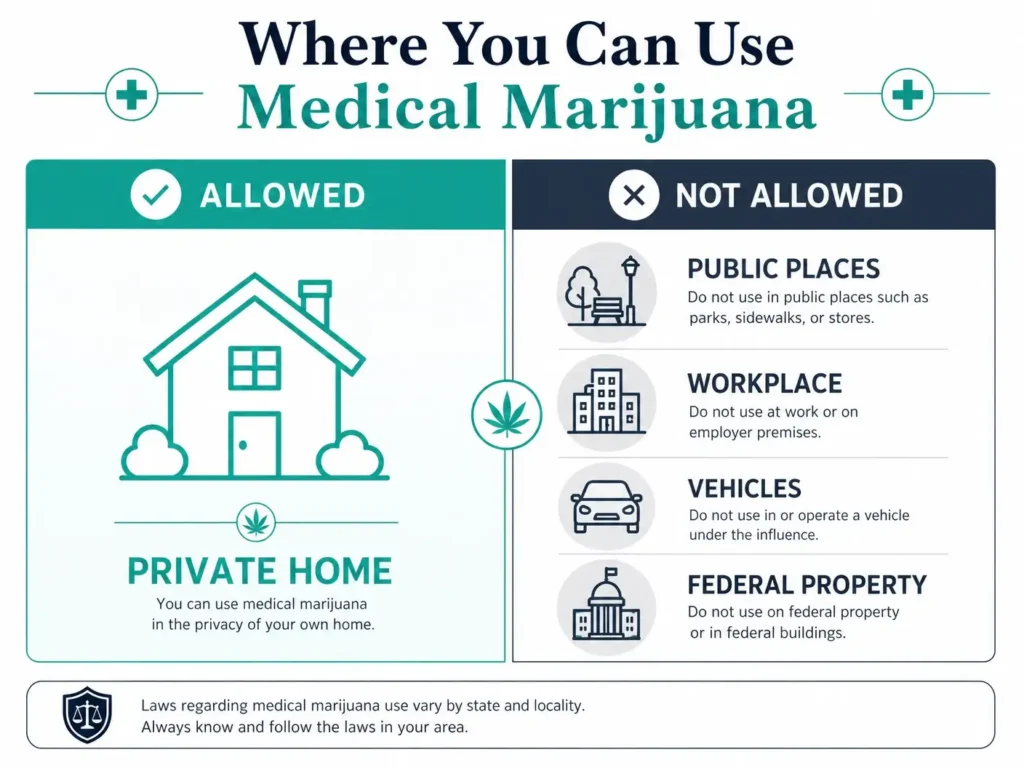
This is where many patients encounter unexpected complications because Pennsylvania law on where consumption is allowed is somewhat vague, creating real-world situations that aren’t clearly addressed.
Definitively legal:
- Your own private residence — the clearest and most unambiguous location for medical marijuana consumption in Pennsylvania
Generally permitted with conditions:
- Another person’s private home — you may consume at a friend or family member’s home if they have given explicit permission. As RISE Cannabis notes, medical marijuana use is “strictly limited to the home of the medical marijuana patient or another private home where you’ve asked for permission”
- A private medical facility or treatment setting — with permission of the facility
Illegal or prohibited:
- Public spaces — streets, parks, sidewalks, parking lots, vehicles in public
- Within 1,000 feet of a school
- Within 250 feet of a recreational playground
- Workplaces — unless your employer explicitly permits it, which almost none do
- Federal property of any kind — federal law applies regardless of your state card
Gray areas:
- Hotel rooms — hotel rooms are private spaces, but hotels are private businesses that can enforce their own no-smoking/no-cannabis policies in room policies and lease agreements. Using a vaporizer in a hotel room creates less odor than smoking but is still subject to hotel policy
- Vehicles — consuming in a parked car is illegal in a public space. Consuming in a vehicle on private property is a gray area. Driving under the influence is absolutely illegal regardless of patient status
The Landlord Problem — What Renters Need to Know
This is a significant real-world issue that most PA MMJ guides never address.
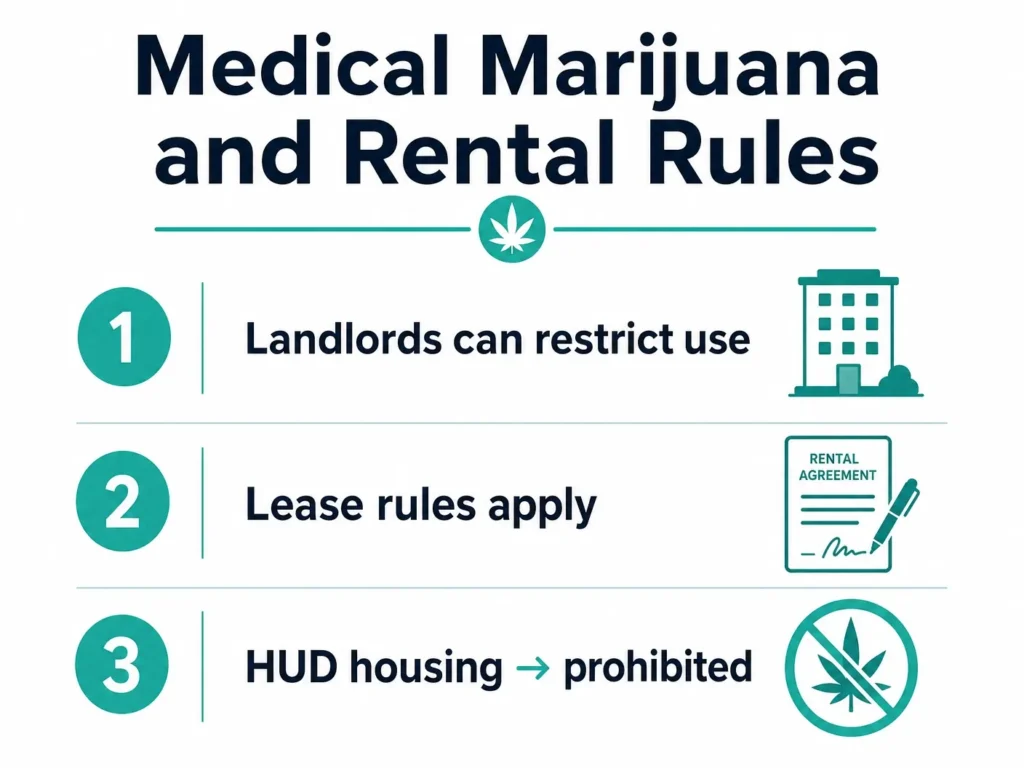
If you rent your home or apartment, your landlord has the legal authority to prohibit cannabis use on the property, including legal medical marijuana consumption, through lease terms.
Pennsylvania’s Medical Marijuana Act protects you from employer discrimination and state criminal prosecution, but it does not override a landlord’s property rights.
Key points for renters:
- Review your lease — many leases contain “no smoking” clauses that may or may not specify cannabis. Some explicitly prohibit all cannabis use including vaporization
- Your landlord can evict you for violating a no-cannabis lease clause, even if you are a registered medical patient
- Federally subsidized housing (Section 8, HUD public housing) follows federal law — cannabis use is prohibited regardless of your state card status, and violations can result in loss of housing assistance
- Private landlords in Pennsylvania cannot discriminate against you solely for being a registered MMJ patient — but they can set property rules about consumption on their premises
If your lease is silent on cannabis or allows vaporization, you have more flexibility. If your lease prohibits it, consuming medical marijuana in your rental creates legal risk with your housing, not just with law enforcement.
The practical solution: if possible, discuss medical marijuana use with your landlord before signing a lease or before beginning use. Many landlords are willing to make accommodations, particularly for patients with documented medical conditions.
The 90-Day Supply Rule — Updated From What You May Have Read
You may have seen various guides stating that Pennsylvania patients can purchase up to a 30-day supply of medical marijuana. That figure is outdated.
Pennsylvania updated its possession limit to allow registered patients to possess up to a 90-day supply of medical cannabis, as determined by the dispensary pharmacist based on your certification and treatment needs.
As Medical Marijuana Doctor confirms: “Patients may possess up to a 90-day supply of medical cannabis, as determined by a pharmacist at a licensed dispensary.”
Key details about the supply limit:
- The 90-day quantity is determined by the dispensary pharmacist based on your documented medical need — not a fixed universal amount
- Dispensaries maintain records of purchases to ensure patients don’t exceed their supply limits
- Possessing medical cannabis in excess of your authorized supply can result in criminal charges
The 90-day supply limit is one of the most significant practical improvements to the PA program for patients, it reduces the frequency of dispensary visits and allows for better stock management, particularly for patients with mobility issues or those in rural areas far from dispensaries.
The THCa Hemp Gray Area — What Patients Should Know
This section addresses a question increasingly common among PA MMJ patients: what about hemp-derived THCa products?
THCa (tetrahydrocannabinolic acid) is the non-psychoactive precursor to THC found in raw cannabis. When heated, through smoking or vaporization, THCa converts to THC, which is what produces the psychoactive effect.
Under federal and Pennsylvania law, hemp-derived products containing 0.3% or less Delta-9 THC are legal, regardless of their THCa content. This has created a growing market for high-THCa hemp flower that is technically legal to purchase but whose legal status when consumed is genuinely murky.
As Hemp Hop’s Pennsylvania THCa guide explains: “THCa is legal in Pennsylvania if it stays within limits and remains in its raw form. But once it becomes active THC, it could be seen as marijuana, which is still illegal for recreational use.”
What this means for registered MMJ patients:
- As a registered patient, your medical marijuana card covers you for dispensary-purchased cannabis — not hemp-derived THCa products from non-dispensary sources
- Hemp-derived THCa products from unlicensed sources are not covered by your PA MMJ card protections
- Law enforcement cannot easily distinguish hemp-derived THCa flower from marijuana by sight or smell — creating practical risk even if the product is technically legal
- For patients, the safest approach is purchasing all cannabis products through licensed PA dispensaries where quality testing and legal status are verifiable
Read More: How to Get a Medical Marijuana Card in PA: The Complete 2026 Guide
How to Get or Renew Your PA Medical Marijuana Card?
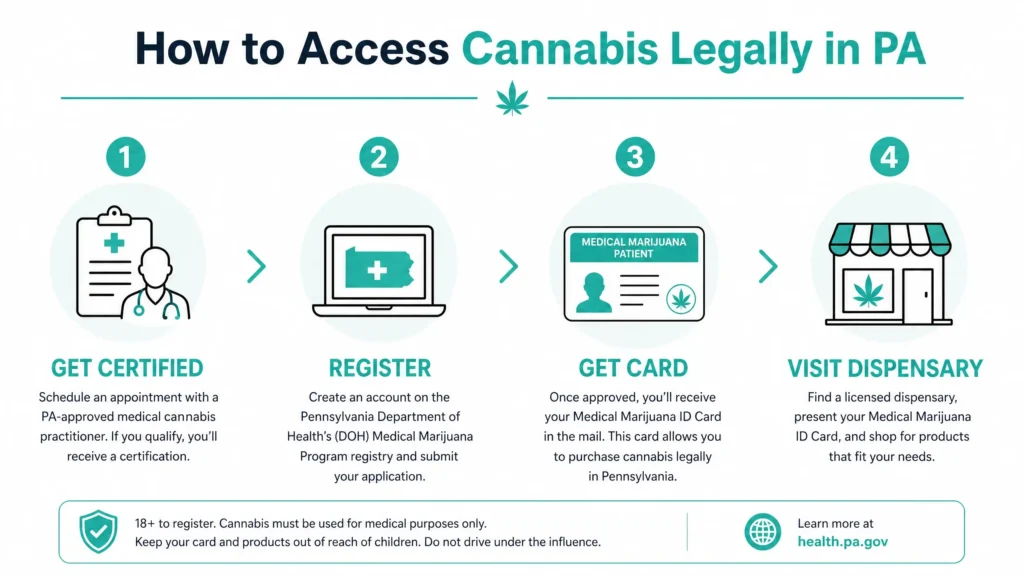
If you are not yet a registered patient or if your card is approaching renewal, the process is straightforward and entirely online.
Step 1 — Get Certified by a PA-Licensed MMJ Physician: Schedule a telehealth appointment with a physician licensed by the Pennsylvania Department of Health to certify MMJ patients.
The appointment takes approximately 15–20 minutes. You will discuss your qualifying condition and medical history. No in-person visit is required.
Step 2 — Register With the PA Department of Health: After your physician certification, register through the Pennsylvania Medical Marijuana Registry online. Pay the $50 state registration fee (waived for patients enrolled in Medicaid, SNAP, WIC, CHIP, or PACE/PACENET).
Step 3 — Receive Your Card and Visit a Dispensary: Your digital card is available immediately upon approval. Your physical card arrives by mail within 7–14 days. With your card, you can legally purchase cannabis products from any licensed Pennsylvania dispensary.
Pennsylvania recognizes 24 qualifying conditions, including anxiety disorders, chronic pain, PTSD, cancer, epilepsy, and many more. You can review the full list of qualifying conditions here.
If anxiety is your qualifying condition, our detailed Anxiety Disorder & Medical Marijuana in Pennsylvania page explains exactly how anxiety qualifies and what documentation you need.
Ready to get started? Begin your PA MMJ certification today.
Frequently Asked Questions
Q: Can you smoke medical marijuana in Pennsylvania?
A: No. Pennsylvania’s Medical Marijuana Act (Act 16) explicitly prohibits smoking cannabis, including by registered patients. Smoking means combusting cannabis with a flame, such as in a joint, blunt, pipe, or bong. This prohibition has been in place since the program launched in 2016 and has not changed. Vaporization of cannabis flower is legal for registered patients.
Q: Can you vaporize medical marijuana flower in Pennsylvania?
A: Yes. Vaporizing cannabis flower using a dry herb vaporizer is fully legal for registered PA MMJ patients. Dispensaries legally sell cannabis flower for this purpose. The key distinction is that vaporization heats the cannabis without burning it, no combustion, no flame, no smoke.
Q: What consumption methods are legal for PA MMJ patients?
A: Legal methods include: dry herb vaporization, vape cartridges and concentrate vaporizers, tinctures (sublingual), capsules and softgels, topical creams and gels, troches (lozenges), and nebulization. Illegal methods include: smoking flower in any form (joints, pipes, bongs), and consuming traditional edibles like gummies or baked goods (which aren’t sold at PA dispensaries).
Q: What happens if you get caught smoking medical marijuana in PA?
A: Smoking medical marijuana, even dispensary-purchased cannabis is illegal in Pennsylvania. A patient caught smoking faces potential misdemeanor possession/consumption charges (up to 30 days, $500 fine) and possible loss of their medical marijuana card. Using a pipe, bong, or rolling papers also creates exposure to a separate paraphernalia misdemeanor charge (up to 1 year, $2,500 fine).
Q: Where can you legally use medical marijuana in Pennsylvania?
A: You can legally use medical marijuana in your own private residence or in another person’s private home with their explicit permission. You cannot use it in public spaces, in vehicles in public, at workplaces (unless your employer explicitly permits it), within 1,000 feet of a school, within 250 feet of a playground, or on any federal property.
Q: Can landlords prohibit medical marijuana use in Pennsylvania?
A: Yes. Pennsylvania’s Medical Marijuana Act protects registered patients from employer and state criminal discrimination, but it does not override a landlord’s right to set rules for their property. Landlords can include no-cannabis clauses in leases. Tenants in federally subsidized housing (Section 8, HUD) are prohibited from using cannabis under federal housing rules regardless of their state patient status.
Q: Are edibles legal in Pennsylvania?
A: Not traditional edibles like gummies, chocolates, or baked goods, these are not approved products under Pennsylvania’s medical marijuana program. However, troches (medical lozenges that dissolve in the mouth) are legal, as are tinctures mixed into food at home. Capsules and softgels are also legal.
Q: How much medical marijuana can you possess in Pennsylvania?
A: Registered patients can legally possess up to a 90-day supply of medical cannabis, as determined by the dispensary pharmacist based on your certification. This was updated from the original 30-day limit and represents one of the more patient-friendly aspects of the current program.
The Bottom Line
Can you smoke medical marijuana in PA? No and that answer has not changed since Pennsylvania launched its medical marijuana program in 2016. Combustion of cannabis is explicitly prohibited under Act 16 regardless of patient status.
But what you can do is meaningful: vaporize flower, use vape cartridges, take tinctures, use capsules and topicals, and consume troches all legally, all at licensed Pennsylvania dispensaries, all with the protection of your state medical marijuana card.
The smoking ban is real, but it is not the barrier it might initially seem. With a quality dry herb vaporizer and a good dispensary relationship, registered patients have access to essentially the same cannabis products and therapeutic benefits, through a slightly different delivery method.
If you have a qualifying condition and want to begin accessing Pennsylvania’s legal medical marijuana program, our team can help you through the certification process today. Get started here.
Medically reviewed by Dr. Johnathon Chance Miller, MD. This article is for informational and educational purposes only and does not constitute legal or medical advice. Pennsylvania cannabis law is actively evolving, verify current regulations with the Pennsylvania Department of Health. Consult a licensed Pennsylvania attorney for legal advice specific to your situation.
Sources
- Pennsylvania Medical Marijuana Act (Act 16 of 2016) — PA General Assembly
- NORML — Pennsylvania Medical Marijuana Law
- Pennsylvania State Cannabis — Marijuana Laws
- Allegheny County Bar Association — Medical Marijuana FAQ
- Patrick Nightingale — Your Rights as a PA Medical Marijuana Patient (2025)
- RISE Cannabis — Pennsylvania Marijuana Laws
- Terrapin Care Station — Pennsylvania Cannabis Law
- MPP — Summary of Pennsylvania’s Medical Marijuana Act
- Philadelphia Inquirer — What to Know About Pennsylvania’s Marijuana Laws
- My State College Lawyer — Can I Smoke My Medical Marijuana in PA?
- AR Cannabis Clinic — Can You Smoke in Public With a Medical Card in PA?
- Medical Marijuana Doctor — Cannabis Laws in Pennsylvania 2025
- Harm Reduction Journal — Vaporization vs. Smoking Study
- Hemp Hop — Is THCa Legal in Pennsylvania?
- PA Department of Health — Medical Marijuana Program