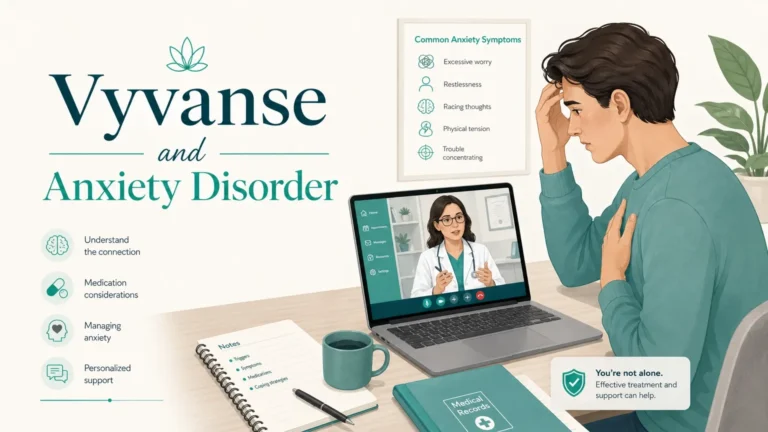

If you’re living with both ADHD and an anxiety disorder or you’ve started taking Vyvanse and noticed your anxiety getting worse, you’ve landed on one of the most genuinely complicated questions in psychiatric medication management.
The relationship between Vyvanse and anxiety disorder is not a simple one. It cuts both ways, and which direction it goes for you depends on factors that most articles don’t explain clearly.
Need a PA Medical Marijuana Card?
Get certified online in 15 minutes. 100% Money-Back Guarantee.
Get Certified Now →The honest answer: Vyvanse can relieve anxiety in some people, worsen it in others, and temporarily trigger it in ways that are manageable, all depending on why your anxiety exists in the first place, how the medication is dosed, and how your individual neurology responds to stimulants.
This guide gives you the full picture.
Why ADHD and Anxiety Almost Always Come Together

Before diving into Vyvanse specifically, it helps to understand just how common this combination is because it fundamentally shapes the conversation about this medication.
According to a 2024 systematic review published in PMC, up to 50% of adults with ADHD also experience anxiety disorders, a rate significantly higher than the general population. Among children with ADHD, approximately 40% have a co-occurring anxiety disorder, according to ADHD statistics from South Denver Therapy. And as many as 80% of adults with ADHD will have at least one co-occurring psychiatric disorder over their lifetime.
Do You Qualify for a PA MMJ Card?
Connect with a licensed Pennsylvania state physician online from home.
This overlap is not coincidental. ADHD and anxiety share neurological roots, both involve dysregulation of dopamine, norepinephrine, and the prefrontal cortex’s ability to regulate emotional responses.
They interact, amplify each other, and often look similar from the outside. The chaos and impairment that untreated ADHD causes, missed deadlines, failed responsibilities, strained relationships, also generates real anxiety as a natural consequence.
This is exactly why the question of how Vyvanse affects anxiety is so layered. You’re often dealing with two conditions whose causes and symptoms overlap and a medication that affects the same neurotransmitter systems driving both.
What Is Vyvanse and How Does It Work?

Vyvanse (lisdexamfetamine dimesylate) is a Schedule II controlled stimulant approved by the FDA for two conditions:
- ADHD in adults and children aged 6 and older
- Moderate-to-severe binge eating disorder (BED) in adults
According to Wikipedia’s pharmaceutical entry on lisdexamfetamine, Vyvanse is a prodrug, meaning it is pharmacologically inactive until your body metabolizes it. After you take it orally, it’s converted in the body into dextroamphetamine, which is the active compound.
This conversion process is what gives Vyvanse its signature smooth, gradual onset compared to other stimulants — effects typically begin within 90 minutes and last up to 14 hours.
Once active, dextroamphetamine increases the release and blocks the reuptake of two key neurotransmitters:
- Dopamine — central to motivation, reward, and executive function
- Norepinephrine — central to attention, arousal, and the fight-or-flight response
This dual action on dopamine and norepinephrine is why Vyvanse is effective for ADHD. It’s also why its relationship with anxiety is complicated because norepinephrine is the same neurotransmitter that drives anxiety’s physical symptoms.
Dosage overview: According to GoodRx’s Vyvanse dosage guide, the standard starting dose is 30 mg once daily in the morning, with increases of 10–20 mg per week as needed. The maximum approved dose is 70 mg daily.
It should always be taken in the morning, taking it later in the day significantly increases the risk of insomnia and associated anxiety.
The Two Opposite Ways Vyvanse Affects Anxiety

⚡ Fast & 100% Online PA Medical Cards
Board-Certified Doctors • 100% Money-Back Guarantee
Book Evaluation Now →Here is the central truth that most articles on this topic fail to state clearly:
Vyvanse can both reduce and increase anxiety and both effects are real, documented, and explainable.
Which direction it goes for you is not random. It depends primarily on the source of your anxiety:
If your anxiety is driven primarily by untreated ADHD: By the chaos, failure, overwhelm, and shame that living with unmanaged ADHD produces, then treating the ADHD with Vyvanse often relieves the anxiety as a natural consequence. The source of the anxiety (ADHD impairment) is addressed, and the anxiety subsides.
If your anxiety is an independent, primary disorder: A genuinely overactive threat-detection system (amygdala hyperreactivity, GABA dysregulation) that exists separately from your ADHD, then adding a stimulant that increases norepinephrine may amplify the anxiety response, because it’s adding fuel to an already-overactive alarm system.
In reality, most people with ADHD and anxiety are dealing with some combination of both and that’s what makes this medication decision one that genuinely requires individualized clinical assessment.
When Vyvanse Relieves Anxiety — The ADHD Chaos Connection

To understand why Vyvanse can actually reduce anxiety, you need to understand what ADHD anxiety feels like because it often looks identical to an anxiety disorder but has a different root cause.
People with untreated ADHD frequently experience:
- Anticipatory anxiety — dreading upcoming tasks because ADHD makes them overwhelming
- Shame-based anxiety — chronic worry stemming from years of underperforming, forgetting things, and letting people down
- Avoidance loops — anxiety about tasks they’re procrastinating, which creates more anxiety
- Emotional dysregulation — intense, rapid emotional responses that feel like anxiety attacks
- Overwhelm anxiety — the cognitive load of trying to manage an ADHD brain without support
When Vyvanse effectively treats ADHD, it addresses the underlying source of this anxiety. The executive function improves. Tasks feel manageable. The constant internal chaos quiets. And as a direct result, the anxiety that was generated by ADHD impairment often significantly reduces.
This is reflected in the clinical data. A meta-analysis cited by Boca Recovery Center found that using psychostimulants like Vyvanse to treat ADHD in children actually reduced the risk of anxiety and that there was no greater risk of anxiety among Vyvanse users than placebo in controlled study conditions.
The 405 Recovery resource on Vyvanse and anxiety summarizes it well: “If your anxiety is caused by the chaos of ADHD, Vyvanse might be the most effective ‘anti-anxiety’ treatment you’ve ever tried.”
When Vyvanse Worsens Anxiety — The Stimulant Mechanism

Renewing Your PA MMJ Card?
Quick annual recertification online. No paperwork hassle.
Renew Card Online →For people with a primary anxiety disorder, one that exists independently of ADHD, Vyvanse can activate or intensify anxiety symptoms through its direct stimulant mechanism.
Here’s what happens neurologically:
Vyvanse increases norepinephrine, the same neurotransmitter that drives the fight-or-flight response. In an already-anxious brain with an overactive amygdala and underactive GABAergic inhibition, adding more norepinephrine can push the nervous system further toward the anxiety response rather than away from it.
The physical results can include:
- Racing heart and palpitations — norepinephrine accelerates heart rate, which anxious people often interpret as a sign of danger, triggering more anxiety
- Muscle tension and restlessness — physical sensations that overlap with anxiety
- Racing thoughts — in some people, the increased neural activity produces an overwhelming flood of thoughts rather than focused clarity
- Increased sweating — another anxiety-amplifying physical cue
- Hypervigilance — heightened alertness that crosses into anxious scanning of the environment
Research indicates that Vyvanse can exacerbate anxiety symptoms, particularly in individuals with pre-existing anxiety disorders.
According to a clinical reference from Dr. Oracle, anxiety is a recognized adverse effect of lisdexamfetamine, occurring in ≥5% of patients at rates at least twice that of placebo in both ADHD and binge eating disorder clinical trials.
Importantly, this does not mean Vyvanse is contraindicated for people with anxiety disorders, it means the combination requires careful monitoring, proper dose titration, and often the addition of an anxiety-specific treatment alongside it.
Rebound Anxiety — What Happens When Vyvanse Wears Off

This is one of the most important and least discussed, aspects of Vyvanse and anxiety. Even in people who tolerate Vyvanse well during the day, a specific type of anxiety can emerge as the medication wears off in the late afternoon or evening.
This is called rebound anxiety — sometimes called “the crash.”
Here’s the mechanism: Vyvanse artificially elevates dopamine and norepinephrine for up to 14 hours. When the drug clears your system, those neurotransmitter levels drop, often below their pre-dose baseline. This sudden chemical shift produces a cluster of symptoms that can feel like an anxiety attack or a mood crash:
- Irritability and emotional volatility
- A sudden wave of worry or dread
- Fatigue that paradoxically coexists with agitation
- Low mood or brief depression-like feelings
- Difficulty relaxing or unwinding
- In some people, a resurgence of ADHD symptoms that feels overwhelming after a day of clarity
According to Medical News Today’s coverage of Vyvanse crash, this rebound occurs because the stimulant leaves the body after several hours, creating a chemical imbalance and because stimulants produce opposite effects when they exit the system.
Get Approved by a Licensed PA Doctor
Schedule your appointment in minutes. You only pay if approved.
Start Online Application →What makes rebound anxiety worse:
- Taking Vyvanse intermittently rather than daily (the FDA label specifies once daily every morning — inconsistent dosing creates unpredictable troughs)
- Taking it too late in the day, disrupting sleep and intensifying the crash
- Using caffeine alongside Vyvanse, compounding the stimulant effect and deepening the subsequent drop
- Higher doses with no period of tolerance building
Warning Signs That Vyvanse Is Making Your Anxiety Worse

If you’re currently taking Vyvanse, watch for these specific indicators that the medication may be exacerbating rather than helping your anxiety:
Immediate red flags (contact your doctor promptly):
- Panic attacks that didn’t occur before starting Vyvanse
- Heart palpitations severe enough to cause significant distress
- Anxiety so intense it impairs functioning more than your ADHD did
- Paranoia, severe hypervigilance, or feeling out of control
- Signs of mania — racing thoughts, decreased need for sleep, grandiosity
Ongoing patterns to discuss with your prescriber:
- Daily anxiety that is clearly worse than before Vyvanse
- Consistent rebound anxiety or mood crash every evening
- Sleep disruption that is worsening your anxiety baseline
- Anxiety that improves on days you skip Vyvanse and returns when you take it
- Physical symptoms (racing heart, tension, sweating) during peak medication hours
According to AuraMD’s long-term Vyvanse side effects guide, in rare cases extended stimulant exposure can trigger mania or psychosis in susceptible individuals, making it essential to report any unusual mood changes promptly rather than waiting to see if they resolve.
Practical Strategies for Managing Anxiety on Vyvanse
If you and your doctor have determined Vyvanse is the right medication for your ADHD but anxiety is a concern, there are specific, evidence-informed strategies that can meaningfully reduce the risk:
Take It Correctly From Day One
Start at the lowest available dose (30 mg) and titrate slowly upward with weekly assessments. As 405 Recovery notes, rushing the dose is the single most common mistake new Vyvanse users make. Allowing your nervous system to acclimate gradually dramatically reduces the likelihood of anxiety as a side effect.
Always Take It First Thing in the Morning
The FDA label is explicit: Vyvanse should be taken once daily, every morning. Taking it later in the day extends its effects into evening hours, disrupting sleep, prolonging the time your norepinephrine is elevated, and worsening the rebound when it finally clears. Poor sleep reliably worsens anxiety, creating a compounding cycle.
Cut Out or Drastically Reduce Caffeine
Caffeine is also a central nervous system stimulant. Combining it with Vyvanse doubles the stimulant load on your nervous system and significantly increases anxiety risk. If you’re experiencing Vyvanse-related anxiety, eliminating caffeine is often one of the fastest and most effective interventions.
Don’t Skip Days Irregularly
Taking Vyvanse some days but not others, particularly without a structured “drug holiday” plan with your doctor can create unpredictable peaks and troughs in neurotransmitter levels, worsening rebound anxiety.
Ready to Get Your Official PA MMJ Card?
State-certified doctor consultations online. No risk—100% refund if not approved.
Claim Your MMJ Card Online →If you need to take breaks from Vyvanse, plan them structured and consistently (e.g., weekends only) and do it with your prescriber’s knowledge.
Add Anxiety-Specific Treatment
For people with genuine co-occurring anxiety disorders, Vyvanse alone is unlikely to be sufficient. Effective combinations include:
- SSRIs or SNRIs alongside Vyvanse — many prescribers add sertraline (Zoloft), escitalopram (Lexapro), or venlafaxine (Effexor) to address the anxiety directly while Vyvanse handles ADHD
- Buspirone — a non-habit-forming anxiolytic that can be used long-term alongside stimulants
- CBT for anxiety — cognitive behavioral therapy directly addresses the thought patterns and avoidance behaviors driving anxiety, complementing Vyvanse’s ADHD management
Monitor Your Physical Anxiety Symptoms Specifically
Keep a simple daily log for the first few weeks on Vyvanse. Note when anxiety symptoms peak (during the medication window or during rebound), their severity, and any specific triggers. This data is invaluable for your prescriber in making dosing decisions.
Non-Stimulant Alternatives for ADHD With Anxiety

If Vyvanse consistently worsens your anxiety despite careful management, it may simply not be the right medication for your individual neurology. That’s not a failure, it’s information. Several non-stimulant ADHD medications carry significantly lower anxiety risk:
Atomoxetine (Strattera) A selective norepinephrine reuptake inhibitor (SNRI) approved for ADHD. It improves attention and impulse control without the stimulant mechanism that triggers anxiety in some people. According to Revival Mental Health, it works by selectively inhibiting norepinephrine reuptake, achieving ADHD symptom control without the dopamine surge that can amplify anxiety.
Guanfacine (Intuniv) Originally developed for hypertension, guanfacine works on alpha-2 receptors in the prefrontal cortex to improve attention and impulse control. It actually has a mild anxiolytic effect for some patients, making it a particularly useful option when anxiety and ADHD co-occur.
Clonidine (Kapvay) Similar in mechanism to guanfacine, clonidine can reduce hyperactivity and improve focus. It also has a calming effect on the nervous system, the opposite direction from stimulants, which can be beneficial when anxiety is a significant part of the clinical picture.
Viloxazine (Qelbree) A newer non-stimulant ADHD medication approved in 2021, viloxazine is a selective norepinephrine reuptake inhibitor with serotonergic activity. It carries no DEA scheduling and has a different side effect profile from amphetamine-based medications.
The right choice depends on your specific symptom profile, medical history, and how your anxiety and ADHD interact. This is a conversation for your prescriber but knowing these options exist means you don’t have to choose between treating your ADHD and managing your anxiety.
When to Talk to Your Doctor — and What to Say
Many people either suffer silently with Vyvanse-induced anxiety or stop taking their medication without telling their prescriber both of which are avoidable. Here’s how to have the most productive possible conversation with your doctor:
Be specific about timing. “Anxiety on Vyvanse” is too vague. Tell your doctor: “I feel anxious approximately 2 hours after taking my dose” versus “My anxiety spikes every evening around 5 pm as the medication wears off.” These are different problems with different solutions.
Describe the anxiety concretely. Racing heart, intrusive thoughts, physical restlessness, panic sensations, specifics help your prescriber distinguish medication side effects from primary anxiety disorder symptoms.
Mention what makes it better or worse. Does your anxiety improve on days you don’t take Vyvanse? Does caffeine make it worse? Does exercise help? This context guides the clinical decision significantly.
Ask specifically about these options:
- Dose reduction or slower titration
- Timing adjustment (if taking later than recommended)
- Adding an anxiety-specific medication
- Trying a non-stimulant ADHD alternative
- Structured drug holidays
Never stop Vyvanse abruptly without medical guidance, gradual tapering under supervision is recommended to avoid withdrawal effects.
Additional Options Pennsylvania Residents Should Know About
If you’re a Pennsylvania resident managing anxiety disorder, whether it developed alongside ADHD or independently, there is one treatment option that many people don’t realize is available to them.
Pennsylvania officially recognizes anxiety disorders as a qualifying condition for a medical marijuana card.
This matters for people on Vyvanse in a specific context: if your anxiety disorder is documented and clinically recognized, you already have a qualifying condition under Pennsylvania law, regardless of whether Vyvanse is helping or worsening it.
While Vyvanse may cause anxiety to worsen for some, for others, it may relieve anxiety as the symptoms of ADHD or BED lift with treatment.
For people in the former group, those whose anxiety remains significant despite Vyvanse management strategies, medical cannabis represents a complementary option that some Pennsylvania patients are exploring alongside conventional treatment.

A few important clinical notes for people on Vyvanse specifically:
- Medical cannabis and Vyvanse are not typically contraindicated together, but any combination should be discussed with your prescribing physician
- Lower-THC, higher-CBD products are generally better tolerated for anxiety specifically
- Starting with very low doses and monitoring how your anxiety responds is especially important when any stimulant medication is already in the picture
- Medical cannabis works best as a complement to an existing treatment plan — not a replacement for ADHD management
According to Spotlight PA’s analysis of over 1.1 million Pennsylvania MMJ certification records, anxiety disorders appear in approximately 60% of all certifications, making it the most commonly cited qualifying condition in the state.
A patient survey published in Frontiers in Neuroscience found that medical marijuana patients rated cannabis an average of 8.03 out of 10 for managing anxiety symptoms.
If you have a diagnosed anxiety disorder and want to explore whether a Pennsylvania MMJ card is an option for you, you can learn more on our Anxiety Disorder & Medical Marijuana in Pennsylvania page or review all PA qualifying conditions here.
Frequently Asked Questions
Q: Does Vyvanse cause anxiety?
A: It can, but it doesn’t always. According to clinical trial data, anxiety occurs in ≥5% of Vyvanse users at rates at least twice that of placebo. Whether it causes anxiety for you depends on whether your anxiety is driven by ADHD impairment (in which case Vyvanse often reduces it) or is an independent primary disorder (in which case the stimulant mechanism may amplify it). Dose, timing, caffeine use, and individual neurology all play significant roles.
Q: Can Vyvanse help with anxiety?
A: Yes, for people whose anxiety stems primarily from the chaos and impairment of untreated ADHD. When Vyvanse successfully manages ADHD symptoms, the secondary anxiety those symptoms were generating often diminishes. A meta-analysis found that stimulant treatment of childhood ADHD actually reduced anxiety risk compared to no treatment.
Q: What does Vyvanse anxiety feel like?
A: Vyvanse-induced anxiety typically presents as a stimulant-driven physical experience: racing heart, muscle tension, restlessness, racing thoughts, hypervigilance, and sweating. It usually occurs within 1–3 hours of taking the dose (peak blood levels). Rebound anxiety, occurring as the medication wears off, tends to feel more like sudden emotional overwhelm, irritability, and a wave of worry or low mood.
Q: What is Vyvanse rebound anxiety?
A: Rebound anxiety occurs when Vyvanse clears the system after its 14-hour window, causing dopamine and norepinephrine to drop, sometimes below pre-dose baseline. This chemical shift can produce a cluster of symptoms including irritability, emotional sensitivity, low mood, and sudden anxiety in the late afternoon or evening.
Q: Can I take anxiety medication with Vyvanse?
A: Yes, many people with co-occurring ADHD and anxiety take Vyvanse alongside an SSRI, SNRI, or buspirone. These combinations are commonly prescribed and generally well tolerated. Always inform your prescriber about all medications you’re taking so they can assess interactions and monitor your response.
Q: Should I stop Vyvanse if it’s making my anxiety worse?
A: Don’t stop abruptly without talking to your doctor first. Instead, document your symptoms specifically (timing, severity, patterns) and schedule a conversation with your prescriber. The solution may be a dose reduction, timing adjustment, an added anxiety medication, or a switch to a non-stimulant ADHD treatment, rather than stopping Vyvanse entirely.
Q: Does Vyvanse interact with anxiety medications?
A: Vyvanse can interact with certain medications. SSRIs and SNRIs are generally compatible and frequently co-prescribed. Benzodiazepines require caution and prescriber oversight. MAOIs should not be combined with Vyvanse due to serious interaction risk. Always consult your prescriber and pharmacist before adding any medication.
Q: Can Pennsylvania residents with anxiety get a medical marijuana card?
A: Yes. Pennsylvania recognizes anxiety disorders as a qualifying condition for a medical marijuana card. If you have a diagnosed anxiety disorder, including anxiety that co-occurs with ADHD, you may qualify for a PA MMJ certification.
The Bottom Line
The relationship between Vyvanse and anxiety disorder is genuinely bidirectional, it is not simply a medication that causes anxiety, and it is not simply a medication that relieves it. Which direction it goes depends on you: your ADHD severity, the nature and root cause of your anxiety, your dose, your timing, and your individual neurochemistry.
What’s clear is that leaving either condition untreated makes both worse. Working with a knowledgeable prescriber to find the right combination, whether that’s Vyvanse plus an anxiety treatment, a non-stimulant alternative, or a carefully managed Vyvanse regimen, is the path that most consistently leads to managing both.
And if you’re a Pennsylvania resident whose anxiety disorder remains a significant challenge despite medication management, know that medical cannabis is a legally accessible additional option, one that 60% of PA MMJ patients already cite as their qualifying condition. Learn more at Pennsylvania Marijuana Cards.
Medically reviewed by Dr. Johnathon Chance Miller, MD. This article is for informational and educational purposes only and does not constitute medical advice. Never start, stop, or change medications without consulting your prescribing healthcare provider.
Sources
- PMC — Adult ADHD and Comorbid Anxiety and Depressive Disorders (2024)
- South Denver Therapy — ADHD Statistics 2025
- Wikipedia — Lisdexamfetamine
- GoodRx — Vyvanse Dosage Guide
- GoodRx — Vyvanse Side Effects
- Dr. Oracle — Clinical Note on Vyvanse Anxiety Management
- Revival Mental Health — Can Vyvanse Cause Anxiety
- Boca Recovery Center — Managing Anxiety With Vyvanse
- 405 Recovery — Does Vyvanse Help With Anxiety?
- AuraMD — Long-Term Side Effects of Vyvanse
- Medical News Today — Vyvanse Crash
- Spotlight PA — PA MMJ Certifications Analysis
- Frontiers in Neuroscience — Cannabis & Anxiety Patient Study