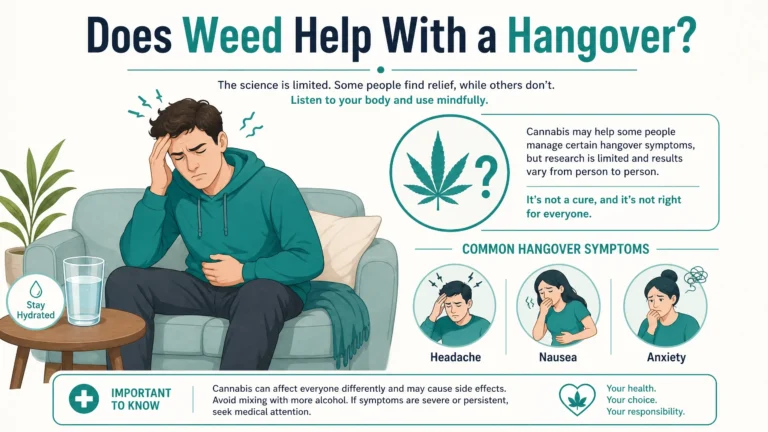

You drank too much last night. Now your head is pounding, your stomach is staging a revolt, and your anxiety is through the roof.
Someone in your group chat swears a joint before noon will fix everything. But does weed actually help with a hangover or is that just wishful thinking?
Need a PA Medical Marijuana Card?
Get certified online in 15 minutes. 100% Money-Back Guarantee.
Get Certified Now →The short answer: cannabis may relieve some hangover symptoms for some people, but it does not fix the underlying problem. Understanding the difference matters, because reaching for weed at the wrong moment or in the wrong way, can make your morning significantly worse.
Here is what the science actually says, broken down symptom by symptom.
What Is a Hangover, Really?

Before evaluating whether cannabis helps, you need to understand what you are actually fighting.
A hangover is not one thing, it is a cluster of overlapping physiological problems that hit at once:
Do You Qualify for a PA MMJ Card?
Connect with a licensed Pennsylvania state physician online from home.
Dehydration. Alcohol is a diuretic. It tells your kidneys to flush more water than you are taking in, which is why you wake up thirsty, headachy, and dry-mouthed. According to the National Institute on Alcohol Abuse and Alcoholism (NIAAA), this mild dehydration contributes meaningfully to fatigue and headache the next morning. 1
Acetaldehyde buildup. When your liver breaks down alcohol, it produces a toxic intermediate compound called acetaldehyde. This byproduct contributes to inflammation throughout the liver, pancreas, brain, and gastrointestinal tract.
Systemic inflammation. Research published in Alcohol, Clinical and Experimental Research reframes the hangover as a manifestation of systemic inflammatory response. Hangover severity correlates significantly with elevated blood levels of interleukin-6 (IL-6), tumor necrosis factor-alpha (TNF-α), and C-reactive protein, all markers of inflammation.
Gastrointestinal irritation. Alcohol directly irritates the stomach lining and increases acid release, causing nausea and stomach pain. 1
Sleep disruption. Alcohol may help you fall asleep faster, but it fragments sleep quality, you wake up exhausted even after what felt like a full night. 1
Blood sugar dips. Alcohol interferes with glucose regulation. Low blood sugar contributes to shakiness and fatigue the morning after.
Why does this matter for the cannabis question?
Because cannabis addresses some of these mechanisms and has no effect on others. Weed will not rehydrate you. It will not speed up acetaldehyde clearance. It will not restore electrolytes or improve your blood sugar. But for certain symptoms that are driven by inflammation, nausea, and pain signaling, there is real science worth examining.
Does Weed Help With a Hangover? The Honest Answer
Cannabis cannot cure a hangover. That framing needs to be cleared up immediately, because no substance can, the only true cure is time and rehydration.
What cannabis may be able to do is manage specific symptoms while your body does the actual repair work.
⚡ Fast & 100% Online PA Medical Cards
Board-Certified Doctors • 100% Money-Back Guarantee
Book Evaluation Now →The research base is important to understand before drawing conclusions. There is currently no clinical trial specifically studying cannabis as a hangover remedy.
The evidence we have comes from studies on cannabis for chemotherapy-induced nausea, cannabis for chronic pain and headache, cannabis for anxiety, and cannabis for appetite stimulation and we are extrapolating from those findings to hangover symptoms, which share some biological overlap but are not identical.
That caveat stated, the biology is interesting enough to take seriously. Your body has an endocannabinoid system (ECS), a network of receptors (CB1 and CB2) involved in regulating pain perception, nausea response, mood, appetite, and inflammation. Both THC and CBD interact with this system in ways that are relevant to at least some of what makes a hangover miserable.
Here is what the evidence actually says for each major symptom.
Symptom-by-Symptom: What Cannabis May (and May Not) Help

Nausea
This is where the science is strongest.
The antiemetic (anti-nausea) properties of cannabinoids are among the best-documented therapeutic effects of the plant. CB1 receptor agonism, activated by THC, has been shown to reduce nausea and vomiting across multiple contexts.
The FDA has even approved two synthetic THC-based medications (dronabinol and nabilone) specifically for nausea in chemotherapy patients who do not respond to conventional antiemetics.
A peer-reviewed study in PubMed found that oral THC:CBD extract was a clinically effective adjunct to standard antiemetics for refractory nausea, with most participants preferring the cannabinoid treatment over placebo.
CBD may also reduce nausea through a different mechanism: by activating somatodendritic 5-HT1A serotonin receptors in the brain’s dorsal raphe nucleus, which in turn reduces serotonin release in the forebrain, the pathway involved in nausea suppression.
Bottom line for hangovers: Cannabis particularly products with both THC and CBD, has genuine biological plausibility for reducing hangover nausea. This is the symptom where the existing science best supports potential relief.
Headache
Hangover headaches appear to be driven primarily by acetate (a byproduct of alcohol metabolism), which accumulates and triggers adenosine-mediated pain sensitivity. Vasodilation, the widening of blood vessels caused by alcohol, also contributes.
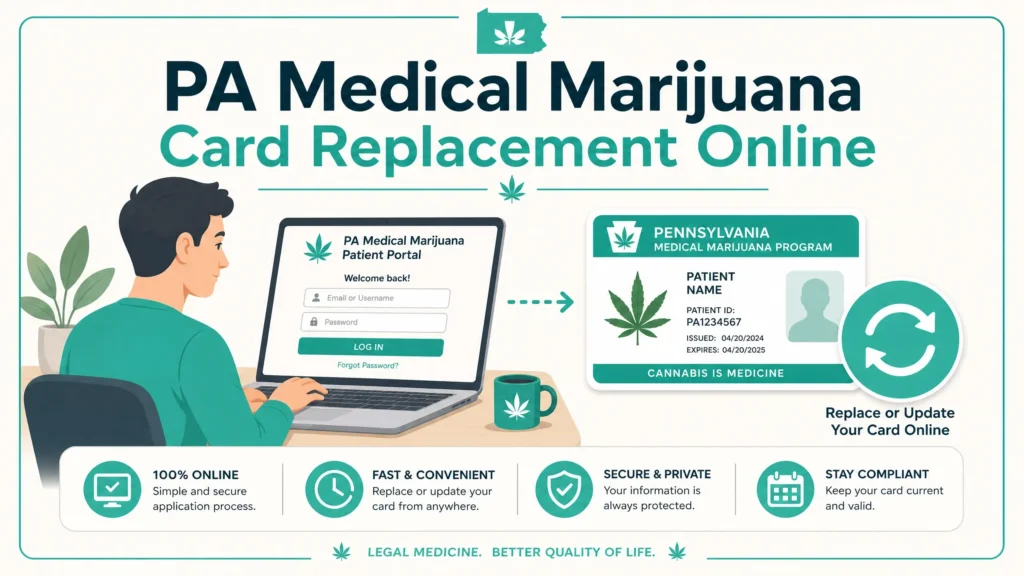
Renewing Your PA MMJ Card?
Quick annual recertification online. No paperwork hassle.
Renew Card Online →Cannabis has been studied for headache relief. A review published in Neurological Sciences (PMC) found that cannabinoids reduce nociception (pain signaling) through multiple pathways, including glutamine, inflammatory, opiate, and serotonin routes, both centrally and peripherally.
However, the anti-inflammatory effect most relevant to headache relief is primarily linked to CBD and CBG, not THC. THC is primarily psychoactive, and its direct analgesic effects on headache are more variable than CBD’s.
Bottom line for hangovers: CBD-forward products have more consistent evidence for headache and pain relief than high-THC products. A high-THC product may also increase heart rate and anxiety, which can make a headache feel worse, not better.
Fatigue
This one is nuanced.
Cannabis’s effect on energy is highly strain-dependent and dose-dependent. Higher doses of THC tend to be sedating. Lower doses and certain terpene profiles (often associated with sativa-leaning cultivars) may have more energizing effects.
There is no direct clinical evidence for cannabis improving hangover-related fatigue specifically. The fatigue is caused by sleep architecture disruption from alcohol, cannabis does not reverse that.
What cannabis might help with is making the fatigue more bearable through mood modulation. Many users report feeling more relaxed and less distressed about their exhausted state, which is a subjective benefit rather than a physiological correction.
Bottom line for hangovers: Cannabis is unlikely to restore energy after a hangover. High-THC sedating products may worsen fatigue. If using cannabis while fatigued, a low-dose, CBD-forward product is more prudent.
Hangxiety
“Hangxiety” the hangover anxiety spike that many people experience, deserves its own discussion, because this is where cannabis becomes both most appealing and most risky.
Hangxiety is real. Alcohol initially acts as a GABA agonist (it calms the nervous system). As it clears your system, a rebound effect occurs: your nervous system becomes hyperexcitable, which many people experience as anxiety, restlessness, or a sense of dread. For people who already live with anxiety disorders, this rebound can be particularly distressing.
Can cannabis help hangxiety? Possibly, but the relationship between cannabis and anxiety is not simple.
Get Approved by a Licensed PA Doctor
Schedule your appointment in minutes. You only pay if approved.
Start Online Application →CBD has demonstrated anxiolytic (anti-anxiety) effects in multiple studies, including at doses relevant to clinical use. Research published in PMC found that CBD at high doses reduced anxiety-like symptoms in alcohol withdrawal models.
THC, on the other hand, is a wildcard. At low doses in experienced users, THC often reduces anxiety. But at higher doses, or in people with low tolerance or predisposition to anxiety, THC can cause or worsen anxiety, paranoia, and panic. The same researchers at Johns Hopkins noted that cannabis can “induce anxiety rather than relieve it” when THC tolerance is exceeded.
Bottom line for hangovers: For hangxiety specifically, a CBD-dominant product with minimal THC is the more sensible choice. High-THC products in someone who is already anxious, dehydrated, and physiologically stressed is a recipe for a bad experience.
Appetite Loss
This one is where cannabis has the most intuitive and well-established support.
THC stimulates appetite through CB1 receptor activation in the hypothalamus. This is one of the most well-known effects of cannabis, and it has been clinically utilized for decades in patients with cancer and HIV-related wasting.
For a hangover, getting food into your stomach is genuinely important, it helps stabilize blood sugar, provides nutrients your body needs for recovery, and reduces stomach acid irritation. If nausea and appetite suppression are keeping you from eating, cannabis-induced appetite stimulation may indirectly support recovery.
Bottom line for hangovers: This is one area where cannabis, particularly THC has reasonably strong support for a practical hangover benefit.
CBD vs. THC: Which One Is Better for Hangover Relief?
The answer depends almost entirely on which symptom you are targeting. Here is a quick comparison:

| Symptom | Better Option | Why |
|---|---|---|
| Nausea | THC + CBD combined | CB1 agonism + serotonin pathway activation |
| Headache / pain | CBD-forward | More consistent analgesic and anti-inflammatory evidence |
| Hangxiety | CBD-dominant | Anxiolytic without THC’s anxiety risk |
| Fatigue | Neither reliably helps | Root cause is sleep disruption, not addressable by cannabis |
| Appetite loss | THC | CB1-driven appetite stimulation in hypothalamus |
| General discomfort | Low-dose balanced | Start low, assess carefully |
The consistent theme: CBD presents less risk and more predictable benefits in most hangover contexts. THC has specific benefits (nausea, appetite) but also specific risks (worsened anxiety, increased heart rate, potential for a worsened experience if dose is too high or tolerance is low).
If you are in Pennsylvania and accessing cannabis through a licensed dispensary, a pharmacist there can help you identify products with appropriate ratios for your symptoms.
The Part Nobody Tells You: Weed Can Make Some Things Worse

Ready to Get Your Official PA MMJ Card?
State-certified doctor consultations online. No risk—100% refund if not approved.
Claim Your MMJ Card Online →Most articles on this topic focus only on the potential benefits. Honest reporting requires flagging the risks.
Cannabis can cause its own hangover. If you consumed significant THC the night before, especially edibles, you may be experiencing residual effects the morning after rather than a true alcohol hangover, or a combination of both. Common symptoms of a “weed hangover” include brain fog, dry mouth, mild headache, and grogginess. Adding more THC the morning after a heavy night can compound these effects rather than resolving them.
THC can worsen anxiety in vulnerable people. As noted above, THC’s effects on anxiety are dose- and person-dependent. Someone who is already in a stress response due to hangover physiology is not in the optimal state to tolerate high-THC products. This is especially true for infrequent users.
It does not fix the root problem. Cannabis cannot rehydrate you, clear acetaldehyde, or repair sleep quality. Using it without also drinking water and electrolytes is addressing the symptoms while ignoring the disease.
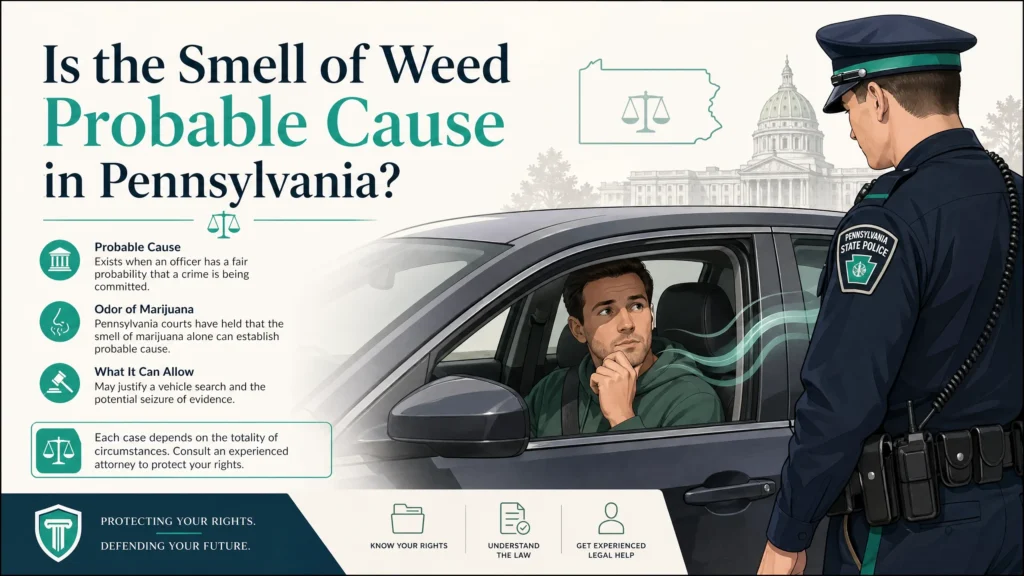
Driving is illegal. This needs to be said plainly. Pennsylvania has a per se DUI law. If THC metabolites are detectable in your blood while driving, you can be charged with DUI, regardless of whether you have a medical marijuana card. If you use cannabis for hangover relief, do not drive until you are confident the effects have fully cleared.
Weed is still illegal recreationally in PA. As of May 2026, recreational cannabis remains illegal in Pennsylvania. If you are using cannabis without a medical card, you are doing so outside the law, even if the substance itself might offer some symptom relief.
If You Are in Pennsylvania: What to Know About Legal Access

If you are a Pennsylvania resident who regularly experiences anxiety, including post-drinking anxiety and you find yourself turning to cannabis for relief, there is an important legal context worth knowing.
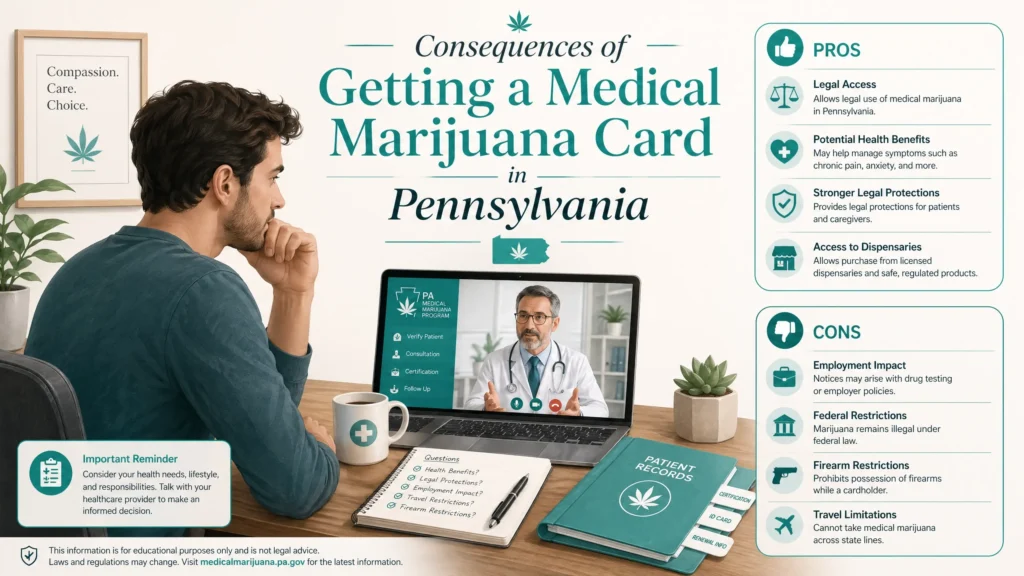
Anxiety disorder is a qualifying condition for a Pennsylvania medical marijuana card.
Pennsylvania is one of only a small number of states that explicitly recognizes anxiety disorder as a qualifying condition. Since anxiety was added to the program in July 2019, it has become by far the most common reason Pennsylvanians obtain their medical card.
A landmark study published in the Annals of Internal Medicine (July 2025) found that anxiety disorders now account for roughly 60% of all PA medical cannabis certifications.
This means that if you are someone who lives with chronic anxiety, whether or not that anxiety spikes after drinking, you may already qualify for legal access to medical cannabis in Pennsylvania through a proper physician certification.
That access matters for several reasons:
- You can access tested, labeled products from licensed PA dispensaries with known THC:CBD ratios, accurate dosing, and pharmacist guidance
- Products purchased at PA dispensaries are required to be tested for potency and contaminants
- A licensed dispensary pharmacist can help you choose the right product for specific symptoms
- You eliminate the legal risk associated with obtaining cannabis through unregulated sources
To qualify, you need a physician certification confirming you have an anxiety disorder. The process is done entirely online through telehealth at Pennsylvania Marijuana Cards.
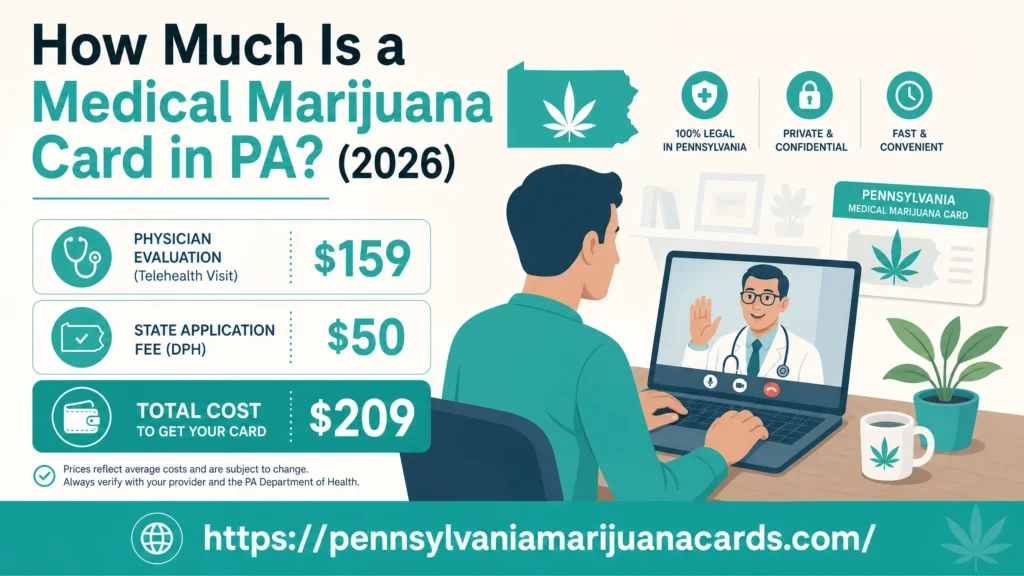
Cost breakdown:
| Fee | Amount |
|---|---|
| Physician certification (new patient) | $159 |
| PA state registration fee | $50 |
| Total (new patient) | $209 |
| Physician certification (renewal) | $149 |
| PA state registration fee | $50 |
| Total (renewal) | $199 |
Patients who qualify for Medicaid, SNAP, WIC, CHIP, PACE, or PACENET may have the $50 state fee waived through Pennsylvania’s MMAP program.
If anxiety is something you manage beyond the occasional hangover morning, you can learn more about how anxiety qualifies for a PA medical marijuana card here.
What Actually Works for a Hangover?

Cannabis aside, here is what the evidence actually supports for hangover recovery:
Water and electrolytes — first, always. Rehydration addresses one of the primary root causes. Sports drinks, coconut water, or electrolyte tablets help restore sodium, potassium, and magnesium lost to alcohol’s diuretic effect.
Food. Bland, easily digestible carbohydrates help stabilize blood sugar. Eggs contain cysteine, which helps break down acetaldehyde. Getting food in your stomach reduces acid irritation and nausea.
Sleep. Time is the only thing that truly clears alcohol and its metabolites from your body. Rest is not optional, it is the mechanism.
Pain relief (with caution). Ibuprofen can help with headache and inflammation, but should be used carefully if you have stomach irritation, it can worsen GI symptoms. Acetaminophen (Tylenol) should be avoided if you drank heavily, as combining it with alcohol metabolism stresses the liver.
Ginger. For nausea specifically, ginger tea has decent evidence behind it and no significant downsides.
Cannabis fits into this framework as a potential complement to the above, not a replacement for any of it.
Frequently Asked Questions
Q: Can smoking weed get rid of a hangover?
A: Cannabis will not eliminate a hangover, because it does not address the root causes: dehydration, acetaldehyde toxicity, and systemic inflammation from alcohol metabolism. What it may do is reduce specific symptoms, particularly nausea and headache for some people, while potentially worsening others (like anxiety) if the wrong product is used. Also worth noting: smoking is prohibited under Pennsylvania’s medical marijuana law. PA patients must use vaporization or other approved delivery methods.
Q: Is CBD or THC better for hangover symptoms?
A: It depends on the symptom. CBD-dominant products have stronger evidence for pain relief and anxiety reduction with lower risk of making things worse. THC is more effective for nausea suppression and appetite stimulation. High-THC products carry real risk of worsening anxiety (hangxiety) in someone who is physiologically stressed from drinking. Start low with any product.
Q: Can I get a medical marijuana card in Pennsylvania if I have anxiety?
A: Yes. Anxiety disorder is one of Pennsylvania’s 24 qualifying conditions under the state’s medical marijuana program (Act 16 of 2016). It is currently the most common reason PA residents obtain a medical card, cited in approximately 60% of certifications statewide. The certification process is fully online through telehealth providers like Pennsylvania Marijuana Cards, with new patient certification starting at $159 plus a $50 state fee.
Medically reviewed by Dr. Johnathon Chance Miller, MD. This content is intended for educational purposes only and does not constitute medical advice. Cannabis affects individuals differently. Consult a licensed healthcare provider before using cannabis to manage any health condition. Pennsylvania medical marijuana patients should follow all state laws regarding legal methods of consumption. Do not drive after using cannabis.
Sources
- National Institute on Alcohol Abuse and Alcoholism (NIAAA). “Hangovers.”
- Turner T, et al. “Inflammation, oxidative stress and gut microbiome perturbation: A narrative review of mechanisms and treatment of the alcohol hangover.” Alcohol, Clinical and Experimental Research, 2024.
- National Cancer Institute. “Cannabis and Cannabinoids (PDQ).”
- Grimison P, et al. “Oral THC:CBD cannabis extract for refractory chemotherapy-induced nausea and vomiting.” Journal of Clinical Oncology, 2023.
- Parker LA, et al. “Regulation of nausea and vomiting by cannabinoids.” British Journal of Pharmacology, 2011.
- Maxwell CR, et al. “Acetate Causes Alcohol Hangover Headache in Rats.” PLOS ONE, 2010.
- Aviram J, Samuelly-Leichtag G. “Medical Cannabis, Headaches, and Migraines: A Review of the Current Literature.” Neurological Sciences, 2021.
- Limbach M, et al. “Effects of cannabidiol, with and without ∆9-tetrahydrocannabinol, on anxiety-like behavior following alcohol withdrawal in mice.” PMC, 2024.
- Johns Hopkins Medicine. “Researchers Show Chemical Found Naturally in Cannabis May Reduce Anxiety-Inducing Effects of THC.” April 2024.
- Pennsylvania DUI Association. Pennsylvania per se DUI law for controlled substances. Reference: 75 Pa. C.S. § 3802(d).
- Drake C, et al. “Medical Cannabis Certifications After Pennsylvania Added Anxiety Disorders as a Qualifying Condition.” Annals of Internal Medicine, July 2025.