
If you have been buying THCA flower, vapes, or concentrates from a smoke shop or online retailer in Pennsylvania, you have probably wondered — or discovered firsthand — what this compound actually does.
The answer is more nuanced than most people realize. How THCA makes you feel depends entirely on one variable: whether heat is involved.
This guide breaks down the science of THCA’s effects in plain language — raw versus heated, what the research actually says about its therapeutic properties, what the high is really like, and the critical legal reality every Pennsylvania THCA user needs to understand before the end of 2026.
What Is THCA? The Chemistry in Plain English
THCA stands for tetrahydrocannabinolic acid. It is the raw, naturally occurring form of THC found in fresh, unprocessed cannabis and hemp plants.
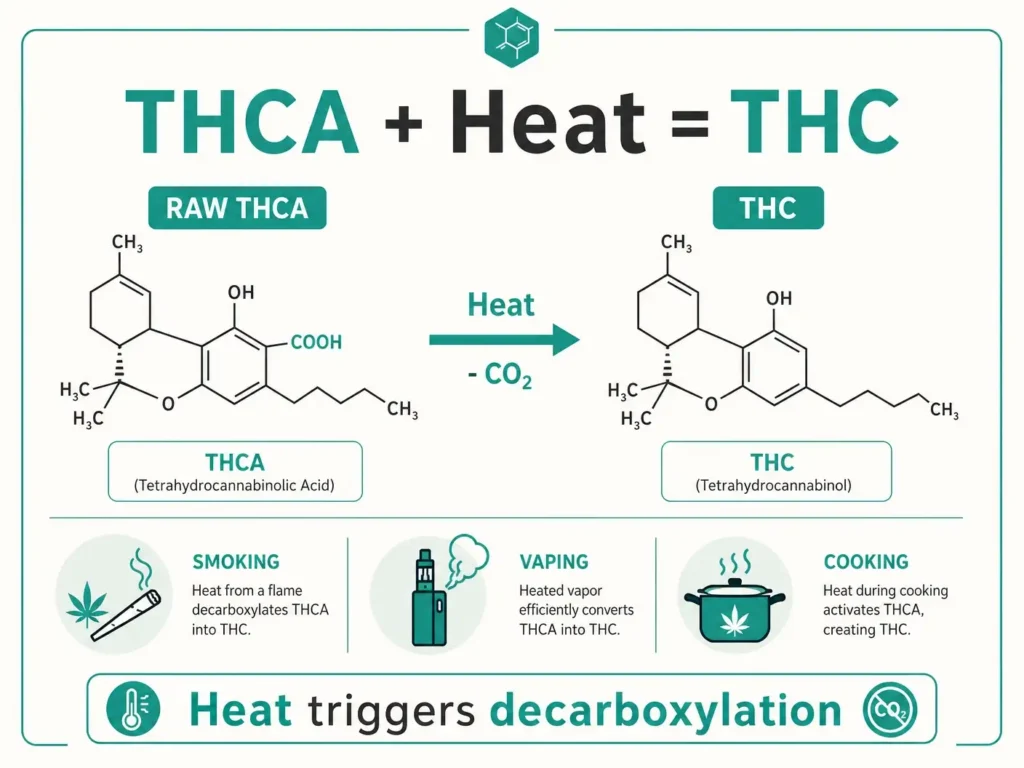
Every cannabis plant produces THCA first — not THC. THC only comes into existence when THCA is exposed to heat, a chemical process called decarboxylation. During this process, the carboxyl group (–COOH) attached to the THCA molecule is removed as carbon dioxide, converting THCA into the familiar delta-9 THC.
That single chemical difference — the presence or absence of the carboxyl group — is what determines whether a cannabis compound makes you feel high or not.
In its raw, unheated form, THCA’s molecular structure is too large to bind effectively to the CB1 receptors in the brain. CB1 receptor activation is the primary mechanism behind cannabis’s psychoactive effects. Because raw THCA cannot fit those receptor sites cleanly, it produces no intoxication whatsoever.
Apply heat — through smoking, vaping, dabbing, or cooking — and the molecule transforms. The carboxyl group detaches, the structure shrinks, and the newly formed delta-9 THC slots precisely into CB1 receptors. That is when the high begins.
This conversion happens rapidly. During smoking or vaping, combustion or vaporization temperatures (generally 315–440°F) trigger near-instant decarboxylation. During cooking, the process is slower — typically requiring temperatures of 220–240°F sustained for 30–45 minutes.
How Does THCA Make You Feel in Its Raw Form?
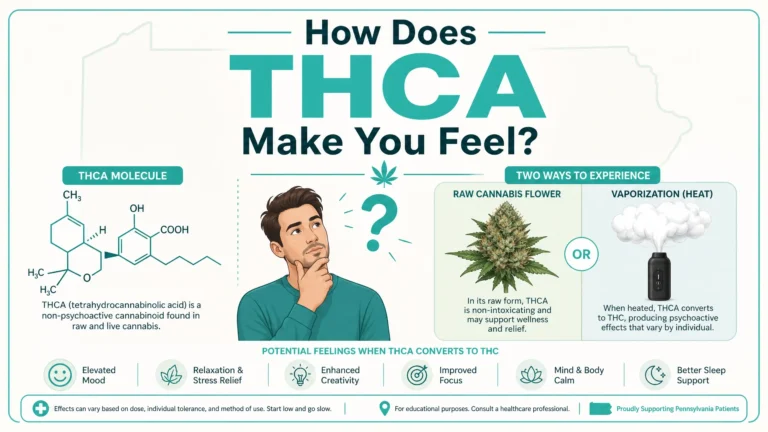
Raw THCA — consumed without heat — will not make you feel high. That is not a caveat or a simplification. It is a biochemical fact.
Eating raw cannabis leaves, juicing fresh cannabis flower, or taking unheated THCA oil will produce no psychoactive effects. You may notice some earthy, grassy flavor. You will not notice a buzz.
What raw THCA may produce, based on early research, is a distinct set of non-intoxicating physiological effects — the same category of activity people associate with CBD. These are covered in detail in the research section below.
It is worth noting that raw THCA can still produce some side effects even without intoxication, including nausea, stomach discomfort, or allergic reactions in sensitive individuals. And importantly — even raw THCA may show up on a drug test in advanced screening formats, though the primary drug testing risk comes from heated consumption (covered in full below).
How Does THCA Make You Feel When Heated?
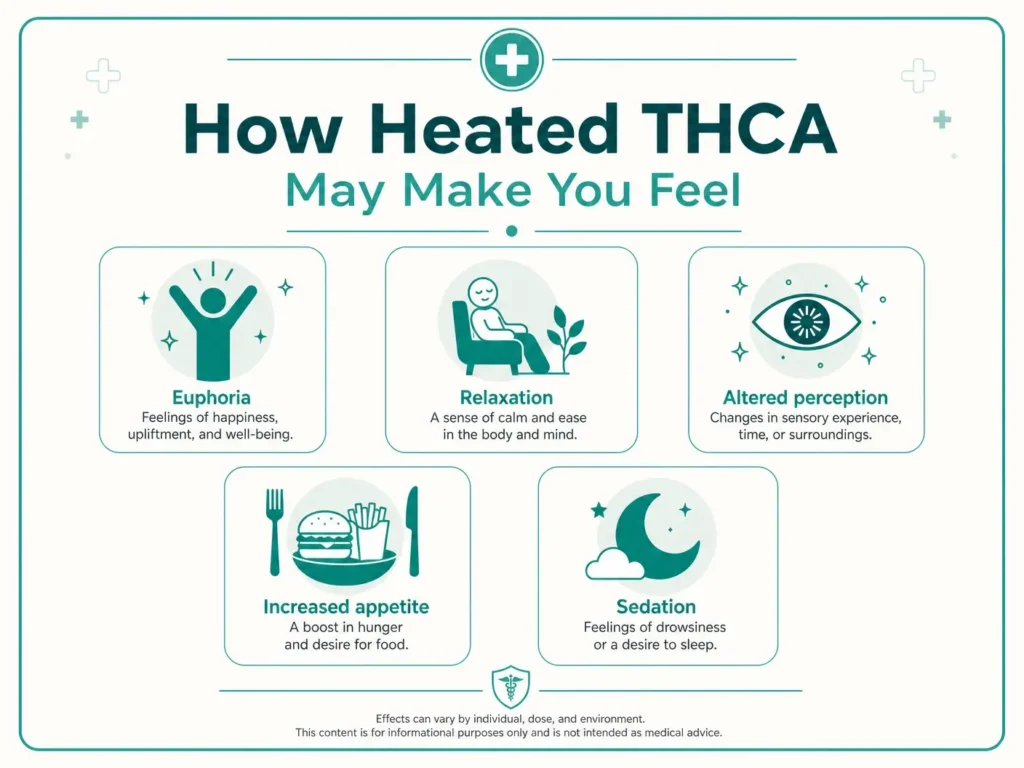
This is what most people asking “how does THCA make you feel” really want to know.
When smoked, vaped, or dabbed, THCA converts into delta-9 THC in real time. The experience that follows is functionally equivalent to consuming marijuana — because you are, biochemically speaking, consuming THC.
Users commonly report:
Euphoria and mood elevation. Delta-9 THC’s activation of CB1 receptors modulates dopamine and serotonin pathways, producing the characteristic cannabis “high” — ranging from mild warmth and mood lift at lower doses to pronounced euphoria at higher ones.
Relaxation and physical ease. Many users describe a body-focused sensation — tension releasing, muscles loosening. This is consistent with THC’s known effects on the endocannabinoid system’s regulation of pain and muscle signaling.
Altered perception. Colors, sounds, and time may feel different. Sensory experiences can feel heightened. This is dose-dependent and more pronounced in lower-tolerance users.
Appetite stimulation. CB1 receptor activation in the hypothalamus drives the well-known “munchies” effect.
Sedation at higher doses. Particularly with indica-leaning cultivars or larger amounts, heated THCA products can produce significant sedation and mental fog.
The intensity of these effects depends on the THCA percentage of the product, the delivery method, the terpene profile of the specific cultivar, individual tolerance, and body composition.
One important point: because THCA flower is sold in unregulated retail environments — smoke shops, convenience stores, online — potency labeling is frequently inaccurate and products are rarely independently verified. 4 A product labeled “20% THCA” from a gas station has no regulatory requirement to actually contain what it claims. This is a meaningful safety distinction compared to products purchased from a licensed Pennsylvania dispensary, which must undergo mandatory third-party testing.
THCA vs. THC: A Side-by-Side Comparison
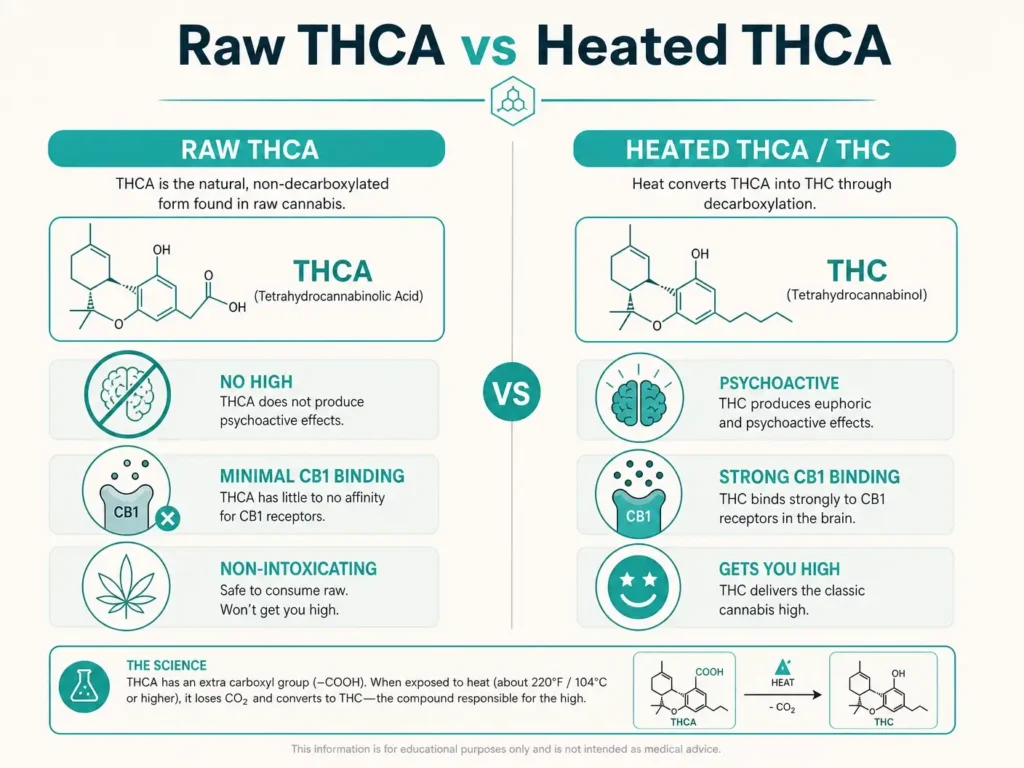
| Feature | Raw THCA | Heated THCA (= THC) |
|---|---|---|
| Psychoactive? | No | Yes |
| CB1 receptor binding? | Minimal — carboxyl group prevents effective binding | Strong — fits receptor site directly |
| Gets you high? | No | Yes — equivalent to delta-9 THC |
| Drug test risk? | Lower, but possible with some tests | High — metabolized to THC-COOH |
| Therapeutic research | Anti-inflammatory, neuroprotective, antiemetic (preclinical) | Extensive — pain, anxiety, appetite, nausea |
| Available legally in PA? | Currently gray area — ban pending | Only through PA MMJ program (licensed dispensaries) |
| Product regulation | None — unregulated retail | Mandatory testing and labeling at PA dispensaries |
What Does the Research Say About Raw THCA’s Therapeutic Properties?
While THCA’s non-psychoactive raw form does not produce a high, researchers have identified several potentially significant biological activities worth understanding.
Anti-inflammatory effects. THCA has been shown to inhibit COX-1 and COX-2 enzyme pathways — the same pathways targeted by common anti-inflammatory drugs like ibuprofen — and to reduce production of inflammatory mediators. A peer-reviewed review published in PMC concluded that THCA displays anti-inflammatory activity and may be beneficial for conditions including inflammatory bowel disease, arthritis, and lupus.
Neuroprotective properties. A study published in PubMed found that THCA acts as a potent PPARγ agonist with neuroprotective activity, showing promise for conditions like Huntington’s disease and other neurodegenerative illnesses. A separate PMC study found that THCA and CBDA may rescue memory deficits and reduce amyloid-beta and tau pathology in Alzheimer’s disease mouse models.
Antiemetic (anti-nausea) effects. Preclinical research suggests that THCA, like CBD, may reduce nausea through interactions with serotonin receptor pathways — without triggering the psychoactive response that THC produces via CB1 activation.
Important limitations. The research is almost entirely preclinical — meaning animal models and cell studies, not human clinical trials. Drawing confident conclusions about what raw THCA will do for you based on current evidence is premature. These are promising early signals, not proven treatments. Anyone using THCA specifically for a medical purpose should consult a licensed physician rather than relying on retail product marketing.
THCA and Drug Tests: The Risk Nobody Warns You About
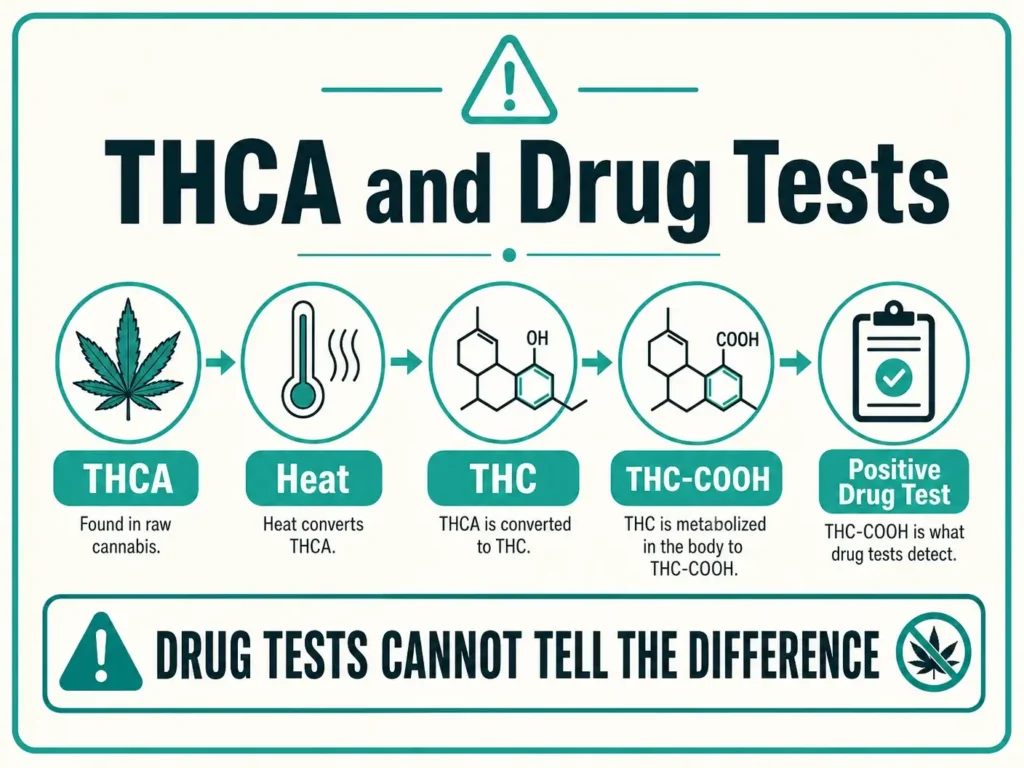
This is where the “legal hemp” marketing around THCA breaks down completely — and where many Pennsylvania users are getting caught off guard.
If you smoke or vape THCA, you will almost certainly fail a standard drug test.
Here is why. When THCA is heated, it converts to delta-9 THC. That THC enters your bloodstream, is metabolized by the liver (via CYP2C9 and CYP3A4 enzymes), and is broken down into THC-COOH — the exact metabolite that standard urine drug tests screen for.
The drug test has no way to distinguish whether the THC-COOH in your system came from a licensed Pennsylvania dispensary, a gas station THCA vape, or a recreational marijuana joint. Legally purchased hemp-derived THCA and illegal marijuana produce the same metabolite in your body.
Detection windows for THCA users who smoke or vape:
| Test Type | Detection Window |
|---|---|
| Urine (most common) | 3–15 days (occasional users); up to 30+ days (regular users) |
| Blood | Up to 48 hours |
| Saliva | Up to 72 hours |
| Hair follicle | Up to 90 days |
These windows are identical to those for conventional THC use — because once heated, THCA is THC.
Pennsylvania DUI exposure. Pennsylvania operates under a per se DUI law (75 Pa. C.S. § 3802(d)). If any amount of THC metabolites is detectable in your blood while driving, you can be charged with DUI — regardless of how impaired you actually feel, and regardless of whether your THCA product was technically sold as “legal hemp.” If you vape or smoke THCA and then drive, you face real legal exposure under PA law.
The Legal Reality for Pennsylvania THCA Users in 2026
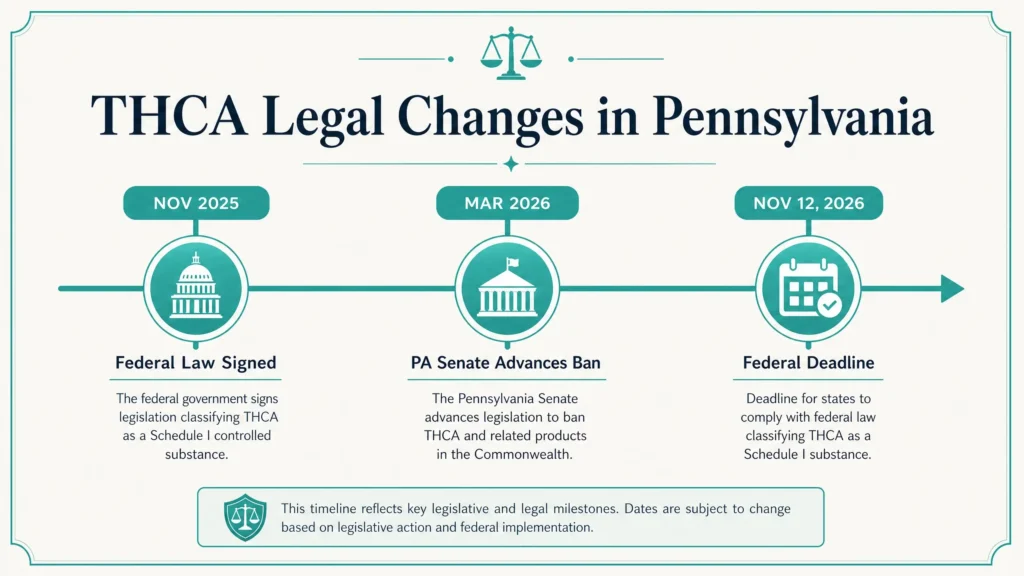
This is information that none of the THCA retailer blogs will tell you — because it is bad for their business.
The federal THCA loophole is closing.
On November 12, 2025, Congress signed H.R. 5371, which fundamentally rewrites the definition of legal hemp. The new law replaces the old delta-9 THC threshold with a total THC standard — meaning THCA’s post-decarboxylation conversion into THC is now counted in the legal calculation. Most intoxicating hemp products, including THCA flower, vapes, and concentrates, will be federally prohibited as of November 12, 2026.
Pennsylvania is moving to ban THCA before the federal deadline.
In March 2026, Pennsylvania’s Senate Law and Justice Committee voted 10-1 — a strong bipartisan margin — to amend Senate Bill 49 to explicitly ban the sale of intoxicating hemp-derived products including Delta-8 THC, Delta-10 THC, and THCA. The amendment aligns PA law with the incoming federal standard.
The bill has bipartisan support from the Pennsylvania Cannabis Coalition, the Pennsylvania Chamber of Business and Industry, the Pennsylvania District Attorneys Association, and the state’s Attorney General. The legislative direction is unambiguous.
The Senate hearing on this legislation included testimony from law enforcement noting that Berks County police purchased random THCA products off store shelves and had them tested at the Pennsylvania State Police laboratory — and found that every single product contained THC levels exceeding the legal limit. This is the unregulated market that PA legislators are moving to shut down.
What this means practically:
- THCA products currently available at smoke shops, convenience stores, and online retailers in Pennsylvania are operating in a closing legal window
- The federal deadline is November 12, 2026
- Pennsylvania state legislation may close that window even sooner
- Products that appear to be “legal hemp” today may become controlled substances before the year is out
What the THCA Ban Means for You — and What Comes Next
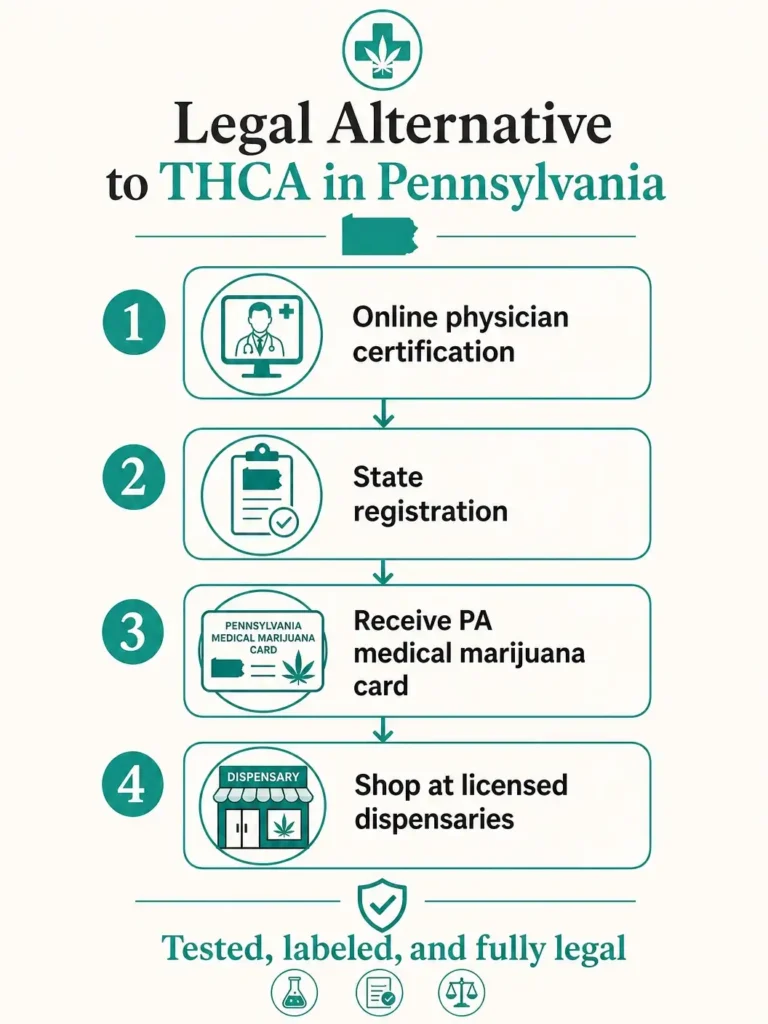
If you have been using THCA products — whether for relaxation, anxiety relief, sleep, pain, or other reasons — the question that matters now is: what is your legal path forward?
For Pennsylvania residents, the answer exists. It is the Pennsylvania medical marijuana program.
Why the PA MMJ program is a materially better alternative to unregulated THCA products:
The PA medical marijuana program, governed under Act 16 of 2016, gives certified patients legal access to cannabis products at licensed dispensaries. Unlike gas station THCA products, every item sold at a PA dispensary undergoes mandatory third-party testing for potency, purity, and contaminants. You know exactly what you are getting. A licensed dispensary pharmacist can help you select the right product for your specific needs — whether that is a high-CBD product for anxiety, a balanced THC:CBD ratio for pain, or a low-dose option for sleep.
You may already qualify.
Pennsylvania recognizes 24 qualifying conditions, and anxiety disorder is by far the most common — cited in approximately 60% of all PA medical cannabis certifications statewide, according to research published in the Annals of Internal Medicine in July 2025.
If you have been reaching for THCA products to take the edge off, reduce stress, quiet racing thoughts, or manage the physical tension that comes with anxiety — there is a strong possibility that the underlying condition you are self-managing is an anxiety disorder that qualifies you for a PA medical marijuana card.
Many Pennsylvanians who have been using unregulated hemp products have transitioned to the PA MMJ program and found that licensed dispensary products are more consistent, more precisely dosed, and more reliably effective — in addition to being fully legal.
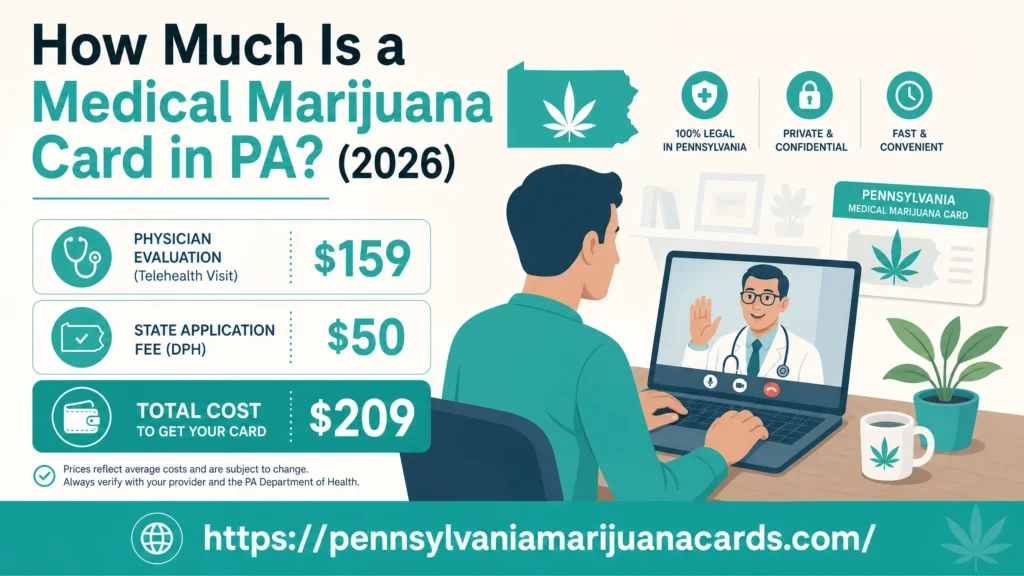
Cost breakdown for certification:
| Fee | Amount |
|---|---|
| Physician certification fee (new patient) | $159 |
| PA state registration fee | $50 |
| Total (new patient) | $209 |
| Physician certification fee (renewal) | $149 |
| PA state registration fee | $50 |
| Total (renewal) | $199 |
Patients who qualify for Medicaid, SNAP, WIC, CHIP, PACE, or PACENET may have the $50 state fee waived through Pennsylvania’s MMAP program.
The entire process is available online through telehealth. You do not need to travel to a clinic or doctor’s office. Learn more about the PA MMJ certification process here or explore whether anxiety disorder qualifies you for a PA medical marijuana card.
Frequently Asked Questions
Q: Does THCA get you high?
A: It depends entirely on whether heat is involved. Raw THCA — consumed unheated, such as in fresh juice or unactivated oil — produces no psychoactive effects. Its molecular structure prevents it from binding to the brain’s CB1 receptors. However, when THCA is smoked, vaped, dabbed, or cooked, heat triggers decarboxylation, converting THCA into delta-9 THC. At that point, the experience is functionally identical to using conventional cannabis. So the accurate answer is: raw THCA will not make you feel high; heated THCA will.
Q: Will THCA show up on a drug test in Pennsylvania?
A: Yes, if you smoke or vape THCA. Once heat is applied, THCA converts to delta-9 THC, which is metabolized in the body to THC-COOH — the exact metabolite detected by standard urine drug screens. Drug tests cannot distinguish between THCA-derived THC and marijuana-derived THC. Detection windows mirror those of conventional cannabis use: 3–30+ days in urine depending on frequency of use, up to 90 days in hair. Driving after using heated THCA products also carries DUI risk under Pennsylvania’s per se THC DUI law.
Q: Is THCA still legal in Pennsylvania in 2026?
A: THCA is in a rapidly closing legal window in Pennsylvania. Federally, Congress passed legislation in November 2025 that will effectively ban most intoxicating hemp products — including THCA — on November 12, 2026. At the state level, Pennsylvania’s Senate Law and Justice Committee voted 10-1 in March 2026 to advance legislation explicitly banning THCA and other intoxicating hemp products, with support from the PA District Attorneys Association and state Attorney General. The legal landscape for THCA in Pennsylvania is shifting decisively toward prohibition. Pennsylvanians who want legal access to cannabis products after that deadline will need to do so through the state’s licensed medical marijuana program.
Medically reviewed by Dr. Johnathon Chance Miller, MD. This content is for educational purposes only and does not constitute legal or medical advice. Cannabis laws are subject to change; always verify current regulations with official Pennsylvania state sources. Do not drive after using any cannabis or hemp product containing THC or converted THCA. Consult a licensed physician before using cannabis for any medical condition.
Sources
- Cornbread Hemp. “THCA vs THC Comparison: Effects, Potency, and Legality.”
- The Haze Connect. “THCA vs THC: Key Differences in Effects, Legality & More.” February 2026.
- Hanley Center. “What Is THCa, and Why Can It Be Dangerous?”
- Pennsylvania Senate Law and Justice Committee Hearing Testimony. Reported via Altoona Mirror. “Pa. legislation aims to ban hemp-derived THC products.” March 2026.
- PMC / National Library of Medicine. “Therapeutic potential of acidic cannabinoids: an update.”
- Nadal X, et al. “Tetrahydrocannabinolic acid is a potent PPARγ agonist with neuroprotective activity.” PubMed, 2017.
- PMC. “The Cannabinoids, CBDA and THCA, Rescue Memory Deficits and Reduce Amyloid-Beta and Tau Pathology in an Alzheimer’s Disease-like Mouse Model.” 2023.
- Parker LA, et al. “Regulation of nausea and vomiting by cannabinoids.” British Journal of Pharmacology, 2011.
- Grove Treatment Center. “THCa Metabolism and Drug Detection Timelines.” November 2025.
- PMC / NIH. “Interpretation of Workplace Tests for Cannabinoids.
- Senator Daniel Laughlin, Pennsylvania Senate. “Laughlin’s Senate Bill 49 Amended to Include New Federal Hemp Standards.” March 2026.
- Altoona Mirror. “Pa. legislation aims to ban hemp-derived THC products.” March 2026.
- Drake C, et al. “Medical Cannabis Certifications After Pennsylvania Added Anxiety Disorders as a Qualifying Condition.” Annals of Internal Medicine, July 2025.