
A lot of Pennsylvanians are sitting on this question right now.
You probably qualify. You might already be using hemp delta 9 gummies from a smoke shop, or buying from a friend, or crossing into New Jersey on weekends. You’re wondering if making it official is actually worth the time, the cost, and whatever other complications might come with it.
Need a PA Medical Marijuana Card?
Get certified online in 15 minutes. 100% Money-Back Guarantee.
Get Certified Now →This is not a sales pitch. It’s an honest breakdown of what a PA MMJ card actually gives you in 2026, what it costs you, and who it genuinely makes sense for, including the people it might not be right for.
The landscape has shifted meaningfully this year. On April 28, 2026, the federal government officially moved state-licensed medical marijuana to Schedule III of the Controlled Substances Act. That changes some of the calculus here, and it’s worth understanding before you decide.
Key Takeaways
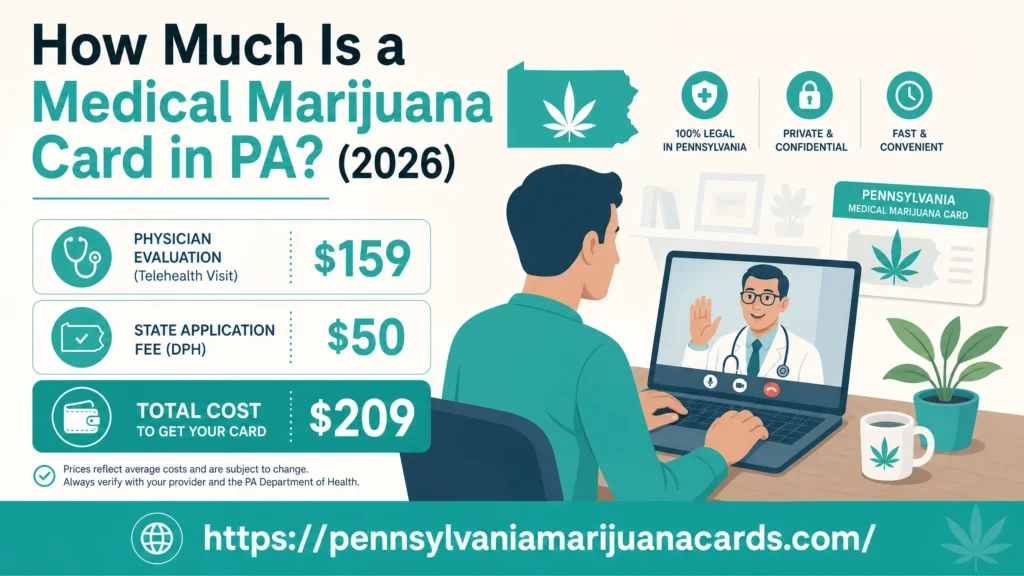
- A PA MMJ card costs $209 total for new patients and $199 to renew — and pays for itself quickly if you already spend money on cannabis regularly.
- Your registration is completely private — HIPAA-protected, excluded from public records, and not visible in standard background checks or law enforcement databases.
- Pennsylvania law gives most private-sector employees legal protection against being fired solely for a positive marijuana drug test. Federal and DOT-regulated workers are the exception.
- As of April 28, 2026, state-licensed medical marijuana is now federally Schedule III — reducing legal exposure for PA patients in a way that did not exist six months ago.
- The hemp delta 9 gummies sold at PA smoke shops face a federal ban deadline of November 2026. PA dispensary products are completely unaffected.
- The firearms situation is changing fast — a new ATF form revision released May 2026 could restore gun rights for registered MMJ patients. Not final yet, but closer than it has ever been.
What It Actually Costs
Let’s start with money, because that’s usually the first question.

Getting a PA MMJ card involves two separate fees paid to two separate entities:
| Fee | New Patient | Renewal |
|---|---|---|
| Physician certification fee | $159 | $149 |
| PA state registration fee | $50 | $50 |
| Total | $209 | $199 |
Do You Qualify for a PA MMJ Card?
Connect with a licensed Pennsylvania state physician online from home.
The state fee is waived entirely for patients enrolled in Medicaid, SNAP, WIC, CHIP, PACE, or PACENET through Pennsylvania’s Medical Marijuana Assistance Program (MMAP). If you qualify, your annual cost is just the physician fee.
The card is valid for one year and must be renewed annually.
Is the cost worth it?

If you’re spending $50 or more per month on hemp gummies or out-of-state cannabis trips, the card pays for itself within a few months, and you get significantly higher-quality, state-tested products at PA dispensaries in return.
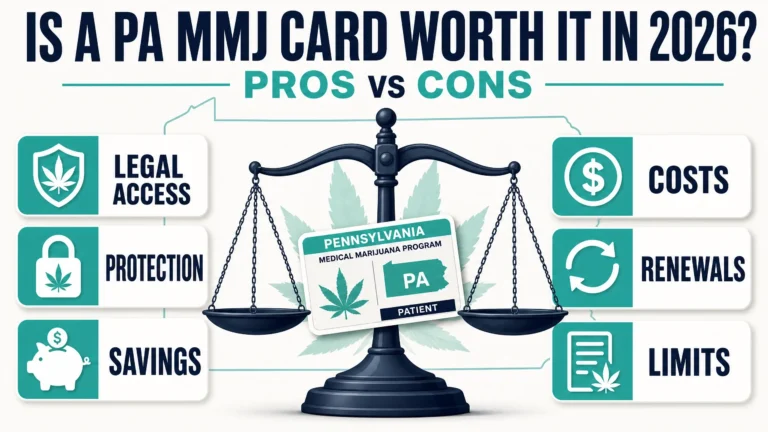
The Pros: What You Actually Get

1. Full State Legal Protection
This is the most concrete benefit and the one most people underestimate.
Under Section 2103 of Pennsylvania’s Medical Marijuana Act, registered patients cannot be arrested, penalized, or prosecuted by any Pennsylvania authority solely for the lawful purchase or use of medical cannabis.
That protection does not exist for hemp gummy buyers, out-of-state purchasers, or anyone using cannabis without a card. You are either in the program or you are not. There is no middle ground legally.
2. Reduced Federal Legal Exposure (New in 2026)
Before April 28, 2026, PA MMJ patients operated in a legal gray zone at the federal level.
That changed. The DOJ officially moved state-licensed medical marijuana to Schedule III, removing it from the same category as heroin and LSD. Registered patients purchasing from licensed PA dispensaries now have “significantly reduced federal legal exposure under the Controlled Substances Act,” according to the updated federal framework.
This does not legalize cannabis federally in a broad sense. But it formally recognizes that what PA MMJ patients are doing has legitimate medical value, and that matters legally.
3. Access to Higher-Quality, State-Tested Products
Every product at every licensed PA dispensary must pass state-mandated third-party lab testing before it reaches the shelf. You get a Certificate of Analysis (COA) for every purchase covering potency, terpene profile, pesticides, heavy metals, and microbial contamination.
⚡ Fast & 100% Online PA Medical Cards
Board-Certified Doctors • 100% Money-Back Guarantee
Book Evaluation Now →The hemp market does not have these requirements. Quality varies wildly.
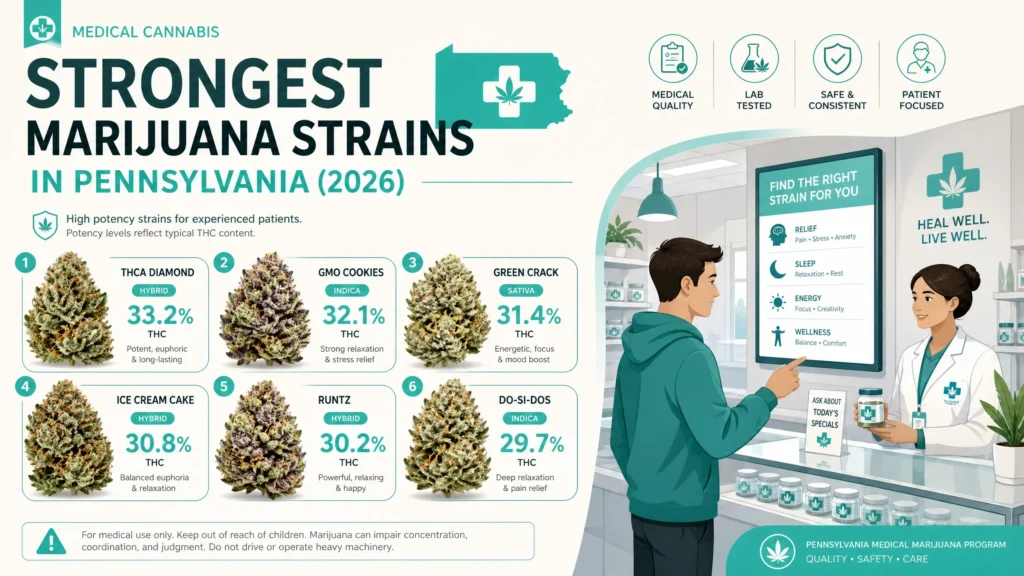
PA dispensary products also reach potency levels that smoke shop hemp products simply cannot match legally. Flower can test at 20-30%+ THC. Concentrates can reach 70-90%+. There is no comparison in terms of concentration and consistency.
4. Access to a Dispensary Pharmacist
Every licensed PA dispensary employs a pharmacist. This is a legal requirement in Pennsylvania, not a marketing feature.
That means you have access to a trained medical professional who can advise on product selection, terpene profiles, dosing, and drug interactions, every time you visit. That guidance is not available at any smoke shop.
5. Commonwealth v. Barr Protection
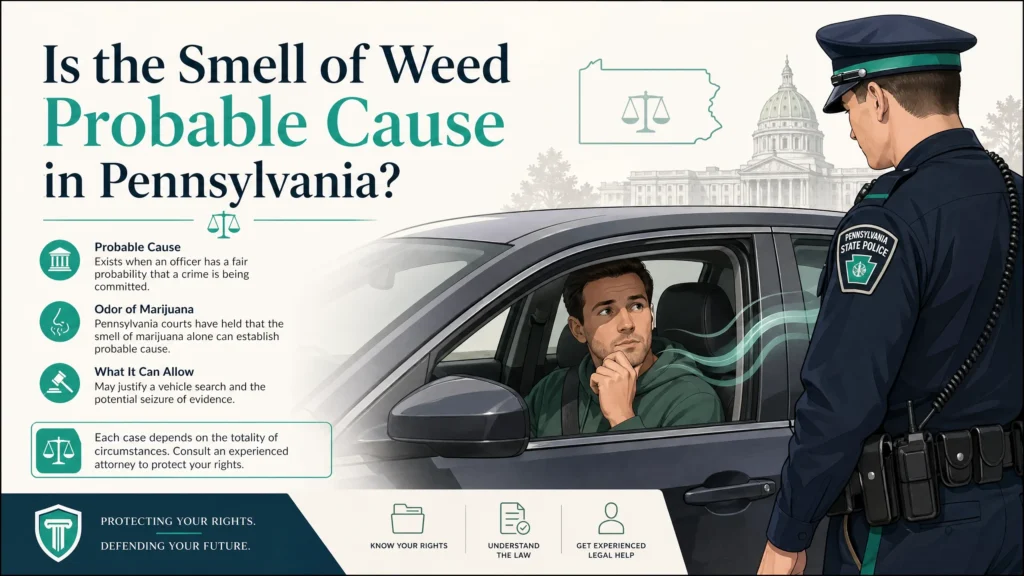
The December 2021 Pennsylvania Supreme Court ruling in Commonwealth v. Barr established that cannabis odor alone is not sufficient probable cause for a warrantless vehicle search in Pennsylvania. With over 440,000 registered patients in the state, the court recognized that the smell of cannabis no longer conclusively indicates illegal activity.
Registered MMJ patients benefit from this ruling in a stronger position than unregistered users.
6. Legal Stability Beyond November 2026
If you currently rely on hemp-derived delta 9 gummies from PA smoke shops, pay attention to this.
Federal law H.R. 5371 (signed November 2025) imposes a 0.4 milligram per-container THC cap on hemp products effective November 12, 2026. Most commercial delta 9 gummies on PA shelves today contain 5-25mg per gummy. That is thousands of percent above the new cap.
PA dispensary products operate under the Medical Marijuana Act, not the Farm Bill. They are completely unaffected by H.R. 5371. If you manage a qualifying condition with hemp gummies today, those products may not be on shelves by the end of this year. The PA MMJ card is the stable long-term path.
The Cons: What You Give Up or Risk

1. The Annual Cost
$209 upfront, $199 annually. For patients on tight budgets who do not qualify for MMAP, this is a real consideration. The card does not automatically pay for itself unless you are buying cannabis regularly enough for the price and quality improvement to offset the certification cost.
2. Firearms: A Real Trade-Off (See Dedicated Section Below)
This is the most significant drawback for some Pennsylvanians and deserves a full section of its own. If you are a gun owner, read it carefully.
3. Federal Employment in Safety-Sensitive Roles
Renewing Your PA MMJ Card?
Quick annual recertification online. No paperwork hassle.
Renew Card Online →If you work in a federally regulated position, particularly any DOT-regulated role covering commercial drivers, pilots, railroad employees, transit workers, or safety-sensitive government contractors, federal drug testing rules remain fully in effect.
Schedule III rescheduling does not change DOT testing requirements. If your job requires federal drug clearance, a PA MMJ card does not protect you from the consequences of a positive drug test in that context.
4. Annual Recertification Requirement
The card does not renew itself. You need a physician evaluation every year and must pay both fees again. For most patients with stable qualifying conditions, this is a minor inconvenience. But it is a recurring commitment.
5. No Gummies at PA Dispensaries
Pennsylvania’s Medical Marijuana Act does not permit licensed dispensaries to sell traditional edible food-form products. No gummies, no chocolates, no baked goods. If that is your preferred format, you are limited to capsules and tinctures from dispensaries. This is a real gap that the PA legislature has not yet closed.
The Employment Question
This is nuanced and the answer has multiple layers.
1. The Baseline Protection
Pennsylvania’s Medical Marijuana Act provides implied legal protection for MMJ patients who face adverse employment actions solely because of a positive marijuana drug test. The Pennsylvania Superior Court affirmed in Palmiter v. Commonwealth Health Systems that certified patients can sue employers who terminate them based solely on a positive MMJ test.
This means you have legal recourse, not immunity. You may still face the drug test, still face the conflict, and still need to pursue a legal challenge. The protection is meaningful, but it is not a shield that prevents the situation from arising.
2. Philadelphia and Pittsburgh Specifics
Philadelphia has banned pre-employment marijuana drug testing entirely since January 2022. Pittsburgh passed similar protections for MMJ cardholders. If you live or work in these cities, your position is stronger than the statewide baseline.
3. What Rescheduling Changed for Employment
Employers whose drug testing policies referenced cannabis being “illegal under federal law” may need to revisit that language now that Schedule III rescheduling has occurred. That argument is weakening. But employers are not required to drop drug testing policies overnight, and most have not.
4. The Honest Summary
Most private sector PA employees with stable, non-safety-sensitive roles have meaningful protection. Federal employees and DOT-regulated workers do not. If your job involves operating heavy machinery, commercial vehicles, or firearms professionally, this requires careful thought and probably a conversation with an employment attorney before getting your card.
The Privacy Question
Most people are surprised to learn how protected PA MMJ patient data actually is.
Get Approved by a Licensed PA Doctor
Schedule your appointment in minutes. You only pay if approved.
Start Online Application →Your patient registration is held by the Pennsylvania Department of Health and is protected under both the Medical Marijuana Act’s confidentiality provisions and HIPAA. It is explicitly excluded from disclosure under Pennsylvania’s Right-to-Know Law.
The PA DOH does not share patient registry data with law enforcement for routine background check purposes. The Pennsylvania Instant Check System (PICS), used for firearms background checks, does not cross-reference the MMJ patient registry.
What this means practically: your employer, neighbors, and most law enforcement databases cannot access your MMJ status from a standard query.
What it does not mean: that your status is invisible in all circumstances. If you are involved in a federal investigation, court proceeding, or other legal process where a court order compels disclosure, that is a different situation.
For most patients in most everyday situations, the PA MMJ registry is genuinely private.
The Firearms Question (Updated May 2026)
This section requires the most careful reading because the law changed significantly in May 2026 and the situation is still evolving.

1. The Historical Position
Prior to 2026, PA MMJ patients were federally prohibited persons under 18 U.S.C. § 922(g)(3) and could not legally purchase or possess firearms. This was an absolute trade-off: card or guns, not both.
2. What Changed in April-May 2026
On April 28, 2026, the DOJ’s rescheduling order removed state-licensed medical marijuana from Schedule I. This prompted immediate legal scrutiny of the basis for prohibiting MMJ patients from owning firearms.
On May 12, 2026, the ATF released a draft revision of Form 4473 reflecting the new landscape. According to Marijuana Moment’s analysis: “if you are a registered medical marijuana patient buying from a licensed dispensary, the federal government’s own research arm says you now have legal cover.”
3. The Honest Caveat
The Form 4473 revision is a proposal, not a final rule. It is currently open for public comment through July 2026. It can be changed, withdrawn, or finalized differently. Federal firearms law has not been formally revised yet. Existing restrictions remain technically in effect until that process concludes.
4. The Practical Guidance
Ready to Get Your Official PA MMJ Card?
State-certified doctor consultations online. No risk—100% refund if not approved.
Claim Your MMJ Card Online →If you own firearms and are considering a PA MMJ card, do not make that decision based on this article alone. Consult a Pennsylvania firearms attorney before acting. The law here is in active transition and the correct answer for your specific situation depends on facts an attorney needs to evaluate.
What is clear: the door that was firmly shut six months ago is now meaningfully ajar, and appears to be opening further.
Who It Makes Sense For
A PA MMJ card is likely worth it if:

- You have a qualifying condition and are already using cannabis in some form
- You spend $50 or more per month on hemp products, out-of-state purchases, or informal sources
- You want state legal protection and access to tested, regulated products
- You work in the private sector in a non-safety-sensitive role
- You do not own firearms, or you are comfortable getting legal guidance on the evolving firearms situation
- You are currently relying on hemp delta 9 gummies that may be eliminated from the market by November 2026
- Privacy and product quality matter to you
Who Should Think Twice
You may want to hold off or get legal advice first if:
- You work in a DOT-regulated role (commercial driver, pilot, railroad, transit) where federal drug testing rules override state protections
- You are an active firearms owner and have not yet spoken with a Pennsylvania firearms attorney about the May 2026 developments
- You work in federal law enforcement or hold a federal security clearance
- Your employer has an active zero-tolerance drug policy and you have not researched your specific legal protections in Pennsylvania
- You do not have a qualifying condition (the program requires a legitimate medical diagnosis, not just a preference for cannabis)
Frequently Asked Questions
Q: Is a PA MMJ card worth it in 2026?
A: For most Pennsylvania residents with a qualifying condition who already use cannabis, yes. The card provides state legal protection, access to regulated products, HIPAA-protected privacy, and significantly reduced federal legal exposure following the April 2026 Schedule III rescheduling.
Q: How much does a PA MMJ card cost in 2026?
A: $209 total for new patients ($159 physician fee plus $50 state fee). Renewals cost $199. The $50 state fee is waived for patients on Medicaid, SNAP, WIC, CHIP, PACE, or PACENET through Pennsylvania’s MMAP program.
Q: Does a PA MMJ card show up on a background check?
A: No. Pennsylvania MMJ patient data is HIPAA-protected and explicitly excluded from disclosure under PA’s Right-to-Know Law. The PA Instant Check System for firearms does not cross-reference the MMJ registry.
Q: Can you be fired for having a PA MMJ card?
A: Pennsylvania law provides implied legal protection against adverse employment actions based solely on a positive MMJ drug test, affirmed by the Pennsylvania Superior Court in Palmiter v. Commonwealth Health Systems. However, DOT-regulated and federal employees are not protected by state law. Philadelphia and Pittsburgh have additional local protections.
Q: Does a PA MMJ card affect gun rights in 2026?
A: This is actively changing. As of May 2026, federal rescheduling has prompted ATF to draft a revised Form 4473 that would no longer classify registered MMJ patients as prohibited persons for firearms purchases. The revised form is currently under public comment through July 2026 and is not yet finalized. Consult a Pennsylvania firearms attorney before making any decisions.
Q: Is the PA MMJ registry private?
A: Yes. Patient data is protected under Pennsylvania’s Medical Marijuana Act and HIPAA. It is not accessible through standard law enforcement databases or public records requests.
Q: What products can PA MMJ patients buy at dispensaries?
A: Vaporizable flower, concentrates, tinctures, capsules, oils, and topicals. Pennsylvania does not currently permit dispensaries to sell gummies or traditional food-form edibles.
Q: What qualifying conditions are most common in Pennsylvania?
A: Anxiety disorders are the most common qualifying condition, cited in approximately 60% of all PA certifications. Chronic pain and PTSD are the second and third most common. Pennsylvania recognizes 24 qualifying conditions in total.
Medical Disclaimer
This blog post is intended for general educational and informational purposes only and does not constitute medical, legal, or financial advice. Pennsylvania cannabis laws and federal regulations are subject to ongoing changes, including developments regarding firearms law that were actively evolving as of May 2026. Always consult a licensed Pennsylvania physician for medical guidance and a licensed Pennsylvania attorney for legal guidance specific to your situation. The firearms information in this article reflects the status of ATF Form 4473 revisions as of May 2026 and will be updated as the process concludes. Medically reviewed by Dr. Johnathon Chance Miller, MD.
Sources
- PennsylvaniaStateCannabis.org — Consequences of Getting a Medical Card in Pennsylvania
- PennsylvaniaStateCannabis.org — Pennsylvania Drug Testing Laws 2025 (Palmiter v. Commonwealth Health Systems ruling)
- Marijuana Moment — New Changes to ATF Gun Form Put Medical Marijuana Patients on Path to Restored Second Amendment Rights (May 2026)
- Patrick Nightingale Law — Cannabis Rescheduling and Gun Rights in Pennsylvania (February 2026)
- PennsylvaniaStateCannabis.org — Can You Own a Gun with a Medical Card in Pennsylvania?
- Axios Philadelphia — Pennsylvania Medical Marijuana Program 2026 (January 2026)
- Talcada — Pennsylvania Drug Testing Laws and Employer Compliance 2026
- Regulatory Oversight — Congress Narrows Federal Definition of Hemp / H.R. 5371 (December 2025)