
If you’ve been putting off this conversation, you’re far from alone.
A 2024 study of Pennsylvania adults found that most people who use cannabis and haven’t told their doctor are staying quiet for the same reasons: they’re worried about being judged, worried it’ll change how their doctor treats them, or worried it’ll just become an awkward moment they can’t take back. That study found rural Pennsylvanians in particular are less likely to bring it up than people in cities, largely because the stigma feels heavier where everyone knows everyone.
Here’s the good news. You have more options than you probably realize, and in Pennsylvania, this conversation doesn’t have to go the way you’re picturing.
Key Takeaways
- You do not need your regular doctor’s permission to get a PA medical marijuana card. Any PA-registered physician, including telehealth providers, can certify a qualifying condition.
- If you’re already on a PA dispensary’s records, it may show up in your PDMP history, which your other doctors can see. Telling them yourself is often better than them finding out on their own.
- Federal courts have confirmed doctors have a legal right to discuss and recommend medical marijuana. This isn’t a legal gray area for them.
- If your doctor reacts poorly, that’s information about them, not about whether medical marijuana is right for you.
- There’s a simple, low-stakes way to bring it up that doctors who specialize in pain, primary care, and chronic conditions hear all the time.
- If the conversation feels like too much right now, the telehealth certification path means you don’t have to have it at all to access the program.
Why This Feels So Hard (And Why That’s Not Your Fault)
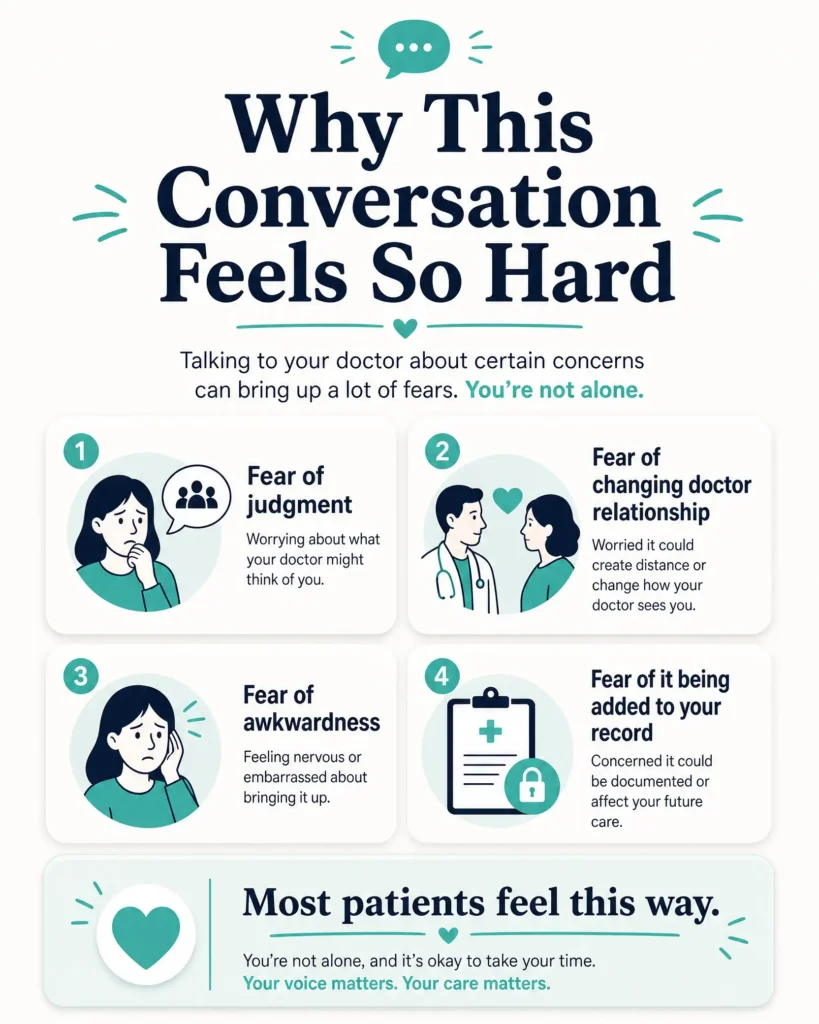
Part of what makes this conversation feel so loaded is that most doctors genuinely weren’t trained for it.
Research shows that only about 9% of medical schools include any education on medical cannabis, and roughly 80% of physicians say they need more training on the topic. A 2025 scoping review of physician attitudes found that many doctors, especially primary care physicians, actually do view medical cannabis as potentially helpful for chronic pain, nausea, and anxiety. But a lot of them also say they don’t feel confident discussing it, simply because nobody ever taught them how.
So if you’ve sensed some awkwardness from a provider before, or anticipate it, it’s often not about judgment of you. It’s often a doctor who feels just as unprepared for the conversation as you do.
That doesn’t make it less uncomfortable in the moment. But it can help to know that the awkwardness, if it happens, usually isn’t personal.
The Thing Most People Don’t Realize: You Have a Choice Here
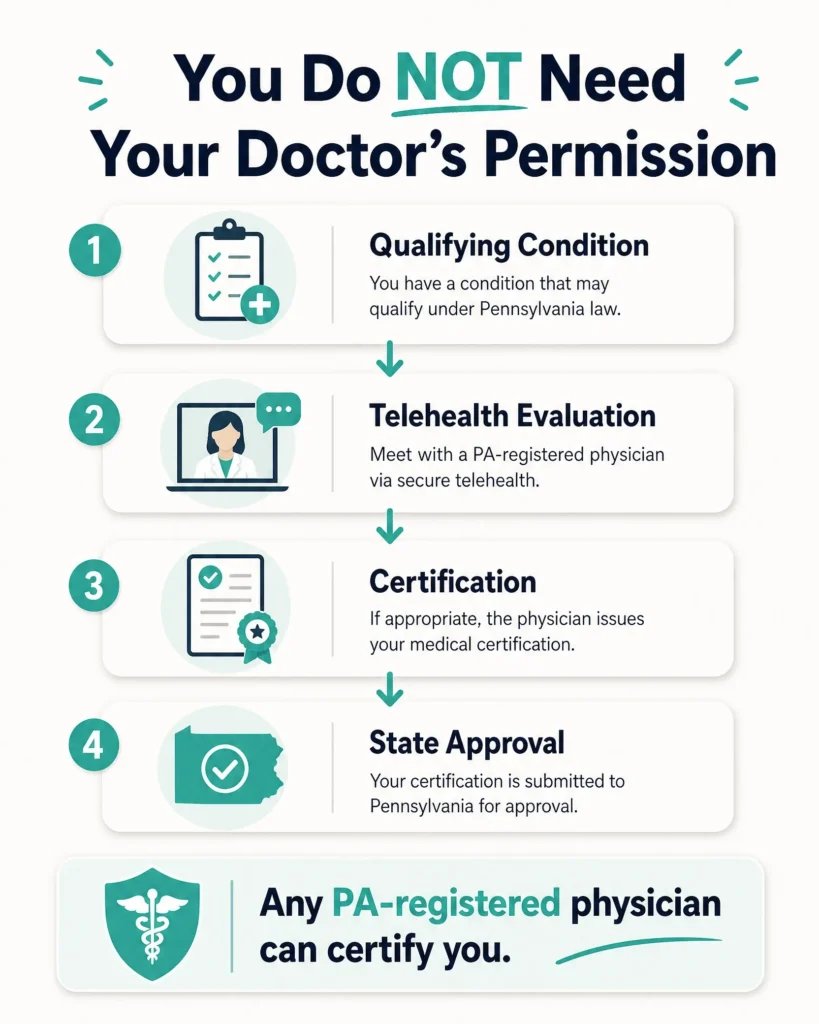
This is the part that changes everything for a lot of patients, and almost nobody explains it clearly.
In Pennsylvania, getting certified for the medical marijuana program does not require your primary care doctor, your specialist, or any doctor you currently see. Any physician registered with the Pennsylvania Department of Health’s Medical Marijuana Program can issue a certification, and this is exactly why telehealth certification services exist. A study of medical cannabis patients found that only 14% obtained their certification through their own primary care provider. The vast majority go through a separate, dedicated process.
This means the conversation you’ve been dreading, the one where you ask your longtime doctor to sign off on medical marijuana, is genuinely optional. You can pursue a PA medical marijuana card entirely through a PA-registered physician you’ve never met before, who specializes in exactly this kind of evaluation and has these conversations every single day.
For some people, that’s the end of the story. They get certified through telehealth, never bring it up with their regular doctor, and that’s a completely valid choice.
For others, there’s a good reason to still have the conversation with their regular doctor too. Here’s why.
Should You Tell Your Regular Doctor Anyway?
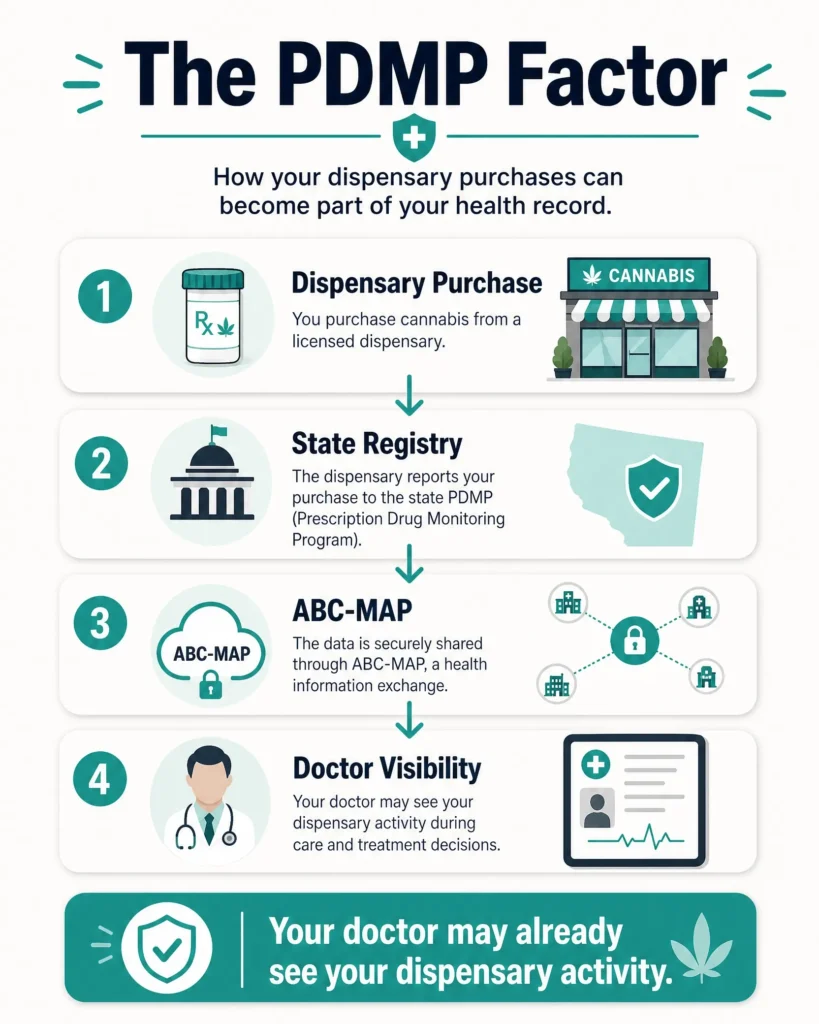
Even though you don’t need your regular doctor’s permission, there’s a genuinely good medical reason to consider telling them you’re using or considering medical cannabis: it affects how they manage everything else.
The PDMP factor. Pennsylvania’s Prescription Drug Monitoring Program, called ABC-MAP, tracks medical marijuana dispensing data alongside prescriptions for opioids, benzodiazepines, and other controlled substances. When a PA-registered physician reviews your PDMP history before prescribing certain medications, your dispensary activity can be visible to them. PA-registered physicians certifying medical marijuana patients are specifically required to review the PDMP as part of that process.
What this means practically: if your regular doctor ever queries the PDMP for another reason, your MMJ dispensary activity may already be visible to them, whether you’ve told them or not. Many patients find it preferable to be the one who brings it up, rather than having a doctor notice it independently and wonder why it wasn’t mentioned.
The drug interaction factor. This is the medical reason that matters most. Cannabis can interact with a range of medications, including blood thinners, certain antidepressants, and some seizure medications. Your regular doctor managing your other prescriptions benefits from knowing the full picture, the same way they’d want to know about any supplement or over-the-counter medication you’re taking regularly.
The continuity of care factor. If cannabis is genuinely helping with a symptom your doctor has been trying to manage, like sleep, pain, or anxiety, that’s useful clinical information. It might mean adjustments to other parts of your treatment plan.
None of this requires your doctor’s approval or a certification from them. It’s simply about making sure the person managing your overall care has accurate information.
What to Actually Say
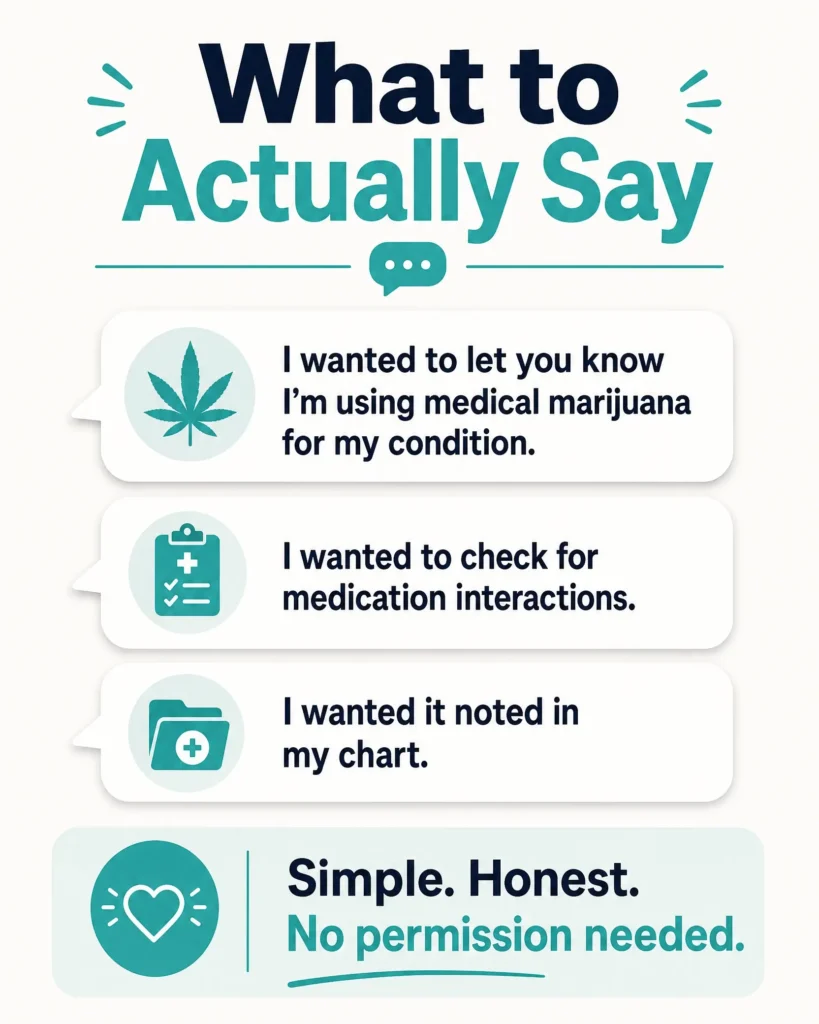
There’s no perfect script, and you don’t need one. But if you want a starting point, pain management specialists who have these conversations regularly suggest keeping it simple and low-key.
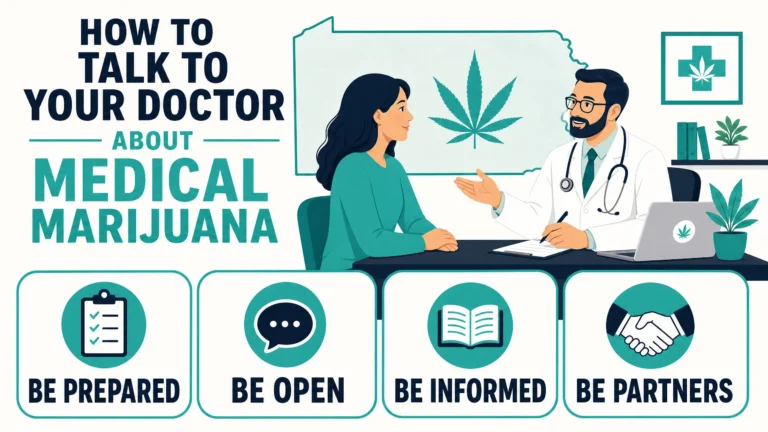
One approach recommended by a pain management physician is to mention it the same way you’d mention any other medication or supplement: “Oh, by the way, in addition to my regular medications, I’m also using medical marijuana for my [condition].” No buildup, no apology, just information.
A few variations depending on your situation:
- If you’re already certified: “I wanted to let you know I’m a registered medical marijuana patient now, I got certified for [condition]. I wanted to make sure it’s on my chart in case it’s relevant to anything else.”
- If you’re considering it: “I’ve been looking into medical marijuana for my [condition], since I qualify for it in PA. I wanted to mention it in case there’s anything I should know about how it might interact with what I’m already taking.”
- If you’re nervous and want to keep it brief: “Just so it’s on record, I’m planning to start using medical marijuana through the state program. Is there anything about my current medications I should be aware of?”
Notice that none of these ask permission. They’re informational. That framing alone tends to lower the temperature of the conversation considerably, because you’re not asking your doctor to make a decision, you’re keeping them informed, which is something doctors generally appreciate regardless of the topic.
If Your Doctor Reacts Badly
Most of the time, this conversation goes fine, especially with younger doctors and those practicing in states where medical cannabis has been legal for years. Pennsylvania’s program has existed since 2016, and most physicians are at least aware of it even if they don’t specialize in it.
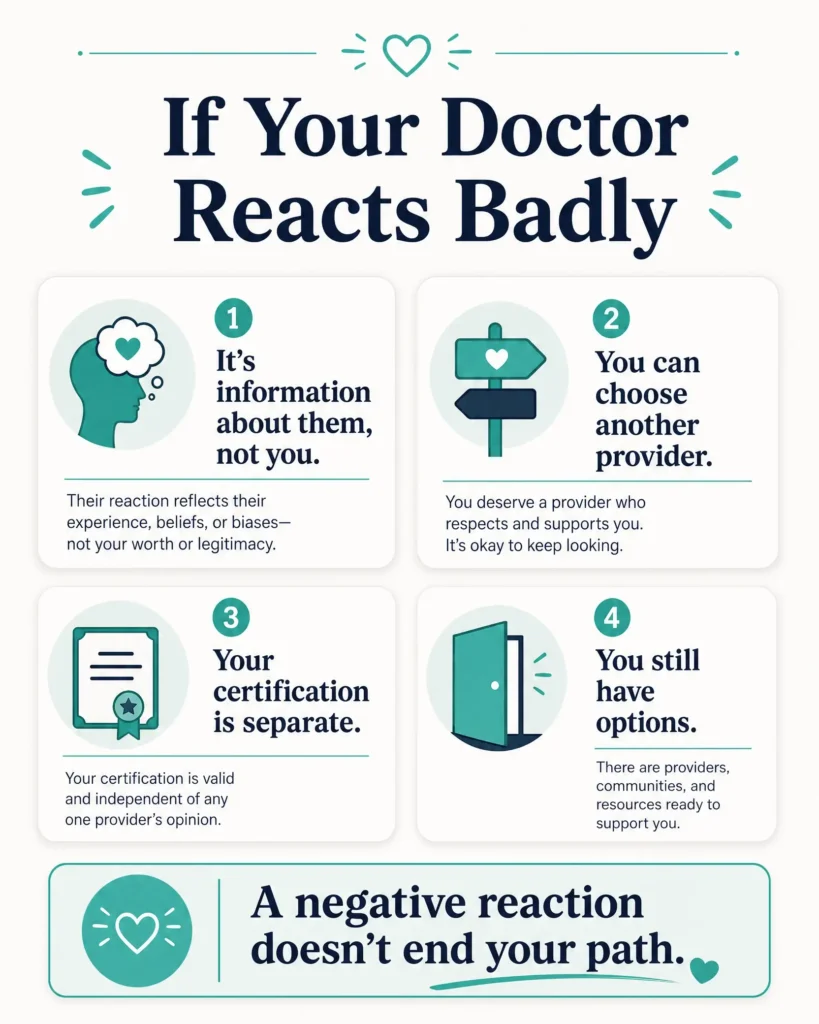
But it’s worth being honest: occasionally, it doesn’t go smoothly. Some patients have reported doctors reacting with discomfort, or in rare cases, being less willing to continue certain other treatments. If that happens, here’s what’s useful to know:
A negative reaction is information about your doctor, not about your treatment choice. A doctor’s discomfort with a topic they weren’t trained on doesn’t change the legitimacy of a state-regulated medical program that over 440,000 Pennsylvanians are enrolled in.
You’re allowed to find a provider who’s more comfortable with this. If a conversation reveals that a doctor is unwilling to engage with this topic at all, that’s useful information for deciding whether they’re the right fit for your overall care going forward. This doesn’t have to be dramatic. It can simply be a factor in future decisions.
Your MMJ certification and your other care are separate. A certification from a telehealth provider doesn’t require your regular doctor’s involvement, and a poor reaction from them doesn’t affect your standing in the state program.
Know Your Legal Ground
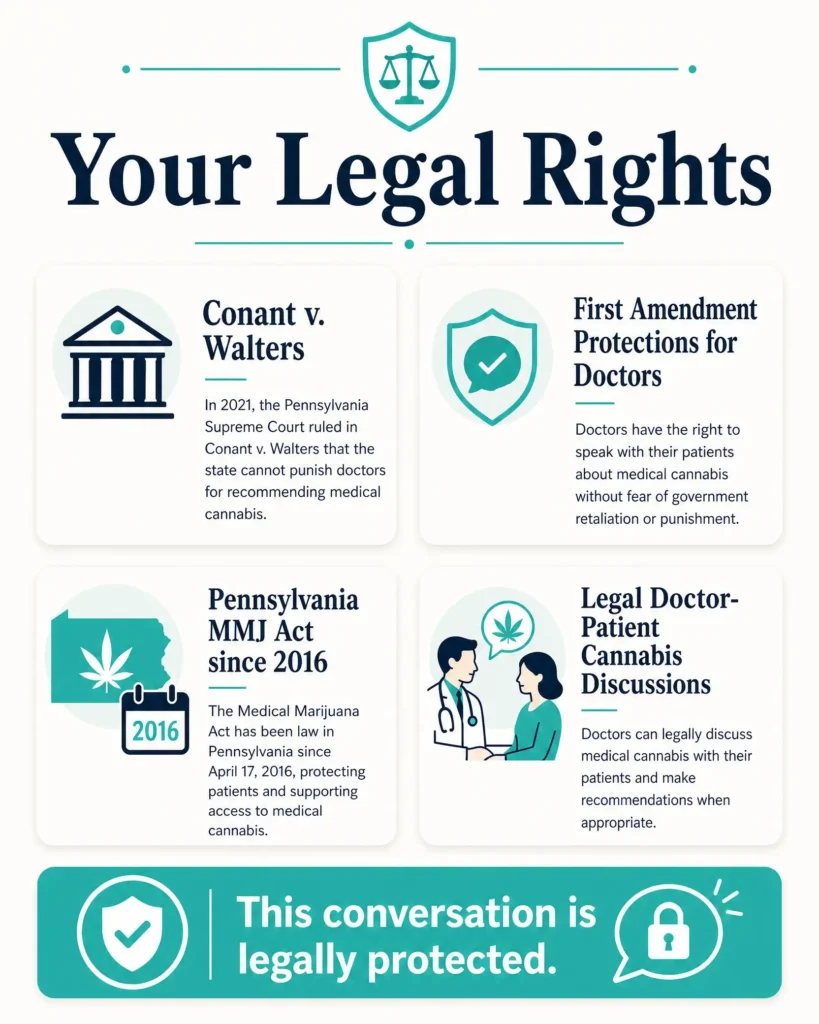
It can help to know that the legal framework here is more settled than the emotional experience sometimes suggests.
Federal courts ruled in Conant v. Walters that physicians have a First Amendment right to discuss and recommend medical marijuana to patients, regardless of cannabis’s federal classification. This isn’t a legal risk your doctor is taking by talking to you about it. The conversation itself is protected.
In Pennsylvania specifically, the Medical Marijuana Act has been in effect since May 2016, and the state’s program is well-established with a robust patient registry, dispensary network, and physician certification process.
You’re not asking your doctor to do anything legally questionable. You’re asking about a state-licensed medical program that’s been operating for nearly a decade.
If You’d Rather Skip the Conversation Entirely
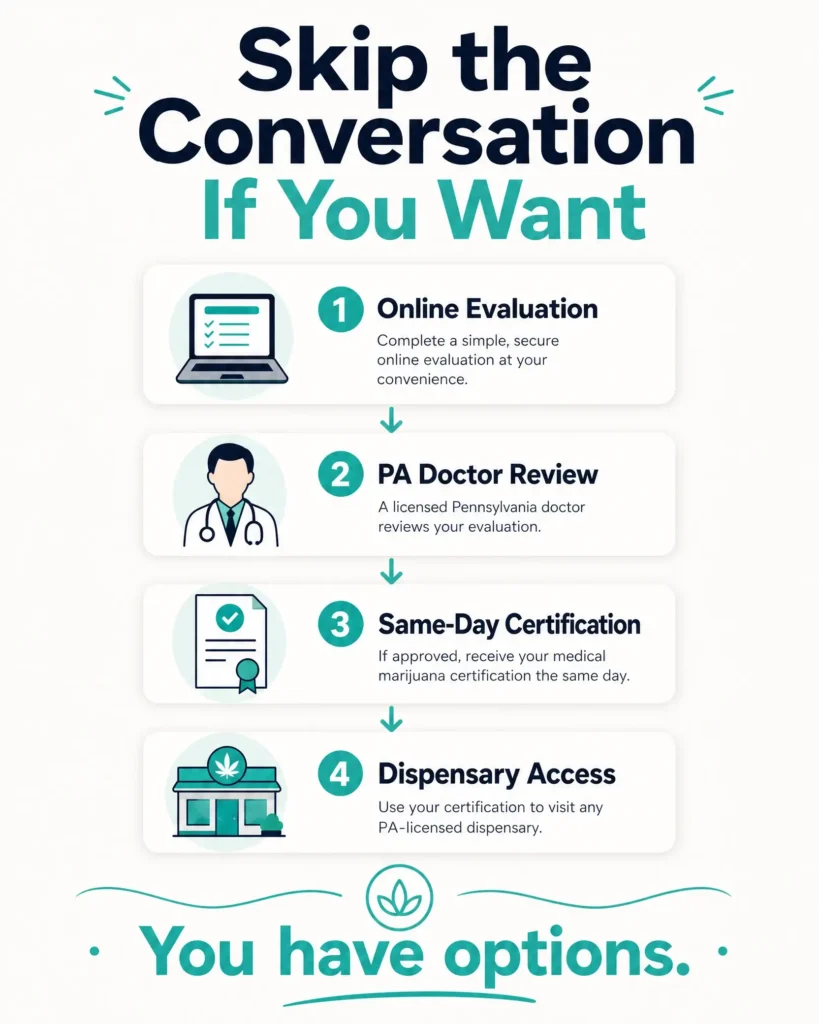
If everything above still feels like more than you want to deal with right now, that’s okay too. Here’s the practical reality.
Pennsylvania’s medical marijuana certification process is built around telehealth specifically because so many patients want exactly this: a straightforward path that doesn’t require navigating an uncomfortable conversation with someone they’ve known for years.
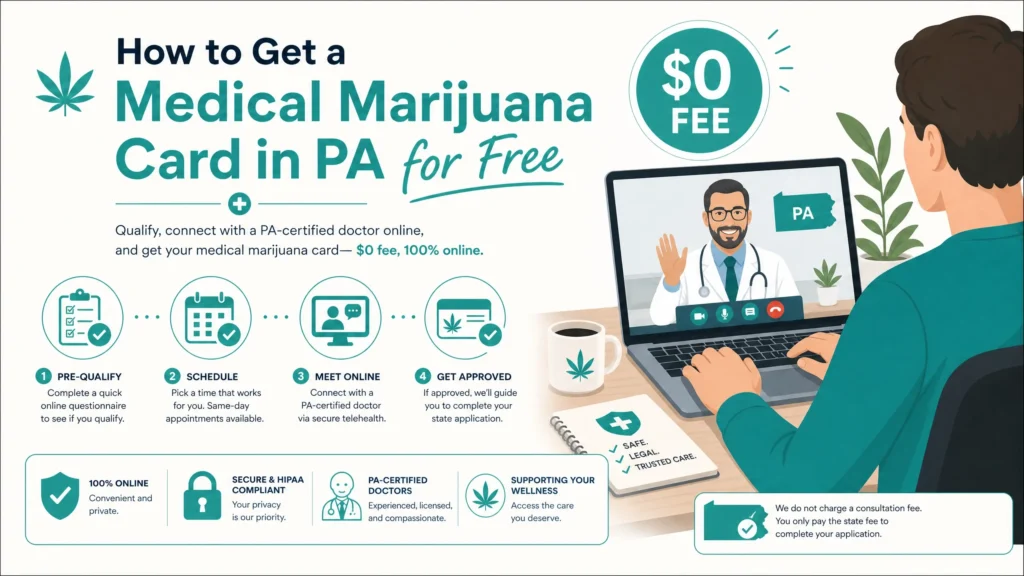
The process works like this: you complete an evaluation with a PA-registered physician, entirely online, focused specifically on your qualifying condition. If you qualify, you receive your certification the same day in most cases. Your regular doctor isn’t contacted, doesn’t need to be involved, and doesn’t need to know unless and until you decide to tell them.
If you have a qualifying condition, this path exists specifically so the conversation you’ve been putting off doesn’t have to be the thing standing between you and trying medical cannabis.
And down the road, if you find that it’s helping, that’s often when patients feel more comfortable mentioning it to their regular doctor anyway, not because they need to, but because the results made the conversation easier.
A Note If You’re Already Using Cannabis Without Telling Anyone
If you’re already using cannabis, whether from a dispensary in another state, a hemp product, or another source, and just haven’t told any doctor, you’re in good company. Studies consistently find this is extremely common, and the reasons are almost always the ones described above: stigma, not wanting it on a chart, or simply not knowing how to bring it up.
The same options apply to you. You can pursue PA certification through telehealth without involving your current doctors at all. Or, if you’re managing other health conditions and taking other medications, it may be worth at least having the conversation about interactions, using one of the scripts above, even if you decide not to pursue formal certification right away.
Either way, the choice is genuinely yours, and there’s no wrong order to do things in.
FAQs — Talking to Your Doctor About Medical Marijuana in PA
Q: Do I need my regular doctor’s permission to get a medical marijuana card in Pennsylvania?
A: No. Any physician registered with the Pennsylvania Department of Health’s Medical Marijuana Program can certify a qualifying patient, and this does not need to be your primary care doctor or any specialist you currently see. This is the reason telehealth certification services exist in Pennsylvania. Studies show only about 14% of medical cannabis patients get their certification through their own primary care provider, with most going through a separate certified physician.
Q: Will my regular doctor find out I’m a medical marijuana patient even if I don’t tell them?
A: Possibly. Pennsylvania’s Prescription Drug Monitoring Program (ABC-MAP) tracks medical marijuana dispensing data alongside controlled substance prescriptions. If your doctor queries the PDMP for another reason, such as prescribing an opioid or benzodiazepine, your dispensary activity may be visible to them. Many patients prefer to mention their medical marijuana use proactively rather than have a doctor discover it independently.
Q: Is it legal for doctors to discuss medical marijuana with patients?
A: Yes, unambiguously. Federal courts ruled in Conant v. Walters that physicians have a First Amendment right to discuss and recommend medical marijuana to patients, regardless of cannabis’s federal scheduling. This protection has been in place for over two decades. In Pennsylvania, the Medical Marijuana Act has been in effect since May 2016, establishing a fully regulated state program.
Q: What if my doctor reacts negatively when I bring up medical marijuana?
A: A negative reaction reflects your doctor’s comfort level with the topic, often due to lack of training (only about 9% of medical schools cover medical cannabis education), not the legitimacy of your treatment choice. You’re not asking for their approval to access Pennsylvania’s program, since certification can be obtained through other PA-registered physicians via telehealth. If a doctor’s reaction makes you uncomfortable, it’s reasonable to factor that into decisions about your ongoing care with that provider.
Q: Why might my doctor need to know I’m using medical cannabis even if they don’t need to approve it?
A: The main reason is medication safety. Cannabis can interact with certain medications including blood thinners, some antidepressants, and certain seizure medications. A doctor managing your other prescriptions benefits from a complete picture of everything you’re taking, the same as they would with any supplement or over-the-counter product used regularly. This also supports continuity of care if cannabis is helping manage a symptom they’ve been treating.
Q: How do I bring up medical marijuana with my doctor without it being awkward?
A: Pain management specialists suggest mentioning it the same way you would mention any other medication: simply, factually, and without asking permission. For example: “I wanted to let you know I’m using medical marijuana for my anxiety, and I wanted to make sure it’s noted in case it’s relevant to anything else.” Framing it as information rather than a request tends to make the conversation feel much lower-stakes for both sides.
Q: Can I get a PA medical marijuana card without ever discussing it with any doctor I currently see?
A: Yes. Pennsylvania’s certification process is built around telehealth specifically for this reason. You complete an evaluation with a PA-registered physician focused on your qualifying condition, entirely online, and your current doctors are not contacted or involved unless you choose to tell them. Many patients use this path precisely because it avoids an uncomfortable conversation with a longtime provider.
Medical Disclaimer
This blog post is intended for general educational and informational purposes only and does not constitute medical advice. Always disclose all medications, supplements, and treatments, including medical marijuana, to healthcare providers managing your care to ensure safety and avoid potential interactions. Medically reviewed by Dr. Johnathon Chance Miller, MD.
Sources
- Mallinson & Servinsky — Rural Reticence to Inform Physicians of Cannabis Use, Journal of Rural Health (2024), Penn State Harrisburg survey of 1,045 PA adults
- Yusupov et al. — Physicians’ Knowledge, Attitudes, and Perceptions About Medical Cannabis: A Scoping Review (2025)
- Boehnke et al. — Communication Between Healthcare Providers and Medical Cannabis Patients, Journal of Cannabis Research
- University of Arizona Health Sciences — Should I Talk to My Doctor About Cannabis?
- Marijuana Policy Project — How to Talk to Your Doctor About Medical Marijuana (Pennsylvania)
- Pennsylvania Department of Health — Prescription Drug Monitoring Program (ABC-MAP)
- Pennsylvania Code, 28 Pa. Code Section 1181a.30 — PDMP Review Requirement for MMJ Certifying Physicians