
If you’ve been living with generalized anxiety disorder and wondering whether it legally counts as a disability then you’re asking exactly the right question.
And the answer is: Yes, generalized anxiety disorder is a disability under multiple U.S. laws, including the Americans with Disabilities Act (ADA) and the Social Security Administration’s (SSA) disability framework. But the full picture is more nuanced than a simple yes or no.
Need a PA Medical Marijuana Card?
Get certified online in 15 minutes. 100% Money-Back Guarantee.
Get Certified Now →Whether you’re trying to understand your workplace rights, explore disability benefits, or simply figure out what support you’re actually entitled to, this guide walks you through everything clearly and honestly.
What Makes GAD a Disability and What Doesn’t

The word “disability” carries a lot of weight: legally, medically, and personally. Before diving into the specifics, it helps to understand what actually separates a clinical disability from everyday stress.
The National Institute of Mental Health (NIMH) defines Generalized Anxiety Disorder as persistent, excessive worry occurring most days for at least six months, about multiple areas of life – work, health, relationships, finances – that the person finds difficult or impossible to control.
This is not the anxiety you feel before a job interview. GAD is chronic, relentless, and functionally impairing. According to NIMH data, among U.S. adults diagnosed with GAD:
- 32.3% experience serious impairment
- 44.6% experience moderate impairment
- 23.1% experience mild impairment
Do You Qualify for a PA MMJ Card?
Connect with a licensed Pennsylvania state physician online from home.
That means roughly 76% of people with GAD are living with moderate-to-serious functional limitations. That’s the clinical reality that disability law is designed to recognize and protect.
Nationally, GAD affects an estimated 6.8 million U.S. adults around 3.1% of the population – according to the Anxiety & Depression Association of America (ADAA). Yet only 43.2% of those people are currently receiving treatment.
If you’re reading this, you may be in that untreated majority, trying to understand your options.
Is Generalized Anxiety Disorder a Disability Under the ADA?

Yes. The Americans with Disabilities Act (ADA) defines a disability as a physical or mental impairment that substantially limits one or more major life activities. GAD qualifies when it limits your ability to:
- Concentrate or focus
- Sleep
- Interact with others
- Communicate
- Care for yourself
- Regulate thoughts or emotions
- Perform job functions
An important update that many people miss: the ADA Amendments Act of 2008 significantly broadened the definition of disability, making it easier for people with mental health conditions – including anxiety disorders to qualify for legal protections.
Courts that previously interpreted the threshold narrowly were effectively overruled.
Your condition does not need to be permanent or severe to qualify. Even if your symptoms come and go, what matters is how limiting they are when present.
Even if you are actively managing GAD with therapy or medication, you can still qualify for ADA protections – you do not need to stop treatment to be considered disabled under this law.
Anxiety disorders explicitly recognized as potential disabilities under the ADA include:
- Generalized Anxiety Disorder (GAD)
- Panic Disorder
- Social Anxiety Disorder
- Post-Traumatic Stress Disorder (PTSD)
- Obsessive-Compulsive Disorder (OCD)
Workplace Accommodations You’re Legally Entitled To

If your GAD qualifies under the ADA, your employer is legally required to provide reasonable accommodations, as long as doing so doesn’t cause “undue hardship” to the business. This applies to employers with 15 or more employees.
⚡ Fast & 100% Online PA Medical Cards
Board-Certified Doctors • 100% Money-Back Guarantee
Book Evaluation Now →What many people don’t realize is that you don’t have to disclose your specific diagnosis to request accommodations. You can simply inform your employer that you have a disability and need adjustments, according to EEOC guidelines.
Common reasonable accommodations for GAD, as outlined by the U.S. Department of Labor, include:
Scheduling flexibility:
- Modified start/end times
- Part-time hours or job sharing
- Flexible use of sick and vacation time for mental health appointments
- More frequent breaks on an as-needed schedule
Workspace adjustments:
- A quiet or private workspace to reduce sensory overload
- Reduced background noise
- Permission to work from home (telecommuting)
Task and communication modifications:
- Breaking large projects into smaller, manageable tasks
- Written instructions rather than verbal-only communication
- Changed communication channels (e.g., email instead of phone calls)
- Additional time to learn new responsibilities
Leave options:
- Intermittent leave for therapy appointments
- Medical leave for treatment or recovery periods
- Use of FMLA (Family and Medical Leave Act) protections for anxiety-related absences
To request an accommodation, put it in writing to your HR department. State that you have a disability and describe what you need, you don’t have to name GAD specifically.
Your employer may ask for documentation from a healthcare provider confirming your limitations, but they cannot demand your full medical history.
Can You Get SSDI or SSI Benefits for GAD?

Yes, but it requires meeting specific criteria and providing solid medical documentation. The Social Security Administration (SSA) recognizes anxiety disorders as potentially qualifying for two programs:
Social Security Disability Insurance (SSDI) Available if you have worked at least five of the past ten years and can no longer work due to your disability.
In 2024, 330,079 disabled workers received SSDI benefits for anxiety and other mental disorders, according to SSA data. The average monthly benefit for mental health conditions is approximately $1,437.
Renewing Your PA MMJ Card?
Quick annual recertification online. No paperwork hassle.
Renew Card Online →Supplemental Security Income (SSI) A needs-based program for individuals with limited income and resources, regardless of work history. The maximum SSI payment in 2026 is $994 per month.
One important reality check: only about 20% of initial SSDI applications are approved. Most initial claims are denied, not because people don’t qualify, but because documentation is incomplete. Working with a disability attorney significantly improves approval odds.
How the SSA Evaluates Anxiety Disability Claims

The SSA evaluates anxiety disorders under Listing 12.06 of its “Blue Book”, its official medical criteria guide. To qualify, you need to satisfy one of two pathways:
Pathway A – Documented Severity: Medical documentation of your GAD diagnosis, plus marked limitations in at least two of the following areas, OR an extreme limitation in one:
- Ability to understand, remember, or apply information
- Ability to interact with others
- Ability to concentrate, persist, or maintain pace
- Ability to adapt or manage oneself
Pathway B – Serious and Persistent: A medically documented history of GAD lasting at least two years, combined with:
- Evidence of ongoing treatment (therapy, medication, structured support)
- Minimal ability to adapt to changes or demands outside your routine
To support your claim, you’ll need:
- A formal diagnosis from a licensed mental health professional
- Treatment history: therapy notes, medication records, hospitalization records if applicable
- Functional impact assessments documenting how GAD affects daily activities
- Statements from healthcare providers, family members, or former employers describing real-world limitations
The SSA is looking for a pattern not just a diagnosis, but documented, consistent evidence that your condition prevents you from performing substantial gainful activity.
VA Disability Ratings for Anxiety Disorders
If you are a veteran, GAD and other anxiety disorders can qualify for VA disability benefits. The VA rates anxiety disorders on a scale based on functional impairment, using criteria that assess how severely your symptoms affect occupational and social functioning.
VA ratings for anxiety disorders typically fall at 0%, 10%, 30%, 50%, 70%, or 100% depending on symptom severity and documented impairment.
Veterans with anxiety disorders often have co-occurring conditions PTSD, depression & chronic pain that can strengthen a combined disability rating.
To file a VA claim for GAD, connect with a Veterans Service Organization (VSO) or an accredited VA claims agent who can help you gather the right documentation and submit a complete claim.
How GAD Affects Daily Life? The Real Burden

Get Approved by a Licensed PA Doctor
Schedule your appointment in minutes. You only pay if approved.
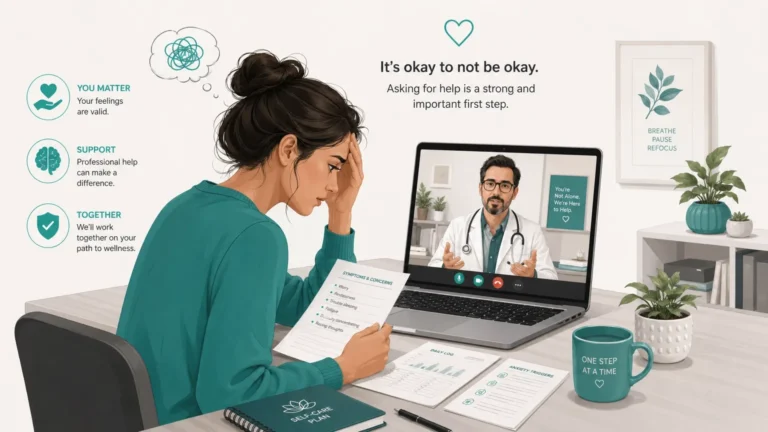
Start Online Application →Beyond legal definitions, it’s worth acknowledging what living with GAD actually feels like day to day because the legal framework sometimes makes it sound clinical and distant, when the reality is anything but.
People with GAD describe a mind that never fully quiets. The worry is not proportionate to real threats. It’s persistent, exhausting, and often invisible to others. Common daily challenges include:
- Sleep disruption – racing thoughts at night, difficulty falling or staying asleep
- Physical symptoms – muscle tension, headaches, fatigue, stomach problems
- Concentration difficulties – inability to focus at work or complete tasks
- Avoidance behaviors – skipping social situations, avoiding responsibilities, isolating
- Irritability and emotional dysregulation – difficulty managing emotions under pressure
- Impact on relationships – strain on friendships, family dynamics, and professional relationships
According to a study published in Frontiers in Neuroscience, people with anxiety disorders are 3 to 5 times more likely to visit a doctor and 6 times more likely to be hospitalized for psychiatric conditions compared to those without anxiety.
The healthcare burden alone tells a significant story.
In Pennsylvania specifically, state health data shows that 18.5% of adults showed symptoms consistent with GAD in 2023 – representing over 2 million residents carrying this burden, many of them without adequate treatment.
Treatment Options for GAD (Including One Most People Don’t Know About)

If you’ve been diagnosed with GAD, you already know the standard treatment options. But many people aren’t aware of the full range especially newer options that have become available in recent years.
Cognitive Behavioral Therapy (CBT) The gold-standard psychological treatment for GAD. CBT helps you identify and restructure anxiety-driven thought patterns.
Multiple clinical trials support its effectiveness, and many therapists now offer it via telehealth.
Medication SSRIs (like Sertraline/Zoloft and Escitalopram/Lexapro) and SNRIs are the most commonly prescribed first-line medications for GAD.
Buspirone is another option for long-term anxiety management. Benzodiazepines (Xanax, Klonopin, Ativan) may be prescribed short-term for acute symptom relief.
Ready to Get Your Official PA MMJ Card?
State-certified doctor consultations online. No risk—100% refund if not approved.
Claim Your MMJ Card Online →Lifestyle and Complementary Approaches Regular aerobic exercise, sleep hygiene improvements, mindfulness-based stress reduction (MBSR), and reduced caffeine intake all have evidence supporting their role in anxiety management.
These work best as complements to formal treatment, not replacements.
Medical Cannabis: A Legal Option in Pennsylvania

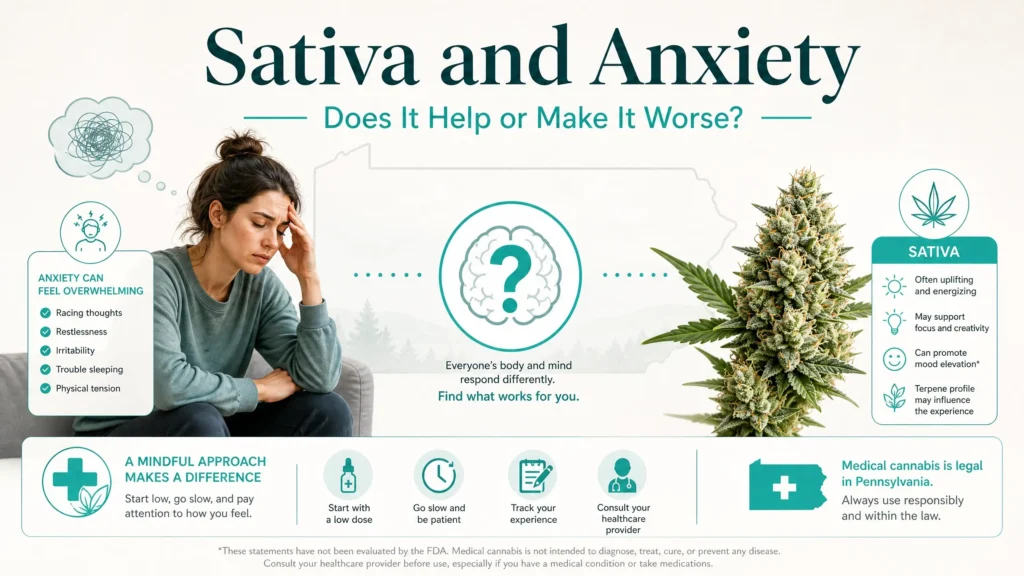
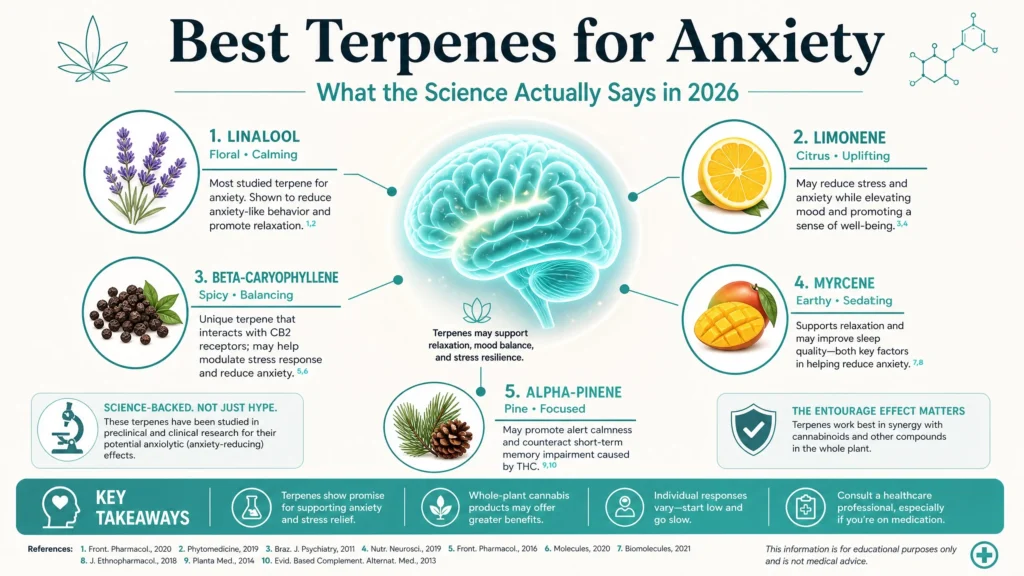
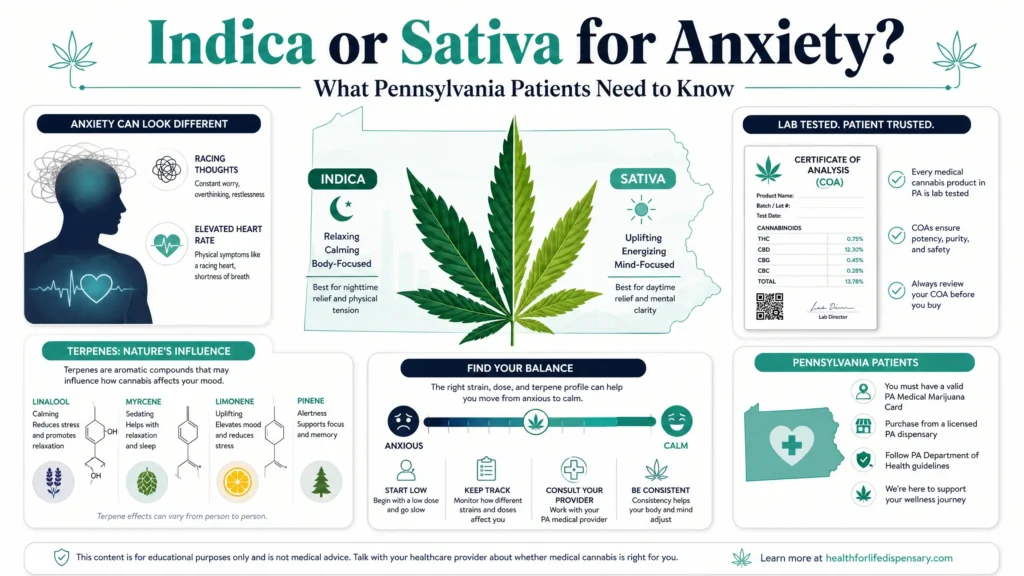
One treatment avenue that many Pennsylvania residents with GAD don’t know about: Pennsylvania officially recognizes anxiety disorders as a qualifying condition for a medical marijuana card.
Since July 2019, the Pennsylvania Department of Health has included anxiety disorders on its list of approved qualifying conditions.
As of 2021, anxiety disorders had become the #1 reason Pennsylvanians obtain a medical marijuana card, appearing in 60% of all certifications, a reflection of how many patients are finding value in this option.
Research is still evolving, but a patient survey published in Frontiers in Neuroscience found that over 400 medical marijuana patients rated cannabis an average of 8.03 out of 10 for managing anxiety symptoms.
Products lower in THC and higher in CBD are generally better tolerated for anxiety, and starting with low doses is always recommended.
This is not for everyone, and it works best as part of a broader treatment plan, not a replacement for therapy or medication. But if you’ve tried conventional approaches and are looking for additional options, it’s worth knowing this door is legally open to you in Pennsylvania.
If you’re curious whether your GAD diagnosis qualifies, you can learn more on our Anxiety Disorder & Medical Marijuana in Pennsylvania page or explore all PA qualifying conditions here.
Frequently Asked Questions
Q: Is generalized anxiety disorder a disability under the ADA?
A: Yes. GAD qualifies as a disability under the ADA when it substantially limits one or more major life activities such as concentrating, sleeping, interacting with others, or regulating emotions. The ADA Amendments Act of 2008 broadened this definition significantly, making it easier for people with mental health conditions to qualify for legal protections.
Q: Do I have to tell my employer I have GAD to get accommodations?
A: No. You can request ADA accommodations by stating you have a disability without disclosing your specific diagnosis. Your employer may ask for documentation from a healthcare provider confirming your limitations, but they cannot require you to reveal your full diagnosis.
Q: Can I get SSDI for generalized anxiety disorder?
A: Yes, but it requires meeting the SSA’s criteria under Listing 12.06, which includes documented marked limitations in at least two functional areas, or a persistent two-year documented history of GAD. Strong medical documentation is essential, most initial claims are denied due to incomplete records, not ineligibility.
Q: Does GAD have to be severe to qualify as a disability?
A: For ADA purposes, it does not need to be severe or permanent, it just needs to substantially limit a major life activity. For SSDI purposes, the standard is higher: your GAD must prevent you from performing substantial gainful activity. The two frameworks have different thresholds.
Q: Can GAD and depression together strengthen my disability claim?
A: Yes. The SSA and VA both recognize that GAD frequently co-occurs with depression, PTSD, and chronic pain. Documenting all co-occurring conditions typically strengthens a disability claim by showing the full scope of functional impairment.
Q: What documentation do I need to prove GAD is a disability?
A: You’ll need a formal diagnosis from a licensed mental health professional, treatment records (therapy notes, medication history), and functional assessments showing how GAD impacts daily activities and work capacity. Statements from healthcare providers describing real-world limitations are also valuable.
The Bottom Line
Is generalized anxiety disorder a disability?
Under U.S. law — yes, in multiple frameworks. Under the ADA, it protects your right to workplace accommodations. Under SSDI and SSI, it may entitle you to financial support if you can no longer work. And as a diagnosed anxiety disorder in Pennsylvania, it legally qualifies you for medical marijuana under the state’s program.
The most important step is getting that clinical diagnosis documented, understanding which legal framework applies to your situation, and knowing that you have more options than most people realize.
If you’d like to explore whether a Pennsylvania medical marijuana card is right for your GAD management plan, our team is here to help.
Medically reviewed by Dr. Johnathon Chance Miller, MD. This article is for informational purposes only and does not constitute legal or medical advice. For disability claims, consult a licensed disability attorney. For medical treatment decisions, consult your healthcare provider.
Sources
- NIMH — Generalized Anxiety Disorder
- ADAA — Anxiety Facts & Statistics
- EEOC — Mental Health Conditions in the Workplace
- U.S. Department of Labor — Mental Health Accommodations
- Atticus — Anxiety & SSDI Benefits
- Spotlight PA — PA MMJ Certifications Analysis
- Frontiers in Neuroscience — Cannabis & Anxiety
- Pennsylvania Mental Health Statistics