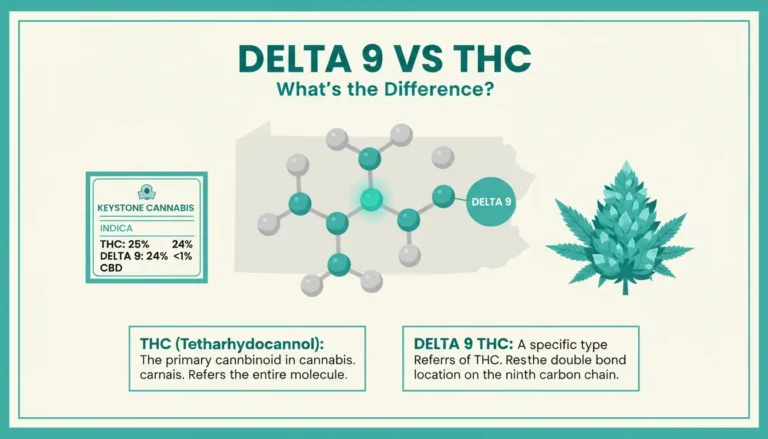

If you have ever wondered whether “delta 9” and “THC” are the same thing, or felt confused seeing both terms on cannabis product labels at a Pennsylvania dispensary or smoke shop — you are not alone. This is one of the most common points of confusion for people new to cannabis, and the answer has real practical implications for Pennsylvania patients and prospective patients.
Here is the short version: Delta 9 THC is a type of THC — the most abundant, most studied, and most therapeutically relevant one. THC is a broader umbrella term that covers an entire family of related compounds. When most people say “THC,” they mean delta 9. When scientists, physicians, and Pennsylvania dispensaries say “THC,” they also mean delta 9. The two terms are used interchangeably in most practical contexts.
Need a PA Medical Marijuana Card?
Get certified online in 15 minutes. 100% Money-Back Guarantee.
Get Certified Now →But understanding the full picture — what the THC family includes, how each variant differs, and what this means specifically for Pennsylvania patients — is genuinely useful information that most cannabis content never covers for a PA audience.
This guide covers all of it.
What Is THC? The Umbrella Term Explained

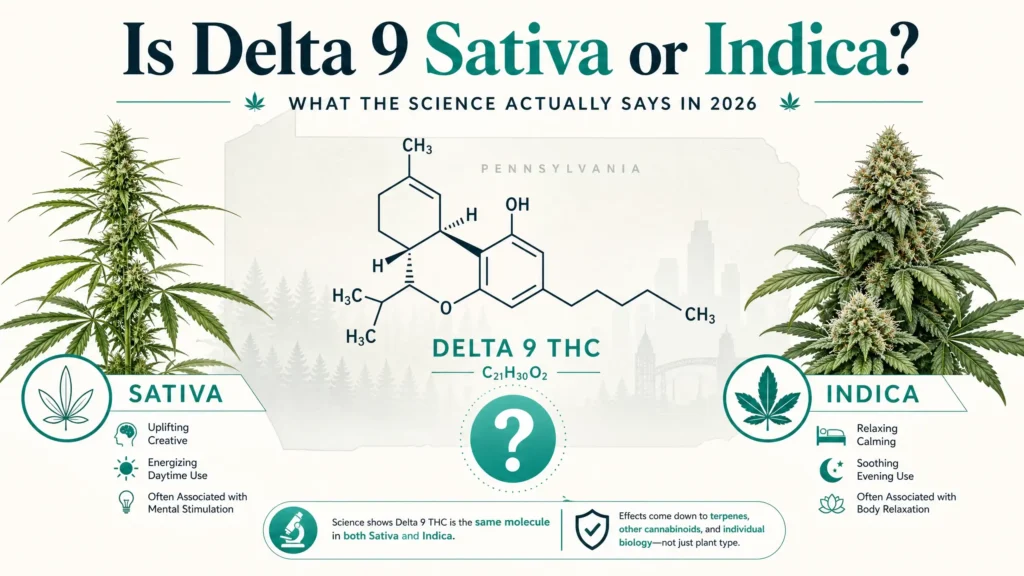
THC stands for tetrahydrocannabinol — a family of psychoactive compounds found naturally in the cannabis plant. It is not a single molecule. It is a group of structurally related molecules that all share the same base molecular formula — C₂₁H₃₀O₂ — but differ in one key structural detail: where a double bond sits along their carbon chain.
As Healthline’s cannabis pharmacology guide explains, when we refer to THC in everyday conversation, we are typically talking about delta-9 THC — the most abundant and well-known form. But there are others in the same family, each with their own distinct effects, legal status, and availability in Pennsylvania.
Do You Qualify for a PA MMJ Card?
Connect with a licensed Pennsylvania state physician online from home.
The cannabis plant produces over 550 chemical compounds, more than 100 of which are cannabinoids. THC variants represent the psychoactive subset of that group — compounds that bind to your body’s endocannabinoid receptors and produce some degree of intoxication or altered state.
What Is Delta 9 THC Specifically?

Delta 9 THC — full name delta-9-tetrahydrocannabinol — is the primary psychoactive compound in cannabis. The “9” in its name refers to the position of its double bond on the carbon chain: specifically the 9th carbon. That structural detail determines how it interacts with your brain’s cannabinoid receptors.
Delta 9 is:
- The most abundant THC variant in cannabis plants — occurring naturally at 15% to 30%+ in medical-grade flower
- The most extensively researched cannabinoid in existence — with over 70 years of clinical literature
- The compound responsible for most of the therapeutic effects of cannabis: pain relief, anti-nausea, appetite stimulation, sleep support, and anxiety modulation
- The compound the FDA approved in synthetic form as dronabinol (Marinol) — a pharmaceutical medication prescribed for chemotherapy-related nausea and AIDS-related appetite loss
- What all Pennsylvania licensed dispensary products are built around
As Muscle MX’s cannabis science guide explains, delta 9 THC binds strongly to both CB1 receptors (Ki = 41 nM) in the brain and CB2 receptors (Ki = 36 nM) in immune tissue — a dual-receptor interaction that underlies its broad spectrum of effects.
Delta 9 vs THC: Are They the Same Thing?
In practical everyday use: yes, they refer to the same compound.
When your Pennsylvania dispensary pharmacist says “this product is 22% THC,” they mean 22% delta-9 THC. When a researcher publishes a study on “the effects of THC on chronic pain,” they are studying delta-9 THC. When Pennsylvania’s Medical Marijuana Act regulates patient access to “THC products,” it means delta-9 THC derived from cannabis.
The reason both terms exist and are used interchangeably comes down to history and marketing. Delta 9 THC was simply called “THC” for decades — because it was the only THC variant that anyone paid meaningful attention to scientifically or commercially. The “delta 9” prefix only became necessary when other THC variants (delta 8, delta 10, delta 11) began appearing on hemp retail shelves and required differentiation.
As The Hemp Doctor’s cannabinoid guide puts it directly: when people say “THC,” they typically mean delta-9 THC — the psychoactive ingredient cannabis is best known for.
The one situation where the distinction matters: when you are looking at a product label and need to know whether the “THC” percentage refers to delta-9 specifically or to total THC across all variants. At Pennsylvania licensed dispensaries, the THC percentage on any product label refers to delta-9 THC content — the figure verified through mandatory third-party laboratory testing under PA Department of Health regulations.
The Full THC Family: Every Major Variant Explained

Understanding delta 9 vs THC fully means knowing what else exists in the THC family and how each variant compares. Here is every major THC variant you are likely to encounter — with direct relevance to what is and is not available to Pennsylvania patients.
Delta 9 THC — The Primary Form
⚡ Fast & 100% Online PA Medical Cards
Board-Certified Doctors • 100% Money-Back Guarantee
Book Evaluation Now →The most abundant, most studied, and therapeutically most relevant THC. All full-strength cannabis products at Pennsylvania licensed dispensaries contain delta-9 THC as their primary active cannabinoid. Legal for registered PA MMJ patients. Not legal recreationally in Pennsylvania as of May 2026.
THCA — The Raw Precursor
THCA (tetrahydrocannabinolic acid) is the non-psychoactive form delta-9 THC takes before it has been heated. In raw cannabis flower — before vaporization or any heat exposure — virtually all the “THC” is actually THCA. When Pennsylvania patients load flower into a dry herb vaporizer, the heat converts THCA into active delta-9 THC through a process called decarboxylation. As Recovered.org’s cannabinoid comparison explains, THCA does not bind to CB1 receptors in its raw form — it only becomes psychoactive after this conversion.
This is why PA dispensary flower labels list both a THCA percentage and a THC percentage. The THCA converts to delta-9 upon vaporization — so the THCA number is the more meaningful indicator of a flower product’s actual potency for Pennsylvania vaporizer patients.
Delta 8 THC — The Milder Cousin
Delta 8 THC has its double bond on the 8th carbon rather than the 9th. This one-position shift produces meaningfully milder psychoactive effects — research from Cannaspecialists notes that based on CB1 receptor binding affinity, delta-8 is less potent than delta-9, which is why some people prefer it for a more manageable experience. It is not naturally abundant in cannabis plants and is typically synthesized from CBD in a laboratory setting. In Pennsylvania, delta-8 is available at hemp retailers — not at licensed dispensaries — and faces an increasingly contested legal status under state Act 64 and impending SB 49 legislation. Delta-8 will be federally banned by November 2026 under H.R. 5371.
Delta 10 THC — The Energizing Variant
Delta 10 has its double bond on the 10th carbon. Users typically report more uplifting, energizing, and cerebral effects compared to delta-9 or delta-8. Like delta-8, it occurs in only trace amounts naturally and is synthesized commercially. It is available at Pennsylvania hemp retailers — not at licensed dispensaries — and faces the same 2026 federal ban trajectory as delta-8 under H.R. 5371.
THCV — The Appetite-Suppressing Variant
THCV (tetrahydrocannabivarin) is a naturally occurring minor cannabinoid that, unlike most THC variants, may actually suppress rather than stimulate appetite at low doses. It has been studied for potential metabolic and blood sugar regulation benefits. As Healthline’s THC comparison notes, THCV remains significantly under-researched compared to delta-9. It is present in trace amounts in some Pennsylvania dispensary strains — but dedicated THCV products are not a standard part of the PA dispensary market.
Delta 11 THC — The Newest and Least Understood
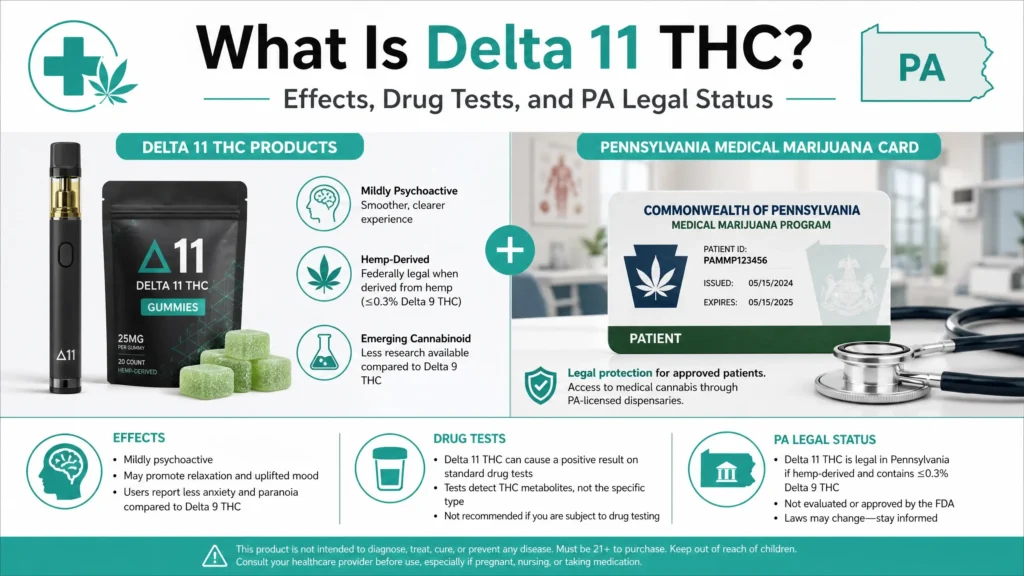
Delta 11 has its double bond on the 11th carbon. It is synthesized from CBD or delta-8 THC in laboratory settings — virtually no natural plant abundance. There is almost no peer-reviewed clinical research on its effects, safety, or dosing. It is available at Pennsylvania smoke shops and online hemp retailers — not at licensed dispensaries. Like delta-8 and delta-10, it will be federally banned by November 2026 under H.R. 5371, and Pennsylvania’s SB 49 may close access sooner at the state level.
Quick Reference Comparison Table
| Variant | Double Bond | Natural Abundance | Psychoactive? | At PA Dispensaries? | 2026 Federal Status |
|---|---|---|---|---|---|
| Delta 9 THC | 9th carbon | High (15–30%+ in flower) | Yes — full strength | ✅ Yes — via MMJ card | Legal via MMJ program |
| THCA | N/A (acid form) | Very high in raw flower | No — until heated | ✅ Yes — in flower products | Legal via MMJ program |
| Delta 8 THC | 8th carbon | Trace — synthesized | Yes — milder than D9 | ❌ No — hemp retail only | Banned Nov 2026 |
| Delta 10 THC | 10th carbon | Trace — synthesized | Yes — milder/energizing | ❌ No — hemp retail only | Banned Nov 2026 |
| THCV | N/A (propyl chain) | Trace | Low / appetite suppressing | Trace amounts in some strains | Under review |
| Delta 11 THC | 11th carbon | Trace — synthesized | Yes — reportedly potent | ❌ No — hemp retail only | Banned Nov 2026 |
How Delta 9 Works in Your Body?

Delta 9 THC produces its effects by interacting with your body’s endocannabinoid system (ECS) — a network of receptors, enzymes, and signaling molecules that regulates mood, pain perception, sleep, appetite, memory, and immune function.
Delta 9 primarily targets two receptor types:
CB1 receptors — found densely throughout the brain and central nervous system, particularly in regions governing pain, emotion, memory, and motor control. As peer-reviewed research in Neuropsychopharmacology confirms, CB1 activation by THC produces the classic psychoactive effects: euphoria, altered sensory perception, relaxation, and in some cases, anxiety at high doses.
CB2 receptors — found primarily in immune tissue and peripheral organs. Delta 9 acts as a partial agonist at CB2, contributing to its anti-inflammatory and immunomodulatory effects — a mechanism particularly relevant for conditions like chronic pain, Crohn’s disease, and multiple sclerosis, all of which are qualifying conditions in Pennsylvania’s MMJ program.
Renewing Your PA MMJ Card?
Quick annual recertification online. No paperwork hassle.
Renew Card Online →The specific effects any individual experiences from delta-9 THC depend on several variables: dose, product format (inhaled vs. oral), individual tolerance, cannabinoid and terpene profile of the specific product, and their baseline physiological state. This variability is exactly why Pennsylvania dispensary pharmacists — present at every licensed PA dispensary — are a valuable resource for helping patients find the right product and dosing for their specific condition.
Delta 9 vs THC in Pennsylvania: What This Means for PA Patients
For Pennsylvania residents, the delta 9 vs THC question has direct practical implications across three different purchasing contexts.
At a Pennsylvania Licensed Dispensary
Every product you purchase at a PA licensed dispensary contains marijuana-derived delta-9 THC — the full-strength, therapeutically relevant form. “THC percentage” on any PA dispensary label means delta-9. Products are tested under PA Department of Health regulations and the label is verified accurate. This is the only setting in Pennsylvania where you can access cannabis at genuine therapeutic concentrations — flower testing 15–30%+ THC, concentrates testing 70–90%+.
Accessing PA dispensary products requires a valid medical marijuana card, obtained through physician certification and state registration under Act 16 of 2016.
At a Pennsylvania Hemp Retailer or Smoke Shop
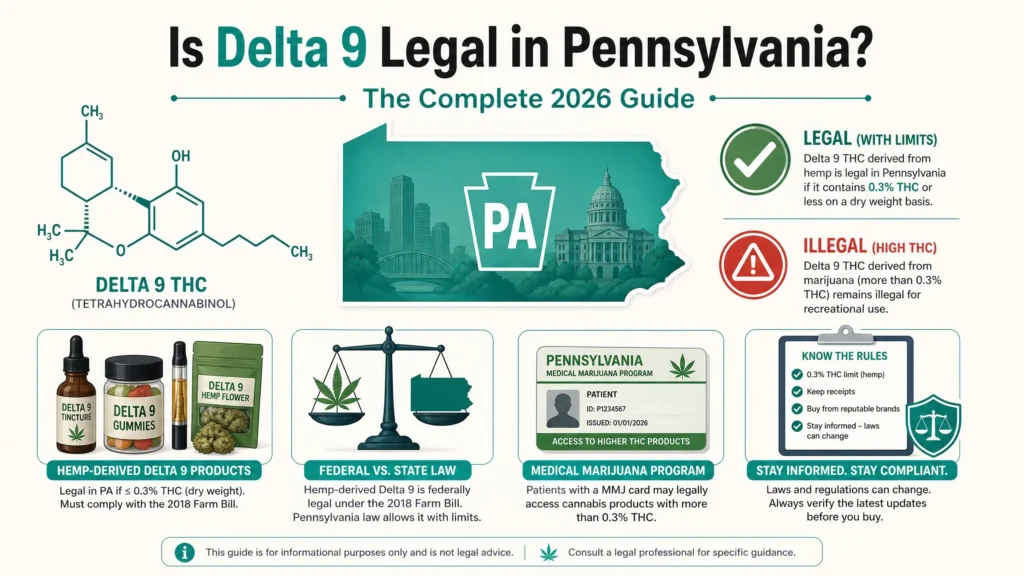
Products labeled “Delta 9” or “THC” at smoke shops, hemp stores, and online retailers selling to Pennsylvania customers contain hemp-derived delta-9 THC capped at 0.3% by dry weight. This is the same molecule as dispensary delta-9 — chemically identical — but at a fraction of the concentration. A 0.3% hemp Delta 9 gummy and a 25% THC dispensary vape cartridge contain the same cannabinoid in radically different amounts. The therapeutic difference is significant.
These products also face a hard legal deadline: H.R. 5371, signed November 2025, reclassifies intoxicating hemp products under a total THC standard effective November 12, 2026. Pennsylvania’s SB 49 may close that window at the state level even sooner.
Recreationally
Possessing marijuana-derived delta-9 THC without a PA MMJ card is illegal in Pennsylvania under the Controlled Substances, Drug, Device, and Cosmetic Act. Recreational cannabis remains illegal statewide as of May 2026.
What “THC” Means on a Pennsylvania Dispensary Label

Pennsylvania patients often encounter two numbers on dispensary flower labels that can be confusing:
Get Approved by a Licensed PA Doctor
Schedule your appointment in minutes. You only pay if approved.
Start Online Application →THCA % — The percentage of THCA present in the raw, unheated flower. This is the dominant form in which delta-9 “lives” in unprocessed cannabis. When you load this flower into a dry herb vaporizer — the legally required consumption method for flower in Pennsylvania — the heat converts THCA into active delta-9 THC. The THCA percentage is the most meaningful indicator of how potent the flower will be when vaporized.
THC % — The percentage of already-active (decarboxylated) delta-9 THC present in the product as packaged. In flower products, this is typically a small number — because most of the delta-9 is still in its THCA form until heated. In concentrates, tinctures, and capsules, the THC % is often higher because those products have already undergone processing that converts THCA to delta-9.
A simple formula used by Pennsylvania dispensary pharmacists to estimate total potential THC after vaporization:
Total THC = THC% + (THCA% × 0.877)
The 0.877 factor accounts for the molecular weight difference when THCA loses its carboxyl group during decarboxylation. A flower product showing 1% THC and 22% THCA would produce approximately 20.3% total active delta-9 THC when vaporized — making it a high-potency product despite the low pre-heat THC number.
Understanding this label math is one of the most practically useful things a new PA patient can know before their first dispensary visit.
THC, Drug Tests, and Pennsylvania’s DUI Law

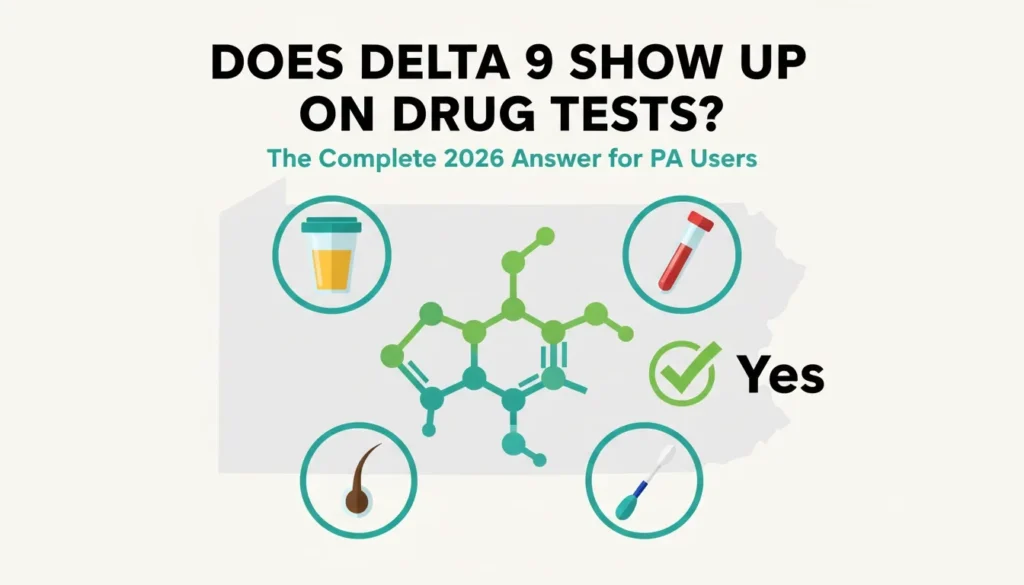
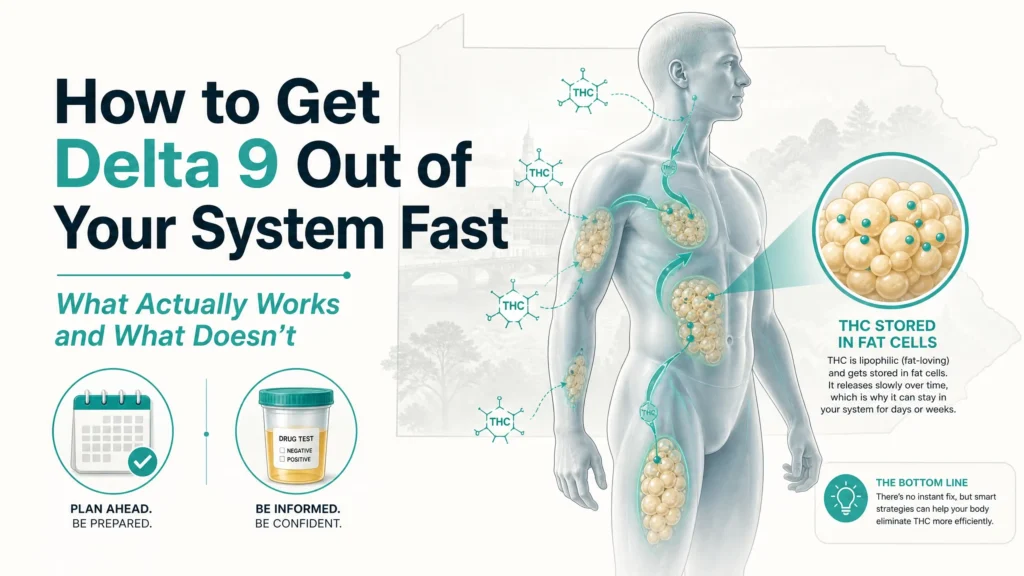
Whether you consume delta-9 THC, delta-8 THC, THCA (heated), or any other psychoactive THC variant — the drug test outcome is the same. Standard urine screens detect THC-COOH — the metabolite your liver produces when breaking down any form of THC — as confirmed by peer-reviewed workplace drug testing research published in PMC. The test has no ability to distinguish the source or variant.
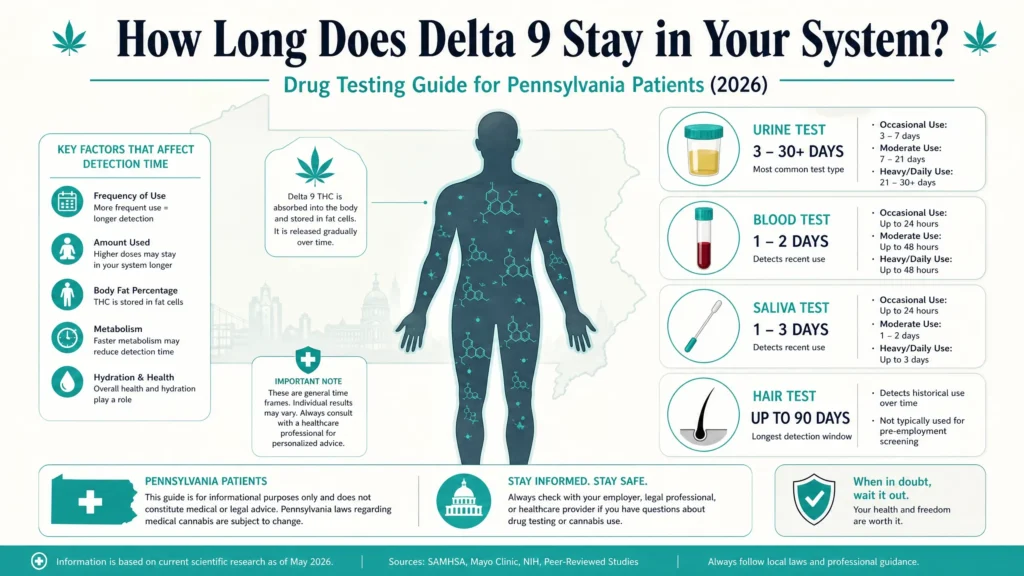
Detection windows for delta-9 THC:
| Test Type | Occasional Use | Regular Use |
|---|---|---|
| Urine | 3–7 days | Up to 30+ days |
| Blood | Up to 48 hours | Up to 48–72 hours |
| Saliva | Up to 24–72 hours | Up to 72 hours |
| Hair | Up to 90 days | Up to 90 days |
Pennsylvania’s per se DUI law under 75 Pa. C.S. § 3802(d) makes any detectable amount of THC metabolites in your blood while driving a DUI offense — regardless of impairment, regardless of whether your product was hemp-derived or dispensary-purchased, and regardless of whether you hold a valid PA medical marijuana card.
This applies equally to all forms of THC. As the Allegheny County Bar Association’s PA MMJ FAQ confirms, Act 16 provides no DUI exemption for registered medical patients. Do not drive after consuming any cannabis product containing any form of THC in Pennsylvania.
How to Access Legal Delta 9 THC in Pennsylvania?

Ready to Get Your Official PA MMJ Card?
State-certified doctor consultations online. No risk—100% refund if not approved.
Claim Your MMJ Card Online →For Pennsylvania residents who want legal, tested, full-strength delta-9 THC — the only reliable and legally protected pathway is through the state’s medical marijuana program.
Pennsylvania’s 24 qualifying conditions under Act 16 of 2016 include anxiety disorder, severe chronic pain, PTSD, cancer, epilepsy, multiple sclerosis, and many others. According to a July 2025 study published in the Annals of Internal Medicine by researchers at the University of Pittsburgh and Johns Hopkins University — analyzing 1.73 million PA Department of Health certification records — anxiety disorder alone accounts for approximately 60% of all PA MMJ certifications.
If you are currently using hemp-derived “Delta 9” or “THC” products from smoke shops or online retailers for therapeutic reasons — anxiety, pain, sleep, or otherwise — a PA medical marijuana card gives you access to the same cannabinoid at full therapeutic concentration, from tested and verified products, with licensed pharmacist guidance, and with legal protection that does not have an expiration date in November 2026.
At Pennsylvania Marijuana Cards, Dr. Johnathon Chance Miller, MD offers telehealth certifications entirely online — no waiting room, no travel, no office visit required. The process takes approximately 15 minutes.
Certification Pricing
| Fee | New Patient | Renewal |
|---|---|---|
| Physician Certification Fee | $159 | $149 |
| PA State Registration Fee | $50 | $50 |
| Total | $209 | $199 |
Pennsylvania residents qualifying for Medicaid, SNAP, WIC, CHIP, PACE, or PACENET may have the $50 state fee waived through Pennsylvania’s MMAP program. Renewal pricing ($199) is always lower than new patient pricing ($209).
Once certified, you gain access to all 186+ licensed Pennsylvania dispensaries carrying the complete range of delta-9 THC products — flower, concentrates, tinctures, capsules, vapes, and topicals — all third-party tested and accurately labeled under PA DOH regulations.
Frequently Asked Questions
Q: Is delta 9 the same as THC?
A: In practical terms, yes — delta-9 THC and THC refer to the same compound in the vast majority of everyday contexts. THC is the umbrella term for a family of psychoactive cannabinoids, and delta-9 is by far the most abundant and well-studied member of that family. When Pennsylvania dispensaries, physicians, and researchers use the term “THC,” they mean delta-9 THC. The two terms became distinguished only when hemp-derived variants like delta-8 and delta-10 entered the market and required differentiation. As The Hemp Doctor explains, “THC” has always been shorthand for delta-9, and that usage continues today in medical and dispensary settings.
Q: What is the difference between delta 9 THC and delta 8 THC?
A: Both are forms of THC and share the same molecular formula (C₂₁H₃₀O₂), but their double bond sits on different carbons — the 9th for delta-9 and the 8th for delta-8. That single structural difference produces meaningfully different effects. Delta-9 is more potent, more abundant in cannabis plants, and more extensively researched. Delta-8 produces milder psychoactive effects with reportedly fewer anxiety-related side effects, as noted by Cannaspecialists’ clinical overview. In Pennsylvania, delta-9 is available at licensed dispensaries for MMJ patients; delta-8 is sold at hemp retailers but faces contested legal status and a federal ban effective November 2026.
Q: What does the THC percentage mean on a Pennsylvania dispensary label?
A: At a Pennsylvania licensed dispensary, the THC percentage on any product refers to delta-9 THC — verified through mandatory third-party laboratory testing under PA Department of Health regulations. For flower products specifically, you will also see a THCA percentage — the non-psychoactive precursor that converts to active delta-9 when heated through vaporization. To estimate total usable delta-9 from a flower product, the formula is: Total THC = THC% + (THCA% × 0.877). A product showing 22% THCA and 1% THC delivers approximately 20.3% active delta-9 when vaporized — making THCA the more important number to evaluate when comparing flower potency at PA dispensaries.
Q: Can I buy delta 9 THC products in Pennsylvania without a medical card?
A: Only in very limited form. Hemp-derived delta-9 products containing 0.3% THC or less by dry weight are currently legal at hemp retailers and online without a medical card. However, this concentration is far below therapeutic levels, and these products face a federal ban under H.R. 5371 effective November 2026 — with Pennsylvania’s SB 49 potentially closing access sooner at the state level. Full-strength delta-9 THC — at the concentrations available at PA dispensaries (15–30%+) — requires a valid Pennsylvania medical marijuana card.
Q: Do all forms of THC show up on a Pennsylvania drug test?
A: Yes — all psychoactive THC variants produce the same metabolite (THC-COOH) when broken down by your liver, and standard drug tests detect that metabolite regardless of which specific THC form you consumed. As confirmed by PMC workplace drug testing research, the immunoassay test cannot distinguish between delta-9, delta-8, delta-10, or any other THC isomer — they all produce the same detectable compound. This also applies to Pennsylvania’s per se DUI law under 75 Pa. C.S. § 3802(d) — any detectable THC metabolite in your blood while driving can result in a DUI charge, regardless of the source.
Q: What THC products are available at Pennsylvania dispensaries?
A: Pennsylvania licensed dispensaries carry the full range of delta-9 THC products approved under the state’s medical marijuana program: dry leaf flower for vaporization, vape cartridges, concentrates, tinctures, oils, capsules, topicals, and troches/lozenges. Importantly, smoking flower is prohibited under Pennsylvania law — flower is approved for vaporization only. Traditional food-based edibles (gummies, chocolates, baked goods) are also not approved for sale at PA dispensaries. All products are third-party tested for potency and contaminants under PA DOH regulations and dispensed with licensed pharmacist guidance. A valid PA medical marijuana card is required to purchase any product.
Q: How do I get a Pennsylvania medical marijuana card to access delta 9 THC legally?
A: You need three things: a qualifying condition, a physician certification, and state registration. Pennsylvania recognizes 24 qualifying conditions including anxiety disorder — the most common, cited in approximately 60% of all PA MMJ certifications according to a July 2025 Annals of Internal Medicine study. Chronic pain, PTSD, and many other conditions also qualify. The full process is done online through telehealth at Pennsylvania Marijuana Cards — no office visit required. New patient total cost is $209 ($159 physician fee + $50 state fee), with the state fee waived for qualifying low-income patients through Pennsylvania’s MMAP program.
Medically reviewed by Dr. Johnathon Chance Miller, MD. This content is for informational and educational purposes only and does not constitute medical or legal advice. Pennsylvania cannabis laws are subject to change. Always verify current regulations with the PA Department of Health before purchasing or using any cannabis product. Do not drive after consuming any product containing THC. Consult a licensed physician before beginning any cannabis-based treatment.
Sources
- Pennsylvania Medical Marijuana Act — Act 16 of 2016
- Pennsylvania Department of Health — Medical Marijuana Program (May 2026)
- Pennsylvania Controlled Substances, Drug, Device and Cosmetic Act (Act 64)
- Healthline — Delta 8 vs Delta 9 vs Delta 10 (February 2025)
- Healthline — What Is Delta 9? (November 2024)
- Muscle MX — Is Delta 9 the Same as THC? The Science-Backed Truth
- The Hemp Doctor — Delta 9 THC Different From THC? (January 2026)
- Cannaspecialists — Delta-8 THC vs Delta-9 THC: What Is the Difference?
- Recovered.org — THCa vs THC and Other Cannabinoids (April 2026)
- NCBI/PMC — Molecular Advances on Cannabinoid and Endocannabinoid Research
- PMC/NIH — Interpretation of Workplace Tests for Cannabinoids
- PMC/NIH — CBD and Anxiety: Neuropsychopharmacology (2011)
- Regulatory Oversight — Congress Narrows Federal Definition of Hemp (December 2025)
- Senator Daniel Laughlin — SB 49 Amendment Statement (March 2026)
- Allegheny County Bar Association — PA Medical Marijuana Patient FAQ
- Pennsylvania General Assembly — 75 Pa. C.S. § 3802(d) Per Se DUI Law
- Annals of Internal Medicine — Medical Cannabis Certifications After Pennsylvania Added Anxiety Disorders (July 2025)
- PA Department of Health — Dispensaries