
PTSD is one of Pennsylvania’s 24 qualifying conditions for the medical marijuana program under Act 16 of 2016. It is also one of the most complex conditions in the cannabis-medicine space. The research tells a story more nuanced than most patient guides present.
Observational studies consistently show patients reporting meaningful symptom improvements from cannabis. Randomized controlled trials tell a more cautious story.
Need a PA Medical Marijuana Card?
Get certified online in 15 minutes. 100% Money-Back Guarantee.
Get Certified Now →And a new body of neurobiological research on CB1 receptors and fear memory extinction is pointing toward how cannabis might work for PTSD at a mechanistic level, even when clinical symptom measures have not yet confirmed it cleanly.
This guide gives Pennsylvania PTSD patients the honest version of all three layers: what the science says, where the gaps are, and what the current best approach looks like at PA dispensaries.
Key Takeaways
| Topic | Key Point |
|---|---|
| PA qualifying condition | PTSD is explicitly listed among PA’s 24 qualifying conditions under Act 16 of 2016 |
| Strongest clinical finding | August 2026 Nature Medicine RCT (n=170+): bedtime THC reduced nightmare burden significantly more than placebo |
| Honest RCT scorecard | May 2026 scoping review of 7 RCTs and 3,598 patients: only ONE showed clear clinical efficacy over placebo |
| Most promising mechanism | Low-dose oral THC (7.5mg) increases vmPFC activation during fear extinction learning in PTSD adults |
| Best-supported symptom | Nightmare reduction and sleep quality, not overall PTSD symptom severity |
| PA veteran patients | PA has a large veteran population; the nabilone nightmare RCT was conducted in military personnel specifically |
Is PTSD a Qualifying Condition for PA Medical Marijuana?
Yes. The Pennsylvania Department of Health explicitly lists post-traumatic stress disorder (PTSD) among the 24 qualifying conditions recognized under the Medical Marijuana Act (Act 16 of 2016).
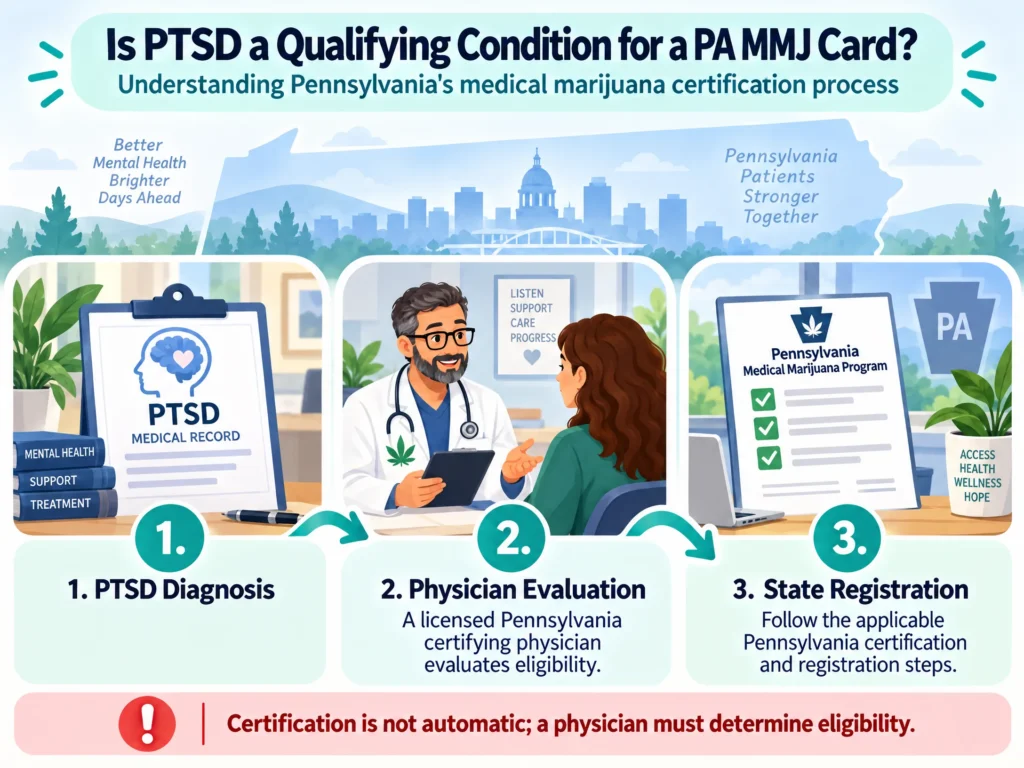
This means that a Pennsylvania resident with a documented PTSD diagnosis from a licensed physician can qualify for the PA MMJ program.
Do You Qualify for a PA MMJ Card?
Connect with a licensed Pennsylvania state physician online from home.
The certification process does not require a specific PTSD treatment history or proof that other treatments have failed. It requires a physician determination that you have a qualifying condition and that medical marijuana may provide symptomatic benefit.
For Pennsylvania veterans, this is particularly significant. Pennsylvania has one of the larger veteran populations in the United States, and PTSD is among the most common conditions for which veterans seek MMJ certification nationally. The VA’s ongoing restrictions on recommending cannabis do not prevent PA veterans from seeking state MMJ certification through civilian physicians.
If you have a PTSD diagnosis and want to explore whether PA medical marijuana is appropriate for your situation, the full qualifying conditions list is here and same-day certification is available at Pennsylvania Marijuana Cards.
Understanding PTSD: The Three Symptom Clusters Cannabis May Affect
PTSD is not a single symptom. It is a disorder involving three distinct symptom clusters, and cannabis evidence is not equally strong across all three.
Understanding this distinction helps set realistic expectations.
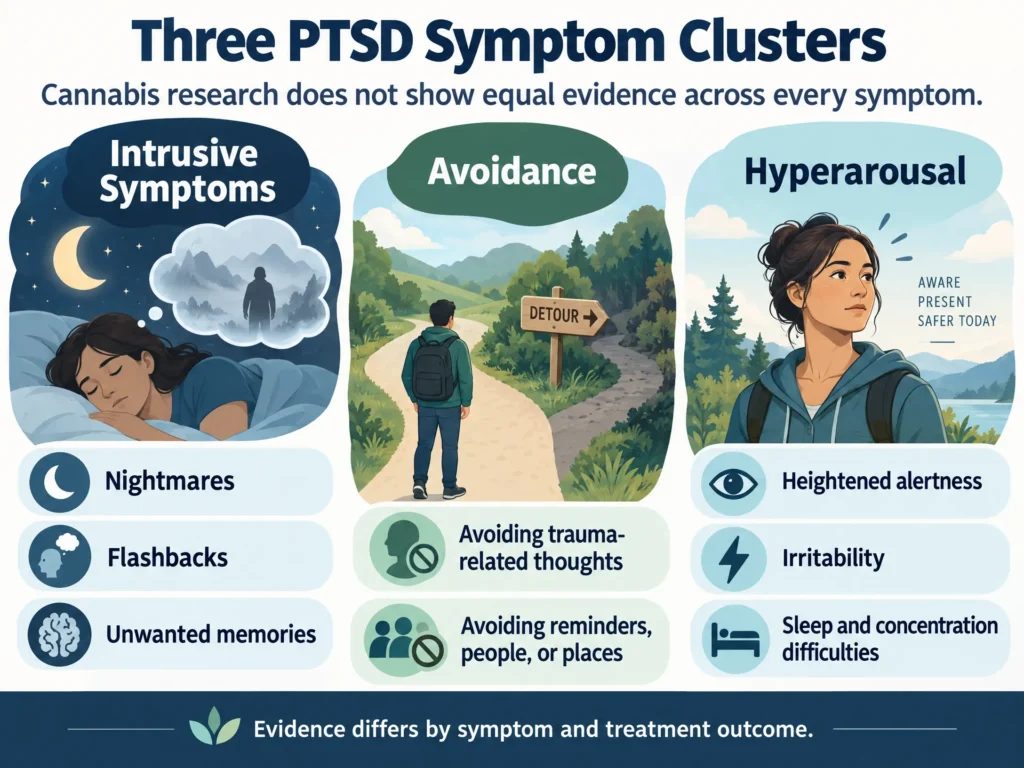
Cluster 1: Intrusive symptoms
Recurring, involuntary re-experiencing of the traumatic event through nightmares, flashbacks, or intrusive memories.
This is where cannabis has its most clinically supported effect. Nightmare reduction is the only PTSD symptom for which a randomized controlled trial has shown statistically significant improvement from a cannabinoid. Sleep quality improvements are also consistently reported.
Cluster 2: Avoidance
Deliberate avoidance of trauma-related thoughts, memories, places, people, or activities.
The evidence here is primarily mechanistic.
Cannabis, particularly THC, may facilitate fear extinction learning, the neurological process that makes avoidance less necessary over time. Human imaging studies show THC increases prefrontal cortex activation during extinction tasks.
⚡ Fast & 100% Online PA Medical Cards
Board-Certified Doctors • 100% Money-Back Guarantee
Book Evaluation Now →Clinical symptom trials have not yet confirmed this mechanism produces measurable avoidance symptom reduction.
Cluster 3: Hyperarousal
Persistent heightened alertness, irritability, sleep disruption, concentration difficulties, and exaggerated startle response.
Cannabis shows mixed results here. Anxiety reduction from lower-dose THC and CBD may reduce the hyperarousal baseline. But higher-dose THC can paradoxically worsen hypervigilance in some patients. The dose-response relationship is critical for this cluster.
| Symptom Cluster | Cannabis Evidence | Best-Supported Approach |
|---|---|---|
| Intrusive symptoms (nightmares, flashbacks) | Strongest: nightmare reduction in RCTs | Low-dose bedtime THC or nabilone |
| Avoidance | Mechanistic only: vmPFC activation in imaging studies | THC as PE therapy augment (experimental) |
| Hyperarousal | Mixed: anxiolytic at low doses, worsens at high doses | Low-dose CBD-dominant or ratio tinctures |
| Sleep quality | Consistent observational and some RCT support | Bedtime THC, CBN, or ratio tinctures |
The CB1 Fear Extinction Mechanism: Why Cannabis and PTSD Are Biologically Connected
This is the scientific foundation that makes cannabis a plausible PTSD treatment at a biological level, even though clinical trials have not yet fully confirmed it.
PTSD fundamentally involves a disruption in fear memory processing.
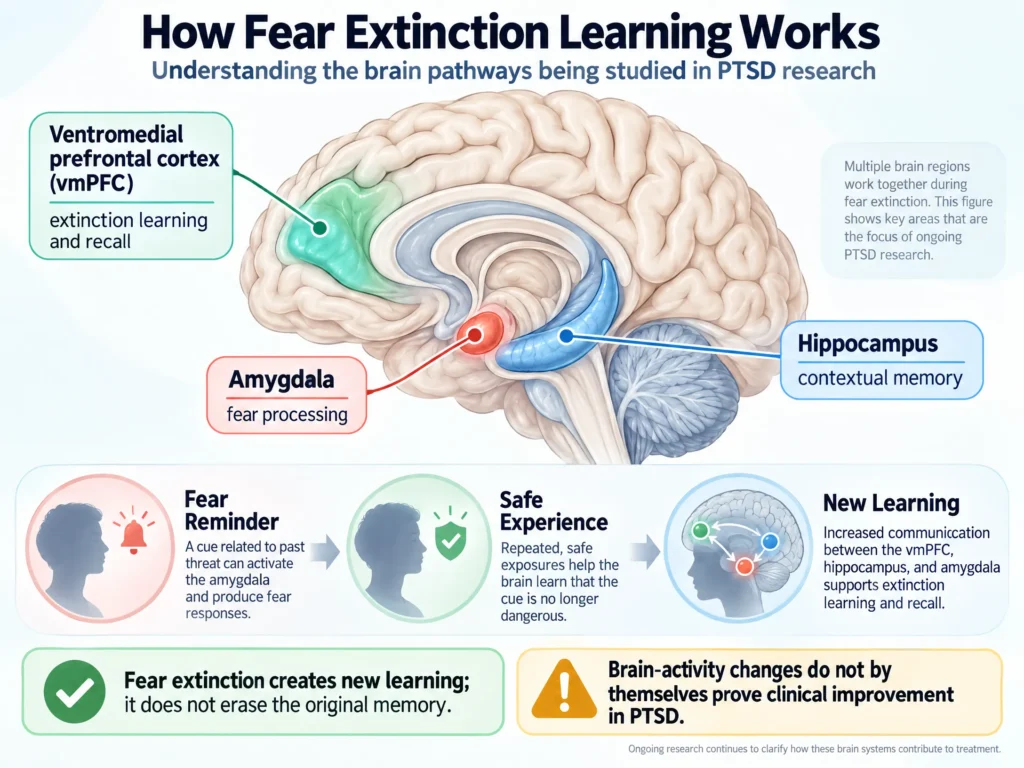
In a normally functioning brain, fear memories can be “extinguished” through a learning process where the brain repeatedly experiences that a feared stimulus is no longer dangerous. This extinction process is not erasure of the memory. It is the creation of a new, competing memory: “this is safe now.”
PTSD patients have impaired extinction learning. Their brains retain fear memories more strongly and fail to update them when evidence suggests the threat is gone. This is why trauma responses persist for years after the original event.
CB1 receptors are found in high concentrations in the three brain regions most involved in fear memory processing.
The amygdala processes fear responses and encodes fear memories. The hippocampus is critical for contextual memory, helping determine when and where fears apply. The ventromedial prefrontal cortex (vmPFC) is essential for extinction recall, the ability to remember “this is safe” and override fear responses.
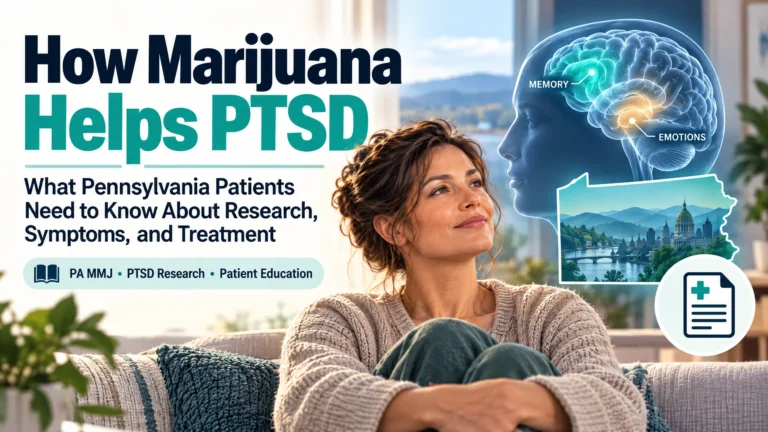
Research from Wayne State University’s Dr. Christine Rabinak and colleagues demonstrates that a 7.5mg oral dose of THC specifically increases vmPFC activation during extinction learning and fear renewal tasks in adults with PTSD.
As the published research states: “7.5 mg of delta-9-tetrahydrocannabinol (THC) decreases fear responding in healthy adults and increases prefrontal cortex activation during extinction learning and fear renewal in adults with PTSD.”
Renewing Your PA MMJ Card?
Quick annual recertification online. No paperwork hassle.
Renew Card Online →This is not just suppressing fear temporarily. It is enhancing the brain’s ability to learn and retain the “this is safe” memory. That is a mechanistically meaningful distinction, even though clinical symptom reduction has not yet been consistently demonstrated.
What the Research Actually Shows in 2026
The most comprehensive summary of the cannabis-PTSD evidence comes from a scoping review published in the Journal of Cannabis Research in May 2026.
The review analyzed 26 studies including 7 randomized controlled trials, 9 prospective observational studies, 9 retrospective observational studies, and one unpublished RCT, covering a total of 3,598 patients.
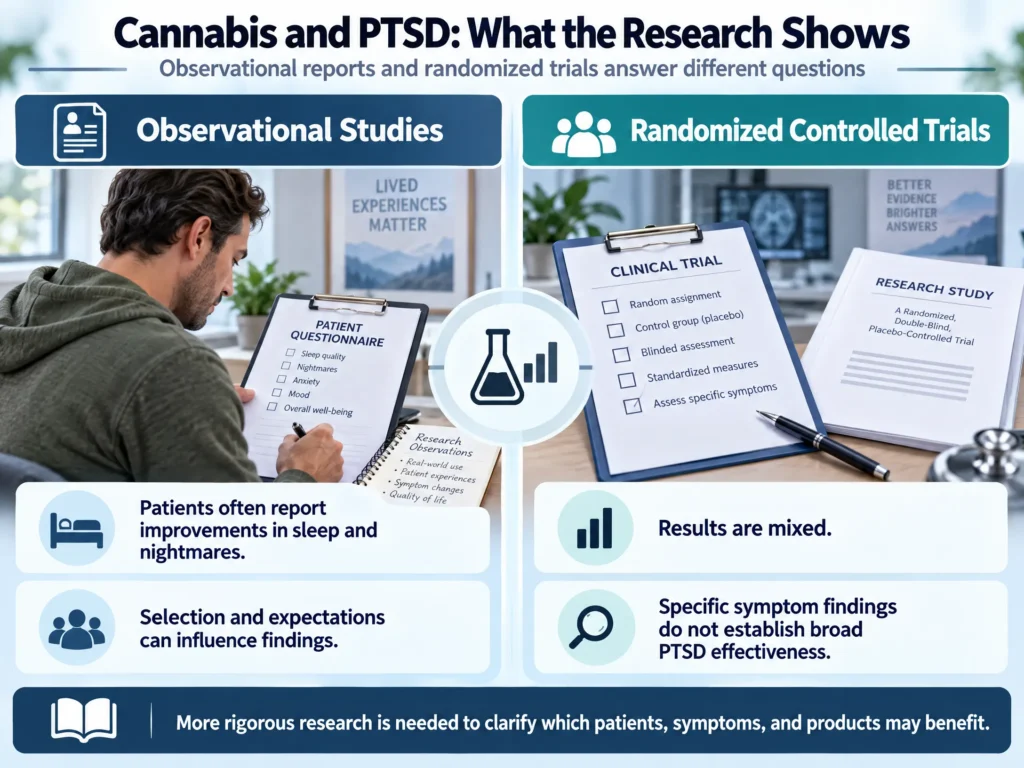
What observational studies consistently show
Patient-reported improvements in nightmares, hyperarousal, sleep quality, and overall quality of life are frequent and consistent across observational studies. Patients who use cannabis for PTSD generally report that it helps with specific symptoms, particularly nightmares and sleep.
What RCTs show
Among the 7 RCTs reviewed, only one demonstrated statistically significant improvement on a specific PTSD symptom outcome: nabilone (a synthetic cannabinoid) versus placebo for nightmare reduction.
Two RCTs testing inhaled or oral cannabis did not show superiority over placebo on overall PTSD symptom measures.
Two RCTs testing THC specifically during fear extinction tasks found neurobiological changes (increased vmPFC activity, reduced fear renewal) without measurable clinical symptom improvement on PTSD assessment scales.
Two RCTs testing CBD alone showed minimal clinical benefit, limited to transient mood or cognitive effects during trauma recall sessions.
The gap between what patients report and what RCTs measure is real and important.
It may reflect that RCTs measure PTSD symptom scales that capture broad severity rather than the specific symptoms (nightmares, sleep disruption) where cannabis shows the most patient-reported benefit.
It may also reflect modest effects that observational reporting overestimates due to expectation and self-selection.
Get Approved by a Licensed PA Doctor
Schedule your appointment in minutes. You only pay if approved.
Start Online Application →Both may be true simultaneously.
The Honest RCT Scorecard: One Win Out of Seven
For a medical site serving PA patients, presenting this data honestly matters.
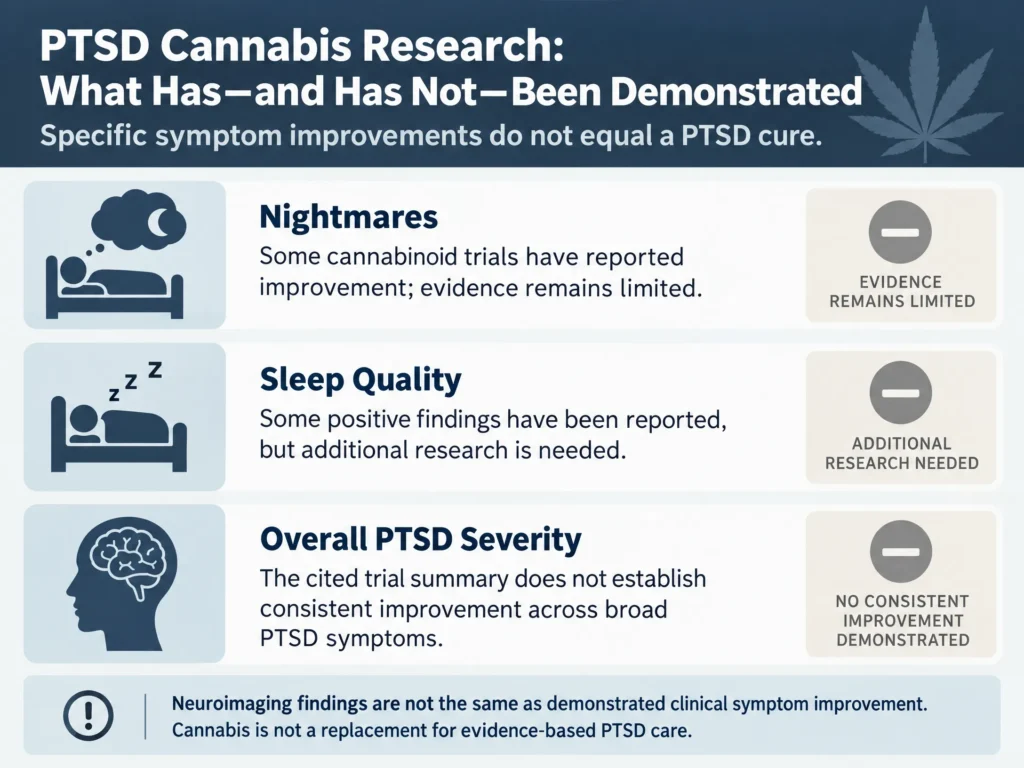
Here is the full RCT picture organized for clarity:
| Trial Type | What Was Tested | Outcome |
|---|---|---|
| Nabilone vs placebo (crossover, n=10, military) | Synthetic cannabinoid for nightmares | Significant nightmare reduction. Only clear RCT win. |
| Inhaled cannabis vs placebo (n=~80) | General PTSD symptoms | No significant superiority over placebo |
| Oral cannabis vs placebo | General PTSD symptoms | No significant superiority over placebo |
| THC during fear extinction tasks (n=~50) | vmPFC activation and fear renewal | Neurobiological changes without clinical symptom improvement |
| THC during prolonged exposure sessions | PE augmentation, extinction learning | Ongoing (Wayne State University trial) |
| Acute oral CBD (n=~32) | Trauma recall anxiety | Transient mood/cognitive effects only |
| Acute oral CBD, second trial | Trauma recall anxiety | Minimal benefit |
The takeaway: Current PTSD-cannabis RCT evidence is insufficient to support cannabis as a first-line or standard PTSD treatment. This is what the May 2026 scoping review concludes, and it is the current position of most clinical practice guidelines.
What this does not mean: That cannabis has no role for PTSD patients.
It means the evidence supports a trial for specific symptoms, particularly nightmares and sleep disruption, with realistic expectations, under physician guidance, alongside (not instead of) evidence-based PTSD therapies.
The August 2026 Nature Medicine Breakthrough on THC and Nightmares
One month before this guide was written, the most significant PTSD-cannabis RCT in years was published in Nature Medicine.
A 10-week randomized controlled trial of more than 170 adults with PTSD tested bedtime dronabinol (synthetic THC) against placebo.
The results: Dronabinol reduced nightmare burden significantly more than placebo, with a mean decrease of 3.7 points versus 2.2 points on the nightmare assessment scale.
The trial also found improvements in sleep quality in the dronabinol group.
Ready to Get Your Official PA MMJ Card?
State-certified doctor consultations online. No risk—100% refund if not approved.
Claim Your MMJ Card Online →Critically, the trial did not find improvement in overall PTSD severity or depression scores. The benefit was specific to nightmares and sleep.
No withdrawal symptoms were observed at the end of the study period. Adverse effects were mild to moderate and more frequent in the treatment group, as expected.
This is the largest and most recent randomized trial of THC specifically for PTSD-related nightmares. Its publication in Nature Medicine, one of the world’s highest-impact journals, represents meaningful scientific recognition that this specific application (bedtime THC for nightmares) has real evidence behind it.
For Pennsylvania PTSD patients whose most debilitating symptoms include recurrent nightmares and the resulting sleep disruption, this is the most directly relevant piece of research available.
THC vs CBD vs Combination for PTSD: What the Evidence Supports
Different cannabinoids have different roles in PTSD symptom management based on their distinct mechanisms.
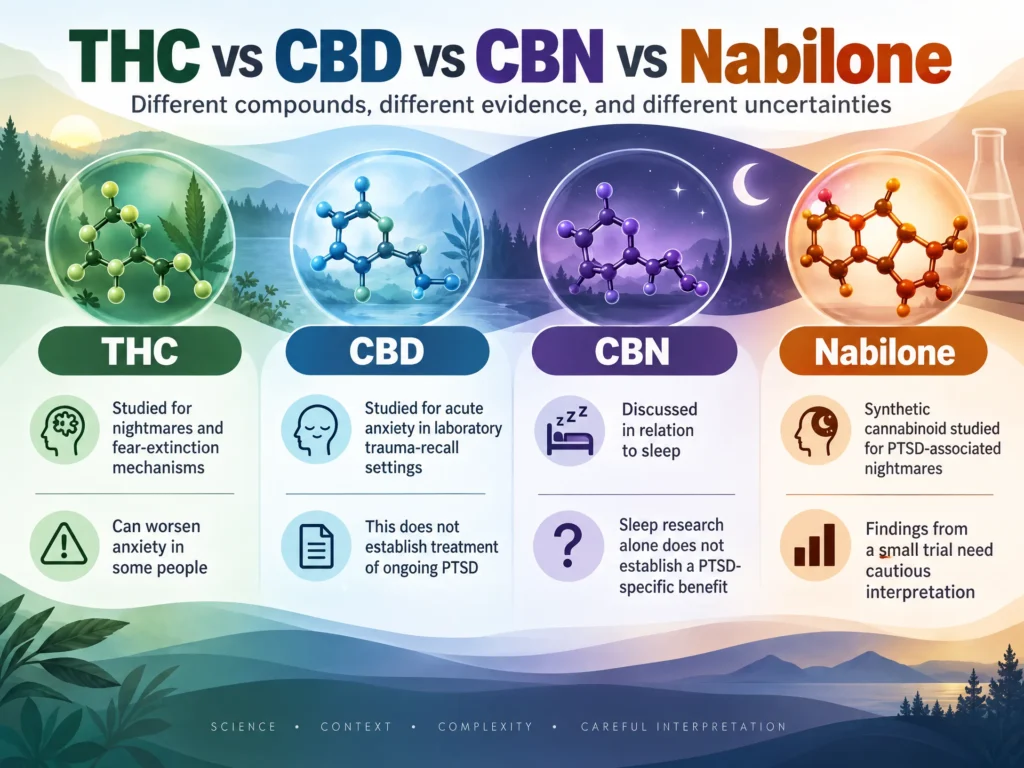
THC for nightmares and sleep
The strongest clinical evidence specifically supports low-dose bedtime THC for nightmare reduction, backed by the nabilone crossover trial and now the August 2026 Nature Medicine RCT.
THC reduces REM sleep in the short to medium term. Since PTSD nightmares occur during REM sleep, this appears to be the mechanism by which THC reduces nightmare frequency.
The long-term concern: chronic REM suppression from nightly THC use can worsen overall sleep architecture over time and reduce the emotional processing that happens during REM. See Section 8 for the important warning on this.
THC at 7.5mg for fear extinction
The Wayne State neuroimaging research points specifically to 7.5mg oral THC as the dose that produces meaningful vmPFC activation during extinction learning.
Higher doses did not consistently produce better outcomes and increased anxiety risk. This suggests that for the fear extinction mechanism specifically, lower doses are more targeted than higher ones.
CBD for acute trauma recall anxiety
The 2022 Bolsoni et al. study found CBD reduced anxiety and discomfort during trauma recall in a laboratory setting. This is not a treatment effect on ongoing PTSD, but suggests CBD may help patients manage acute distress when trauma-related memories are being processed, which may be relevant for patients in active therapy.
Cannabinoid comparison for PTSD symptoms:
| Cannabinoid | Best PTSD Application | Key Evidence | Risk |
|---|---|---|---|
| THC (low dose, 5-10mg) | Nightmares, sleep onset, fear extinction augmentation | Nature Medicine 2026 RCT; Wayne State neuroimaging | Anxiety at higher doses; REM suppression |
| CBD (20-50mg) | Acute trauma recall anxiety, hyperarousal reduction | 2022 Bolsoni et al. lab study; 5-HT1A serotonin mechanism | Minimal; CYP450 drug interactions |
| 1:1 THC:CBD | Nightmares + anxiety moderation | No direct PTSD RCT; mechanism-based | Lower anxiety risk than THC alone |
| CBN (25-50mg) | Sleep continuity without REM suppression | 2024 TruCBN RCT; 2025 rat polysomnography | Minimal at typical doses |
| Nabilone (synthetic) | PTSD nightmares | 2015 RCT in military personnel (n=10) | Only in regulated clinical settings |
Combination products
No large-scale PTSD-specific RCT has directly tested 1:1 THC:CBD combination products. Based on what is known about CBD modulating THC’s anxiogenic effects at higher doses, combination products are a reasonable clinical approach for PTSD patients who want THC’s nightmare-reducing effect with reduced risk of anxiety.
For more on ratio tincture options, read our THC tincture guide.
The REM Sleep Tradeoff: A Critical Warning for PTSD Patients
This is the section most cannabis-for-PTSD guides omit, and it is one of the most important for long-term patient safety.
THC suppresses REM sleep.
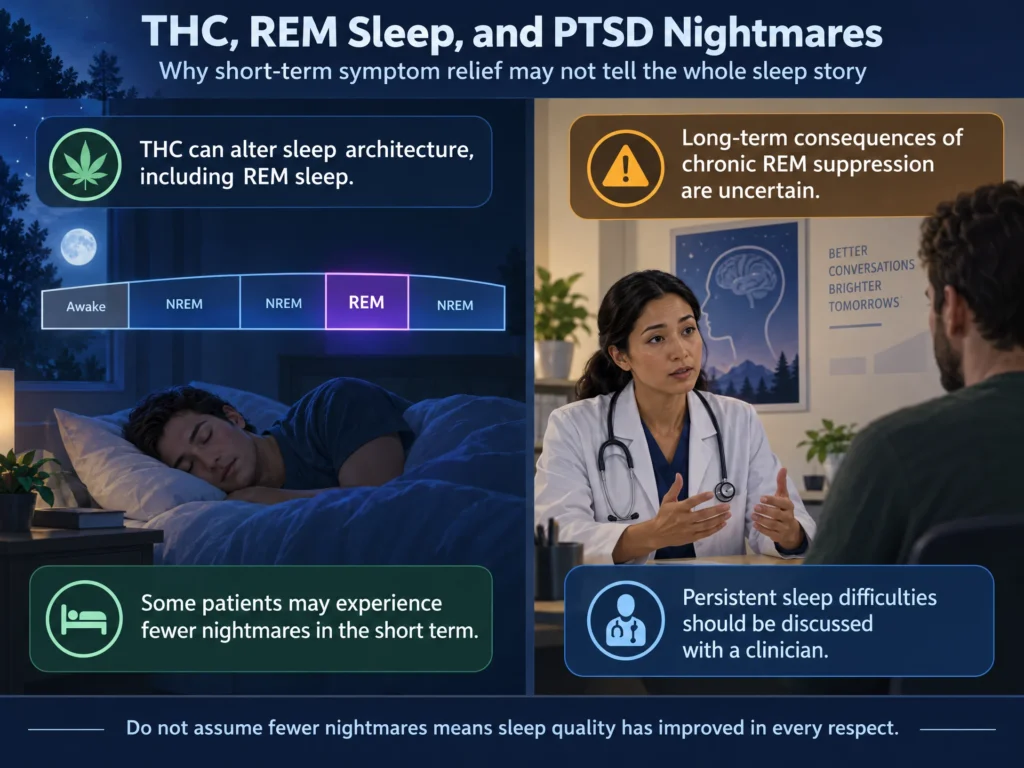
This is the mechanism by which bedtime THC reduces nightmare frequency. PTSD nightmares occur during REM sleep. Less REM equals fewer nightmares, at least in the short to medium term.
But REM sleep is not just where nightmares happen. It is also where the brain does critical emotional memory processing, consolidates learning from therapy sessions, and regulates mood.
For PTSD patients, REM sleep has a specific role: it is where fear memories can be reprocessed and integrated in a less emotionally raw form. This is part of how the brain naturally recovers from trauma over time.
Chronic nightly THC use that persistently suppresses REM may reduce nightmares while simultaneously interfering with the natural emotional recovery process that REM enables.
CBN, as covered in our CBN cannabinoid sleep guide, actually increased REM sleep in animal studies. For PTSD patients specifically, CBN may offer an alternative or complementary approach for sleep continuity without the REM suppression concern.
The practical guidance for PA PTSD patients on THC for sleep:
Using bedtime THC as a short-term intervention to break a cycle of severe nightmare disruption is well-supported and the most evidence-aligned use.
Using it nightly for months or years without regular reassessment raises concern about long-term REM effects.
Work with your certifying physician on a sustainable approach: periodic tolerance breaks, CBN alternation, or integration with therapy that processes fear memories directly.
Cannabis as a Therapy Augmentation Tool
This is one of the most scientifically interesting and clinically relevant aspects of cannabis and PTSD, and it is almost entirely absent from patient-facing guides.
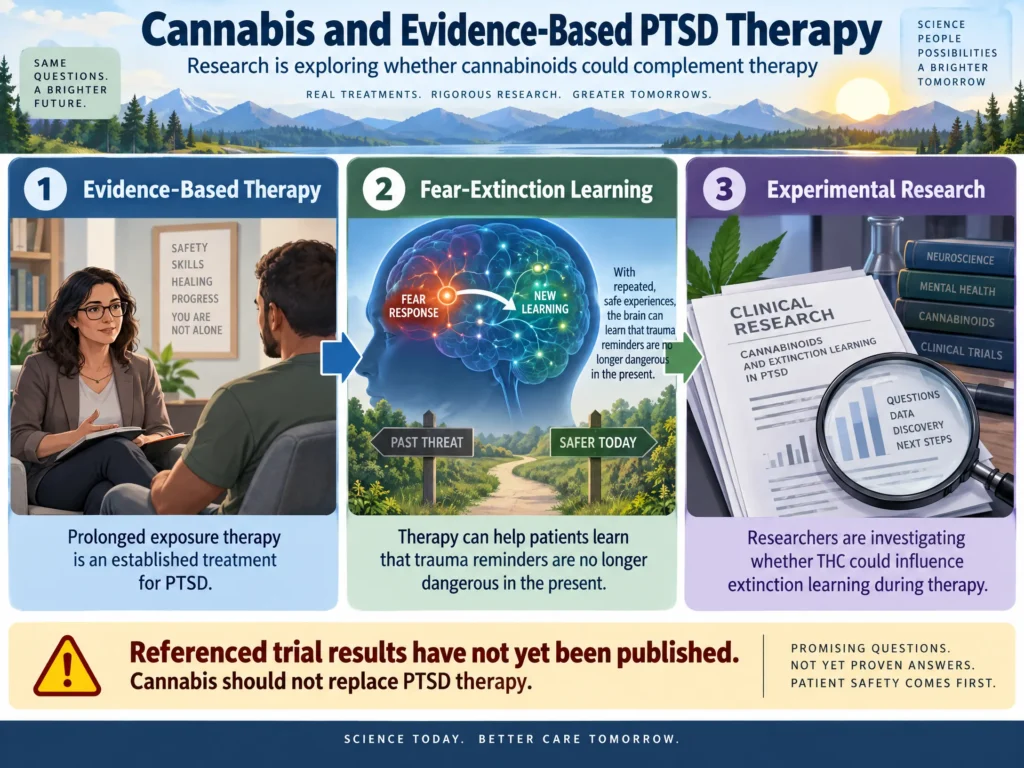
Prolonged exposure (PE) therapy is one of the most evidence-based PTSD treatments available. It works by having patients gradually and systematically confront trauma memories and feared stimuli, facilitating fear extinction through repeated exposure.
PE is effective. But dropout rates are high, and a significant portion of patients experience only partial response.
An ongoing Wayne State University randomized controlled trial is testing whether 7.5mg oral THC taken before PE sessions augments the therapy’s effectiveness.
The hypothesis is neurobiologically specific: if THC enhances vmPFC activation and extinction memory consolidation, taking THC before exposure sessions might make the extinction learning from each PE session “stick” better, improving long-term outcomes and potentially reducing the number of sessions needed.
This trial (NCT04080427) completed data collection in May 2025. Results have not yet been published as of this writing.
If you are a PA PTSD patient currently in or planning to enter prolonged exposure therapy or EMDR, discussing cannabis as a potential adjunct with your therapist is now a clinically informed conversation.
Cannabis as a therapy enhancer rather than a standalone treatment is consistent with the best current understanding of how it may work: by facilitating the neurological processes that therapy already engages, rather than treating PTSD independently.
PA Dispensary Product Guidance for PTSD Patients
Based on the current evidence, here is a practical product framework for Pennsylvania PTSD patients.
For nightmare reduction and sleep (most evidence-supported)
A low-dose THC product taken 60 to 90 minutes before bedtime. The Nature Medicine trial used 10 to 15mg dronabinol equivalents. PA dispensary troches or tinctures in the 5mg to 10mg THC range are the closest available equivalent.
A 3:1 or 1:1 CBD:THC tincture reduces anxiety risk compared to THC alone while preserving the nightmare-reduction mechanism.
For patients concerned about chronic REM suppression, a CBN-containing tincture or dedicated CBN product (25 to 50mg) taken at bedtime may help sleep continuity with less REM disruption.
For daytime hyperarousal management
Low-dose CBD-dominant tincture (10:1 or 5:1 CBD:THC ratio) taken in the morning or early afternoon.
CBD’s serotonin pathway activation (5-HT1A) reduces the baseline anxiety and hyperarousal that characterizes PTSD hyperarousal cluster symptoms.
Avoid high-THC daytime products for hyperarousal. THC at higher doses worsens anxiety and hypervigilance in anxiety-sensitive individuals, which most PTSD patients are.
For more on CBD tincture options at PA dispensaries, read our CBD tinctures guide.
Terpene profile for PTSD patients
At your PA dispensary, review the COA terpene panel for products. For PTSD patients, prioritize linalool (GABA modulation, reduces anxiety-driven hyperarousal), limonene (serotonin pathway activation, anxiolytic), and caryophyllene (CB2 anti-inflammatory, calming).
Minimize high-myrcene products for daytime use if they produce excessive sedation that interferes with therapy participation or daily function.
For a full terpene guide, read our terpenes for anxiety guide.
PA dispensary product summary for PTSD:
| Symptom | Product Type | Dose | Timing |
|---|---|---|---|
| Nightmares | THC troche or tincture | 5mg to 10mg THC | 60 to 90 min before sleep |
| Nightmares + anxiety risk | 1:1 or 3:1 CBD:THC tincture | Per ratio | 60 to 90 min before sleep |
| Sleep continuity (no REM suppression) | CBN tincture or troche | 25 to 50mg CBN | 60 to 90 min before sleep |
| Daytime hyperarousal | CBD-dominant tincture (10:1 or 5:1) | 25 to 50mg CBD | Morning or early afternoon |
| Acute anxiety / hypervigilance | Limonene-rich, low-THC vaporized flower | 1 to 2 draws | As needed |
What to avoid
High-THC concentrates, vape cartridges at heavy use frequency, and high-dose THC without CBD for patients with significant anxiety or hyperarousal symptoms. These increase the risk of cannabis-induced anxiety episodes that can resemble and reinforce PTSD hyperarousal and avoidance patterns.
How to Discuss Cannabis for PTSD with Your PA Certifying Physician
The PA MMJ certification through Pennsylvania Marijuana Cards involves a telehealth consultation with Dr. Johnathon Chance Miller, MD.
Coming to that appointment with specific, clear information helps the physician make the most informed recommendation.
What to bring and discuss:
Your PTSD diagnosis documentation and diagnosing provider information.
Which symptom cluster is most debilitating for you: nightmares and sleep disruption, avoidance, or hyperarousal and anxiety. The evidence-based product approach differs depending on your primary symptom.
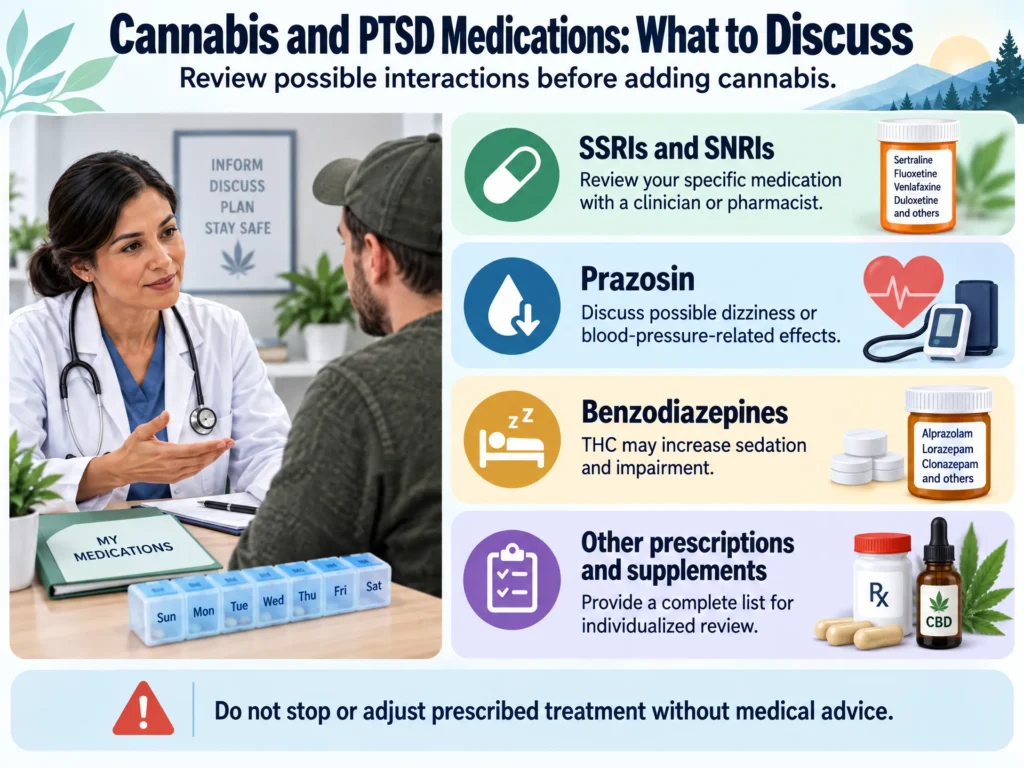
Any current medications, particularly SSRIs, SNRIs, prazosin (often prescribed for PTSD nightmares), and benzodiazepines. CBD inhibits CYP450 enzymes that process several of these medications, and interactions need to be considered.
Whether you are currently in psychotherapy (PE, EMDR, CBT). This affects the timing and approach recommendation.
Your prior cannabis experience, if any. PTSD patients with no prior cannabis history should start at significantly lower doses than established users.
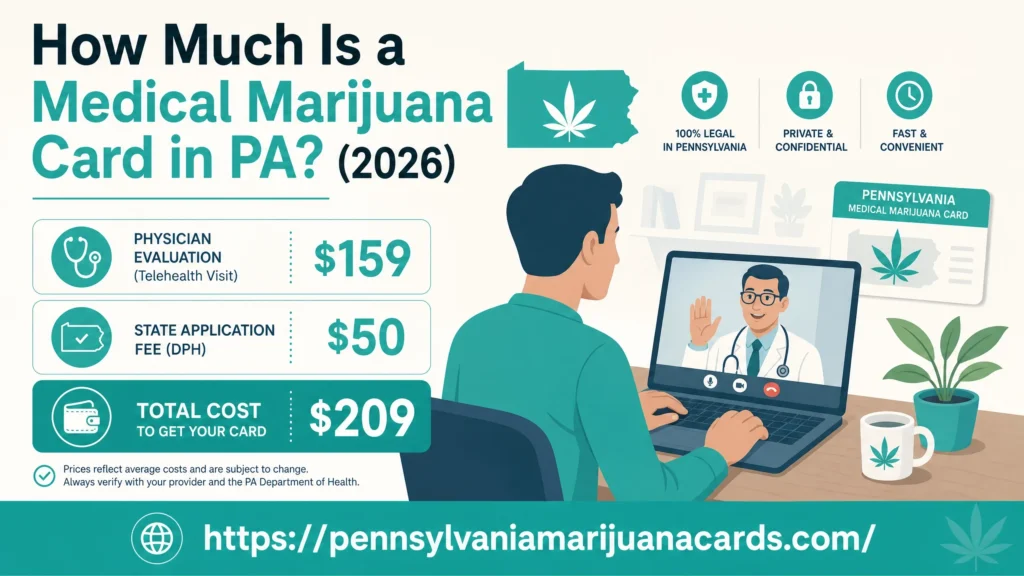
The certification process is entirely online and appointments are typically completed the same day. New patient certification is $159 plus the $50 state registration fee, with the state fee waived through MMAP for Medicaid, SNAP, WIC, CHIP, PACE, and PACENET enrollees.
Check whether your PTSD diagnosis qualifies here or get certified at Pennsylvania Marijuana Cards.
Frequently Asked Questions
Q: Is PTSD a qualifying condition for a PA MMJ card?
A: Yes. Post-traumatic stress disorder is explicitly listed among Pennsylvania’s 24 qualifying conditions under the Medical Marijuana Act (Act 16 of 2016). A documented PTSD diagnosis from a licensed physician is the basis for certification. PA veterans with PTSD can seek state MMJ certification through civilian physicians regardless of VA policy restrictions on cannabis recommendations.
Q: Does marijuana actually help PTSD?
A: The honest answer is: for specific symptoms, yes, with the clearest evidence for nightmare reduction.
A May 2026 scoping review of 7 RCTs and 3,598 patients found only one RCT showing clear clinical efficacy over placebo (nabilone for nightmares). An August 2026 Nature Medicine RCT of more than 170 adults found bedtime THC significantly reduced nightmare burden compared to placebo.
Observational studies consistently show patient-perceived improvements in nightmares, sleep, and quality of life. Evidence for overall PTSD severity reduction is much weaker. Cannabis is best understood as a targeted symptom management tool, not a cure.
Q: Why does THC help with PTSD nightmares?
A: Two mechanisms.
First, THC suppresses REM sleep, and PTSD nightmares occur during REM sleep. Less REM means fewer nightmares in the short to medium term.
Second, THC activates CB1 receptors in the amygdala, hippocampus, and ventromedial prefrontal cortex, regions critical for fear memory processing and extinction learning. Low-dose oral THC (7.5mg) has been shown in human neuroimaging studies to increase vmPFC activation during fear extinction learning in PTSD patients.
Q: What is the best cannabis product for PTSD in Pennsylvania?
A: For nightmares and sleep, a low-dose THC product (5mg to 10mg THC) or a 1:1 to 3:1 CBD:THC tincture taken 60 to 90 minutes before bed is most consistent with available evidence.
For daytime hyperarousal, a CBD-dominant tincture (10:1 or 5:1 CBD:THC) is better supported and lower risk. Avoid high-THC daytime use for hyperarousal-dominant PTSD.
Ask your PA dispensary pharmacist for specific product recommendations matched to your primary symptom cluster.
Q: Is there a risk of cannabis making PTSD worse?
A: Yes, particularly with high-THC products and frequent use.
Higher doses of THC can worsen anxiety, paranoia, and hypervigilance, reinforcing rather than reducing PTSD hyperarousal. Chronic heavy cannabis use is associated with increased PTSD symptoms in some longitudinal studies.
Regular cannabis use can also become an avoidance behavior, reducing exposure to feared stimuli rather than facilitating extinction of fear responses. Using cannabis within a therapy-informed approach reduces these risks.
Q: Can I use cannabis alongside my PTSD medications?
A: With physician and pharmacist oversight.
CBD inhibits CYP2C9 and CYP3A4 enzymes that metabolize several common PTSD medications including some SSRIs. Prazosin (used for PTSD nightmares) may have additive blood pressure-lowering effects with cannabis.
Benzodiazepines combined with THC produce additive CNS depression. Disclose your full medication list to both your certifying physician and your PA dispensary pharmacist before starting.
Q: What dose of THC is most supported for PTSD?
A: The most specific human research from Wayne State University identifies 7.5mg of oral THC as the dose that produces meaningful vmPFC activation during fear extinction learning in PTSD patients.
The August 2026 Nature Medicine nightmare trial used 10 to 15mg dronabinol equivalents at bedtime. These are relatively low doses by recreational standards.
For PTSD patients, lower starting doses (2.5mg to 5mg) are appropriate given the anxiety sensitivity common in this population, with gradual titration toward the studied range.
The Bottom Line
Marijuana helps with PTSD through biologically meaningful mechanisms. The CB1 receptor system is directly relevant to how PTSD works, and the fear extinction mechanism gives a compelling scientific reason why THC at low doses might facilitate the neurological processes that therapy and time engage.
The clinical evidence in 2026 supports cannabis for specific PTSD symptoms, most clearly nightmare reduction and sleep quality improvement. The August 2026 Nature Medicine RCT is the strongest direct evidence available for this specific application.
What the evidence does not yet support: cannabis as a standalone PTSD treatment that replaces therapy or significantly reduces overall PTSD severity across all symptom clusters.
For Pennsylvania PTSD patients, the most evidence-aligned approach is a low-dose bedtime THC or ratio product for nightmare relief, a CBD-dominant product for daytime hyperarousal management, and participation in evidence-based therapy where cannabis may one day be shown to enhance the extinction learning process.
This blog post is intended for general educational and informational purposes only and does not constitute medical advice. Cannabis should not replace evidence-based PTSD therapies including prolonged exposure, EMDR, or cognitive processing therapy. Cannabis can interact with PTSD medications including SSRIs, prazosin, and benzodiazepines. Always disclose all medications to your certifying physician and PA dispensary pharmacist. If you are experiencing a mental health crisis, contact the Veterans Crisis Line at 988 (press 1) or the Crisis Text Line (text HOME to 741741). Medically reviewed by Dr. Johnathon Chance Miller, MD.
Sources
- Journal of Cannabis Research 2026: Efficacy, Effectiveness and Safety of Medical Cannabis in PTSD, Scoping Review (May 2026)
- Nature Medicine 2026: Dronabinol for Nightmares in PTSD, Randomized Controlled Trial (August 2026)
- PMC 2026: Randomized Trial of THC to Augment Prolonged Exposure Therapy for PTSD, Wayne State University Protocol (January 2026)
- PMC 2026: Dose-Dependent Effect of Acute THC on Fear Extinction in PTSD (February 2026)
- Thieme 2025: The Endocannabinoid System in PTSD (August 2025)
- Cannabis Evidence: Cannabis and PTSD in Veterans
- Utah Medical Cannabis Evidence Guidelines: PTSD
- Compassionate Certification Centers: Medical Marijuana for PTSD (July 2026)
- Jetly R et al. 2015: Nabilone for PTSD-Associated Nightmares, Randomized Double-Blind Crossover Trial (Psychoneuroendocrinology)
- Bolsoni LM et al. 2022: CBD Effects on Symptoms from Traumatic Event Recall in PTSD (Psychopharmacology)
- PA Department of Health: Qualifying Conditions for Medical Marijuana