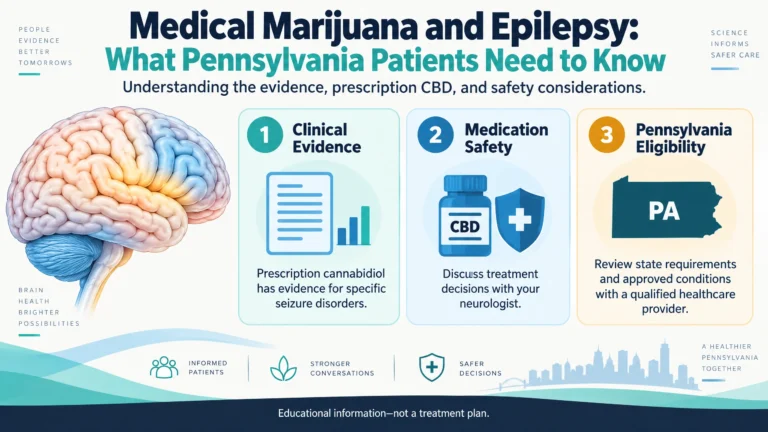

Epilepsy is explicitly listed among Pennsylvania’s 24 qualifying conditions for medical marijuana under Act 16 of 2016.
It is also the condition where the evidence for a specific cannabinoid, CBD, is the most rigorous available in all of medical cannabis research. The FDA-approved Epidiolex is a pharmaceutical-grade CBD product that passed four randomized, double-blind, placebo-controlled clinical trials involving 516 patients before receiving approval. No other cannabis-derived medication has cleared that bar.
Need a PA Medical Marijuana Card?
Get certified online in 15 minutes. 100% Money-Back Guarantee.
Get Certified Now →But for PA patients who rely on state-licensed dispensaries rather than a pharmaceutical prescription, there is a significant gap between the Epidiolex evidence and what is available on a dispensary menu. Understanding that gap, what it means practically, and how to navigate it safely with your neurologist requires information that most patient guides do not provide.
This guide covers what the research actually shows, how CBD’s anticonvulsant mechanisms work, the critical safety warnings that most cannabis epilepsy guides omit, and the PA-specific context that determines how this applies to your situation.
Key Takeaways
| Topic | Key Point |
|---|---|
| PA qualifying condition | Epilepsy is explicitly listed among Pennsylvania’s 24 qualifying conditions under Act 16 of 2016 |
| Strongest evidence | FDA-approved Epidiolex (pharmaceutical CBD) reduced seizures in four controlled trials, including 48% reduction vs 24% placebo for tuberous sclerosis complex |
| The Epidiolex-to-dispensary gap | Epidiolex is 100mg/ml pharmaceutical-grade CBD in a standardized delivery system; PA dispensary CBD products vary significantly in purity, concentration, and formulation |
| THCA distinction | THCA in its raw unheated form has documented anticonvulsant properties and is non-psychoactive; vaporization converts THCA to THC, which can be proconvulsant in some patients |
| Critical safety warning | Some epilepsy patients experience increased seizure activity with THC; high-THC products can be contraindicated for some epilepsy types |
| Critical drug interaction | CBD significantly inhibits clobazam metabolism, causing accumulation to potentially toxic levels; patients on clobazam need monitoring when adding CBD |
Is Epilepsy a Qualifying Condition for PA Medical Marijuana?
Yes. Pennsylvania’s Medical Marijuana Act (Act 16 of 2016) explicitly lists epilepsy as one of 24 qualifying conditions. The original legislation used the term “intractable epilepsy” but Pennsylvania’s qualifying condition framework applies to epilepsy broadly, not limited to treatment-refractory cases.
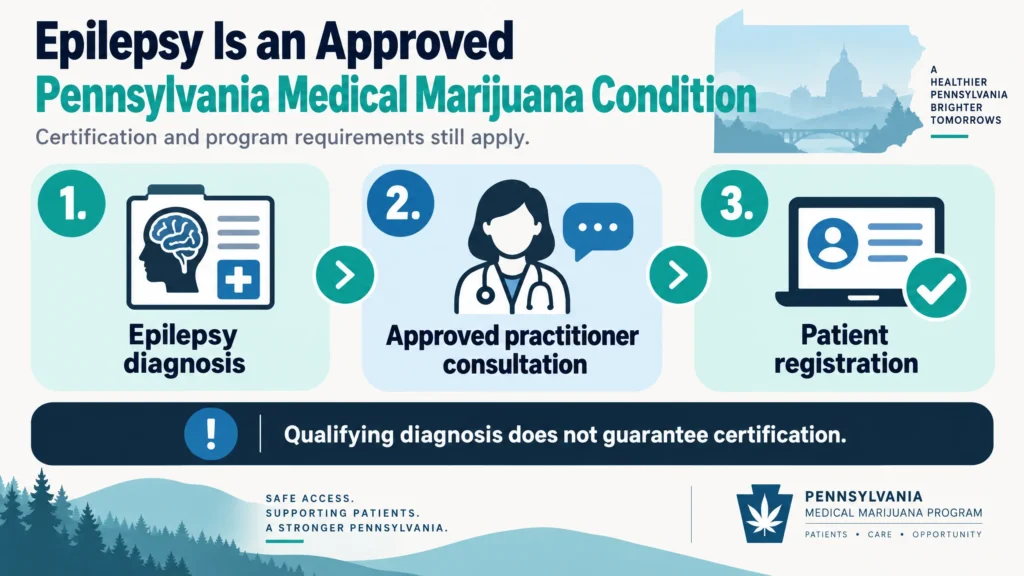
Patients with any form of documented epilepsy, including Dravet syndrome, Lennox-Gastaut syndrome, tuberous sclerosis complex, focal epilepsy, juvenile myoclonic epilepsy, and other epileptic syndromes, have a clear qualifying pathway.
Do You Qualify for a PA MMJ Card?
Connect with a licensed Pennsylvania state physician online from home.
The UPMC Health System enrolled PA patients in its Medical Marijuana Program for epilepsy beginning in January 2018, among the earliest participants in Pennsylvania’s program following its launch. Pennsylvania was one of the first states to specifically identify epilepsy as a qualifying condition, ahead of several states that later added it following Epidiolex’s FDA approval.
The certification process does not require failed trials of every antiseizure medication before qualifying. It requires a documented epilepsy diagnosis and physician determination that cannabis may provide therapeutic benefit.
The Research Landscape: From Anecdote to FDA Approval
Cannabis and seizures have been connected in medical literature for over a century. The modern research arc is worth understanding because it shapes what evidence patients can and cannot rely on.
The anecdotal era (2012 to 2014)
Stories of families moving to cannabis-legal states to access CBD-rich strains for treatment-resistant childhood epilepsy drove enormous public interest. Charlotte Figi’s story, the child with Dravet syndrome whose seizures were dramatically reduced by a CBD-dominant strain, became the most visible catalyst for medical cannabis reform nationally.
These stories were compelling and shaped legislation. They were not controlled evidence.
The clinical trial era (2015 to 2018)
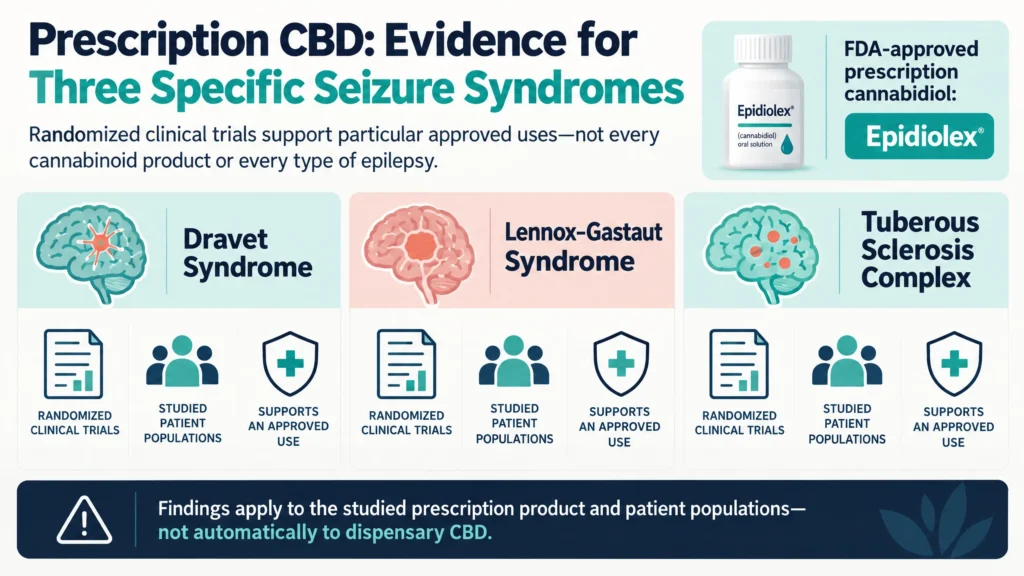
GW Pharmaceuticals conducted four randomized, double-blind, placebo-controlled trials of Epidiolex (pharmaceutical-grade CBD) across Dravet syndrome, Lennox-Gastaut syndrome, and tuberous sclerosis complex.
Key findings:
- Epidiolex reduced monthly convulsive seizures by a median of 39% in Dravet syndrome patients, versus 13% for placebo.
- For Lennox-Gastaut syndrome, Epidiolex reduced total seizures more than placebo across two separate trials.
- For tuberous sclerosis complex, Epidiolex reduced seizures by 48% versus 24% for placebo.
The FDA approved Epidiolex in June 2018 for Dravet syndrome and Lennox-Gastaut syndrome. In 2020, approval was extended to tuberous sclerosis complex.
The current landscape (2025 to 2026)
A 2025 systematic review published in Frontiers Acta Biochimica Polonica searched MEDLINE through June 2025 and examined approximately 150 peer-reviewed articles on cannabinoids in epilepsy. The review covered CBD, THCA, CBDV, THCV, THC, and the synthetic analog H2CBD.
Nationwide Children’s Hospital published the most extensive long-term data on Epidiolex for focal epilepsies through the US Expanded Access Program, tracking 140 patients at 35 epilepsy centers. This study extended evidence beyond Dravet and LGS to other focal epilepsy types.
How CBD Controls Seizures: Three Independent Mechanisms
⚡ Fast & 100% Online PA Medical Cards
Board-Certified Doctors • 100% Money-Back Guarantee
Book Evaluation Now →CBD’s anticonvulsant effect is one of the most mechanistically studied phenomena in cannabis pharmacology, and it works through pathways that are independent of CB1 and CB2 receptors. This is why CBD reduces seizures without producing intoxication.
Three primary mechanisms have been identified and supported by the most rigorous available research:
Mechanism 1: GPR55 receptor inhibition
GPR55 is a cell surface receptor that regulates neuronal excitability. Its activity appears to contribute to epileptic conditions because GPR55 expression is increased in the epileptic hippocampus, and GPR55 activation increases the frequency of excitatory postsynaptic currents (EPSC), making neurons fire more readily.
CBD inhibits GPR55-mediated increases in EPSC frequency in both non-epileptic and epileptic conditions, effectively reducing the neuronal excitability that underlies seizure activity.
Mechanism 2: TRPV1 receptor activation and desensitization
TRPV1 receptors (the same receptors activated by capsaicin in hot peppers) are expressed throughout the central nervous system and are upregulated in epileptic patients’ brains. TRPV1 activation promotes neuronal depolarization and seizure facilitation.
CBD activates TRPV1 receptors but then rapidly desensitizes them. This activation-then-desensitization net effect reduces TRPV1’s ability to facilitate future seizures, raising the seizure threshold.
Mechanism 3: Adenosine signaling enhancement
Adenosine is the brain’s endogenous anticonvulsant. It suppresses neuronal excitability through A1 receptor activation, effectively putting a brake on excessive neural firing.
CBD increases extracellular adenosine availability through inhibition of the adenosine transporter. More available adenosine means more A1 receptor activation, more braking of excitability, and a higher seizure threshold.
These three mechanisms work through pathways completely separate from the CB1 and CB2 pathways involved in pain relief, mood, and appetite. This explains why CBD can be anticonvulsant in children and adolescents without the psychoactive or appetite effects of THC.
The Epidiolex-to-Dispensary Gap: What PA Patients Must Understand
This section covers one of the most important practical distinctions in epilepsy cannabis medicine, and it is almost entirely absent from patient guides.
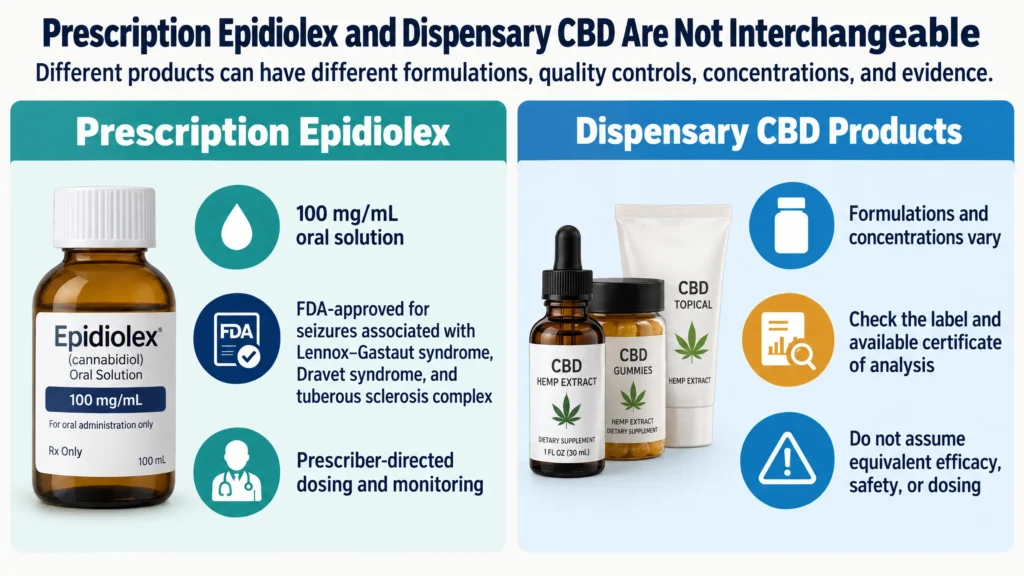
Epidiolex is not simply “CBD oil you get at a pharmacy instead of a dispensary.” It is a specifically engineered pharmaceutical product with characteristics that most PA dispensary CBD products do not replicate.
What makes Epidiolex different?
Renewing Your PA MMJ Card?
Quick annual recertification online. No paperwork hassle.
Renew Card Online →Pharmaceutical purity and consistency. Epidiolex contains highly purified CBD in a sesame oil carrier. The CBD concentration is 100mg/ml and is batch-tested to pharmaceutical standards. Every bottle delivers the stated concentration.
Standardized dosing. The clinical trials used precise mg/kg body weight dosing that was individually titrated. This dosing precision is meaningful for seizure control.
FDA-regulated quality control. Manufacturing standards are pharmaceutical-grade and federally overseen.
Epidiolex vs PA dispensary CBD: key differences
| Feature | Epidiolex (Prescription) | PA Dispensary CBD Products |
|---|---|---|
| Regulatory status | FDA-approved Schedule V drug | State-tested, not FDA-approved |
| CBD concentration | Standardized 100mg/ml | Typically 10 to 33mg/ml; varies by product |
| Purity | Pharmaceutical-grade purified CBD | State COA-verified; variable purity |
| Dosing | Precise mg/kg body weight | Requires calculation from COA; neurologist guidance needed |
| Minor cannabinoids | Highly purified; minimal other cannabinoids | Full-spectrum products retain THCA, CBDV, others |
| THC content | Trace levels only | Variable; choose low or zero THC for epilepsy |
| Access | Prescription from neurologist | PA MMJ card + dispensary purchase |
What PA dispensary CBD products are?
State-tested for potency and contaminants. PA dispensary products are tested by two independent labs and the COA reflects actual concentration. This is meaningful quality verification, but it is not pharmaceutical-grade standardization.
Variable CBD concentrations across formats. A PA dispensary tincture may be 300mg CBD in 30ml (10mg/ml) or 1000mg in 30ml (33mg/ml). Neither approaches Epidiolex’s 100mg/ml concentration without taking extremely small volumes.
Variable formulations. Carrier oils, extraction methods, and minor cannabinoid content all vary across products.
What this means for PA epilepsy patients?
Neurologist involvement is not optional. Translating Epidiolex clinical trial dosing to PA dispensary product dosing requires physician oversight. Body-weight-based dosing of CBD cannot be done reliably without knowing exactly how much CBD is in each milliliter of the product.
PA dispensary products can be effective. The key is working with your neurologist to calculate equivalent doses from the COA-verified concentration of the specific dispensary product you are using. As covered in our how to read a PA dispensary COA guide, the cannabinoid panel provides the mg/ml concentration needed to calculate dosing.
THCA and the Raw Cannabis Anticonvulsant Angle
This is one of the most practically useful and least-discussed topics in cannabis epilepsy medicine for PA dispensary patients.
THCA (delta-9-tetrahydrocannabinolic acid) is the raw, unheated precursor to THC found in cannabis before heat is applied. When cannabis is vaporized or heated, THCA converts to psychoactive THC through decarboxylation.
As covered in our does THCA turn into THC guide, the conversion is temperature and time dependent.
Get Approved by a Licensed PA Doctor
Schedule your appointment in minutes. You only pay if approved.
Start Online Application →The 2025 Frontiers review specifically identified THCA as a compound with anticonvulsant properties in preclinical research. THCA is non-psychoactive in its raw form and does not produce the proconvulsant risk associated with THC.
The practical implication for PA epilepsy patients:
Raw or minimally processed cannabis products that retain high THCA content rather than converting it to THC may be more appropriate for some epilepsy patients than vaporized products.
PA dispensary tinctures made from raw or cold-processed cannabis extract retain more THCA before decarboxylation. On the COA, THCA and delta-9 THC are listed separately. A product with high THCA and low delta-9 THC has not yet undergone conversion.
The distinction matters: THCA at 3% alongside CBD shows different anticonvulsant potential than delta-9 THC at 3% alongside CBD. The former may add anticonvulsant benefit. The latter adds psychoactive and potentially proconvulsant risk.
For epilepsy patients, this suggests prioritizing tinctures and oral products over vaporized products, specifically because oral delivery preserves more THCA before decarboxylation than vaporization.
CBDV: The Emerging Minor Cannabinoid in Epilepsy Research
Cannabidivarin (CBDV) is a minor cannabinoid that appears in small amounts in some PA dispensary products and on COAs.
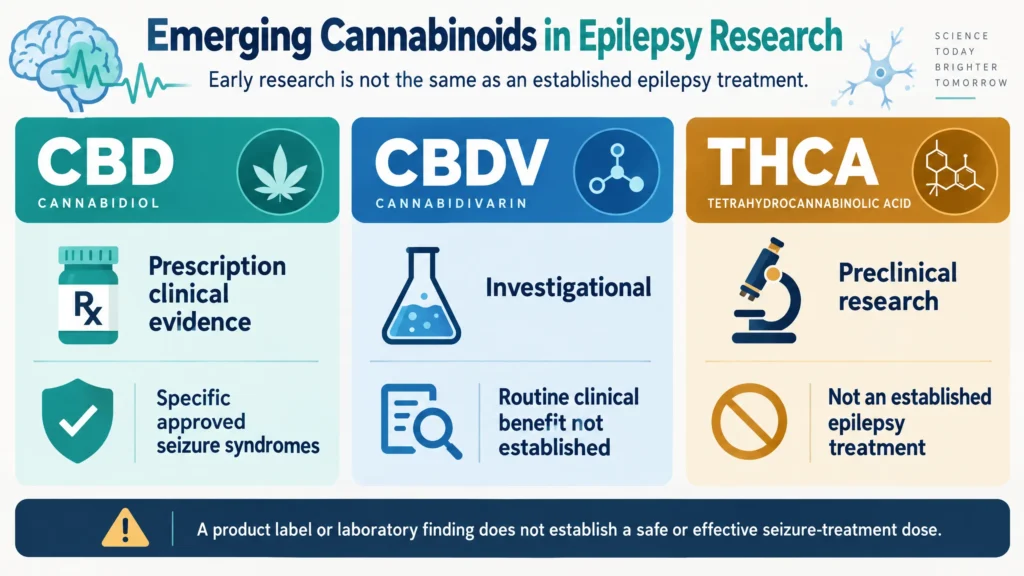
The 2025 Frontiers systematic review highlighted CBDV specifically: it has shown anticonvulsant properties that were even more effective when combined with CBD in some studies.
GW Pharmaceuticals (the Epidiolex maker) has been developing a CBDV-based product (codenamed GWP42006, later named Epidiolex for focal epilepsy studies) specifically for treatment-resistant focal epilepsies.
Cannabinoid anticonvulsant evidence summary (2025)
| Cannabinoid | Psychoactive? | Anticonvulsant Evidence | Available at PA Dispensaries? |
|---|---|---|---|
| CBD | No | Strongest: FDA approval for 3 syndromes; 4 RCTs | Yes, widely available |
| THCA | No (unheated form) | Preclinical anticonvulsant evidence; 2025 Frontiers review | Yes, in raw/oral products with high THCA on COA |
| CBDV | No | Strong preclinical; GW Pharmaceuticals active development | Yes, in some full-spectrum products; check minor cannabinoid panel |
| THC | Yes | Complex: possibly anticonvulsant at low doses; proconvulsant risk at higher doses | Yes, but generally avoid for epilepsy |
| Linalool (terpene) | No | Preclinical anti-seizure activity, especially with cannabinoids | Yes, in products with linalool on terpene panel |
For PA epilepsy patients, CBDV represents an emerging therapeutic target that is currently only practically accessible through full-spectrum dispensary products that retain minor cannabinoids.
How to find CBDV on a PA dispensary COA
Ready to Get Your Official PA MMJ Card?
State-certified doctor consultations online. No risk—100% refund if not approved.
Claim Your MMJ Card Online →CBDV appears on the minor cannabinoid panel of the COA. Not all PA dispensary products contain meaningful CBDV, but some full-spectrum tinctures and extracts do. Ask your dispensary pharmacist to identify products with documented CBDV content from recent batch COAs.
The Proconvulsant THC Warning
This is the most critical safety warning for epilepsy patients in all of cannabis medicine, and it is the warning most often omitted from general patient guides.
THC can increase seizure activity in some epilepsy patients.
This is not a theoretical risk or a minor concern. Project CBD’s epilepsy resource explicitly states: “Some patients treated with THC had increased seizure activity.” The 2025 Frontiers review identified THC’s complex and mixed relationship with seizure activity across different epilepsy types and individual patients.
The mechanisms for THC’s proconvulsant potential are biological. THC activates CB1 receptors in ways that can increase neuronal excitability in certain circuits. The biphasic dose-response that affects THC’s effects on anxiety applies here too: low-dose THC may have minimal seizure impact in some patients, while higher doses produce proconvulsant risk.
This does not mean all epilepsy patients who use THC will have more seizures. Individual responses vary, epilepsy types differ in their cannabinoid responses, and many patients use cannabis products containing some THC without incident.
But it does mean:
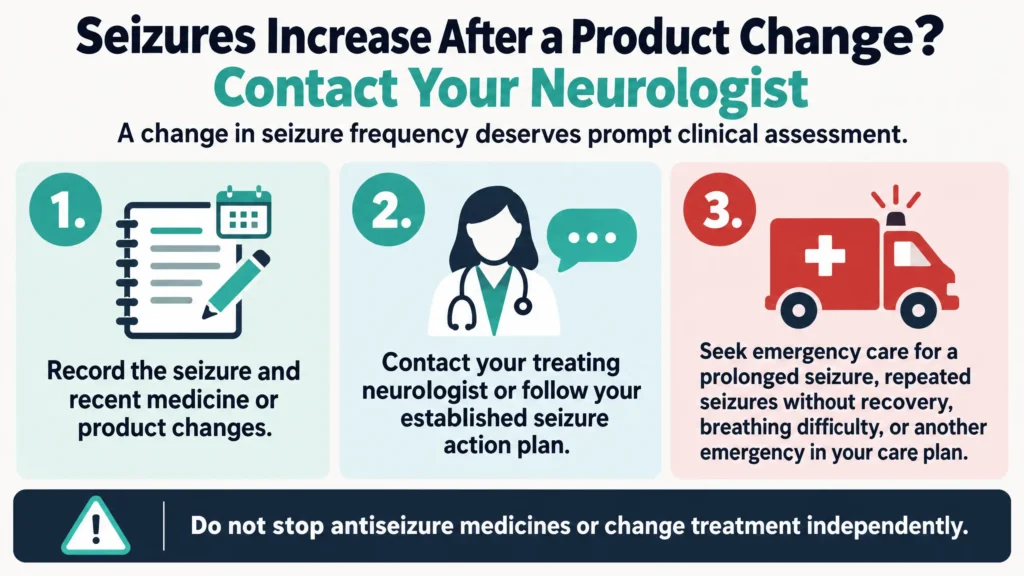
High-THC products should generally be avoided by epilepsy patients without specific neurologist guidance. The evidence base for cannabis in epilepsy is built primarily on CBD and CBD-dominant products, not THC-dominant products.
Any product change that increases THC exposure should be monitored carefully with seizure diary records.
If a PA epilepsy patient notices increased seizure frequency after starting or changing a cannabis product, THC should be considered as a potential contributing factor and the neurologist informed immediately.
Drug Interactions: Antiseizure Medications and Cannabis
The drug interaction between CBD and clobazam is the most clinically significant cannabis drug interaction in epilepsy medicine and is supported by data from the Epidiolex clinical trials themselves.
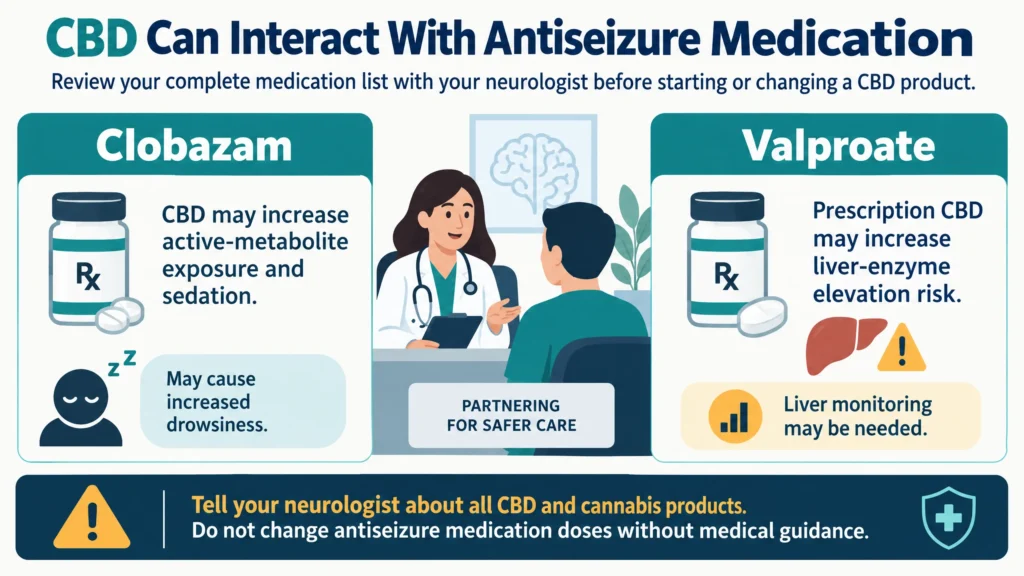
| Antiseizure Medication | Interaction with CBD | Clinical Significance | Monitoring |
|---|---|---|---|
| Clobazam (Onfi, Sympazan) | CBD dramatically inhibits CYP2C19 metabolism of clobazam, causing accumulation | High: clobazam toxicity risk; somnolence, sedation increase | Reduce clobazam dose when starting CBD; monitor for sedation |
| Valproate (Depakote) | Additive hepatotoxicity concern with high-dose CBD | Moderate: liver function monitoring warranted | LFTs at baseline and periodically |
| Lamotrigine (Lamictal) | Some CBD interaction via CYP metabolism | Low to moderate | Monitor lamotrigine levels if doses are changed |
| Levetiracetam (Keppra) | Minimal direct pharmacokinetic interaction | Low | Standard monitoring |
| Phenobarbital | CYP450 interaction possible with CBD | Moderate | Monitor phenobarbital levels |
| Topiramate (Topamax) | Additive metabolic effects possible | Low to moderate | Watch for weight or metabolic changes |
The clobazam interaction is so significant that Epidiolex’s prescribing information explicitly states that the dose of clobazam should be reduced when Epidiolex is started.
PA dispensary CBD products, even at lower concentrations than Epidiolex, engage the same CYP2C19 pathway and can produce the same interaction with any patient on clobazam.
For any PA epilepsy patient on clobazam who wants to add CBD from a PA dispensary, this is not a decision to make independently. It requires neurologist involvement before starting, dose adjustment of clobazam, and monitoring for sedation in the early weeks.
PA Dispensary Product Guidance for Epilepsy Patients
Given the research landscape and the safety considerations, here is practical guidance for PA epilepsy patients using dispensary products.
Prioritize CBD-dominant oral products
The evidence base is built on orally administered CBD. Tinctures and capsules preserve THCA before decarboxylation and provide more predictable dosing than inhalation.
For PA dispensary tinctures, calculate the mg of CBD per milliliter from the COA and work with your neurologist to establish body-weight-based dosing comparable to Epidiolex trial protocols.
Check the minor cannabinoid panel for CBDV and THCA
Some PA dispensary full-spectrum extracts contain meaningful CBDV and high THCA that adds to CBD’s anticonvulsant potential. Ask your dispensary pharmacist specifically which products show CBDV and THCA on recent batch COAs.
Avoid or minimize high-THC products
For epilepsy patients specifically, the proconvulsant risk from THC is a real clinical concern. A CBD-dominant product (10:1 or 20:1 CBD:THC) or a CBD-only product is the evidence-aligned choice.
If a PA epilepsy patient has used THC-containing products without seizure worsening, continue with current dosing. If considering adding THC or switching to a higher-THC product, do so only with neurologist oversight and maintained seizure diary.
Maintain a detailed seizure diary during any product change
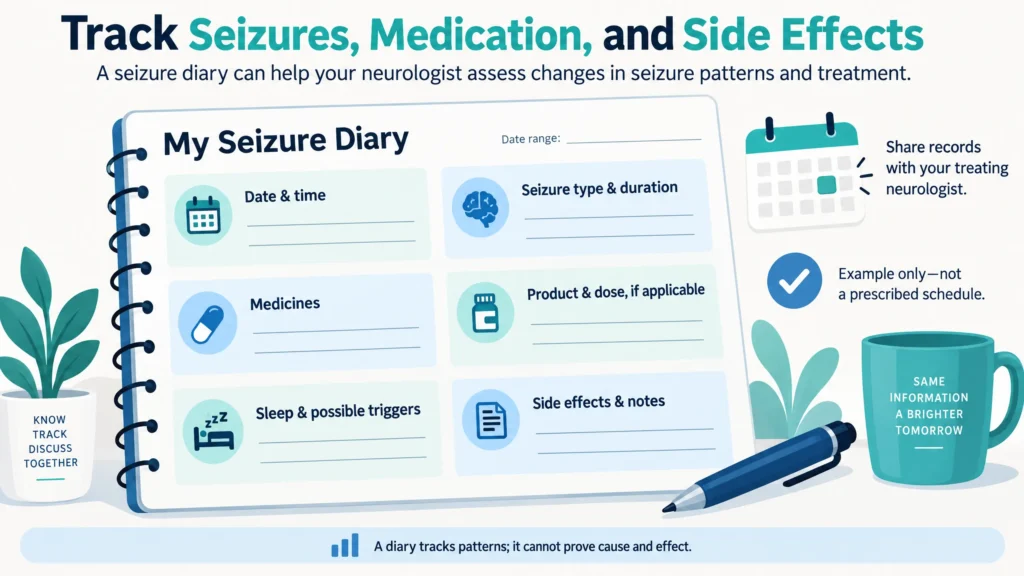
When starting a new PA dispensary product or changing doses, maintain a daily record of seizure frequency and duration for at least 4 to 6 weeks. This is the only reliable way to identify whether a product is helping, having no effect, or worsening seizure control.
Seizure diary during cannabis product changes
| What to Track | Frequency | Why It Matters |
|---|---|---|
| Seizure type and duration | Every occurrence | Establishes baseline and detects changes |
| Seizure frequency (daily count) | Daily | Primary outcome measure for cannabis efficacy |
| Cannabis product, dose, and time | Every dose | Links product changes to seizure pattern changes |
| Sleep quality | Nightly | CBD affects sleep; disrupted sleep can trigger seizures |
| Antiseizure medication doses | Daily | Documents any concurrent medication changes |
| Side effects | Daily | Early detection of sedation, liver symptoms, or adverse effects |
For PA dispensary CBD tincture options, see our CBD tinctures guide.
Working With Your Neurologist on a PA MMJ Protocol
Epilepsy is the qualifying condition where neurologist involvement is most important of any on Pennsylvania’s qualifying list.
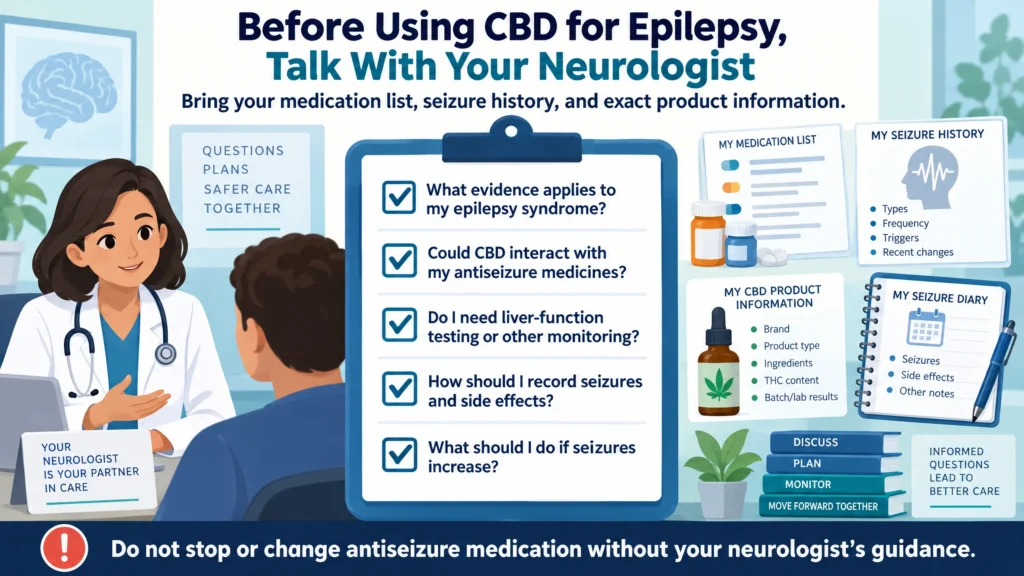
The stakes are high. Poorly managed cannabis use in an epilepsy patient can worsen seizure control, produce dangerous drug interactions with existing antiseizure medications, and potentially create situations where a patient reduces evidence-based medications in favor of an inadequately dosed dispensary product.
Done well, with neurologist oversight, PA MMJ can be a meaningful adjunct for epilepsy patients whose seizures remain inadequately controlled on conventional antiseizure therapy.
Bringing your neurologist into the conversation
If your neurologist is unfamiliar with cannabis pharmacology, bring the Epidiolex prescribing information and the 2025 Frontiers systematic review to your appointment. These are credible, peer-reviewed sources that neurologists can engage with professionally.
Make clear that you intend to use CBD-dominant dispensary products as an adjunct to your current therapy, not as a replacement.
Ask specifically about clobazam interaction if you are on clobazam. Ask about valproate if you are on Depakote. These are the most clinically significant interaction risks.
Share the specific dispensary product’s COA with your neurologist so they can calculate dosing guidance based on actual CBD concentration.
The PA MMJ certification
PA MMJ certification for epilepsy patients is completed entirely online via telehealth at Pennsylvania Marijuana Cards. Bring your epilepsy diagnosis documentation, current antiseizure medication list, and seizure frequency information to the appointment.
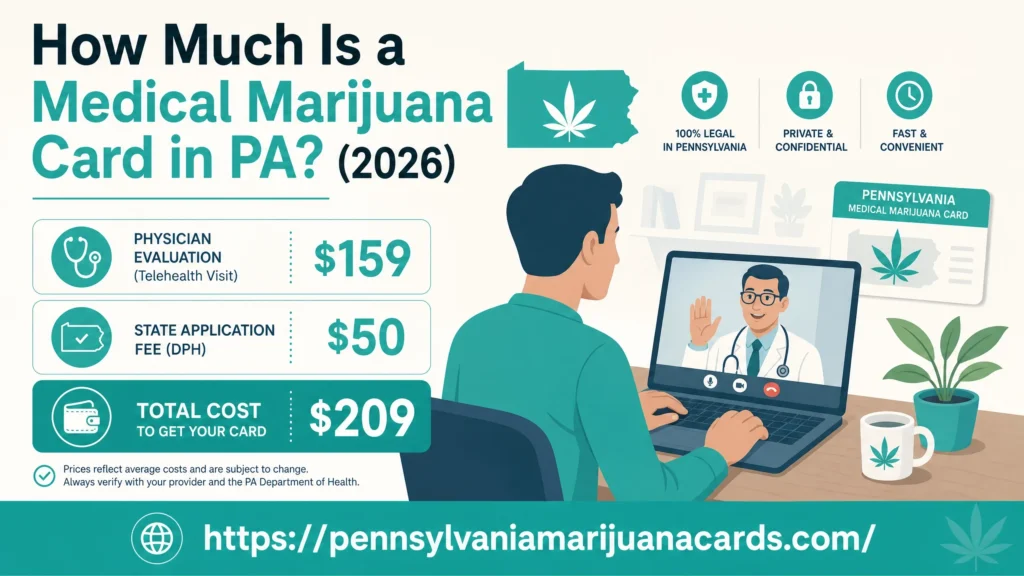
New patient certification is $159 plus the $50 state registration fee. For patients enrolled in Medicaid, SNAP, WIC, CHIP, PACE, or PACENET, the $50 state fee is waived through MMAP.
Frequently Asked Questions
Q: Is epilepsy a qualifying condition for PA medical marijuana?
A: Yes. Epilepsy is explicitly listed among Pennsylvania’s 24 qualifying conditions under Act 16 of 2016. All epilepsy types qualify, including Dravet syndrome, Lennox-Gastaut syndrome, tuberous sclerosis complex, focal epilepsy, and other forms.
The qualifying framework does not require treatment-refractory status, though most epilepsy patients seeking certification have already tried multiple antiseizure medications.
PA MMJ certification is available online via telehealth at Pennsylvania Marijuana Cards.
Q: Does cannabis actually help epilepsy?
A: For CBD specifically, yes, with the strongest evidence in medical cannabis research.
Four randomized, double-blind, placebo-controlled trials of Epidiolex demonstrated statistically significant seizure reduction in Dravet syndrome, Lennox-Gastaut syndrome, and tuberous sclerosis complex. Epidiolex reduced seizures by 48% vs 24% for placebo in tuberous sclerosis complex.
A 2025 Frontiers systematic review of 150 articles confirmed CBD’s anticonvulsant evidence base and identified additional cannabinoids (THCA, CBDV) with emerging anticonvulsant evidence.
Q: Can cannabis make seizures worse?
A: Yes, under specific circumstances. THC can increase seizure activity in some epilepsy patients. Project CBD’s epilepsy resource specifically notes that some patients treated with THC experienced increased seizure activity.
High-THC products are generally not recommended for epilepsy patients without specific neurologist guidance.
If increased seizure frequency follows initiation of any cannabis product, contact your neurologist immediately and consider THC content as a potential contributing factor.
Q: What is the difference between Epidiolex and CBD from a PA dispensary?
A: Epidiolex is a pharmaceutical-grade, FDA-approved CBD product at a standardized 100mg/ml concentration, dosed in mg/kg body weight.
PA dispensary CBD products vary in purity, concentration (typically 10 to 33mg/ml), carrier oils, and minor cannabinoid content. Both use CBD as the primary active ingredient, but Epidiolex’s precision and pharmaceutical-grade quality cannot be assumed to apply directly to dispensary products.
PA epilepsy patients using dispensary CBD should work with their neurologist to calculate equivalent dosing from the specific product’s COA-verified concentration.
Q: What medications interact with CBD for epilepsy?
A: The most significant interaction is with clobazam (Onfi). CBD dramatically inhibits CYP2C19 metabolism of clobazam, causing it to accumulate to higher blood levels. Epidiolex’s prescribing information specifically states that clobazam dose should be reduced when Epidiolex is started.
PA dispensary CBD products engage the same CYP2C19 pathway. Valproate (Depakote) combined with high-dose CBD raises hepatotoxicity concern requiring liver function monitoring.
Always provide your complete antiseizure medication list to both your certifying physician and your PA dispensary pharmacist before starting any cannabis product.
Q: What PA dispensary products are best for epilepsy?
A: CBD-dominant oral products (tinctures or capsules) provide the most evidence-aligned approach.
Look for high CBD concentration on the COA to allow neurologist-guided mg/kg dosing, CBDV in the minor cannabinoid panel if available, and high THCA content (which converts less to THC in oral delivery than in vaporization).
Avoid high-THC products. Ask your dispensary pharmacist for the current inventory product with the highest CBD per milliliter and any documentation of CBDV content.
The Bottom Line
Epilepsy and cannabis have the strongest evidence relationship of any condition in medical cannabis research. The FDA approval of Epidiolex represents the highest level of evidence achievable, and the 2025 systematic review of 150 studies confirms and extends that picture.
The path from that evidence to a PA dispensary menu requires careful navigation. The Epidiolex-to-dispensary gap is real. The proconvulsant risk of THC is real. The clobazam interaction is real. And the dosing precision required for epilepsy management is greater than for most other qualifying conditions.
Done with neurologist oversight, COA-guided CBD dosing, and careful monitoring, PA dispensary CBD can provide meaningful anticonvulsant benefit for PA epilepsy patients. The evidence for the three CBD mechanisms (GPR55, TRPV1, adenosine) provides a solid biological foundation for that benefit that is independent of any individual patient story or anecdotal report.
This blog post is intended for general educational and informational purposes only and does not constitute medical advice. Epilepsy management requires physician oversight. Do not reduce or stop antiseizure medications without your neurologist’s guidance. CBD interacts significantly with clobazam (Onfi) and may interact with valproate, lamotrigine, and phenobarbital. Provide your complete medication list to both your certifying physician and PA dispensary pharmacist before starting any cannabis product. If seizure frequency changes after starting cannabis, contact your neurologist immediately. Medically reviewed by Dr. Johnathon Chance Miller, MD.
Sources
- FDA: Epidiolex Approval 2018, 2020, Dravet Syndrome, Lennox-Gastaut Syndrome, Tuberous Sclerosis Complex
- Frontiers Acta Biochimica Polonica 2025: Molecular Targets of Cannabinoids in Epilepsy, Systematic Review of 150 Articles (June 2025)
- Nationwide Children’s Hospital / Epilepsia: Long-Term Efficacy of Epidiolex in Focal Epilepsy, 140 Patients at 35 US Centers
- Brain and Life / American Academy of Neurology: Can Medical Marijuana Help Control Seizures?
- CED Clinic: Understanding the Antiepileptic Mechanisms of CBD, GPR55, TRPV1, Adenosine
- Project CBD: Epilepsy and Endocannabinoids, Phytocannabinoids and Seizure
- AAN 2018 Abstract: Medical Marijuana for Treatment-Refractory Seizures, The Pittsburgh Experience (UPMC)
- PMC: Cannabinoids as Anticonvulsants, Mechanisms and Clinical Evidence Review
- Epidiolex (cannabidiol) Prescribing Information, GW Pharmaceuticals/Jazz Pharmaceuticals
- PA Department of Health: Qualifying Conditions, Epilepsy