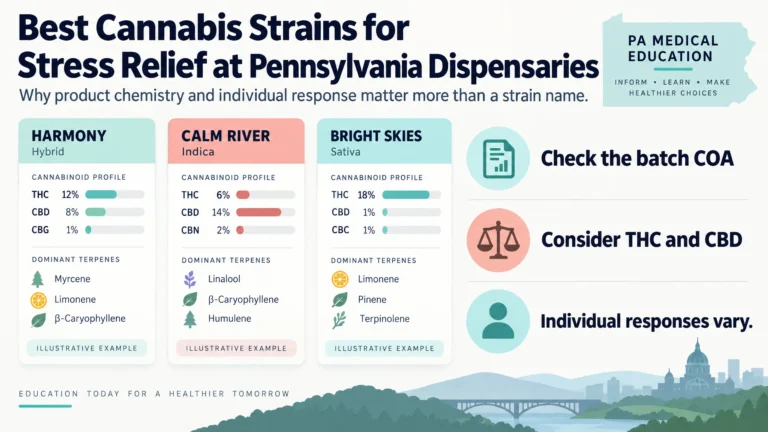

Most cannabis strain guides for stress relief give you a list of strain names: Blue Dream, OG Kush, Granddaddy Purple, ACDC, Jack Herer. At Pennsylvania dispensaries, this approach has a significant problem.
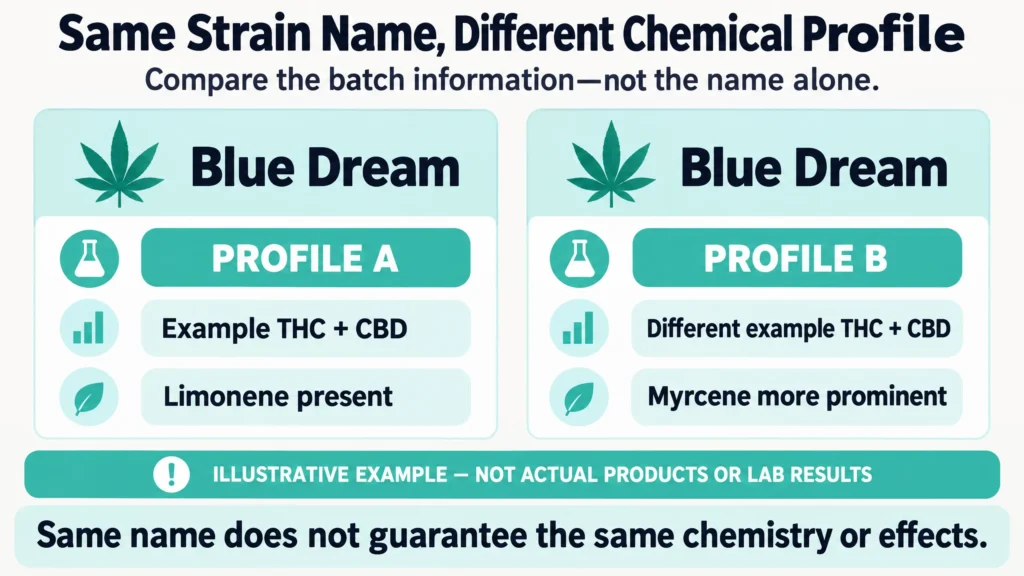
Strain names at PA dispensaries are assigned by individual cultivators and are not standardized. The same strain name from two different PA cultivators can have dramatically different terpene profiles and THC percentages.
Need a PA Medical Marijuana Card?
Get certified online in 15 minutes. 100% Money-Back Guarantee.
Get Certified Now →“Blue Dream” from one PA cultivator may be limonene-dominant and uplifting. “Blue Dream” from another may be myrcene-dominant and sedating.
The terpene profile on the Certificate of Analysis tells you what a product will actually do. The strain name tells you what it is called.
This guide explains what the 2024 and 2025 research shows about terpenes and stress relief, provides a practical framework for stress-specific product selection at PA dispensaries, and gives you the three COA numbers that matter most.
Key Takeaways
| Topic | Key Point |
|---|---|
| Why strain names are unreliable | The same strain name can have different terpene profiles across different PA cultivators, the COA is the reliable tool |
| The 2024 Johns Hopkins finding | Vaporized THC plus d-limonene significantly reduced anxiety and paranoia vs THC alone in a controlled crossover trial |
| The THC paradox for stress | THC at low doses (under 7.5mg) reduces stress; at higher doses it worsens it, high-THC products often backfire for stress relief |
| Three-number COA framework | For stress: Total THC under 18%, CBD present (1%+), dominant terpene is limonene, linalool, or caryophyllene |
| Anxiety is #1 PA qualifying condition | 60% of PA certifications list anxiety as the qualifying condition, stress management is the most common PA patient use case |
| Pharmacist over budtender | For stress-specific product selection, request the dispensary pharmacist rather than the budtender, pharmacists have access to COA data and can match terpene profiles to your specific situation |
Why Strain Names Don’t Reliably Predict Stress Relief at PA Dispensaries
This is the most important practical reality for any PA patient trying to choose a stress-relief product from a dispensary menu. Strain names are branding, not chemistry.
Do You Qualify for a PA MMJ Card?
Connect with a licensed Pennsylvania state physician online from home.
A 2022 study published in PLOS ONE analyzed commercially sold cannabis products and found that strains sharing the same name can have dramatically different chemical profiles. Two products labeled as “Blue Dream” from different cultivators may have entirely different terpene dominant profiles.
At PA licensed dispensaries, this problem is compounded by the structure of Pennsylvania’s cannabis production system.
Multiple licensed growers cultivate products that appear on PA dispensary menus under recognizable strain names. The same name, grown by different cultivators with different growing conditions and curing processes, produces different terpene expressions.
The COA terpene panel is what you should read, not the strain name.
A product labeled “OG Kush” that shows caryophyllene at 0.4%, limonene at 0.3%, and linalool at 0.2% will produce a meaningfully different stress experience than an “OG Kush” showing dominant myrcene at 1.2% with no other significant terpenes.
Both are “OG Kush.” They are not the same product for your purposes.
This does not make strain names entirely useless. They give a rough signal about the genetic lineage and potential terpene tendencies. But the COA is the verification step that tells you whether this specific product, from this specific cultivator, this specific batch, actually matches your intended outcome.
For a full explanation of why terpene profiles predict cannabis experience more reliably than strain names, see our sativa vs indica guide and beginner’s guide to cannabinoids and terpenes.
The THC Paradox: Why High-THC Products Often Backfire for Stress
This is the single most important clinical principle for PA patients seeking stress relief. Cannabis follows a biphasic dose-response for stress and anxiety.
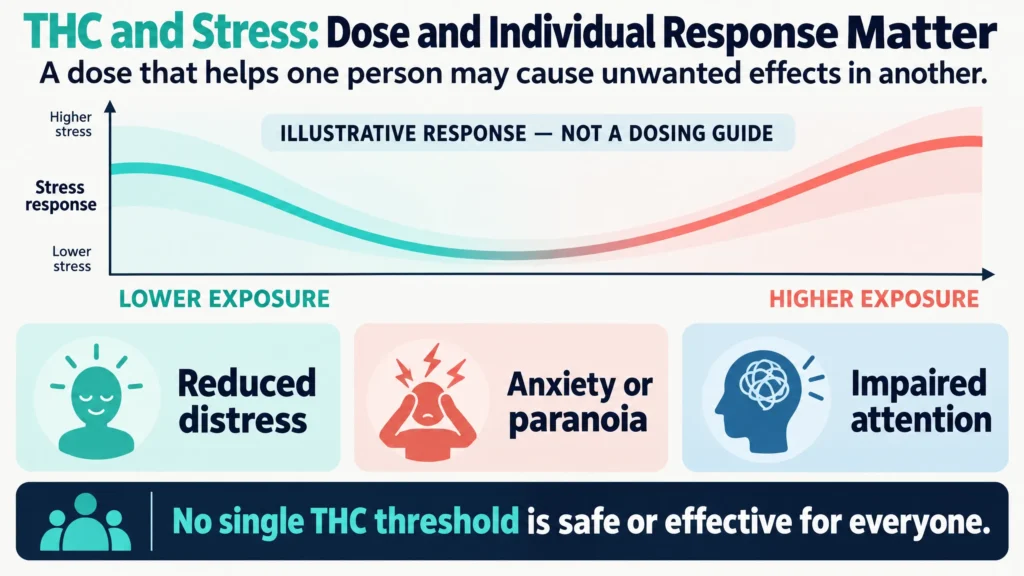
At low doses, THC activates CB1 receptors in a way that reduces the amygdala’s threat-detection activity. The result is genuine stress reduction, mood elevation, and a quieting of anxious mental activity.
⚡ Fast & 100% Online PA Medical Cards
Board-Certified Doctors • 100% Money-Back Guarantee
Book Evaluation Now →Above an individual threshold, the same CB1 activation reverses direction. The amygdala becomes hyperactivated. Threat perception increases. Anxiety worsens. The stress that cannabis was intended to relieve instead intensifies.
A University of Chicago clinical trial documented this reversal precisely. Participants given 7.5mg of oral THC reported improved mood and reduced stress. Participants given 12.5mg reported worsened outcomes on the same measures.
For PA patients seeking stress relief, this has a direct implication: the highest-THC products on the PA dispensary menu are often the worst choices for stress.
A PA dispensary flower product at 28% Total THC delivers approximately 22 to 28mg of THC per session at typical consumption amounts. This is well above the range where THC reliably reduces stress and well into the range where it can worsen it, particularly for patients with underlying anxiety sensitivity.
For stress relief, the target is the minimum dose that produces the desired effect. Not the highest-THC product on the shelf.
For more on how THC percentage alone predicts your experience, see our does THC percentage matter guide.
The Three Terpenes With the Best Stress and Anxiety Evidence
Terpenes modulate the cannabis stress-relief experience through pharmacological mechanisms that are increasingly well-documented. Three have the strongest evidence specifically for stress and anxiety applications.
Limonene
Citrus aroma: lemon, orange, grapefruit. Found in high concentrations in many popular cannabis varieties.
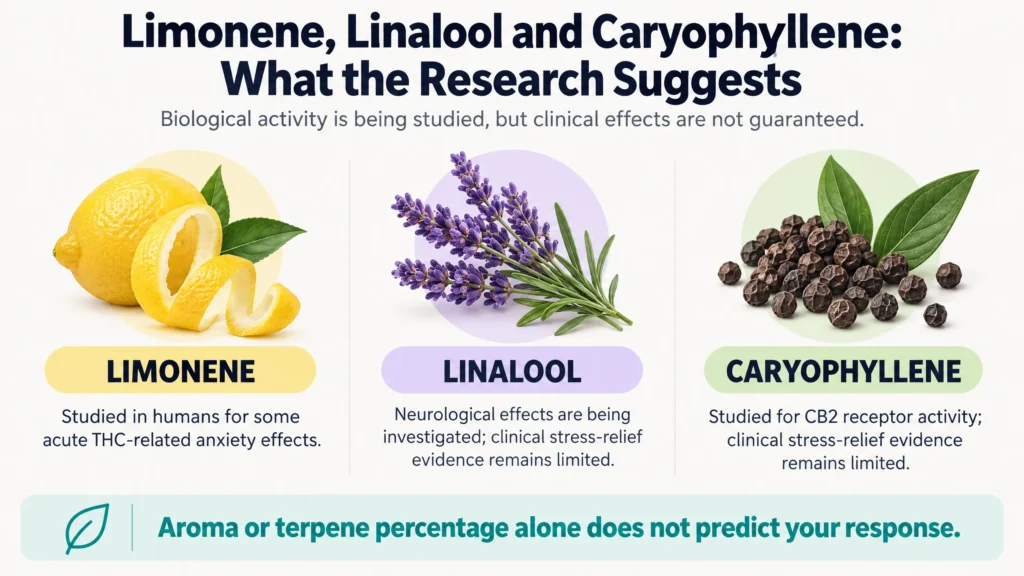
Limonene’s primary mechanism for stress relief is serotonin (5-HT1A) receptor activation. The same serotonin pathway targeted by buspirone (an anti-anxiety medication) and partially by SSRIs. This is an endocannabinoid-independent pathway, which means limonene’s anxiolytic effect adds to cannabis’s CB1 mechanism rather than duplicating it.
The Johns Hopkins 2024 study (covered in detail in Section 4) is the strongest human evidence for limonene’s specific role in cannabis stress relief.
Products with dominant limonene tend to feel uplifting, clear-headed, and mood-elevating rather than sedating. Best suited for daytime stress, social situations, and stress that needs to coexist with functional alertness.
Linalool
Renewing Your PA MMJ Card?
Quick annual recertification online. No paperwork hassle.
Renew Card Online →Floral, lavender aroma. The same compound responsible for lavender’s documented anxiolytic properties in clinical research.
Linalool’s primary mechanism is GABA-A receptor modulation. GABA is the brain’s primary inhibitory neurotransmitter. Increasing GABA activity reduces the neural firing rate associated with anxious, stressed mental states.
As research published in Neurochemical Research confirmed, linalool activates GABA-A receptors in a manner similar to benzodiazepines but without the dependency risk or sedation at typical cannabis concentration levels.
Products with dominant linalool produce a noticeably calming, settling effect. Best suited for evening stress, anxiety that feels more like internal tension than low mood, and patients who tend toward the anxious end of stress.
Caryophyllene
Spicy, peppery, woody aroma. The only terpene known to directly bind cannabinoid receptors (CB2).
Caryophyllene’s CB2 binding is particularly relevant for stress because CB2 activation modulates neuroinflammatory pathways associated with stress responses. A 2014 Physiology and Behavior study found caryophyllene at 50mg/kg produced anxiolytic and antidepressant-like behavior in mice, and a 2023 paper confirmed CB2 receptors mediated these effects.
For stress that has a significant physical tension or inflammatory component, caryophyllene adds direct CB2 activity to THC’s CB1 stress-relief effect.
Also the terpene behind the “sniff black pepper for cannabis anxiety” folk remedy, which has legitimate pharmacological support.
The 2024 Johns Hopkins Limonene Finding: The Most Specific Human Evidence
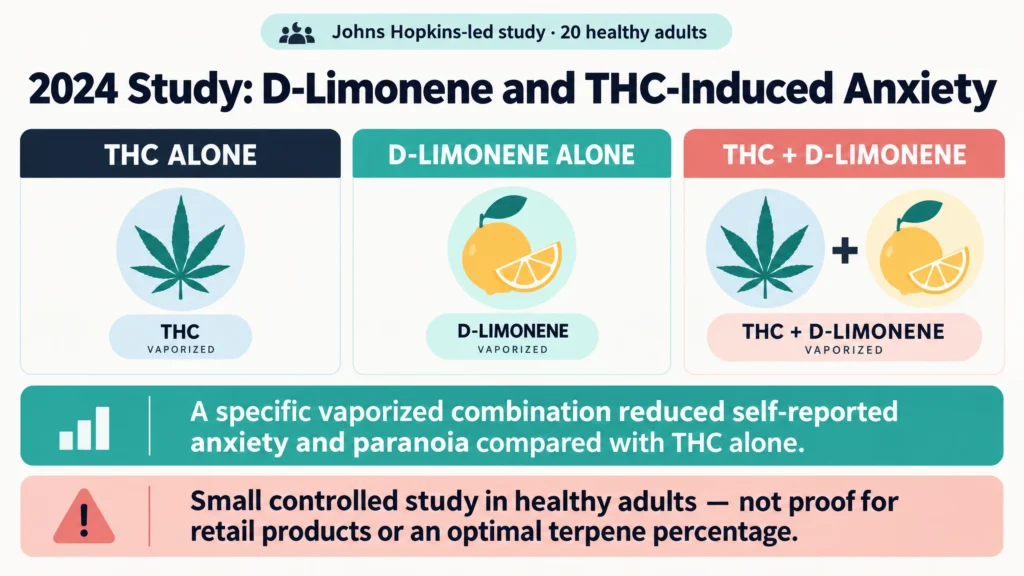
In 2024, a research team led by Tory Spindle and Ryan Vandrey at Johns Hopkins University published a double-blind crossover study in Drug and Alcohol Dependence.
The study tested vaporized d-limonene (15mg) combined with vaporized THC (30mg) against THC alone in 20 healthy adults.
The finding: THC combined with d-limonene significantly reduced self-reported anxiety and paranoia compared to THC alone.
Get Approved by a Licensed PA Doctor
Schedule your appointment in minutes. You only pay if approved.
Start Online Application →Limonene alone did not produce significant subjective effects.
As Dr. Vandrey stated: “D-limonene can modulate the effects of THC in a meaningful way and make THC more tolerable to people using it for both therapeutic and non-therapeutic purposes.”
This is narrow evidence. It tested one specific dose of limonene alongside one specific dose of THC in a controlled laboratory setting. But it is the strongest human controlled trial data available for any specific terpene’s role in cannabis stress and anxiety management.
The practical implication for PA patients: For stress relief from cannabis, a product with dominant limonene alongside the THC may produce significantly better outcomes than the same THC amount in a myrcene-dominant or terpene-depleted product.
This does not mean more limonene always means less stress. It means the combination of THC with limonene present produces a different anxiety profile than THC alone. On a PA dispensary COA, look for limonene at 0.3% or higher as a meaningful indicator.
The Kush Chemotype: The Strain Research Pattern Worth Knowing
Research published in the journal Frontiers in Psychiatry and discussed in clinical cannabis literature identified a specific chemotype associated with the highest patient-reported anxiety and stress reduction.
The four strains most frequently rated effective for anxiety reduction were Bubba Kush, Skywalker OG Kush, Blueberry Lambsbread, and Kosher Kush.
Three of the four are Kush varieties. Analysis of their terpene profiles revealed a consistent pattern: high levels of trans-nerolidol, myrcene, caryophyllene, d-limonene, and linalool occurring together.
This five-terpene combination is not unique to Kush genetics. It is a chemotype that can appear in various strains when the genetics and growing conditions produce it. What matters is the presence of the pattern, not the Kush name on the label.
If you see a PA dispensary product with a COA terpene panel showing moderate-to-high myrcene alongside meaningful limonene, caryophyllene, and linalool together, that is the Kush chemotype pattern that research associates with anxiety reduction regardless of what the strain is called.
Three Stress Profiles: Which Terpene Combination Fits Your Situation
Not all stress is the same experience, and different terpene profiles suit different stress presentations.
Ready to Get Your Official PA MMJ Card?
State-certified doctor consultations online. No risk—100% refund if not approved.
Claim Your MMJ Card Online →Three stress profiles: terpene targets and product approach:
| Stress Profile | Primary Terpene Target | THC Range | CBD Ratio | Best Format |
|---|---|---|---|---|
| Daytime situational (work, social) | Limonene 0.3%+ | Under 15% or CBD-dominant | 5:1 or 10:1 minimum | Low-THC flower vaporized or ratio tincture |
| Evening decompression | Myrcene 0.5%+ with linalool | 10 to 15mg total session | 3:1 CBD:THC | Tincture 30-60 min before, or flower |
| Anxiety-driven stress (worry, tension) | Linalool 0.2%+ and caryophyllene 0.3%+ | Minimal or zero THC | 10:1 or 20:1 | CBD-dominant tincture |
Profile 1: Daytime Situational Stress (Work, Social, Functional)
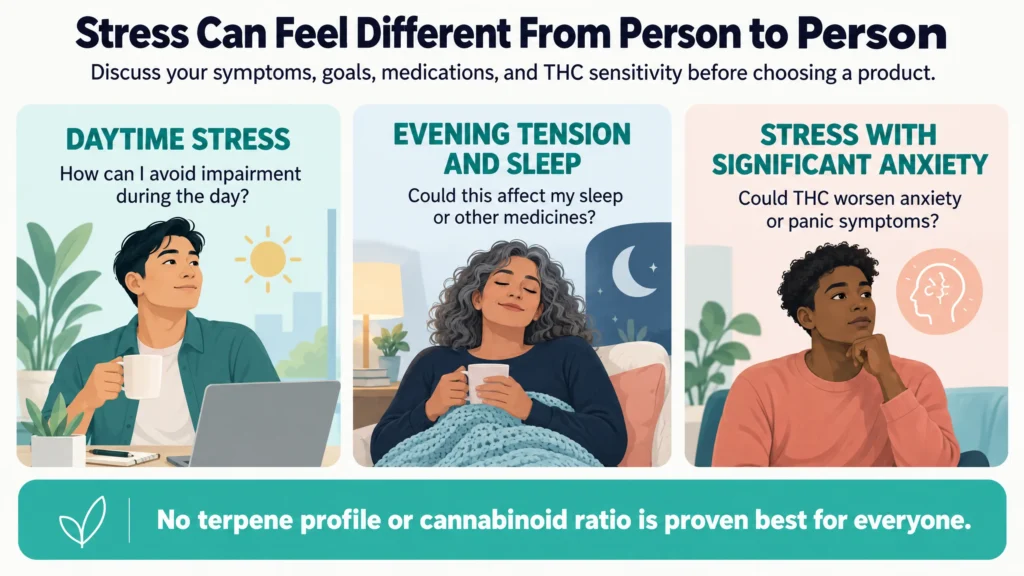
Stress that needs to be managed while remaining alert, productive, or socially engaged. Cannot afford sedation or significant cognitive effects.
Best terpene target: Dominant limonene (0.3%+) with secondary caryophyllene. Low myrcene (high myrcene produces physical sedation incompatible with daytime function).
Best product approach: Low-THC flower (under 18% Total THC) or CBD-dominant tincture with minimal THC. Vaporized at lower temperatures (under 365°F) to prioritize limonene delivery. Or a 5:1 or 10:1 CBD:THC ratio tincture.
What it feels like: Mild mood elevation, reduced mental chatter, maintained alertness.
Profile 2: Evening Stress Release (Decompression After Work)
Stress accumulated through the day that needs to fully dissolve. Sedation is acceptable. Sleep improvement is welcome.
Best terpene target: Dominant myrcene (0.5%+) with linalool (0.2%+). Higher THC acceptable here (10 to 15mg range). CBD alongside to moderate the experience.
Best product approach: 3:1 CBD:THC tincture 30 to 60 minutes before desired relaxation onset. Or vaporized flower with high myrcene, moderate THC in the 18 to 22% range.
What it feels like: Progressive physical relaxation, mental quieting, comfortable sedation.
Profile 3: Anxiety-Driven Stress (Worry, Intrusive Thoughts, Tension)
Stress with a significant anxious component: racing thoughts, physical tension, worry loops. THC’s anxiogenic risk at higher doses is the primary concern.
Best terpene target: Dominant linalool (0.2%+) and caryophyllene (0.3%+). Low to minimal THC. High CBD.
Best product approach: CBD-dominant tincture (10:1 or 20:1 CBD:THC) with linalool-dominant or caryophyllene-dominant terpene profile. Or CBD-only tincture for patients with very high THC sensitivity.
What it feels like: Calming, settling, reduction of tension without the head-pressure or over-activation risk of THC.
The Three COA Numbers to Check Before Every Stress-Relief Purchase
For PA patients using cannabis for stress relief, three numbers on the product COA matter more than the strain name.
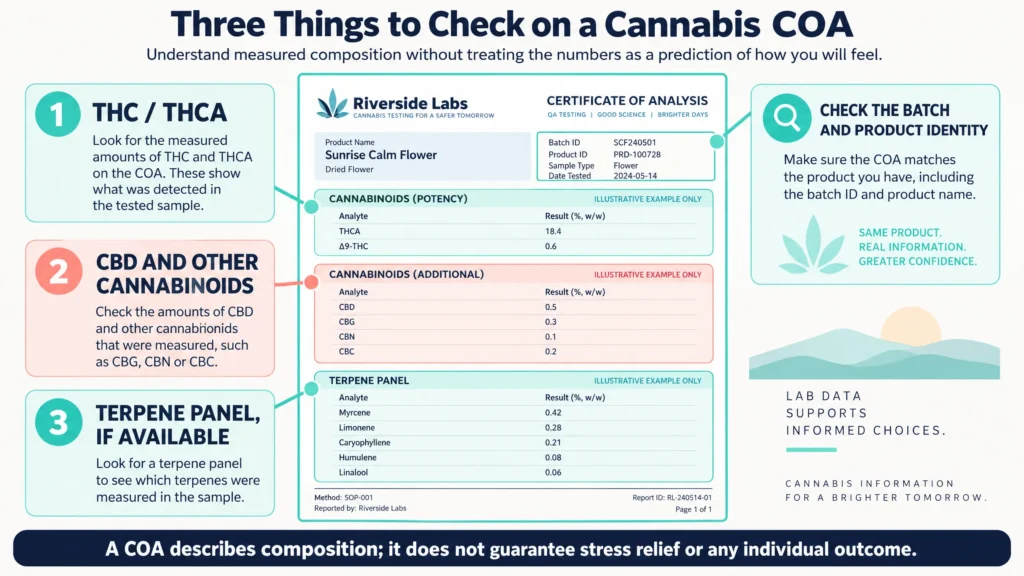
Three COA numbers for stress relief at a glance:
| COA Number | What to Look For | Why It Matters for Stress |
|---|---|---|
| Total THC% | Under 18% for flower (lower for sensitive patients) | Above this range, THC paradox risk increases significantly |
| CBD% or CBD:THC ratio | 1%+ in flower; 5:1 minimum ratio tincture; 10:1 for anxious patients | CBD modulates THC anxiety risk; adds serotonin pathway |
| Dominant terpene | Limonene 0.3%+, linalool 0.2%+, or caryophyllene 0.3%+ | Terpene determines direction of stress effect |
Number 1: Total THC percentage
Calculate (THCA × 0.877) + delta-9 THC. For stress relief, target under 18% for vaporized flower, and under 15% for new or anxiety-sensitive patients. Above this range, the THC paradox becomes a real risk.
This does not mean 15% is always safe or 19% is always too much. Individual thresholds vary. But as a starting orientation for stress-relief product selection, lower is more reliable for stress than higher.
Number 2: CBD presence and ratio
Even trace CBD (1 to 2% in flower) meaningfully changes the stress profile compared to a THC-only product. CBD modulates CB1 receptor activity and adds 5-HT1A serotonin pathway activation, both of which contribute to stress relief.
For moderate to high stress sensitivity: seek at least 1% CBD in flower products, or use a ratio tincture (5:1 CBD:THC minimum).
For significant anxiety-driven stress: a 10:1 or 20:1 CBD:THC tincture is safer than any THC-dominant flower product.
Number 3: Dominant terpene and its percentage
The highest-percentage terpene on the terpene panel tells you the predominant character of the stress experience.
Dominant limonene at 0.3%+: uplifting, daytime-appropriate, reduces anxiety alongside THC. Dominant linalool at 0.2%+: calming, settling, GABA modulation, anxiety-specific. Dominant caryophyllene at 0.3%+: grounding, anti-inflammatory, CB2 pathway. Dominant myrcene above 0.8% with no other significant terpenes: heavy, sedating, less suitable for functional daytime stress.
| If Your Dominant Terpene Is | Expected Stress Experience | Best Time of Day |
|---|---|---|
| Limonene (0.3%+) | Uplifting, mood-elevating, alert | Daytime, social situations |
| Linalool (0.2%+) | Calming, settling, anxiolytic | Evening, anxiety-driven stress |
| Caryophyllene (0.3%+) | Grounding, tension reduction, CB2 activity | Any time, physical stress component |
| Myrcene dominant (0.8%+, others low) | Heavy physical relaxation, sedating | Evening only |
| Terpinolene dominant | Uplifting, energetic | Daytime only, low-anxiety stress |
For a full guide to reading the terpene panel on your PA dispensary product COA, see our how to read a PA dispensary COA guide.
PA Dispensary Product Selection: Format Matters as Much as Strain
The right strain in the wrong format can produce a stress response rather than stress relief.
For acute situational stress (on-demand)
Vaporized flower or cartridge provides the fastest onset (2 to 10 minutes). When stress is immediate and you need relief quickly, inhalation is the appropriate format. Select a low-THC, limonene-dominant flower or a cartridge from a live resin (not distillate) product that retains the original terpene profile.
For chronic daily stress management
Sublingual tincture taken at consistent daily times produces stable blood levels that provide baseline stress buffering throughout the day. This is the format most consistent with how CBD’s anxiolytic mechanism works: cumulative serotonin pathway modulation that builds over days to weeks of consistent use.
A 5:1 or 10:1 CBD:THC tincture taken every morning does more for chronic stress management than the highest-rated strain vaped on demand.
For evening stress relief and sleep improvement
A ratio tincture (3:1 CBD:THC) or low-dose THC troche taken 60 to 90 minutes before your intended relaxation period provides gradual, sustained stress relief into the evening and supports sleep onset.
For more on tincture options specifically for anxiety and stress, see our THC tincture for anxiety guide and CBD tinctures guide.
For how sativa vs indica labels relate to stress relief (they are less reliable than terpene profiles), see our sativa and anxiety guide.
The PA Dispensary Pharmacist Advantage for Stress Patients
At most PA dispensaries, you have two options when making a product selection: speak with a budtender or request the pharmacist.
For stress and anxiety-specific product selection, the pharmacist is the right choice.
Budtenders are trained in product knowledge and customer service. They can tell you what is popular, what other customers have said, and what the strain description says. Their recommendations are based on general product knowledge and customer feedback.
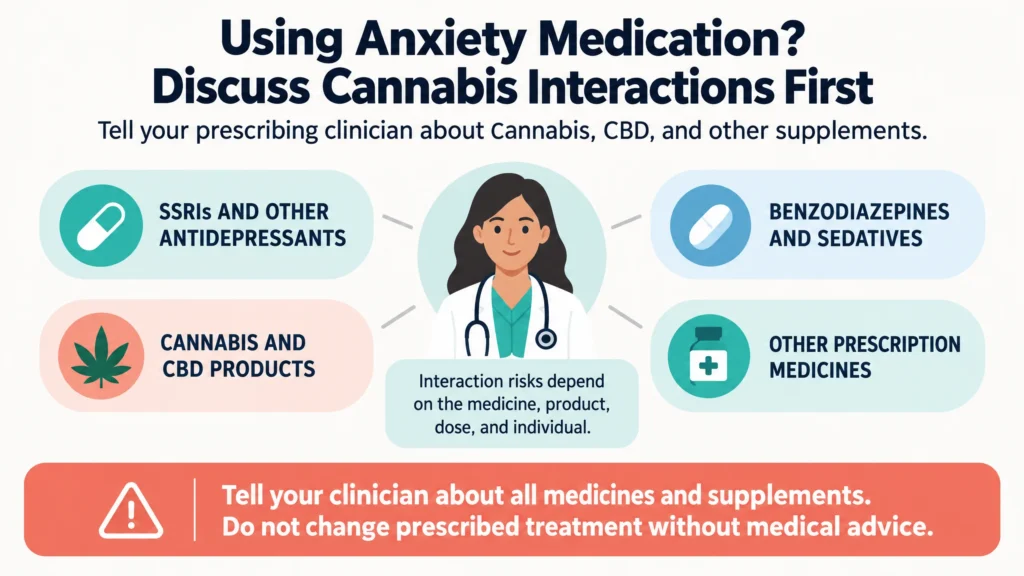
Pharmacists at PA dispensaries have COA access, clinical training, and the ability to review your specific medication list for interactions. For a patient with anxiety as their qualifying condition, a history of THC-induced paranoia, or current prescriptions for SSRIs or benzodiazepines, the pharmacist provides a clinically grounded recommendation rather than a product popularity signal.
What to ask your PA dispensary pharmacist for stress relief:
| Your Situation | Ask the Pharmacist |
|---|---|
| Daytime stress, need to stay functional | “Which current flower products have the highest limonene content on the COA?” |
| Evening decompression, sedation okay | “What products have dominant myrcene with some linalool? What’s the Total THC on your batch COA?” |
| Anxiety-driven stress, sensitive to THC | “What’s your highest CBD:THC ratio tincture option? Does it have caryophyllene or linalool?” |
| On SSRIs or anxiety medications | “Can you check my medication list for CBD interactions before I choose a product?” |
| Not sure where to start | “I have anxiety as my qualifying condition and I’m looking for stress relief without high intoxication. What would you start me with?” |
Specifically ask the pharmacist:
What product in your current inventory has the highest limonene content? (For daytime stress). What products have significant linalool alongside caryophyllene? (For anxiety-driven stress). What is the CBD:THC ratio option you most frequently recommend for anxiety patients? What interactions should I know about given my current medications?
This consultation is free and available during business hours at every licensed PA dispensary.
If stress or anxiety is your primary qualifying condition, see our anxiety disorder and medical marijuana guide for condition-specific guidance and our terpenes for anxiety guide for deeper terpene research.
Frequently Asked Questions
Q: What is the best cannabis strain for stress relief?
A: At PA dispensaries, strain names are less reliable predictors of stress relief than terpene profiles because the same strain name from different cultivators can have different terpene expressions.
The best approach is to look for three things on the COA: Total THC under 18%, some CBD content (1%+ in flower or a ratio tincture), and a dominant terpene of limonene (uplifting, daytime stress), linalool (calming, anxiety-driven stress), or caryophyllene (grounding, physical tension).
Ask the dispensary pharmacist for the current inventory product that best matches your terpene target.
Q: Does cannabis actually help with stress?
A: At appropriate doses, yes.
The evidence base includes the University of Chicago clinical trial showing 7.5mg THC reduced stress while 12.5mg worsened it, and the 2024 Johns Hopkins study finding that THC combined with limonene significantly reduced anxiety compared to THC alone.
Anxiety disorders are Pennsylvania’s most common qualifying condition, cited in 60% of all MMJ certifications. Low doses are reliably anxiolytic while high doses can be anxiogenic.
Q: Why do high-THC strains sometimes make anxiety worse?
A: Because of the biphasic dose-response relationship between THC and stress.
THC at low doses reduces CB1 receptor activation in the amygdala in a calming direction. Above an individual threshold (often around 7.5 to 10mg for most people), the same activation reverses direction and increases threat perception, anxiety, and paranoia.
PA dispensary products with 25 to 30% Total THC deliver doses in this anxiety-producing range at typical consumption amounts. For stress relief, the goal is the minimum effective dose, not the highest potency available.
Q: How do I choose a stress-relief product at a PA dispensary if I cannot smell the products?
A: Many PA dispensaries do not provide smell samples for all products. In this case, the COA terpene panel is your primary selection tool.
Request the COA for the products you are considering and look at the top terpene by percentage. Dominant limonene for uplifting daytime stress relief. Dominant linalool for calming anxiety-driven stress. Dominant caryophyllene for physical tension.
Ask the dispensary pharmacist which current product in the inventory has the highest limonene or linalool content based on batch COA data.
Q: Is indica or sativa better for stress relief?
A: Neither label reliably predicts stress relief outcomes at PA dispensaries. Sativa-labeled products tend toward limonene or terpinolene dominance, which often produces more alert, uplifting stress relief. Indica-labeled products tend toward myrcene dominance, which often produces more sedating, physical relaxation. But these are tendencies, not rules. The same strain name from different PA cultivators can reverse the typical pattern. Use the COA terpene panel rather than the indica/sativa label for stress-specific product selection. For a full breakdown, see our indica or sativa for anxiety guide.
The Bottom Line
The best cannabis strain for stress relief at PA dispensaries is not a name. It is a terpene profile.
Dominant limonene for daytime situational stress and mood elevation. Dominant linalool for anxiety-driven stress and calming. Dominant caryophyllene for physical tension and grounding. All three above 0.3% together represents the Kush chemotype pattern most consistently associated with anxiety reduction in the research literature.
Keep the THC in the lower range (under 18% Total THC, lower for sensitive patients). Make sure CBD is present. And use a format matched to your stress pattern: tincture for chronic daily management, vaporized for acute situational stress.
The PA dispensary pharmacist is your most reliable resource for matching current inventory to your specific terpene targets.
This blog post is intended for general educational and informational purposes only and does not constitute medical advice. Individual responses to cannabinoids and terpenes vary significantly. Cannabis interacts with SSRIs, benzodiazepines, and other anxiety medications through CYP450 enzyme pathways. Always disclose cannabis use to your prescribing physician and PA dispensary pharmacist, particularly if you take medications for anxiety or stress-related conditions. If you are experiencing severe anxiety or a mental health crisis, contact the 988 Suicide and Crisis Lifeline (call or text 988). Medically reviewed by Dr. Johnathon Chance Miller, MD.
Sources
- Johns Hopkins University / Drug and Alcohol Dependence 2024: Spindle T, Vandrey R, d-Limonene Reduces THC-Induced Anxiety and Paranoia in Controlled Crossover Trial
- Accurate Clinic: Cannabis and Anxiety, The Kush Chemotype and Terpene Research
- Entourbrand: Best Terpenes for Anxiety Relief, Linalool, Limonene, Caryophyllene (2025 Research Summary)
- Mamedica Clinic UK: The Five Best Terpenes for Anxiety Relief
- Physiology and Behavior 2014: Bahi A et al., Beta-Caryophyllene Produces Anxiolytic and Antidepressant-Like Effects via CB2 Receptor Activation
- University of Chicago: THC Dose and Stress Response, Biphasic Dose-Response Trial
- PA Department of Health: Medical Marijuana Qualifying Conditions