
You found a pack of gummies tucked in the back of a drawer. The “best by” date passed three months ago. Now you’re wondering whether to eat them, toss them, or just eat them and hope for the best.
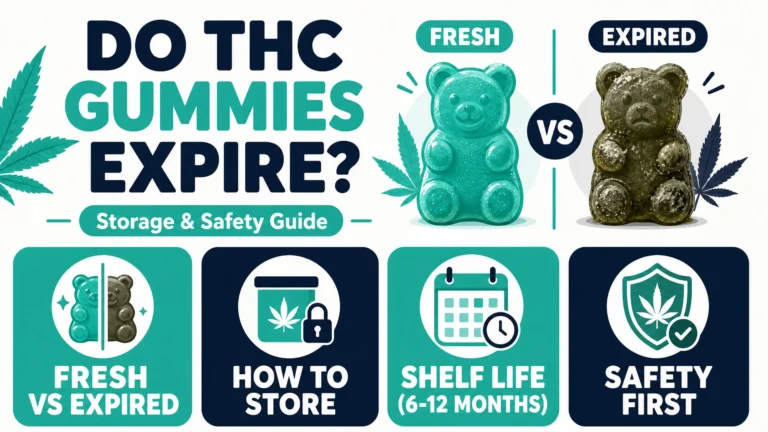
Here is the direct answer: Yes, THC gummies expire. They do not go dangerous overnight the way spoiled milk does, but they do lose potency, texture, and flavor over time. In some cases, they can develop mold, which makes them genuinely unsafe.
Need a PA Medical Marijuana Card?
Get certified online in 15 minutes. 100% Money-Back Guarantee.
Get Certified Now →This guide covers exactly how long THC gummies last, what actually happens to the THC as they age, how to tell when they’ve gone bad, and the right way to store them to get the most out of what you have. It also covers THC vape cartridges and oils, since the expiry questions are similar and the answers differ in important ways.
Key Takeaways
- Unopened THC gummies last 6 to 12 months in a cool, dark place. Some well-formulated products stay fresh up to 24 months with proper storage.
- Opened packages last 3 to 6 months. Once you break the seal, oxygen and moisture start working against you immediately.
- THC degrades into CBN over time. The gummy may still feel like something, but the effect shifts toward sedation rather than the clearer experience you bought it for.
- Freezing works for long-term storage, but texture changes when you thaw. Always freeze in airtight portions and thaw before opening to avoid condensation.
- At PA dispensaries, every product has a COA with a batch date. Look for this before purchase, and avoid buying products with batch dates older than six months.
- Vape carts and THC oil expire differently from gummies. Oil stored improperly can degrade in weeks. Sealed cartridges can last 12 to 24 months if stored correctly.
Do THC Gummies Actually Expire?

Yes. THC gummies are a food product, and like all food products, they have a natural shelf life determined by their ingredients, packaging, and storage conditions.
The sugar and gelatin base of a gummy is relatively shelf-stable compared to other cannabis edibles like brownies or cookies. That’s why gummies outlast most other infused food products. But “relatively stable” doesn’t mean “indefinite.”
Two things expire in a THC gummy. The food itself, and the THC inside it.
Do You Qualify for a PA MMJ Card?
Connect with a licensed Pennsylvania state physician online from home.
The food portion can develop mold, dry out, change texture, or go stale. The THC portion degrades chemically over time, converting to other compounds with different effects. Both processes happen simultaneously, at rates determined by how the product is stored.
The good news: an expired THC gummy rarely becomes dangerous to eat unless there’s visible mold or a clearly off smell. The more common outcome is a gummy that is safe but significantly weaker than what you bought. Whether that is worth eating is a personal call.
What Happens to THC as Gummies Age?
This is the chemistry part, and it’s worth understanding because it explains why “expired” doesn’t mean “nothing happens.”

THC (delta-9-tetrahydrocannabinol) is an unstable compound when exposed to oxygen, light, and heat. Over time, it undergoes oxidation and converts into CBN (cannabinol).
CBN is a cannabinoid with its own effects, but they are meaningfully different from THC:
| Cannabinoid | Primary Effect | Potency vs Fresh THC |
|---|---|---|
| Fresh THC | Euphoria, relaxation, appetite, altered perception | Baseline (100%) |
| Degraded THC (partial) | Weaker version of the above effects | Reduced |
| CBN (fully degraded) | Sedation, mild body relaxation | Much lower psychoactive effect |
Research on cannabis degradation confirms that THC experiences roughly a 12% degradation over the first 100 days of storage, then continues degrading at 3 to 4% per month thereafter. A 24-month stability trial published in PMC found that THCA concentration dropped by 44% and CBN increased by 2,700% in cannabis products stored at room temperature over two years.
What this means practically: a gummy you bought six months ago and stored properly may still have most of its original potency. The same gummy left in a hot car through a Pennsylvania summer could lose meaningful potency in weeks.
The shift toward CBN as gummies age is also why some people report that older gummies feel more sedating and less euphoric than fresh ones. They’re not imagining it.
Shelf Life: Unopened vs Opened Gummies
Here is the realistic shelf life picture for most commercial THC gummies:

| Condition | Shelf Life | Notes |
|---|---|---|
| Unopened, stored correctly (cool, dark, room temperature) | 6 to 12 months | Some quality brands extend shelf life to 18 to 24 months. |
| Opened, resealed tightly, stored correctly | 3 to 6 months | Oxygen exposure accelerates cannabinoid and terpene degradation. |
| Opened, left out at room temperature | Weeks to 2 to 3 months | Rapid potency loss and texture changes are likely. |
| Left in a hot car or sunny location | Days to weeks | Significant potency loss can occur even in sealed packaging. |
A few factors that extend or shorten shelf life beyond these ranges:
Formulation matters.
⚡ Fast & 100% Online PA Medical Cards
Board-Certified Doctors • 100% Money-Back Guarantee
Book Evaluation Now →Gummies made with natural sweeteners and no preservatives degrade faster than those with stabilizers. Some premium brands publish stability testing data alongside COAs. If this matters to you, look for brands that disclose it.
Full-spectrum vs isolate.
Full-spectrum gummies contain terpenes alongside THC. Since terpenes are highly volatile and degrade faster than cannabinoids, full-spectrum products have a shorter window at peak quality than isolate-based gummies. The terpenes go first, which shifts the effect profile before significant THC loss occurs.
Packaging quality.
Airtight, opaque packaging with resealable closures extends shelf life significantly compared to clear bags or loosely sealed containers. This is one area where PA dispensary products have an advantage: state-mandated child-resistant, opaque packaging helps preserve products throughout their intended shelf life.
5 Signs Your THC Gummies Have Gone Bad
Your senses are the most reliable tools here. Here’s what to check:

1. Visible mold.
Any fuzzy spots, white patches that aren’t sugar bloom, or unusual growth means immediate disposal. This is the only sign that makes a gummy genuinely unsafe rather than just weaker. Mold on gummies can cause food poisoning.
2. Texture problems.
Fresh gummies should be chewy and pliable. Gummies that have gone rock-hard and won’t flex, or that have melted together into a sticky mass, have degraded beyond their intended form. A white, powdery coating on the surface is called “sugar bloom” and occurs from temperature swings. It’s not dangerous but signals that the product has been through poor storage conditions.
3. Off smell.
Fresh gummies should smell like their intended flavor. A sour, musty, or “off” odor that doesn’t match the product means something has changed chemically or microbially. Trust your nose.
4. Significant color change.
Some fading over time is normal. Dramatic color changes, particularly darkening or unusual discoloration, indicate significant cannabinoid and terpene degradation.
5. Stale or flat taste.
Expired gummies often taste noticeably less complex than fresh ones. If a gummy that used to taste like lemon now tastes vaguely sweet with no specific character, the terpenes and flavor compounds have degraded.
When in doubt, throw it out. Fresh gummies are not expensive enough to risk eating something that’s developed mold or gone genuinely rancid.
How to Store THC Gummies Properly?
Correct storage can extend the effective life of your gummies significantly. The four enemies to protect against are heat, light, oxygen, and humidity.

Temperature
Renewing Your PA MMJ Card?
Quick annual recertification online. No paperwork hassle.
Renew Card Online →Store between 60 and 70 degrees Fahrenheit. Pantry shelves away from the stove, or interior cabinets that don’t get warm, are ideal. Avoid anything that sits in direct sunlight or near appliances that generate heat.
Light
UV light breaks down THC faster than almost any other environmental factor. Keep gummies in opaque packaging or a dark container. If the original packaging is clear, transfer to a dark glass jar or a opaque resealable bag before long-term storage.
Oxygen
Every time you open a package, oxygen gets in and oxidation begins. After taking what you need, squeeze excess air out of resealable bags before closing. For glass jars, choose a size close to the amount you have so there’s minimal headspace. A small food-safe desiccant packet in the container helps absorb moisture without requiring refrigeration.
Humidity
The ideal storage humidity is 55 to 65%. Too much moisture promotes mold. Too little causes gummies to dry out, crack, and lose texture. Most climate-controlled indoor environments in Pennsylvania fall within this range naturally in cooler months. Summer humidity is worth watching, particularly in basements.
A practical storage setup: The original airtight, opaque manufacturer’s packaging placed in a kitchen cabinet or pantry that doesn’t get warm. This protects against all four degradation factors without requiring any special equipment.
Can You Freeze THC Gummies?
Yes, freezing works for long-term storage, but with important caveats.

Freezing slows all degradation processes significantly. Gummies stored in a properly sealed, airtight container in the freezer can maintain potency for up to 12 months beyond their typical room-temperature shelf life.
The tradeoff: Texture changes. Gummies thawed from frozen often have a slightly different consistency than fresh ones. They may be firmer, slightly gritty from ice crystal formation, or lose some of their original chewiness. This is cosmetic rather than a safety or potency issue.
How to freeze correctly:
- Portion gummies into single-use amounts before freezing. Freezing and re-freezing repeatedly degrades quality faster than a single freeze-thaw cycle.
- Seal in an airtight container with as little air as possible.
- Label with the freeze date.
- When ready to use, take the sealed container out of the freezer and let the container return to room temperature before opening. This prevents condensation from forming directly on the gummies, which can cause surface mold.
One caution: do not store THC gummies in the same freezer space as strong-smelling foods without proper airtight sealing. Gummies absorb odors easily, and a gummy that tastes like last week’s leftovers is not a pleasant experience.
Do THC Carts Expire?
Yes. THC vape cartridges expire, and the degradation process is different from gummies in important ways.

Get Approved by a Licensed PA Doctor
Schedule your appointment in minutes. You only pay if approved.
Start Online Application →A vape cartridge contains concentrated THC oil rather than a food-based substrate. The oil itself is more chemically stable than a gummy in some respects, but the combination of heat (from the battery and coil), UV exposure, and air makes cartridges susceptible to rapid degradation if stored poorly.
Shelf life at a glance:
| Cart Condition | Shelf Life | Quality Risk |
|---|---|---|
| Unopened, sealed, stored correctly | 12 to 24 months | Minimal degradation |
| Opened, stored correctly | 6 to 12 months | Gradual potency and flavor decline |
| Left in a hot car, frequent heat exposure | Weeks | Rapid degradation regardless of use |
A 24-month cannabis cartridge stability trial published in PMC found THCA concentration dropped by 44% and CBN increased by 2,700% in cartridges stored at room temperature over two years. Cartridges stored at higher temperatures degraded significantly faster.
Signs a cart has expired or gone bad:
- Oil color has darkened from honey-gold to brown or dark amber
- A burnt, sour, or otherwise off taste on the draw
- Vapor production is reduced or inconsistent
- Oil has become thick and sludgy rather than flowing smoothly
- Crystallization or separation visible in the oil
Storage rules for carts: Store upright in a cool, dark place between 60 and 70 degrees Fahrenheit. Do not refrigerate (moisture degrades the oil and can crack cartridge hardware). Do not leave attached to a battery when not in use, as residual battery warmth slowly degrades the oil. Remove the cart from the pen and replace the protective cap after each session.
Does THC Oil Expire?
Yes, THC oil expires, though its shelf life and degradation pattern differ from both gummies and cartridges.
Standalone THC oils, such as the tinctures and oral syringes sold at PA dispensaries, typically maintain quality for 1 to 2 years when sealed and stored correctly. Once opened, most manufacturers recommend use within 3 to 6 months for optimal potency and flavor.
The main degradation pathways for THC oil are the same as for gummies: oxidation from air exposure, heat-driven cannabinoid conversion to CBN, and light-driven photodegradation. Oil is generally more stable than gummies because it does not have a food matrix that can mold or degrade independently of the cannabinoid content.
Signs THC oil has gone bad:
- Color has darkened significantly from its original appearance
- Smell has shifted to something sour, rancid, or off-character
- Separation of the oil into layers that do not recombine when shaken
- Unusual thickening or visible particles in a product that was originally clear
Storage for THC oil: Keep in the original amber or opaque glass container, tightly sealed, in a cool dark cabinet. Do not refrigerate unless the manufacturer specifically recommends it, as temperature cycling when taking the bottle in and out can create condensation inside the cap.
Reading Expiry Dates at Pennsylvania Dispensaries

Ready to Get Your Official PA MMJ Card?
State-certified doctor consultations online. No risk—100% refund if not approved.
Claim Your MMJ Card Online →Every product at every licensed Pennsylvania dispensary is required to carry a Certificate of Analysis (COA) before sale. The COA includes a batch number and manufacturing date, which gives you real information about product freshness beyond just a printed “best by” date.
Pennsylvania’s Medical Marijuana Act mandates that all dispensary products are tested and labeled with verified cannabinoid content before reaching patients. This is one significant advantage of purchasing through a licensed PA dispensary over buying hemp products at a smoke shop, where testing standards are inconsistent and batch date transparency is voluntary.
What to check when buying at a PA dispensary:
- Batch date or manufacturing date on the COA. Aim for products where the batch date is within the last 3 to 6 months. Avoid products from batches older than a year, particularly for full-spectrum products where terpene degradation begins earlier.
- Expiration or best-by date on the label. Pennsylvania law requires this to be displayed. Cross-reference it with the batch date to get a sense of the intended shelf life.
- Product type matters for shelf life. Capsules and oils generally hold longer than full-spectrum gummies. If you’re buying to stockpile, lean toward more stable formats.
You can also ask the dispensary pharmacist about batch freshness. This is not an unusual request, and a well-run dispensary will be able to tell you when their current stock was produced.
The PA 90-Day Supply Rule and Why Stockpiling Rarely Makes Sense
Pennsylvania’s Medical Marijuana Act limits registered patients to a 90-day supply at any one time. This limit is assessed by dispensary pharmacists based on your physician certification and typical use patterns, rather than as a specific gram weight.
Practically, this rule means that PA dispensary patients are naturally protected from holding large quantities long enough to encounter significant expiry issues. A 90-day supply purchased from a dispensary with current batch dates will, in nearly all cases, be used well within its effective shelf life.
Where expiry becomes more relevant for PA patients: hemp products purchased at smoke shops, products purchased in neighboring states for personal use, or situations where a patient’s condition changes and they stop using a product they’ve already bought in quantity.
If you are a Pennsylvania MMJ patient thinking about stocking up on any cannabis product, the 90-day rule is a useful natural limiter. Buy what you need for the current period, rotate through products while fresh, and use the dispensary pharmacist consultation to calibrate quantities appropriately.
If you are a PA resident currently using hemp THC products from smoke shops and considering the PA MMJ program, the qualifying conditions page lists all 24 recognized conditions. Certification is completed via telehealth the same day, and dispensary products come with the freshness verification that smoke shop products do not.
Frequently Asked Questions
Q: Do THC gummies expire?
A: Yes. THC gummies expire like any food product. Unopened gummies stored correctly in a cool, dark place typically last 6 to 12 months, with some well-formulated products staying fresh up to 24 months. Opened packages should be used within 3 to 6 months. The gummy’s food base can develop mold or change texture over time, while the THC inside degrades into CBN through oxidation, producing a more sedating and less euphoric effect. Products with visible mold, off smells, or dramatic texture changes should be discarded.
Q: Do THC gummies go bad and become unsafe?
A: THC gummies rarely become dangerous beyond the food safety risks that apply to any expired food. The primary risk is mold, which can develop if gummies are exposed to moisture or high humidity and makes them genuinely unsafe to consume. Gummies without visible mold or off smells that are past their “best by” date are typically still safe but will be noticeably weaker in potency and may have degraded texture and flavor. When in doubt, throw them out.
Q: Can you freeze THC gummies to extend their shelf life?
A: Yes. Freezing THC gummies in airtight, portioned containers can extend their shelf life significantly, potentially by up to 12 months beyond room-temperature storage. The main tradeoff is texture changes after thawing. Gummies frozen and thawed may be slightly firmer or have a different chewiness than fresh ones. To freeze correctly, portion gummies before freezing, seal out as much air as possible, label with the freeze date, and allow the sealed container to return to room temperature before opening to avoid condensation forming on the gummies.
Q: Do THC vape carts expire?
A: Yes. THC vape cartridges expire as the oil inside degrades from heat, light, and air exposure. Unopened carts stored correctly can maintain quality for 12 to 24 months. Once opened and in use, expect 6 to 12 months before noticeable quality decline. Signs of an expired cart include oil that has darkened from honey-gold to dark brown, a burnt or sour taste on the draw, reduced vapor production, and oil that has become sludgy or separated. Store carts upright in a cool, dark location and detach from the battery between uses to minimize heat exposure.
Q: Does THC oil expire and go bad?
A: Yes. THC oil expires, though it is generally more shelf-stable than gummies or full-spectrum flower. Sealed THC oil typically maintains quality for 1 to 2 years when stored correctly. Once opened, use within 3 to 6 months for optimal potency. THC oil degrades through the same oxidation and photodegradation processes as other cannabis products, converting THC to CBN over time. Signs of expired THC oil include significant darkening from its original color, a rancid or sour smell, oil that has separated into layers that won’t recombine, or unusual thickening. Store in the original amber or opaque glass container, sealed, in a cool dark cabinet.
Q: How do I know if my THC gummies have expired?
A: Check for five things in order. First, look for mold, any fuzzy patches or unusual growths that mean immediate disposal. Second, check the texture: gummies should be chewy and pliable, not rock-hard, melted together, or coated in a grainy white bloom from temperature swings. Third, smell them: fresh gummies smell like their flavor, while expired ones smell sour, musty, or off. Fourth, check the color: significant fading or unusual darkening indicates cannabinoid degradation. Fifth, taste a small amount if everything else checks out: flat, stale, or notably different flavor from when you first opened the package signals that the product is past its best. When in doubt, throw them out.
Q: What does Pennsylvania law require on dispensary cannabis product labels regarding expiration?
A: Pennsylvania’s Medical Marijuana Act requires all products sold at licensed dispensaries to carry a Certificate of Analysis (COA) with a batch number and manufacturing date, along with a printed expiration or best-by date on the label. This gives PA patients verifiable freshness information beyond just the label date. At a licensed PA dispensary, you can request the COA for any product and check the batch date before purchasing. The dispensary pharmacist can also advise on which current stock is freshest. This level of documentation is not consistently required for hemp products sold at Pennsylvania smoke shops, making dispensary products more verifiable in terms of freshness.
Q: How long do THC gummies last if stored in a hot car or warm location?
A: Hot storage environments dramatically shorten THC gummy shelf life. Even sealed packaging provides limited protection against heat. A car interior in Pennsylvania summer can reach 130 degrees Fahrenheit or higher. At those temperatures, THC degrades to CBN rapidly, the gelatin base can melt and fuse gummies together, and any remaining moisture in the product creates conditions favorable for mold. Gummies stored in a hot car for even a few days may lose significant potency and change texture substantially. For all cannabis products, treat heat exposure like a countdown: the hotter the storage, the shorter the effective window.
Medical Disclaimer
This blog post is intended for general educational and informational purposes only and does not constitute medical advice. Shelf life ranges vary by product formulation, manufacturer, and storage conditions. Always check expiration dates and COA batch dates before consuming any cannabis product, and discard any product showing signs of mold or significant degradation. Do not consume any cannabis product while driving or operating machinery. Medically reviewed by Dr. Johnathon Chance Miller, MD.
Sources
- CBDX.com, Do THC Gummies Expire? Shelf Life and Storage Guide (October 2025)
- Higher Standard, Do THC Gummies Expire? Shelf Life and Storage Tips (March 2026)
- Cornbread Hemp, Do THC Gummies Expire (And If So, Can I Still Eat Them)? (January 2026)
- Green Health Docs, Can Your Edibles Expire? How Long Do THC Gummies Last?
- Bobby Sea Moss, Do THC Gummies Expire? The Complete Shelf Life and Storage Guide (August 2025)
- The Hemp Doctor, Do Weed Gummies Go Bad? Shelf Life and Storage Tips (May 2026)
- Exhale Wellness, How Long Do Edible Gummies Take to Expire? (February 2026)
- Mellow Fellow, Do Weed Carts Expire? Signs, Shelf Life, and Storage Tips (May 2026)
- CannaAid, Do THC Gummies Expire? A Complete Guide to Shelf Life and Storage (September 2025)
- Cannabuddha, Do THC Carts Expire? A Guide to Vape Cartridge Shelf Life (February 2026)
- Diet Smoke, How Long Do THC Vape Cartridges Last? (October 2025)
- PMC/NIH, 24-Month Cannabis Cartridge Stability Trial: THCA Concentration and CBN Formation
- Pennsylvania Medical Marijuana Act, Act 16 of 2016 (labeling and COA requirements)