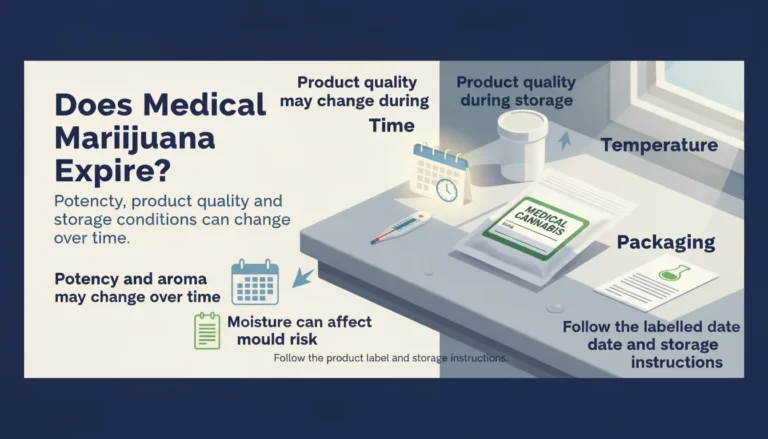

Medical marijuana does not expire the way milk does.
It will not become poisonous, toxic, or dangerous to use past a certain date. But it does degrade. THC converts to CBN over time. Terpenes evaporate faster than cannabinoids. Moisture content shifts. Mold becomes possible under certain conditions. And the therapeutic profile of the product changes meaningfully as a result.
Need a PA Medical Marijuana Card?
Get certified online in 15 minutes. 100% Money-Back Guarantee.
Get Certified Now →For Pennsylvania medical marijuana patients, the relevant question is not whether cannabis can stay good for three years. It is whether it stays good for the 90-day supply window that Act 16 of 2016 allows patients to purchase at a time.
The answer depends heavily on the product format, the storage conditions, and a four-factor framework that governs degradation across every cannabis product type.
Key Takeaways
| Topic | Key Point |
|---|---|
| Does it expire? | Not in a toxic sense, but potency and terpene quality degrade meaningfully over time |
| PA 90-day supply rule | PA patients may purchase up to a 90-day supply at once, most products should remain at adequate quality within that window with proper storage |
| PA legal storage requirement | Pennsylvania law requires patients to store cannabis in its original dispensary packaging |
| The four enemies | Light, heat, air, and humidity are the four factors that degrade cannabis across all product formats |
| Most perishable format | Live rosin, high terpene content makes it uniquely sensitive; requires refrigeration or freezing |
| THC-to-CBN conversion | Aging THC converts to CBN (the sleepy cannabinoid), a concern for daytime users, potentially beneficial for patients using cannabis for sleep |
Does Medical Marijuana Actually Expire?
The short answer: not the way food does, but yes in ways that matter for medical patients.
Cannabis degradation is not a binary expiration event. It is a gradual process where potency diminishes, terpene content decreases, and under certain conditions, mold becomes possible.
Do You Qualify for a PA MMJ Card?
Connect with a licensed Pennsylvania state physician online from home.
Dried cannabis typically retains its quality for about 6 months to 1 year if stored correctly. After this period, it begins to lose its aroma and potency, with THC levels decreasing significantly over the years, approximately 16% after one year, increasing to 41% after four years.
For PA medical patients using cannabis for qualifying conditions, this degradation matters more than it might for a recreational user.
A patient managing chronic pain or severe anxiety depends on a predictable, consistent therapeutic dose. A product that has lost 20% of its THC content and most of its terpenes delivers a meaningfully weaker therapeutic response than the same product fresh from the dispensary.
The good news for most PA patients: within the 90-day supply window that Act 16 allows, proper storage preserves most products at acceptable therapeutic quality.
The Science of Cannabis Degradation
Two primary degradation processes occur in stored cannabis.
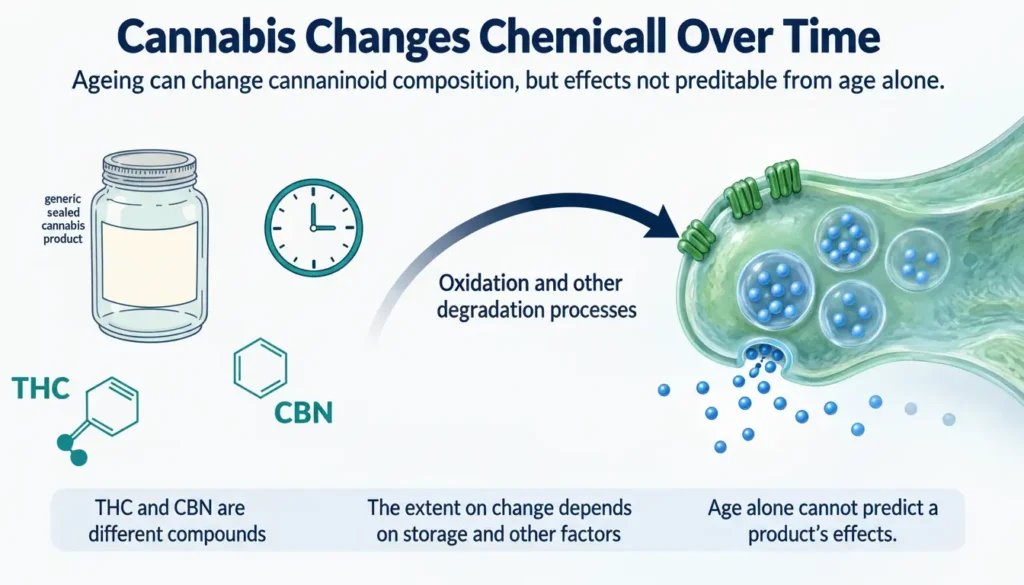
THC oxidizes to CBN
When THC is exposed to oxygen over time, it undergoes oxidation and converts to cannabinol (CBN). THC degrades into cannabinol (CBN), resulting in lower potency, as CBN does not have strong psychoactive effects. CBN may also make users sleepy.
This conversion has a nuanced implication for PA patients.
For daytime patients or those using cannabis for focus, anxiety management, or nausea, THC-to-CBN conversion reduces the therapeutic profile they are seeking. The product becomes more sedating and less potent for their target application.
For patients using cannabis specifically for sleep or for the CBN sleep benefits described in our CBN cannabinoid sleep guide, slightly aged flower with elevated CBN content may actually align with their therapeutic goal. This is the one context where aging cannabis is not purely a loss.
Terpenes evaporate and degrade faster than cannabinoids
THC degrades at a rate of about 10 to 20% per year under ideal conditions, but terpenes, which are responsible for aroma and much of the high’s character, evaporate far faster. A single poor storage choice can turn a product into a significantly diminished one in weeks.
⚡ Fast & 100% Online PA Medical Cards
Board-Certified Doctors • 100% Money-Back Guarantee
Book Evaluation Now →Terpenes are volatile. They are lost to evaporation even under good storage conditions, just more slowly than under poor ones. This is why the aroma of a stored cannabis product is the most immediate indicator of terpene integrity.
A product that has lost its distinctive smell has lost a significant portion of the terpene profile that distinguishes its therapeutic character. For PA patients selecting products based on terpene profiles (limonene for anxiety, myrcene for sleep, caryophyllene for pain), terpene loss means the product is no longer delivering what the COA promised at time of purchase.
The Four Enemies: Light, Heat, Air, and Humidity
Every cannabis storage decision reduces to managing four environmental factors. Remember these as LHAH.
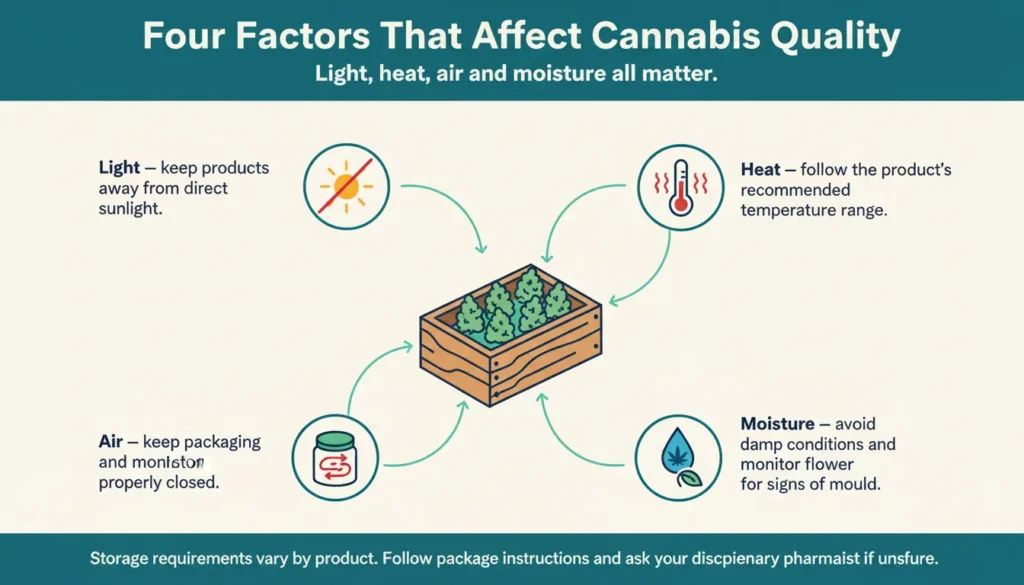
The four enemies of cannabis quality (LHAH) at a glance:
| Enemy | Optimal Level | What Happens When Exceeded | Solution |
|---|---|---|---|
| Light | Zero UV exposure | THC degrades faster than any other single factor | Opaque containers; dark storage location |
| Heat | 60 to 70°F (15 to 21°C) | Cannabinoid oxidation and terpene evaporation accelerate | Cool cabinet; avoid rooms above 77°F in PA summers |
| Air | Minimized | THC oxidizes to CBN; terpenes lost to evaporation | Airtight container; vacuum seal for long-term |
| Humidity | 55 to 62% RH | Below 55%: trichome loss; above 65%: mold risk | Boveda humidity pack inside airtight jar |
Light
UV radiation degrades cannabinoids faster than almost any other single factor. THC is particularly sensitive to UV light.
Opaque storage containers are not optional for long-term storage. Even indirect sunlight through a window accelerates degradation. PA dispensary products typically come in opaque or tinted packaging specifically to address this.
Store in a dark location: a drawer, a cabinet, or a dedicated storage box away from windows.
Heat
Heat accelerates both cannabinoid oxidation and terpene evaporation. The optimal storage temperature for most cannabis products is 60 to 70°F (15 to 21°C).
Temperature above 77°F (25°C) noticeably accelerates degradation. This matters specifically for PA patients in summer: Pennsylvania’s July and August can bring sustained indoor temperatures above 80°F without air conditioning, which meaningfully shortens the shelf life of stored products.
Avoid storing cannabis near heat sources: stoves, radiators, electronic devices, and sunny windowsills.
Air (Oxygen)
Oxygen drives the THC-to-CBN oxidation process. Minimizing air contact extends cannabinoid shelf life significantly.
Renewing Your PA MMJ Card?
Quick annual recertification online. No paperwork hassle.
Renew Card Online →Airtight containers are the most important storage investment. Every time a container is opened, some oxygen exchange occurs. Minimize opening frequency, particularly for larger quantities intended for long-term storage.
Vacuum-sealed storage is the gold standard for concentrates and for flower intended to be stored beyond 30 days.
Humidity
This is the most nuanced of the four factors because there is an optimal range in both directions.
Below 55% relative humidity: trichomes become brittle and break off when handling. Terpenes accelerate evaporation. The product becomes harsh and less aromatic.
Above 65% relative humidity: mold and mildew risk increases significantly. In Pennsylvania’s humid summers, unsealed or loosely stored cannabis is at real mold risk during July and August.
The target range is 55 to 62% relative humidity for flower. Humidity control packs (such as Boveda 58% or 62%) placed inside an airtight jar maintain the correct range passively.
The PA 90-Day Supply Rule and Shelf Life
Pennsylvania law under Act 16 of 2016 allows registered patients to purchase up to a 90-day supply of medical marijuana at a time.
This means the practical shelf life question for PA patients is: will this product remain at adequate therapeutic quality for up to 90 days?
For most PA dispensary product formats, the answer is yes, with proper storage. Flower, tinctures, troches, capsules, and cartridges all maintain therapeutic quality well beyond 90 days when stored correctly.
The formats where the 90-day window is a meaningful constraint are live rosin and fresh-pressed hash rosin, which are discussed in detail in Section 6.
The practical 90-day storage framework for PA patients:
Get Approved by a Licensed PA Doctor
Schedule your appointment in minutes. You only pay if approved.
Start Online Application →PA 90-day supply storage plan by format:
| Format | Buy at Once? | Storage During 90 Days | Any Special Action? |
|---|---|---|---|
| Flower | Full 90-day supply fine | Airtight jar + humidity pack, dark cabinet | Split into 30-day working supply + sealed long-term stash |
| Tinctures | Full 90-day supply fine | Original bottle, cool dark location | None; fully stable for 90 days |
| Troches / capsules | Full 90-day supply fine | Original packaging, cool dry location | None; very stable for 90 days |
| Vape cartridges | Full 90-day supply fine | Upright, room temperature, away from heat | Avoid leaving in car |
| Live rosin | Buy only 30 days at a time unless freezing | Original jar refrigerated or frozen | Freeze remainder in vacuum-sealed bag immediately |
| RSO | Full 90-day supply fine | Original syringe, room temperature until opened | Refrigerate after opening if not finishing in 30 days |
If you purchase a 90-day supply of flower, divide it into two portions. Store approximately 30 days’ worth in an accessible, everyday container (airtight glass jar with humidity pack). Store the remaining 60 days’ supply in a more protected container (vacuum-sealed or humidity-controlled) in a cool, dark location.
For oral products (troches, capsules, tinctures), original dispensary packaging with the child-resistant closure provides adequate protection for the full 90-day period when stored at room temperature away from light and heat.
Shelf Life by Product Format
Different PA dispensary product formats degrade at different rates.
| Product Format | Optimal Shelf Life | Maximum Before Significant Degradation | Key Risk |
|---|---|---|---|
| Flower (vaporized) | 6 months | 12 months | Terpene loss, THC-to-CBN conversion |
| Pre-rolls | 3 to 4 months | 6 months | Faster oxidation due to grinding and rolling |
| Tinctures (THC or CBD oil) | 12 to 18 months | 24 months | Carrier oil oxidation, cannabinoid degradation |
| Troches and capsules | 12 to 18 months | 24 months | Generally stable if stored per dispensary guidance |
| Vape cartridges (distillate) | 12 to 18 months | 24 months | Coil degradation and oil oxidation over time |
| Live resin cartridges | 6 to 12 months | 18 months | Terpene degradation faster than distillate cartridges |
| Live rosin | 1 to 3 months (room temp) | 6 months refrigerated, 12 months frozen | Most perishable; terpene loss, oxidation, texture change |
| Hash rosin | 2 to 4 months (room temp) | 6 months refrigerated, 12 months frozen | Similar to live rosin but slightly more stable |
| RSO (oral) | 12 to 18 months | 24 months | Stable at room temperature; refrigerate after opening |
| Distillate (syringe) | 12 to 18 months | 24 months | Stable; avoid repeated temperature cycling |
These ranges assume the storage conditions described in Section 7. Exposure to the four enemies (light, heat, air, humidity) can reduce effective shelf life significantly below the optimal range.
Live Rosin: The Most Perishable PA Dispensary Product
Live rosin deserves its own section because it is categorically more perishable than every other PA dispensary product format.
The reason is its starting material. Live rosin is made from fresh-frozen cannabis, meaning cannabis that was harvested and immediately frozen rather than dried and cured. This preserves an exceptionally high concentration of volatile terpenes in the final product.
Those same volatile terpenes that make live rosin the most flavorful and terpene-rich product format also make it the most sensitive to degradation.
What happens to live rosin over time
At room temperature (above 70°F), live rosin degrades noticeably within 4 to 6 weeks. Terpenes oxidize and evaporate. The texture shifts from a clean, fresh-pressed consistency toward a darker, waxy, or saucy texture. The aroma weakens. The flavor profile becomes less distinct.
At refrigerator temperature (34 to 40°F), live rosin maintains quality for approximately 3 to 6 months.
Ready to Get Your Official PA MMJ Card?
State-certified doctor consultations online. No risk—100% refund if not approved.
Claim Your MMJ Card Online →In a freezer (0°F or below), vacuum-sealed live rosin can maintain quality for 12 months or more with minimal terpene degradation.
The refrigerator vs freezer decision
Refrigerators are appropriate for live rosin intended to be used within 30 to 60 days. However, every time you open the refrigerator door, the temperature differential causes condensation risk on the container. Always allow refrigerator-stored live rosin to come to room temperature before opening the container, with the container sealed, to prevent moisture condensation on the product.
Freezers are better for live rosin intended to be stored beyond 30 days. Vacuum-seal the product before freezing (most PA dispensary live rosin jars are not vacuum-sealed), allow to thaw fully at room temperature before opening.
For more on the live rosin product category and how it compares to hash rosin, see our hash rosin vs live rosin guide.
How to Store Each PA Dispensary Product Format
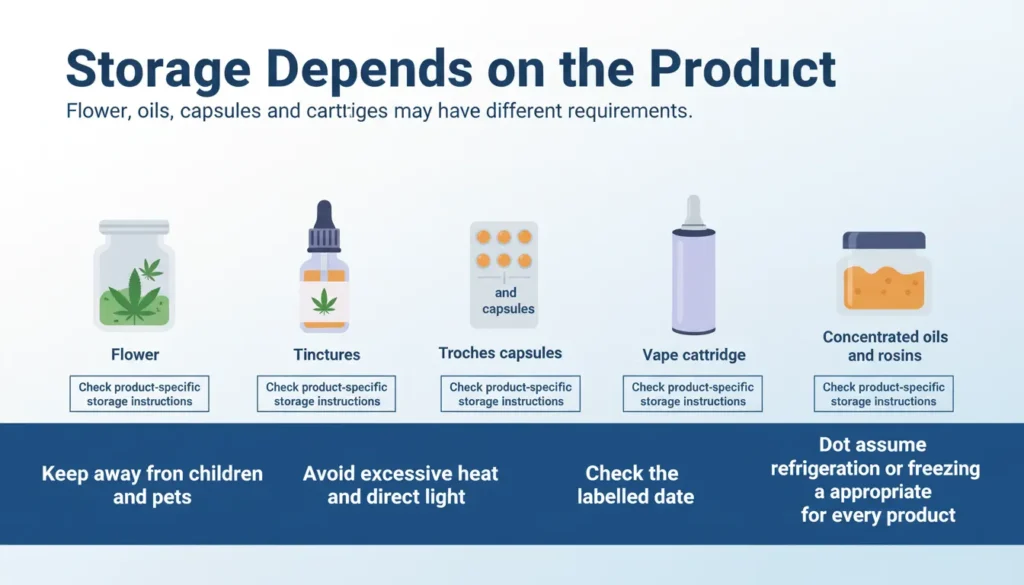
Flower
Airtight glass jar with a Boveda 58% or 62% humidity control pack. Dark drawer or cabinet. Room temperature (65 to 70°F preferred). Do not use plastic bags or unsealed plastic containers for more than a day or two. Do not refrigerate flower (the humidity fluctuation from refrigerator opening is harmful).
Tinctures
Original dispensary bottle with the dropper cap fully closed. Cool, dark location. Do not refrigerate most oil-based tinctures unless the product label specifically instructs it. Refrigeration can cause carrier oil to solidify in some formulations. Avoid leaving tinctures on countertops near heat-producing appliances.
Troches and capsules
Original dispensary packaging with the child-resistant closure. Cool, dry location away from moisture and heat. No special humidity control needed for solid oral forms. Avoid bathrooms (humidity spikes from showers accelerate degradation).
Vape cartridges
Upright storage (not sideways or inverted) to prevent oil from settling against the coil. Room temperature. Away from direct light. Never leave cartridges in a hot car; heat causes oil to thin and leak and degrades the terpene content.
Live rosin and hash rosin
Original dispensary container, sealed. Refrigerator for up to 60 days. Freezer (vacuum-sealed) for up to 12 months. Allow to reach room temperature with lid on before opening. Minimize the number of open-container exposures.
RSO
Original dispensary syringe sealed with the cap. Room temperature for unopened syringes. Refrigerate after opening if not using the full syringe within 30 days. Bring to room temperature before use as refrigerated RSO becomes very viscous and difficult to dispense.
PA Legal Storage Requirements
Pennsylvania law under Act 16 requires patients to store medical marijuana in its original dispensary packaging. This is not a general recommendation. It is a legal obligation for registered PA MMJ patients.
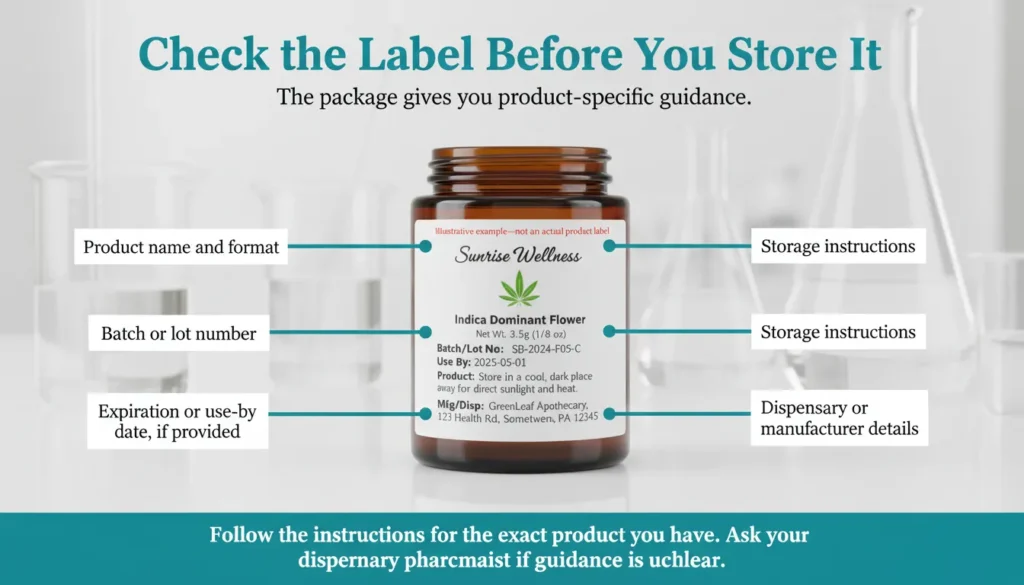
Original packaging serves several important functions beyond compliance. It maintains the product in its tested and labeled state. It ensures child-resistant closure is available for households with children. It preserves the batch number and dispensary information that may be needed for any product quality concerns or pharmacist consultations.
If original packaging is damaged or lost, contact your PA dispensary immediately. They can advise on compliant replacement storage options.
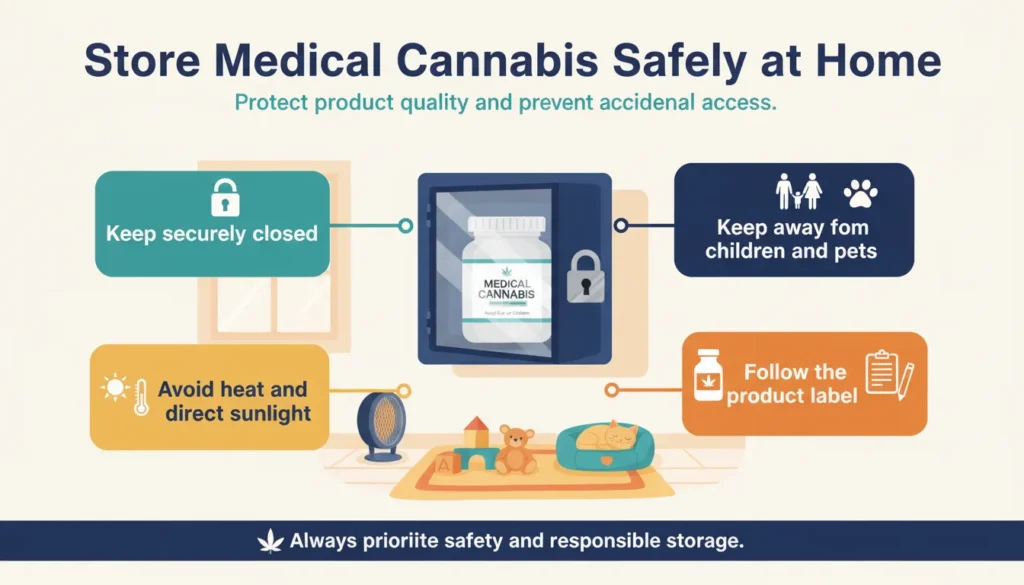
The original packaging requirement also means that repackaging cannabis into personal containers, while sometimes done for convenience, puts the patient outside the legal framework for possession. PA dispensary packaging was specifically designed for the storage properties of each product format and typically provides adequate protection for reasonable storage periods.
Signs Your PA Dispensary Product Has Degraded
Knowing when a product has degraded to the point of reduced therapeutic value is practical knowledge for every PA patient.
Signs of degradation by PA dispensary product format:
| Format | Early Signs | Advanced Signs | Action |
|---|---|---|---|
| Flower | Fading aroma | Harsh flat vapor; brown discoloration; musty smell | Consult dispensary pharmacist; discard if mold suspected |
| Tincture | Color darkening | Reduced effect at established dose | Check packaging date; compare to COA original values |
| Vape cartridge | Oil darkening | Diminished vapor; poor flavor; leaking | Discard; report to dispensary if within purchase window |
| Live rosin | Color darkening; texture change | Loss of fresh terpene aroma; waxy or saucy texture | Refrigerate or freeze remaining product immediately |
| RSO | Viscosity change | Off smell | Consult dispensary pharmacist |
Flower
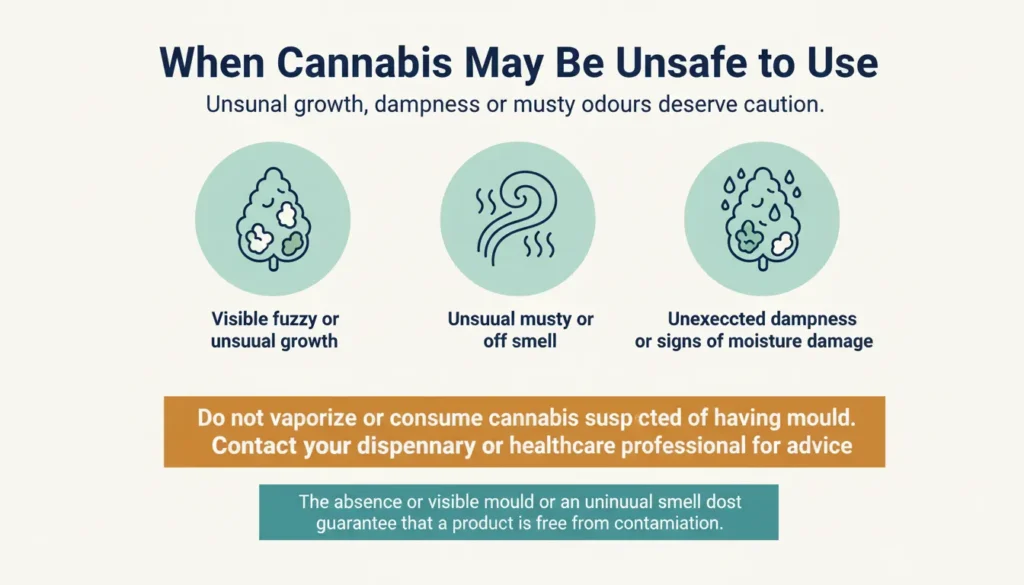
Diminished or absent characteristic aroma. Loss of aroma is the single most reliable indicator of terpene degradation. Overly dry, crumbling texture (indicating moisture and trichome loss). Harsh, flat vapor with little flavor. Brown or yellow discoloration beyond the strain’s natural color. Any unusual, musty, or off smell that suggests mold.
Tinctures
Color change to significantly darker than original (normal for some formulations, unusual in others). Unusual smell when the dropper cap is removed. Reduced effect at your established dose may indicate potency degradation.
Vape cartridges
Darkening of the oil from original color. Diminished vapor production or flavor. Visible debris or crystallization in the oil (minor crystallization of THCA is normal in some products; significant discoloration is not). Leaking, which may indicate seal degradation.
Live rosin
Color darkening from original. Change in texture from fresh-pressed to darker, saucier, or harder. Loss of the distinctive fresh terpene aroma. Any sign of moisture on the product surface.
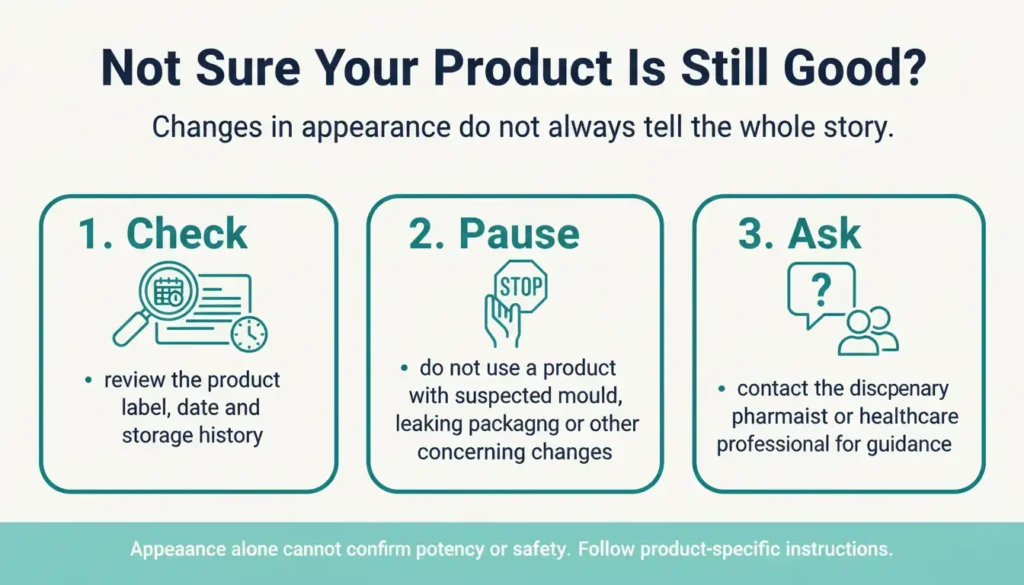
For any product where degradation is suspected, consult your PA dispensary pharmacist. They can review the batch COA and advise whether the product is still appropriate for therapeutic use.
To understand what the COA tells you about a product’s original potency and terpene content (your baseline for comparing to current product quality), see our how to read a PA dispensary COA guide.
Frequently Asked Questions
Q: Does medical marijuana expire?
A: Not in the toxic sense that food expires. Cannabis does not become dangerous to use after a certain date.
However, it degrades in ways that matter for medical patients: THC converts to CBN (reducing psychoactive potency and increasing sedative effects), terpenes evaporate (reducing flavor and therapeutic character), and humidity changes can produce mold risk.
Research shows THC degrades approximately 16% in the first year under ideal storage, and up to 41% over four years. For PA patients, proper storage within the 90-day supply window preserves most products at adequate therapeutic quality.
Q: How long does medical marijuana stay good?
A: It depends on the product format.
Flower: 6 to 12 months optimal. Tinctures, RSO, and distillate: 12 to 24 months. Troches and capsules: 12 to 18 months. Vape cartridges: 12 to 18 months. Live rosin: 1 to 3 months at room temperature, 6 months refrigerated, 12 months frozen and vacuum-sealed.
Within the PA 90-day supply window, all formats except live rosin maintain therapeutic quality with standard proper storage. Live rosin purchased in larger quantities should be frozen.
Q: What is the best way to store medical marijuana in Pennsylvania?
A: The best storage approach varies by format, but all formats follow the same four-factor framework: minimize light, control temperature (65 to 70°F), minimize air exposure, and maintain optimal humidity (55 to 62% for flower).
Pennsylvania patients are legally required to store cannabis in its original dispensary packaging.
Within those requirements, a cool, dark cabinet with an airtight container and humidity control pack is the standard optimal setup for flower.
Q: Can medical marijuana grow mold?
A: Yes. Cannabis flower at humidity above 65% is susceptible to mold and mildew growth, particularly in Pennsylvania’s humid summers.
Mold on cannabis is a health hazard that should not be vaporized or consumed. Signs include unusual musty or off smells, visible white or grey fuzzy growth, and excessively damp texture.
To prevent mold, store flower at 55 to 62% relative humidity using humidity control packs in an airtight container. If you see or smell anything suggesting mold, discard the product and consult your dispensary.
Q: Does THC turn into something when cannabis ages?
A: Yes. THC oxidizes over time into cannabinol (CBN). CBN has minimal psychoactive potency compared to THC but has documented mild sedative effects. CBN is the compound studied for sleep benefits in our CBN cannabinoid sleep guide. For PA patients using cannabis primarily for sleep, the natural aging conversion of THC to CBN in stored flower may align with therapeutic goals. For patients relying on THC’s full potency for pain, nausea, or other daytime qualifying conditions, aging and the resulting CBN conversion represents therapeutic loss.
Q: Is it legal to transfer cannabis to a different container in Pennsylvania?
A: Pennsylvania law requires patients to store medical marijuana in its original dispensary packaging. Transferring to personal containers is not technically compliant, even if the practice is common.
The original packaging includes batch identification, dosing information, and child-resistant closures that serve both legal and safety functions.
If original packaging is inadequate for a specific format (live rosin being the primary example), consult your dispensary pharmacist for guidance on compliant storage approaches.
The Bottom Line
Medical marijuana does not expire in a way that makes it dangerous. But it does degrade in ways that directly affect therapeutic outcomes for PA medical patients.
Terpenes are lost first and fastest. THC gradually converts to CBN. Moisture changes affect texture and mold risk. For most PA dispensary product formats, proper storage within the 90-day supply window preserves adequate therapeutic quality without specialized equipment.
Live rosin is the meaningful exception: purchase only what you can use in 30 to 60 days unless you are prepared to freeze the remainder in a vacuum-sealed container.
The four-enemy framework (light, heat, air, humidity) applies to every format. Address all four and your PA dispensary products will remain at therapeutic quality through the full supply window.
This blog post is intended for general educational and informational purposes only and does not constitute medical advice. Pennsylvania patients are legally required to store medical marijuana in original dispensary packaging. Do not consume cannabis that shows signs of mold growth. If you have questions about a specific product’s storage or shelf life, consult your licensed PA dispensary pharmacist. Medically reviewed by Dr. Johnathon Chance Miller, MD.
Sources
- Perfect Union: Does Weed Expire? Signs Your Cannabis Might Be Past Its Prime
- ATTN: Here’s How to Tell If Your Marijuana Has Expired
- Cannabis Shelf Life Science Guide 2025 (Radiology.ca Research Aggregator)
- UPSU: Does THC Oil Expire? Shelf Life and Storage Tips (2025)
- ACS Laboratory: Cannabis Concentrates Storage and Testing Guide 2025-2026
- PA Department of Health: Medical Marijuana Program, Patient Storage Requirements