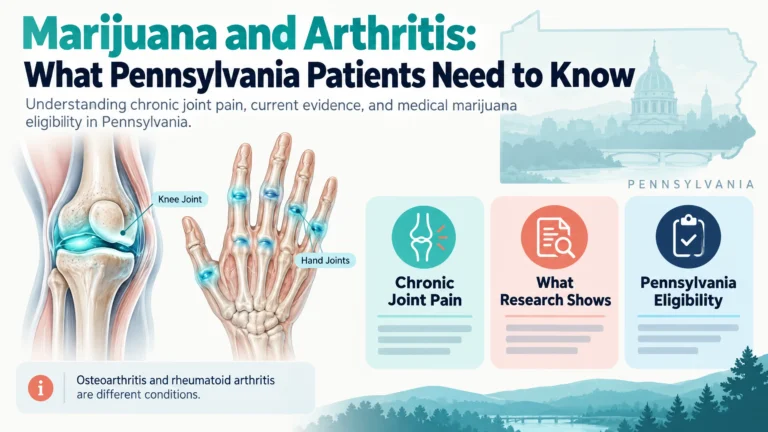

More than 54 million American adults have been diagnosed with some form of arthritis. It is the leading cause of disability in the United States and one of the most common reasons patients in Pennsylvania seek medical marijuana certification. Arthritis itself is not named on Pennsylvania’s qualifying conditions list. Chronic pain is.
For PA patients living with osteoarthritis, rheumatoid arthritis, psoriatic arthritis, or other arthritis-related conditions, the qualifying pathway is chronic pain under Act 16 of 2016. The pain from arthritis, when it is persistent and significantly impacts daily function, meets that threshold clearly.
Need a PA Medical Marijuana Card?
Get certified online in 15 minutes. 100% Money-Back Guarantee.
Get Certified Now →The research behind cannabis for arthritis has strengthened considerably through 2025 and 2026. This guide covers what the evidence actually shows, how cannabis works on joint pain and inflammation specifically, and the PA dispensary product approach most consistent with the available research.
Key Takeaways
| Topic | Key Point |
|---|---|
| PA qualifying pathway | Arthritis pain qualifies through chronic pain under Act 16 of 2016, not through a specific arthritis listing |
| Strongest patient evidence | Frane et al. 2022 (N=428): 83% reported pain improvement; 44% numerical pain score reduction; 60.5% reduced or stopped other medications after CBD use |
| OA vs RA distinction | Osteoarthritis patients showed significantly greater CBD pain reduction than rheumatoid arthritis patients in the largest available study |
| The CB2 mechanism | CBD and caryophyllene both engage CB2 receptors in joint tissue and immune cells, reducing inflammatory cytokine production directly relevant to arthritis |
| Active 2025 research | Brown University RCT results for RA/psoriatic arthritis posted March 2025; University of Michigan CBD knee arthroplasty trial completed August 2025 |
| The opioid reduction connection | 18.9% of arthritis patients using CBD discontinued opioids completely in the Frane study, relevant in a state with one of the highest opioid death rates in the US |
Does Arthritis Qualify for PA Medical Marijuana?
Arthritis is not listed by name among Pennsylvania’s 24 qualifying conditions under Act 16 of 2016.
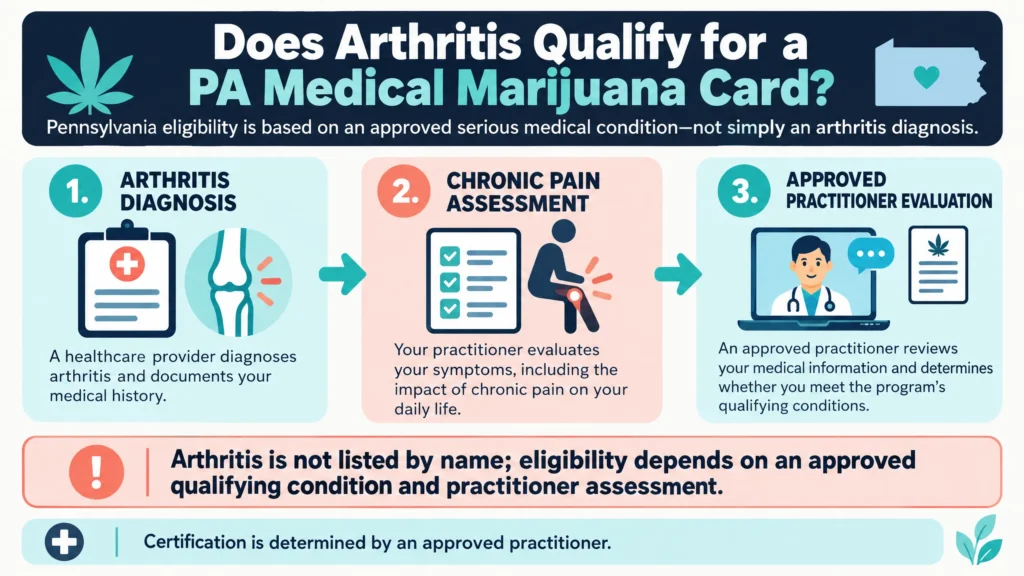
Chronic pain is.
For arthritis patients, this distinction matters practically. To qualify, the pain from your arthritis must be documented as chronic (persistent over time, not acute or injury-related) and sufficiently debilitating to impact daily function.
Do You Qualify for a PA MMJ Card?
Connect with a licensed Pennsylvania state physician online from home.
In practice, most arthritis patients who seek certification qualify through chronic pain without difficulty. Osteoarthritis, rheumatoid arthritis, psoriatic arthritis, and ankylosing spondylitis all produce chronic, documented pain that PA certifying physicians recognize as meeting the threshold.
What helps a certification appointment:
Medical records documenting your arthritis diagnosis, whether from a rheumatologist, orthopedic physician, or primary care provider. Notes that describe the frequency, severity, and functional impact of your pain. Information about treatments you have tried and their results or why you discontinued them. Documentation of how pain affects your daily activities, sleep, or work.
You do not need to have failed every other treatment option. You need documentation that the pain is chronic and that cannabis may provide therapeutic benefit.
Osteoarthritis vs Rheumatoid Arthritis: Why the Distinction Matters for Cannabis
Arthritis encompasses over 100 different conditions, but the two most common types respond differently to cannabis and deserve separate understanding.
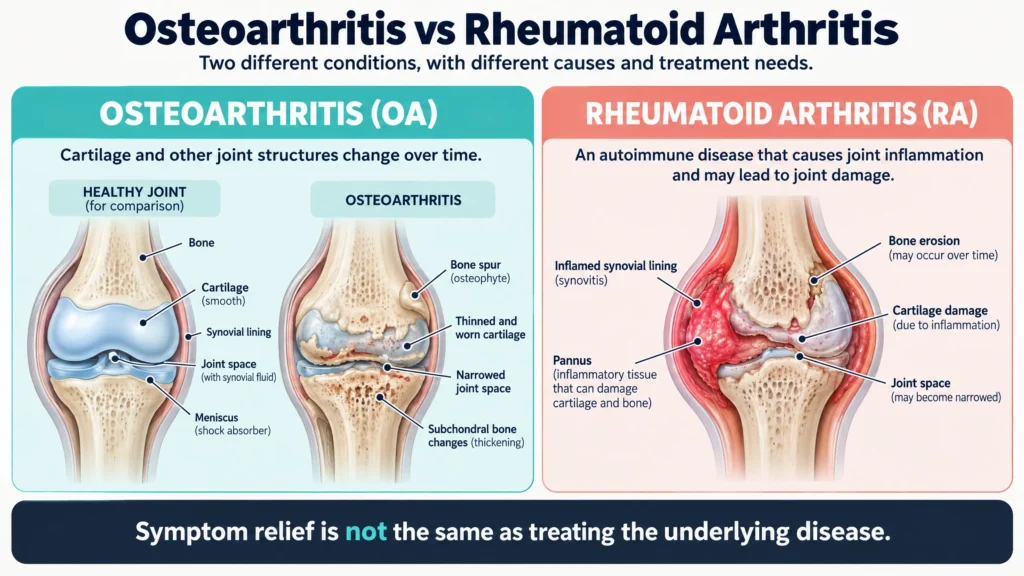
Osteoarthritis (OA)
OA is mechanical joint disease. It involves the breakdown of cartilage that cushions joint surfaces, leading to bone-on-bone contact, inflammation, pain, and reduced mobility.
OA is the most common form of arthritis, particularly in older PA adults. Hips, knees, hands, and spine are the most frequently affected joints.
The pain in OA has two primary components: mechanical nociception (pain signals from damaged joint tissue) and secondary inflammation from the inflammatory response to that tissue damage.
Cannabis research shows OA patients respond well to both components: CB1 receptor activation in the spinal cord reduces pain signal transmission, and CB2 receptor activation in joint tissue reduces the secondary inflammatory response.
Rheumatoid Arthritis (RA)
RA is an autoimmune disease. The immune system attacks the synovial membrane lining the joints, causing inflammation, joint damage, and systemic effects.
⚡ Fast & 100% Online PA Medical Cards
Board-Certified Doctors • 100% Money-Back Guarantee
Book Evaluation Now →RA affects the hands, wrists, feet, and ankles most commonly, typically in a symmetrical pattern (both hands affected simultaneously, for example).
Cannabis’s CB2 mechanism is directly relevant to RA’s underlying autoimmune inflammation. CB2 activation modulates immune cell activity and reduces pro-inflammatory cytokine production, addressing the autoimmune mechanism rather than just the resulting pain.
However, the evidence picture shows a nuanced outcome. The Frane et al. 2022 study found OA patients experienced significantly greater pain reduction with CBD than RA patients. The autoimmune mechanism of RA may not respond as completely to cannabinoids alone as the mechanical-plus-inflammatory picture of OA.
For RA patients, cannabis is better characterized as an adjunct to disease-modifying therapy (biologics, methotrexate) rather than a standalone disease modification approach.
How Cannabis Works on Arthritis: The CB1 and CB2 Mechanisms
Cannabis engages arthritis through two separate receptor pathways that address different aspects of the condition.
CB1 receptors: Pain signal modulation
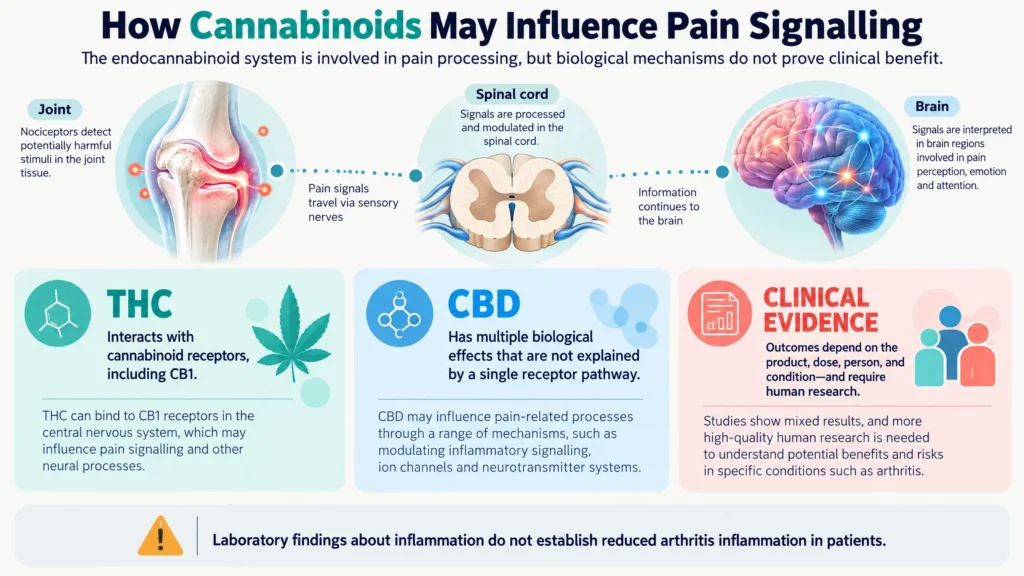
CB1 receptors are found in high concentrations in the spinal cord and dorsal root ganglia, where pain signals from peripheral joints are transmitted toward the brain.
THC activates CB1 receptors at these pain-processing locations, reducing the strength of pain signals transmitted up the spinal cord. This mechanism is not specific to arthritis: it applies to chronic pain from any cause.
The result is pain reduction without addressing the underlying joint pathology. THC provides symptom relief while the joint disease continues to progress.
OA vs RA: How each type responds to cannabis
| Feature | Osteoarthritis (OA) | Rheumatoid Arthritis (RA) |
|---|---|---|
| Underlying cause | Mechanical cartilage breakdown | Autoimmune synovial attack |
| Primary cannabis mechanism | CB1 pain reduction + CB2 secondary inflammation | CB2 immune modulation + CB1 pain reduction |
| CBD response (Frane 2022) | Greater pain reduction; statistically significant | Meaningful improvement but less than OA group |
| Disease modification potential | Not established | Not established (5 RCTs showed no inflammatory marker change) |
| Best cannabis approach | CBD-dominant daily + ratio for flares | CBD-dominant as adjunct to biologics/methotrexate |
| Key drug interaction concern | NSAIDs (CYP2C9) | Methotrexate (CYP interaction + hepatotoxicity) |
CB2 receptors: Joint inflammation modulation
This is the mechanism most directly relevant to arthritis specifically.
CB2 receptors are concentrated in immune cells, synovial tissue, and joint cartilage. Research confirms CB2 receptors are expressed in human osteoarthritic cartilage, and CB2 activation reduces the production of pro-inflammatory cytokines (TNF-alpha, IL-6, IL-1beta) that drive joint destruction in both OA and RA.
CBD engages CB2 receptors through its FAAH-inhibiting mechanism (raising natural anandamide) and through direct CB2 partial agonist activity. Caryophyllene, a terpene found in many PA dispensary products, binds CB2 receptors directly.
Renewing Your PA MMJ Card?
Quick annual recertification online. No paperwork hassle.
Renew Card Online →This dual-pathway engagement is why 1:1 THC:CBD products show the most consistent evidence in arthritis research. THC addresses the pain signal through CB1; CBD (and caryophyllene) addresses the inflammatory process through CB2.
For a full explanation of CB1 and CB2 receptor mechanisms, see our endocannabinoid system guide.
Caryophyllene: The Terpene That Directly Addresses Joint Inflammation
For arthritis patients selecting PA dispensary products, caryophyllene deserves specific attention.
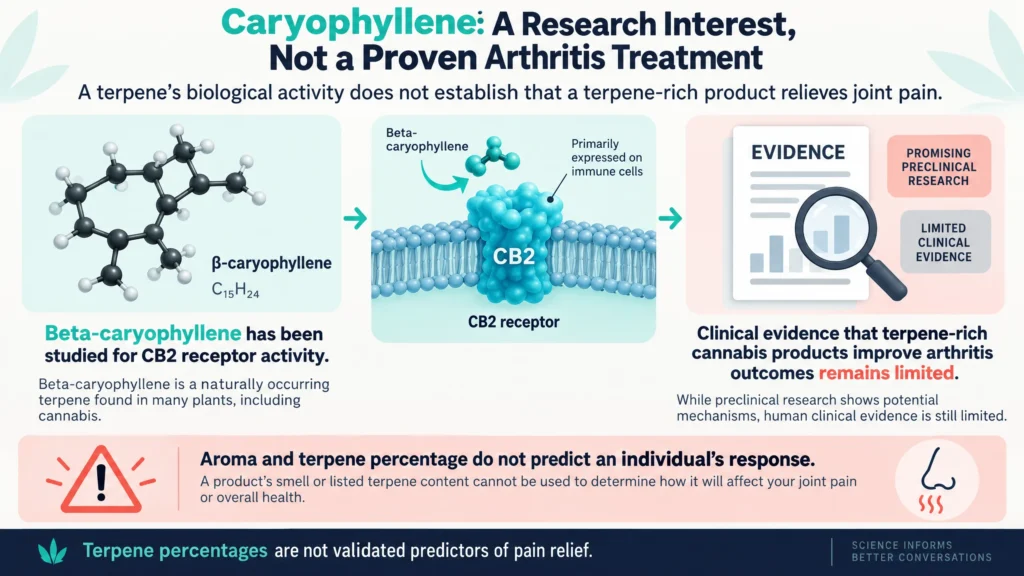
Caryophyllene is a terpene found in cannabis (and in black pepper, cloves, and rosemary). It is the only known terpene that directly binds cannabinoid receptors, specifically CB2 receptors.
This makes caryophyllene uniquely relevant for arthritis patients because:
It provides CB2 anti-inflammatory activity without adding psychoactivity. Unlike THC, caryophyllene does not activate CB1 receptors and does not produce a “high.” A caryophyllene-rich product therefore adds inflammation-relevant CB2 engagement without changing the intoxication profile.
It adds to CBD’s anti-inflammatory effects through the same CB2 pathway, producing additive (possibly synergistic) benefit.
The peppery, spicy aroma in cannabis products is the most direct indicator of caryophyllene presence. On a PA dispensary COA, look for caryophyllene listed at 0.3% or higher in the terpene panel to expect meaningful CB2 engagement.
Products with both meaningful CBD content and high caryophyllene provide the most complete available engagement of the CB2 anti-inflammatory pathway relevant to joint disease.
For a full guide to terpenes and their mechanisms, see our terpenes for anxiety guide, which covers caryophyllene’s CB2 mechanism in detail.
What the Research Actually Shows in 2025 and 2026
The Frane et al. 2022 study, the largest available patient data (N=428)
Published in the Journal of Cannabis Research, this survey of 428 arthritis patients using CBD remains the most substantial human data available for cannabis and arthritis.
Get Approved by a Licensed PA Doctor
Schedule your appointment in minutes. You only pay if approved.
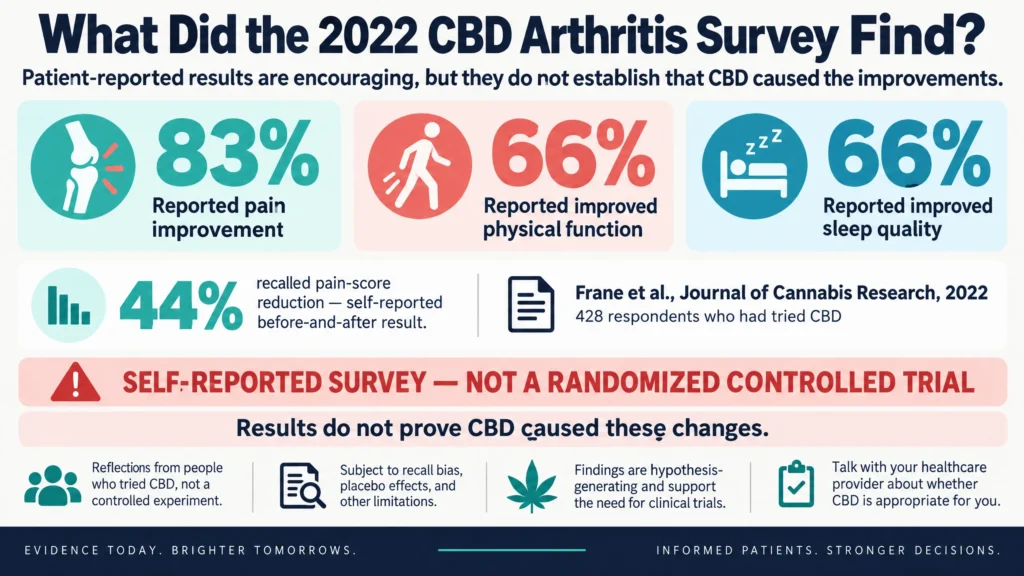
Start Online Application →CBD use was associated with improvements in pain (83%), physical function (66%), and sleep quality (66%). The overall cohort reported a 44% reduction in pain after CBD use. The osteoarthritis group had a greater percentage reduction and point reduction in pain compared to rheumatoid arthritis and other autoimmune arthritis.
The medication reduction finding is particularly relevant for PA patients:
The majority of respondents reported a reduction or cessation of other medications after CBD use: reductions in anti-inflammatories (31.1%), acetaminophen (18.2%), opioids (8.6%) and discontinuation of anti-inflammatories (17.8%), acetaminophen (17.8%), and opioids (18.9%).
The critical caveat: this is a patient survey, not a randomized controlled trial. Self-reported improvement data reflects patient perception and may be subject to expectation bias. It is strong signal data but not proof of efficacy.
Brown University RA/Psoriatic Arthritis RCT (NCT04269993), results March 2025
This is the first controlled trial specifically designed to test cannabis for rheumatoid and psoriatic arthritis. The results, posted in March 2025, compared a medium THC (3.6%) and medium CBD (5.4%) combination against placebo using a double-blind, crossover design in 66 patients.
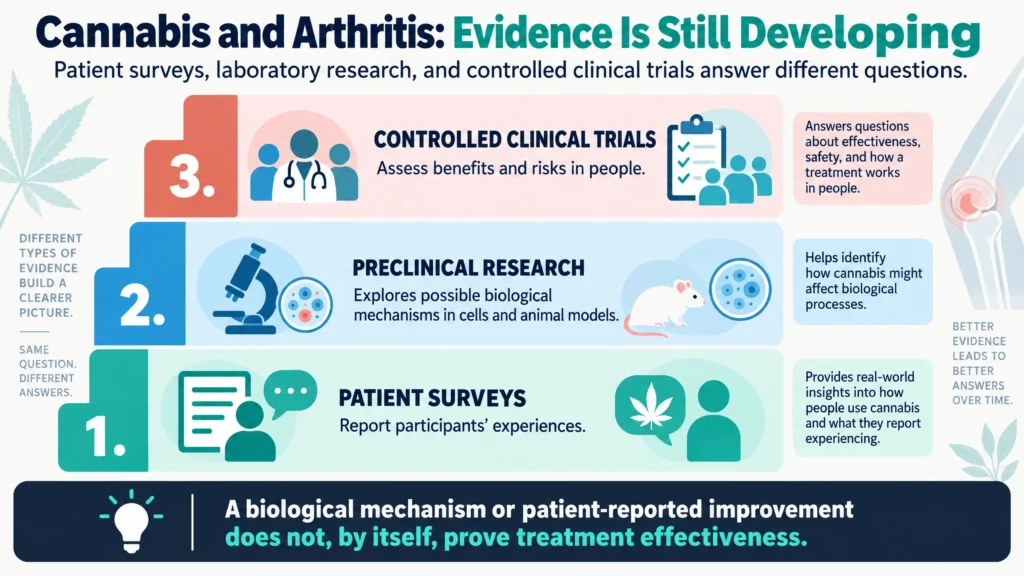
This 1.5:1 CBD:THC ratio aligns with what is available at PA dispensaries in ratio tincture formats. The results provide the most controlled available evidence for a cannabis combination product specifically in inflammatory arthritis.
University of Michigan CBD knee arthroplasty trial (NCT06234631), completed August 2025
Funded by the National Institute of Arthritis and Musculoskeletal and Skin Diseases (NIAMS), this trial tested whether daily CBD treatment reduced opioid requirements, pain, and inflammation after knee replacement surgery.
Knee replacement is directly relevant to advanced OA patients, one of the largest PA arthritis patient groups. Results are expected in publication through 2026.
What the systematic review evidence shows:
A 2016 systematic review of cannabinoid RCTs for chronic musculoskeletal pain conditions found statistically significant improvements in pain and quality of life outcomes for cannabinoids versus placebo.
Ready to Get Your Official PA MMJ Card?
State-certified doctor consultations online. No risk—100% refund if not approved.
Claim Your MMJ Card Online →Pre-clinical studies consistently demonstrate CBD’s anti-arthritic properties in both human cells from RA patients and animal models. The pre-clinical evidence is strong; the controlled human trial evidence is still developing.
The Opioid Reduction Finding: What PA Arthritis Patients Should Know
Pennsylvania consistently ranks among the states with the highest opioid overdose death rates. Many PA arthritis patients have been on opioid pain management for years, managing significant side effects and dependency concerns alongside ongoing pain.
The Frane et al. 2022 study finding, that 18.9% of arthritis patients discontinued opioids completely after starting CBD, is one of the most clinically significant findings in the arthritis-cannabis research space.
A separate 2020 prospective cohort study (Capano et al.) found that over half of chronic pain patients were able to reduce or cease opioid use after introducing CBD-rich extract.
What this means for PA arthritis patients
Cannabis should not be viewed as a direct opioid substitute for severe pain management. But for arthritis patients on lower to moderate opioid doses who are seeking to reduce their pharmaceutical burden, the evidence supports a conversation with both the certifying physician and the PA dispensary pharmacist about how cannabis might fit into a gradual reduction plan.
Cannabis and opioids can be used simultaneously, but the interaction requires monitoring. CBD inhibits CYP450 enzymes that metabolize opioids, potentially increasing opioid blood levels. Any reduction in opioid dose alongside cannabis introduction should be done with prescribing physician oversight.
CBD vs THC vs Combination for Arthritis: Which Evidence Is Strongest?
Different cannabinoid approaches serve different arthritis patient needs.
| Approach | What It Addresses | Evidence Level | Best For |
|---|---|---|---|
| CBD-dominant (10:1 or higher CBD:THC) | CB2 anti-inflammatory; FAAH inhibition; no significant intoxication | Strong patient-reported data; Frane 2022 | OA and RA patients wanting anti-inflammatory effect without psychoactivity; daytime use |
| 1:1 or 3:1 CBD:THC ratio | CB1 pain signal reduction + CB2 inflammation; moderate intoxication | Sativex clinical evidence; Brown University RCT protocol | Patients with significant pain who want both pain and inflammation addressed |
| THC-dominant | CB1 pain signal reduction; more significant intoxication | Established chronic pain evidence | Severe pain episodes requiring strong relief; nighttime use only |
| Caryophyllene-rich products | Direct CB2 engagement; no psychoactivity from terpene itself | Mechanism documented; clinical arthritis data limited | Add-on to CBD products; all arthritis types |
| Topical CBD | Local CB2 activation at joint site; minimal systemic absorption | Preclinical support; limited clinical data | Localized joint pain (single knee, specific hand joints); patients avoiding systemic effects |
The strongest evidence combination for most PA arthritis patients is a CBD-dominant or ratio tincture taken daily alongside attention to caryophyllene content on the COA.
PA dispensary product approach by arthritis patient profile:
| Patient Profile | Primary Product | Secondary Product | COA What to Look For |
|---|---|---|---|
| OA, daytime pain management | CBD-dominant tincture (10:1 or 5:1) | None needed initially | CBD 15-25mg per serving; caryophyllene 0.3%+ |
| OA or RA, nighttime pain + sleep | 3:1 or 1:1 CBD:THC tincture | CBN product for sleep if needed | Ratio confirmed on cannabinoid panel |
| RA as adjunct to biologics | CBD-dominant tincture (10:1 or 20:1) | Discuss with rheumatologist first | Low or no THC; caryophyllene-rich |
| Acute flare breakthrough | Vaporized flower (myrcene + caryophyllene) | Caryophyllene 0.4%+; myrcene 0.5%+ | |
| Single joint (knee, hand) | Topical CBD (if available at dispensary) | CBD tincture for systemic support | Check CBD mg per application |
For a full guide to CBD tincture options at PA dispensaries, see our CBD tinctures guide.
PA Dispensary Product Guidance for Arthritis Patients
For daytime pain management
A CBD-dominant tincture (10:1 or 5:1 CBD:THC) taken in the morning with breakfast provides sustained daytime anti-inflammatory and analgesic effects without meaningful intoxication. CBD’s effects are cumulative with daily use, typically requiring 2 to 4 weeks of consistent dosing before full benefit is apparent.
Starting dose: 15 to 25mg CBD, once or twice daily. Titrate up by 5 to 10mg per week based on response.
For nighttime pain and sleep disruption
Arthritis pain disrupts sleep significantly. A ratio tincture (3:1 or 1:1 CBD:THC) taken 30 to 60 minutes before bed addresses both nighttime pain and sleep onset.
THC at low bedtime doses (2.5 to 5mg) reduces sleep onset latency. CBD alongside it preserves REM sleep quality. The combination addresses the dual problem of arthritic nighttime pain and the resulting sleep disruption.
For breakthrough joint pain episodes
Vaporized flower or concentrate provides the fastest onset (2 to 10 minutes) for acute pain flares. Select products with dominant caryophyllene and myrcene content on the COA for the most complete pain-plus-inflammation profile.
Pennsylvania law requires vaporization rather than smoking. A dry herb vaporizer at 365 to 380°F delivers myrcene and caryophyllene effectively.
For localized joint pain (single joint or specific area)
If your PA dispensary carries topical CBD formulations, these deliver localized CB2 anti-inflammatory activity at the joint site without systemic absorption. This is particularly useful for patients with clear single-joint involvement such as a knee or specific hand joints.
What to look for on the COA
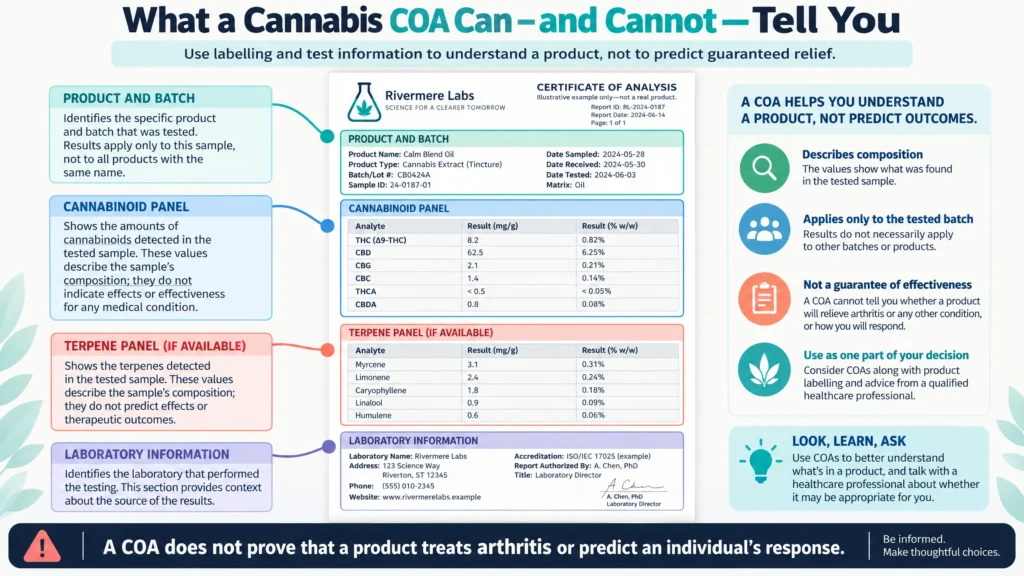
Total CBD percentage or mg per serving. Caryophyllene presence at 0.3% or higher. CBD:THC ratio. For ratio tinctures: verify the actual ratio from the cannabinoid panel rather than relying on the product label description.
For reading the PA dispensary COA, see our how to read a PA dispensary COA guide.
Drug Interactions: Arthritis Medications and Cannabis
Many PA arthritis patients are on multiple medications. CBD at therapeutic doses (above 25mg daily) inhibits CYP2C9 and CYP3A4 liver enzymes that process several common arthritis drugs.
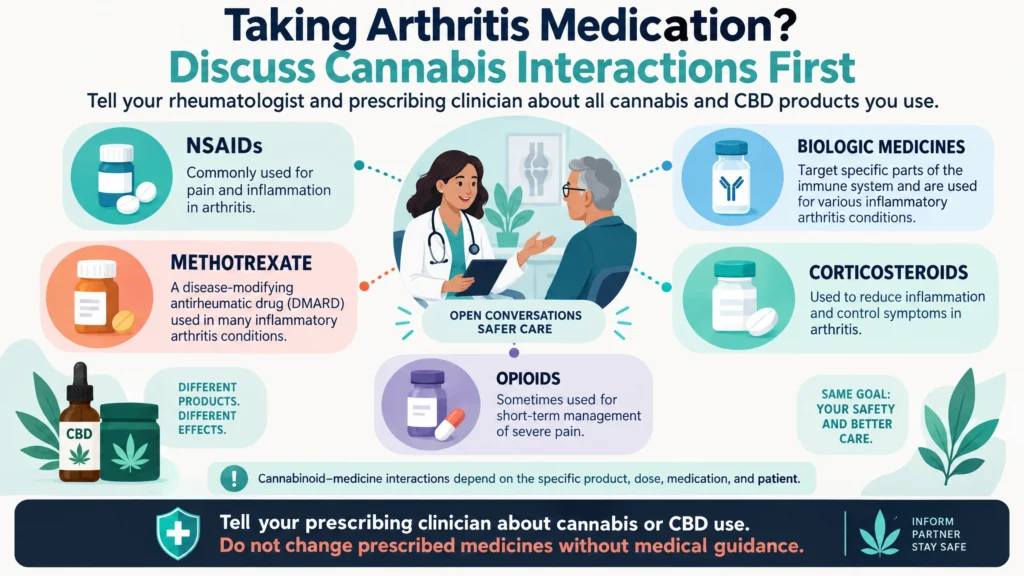
| Medication Category | Common Drugs | Interaction Risk | Guidance |
|---|---|---|---|
| NSAIDs | Ibuprofen, naproxen, celecoxib | CYP2C9 inhibition may raise NSAID levels | Monitor for increased NSAID side effects; discuss with prescribing physician |
| Methotrexate (RA) | Methotrexate | CYP metabolism interaction possible; additive hepatotoxicity concern | Inform rheumatologist before starting CBD; liver monitoring may be warranted |
| Biologics (RA) | Adalimumab, etanercept, ustekinumab | Generally low direct interaction risk | Disclose to rheumatologist; monitor for unexpected immune effects |
| Corticosteroids | Prednisone, methylprednisolone | Both cannabis and corticosteroids affect immune function | Consult prescribing physician before combining |
| Opioids | Oxycodone, hydrocodone, tramadol | CBD inhibits CYP3A4 that metabolizes many opioids; additive CNS depression with THC | Do not adjust opioid doses without prescribing physician involvement |
The dispensary pharmacist at every licensed PA dispensary can review your complete medication list and flag specific interaction concerns before any product is purchased. This consultation is free at every visit.
How to Get Certified for PA MMJ with Arthritis
The PA MMJ certification process at Pennsylvania Marijuana Cards is completed entirely online via telehealth.
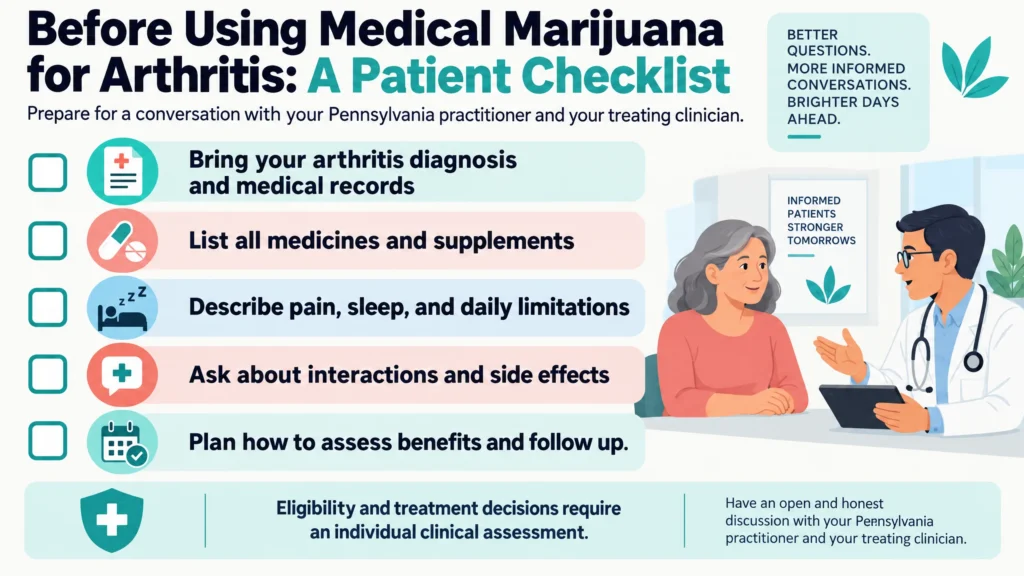
What to bring and discuss at your appointment:
- Your arthritis diagnosis documentation and diagnosing provider information
- Pain pattern description: which joints, frequency, severity (0 to 10 scale), functional impact
- Any imaging reports (X-rays, MRI) that document joint damage
- Medications you currently take or have tried, and their results or side effects
- Whether sleep disruption is a significant secondary symptom
The certifying physician needs to determine that your pain is chronic and sufficiently debilitating to qualify, and that medical marijuana may provide therapeutic benefit. Arthritis that is actively documented and significantly impacting function typically meets this standard.
New patient certification is $159 plus the $50 state registration fee. Renewals are $149 plus $50. For patients enrolled in Medicaid, SNAP, WIC, CHIP, PACE, or PACENET, the $50 state fee is waived through the MMAP program.
Check whether your condition qualifies here or get certified at Pennsylvania Marijuana Cards.
Frequently Asked Questions
Q: Does arthritis qualify for a PA MMJ card?
A: Arthritis is not listed by name among Pennsylvania’s qualifying conditions, but chronic pain is.
For most arthritis patients with documented persistent pain significantly impacting daily function, the qualifying pathway through chronic pain under Act 16 of 2016 is clear.
Bring arthritis diagnosis documentation, pain pattern information, and treatment history to your certification appointment. PA MMJ certification is available online via telehealth at Pennsylvania Marijuana Cards for $159 plus the $50 state fee, waived for MMAP-qualifying patients.
Q: Does marijuana actually help arthritis?
A: Patient-reported evidence is strongly positive.
A 2022 Hofstra University/Banner Medical Center study of 428 arthritis patients using CBD found 83% reported pain improvement, 44% numerical pain score reduction, and 60.5% reduced or stopped other medications including 18.9% who discontinued opioids.
Biologically, cannabis engages both CB1 receptors (pain signal modulation) and CB2 receptors (joint tissue inflammation reduction). Brown University RA/psoriatic arthritis RCT results published March 2025 provide the first controlled data in inflammatory arthritis.
Q: What type of cannabis is best for arthritis?
A: The evidence most strongly supports CBD-dominant products for daily anti-inflammatory use, with ratio products (3:1 or 1:1 CBD:THC) for patients needing stronger pain relief.
Products with high caryophyllene content add direct CB2 anti-inflammatory activity through the terpene’s unique CB2 binding. Osteoarthritis patients showed greater CBD response than rheumatoid arthritis patients in the largest available study.
For PA dispensary patients, a CBD-dominant tincture with caryophyllene-rich terpene content is the most evidence-aligned starting point.
Q: Can cannabis replace NSAIDs or opioids for arthritis?
A: Cannabis should not be positioned as a direct replacement for disease-modifying treatments in RA.
However, survey data consistently shows arthritis patients using CBD frequently reduce NSAID, acetaminophen, and opioid use. The Frane 2022 study found 31.1% reduced NSAID use and 18.9% discontinued opioids after starting CBD.
Any reduction in prescribed medications should happen with prescribing physician oversight, particularly for opioids where CBD may affect blood levels through CYP enzyme inhibition.
Q: Is CBD or THC better for arthritis inflammation?
A: CBD has more direct evidence for the inflammation component of arthritis specifically. CBD’s FAAH inhibition raises anandamide, which activates CB2 receptors in joint tissue. CBD also reduces pro-inflammatory cytokine production directly.
THC primarily addresses pain through CB1 receptor mechanisms, with less direct anti-inflammatory action.
Combination products providing both CB1 pain relief (THC) and CB2 anti-inflammatory effect (CBD and caryophyllene) are supported by the Brown University RCT design, which specifically tests medium THC alongside medium CBD.
Q: Can I use medical marijuana if I take methotrexate for rheumatoid arthritis?
A: With rheumatologist supervision.
CBD at therapeutic doses inhibits liver enzymes that process methotrexate, and there is a theoretical concern about additive hepatotoxicity with high-dose CBD and methotrexate combined.
This does not mean the combination is unsafe, but it requires disclosure to your rheumatologist before starting cannabis. Your PA dispensary pharmacist can review the specific interaction profile based on your methotrexate dose when you visit.
The Bottom Line
The evidence for cannabis in arthritis is among the most promising in medical cannabis research, supported by a large patient survey with striking medication reduction findings and ongoing controlled trials that will refine the picture further through 2026 and 2027.
For PA patients with chronic arthritis pain, the evidence most strongly supports CBD-dominant daily tinctures for inflammation management, ratio products for more significant pain relief, and products with high caryophyllene content for the most complete CB2 engagement.
Cannabis will not halt the progression of OA or RA. But the evidence strongly suggests it can meaningfully reduce pain and inflammatory burden, and that for a substantial number of arthritis patients, it correlates with significant reduction in NSAID and opioid use.
For Pennsylvania patients with qualifying chronic pain from arthritis, the licensed dispensary system provides COA-verified products, on-site pharmacist consultation, and a telehealth certification pathway that makes accessing this evidence-based treatment accessible.
This blog post is intended for general educational and informational purposes only and does not constitute medical advice. Do not reduce or discontinue prescribed arthritis medications without guidance from your rheumatologist or prescribing physician. CBD at therapeutic doses interacts with methotrexate, NSAIDs, corticosteroids, and opioids through CYP450 enzyme pathways. Always disclose cannabis use to your rheumatologist, orthopedic physician, and all prescribing providers. Medically reviewed by Dr. Johnathon Chance Miller, MD.
Sources
- Frane N et al. 2022: Cannabidiol as a Treatment for Arthritis and Joint Pain, Exploratory Cross-Sectional Study (Journal of Cannabis Research, N=428)
- ClinicalTrials.gov NCT04269993: Impact of Cannabis on Pain and Inflammation Among Patients with Rheumatoid or Psoriatic Arthritis, Brown University (Results March 2025)
- ClinicalTrials.gov NCT06234631: CBD for Postoperative Opioid Reduction in Primary Total Knee Arthroplasty, University of Michigan/NIAMS (Completed August 2025)
- Arthritis.ca: Arthritis Pain and Medical Cannabis, Pharmacist and Research Webinar (May 2026)
- Arthritis.ca: Medical Cannabis Report, Patient Perspectives (May 2026)
- Drug Topics: Relieve Arthritis Pain and Improve Patient QOL with CBD, APhA 2022 Data
- NORML: Survey, Arthritis Patients Likely to Report Improvements Following CBD Therapy (September 2022)
- Capano A et al. 2020: Evaluation of the Effects of CBD Hemp Extract on Opioid Use and Quality of Life Indicators in Chronic Pain Patients (Postgraduate Medicine)
- NZMJ: Cannabis-Based Medicinal Products in Arthritis, A Painful Conundrum
- PA Department of Health: Qualifying Conditions for Medical Marijuana