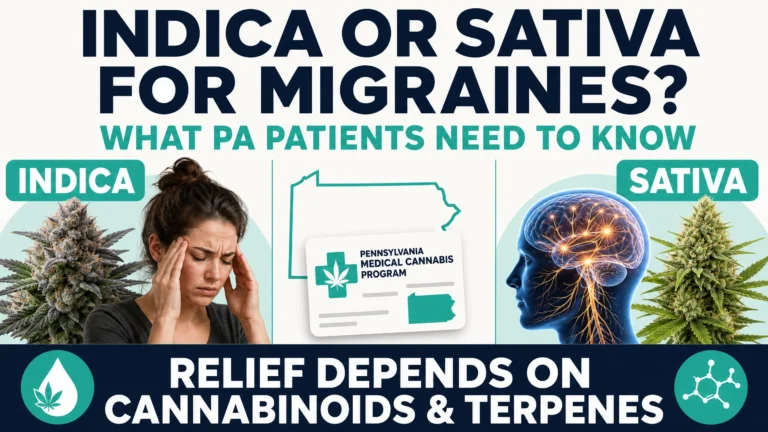

Migraines are far more than a bad headache, they are a neurological event involving cortical spreading depression, trigeminal nerve activation, and, for many patients, complete functional incapacity for hours or days.
Pennsylvania recognizes migraines under its Neuropathies and Severe Chronic or Intractable Pain qualifying conditions, giving tens of thousands of PA residents legal access to medical cannabis. But once patients enter a dispensary, they are often asked a question the science cannot cleanly answer: indica or sativa?
Need a PA Medical Marijuana Card?
Get certified online in 15 minutes. 100% Money-Back Guarantee.
Get Certified Now →The honest answer is that the indica/sativa classification is pharmacologically unreliable for predicting migraine relief.
What actually matters for migraine patients is the terpene profile and cannabinoid ratio documented on a batch-specific Certificate of Analysis (COA). This guide explains why and what to look for instead.
⚡ Quick Answer
Neither the “indica” nor the “sativa” label reliably predicts migraine relief; terpene profiles and THC:CBD ratios on the product’s Certificate of Analysis are the clinically relevant guides.
For Pennsylvania residents: A valid MMJ card under Act 16 of 2016 is required to access any medical cannabis product at PA’s 186+ licensed dispensaries.
Key Takeaways
- The indica/sativa label is a marketing category, not a pharmacology — two products labeled “indica” can have completely different terpene profiles, producing entirely different effects for migraine patients.
- Myrcene-dominant products are the most commonly recommended by PA dispensary pharmacists for migraine — yet myrcene content is invisible on the front of every package; you must ask for the COA.
- High THC can trigger medication overuse headache — a risk that parallels the rebound phenomenon seen with triptans and NSAIDs, and one that most recreational cannabis sites never mention.
- PA’s per se DUI law applies to MMJ patients — 75 Pa.C.S. § 3802(d) means any detectable THC metabolite in blood constitutes DUI, regardless of card status, which matters if you use cannabis during a migraine workday.
- Vaporizing a terpene-rich flower or concentrate during the prodrome phase is a different clinical approach than using an edible mid-attack — and which delivery method you choose changes the entire product selection logic.
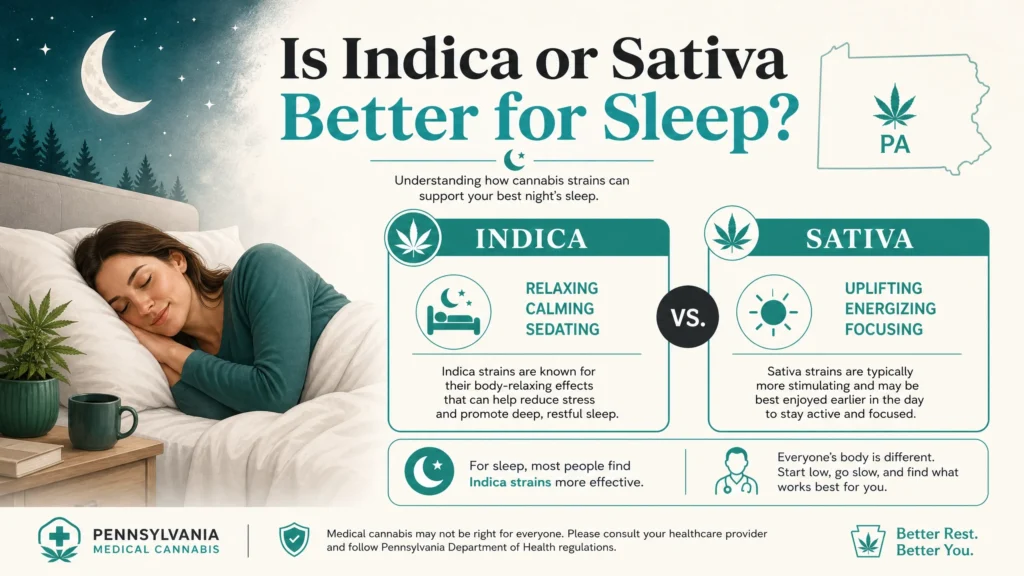
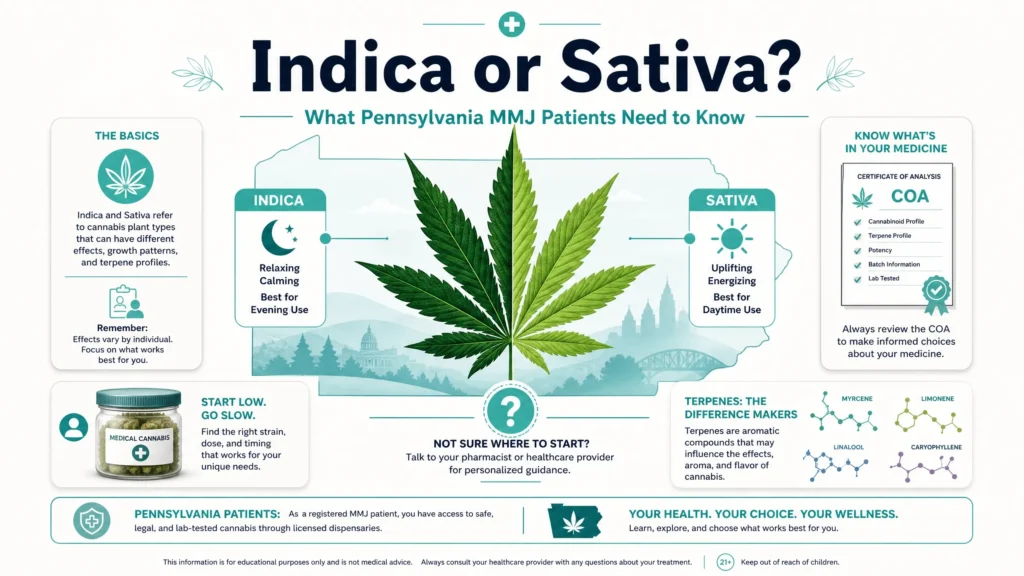
Why “Indica or Sativa” Is the Wrong Question for Migraines
The traditional indica/sativa distinction originated as a botanical classification describing plant structure and geographic origin, not pharmacological effect.

As Ethan Russo and colleagues have documented in peer-reviewed literature, the chemical diversity within the Cannabis genus is driven by terpene and cannabinoid profiles, not by whether a plant has broad or narrow leaves.
In practical terms, this means a product labeled “indica” at one PA dispensary may have a completely different terpene profile and produce a completely different patient experience, than a product labeled “indica” at a dispensary across town.
Do You Qualify for a PA MMJ Card?
Connect with a licensed Pennsylvania state physician online from home.
The 2025 Pennsylvania Department of Health update now requires full terpene profile disclosure on all licensed product COAs, which gives PA patients real pharmacological data that no other label provides.
PA Patient Alert: When you see “indica” or “sativa” on a PA dispensary shelf label, treat it as a general orientation guide, not a clinical prescription. Always ask the dispensary pharmacist for the batch-specific COA before choosing a product for migraine management.
The Entourage Effect and Why It Matters for Migraines
The entourage effect, the synergistic interaction between cannabinoids and terpenes, is the core reason why a whole-plant or full-spectrum product may perform differently than an isolated THC product for migraine.
Russo’s landmark 2011 paper in the British Journal of Pharmacology established that terpenes modulate cannabinoid receptor activity and blood-brain barrier permeability, affecting both the speed and character of cannabis effects.
For migraine patients, this means the terpene matrix of a product may be as therapeutically significant as its THC percentage.
How Cannabis May Affect Migraines: The Mechanism
Migraines involve at least three overlapping biological processes that cannabis compounds may influence:

- Cortical spreading depression: The wave of neuronal depolarization that underlies aura; cannabinoids modulate cortical excitability via CB1 receptors
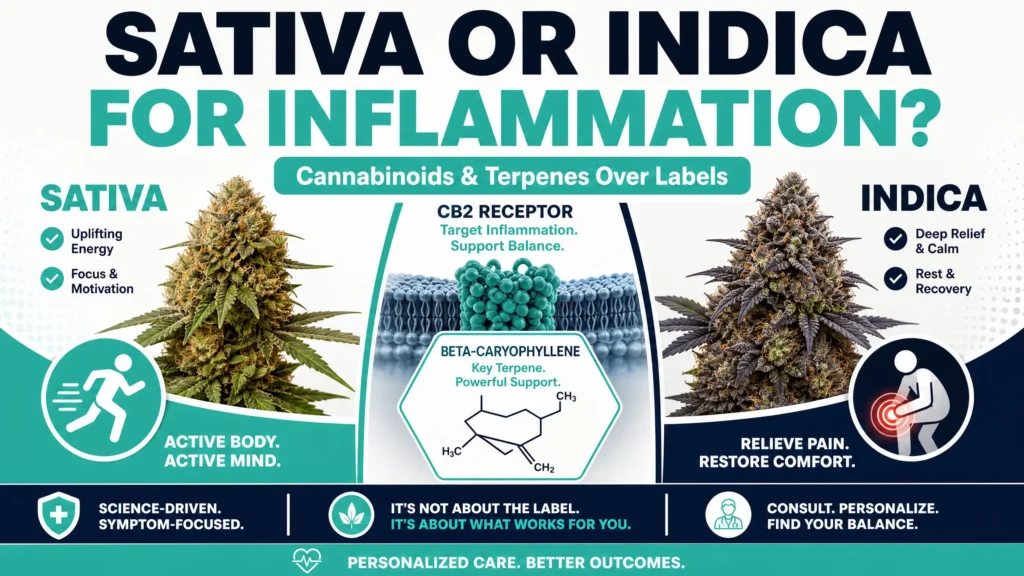
- Trigeminal sensitization: The peripheral and central sensitization that amplifies migraine pain; beta-caryophyllene activates CB2 receptors with demonstrated anti-inflammatory effect
- Serotonergic dysregulation: Altered 5-HT receptor activity during migraine; some terpenes show serotonin-modulating properties in preclinical models
A 2021 study in The Journal of Pain found that inhaled cannabis reduced self-reported migraine and headache severity by approximately 47.3% in a real-world longitudinal cohort.
Concentrates outperformed flower for headache intensity reduction, and higher CBD percentage was associated with greater reduction in migraine duration.
This evidence is observational and not yet confirmed in double-blind RCTs, a limitation PA patients should understand when discussing options with their certifying physician.
The Terpenes That Matter Most for Migraine Patients
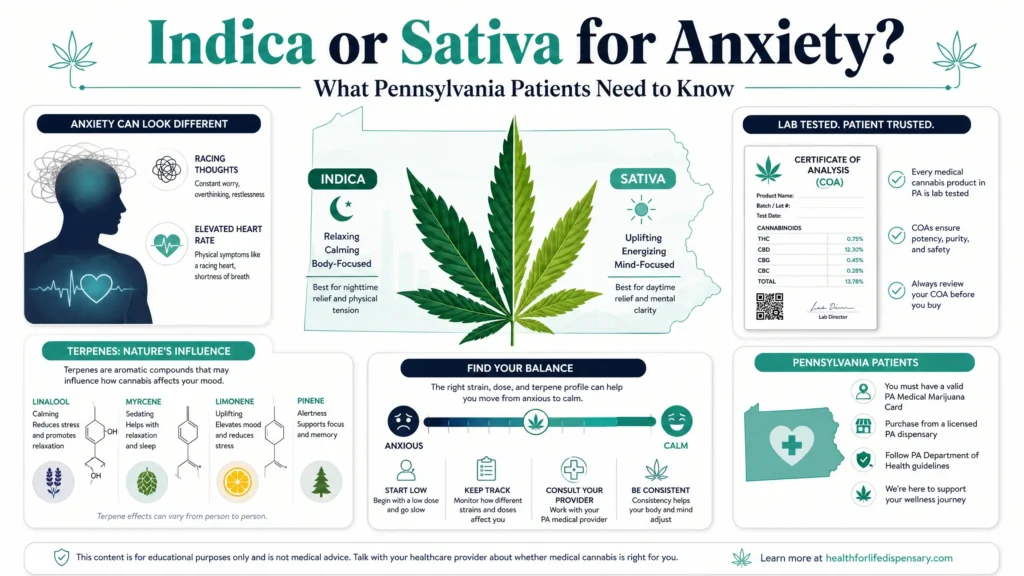
Rather than searching for an “indica” or “sativa” label, PA migraine patients should examine the terpene section of the product COA. These three terpenes have the most relevant documented mechanisms:

Myrcene
Myrcene is the most abundant terpene in most commercially available cannabis and is strongly correlated with the sedating, muscle-relaxing character associated with “indica” products. For migraine patients, myrcene is relevant for two reasons:
- It has demonstrated analgesic and anti-inflammatory properties in preclinical models, consistent with reduction of peripheral sensitization during migraine
- It enhances cannabinoid transport across the blood-brain barrier, potentially potentiating THC’s analgesic effect at lower doses
⚡ Fast & 100% Online PA Medical Cards
Board-Certified Doctors • 100% Money-Back Guarantee
Book Evaluation Now →Best for: Patients whose migraines involve significant muscle tension (neck, shoulders, jaw), those seeking night-time relief, and patients who find high-THC products overstimulating.
Evidence level: Moderate (preclinical + observational human data)
Beta-Caryophyllene
Beta-caryophyllene (BCP) is the only terpene known to act as a dietary cannabinoid, it binds selectively to CB2 receptors, producing anti-inflammatory effects without psychoactivity.
PubMed-indexed research has established its role as a functional CB2 agonist, which is particularly relevant to the neuroinflammatory component of chronic migraine.
Best for: Patients with frequent migraines (15+ days/month), those who need daytime symptom management, and patients sensitive to the psychoactive effects of THC.
Evidence level: Moderate (established mechanism; human migraine-specific trials ongoing as of July 2026)
Linalool
Linalool, the dominant terpene in lavender, has well-documented anxiolytic and analgesic properties. Because anxiety and stress are among the most consistent migraine triggers, linalool’s GABA-modulating activity may be useful in products targeted at the prodromal phase of a migraine attack, before peak pain onset.
Best for: Patients whose migraines are triggered by anxiety or stress, those using cannabis prophylactically rather than acutely.
Evidence level: Moderate (lavender aromatherapy RCT data + preclinical cannabis research)
Terpene Comparison Table
| Terpene | Primary Mechanism | Best Use Case | Evidence Level |
|---|---|---|---|
| Myrcene | Analgesic, BBB permeability | Muscle-tension migraine, nighttime | Moderate |
| Beta-caryophyllene | CB2 anti-inflammatory | Chronic/frequent migraine, daytime | Moderate |
| Linalool | Anxiolytic, GABA modulation | Stress-triggered, prodromal phase | Moderate |
| Alpha-pinene | Acetylcholinesterase inhibition | Cognitive fog (migraine prodrome) | Preliminary |
| Limonene | Serotonin modulation | Anxiety-comorbid migraine | Preliminary |
THC vs. CBD for Migraines: What the Evidence Shows

THC: Helpful — But Not Always Linear
THC activates CB1 receptors in the trigeminal system and may reduce pain signaling during an acute migraine. However, the relationship is dose-dependent and non-linear:
- Low to moderate THC (under 10mg or low-THC vaporization) may reduce acute migraine pain
- High THC can trigger anxiety-driven vasoconstriction, potentially worsening head pain in sensitive patients
- Frequent high-THC use carries a documented risk of cannabis hyperemesis syndrome and medication overuse headache, a rebound pattern that parallels NSAID-overuse headache
CBD: The Anti-Inflammatory and Anti-Nausea Companion
CBD does not produce psychoactive effects and does not bind directly to CB1 receptors. Its relevance to migraine comes from:
- CB2 receptor modulation (anti-neuroinflammatory)
- Inhibition of the fatty acid amide hydrolase (FAAH) enzyme, raising endocannabinoid tone
- Demonstrated anti-nausea properties relevant to migraine-associated vomiting (Cluny et al., British Journal of Pharmacology)
Cannabinoid Ratio Table — PA Dispensary Starting Points
| Condition Profile | Suggested THC:CBD Ratio | Notes |
|---|---|---|
| Acute severe migraine | 1:1 or 2:1 | Lower THC reduces anxiety risk |
| Chronic daily migraine (prophylaxis) | 1:1 to 1:2 (CBD-dominant) | Less psychoactivity, sustained anti-inflammatory |
| Migraine with nausea | 1:1 | CBD reduces nausea; THC stimulates appetite |
| High THC sensitivity | 1:3 to 1:5 (high CBD) | Functional relief without significant psychoactivity |
| Nighttime pain/insomnia | 2:1 to 4:1 (THC-dominant) | Pair with myrcene-rich product |
Renewing Your PA MMJ Card?
Quick annual recertification online. No paperwork hassle.
Renew Card Online →These are starting-point orientations only. Dispensary pharmacists can refine recommendations based on your specific COA and symptom pattern.
Delivery Format and Timing: The PA Patient’s Decision Tree
The right delivery format for migraines depends on when in the attack cycle a patient is using cannabis.
This is one of the most clinically important decisions and one that directly determines which product format makes sense.

Product Format Comparison
| Format | Onset | Duration | Best Attack Phase | PA Legal? |
|---|---|---|---|---|
| Vaporized flower | 2–10 min | 1–3 hrs | Acute (peak pain) | ✅ Yes |
| Vaporized concentrate | 2–5 min | 2–4 hrs | Acute (severe) | ✅ Yes |
| Sublingual tincture | 15–45 min | 4–6 hrs | Prodromal or postdromal | ✅ Yes |
| Oral capsule/edible | 45–120 min | 6–8 hrs | Prophylactic or overnight | ✅ Yes |
| Topical | Minimal systemic | Ongoing | Neck/shoulder tension | ✅ Yes |
| Smoked flower | — | — | Any | ❌ Illegal in PA |
⚠️ PA Law — Smoking Prohibited: Pennsylvania Act 16 of 2016 explicitly prohibits smoking cannabis. The only legal inhaled delivery method is vaporization using a licensed dispensary product and an appropriate vaporizer device. Patients who smoke cannabis, even with a valid MMJ card, are in violation of PA law.
Pennsylvania Qualifying Conditions for Migraine Patients
Migraines are not listed as a standalone qualifying condition under Pennsylvania’s MMJ program. However, most migraine patients qualify under one of two recognized conditions:

Neuropathies
Pennsylvania’s Neuropathies qualifying condition covers disorders of peripheral and central nervous system pain signaling, which encompasses the trigeminal nerve pathology underlying migraine.
Certifying physicians routinely certify chronic migraine patients under this category when the pain pattern is persistent and documented.
Severe Chronic or Intractable Pain
Severe Chronic or Intractable Pain is the most broadly applicable qualifying condition for migraine patients.
If your migraines occur frequently, significantly impair function, and have not responded adequately to conventional treatments, this condition covers your certification pathway.
Anxiety Disorder (When Anxiety Is a Primary Comorbidity)
Anxiety Disorder is Pennsylvania’s most frequently cited qualifying condition, cited in over 68% of all PA certifications according to Drake et al. in the Annals of Internal Medicine (July 2025, DOI: 10.7326/ANNALS-25-01037).
Migraine patients with comorbid anxiety, a clinically common presentation, may qualify under this condition in addition to or instead of neuropathies.
Not sure which condition applies to you? A certifying physician reviews your medical history and determines the appropriate qualifying condition. You do not need to self-select. See the full list of Pennsylvania MMJ qualifying conditions.
Pennsylvania Legal Requirements and How to Get Certified
The Essentials — Every PA Migraine Patient Needs to Know
Valid MMJ card required. Recreational cannabis remains illegal in Pennsylvania as of July 2026. All cannabis access, including at PA’s 186+ licensed dispensaries, requires a valid patient card issued under Act 16 of 2016.
Get Approved by a Licensed PA Doctor
Schedule your appointment in minutes. You only pay if approved.
Start Online Application →Smoking is prohibited. As noted above, this is a non-negotiable PA law requirement. Legal consumption methods include vaporization, edibles, capsules, tinctures, and topicals.
⚠️ Per Se DUI Law — Critical for Migraine Patients. 75 Pa.C.S. § 3802(d) establishes that any detectable level of THC metabolites in blood constitutes a DUI in Pennsylvania, regardless of whether the driver is impaired, and regardless of MMJ card status.

The Pennsylvania Superior Court confirmed in Commonwealth v. Stone (2022) that an MMJ card is not a defense to a per se DUI charge. Do not drive after using cannabis, even if you feel unimpaired.
THC metabolites remain detectable in blood after psychoactive effects have resolved.
Certification Fees
| Fee | Amount |
|---|---|
| Physician certification (new patient) | $159 |
| PA state registration fee | $50 |
| Total — new patient | $209 |
| Physician certification (renewal) | $149 |
| PA state registration fee | $50 |
| Total — renewal | $199 |
MMAP Fee Waiver: Patients qualifying for Medicaid, SNAP, WIC, CHIP, PACE, or PACENET may have the $50 state registration fee waived.
Certification is available by telehealth, no in-person visit required. Get started at PennsylvaniaMarijuanaCards.com.
How to Read a PA Dispensary COA for Migraine Products?
Pennsylvania’s 2025 DOH update requires all licensed dispensary products to carry full terpene profiles on their Certificates of Analysis. Here is how to use that data for migraine product selection:

- Confirm the cannabinoid ratio first. Find the THC% and CBD% columns. Calculate the ratio (THC ÷ CBD). Compare to the ratio table above based on your migraine profile.
- Locate the terpene panel. Look for myrcene, beta-caryophyllene, and linalool in the terpene results. The dominant terpene (highest percentage) most strongly predicts the character of the product’s effect.
- Check the batch date. Terpene content degrades with time and storage. A COA dated more than six months ago may not reflect the product’s current terpene profile.
- Ask for the batch-specific COA — not the generic brand sheet. Products are tested per batch; the batch number on your product should match the COA you are reviewing.
- Start low. Pennsylvania dispensary pharmacists consistently recommend beginning with the lowest effective dose, particularly for patients new to cannabis or new to a product format.

💡 Pro Tip: Describe your symptoms not a strain name to your dispensary pharmacist. Say: “I have chronic migraines with significant neck tension and nausea.
I need daytime-appropriate relief.” They can cross-reference your symptom profile against available COA data far more effectively than a strain label ever could.
Frequently Asked Questions
Q: Is indica or sativa better for migraines?
A: Neither label reliably predicts migraine relief, this is the most important thing a PA migraine patient can know before entering a dispensary. The indica/sativa classification describes plant structure and geographic origin, not pharmacological effect. Two products both labeled “indica” can have completely different terpene profiles and produce entirely different patient experiences. For migraine patients, the terpene profile (particularly myrcene, beta-caryophyllene, and linalool content) and the THC:CBD ratio on the batch-specific COA are the clinically relevant factors. Ask your PA dispensary pharmacist for the COA rather than selecting by label.
Q: Can I get a Pennsylvania MMJ card for migraines?
A: Most migraine patients qualify under PA’s Neuropathies or Severe Chronic or Intractable Pain conditions. Migraines are not listed as a standalone qualifying condition, but the trigeminal nerve pathology and chronic pain pattern of frequent migraines typically meet the clinical threshold for one or both of these recognized conditions. Patients with comorbid anxiety may also qualify under Pennsylvania’s Anxiety Disorder condition, which is cited in over 68% of all PA MMJ certifications. A telehealth evaluation with a certifying physician determines which condition applies based on your documented medical history.
Q: What terpenes are best for migraines?
A: Myrcene, beta-caryophyllene, and linalool have the most documented mechanisms relevant to migraine. Myrcene has analgesic and muscle-relaxing properties and may enhance cannabinoid delivery across the blood-brain barrier. Beta-caryophyllene is a CB2 receptor agonist with anti-inflammatory effects directly relevant to the neuroinflammatory component of chronic migraine. Linalool modulates GABA receptors with anxiolytic effects useful for stress-triggered migraines. These terpenes are documented on every PA dispensary product’s Certificate of Analysis, which is the only reliable way to identify them, the shelf label will not tell you which terpenes are present.
Q: Can THC make migraines worse?
Ready to Get Your Official PA MMJ Card?
State-certified doctor consultations online. No risk—100% refund if not approved.
Claim Your MMJ Card Online →A: Yes, in some patients, particularly at high doses. High-THC cannabis can trigger anxiety-driven vasodilation, which may worsen migraine pain in patients with pre-existing anxiety or vascular sensitivity. Additionally, frequent high-THC use carries a risk of medication overuse headache, a rebound pattern that parallels the well-documented rebound headache seen with NSAIDs and triptans. Patients who find that their migraine frequency increases with regular cannabis use should discuss this pattern with their certifying physician and consider a lower-THC, higher-CBD product profile.
Q: What is the best way to use cannabis for a migraine in Pennsylvania?
A: The best delivery method depends on when in the migraine attack you are treating. For acute relief during peak pain, vaporized flower or concentrate provides onset within 2–10 minutes, the fastest legal option available to PA patients. For prodromal or prophylactic use, sublingual tinctures (15–45 minute onset) or oral capsules (45–120 minutes) provide longer-duration effects suitable for patients who can identify the prodrome early. Smoking is illegal under Pennsylvania Act 16 regardless of MMJ card status. Never drive after using cannabis, Pennsylvania’s per se DUI law applies to all MMJ patients.
Q: Does cannabis interact with migraine medications?
A: Cannabis can interact with several medications commonly used for migraine. THC may potentiate the sedating effects of opioids, antihistamines, and certain antidepressants used for migraine prophylaxis (amitriptyline, nortriptyline). CBD inhibits CYP450 liver enzymes that metabolize many drugs, potentially altering serum levels of topiramate, valproate, and beta-blockers used in migraine prevention. Patients using any prescription migraine medication should discuss cannabis use with their certifying physician and primary care provider before beginning. The PA DOH helpdesk is available at 888-733-5595 (7AM–9PM ET, 7 days/week) for program-related questions.
Q: How much does a Pennsylvania medical marijuana card cost for migraine patients?
A: The total out-of-pocket cost for a new PA MMJ patient is $209, a $159 physician certification fee and a $50 Pennsylvania state registration fee. Renewal costs $199 annually ($149 physician + $50 state). Patients who qualify for Medicaid, SNAP, WIC, CHIP, PACE, or PACENET may have the $50 state fee waived through Pennsylvania’s Medical Marijuana Access Program (MMAP). Certification is completed by telehealth — no in-person office visit is required.
Medically reviewed by Dr. Johnathon Chance Miller, MD (License #MD474783). This content is for educational purposes only and does not constitute medical advice. Cannabis affects individuals differently. Consult a licensed healthcare provider before using cannabis for any medical condition. Pennsylvania medical marijuana patients must follow all state laws regarding legal methods of consumption. Smoking cannabis is prohibited under PA law. Do not drive after consuming cannabis. THC metabolites remain detectable in blood after psychoactive effects resolve, Pennsylvania’s per se DUI law applies regardless of MMJ card status.