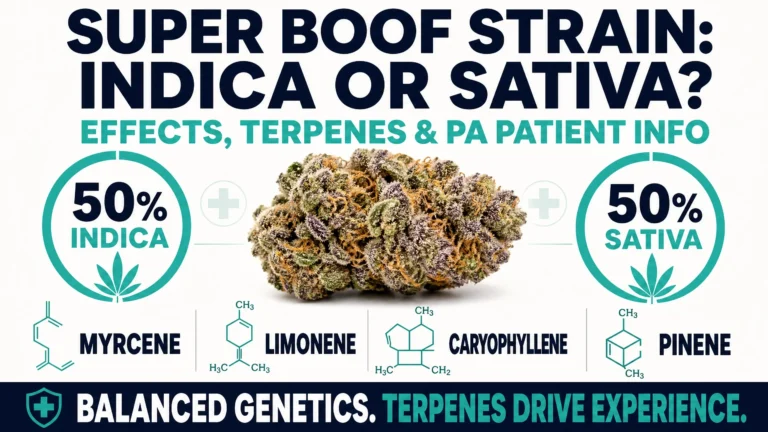

Super Boof also called Superboof or Blockberry, is one of the most talked-about cannabis strains in Pennsylvania dispensaries right now, and for good reason. Named Leafly’s Strain of the Year for 2024.
This balanced hybrid delivers a terpene profile that is clinically relevant for several Pennsylvania MMJ qualifying conditions.
Need a PA Medical Marijuana Card?
Get certified online in 15 minutes. 100% Money-Back Guarantee.
Get Certified Now →Whether you are managing anxiety, chronic pain, or depression, understanding what the COA actually says about Super Boof matters far more than the indica/sativa label on the shelf.
⚡ Quick Answer
Super Boof is a balanced hybrid strain (50% indica / 50% sativa), created by crossing Black Cherry Punch and Tropicana Cookies, with THC levels regularly testing between 28–32%.
For Pennsylvania residents: Super Boof is available at select PA dispensaries (186+ statewide as of July 2026); availability varies by batch and location. A valid PA MMJ card under Act 16 of 2016 is required for legal access.
Key Takeaways
- The indica/sativa label tells you almost nothing about Super Boof — its 50/50 classification means both labels are equally correct and equally incomplete; the terpene COA is the only reliable guide to how a specific batch will affect you.
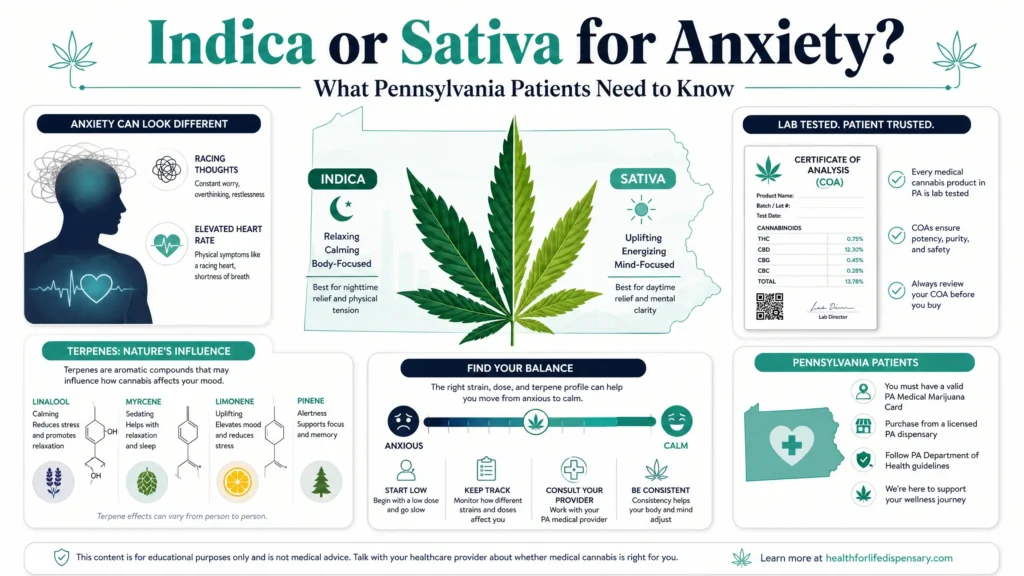
- Myrcene is the dominant terpene, but limonene may be the most clinically significant for anxiety patients — a 2024–2025 double-blind crossover study found that inhaled limonene combined with THC significantly reduced anxiety and paranoia compared to THC alone.
- Super Boof’s THC regularly tests above 28% — at this potency, patients new to cannabis or those with anxiety disorders should approach with extreme caution; high THC without adequate terpene-based modulation can worsen anxiety symptoms.
- Pennsylvania’s per se DUI law applies regardless of your MMJ card status — any detectable THC metabolite in blood constitutes a DUI under 75 Pa.C.S. § 3802(d); Commonwealth v. Stone (2022) confirmed no card-based defense exists.
- Ask the dispensary pharmacist to pull the specific batch COA — Super Boof terpene content varies significantly by cultivator; a batch at 1.65% total terpenes produces a markedly different therapeutic experience than one at 2.5%+.
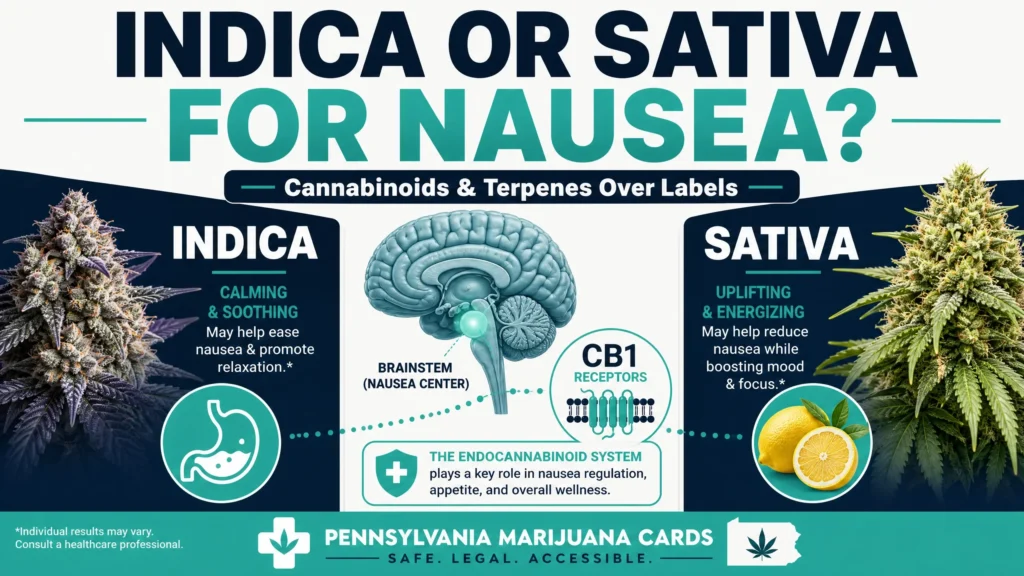
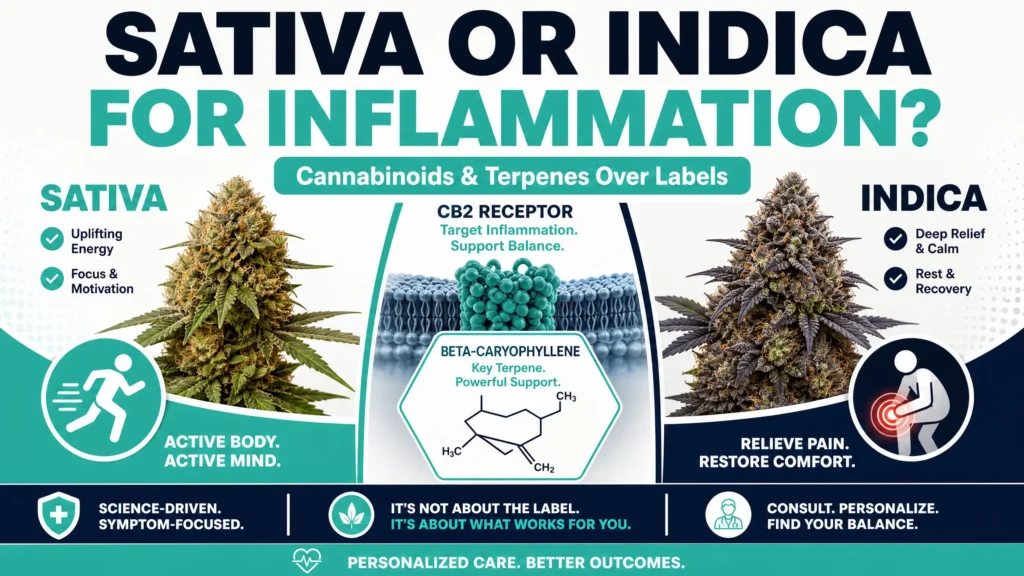
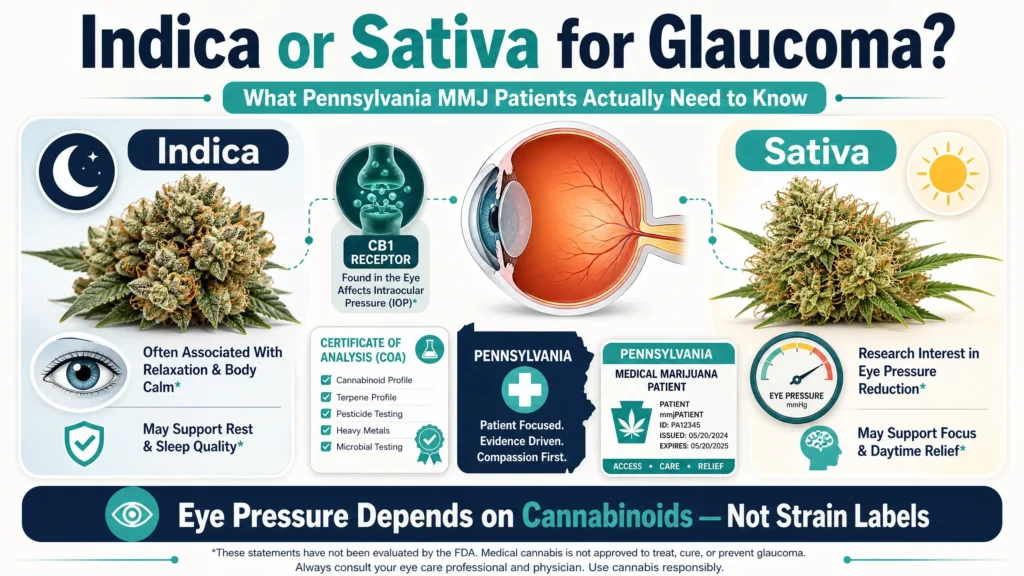
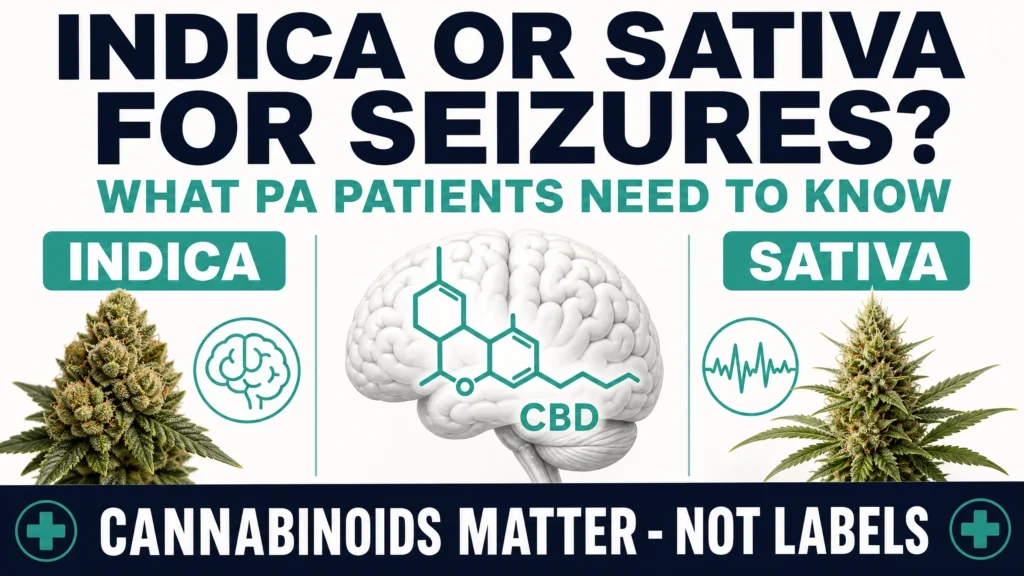
Is Super Boof Indica or Sativa?
Super Boof is a balanced hybrid — approximately 50% indica and 50% sativa, bred by California-based Blockhead Buds through crossing Black Cherry Punch with Tropicana Cookies.

The original cultivar was called Blockberry; Michigan grower Mobilejay selected a phenotype, renamed it Super Boof, and popularized it across the cannabis community between 2021 and 2022.
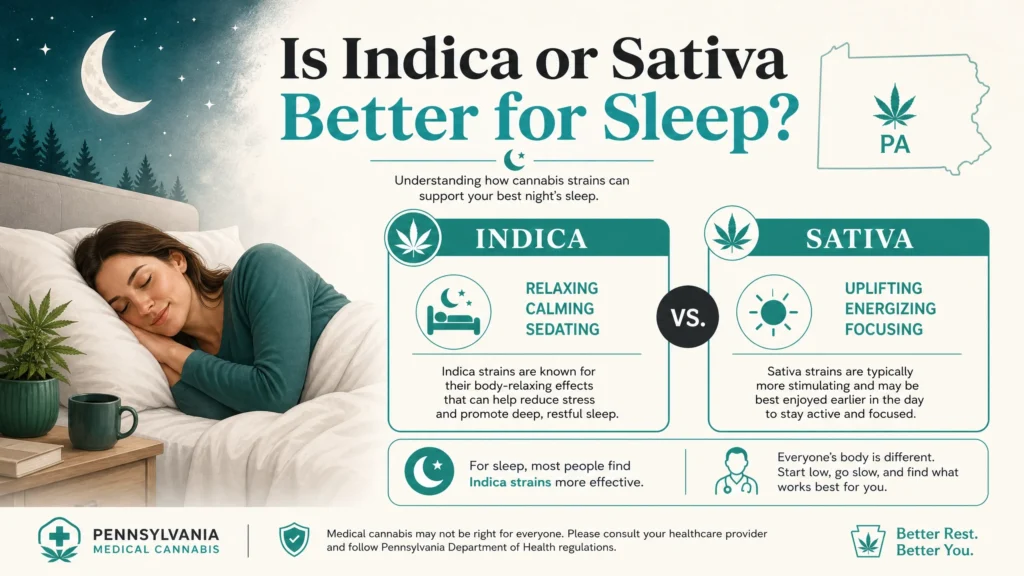
The indica/sativa classification, however, is pharmacologically unreliable.
As cannabis researcher Dr. Ethan Russo established in his landmark entourage effect study in the British Journal of Pharmacology (2011), the therapeutic character of any cannabis product is driven by its full chemical profile, cannabinoids and terpenes working together, not its leaf morphology or subspecies label.
Do You Qualify for a PA MMJ Card?
Connect with a licensed Pennsylvania state physician online from home.
Pennsylvania’s 2025 DOH update requiring full terpene profiles on all dispensary products reflects exactly this science.

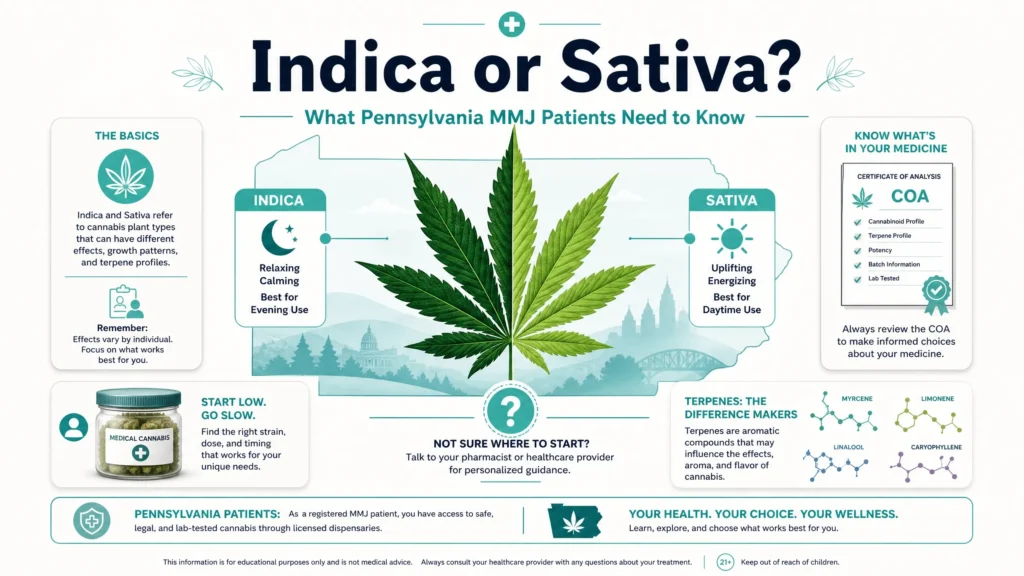
⚠️ COA Callout: When you see Super Boof at a PA dispensary, do not rely on the shelf label. Request the Certificate of Analysis (COA) for the specific batch in stock. Two jars labeled “Super Boof” from different cultivators can have dramatically different terpene profiles and therefore different therapeutic effects.
Super Boof Cannabinoid Profile
| Cannabinoid | Typical Range | What It Means for PA Patients |
|---|---|---|
| THC | 28–32% | High potency; experienced patients only at standard doses |
| CBD | <1% | Minimal CBD buffering of THC effects |
| THC:CBD Ratio | ~30:1 | THC-dominant; expect significant psychoactive effects |
| THCA (pre-decarb) | 28–32% | Converts to THC when vaporized |
This is a high-THC, low-CBD strain. For patients managing anxiety, Pennsylvania’s number one qualifying condition, cited in over 68% of all MMJ certifications according to Drake et al. in the Annals of Internal Medicine (July 2025), starting at the lowest available dose is essential.

THC is dose-dependent in its anxiety effects: low doses may reduce anxiety, while high doses can amplify it.
The near-absence of CBD means patients do not benefit from CBD’s known anxiety-moderating effects.
This makes Super Boof’s terpene profile the primary modulator of psychoactive intensity, which is discussed in detail in the next section.
Super Boof Terpene Profile
Pennsylvania’s DOH now mandates full terpene labeling on all dispensary products. Super Boof’s four dominant terpenes have meaningful clinical relevance for qualifying conditions.

Myrcene — Primary Terpene
Myrcene is the most abundant terpene in Super Boof, lending earthy, musky, and faintly fruity aromas. Its high lipophilicity allows it to cross the blood–brain barrier efficiently.
Preclinical research published across multiple peer-reviewed journals shows myrcene may reduce inflammation and pain through engagement of TRPV1 channels and opioid pathways, with animal models demonstrating sedative and muscle-relaxant properties.
- Best for: Chronic pain, neuropathic pain, muscle spasticity, insomnia
- Evidence level: Preclinical — animal models; clinical trials ongoing
Limonene — The Anxiety Modifier
Limonene is the citrus-forward terpene giving Super Boof its characteristic orange and grapefruit aroma.
It is also the most clinically significant terpene in this strain for Pennsylvania’s largest patient population.

⚡ Fast & 100% Online PA Medical Cards
Board-Certified Doctors • 100% Money-Back Guarantee
Book Evaluation Now →A 2024–2025 double-blind crossover study found that inhaled d-limonene combined with THC significantly reduced self-reported anxiety and paranoia compared with THC alone, providing rare human-level evidence for limonene’s anxiety-moderating role in high-THC formulations.
- Best for: Anxiety disorder, depression, stress-related symptoms
- Evidence level: Human clinical (double-blind, crossover study, 2024–2025)
Beta-Caryophyllene — The Only Terpene That Binds CB2 Receptors
Beta-caryophyllene is uniquely classified as both a terpene and a dietary cannabinoid because it directly binds CB2 receptors in the endocannabinoid system.
Research published in the Journal of Psychopharmacology found it can reduce anxiety and depressive behaviors.
A separate study in Physiology & Behavior documented anxiolytic effects through modulation of the body’s stress response.
- Best for: Anxiety, inflammation, neuropathic pain
- Evidence level: Preclinical with emerging human evidence
Pinene — The Cognitive Clarity Terpene
Pinene (alpha-pinene) contributes a fresh, forest-like note to Super Boof’s aroma profile.
A June 2025 review highlighted pinene’s role in promoting alertness and short-term memory retention, which is clinically relevant for patients concerned that high-THC products may impair daytime cognitive function.
- Best for: Daytime use, cognitive clarity, counteracting THC memory impairment
- Evidence level: Preclinical and review-based; promising but preliminary
Entourage Effect Note: The combined action of myrcene, limonene, caryophyllene, and pinene in Super Boof illustrates the entourage effect, the principle established by Russo (2011) that whole-plant terpene-cannabinoid combinations produce effects distinct from cannabinoids in isolation.
This is why batch-specific COA data matters so much more than the strain name.
Therapeutic Effects for PA Patients
Super Boof’s reported therapeutic effect sequence follows a predictable pattern documented in patient reviews and consistent with its terpene profile:
- Onset: Cerebral lift — improved focus, mood elevation, reduced rumination
- Mid-phase: Physical relaxation settling into the body without full sedation
- Later phase: Calm, grounded state with potential for sleep in higher doses
Who Should Use Caution
- Anxiety patients with low THC tolerance — at 28–32% THC, Super Boof can worsen anxiety in susceptible individuals, particularly without adequate limonene content in the specific batch
- First-time or low-tolerance patients — start with the minimum effective dose; do not assume tolerance from prior cannabis experience with lower-THC products
- Patients sensitive to psychoactive effects — Super Boof’s high THC:CBD ratio means psychoactive intensity is significant
- Patients who need to drive — Pennsylvania’s per se DUI law applies; plan transportation accordingly
What Conditions Is Super Boof Used For?

Anxiety Disorder
Anxiety is Pennsylvania’s most certified qualifying condition, cited in over 68% of all PA MMJ certifications (Drake et al., Annals of Internal Medicine, 2025).
Super Boof’s limonene content makes it relevant for anxiety patients, but the high THC level demands careful dose management.
Start low, monitor the limonene percentage on the batch COA, and consult your certifying physician. Learn more about anxiety disorder as a PA qualifying condition.
Chronic and Intractable Pain
Myrcene’s engagement of TRPV1 channels and opioid pathways, combined with caryophyllene’s CB2 receptor activity, gives Super Boof a meaningful profile for severe chronic and intractable pain patients.
Renewing Your PA MMJ Card?
Quick annual recertification online. No paperwork hassle.
Renew Card Online →Patient reviews consistently report relief from aches, tension, and neuropathic discomfort. For patients managing neuropathies, the myrcene-caryophyllene combination is particularly noted in preclinical literature.
Depression and Mood Disorders
Limonene’s well-documented serotonin-modulating properties make Super Boof relevant for patients with depression.
The strain’s cerebral onset, characterized by mood elevation and a reduction in mental fatigue, aligns with what limonene and caryophyllene research would predict.
Depression frequently co-occurs with PTSD, another PA qualifying condition, and Super Boof appears in patient reports for both conditions.
Gastrointestinal Disorders
Patient-reported data on platforms like AllBud and Leafly consistently flags gastrointestinal symptoms as an area where Super Boof provides relief.
Myrcene’s anti-inflammatory properties extend to gut tissue, which is consistent with its reported benefit for conditions that overlap with Crohn’s disease and inflammatory bowel disease.
Super Boof at Pennsylvania Dispensaries
Super Boof has been confirmed available at Pennsylvania dispensaries including Maitri. With 186+ licensed dispensaries statewide as of July 2026, availability varies by region, cultivator batch, and current inventory.

| Product Format | Typical Onset | Duration | Best Used For |
|---|---|---|---|
| Dry flower (vaporized) | 5–15 min | 2–3 hours | Rapid symptom relief, dose control |
| Vape cartridge | 5–10 min | 1.5–2.5 hours | Portability, discretion |
| Capsule / oral | 45–90 min | 4–8 hours | Sustained overnight relief |
| Tincture (sublingual) | 15–45 min | 3–6 hours | Adjustable dosing, moderate onset |
| Concentrated oil | 5–15 min (vaporized) | 2–4 hours | Experienced patients; high potency |
Dispensary Pharmacist Tip: Do not walk in and ask for “Super Boof by name.” Instead, describe your symptoms and qualifying condition, and ask the pharmacist to identify products with a myrcene-limonene-caryophyllene dominant terpene profile in the 2%+ total terpene range.
You are more likely to receive a batch that delivers the therapeutic profile you are looking for. Product names and batches rotate frequently at Pennsylvania dispensaries.

Always request the batch-specific COA, not the generic product sheet.
The COA will show you the actual terpene percentage for the specific flower or product you are buying, which is the only reliable way to predict the therapeutic effect.
Pennsylvania Legal Notes

✅ Valid PA MMJ Card Required Cannabis remains illegal for recreational use in Pennsylvania as of July 2026. Legal access to Super Boof at PA dispensaries requires a valid patient card issued under Act 16 of 2016.
🚫 Smoking Is Prohibited Under PA Law Act 16 explicitly prohibits smoking cannabis in Pennsylvania. Legal consumption methods include vaporization of dry flower or concentrates, oral capsules, tinctures, topicals, and edibles. No product review or recommendation on this page implies or endorses smoking.
⚠️ Pennsylvania DUI Law — Read Before You Drive Under 75 Pa.C.S. § 3802(d), any detectable level of THC metabolites in your blood constitutes a DUI, regardless of impairment and regardless of MMJ card status.
Commonwealth v. Stone (2022) confirmed that a Pennsylvania MMJ card is not a legal defense to a DUI charge. THC metabolites remain detectable in blood well after psychoactive effects have resolved. Do not drive after consuming any cannabis product.
Getting Certified in Pennsylvania
Accessing Super Boof legally starts with a valid PA MMJ card. Dr. Johnathon Chance Miller, MD (License #MD474783) conducts telehealth certifications for Pennsylvania residents.
| Fee | Amount |
|---|---|
| Physician certification (new patient) | $159 |
| PA state registration fee | $50 |
| Total — new patient | $209 |
| Physician certification (renewal) | $149 |
| PA state registration fee | $50 |
| Total — renewal | $199 |
MMAP Fee Waiver: Patients qualifying for Medicaid, SNAP, WIC, CHIP, PACE, or PACENET may have the $50 state fee waived. Start your certification here.
How to Choose the Right Super Boof Product?
Get Approved by a Licensed PA Doctor
Schedule your appointment in minutes. You only pay if approved.
Start Online Application →Follow these five steps before purchasing any Super Boof product at a PA dispensary:

- Request the batch-specific COA. Confirm that myrcene, limonene, and caryophyllene are present and that total terpene content is 2%+ for meaningful therapeutic effect.
- Verify the THC percentage on the batch COA. Do not rely on generic strain data. THC at 28% versus 32% is a meaningful difference for dosing.
- Match the delivery format to your condition. Chronic pain patients may benefit from longer-duration oral formats; anxiety patients often prefer faster-onset vaporization for acute symptom management.
- Start at the lowest available dose. With Super Boof’s THC regularly exceeding 28%, experienced cannabis users should still start conservatively with a new batch from an unfamiliar cultivator.
- Describe symptoms to the pharmacist — not the strain name. A pharmacist who understands your qualifying condition can guide you toward the batch most likely to match your therapeutic needs.
Pro Tip: Super Boof’s terpene content can vary dramatically by cultivator and harvest. A batch with only 1.65% total terpenes will feel markedly different from one at 2.5%+, even if both are labeled “Super Boof.” The COA is your most important tool.
Frequently Asked Questions
Q: Is Super Boof indica or sativa?
A: Super Boof is a balanced hybrid, approximately 50% indica and 50% sativa, bred from Black Cherry Punch and Tropicana Cookies. This classification means neither label accurately predicts its effects. Its myrcene-limonene-caryophyllene terpene profile, which varies by batch, is a far more reliable guide to therapeutic outcomes. Pennsylvania dispensaries are required as of 2025 to list full terpene profiles on all products; always review the COA before purchasing.
Q: What terpenes are in Super Boof?
A: Super Boof’s dominant terpenes are myrcene, limonene, beta-caryophyllene, and pinene. Myrcene contributes earthy, relaxing, and potentially analgesic properties. Limonene is the citrus-forward terpene linked to anxiety reduction in a 2024–2025 double-blind human study. Beta-caryophyllene directly binds CB2 receptors, providing anti-inflammatory and anxiolytic effects. Pinene adds alertness and may counteract some THC-related cognitive cloudiness. Terpene percentages vary significantly by batch and cultivator, which is why requesting the specific COA at your PA dispensary is essential.
Q: What is Super Boof good for medically?
A: Patient reports and terpene pharmacology research support Super Boof for anxiety, chronic pain, depression, and gastrointestinal symptoms. Myrcene’s interaction with TRPV1 and opioid pathways addresses pain and inflammation; limonene’s serotonin-modulating properties target anxiety and mood; caryophyllene’s CB2 activity contributes anti-inflammatory effects. As with all high-THC products, individual response varies considerably. Pennsylvania patients should discuss this strain’s terpene profile with their certifying physician and dispensary pharmacist.
Q: How much THC does Super Boof have?
A: Super Boof regularly tests between 28% and 32% THC, making it one of the more potent strains available at Pennsylvania dispensaries. This level of potency is appropriate for experienced patients with established tolerance but may be overwhelming for new MMJ patients. Always confirm the THC percentage on the batch-specific COA, as phenotype and growing conditions produce meaningful variation from the published averages.
Q: Is Super Boof available at Pennsylvania dispensaries?
A: Super Boof is available at select Pennsylvania dispensaries; availability varies by batch and region. With 186+ licensed dispensaries statewide as of July 2026, the strain appears across the state but is not universally stocked at all locations. Patient reviews confirm availability at Pennsylvania dispensaries including Maitri. Contact your nearest dispensary’s pharmacist to check current inventory, and ask about myrcene-limonene-dominant products if Super Boof specifically is out of stock.
Q: Can I get a PA medical marijuana card to access Super Boof?
A: Yes, a valid PA MMJ card under Act 16 of 2016 is required to legally purchase Super Boof at any Pennsylvania dispensary. Recreational cannabis remains illegal in Pennsylvania as of July 2026. Pennsylvania Marijuana Cards offers telehealth certifications with Dr. Johnathon Chance Miller, MD. New patient certification costs $159 for the physician fee plus the $50 PA state registration fee. Patients on Medicaid, SNAP, WIC, CHIP, PACE, or PACENET may qualify for a state fee waiver through the MMAP program.
Q: Is Super Boof good for anxiety?
A: Super Boof can be appropriate for anxiety patients, but the high THC content requires careful dose management. Its limonene content is directly relevant to anxiety: a 2024–2025 double-blind crossover study found that inhaled d-limonene combined with THC significantly reduced anxiety and paranoia compared to THC alone. However, at 28–32% THC, high doses can worsen anxiety in susceptible patients, particularly those new to cannabis or with sensitivity to psychoactive effects. Anxiety disorder is Pennsylvania’s number one qualifying condition, cited in over 68% of certifications. Learn more about anxiety as a PA qualifying condition.
Medically reviewed by Dr. Johnathon Chance Miller, MD (License #MD474783). This content is for educational purposes only and does not constitute medical advice. Cannabis affects individuals differently. Consult a licensed healthcare provider before using cannabis for any medical condition. Pennsylvania medical marijuana patients must follow all state laws regarding legal methods of consumption. Smoking cannabis is prohibited under PA law. Do not drive after consuming cannabis. THC metabolites remain detectable in blood after psychoactive effects resolve, Pennsylvania’s per se DUI law applies regardless of MMJ card status.
Sources
- Russo, E.B. (2011). Taming THC: potential cannabis synergy and phytocannabinoid-terpenoid entourage effects. British Journal of Pharmacology.
- Drake, C. et al. (July 2025). Pennsylvania MMJ certification trends. Annals of Internal Medicine. DOI: 10.7326/ANNALS-25-01037
- Pennsylvania Department of Health — Medical Marijuana Program
- Pennsylvania Act 16 of 2016 — Medical Marijuana Act
- 75 Pa.C.S. § 3802(d) — Pennsylvania DUI Statute
- 2024–2025 research on limonene and THC-induced anxiety — Emerald Bay Extracts terpene research summary
- Phytochemical Modulators of Nociception: Cannabis Terpenes in Chronic Pain. MDPI Pharmaceuticals, July 2025.
- Beta-caryophyllene anxiolytic effects — Mamedica terpene pharmacology review
- Terpene research 2025: Myrcene, limonene, and entourage effect clinical evidence. Burning Bush Labs.
- Super Boof strain data, patient reviews. AllBud.com
- Leafly Strain of the Year 2024 — Super Boof.
- Myrcene analgesic properties — Lorenzetti et al. Journal of Ethnopharmacology.