
Permanent Marker is a high-potency, indica-dominant hybrid that has become one of the most discussed strains in legal cannabis markets since its 2022 release, earning Leafly’s 2023 Strain of the Year award and appearing on over 2,300 dispensary menus by 2024.
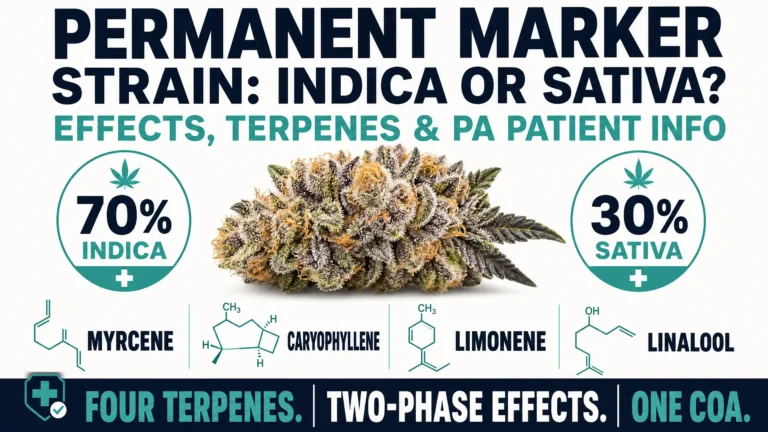
It is approximately 70% indica and 30% sativa, bred by Seed Junky Genetics’ JBeezy from a three-way cross of Biscotti, Jealousy, and Sherb Bx1.
Need a PA Medical Marijuana Card?
Get certified online in 15 minutes. 100% Money-Back Guarantee.
Get Certified Now →For Pennsylvania medical marijuana patients, understanding its terpene chemistry not just the indica label, is what determines whether it aligns with your qualifying condition and symptom profile.
⚡ Quick Answer
Permanent Marker is an indica-dominant hybrid (approximately 70% indica / 30% sativa), developed by Seed Junky Genetics from a three-way cross of Biscotti × Jealousy × Sherb Bx1, and named Leafly’s 2023 Strain of the Year.
For Pennsylvania residents: A valid PA medical marijuana card under Act 16 of 2016 is required to purchase Permanent Marker at any licensed PA dispensary.
Key Takeaways
- Permanent Marker’s 70/30 indica split does not tell the whole story: It’s Biscotti and Jealousy genetics contribute an uplifting cerebral onset before the indica body effect settles in, making it a two-phase experience that surprises patients expecting immediate sedation
- Linalool, a terpene unique to Permanent Marker’s profile compared to most cannabis strains — acts on GABA receptors via a mechanism studied in Frontiers in Behavioral Neuroscience, the same receptor system targeted by benzodiazepine medications prescribed for anxiety
- THC in the 25–30% range demands a start-low protocol more than almost any other commonly available PA dispensary strain, new patients or those resuming after a break face a meaningfully elevated risk of anxiety paradox at standard doses
- PA DUI law makes no distinction between sedating indicas and energizing sativas, any detectable THC metabolite in blood constitutes a per se DUI offense under 75 Pa.C.S. § 3802(d), confirmed in Commonwealth v. Stone (2022)
- Batch variation is significant for Permanent Marker specifically: The myrcene-to-limonene ratio determines whether a given batch leans toward heavy sedation or retains more of the euphoric, functional early-phase character; only the COA reveals this
Is Permanent Marker Indica or Sativa?
Permanent Marker is an indica-dominant hybrid, carrying approximately 70% indica and 30% sativa genetics.

Seed Junky Genetics’ head breeder JBeezy developed it through a carefully selected three-way cross: Biscotti (itself a cross of Gelato #25 and South Florida OG) combined with Jealousy (Gelato #41 × Sherb Bx1) and a Sherbet backcross.
The strain was launched in June 2022 on both coasts and popularized by LA-based Doja Exclusive, before winning Leafly’s 2023 Strain of the Year, one of the fastest rises in modern cannabis market history.
Why the 70/30 Label Is Only a Starting Point
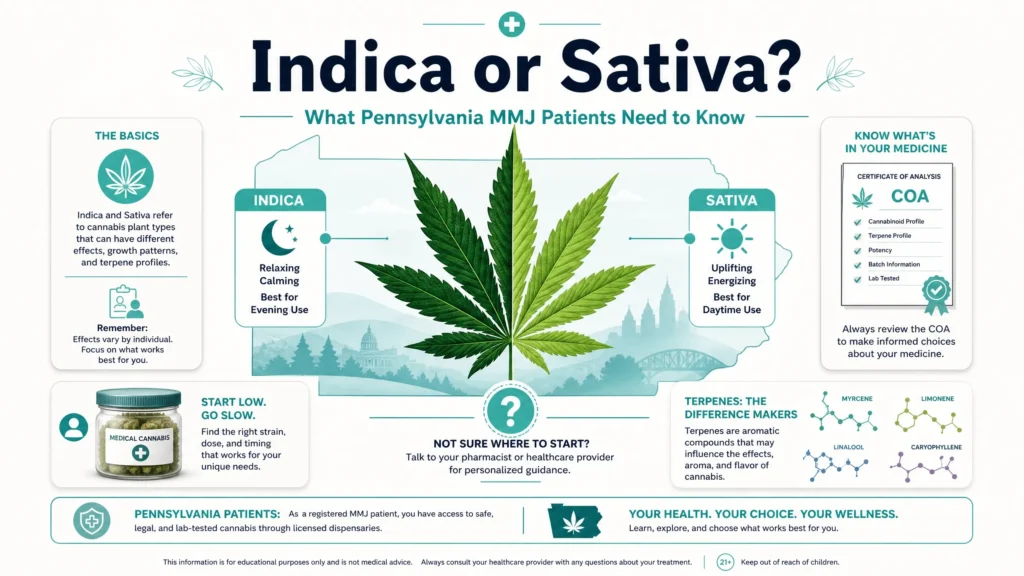
For Pennsylvania medical marijuana patients, the indica/sativa split is pharmacologically insufficient as a standalone guide.

Do You Qualify for a PA MMJ Card?
Connect with a licensed Pennsylvania state physician online from home.
As neurologist and cannabis researcher Dr. Ethan Russo established in his foundational British Journal of Pharmacology entourage effect paper, it is the interaction between cannabinoids and terpenes, not genetic heritage, that determines a strain’s actual therapeutic character.
Permanent Marker is a clear example of this principle.
It’s Biscotti and Jealousy parent genetics contribute a notable cerebral onset, reported by many patients as energizing and euphoric, before the Sherb Bx1 indica foundation transitions the experience toward physical relaxation and sedation.
A patient expecting immediate indica-style heaviness may be surprised by the opening phase. Two products labeled “Permanent Marker” at the same PA dispensary can also feel meaningfully different if their terpene ratios differ across cultivation batches.

🔬 COA Callout: Request the batch-specific Certificate of Analysis from your dispensary pharmacist, not a generic product sheet. Focus on the terpene section: the ratio of myrcene to limonene is the primary indicator of whether that batch leans toward heavier sedation (myrcene-dominant) or retains a more functional, mood-elevating character (limonene-forward).
Total terpene content in premium indoor batches typically falls between 2.0–3.5% by weight.
Cannabinoid Profile
| Cannabinoid | Typical Range | Clinical Significance |
|---|---|---|
| THC | 25–30% | High to very high potency; strict start-low protocol required |
| CBD | <1% | Minimal moderating effect on THC intensity |
| CBG | Trace amounts | Under investigation for anti-inflammatory and neuroprotective potential |
| THC:CBD Ratio | ~28:1 or higher | Significant psychoactive profile; among highest-potency strains at PA dispensaries |
What This Means for PA Patients
Permanent Marker’s 25–30% THC range places it among the most potent strains regularly stocked at Pennsylvania dispensaries as of July 2026.
The absence of meaningful CBD means there is no built-in cannabinoid moderator, a factor that matters clinically for patients whose qualifying condition is anxiety disorder.
New patients and those resuming after a tolerance break should not start with Permanent Marker.
For experienced patients managing conditions where higher THC is therapeutically appropriate, such as severe chronic pain, intractable spasticity, or PTSD, the cannabinoid profile may align well.
Always begin with the minimum available dose and titrate over multiple sessions. Your PA dispensary pharmacist can recommend appropriate starting formats, typically a low-dose edible or a fractional vaporization dose from a measured device.
Terpene Profile
Permanent Marker’s character is defined by four terpenes working in concert.
⚡ Fast & 100% Online PA Medical Cards
Board-Certified Doctors • 100% Money-Back Guarantee
Book Evaluation Now →The balance between them varies across batches, which is why reviewing the COA before purchase is the single most clinically useful step any PA patient can take.

Myrcene — The Dominant Sedation Driver
Myrcene is the most abundant terpene in most verified Permanent Marker batches, typically accounting for 0.6–1.0% of total weight in connoisseur-grade indoor flower.
It contributes the strain’s earthy, musky base aroma notes and is the primary driver of its physical sedation.
A comprehensive PMC review on myrcene pharmacology confirms that myrcene is well-documented for anxiolytic and sedative properties, with studies demonstrating extended sleep time and increased non-REM sleep cycles.
A PMC review on cannabis terpenes specifically notes that batches with myrcene content above 0.5% are associated with the sedative “couch-lock” effect classically attributed to indica-dominant cultivars.
PA Relevance: High-myrcene Permanent Marker batches are most relevant for patients managing sleep disruption, a common secondary symptom in PTSD, chronic pain, and multiple sclerosis.
Daytime use of high-myrcene batches is not advisable for patients who need functional capacity during the day.
| Evidence Area | Finding | Source |
|---|---|---|
| Sedation / sleep | Prolongs sleep time, increases non-REM cycles | PMC (2021) |
| Analgesic | Reduces pain perception, potentiates cannabinoid analgesia | PMC Cannabis Terpenes Review |
| Anti-inflammatory | Inhibits pro-inflammatory compounds | Fundación CANNA / PMC |
Beta-Caryophyllene — The CB2 Receptor Terpene
Beta-caryophyllene typically appears in Permanent Marker at 0.4–0.7% of total weight, contributing the strain’s distinctive peppery, spicy bite, the chemical backbone of its “marker-like” sharpness alongside limonene.
Its pharmacological significance lies in being the only dietary terpene known to directly activate CB2 cannabinoid receptors. Research published in PMC/NIH documents CB2 and PPAR receptor-mediated anti-inflammatory effects.
A 2024 PubMed review highlighted beta-caryophyllene’s immunomodulatory properties with therapeutic potential specifically for anxiety and depression management.
Pain-focused research published in European Neuropsychopharmacology demonstrated dose-dependent reductions in both inflammatory and neuropathic pain responses.
Renewing Your PA MMJ Card?
Quick annual recertification online. No paperwork hassle.
Renew Card Online →PA Relevance: Patients certified for chronic pain, neuropathies, or inflammatory conditions may find elevated beta-caryophyllene batches particularly relevant.
It’s CB2 activity also means anti-inflammatory benefit without the psychoactive effect of CB1 receptor activation.
Limonene — The Mood and Anxiety Moderator
Limonene contributes 0.4–0.8% of total weight in most Permanent Marker batches, providing the citrus, candy-sweet top notes that balance the strain’s pungent gas character.
It’s therapeutic significance is increasingly supported by clinical evidence.
A landmark 2024 study from Johns Hopkins Medicine, published in Drug and Alcohol Dependence (DOI: 10.1016/j.drugalcdep.2024.111267), provided the first clinical evidence that d-limonene significantly reduced THC-induced anxiety and paranoia in human subjects, in a dose-dependent manner, without altering other desired effects of THC.
A PMC cannabis terpenes review further notes limonene’s ability to boost serotonin and dopamine signaling, contributing to mood elevation and stress relief.
PA Relevance: Limonene-forward Permanent Marker batches are of particular clinical interest for anxiety disorder patients, the most commonly cited qualifying condition in Pennsylvania, referenced in over 68% of all MMJ certifications per Drake et al., Annals of Internal Medicine, July 2025. With Permanent Marker’s high THC, a higher limonene ratio provides a meaningful pharmacological buffer.
Linalool — The GABA-Pathway Terpene
Linalool is present at approximately 0.2–0.5% in most Permanent Marker batches, contributing the strain’s distinctive floral, soapy, fresh-laundry aroma character, a major component of what makes the scent profile genuinely unusual compared to most cannabis strains.
It’s therapeutic mechanism is distinct from the other three dominant terpenes.

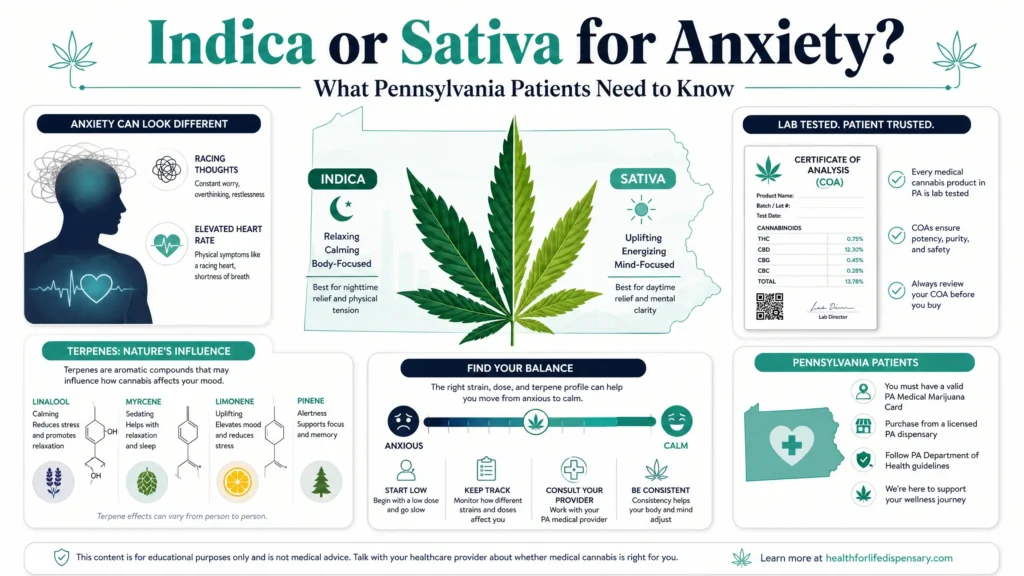
Research published in Frontiers in Behavioral Neuroscience demonstrated that linalool’s anxiolytic effects are mediated via GABAergic transmission through benzodiazepine-responsive GABA-A receptors, the same receptor pathway targeted by prescription benzodiazepines like diazepam.
A PMC review additionally documents linalool’s antidepressant activity through NMDA receptor modulation and serotonin reuptake inhibition. A 2024 PMC study specifically examined linalool’s anxiolytic properties in animal models alongside myrcene, confirming significant anxiety-reducing effects.
Get Approved by a Licensed PA Doctor
Schedule your appointment in minutes. You only pay if approved.
Start Online Application →PA Relevance: Linalool’s GABA-pathway activity is clinically meaningful for anxiety and PTSD patients and distinguishes Permanent Marker’s terpene profile from strains that rely solely on limonene for mood support.
Entourage Effect Summary
💊 Entourage Effect Callout: Permanent Marker’s four-terpene combination, myrcene (sedation, analgesia), beta-caryophyllene (CB2 anti-inflammatory, pain), limonene (anxiety reduction, mood), and linalool (GABA-mediated anxiolytic, antidepressant), produces a layered therapeutic profile that no single terpene achieves in isolation.
This is precisely why COA terpene ratios, not the indica/sativa label, should guide your PA dispensary purchase decision.
Therapeutic Effects
Permanent Marker’s effects follow a characteristic two-phase arc that reflects its mixed genetic heritage.
Reported therapeutic effects (medical framing):
- Cerebral mood elevation and euphoria in the initial phase — attributed to limonene and the Biscotti/Jealousy sativa component
- Stress and anxiety reduction as effects develop — supported by limonene’s clinical anti-anxiety evidence and linalool’s GABA pathway activity
- Deepening physical relaxation and muscle tension relief — driven by myrcene and beta-caryophyllene’s CB2 activity
- Appetite stimulation — clinically relevant for patients managing cancer treatment-related anorexia or appetite loss from qualifying conditions
- Sleep support at moderate-to-higher doses — particularly relevant for high-myrcene batches; total duration typically 2–4 hours for vaporized use
Who Should Use Caution
- New MMJ patients — Permanent Marker’s 25–30% THC is among the highest available at PA dispensaries; it is not an appropriate first-choice strain
- Patients with anxiety as their primary qualifying condition and no prior cannabis tolerance — the high-THC profile can paradoxically worsen anxiety at doses exceeding individual tolerance, despite linalool and limonene’s moderating contributions
- Patients subject to workplace or legal drug testing — THC metabolites remain detectable well after psychoactive effects fully resolve
- Anyone who needs to drive or operate equipment — PA’s per se DUI statute applies from the first use
What Conditions Is Permanent Marker Used For?

Anxiety Disorders
Anxiety disorders are cited in over 68% of all Pennsylvania MMJ certifications per Drake et al., Annals of Internal Medicine, July 2025, making them by far the most common qualifying condition in the state.
Permanent Marker’s linalool (GABA-pathway) and limonene (clinical anti-anxiety evidence) terpene content makes it an interesting clinical option for anxiety-certified PA patients, but its 25–30% THC requires significant caution.
Anxiety patients should request limonene-forward COA batches specifically, consider low-dose vaporization for careful titration, and discuss symptom burden with the dispensary pharmacist before selecting Permanent Marker over lower-THC alternatives.
It is generally not a first-line choice for anxiety-only patients with no prior tolerance.
Severe Chronic and Intractable Pain
Beta-caryophyllene’s direct CB2 receptor activation and myrcene’s analgesic synergy with THC make Permanent Marker one of the more pharmacologically supported high-THC options for patients certified for severe chronic or intractable pain.
It’s two-phase effect arc, euphoric onset transitioning to deep physical relaxation, is commonly described by chronic pain patients as addressing both the sensory and emotional components of persistent pain.
Evening or nighttime use is strongly advisable given the sedation potential at therapeutic doses.
PTSD
Ready to Get Your Official PA MMJ Card?
State-certified doctor consultations online. No risk—100% refund if not approved.
Claim Your MMJ Card Online →The symptom triad of PTSD, hyperarousal, sleep disruption, and intrusive anxiety, maps directly onto Permanent Marker’s four-terpene profile.
PTSD-certified PA patients may find the linalool-laced sedative arc particularly relevant for nighttime use.
Research published in Drug and Alcohol Review (2024) explored cannabis use patterns in anxiety-comorbid sleep disruption, noting improved sleep quality in cannabis users compared to alcohol users among this population.
Permanent Marker is not appropriate for daytime use for most PTSD patients given its sedation and high-THC profile.
Neuropathies
Beta-caryophyllene’s documented effects on neuropathic pain in animal models, including reduction of thermal hyperalgesia and mechanical allodynia per European Neuropsychopharmacology research, makes Permanent Marker relevant for patients certified under Pennsylvania’s neuropathies qualifying condition.
Topical formats containing Permanent Marker’s terpene profile are worth discussing with a dispensary pharmacist for patients managing localized neuropathic symptoms without seeking psychoactive effects.
Multiple Sclerosis
Myrcene’s muscle-relaxant properties and beta-caryophyllene’s CB2 anti-inflammatory activity are both potentially relevant for MS-certified PA patients managing spasticity, pain, and sleep disruption.
Patients managing MS-related daytime fatigue should approach Permanent Marker with particular caution, the strain’s sedative arc can compound fatigue in susceptible individuals.
Permanent Marker at Pennsylvania Dispensaries
Permanent Marker’s rapid market rise, from 10 dispensary menus in early 2022 to over 2,300 nationally by 2024, has translated into meaningful availability across Pennsylvania’s 186+ licensed dispensaries (July 2026).
Availability remains batch-dependent and varies by location and grow rotation.

Available Product Formats
| Format | Onset Time | Duration | Best Suited For |
|---|---|---|---|
| Vaporized flower | 5–15 minutes | 2–4 hours | Dose titration, rapid relief |
| Vape cartridge | 5–10 minutes | 2–3 hours | Portability, consistent dosing |
| Live resin / concentrate | 5–10 minutes | 2–4 hours | Experienced patients; maximum terpene expression |
| Tincture (sublingual) | 15–45 minutes | 3–5 hours | Predictable dosing, flexible intake |
| Edible / capsule | 45–120 minutes | 4–8 hours | Extended overnight relief, sleep support |
| Topical | Localized only | Variable | Localized pain and inflammation; no psychoactive effect |
COA Guidance for Permanent Marker Specifically
Permanent Marker’s batch variation is above average for commonly stocked PA dispensary strains.

The myrcene-to-limonene ratio specifically determines whether a given batch leans toward heavier sedation or retains the more functional, mood-elevating character the strain is known for.
Always confirm:
- Myrcene, limonene, beta-caryophyllene, and linalool percentages for the specific batch number
- Total terpene content (premium indoor batches: 2.0–3.5%+)
- THC exact percentage (note whether listed as THCa on flower labels vs. active THC)
- Third-party laboratory verification (mandatory under PA DOH regulations)
Dispensary Pharmacist Recommendation
Describe your symptoms and qualifying condition, not the strain name. This approach consistently yields better clinical outcomes than requesting a specific strain.
A PA dispensary pharmacist who understands your symptom burden can identify whether a current Permanent Marker batch has the terpene ratio suited to your goals, or recommend a comparable alternative.
For Permanent Marker specifically, tell the pharmacist whether you are prioritizing pain relief, sleep, anxiety management, or daytime function, the answer meaningfully changes which batch or product format is appropriate.
Pennsylvania Legal Notes

Valid PA MMJ Card Required
Cannabis remains illegal for recreational use in Pennsylvania as of July 2026.
Permanent Marker is accessible only to patients holding a valid card issued under Act 16 of 2016. Cards are valid for one year from issuance and require annual renewal.
Smoking Is Prohibited Under PA Law
Act 16 explicitly prohibits smoking as a consumption method. Legal methods for Permanent Marker in Pennsylvania:
- Vaporization of flower or concentrate
- Edibles and capsules
- Tinctures (sublingual or oral)
- Topicals
⚠️ PA DUI Law — Critical Warning
75 Pa.C.S. § 3802(d) — Pennsylvania’s per se DUI statute makes it a criminal offense to drive with any detectable amount of THC metabolites in blood, regardless of MMJ card status, impairment level, or how much time has passed since consumption.
The Pennsylvania Supreme Court confirmed in Commonwealth v. Stone (2022) that a valid MMJ card does not constitute a defense to a DUI charge. Given Permanent Marker’s high-THC profile, metabolites may remain detectable in blood substantially longer than with lower-potency products. Do not drive after consuming any cannabis product.
Getting Your PA MMJ Card
Patients who qualify under one of Pennsylvania’s 24 recognized qualifying conditions can complete the entire certification process via telehealth.
| Fee | Amount |
|---|---|
| Physician certification (new patient) | $159 |
| PA state registration fee | $50 |
| Total — new patient | $209 |
| Physician certification (renewal) | $149 |
| PA state registration fee | $50 |
| Total — renewal | $199 |
MMAP Fee Waiver: Patients qualifying for Medicaid, SNAP, WIC, CHIP, PACE, or PACENET may have the $50 state fee waived.
Start your PA MMJ telehealth certification →
How to Choose the Right Permanent Marker Product?

- Request the batch-specific COA before purchasing. Confirm myrcene, limonene, beta-caryophyllene, and linalool percentages. Match the terpene ratio to your therapeutic goal — higher limonene for anxiety and mood support, higher myrcene for sleep and pain-dominant profiles.
- Respect the THC range. Permanent Marker’s 25–30% THC is among the most potent products at PA dispensaries. New patients should not start here. Patients with established tolerance should still begin with the minimum available dose.
- Match the format to your condition. Vaporized flower gives the fastest onset and the most precise dose control — critical with a strain this potent. Edibles provide extended overnight coverage for sleep and pain but require longer onset management.
- Plan for sedation. Even with the euphoric early phase, Permanent Marker’s indica dominance and high myrcene content will transition most patients toward significant physical relaxation. Schedule use for times when sedation is appropriate.
- Lead with symptoms at the dispensary counter. Tell your PA dispensary pharmacist your qualifying condition and primary symptoms. Ask for a comparison of available Permanent Marker batches by COA terpene data, or for alternatives with a similar profile at lower THC if Permanent Marker’s potency is a concern.
💡 Pro Tip: Pennsylvania dispensary pharmacists are licensed clinical professionals, not retail clerks. They can discuss terpene profiles, qualifying condition relevance, and appropriate dose formats.
Bring your PA DOH-registered qualifying condition name, describe your primary symptom burden, and ask specifically: “Can you compare the terpene COA data for this batch versus what you have available in a lower-THC option?”
Frequently Asked Questions
Q: Is Permanent Marker indica or sativa?
A: Permanent Marker is an indica-dominant hybrid, carrying approximately 70% indica and 30% sativa genetics. It was developed by Seed Junky Genetics’ JBeezy from a three-way cross of Biscotti, Jealousy, and Sherb Bx1, all of which trace lineage back through the Gelato and Sunset Sherbet family. Despite the indica dominance, its Biscotti and Jealousy genetics contribute a notable cerebral onset phase before the indica body effect takes hold. For Pennsylvania patients, the 70/30 split is only a starting point, the batch-specific terpene COA determines whether a given product will lean toward energizing euphoria or heavier sedation.
Q: What terpenes are in Permanent Marker?
A: The dominant terpenes in Permanent Marker are myrcene, beta-caryophyllene, limonene, and linalool, with bisabolol and alpha-humulene also commonly present as minor contributors. Myrcene (0.6–1.0% by weight) drives sedation and physical relaxation. Beta-caryophyllene (0.4–0.7%) activates CB2 receptors with anti-inflammatory and analgesic effects. Limonene (0.4–0.8%) contributes the citrus brightness and has clinical evidence for reducing THC-induced anxiety. Linalool (0.2–0.5%) provides the floral, soapy character and acts via GABA-A receptor pathways. Total terpene content in premium indoor batches typically falls between 2.0–3.5% by weight.
Q: What is Permanent Marker good for medically?
A: Permanent Marker’s terpene profile is most commonly associated with chronic pain relief, anxiety and stress reduction, PTSD symptom management, and sleep support. Beta-caryophyllene’s CB2 receptor activity is documented in neuropathic and inflammatory pain models. Linalool’s GABA-pathway anxiolytic mechanism is distinct from other cannabis terpenes and pharmacologically similar in pathway to benzodiazepine medications. Limonene provides clinical anti-anxiety evidence from a 2024 Johns Hopkins University trial. Myrcene drives sedative and analgesic properties. At Pennsylvania dispensaries, Permanent Marker is most frequently discussed for patients managing anxiety disorders, severe chronic pain, PTSD, and neuropathies, all recognized PA qualifying conditions.
Q: How much THC does Permanent Marker have?
A: Verified dispensary COA data consistently places Permanent Marker’s THC between 25–30%, with some premium indoor phenotypes and concentrate products testing higher. CBD is typically below 1%, meaning no meaningful cannabinoid moderation of THC intensity. This makes Permanent Marker one of the higher-potency strains routinely available at Pennsylvania dispensaries as of July 2026. Patients without prior cannabis tolerance should not start with this strain. Even experienced patients should begin with the minimum available dose and titrate across multiple sessions before increasing.
Q: Is Permanent Marker available at Pennsylvania dispensaries?
A: Permanent Marker has become one of the more widely stocked premium strains across Pennsylvania’s 186+ licensed dispensaries (July 2026), reflecting its rapid national market rise after the 2023 Leafly Strain of the Year award. Availability varies by location, cultivator, and batch rotation. It is typically stocked in flower for vaporization, vape cartridges, and live resin concentrate formats; edible and tincture formats vary by dispensary. Because terpene ratios differ meaningfully across batches and cultivators, patients should request batch-specific COA data and not assume equivalence between products from different sources.
Q: Can I get a PA medical marijuana card to access Permanent Marker?
A: Yes, Pennsylvania residents who qualify under one of the 24 recognized serious medical conditions can obtain a PA MMJ card via telehealth and access Permanent Marker at licensed PA dispensaries. Conditions most relevant to Permanent Marker’s terpene and therapeutic profile include anxiety disorders, severe chronic pain, PTSD, neuropathies, and multiple sclerosis. New patient certification costs $209 total. Begin the telehealth certification process here.
Q: Is Permanent Marker good for anxiety?
A: Permanent Marker can be relevant for anxiety patients, but its 25–30% THC demands more careful patient selection than most dispensary options. Its linalool content acts via GABA-A receptor pathways with documented anxiolytic properties in research published in Frontiers in Behavioral Neuroscience. Limonene has direct clinical evidence from Johns Hopkins for reducing THC-induced anxiety and paranoia. However, high-THC cannabis can paradoxically worsen anxiety at doses exceeding individual tolerance, particularly in treatment-naive patients. Anxiety-certified PA patients considering Permanent Marker should discuss it with their dispensary pharmacist, request a limonene-forward batch by COA, start with the minimum vaporization dose, and have a lower-THC alternative identified before committing to this strain.
Q: What makes Permanent Marker smell like a marker?
A: Permanent Marker’s distinctive solvent-like, ink-reminiscent aroma is the result of its specific combination of beta-caryophyllene, limonene, and linalool interacting at relatively high total terpene concentrations. Beta-caryophyllene contributes the peppery, diesel backbone. Limonene adds a sharp citrus-chemical note. Linalool provides a soapy, clean solvent impression. Together, particularly in well-cured, high-terpene indoor batches, these three terpenes create the chemical illusion of permanent marker ink without any actual solvents present. The intensity of this aroma is also a reliable quality indicator: flat or muted scent in a batch claiming to be Permanent Marker typically signals age, poor storage, or lower total terpene content.
Medically reviewed by Dr. Johnathon Chance Miller, MD (License #MD474783). This content is for educational purposes only and does not constitute medical advice. Cannabis affects individuals differently. Consult a licensed healthcare provider before using cannabis for any medical condition. Pennsylvania medical marijuana patients must follow all state laws regarding legal methods of consumption. Smoking cannabis is prohibited under PA law. Do not drive after consuming cannabis. THC metabolites remain detectable in blood after psychoactive effects resolve, Pennsylvania’s per se DUI law applies regardless of MMJ card status.
Sources
Strain Genetics & Market Data
- Permanent Marker genetic lineage — SeedFinder.eu
- Permanent Marker: Leafly 2023 Strain of the Year — Lab Effects
- Permanent Marker terpene COA ranges — JointCommerce
- Permanent Marker strain profile — Pacific Stone (2024)
- Permanent Marker strain review — Seeds Here Now
- Permanent Marker terpene & COA guidance — Pettals Cannabis (Feb 2026)
- Permanent Marker patient benefits review — Veriheal (Dec 2025)
Terpene Pharmacology — Myrcene
- Russo, E.B. (2011). Taming THC: Entourage Effect. Br J Pharmacol — PMC
- Myrcene: Potential Health Benefits. Frontiers in Nutrition — PMC (2021)
- Terpenes/Terpenoids in Cannabis: Are They Important? Cannabis Cannabinoid Res — PMC (2020)
- β-Myrcene, Simulated Driving & Sedation. Cannabis — PMC (2023)
Terpene Pharmacology — Beta-Caryophyllene
- BCP: CB2 Receptor Anti-Inflammatory Mechanism — PMC/NIH
- BCP Analgesic Effects in Neuropathic & Inflammatory Pain. Eur Neuropsychopharmacol — PubMed (2013)
- BCP as CB2 Agonist in Emotional & Cognitive Disorders — PubMed (2024)
- BCP Reduces Inflammatory Phenotype via CB2. Biomedicines — PMC (2020)
- Topical BCP for Dermatologic Disorders — PMC Systematic Review (2025)
Terpene Pharmacology — Limonene
- Spindle et al. D-Limonene Mitigates THC-Induced Anxiety. Drug Alcohol Depend — PMC (2024)
- Limonene Reduces THC Anxiety — Johns Hopkins Medicine Press Release (2024)
- The Cannabis Terpenes: Limonene & Serotonin Pathway. Molecules — PMC (2018)
Terpene Pharmacology — Linalool
- Linalool Anxiolytic Effects via GABA-A Receptors. Front Behav Neurosci (2018)
- Linalool Metabolites & GABA-A Receptor Modulation. Front Chem — PMC (2017)
- Linalool as Antidepressant Tool: NMDA & Serotonin Mechanisms — PMC (2022)
- Anxiolytic Properties of Linalool & β-Myrcene in Mice — PMC (Dec 2024)
- Cannabinoids & Sleep: Linalool’s Adenosine Mechanism — Canna Specialists (2025)
Pennsylvania MMJ Program & Legal
- Pennsylvania Medical Marijuana Laws — Act 16 of 2016
- 75 Pa.C.S. § 3802(d) — Pennsylvania Per Se DUI Statute
- Commonwealth v. Stone (2022) — PA Supreme Court DUI Ruling
- Pennsylvania Department of Health — Medical Marijuana Program
- Drake et al. Anxiety as Dominant MMJ Qualifying Condition. Ann Intern Med (July 2025)
Sleep & Cannabis Research