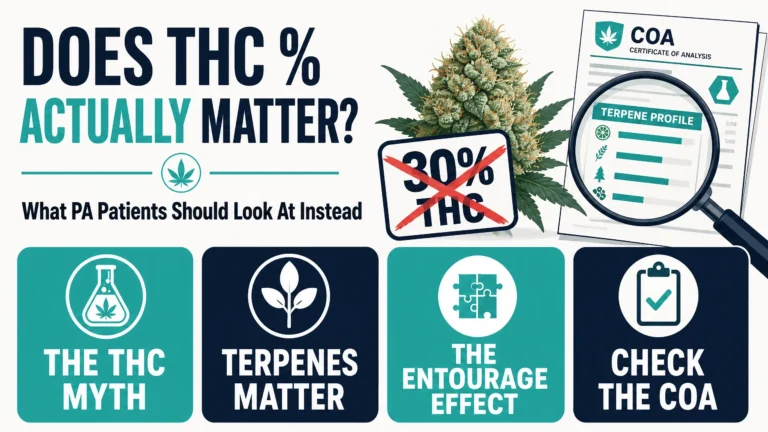

Does THC percentage matter?
The honest answer is: Somewhat, but far less than most new patients think, and fixating on it as your primary purchase signal is one of the most common mistakes made at Pennsylvania dispensaries.
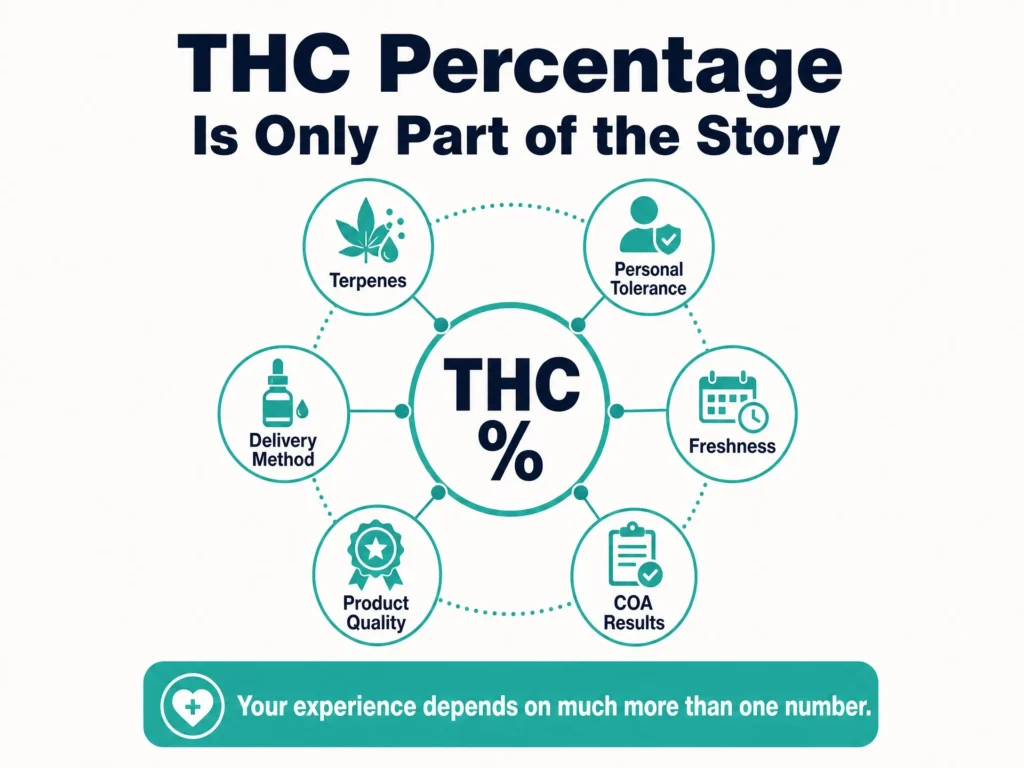
THC percentage tells you the concentration of one compound in a product. It says nothing about the terpene profile that shapes whether you feel relaxed, focused, or anxious. It says nothing about how that product was grown, cured, or processed. It says nothing about your personal tolerance, or the delivery method, or whether you ate recently. And above a certain threshold, research suggests it barely predicts how high you feel at all.
This guide explains what THC percentage does and does not tell you, what the numbers actually mean in milligrams, and what to look at instead on a Pennsylvania dispensary label to make a better decision every single visit.
Key Takeaways
- THC percentage is an incomplete metric. Research from the University of Colorado found no significant difference in subjective intoxication between high-THC and very-high-THC flower once a threshold around 20% was crossed.
- What does THC percentage mean on a PA label? On flower, it represents THCA (the raw precursor), not active THC. You need to apply the formula (THCA x 0.877) + Delta-9 THC to get the actual Total THC after heating.
- One gram of 20% THC flower contains 200mg of total THC, but your body only absorbs 30 to 40% of that through vaporization, meaning roughly 60 to 80mg actually enters your system per gram.
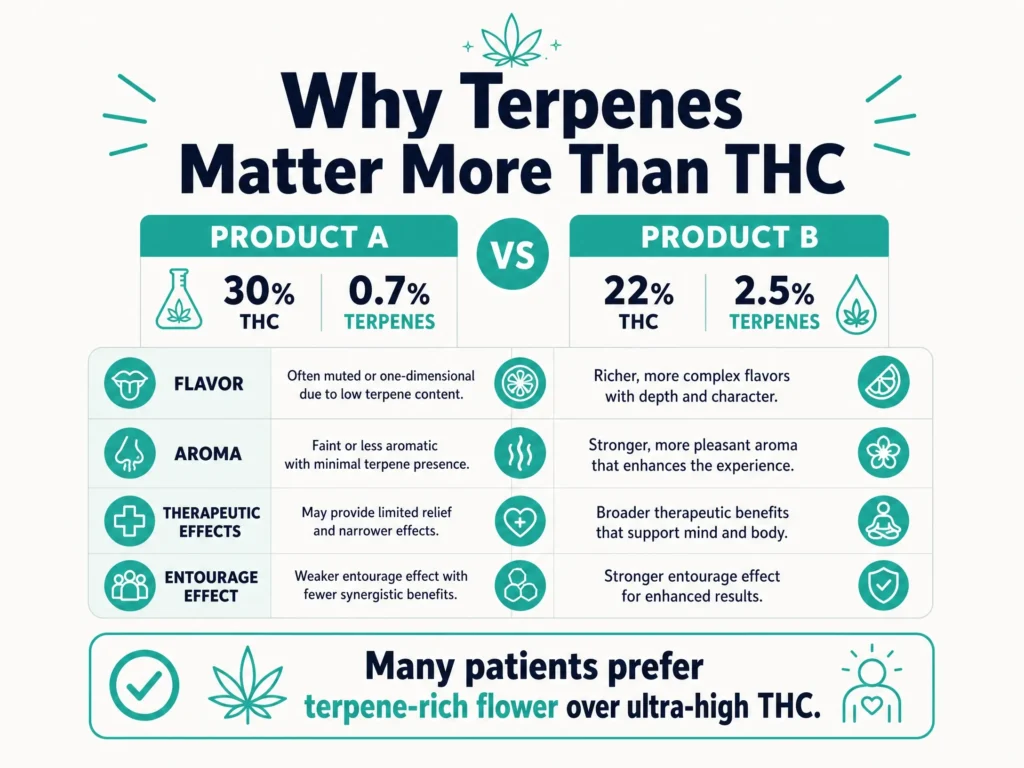
- Terpenes are the better predictor of experience. A 22% flower with 2.5% total terpenes will typically outperform a 30% flower with 0.8% total terpenes for most patients.
- Chasing high THC% accelerates tolerance, meaning you need progressively more product to feel the same effect over time.
- For PA anxiety patients specifically, very high THC products increase the risk of THC-induced anxiety and paranoia, regardless of the percentage on the label.
Pennsylvania dispensary labels show THCA%, Total THC (calculated), terpene profiles, and COA data for every product. Most new patients shop purely by THC percentage. This guide shows you what to use instead.
What Does THC Percentage Mean on a PA Dispensary Label?
Before asking whether THC percentage matters, it helps to know what the number on the label is actually measuring.
On Pennsylvania dispensary flower products, the number listed as “THC” or “THC%” is almost always the THCA percentage, not active Delta-9 THC. This is an important distinction.
THCA (tetrahydrocannabinolic acid) is the non-psychoactive precursor found in raw cannabis. It only becomes active THC when heated, through a process called decarboxylation. When you vaporize flower, that conversion happens in the moment of heating.
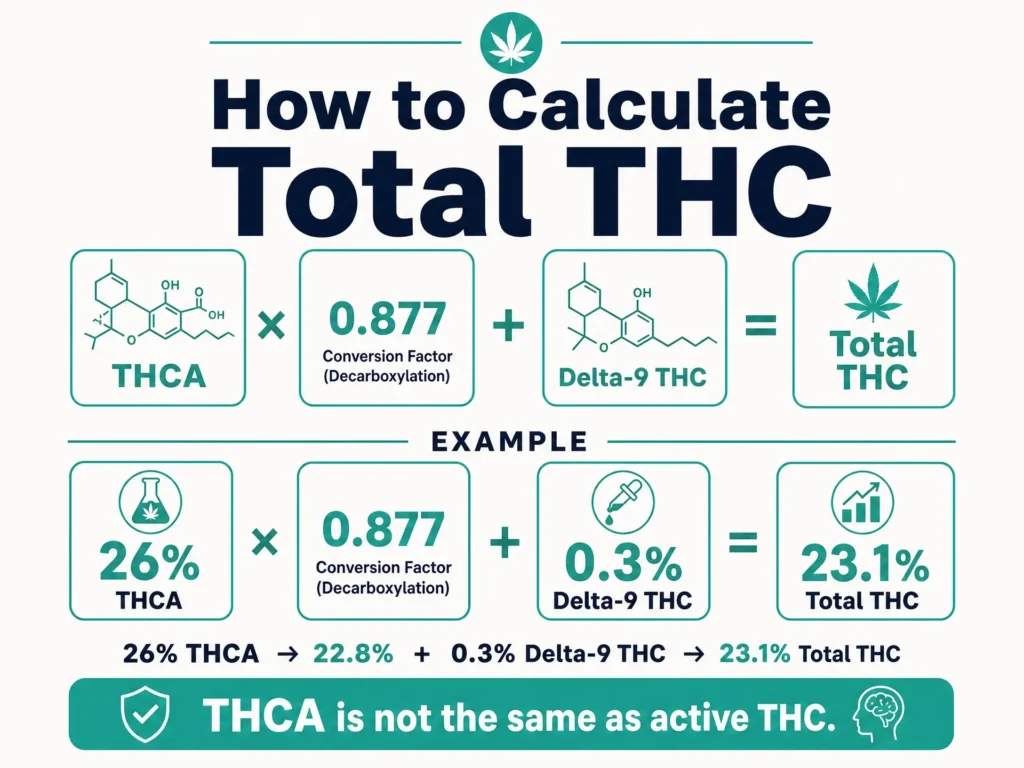
The formula to calculate active THC from a PA dispensary label:
Total THC = (THCA% x 0.877) + Delta-9 THC%
The 0.877 factor accounts for molecular weight lost during the conversion from THCA to THC. In practice, this means the real Total THC is always lower than the THCA number shown.
A worked example:
| What the Label Shows | Value | Calculation |
|---|---|---|
| THCA | 26% | 26 × 0.877 = 22.8% |
| Delta-9 THC (raw) | 0.3% | Add directly |
| Total THC (active after heating) | 23.1% | 22.8 + 0.3 |
A product labeled “26% THCA” is actually a 23% Total THC product once you do the math. This distinction is covered in detail in our How to Read a Pennsylvania Dispensary COA guide, which explains every section of the lab report that comes with each PA dispensary product.
For concentrate products (vape cartridges, rosin, live resin), labels typically show Total THC directly since the product has already been processed, and the numbers are significantly higher, often 60% to 85%.
Does THC Percentage Matter? What the Research Actually Shows
Here is the research that should change how most new patients shop.
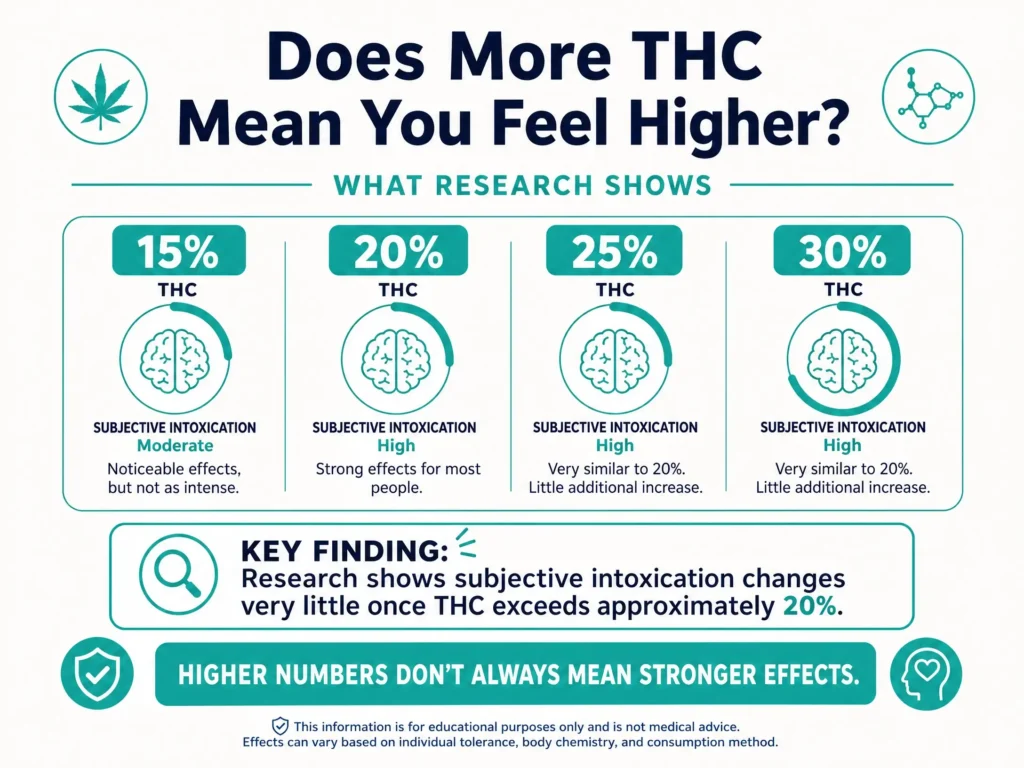
A widely referenced study from the University of Colorado and Johns Hopkins University tested participants using cannabis of varying potencies in a real-world setting. The finding that matters most: participants showed no significant differences in cognitive or psychomotor impairment based on THC concentration, and subjective feelings of intoxication did not meaningfully increase once products exceeded approximately 20% THC.
As OG Nation’s cannabinoid science review summarizes: “Research from the University of Colorado and Johns Hopkins University shows that this isn’t true. In fact, once THC levels reach about 20%, there’s little difference in how ‘high’ people feel, even if the THC content goes much higher.”
This does not mean all cannabis products are identical. It means that the jump from 20% to 30% THC flower does not produce the jump in effect that most patients expect when they see those numbers. The variables that actually determine experience are covered in Sections 6 and 8.
What THC percentage does tell you:
| THC Range | General Guidance |
|---|---|
| Under 10% | Mild, often suitable for beginners or daytime microdosing |
| 10% to 15% | Light to moderate effects, a good starting range for many new patients |
| 15% to 20% | Moderate to strong effects, appropriate for patients with some tolerance |
| 20% to 25% | Strong effects, suitable for experienced patients or specific therapeutic needs |
| Above 25% | High potency; for most patients, it offers minimal additional benefit over 20–25% THC while increasing the likelihood of anxiety and other adverse effects |
THC percentage is a useful rough filter, not a precision tool. It tells you whether a product is likely to feel mild, moderate, or strong. It cannot tell you whether it will feel relaxing or energizing, whether it will help your specific condition, or whether it will cause anxiety.
How Many mg of THC in a Gram of Flower?
This is one of the most practically useful pieces of cannabis math for any patient, and the formula is simple once you learn it.
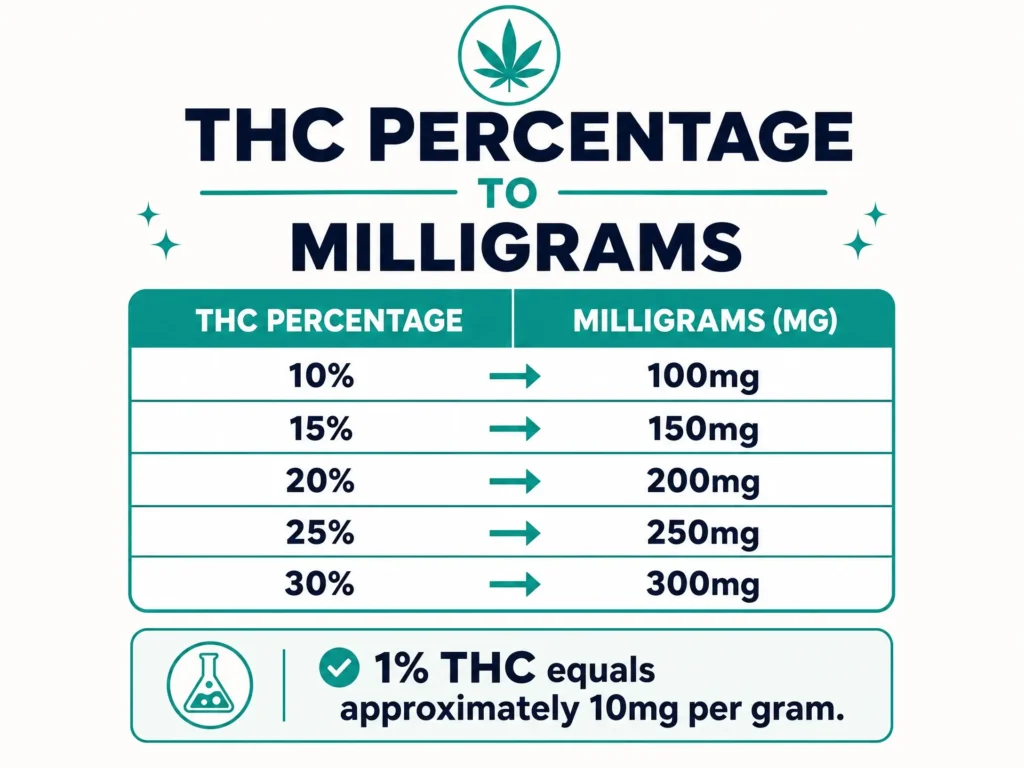
The core conversion: 1% THC = 10mg of THC per gram
So a gram of flower at 20% THC contains 200mg of total THC. A gram at 25% contains 250mg. The math scales linearly.
Full reference table:
| THC Percentage | mg of Total THC per Gram |
|---|---|
| 10% | 100mg |
| 15% | 150mg |
| 18% | 180mg |
| 20% | 200mg |
| 22% | 220mg |
| 25% | 250mg |
| 28% | 280mg |
| 30% | 300mg |
This is total THC present in the gram before any consumption losses. What your body actually absorbs is a different number, covered in the next section.
For concentrate products, the same formula applies but at much higher starting percentages. A gram of live rosin at 75% THC contains 750mg of total THC. This is why our hash rosin vs live rosin guide emphasizes starting with extremely small amounts when moving to concentrates.
How Many mg of THC in a Joint or Vaporizer Session?
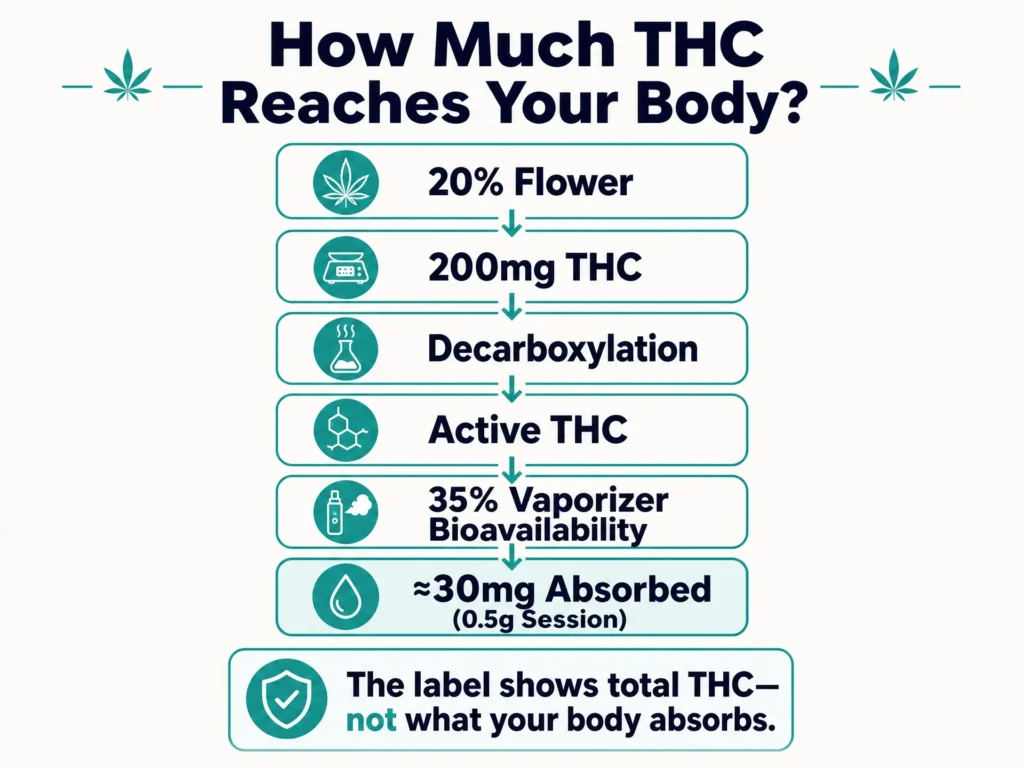
The total THC in a gram is not the amount your body absorbs. Two additional factors reduce the delivered dose significantly: decarboxylation losses during heating, and bioavailability, which is the percentage of what is delivered that actually enters your bloodstream.
For vaporization (the legal consumption method for PA medical patients):
Research cited in Frontiers in Pharmacology and summarized by Mello Cannabis’s THC calculator guide shows that vaporization bioavailability averages 30% to 40%, higher than smoking because vaporization avoids combustion losses.
Step-by-step example using a 0.5g vaporizer session at 20% THC:
| Step | Calculation | Result |
|---|---|---|
| Total THC in 0.5g | 0.5 × 20 × 10 | 100mg |
| After THCA conversion (×0.877) | 100 × 0.877 | 87.7mg active THC |
| After vaporization bioavailability (35% average) | 87.7 × 0.35 | Approximately 30mg absorbed |
A 0.5g vaporizer session with 20% THC flower delivers approximately 25 to 35mg of absorbed THC to most patients. Compare that to the 100mg written on the label in raw form, and you understand why the percentage number alone is insufficient for dosing decisions.
Joint reference for context (smoking is prohibited for PA MMJ patients, but many ask about this):
Smoking bioavailability is lower than vaporization, approximately 20% to 30%, because combustion destroys some cannabinoids before they can be inhaled. A joint using the same 0.5g of 20% flower would deliver approximately 15 to 25mg absorbed THC, less efficient than vaporization.
How Much THC Is in One Puff?
This is difficult to calculate precisely because it depends on your device, puff duration, temperature setting, and lung capacity. However, a reasonable working estimate exists.
For dry herb vaporizers at typical temperatures (350 to 410 degrees Fahrenheit), most puffs deliver approximately 2 to 5mg of absorbed THC, depending on how long you draw and how deeply you inhale.
Practical estimates per single puff from a dry herb vaporizer:
| THC% of Flower | Device Loaded | Estimated mg per Puff |
|---|---|---|
| 15% | 0.1g session | Approximately 1.5 to 2.5mg |
| 20% | 0.1g session | Approximately 2 to 3.5mg |
| 25% | 0.1g session | Approximately 2.5 to 4.5mg |
| 30% | 0.1g session | Approximately 3 to 5mg |
These are estimates. The right approach for any new session with an unfamiliar product is the same: one or two puffs, then wait 10 to 15 minutes before taking more. Vaporization onset is faster than edibles (2 to 10 minutes for most patients), so you do not need to wait long to assess.
For vape cartridges, most devices deliver approximately 3 to 5mg of oil per puff, with THC absorption around 35%. That means a single puff from an 80% THC cartridge delivers approximately 1 to 1.5mg of absorbed THC per puff. Cartridges are actually one of the easier formats to microdose with, precisely because puff sizes are more consistent than a vaporizer.
Why High THC Percentage Does Not Guarantee a Stronger Experience
Here is the part of this topic that most dispensary marketing actively obscures. Higher THC percentage does not reliably predict a better or stronger experience, and several factors explain why.
Individual biology varies dramatically
Your endocannabinoid system is unique. The density of CB1 receptors in your brain, the efficiency of your liver’s THC metabolism, your baseline anxiety level, and dozens of other factors all shape how you respond to THC. Two patients using the exact same product at the exact same dose can have completely different experiences.
Terpenes modify the THC effect profoundly
Myrcene, caryophyllene, limonene, linalool, and other terpenes interact directly with your endocannabinoid system and can amplify, soften, or redirect the THC effect. As Commencement Bay Cannabis’s potency guide states: “A widely cited 2021 Scientific Reports study investigated several cannabis terpenes and reported cannabimimetic behaviors in animal models, with additive effects alongside a cannabinoid agonist.”
Practically: a 22% flower with dominant myrcene and caryophyllene will feel heavier, more sedating, and more physical than a 28% flower that is terpene-depleted. Most patients report that terpene-rich products at moderate THC feel more satisfying than high-THC products with minimal terpenes.
Batch variance is real
Cannabis is an agricultural product. The same strain from the same cultivator can test at 22% this month and 26% next month depending on light exposure, harvest timing, curing duration, and storage conditions. The number on the label reflects that specific tested batch. Chasing a strain because it tested high once does not guarantee the same result on a future purchase.
Freshness matters
THC degrades over time into CBN (cannabinol), a different compound with distinct properties. Older flower, even if it tested high originally, may have significantly less active THC than the label suggests by the time you purchase and use it.
The Tolerance Treadmill: Why Chasing High THC Works Against You
This is the practical consequence of shopping primarily by THC percentage that most guides leave out.
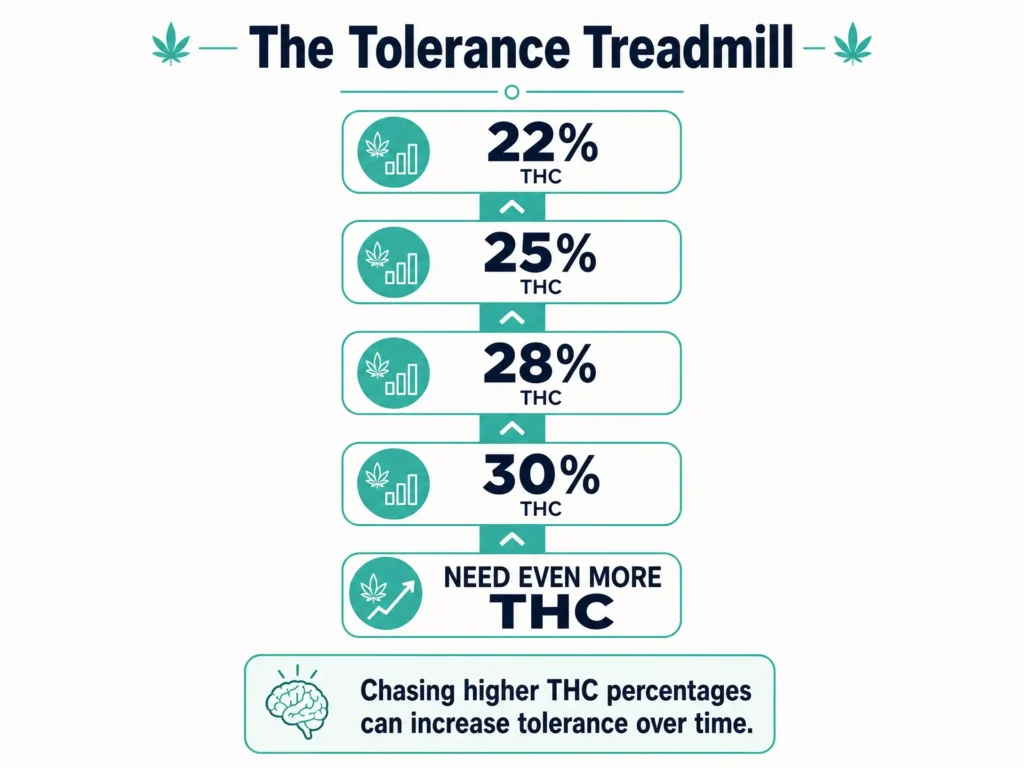
Regular THC use causes CB1 receptor downregulation: your brain reduces the number and sensitivity of the receptors that THC binds to, requiring more THC over time to produce the same effect. This is tolerance, and it is directly accelerated by consistently using high-THC products.
As Kind Goods’ dispensary education guide notes: “If you stay on high-THC products all the time, many people find they need more to get the same effect. Consumer education sources regularly point out that chasing higher THC can become a treadmill.”
The practical result: a patient who starts at 25% flower and escalates to 30% because the 25% stopped working will eventually find the 30% ineffective too. There is no ceiling-busting product that bypasses tolerance. The answer to tolerance is either a break (allowing CB1 receptors to resensitize, which takes 2 to 4 weeks of abstinence) or diversifying your product selection based on terpene profiles rather than escalating THC percentages.
Patients who rotate between products with different terpene profiles, including moderate-THC products with rich terpene content, often report more consistent effects over time than those who use the same high-THC product repeatedly.
What to Look at Instead: The PA Dispensary Label Guide
Here is a practical, five-point checklist for every PA dispensary purchase. These are the things that actually predict your experience more accurately than THC percentage alone.
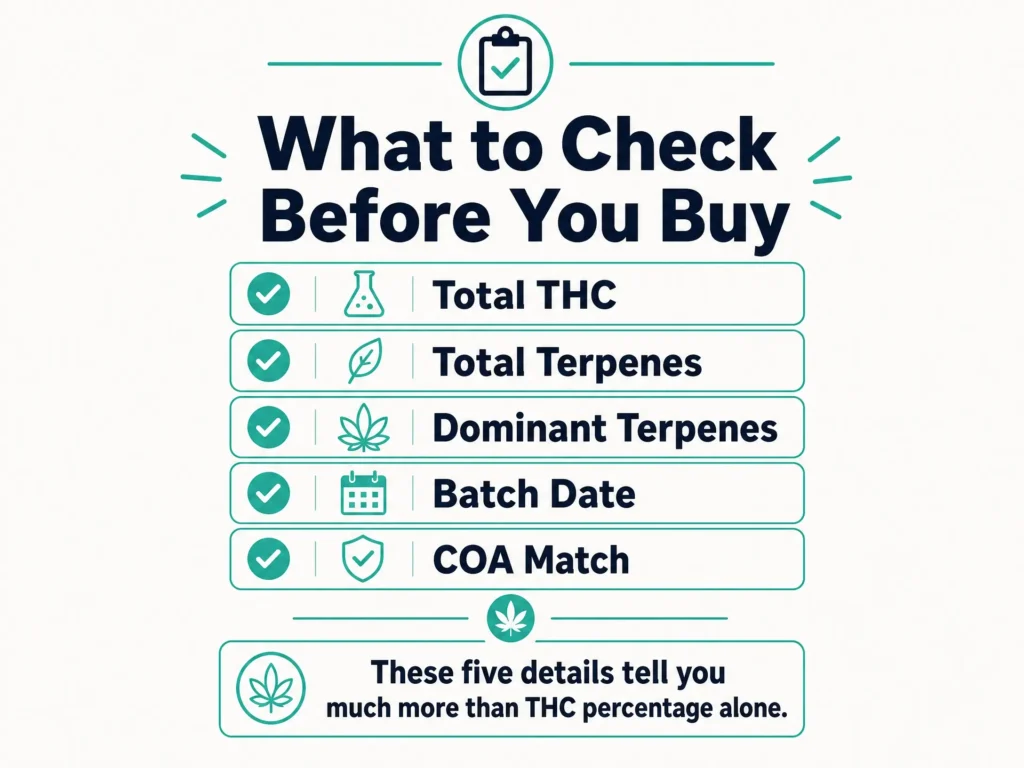
The PA Dispensary Label Checklist:
| What to Check | Where to Find It | Why It Matters |
|---|---|---|
| Total THC (calculated) | COA or product label, calculated as (THCA × 0.877) + Delta-9 THC | Shows the actual potency after heating rather than the inflated THCA percentage. |
| Total Terpenes % | COA terpene panel | Values above 1.5% for flower generally indicate a richer, more complex terpene profile. |
| Dominant terpenes | COA terpene panel, listed by name | Provides clues about the product profile (for example, Myrcene = sedating, Limonene = uplifting, Caryophyllene = anti-anxiety). |
| Batch date and test date | COA header | Fresher products generally retain more terpenes and potency. |
| Batch number match | COA header vs. product packaging | Confirms the laboratory results correspond to the exact product you are purchasing. |
What Total Terpenes tells you that THC% does not:
A product with 23% Total THC and 2.5% Total Terpenes will typically deliver a richer, more complete therapeutic experience than a product with 29% Total THC and 0.7% Total Terpenes. The terpene percentage is the single most underused data point on PA dispensary COAs.
For a full walkthrough of every section of a PA dispensary COA, including how to read heavy metal panels, pesticide results, and batch matching, see our How to Read a Pennsylvania Dispensary COA guide.
The Anxiety Risk: Why This Matters for PA’s Largest Patient Group
Anxiety disorders are the number one qualifying condition for Pennsylvania’s medical marijuana program, cited in approximately 60% of all certifications. This means the majority of PA MMJ patients have a condition that makes them particularly sensitive to one of the most consistent side effects of high-THC products: THC-induced anxiety and paranoia.
Research consistently shows that the relationship between THC and anxiety is dose-dependent. Lower doses of THC tend to reduce anxiety. Higher doses tend to increase it, particularly in individuals with underlying anxiety sensitivity.
This creates a real problem for anxiety patients who chase high THC percentages because they want strong relief. The product most visually impressive on the dispensary menu (30%+ THC) is also the one most likely to trigger or worsen anxiety symptoms, particularly in patients who have not built significant tolerance.
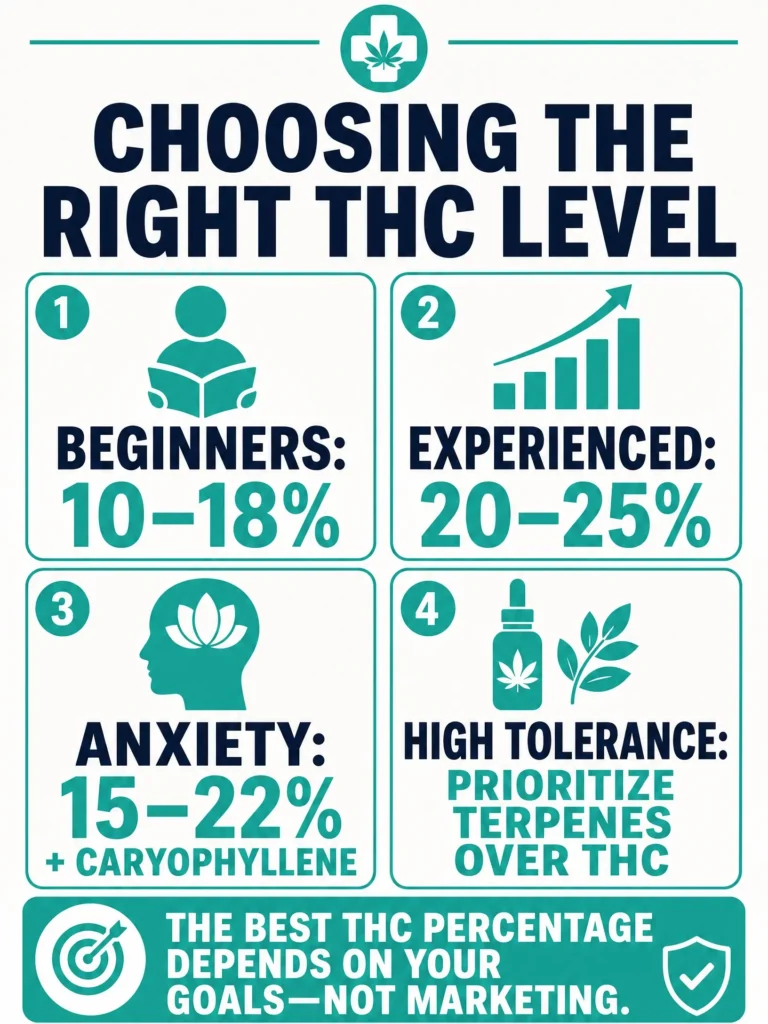
For anxiety patients, the better profile is a moderate THC product (15% to 22%) with elevated caryophyllene, which binds directly to CB2 receptors and has documented anxiolytic properties. High limonene content also helps moderate THC-induced anxiety by elevating mood through serotonin pathway interaction.
For a detailed guide on cannabis and anxiety management specific to Pennsylvania patients, see our Anxiety Disorder and Medical Marijuana in Pennsylvania guide.
How to Use This Knowledge on Your Next Dispensary Visit
Practical steps to make a better purchase decision at any Pennsylvania dispensary:
Before you visit: Think about what you need the product to do. Relaxation at night? Pain relief during the day? Help with anxiety? The answer shapes which terpene profile to look for, not which THC percentage to target.
At the dispensary: Ask your pharmacist or budtender for the COA rather than asking “what’s the highest THC you have?” A question like “which of your current flower options has the best terpene percentage?” will get you more useful information.
At the product level: Look at Total THC (not THCA alone), Total Terpenes, and the top two or three terpenes listed. Use the guidance in Section 8 to match terpenes to your goal.
At home: Start with a small amount, especially with any new product. Note how it feels at 15 minutes and 30 minutes. A product that works well for you at 0.2g per session does not need to be replaced by a higher-THC option.
If you do not yet have a Pennsylvania medical marijuana card and want access to the full range of dispensary products, including those with COA data and pharmacist guidance, check whether your condition qualifies or get started with your certification today.
Frequently Asked Questions
Q: Does THC percentage matter when buying cannabis?
A: It matters as a rough filter, but it is a poor predictor of experience on its own. Research from the University of Colorado and Johns Hopkins University found no significant difference in subjective intoxication between products above approximately 20% THC. Terpene profile, your personal tolerance, delivery method, and product freshness all predict experience more accurately than THC percentage alone.
Q: What does THC percentage mean on a Pennsylvania dispensary label?
A: On flower products, the THC or THC% figure almost always represents THCA, the non-psychoactive precursor to active Delta-9 THC. To calculate the actual potency after heating (through vaporization), apply the formula: (THCA% x 0.877) + Delta-9 THC%. A product labeled “26% THCA” has approximately 23% Total THC after conversion, not 26%.
Q: How many mg of THC are in a gram of flower?
A: The formula is: THC% x 10 = mg per gram. A gram of 20% THC flower contains 200mg of total THC. A gram of 25% flower contains 250mg. However, your body absorbs only a fraction of this through vaporization, approximately 30% to 40%, meaning roughly 60 to 80mg is absorbed per gram of 20% flower vaporized.
Q: How many mg of THC are in a joint?
A: A typical 0.5g joint rolled with 20% THC flower contains approximately 87mg of active THC after decarboxylation (0.5 x 200mg x 0.877). After smoking bioavailability of roughly 20% to 30%, a person absorbs approximately 17 to 26mg from that joint. Note: smoking is prohibited for Pennsylvania medical marijuana patients under Act 16. PA patients must vaporize rather than smoke.
Q: How much THC is in one puff of a vaporizer?
A: One puff from a dry herb vaporizer loaded with 0.1g of 20% THC flower delivers approximately 2 to 3.5mg of absorbed THC. Puff estimates vary based on device, temperature, puff duration, and inhalation depth. Starting with one or two puffs and waiting 10 to 15 minutes before reassessing is the recommended approach with any new product.
Q: What is the best THC percentage to look for?
A: There is no universally correct answer. New patients generally do well starting at 10% to 18% THC to understand their response before moving higher. Experienced patients may use 20% to 25% effectively. Very high products (28% and above) offer minimal additional therapeutic benefit for most patients while increasing anxiety and tolerance risks. For anxiety patients specifically, moderate THC with elevated caryophyllene is often more therapeutic than maximum-percentage products.
Q: Can cannabis with 15% THC be stronger than cannabis with 28% THC?
A: Yes. A 15% product with rich terpene content (2% or higher total terpenes) and dominant myrcene or caryophyllene can produce a more intense, therapeutic experience than a 28% product that is terpene-depleted or poorly grown. This is the core insight from the entourage effect: terpenes and cannabinoids work together, and the synergy often matters more than any single compound’s percentage.
Q: Do PA dispensaries have to show THC percentage on product labels?
A: Yes. All licensed Pennsylvania dispensaries are required by the Pennsylvania Department of Health to include cannabinoid content on product packaging, backed by a Certificate of Analysis from a state-approved laboratory. Every product comes with a COA that shows Total THC, THCA, CBD, and other cannabinoids, as well as the full terpene panel and contaminant testing results.
The Bottom Line
Does THC percentage matter? It matters enough to use as a starting filter, and not enough to use as your primary purchase decision.
The most important shift PA dispensary patients can make is this: look at the full COA rather than the single number on the front of the package. Total THC (after applying the THCA conversion), Total Terpenes percentage, and the dominant terpene names give you a far more accurate picture of what a product will actually feel like than any single percentage ever can.
For anxiety patients, the number that matters most is not THC at all. It is the caryophyllene percentage. For patients seeking sedation and pain relief, it is myrcene. For patients who need to stay functional during the day, it is limonene and terpinolene content.
Pennsylvania dispensary pharmacists can walk you through any of this on your next visit. If you are not yet a registered PA MMJ patient and want access to the full COA data, pharmacist guidance, and product range at licensed dispensaries, get started with your certification today.
This blog post is intended for general educational and informational purposes only and does not constitute medical advice. THC affects individuals differently based on tolerance, body chemistry, and consumption method. Start with low doses and increase gradually. Do not drive or operate machinery after consuming any THC product. Medically reviewed by Dr. Johnathon Chance Miller, MD.
Sources:
- OG Nation: THC Percentages: Does It Really Matter? (June 2025)
- Commencement Bay Cannabis: THC Potency vs Terpene Profile (February 2026)
- Triangle Seeds: Why THC% Doesn’t Really Matter (April 2026)
- Kind Goods: Decoding THC Percentage (February 2026)
- Nurse Wellness: What THC Percentage Is Best for You? (April 2026)
- Mello Cannabis: THC Calculator Guide (April 2026)
- Weedmaps: How Many mg THC Are in a Joint? (February 2026)
- GoEmbarc: How to Calculate THC in a Joint (March 2026)
- STIIIZY: How to Calculate How Much THC Is in a Joint (December 2025)
- Strains of the Earth: What Potency Numbers Really Mean (February 2026)
- PA Department of Health: Medical Marijuana Program
- Pennsylvania Marijuana Cards: How to Read a PA Dispensary COA
- Pennsylvania Marijuana Cards: Qualifying Conditions