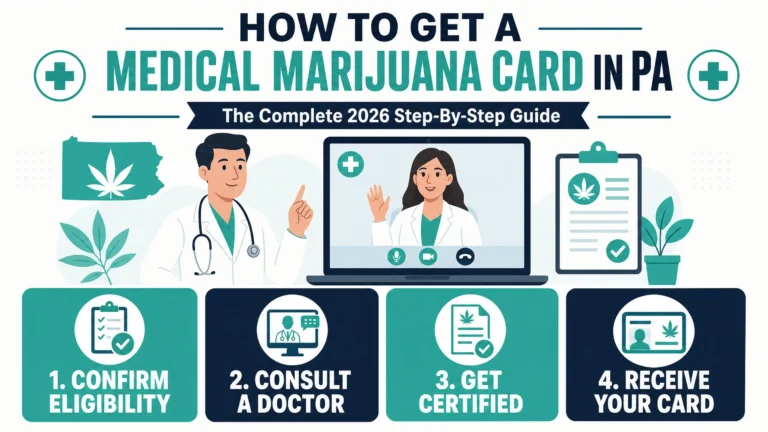

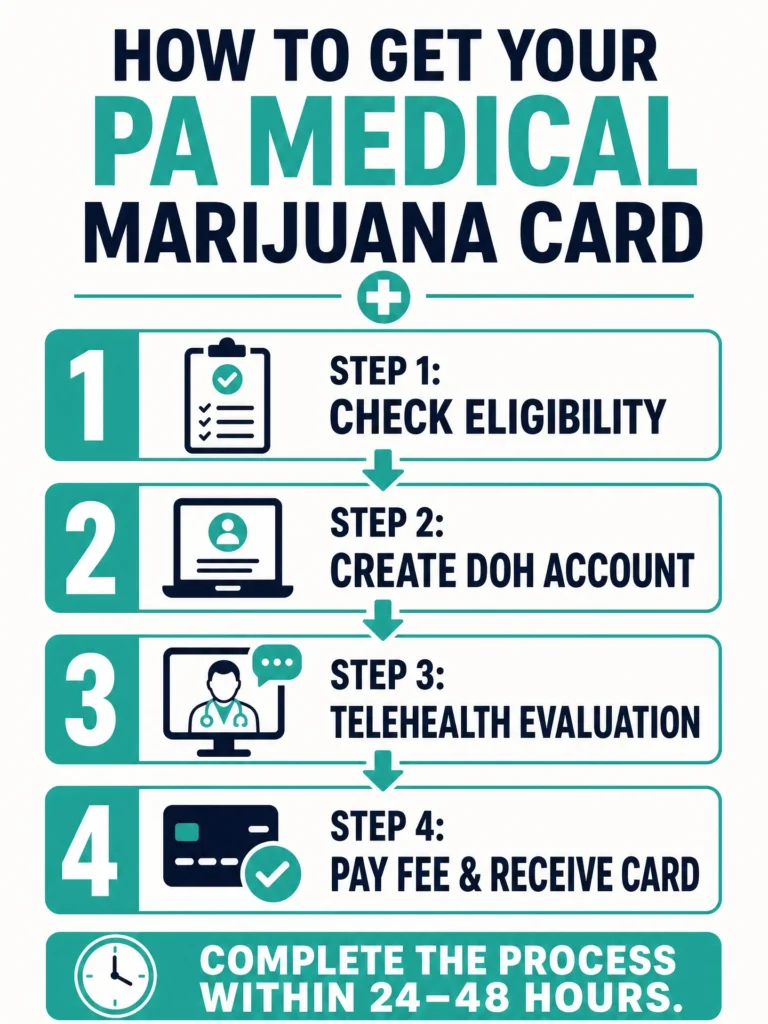
Getting a Pennsylvania medical marijuana card in 2026 takes most people about 24 to 48 hours from start to card-in-hand for the temporary digital ID, with the physical card arriving by mail within 7 to 14 days after that.
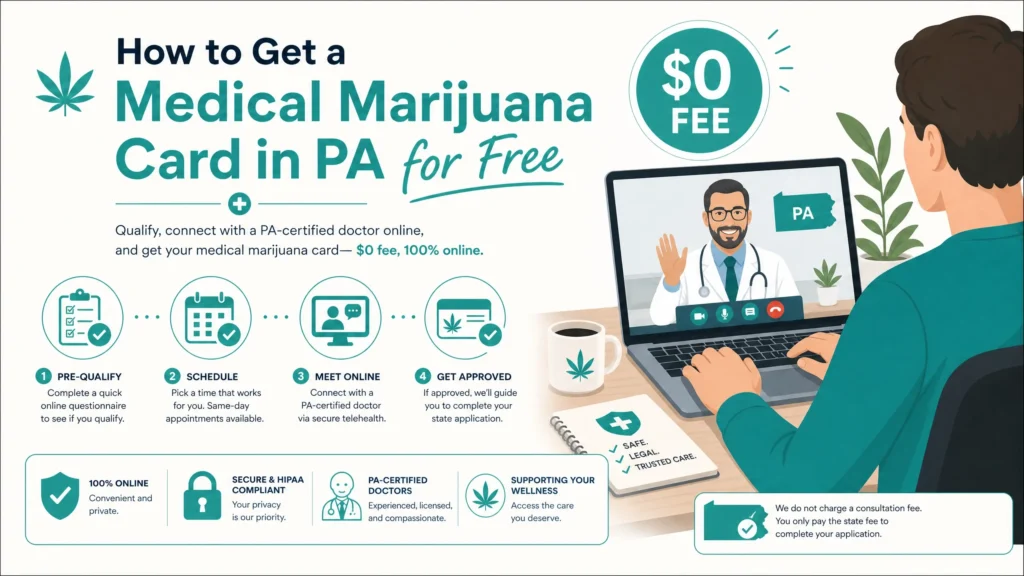
The process has four parts: check if you qualify, see a PA-registered physician, register in the state portal, and pay the $50 card fee. That’s it. No in-person office visits required. No referral needed from your regular doctor. The entire process is completed online.
Pennsylvania has over 440,000 registered MMJ patients as of July 2026. The program is well-established, the process is smooth, and if you have a qualifying condition, getting certified is genuinely accessible.
Here is exactly how it works.
Key Takeaways
- You need two things to qualify: Pennsylvania residency with a valid PA ID, and a physician certification from a PA-registered doctor confirming a qualifying condition.
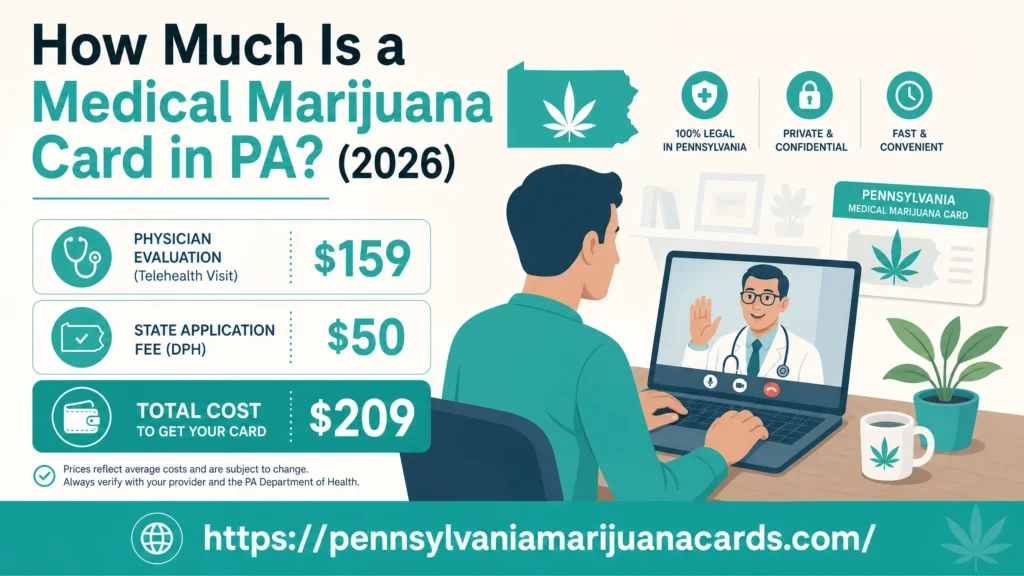
- The total cost is $209 for new patients ($159 physician fee + $50 PA state registration fee). Renewals cost $199. MMAP-qualifying patients have the $50 state fee waived.
- The entire process is done online via telehealth. No in-person office visits are required. Most certifications are completed the same day.
- There are 24 qualifying conditions under Pennsylvania’s Medical Marijuana Act. Anxiety disorder is the most common, cited in approximately 60% of all PA certifications.
- Your PA ID address must match your registry profile exactly. A mismatch is the most common reason for application delays.
- The card is valid for one year and must be renewed annually. PA DOH sends renewal reminders 60 days before expiration.
Step 1: Check If You Qualify
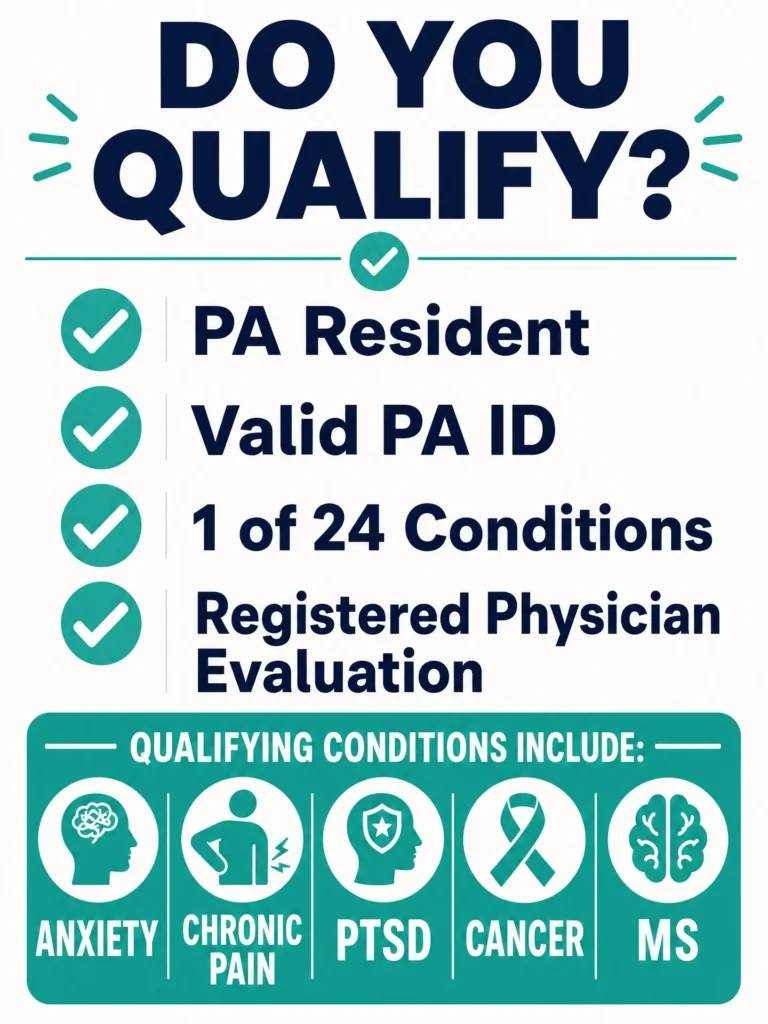
Before anything else, confirm that you meet the two basic eligibility requirements for Pennsylvania’s medical marijuana program.
Requirement 1: Pennsylvania residency
You must be a Pennsylvania resident with a valid Pennsylvania driver’s license or state-issued ID card. The address on your ID must be a current Pennsylvania address. Out-of-state IDs are not accepted even if you currently live in PA.
One critical detail that trips up many applicants: the name and address on your PA ID must match exactly what you enter in the PA DOH patient registry. Even a minor discrepancy, like an abbreviated street name on your ID versus the full name in the registry, can delay your card from being processed. Use your ID as the reference document when filling out your profile.
Requirement 2: A qualifying medical condition
Pennsylvania recognizes 24 serious medical conditions under Act 16 of 2016. You must have at least one of these conditions, confirmed by a PA-registered physician through a physician certification.
The 24 Pennsylvania Qualifying Conditions
Under the Pennsylvania Medical Marijuana Act, the following conditions qualify for a medical marijuana card:
- Amyotrophic Lateral Sclerosis (ALS)
- Autism
- Cancer, including remission therapy
- Crohn’s Disease
- Damage to the nervous tissue of the central nervous system (brain-spinal cord) with objective neurological indication of intractable spasticity, and other associated neuropathies
- Epilepsy
- Glaucoma
- Positive status for Human Immunodeficiency Virus or Acquired Immune Deficiency Syndrome (HIV/AIDS)
- Huntington’s Disease
- Inflammatory Bowel Disease (IBD)
- Intractable Seizures
- Tourettes
- Multiple Sclerosis
- Neuropathies
- Parkinson’s Disease
- Post-traumatic Stress Disorder (PTSD)
- Severe chronic or intractable pain of neuropathic origin or severe chronic or intractable pain
- Sickle Cell Anemia
- Neurodegenerative diseases (i.e., Alzheimer’s Disease)
- Terminal illness
- Dyskinetic and spastic movement disorders
- Opioid use disorder for which conventional therapeutic interventions are contraindicated or ineffective, or for which adjunctive therapy is indicated in combination with primary therapeutic interventions
- Anxiety Disorder
- Chronic Hepatitis C
Anxiety disorder is the most common qualifying condition in Pennsylvania, cited in approximately 60% of all certifications statewide. Chronic pain and PTSD are the second and third most common.
You do not need to have a formal prior diagnosis in your medical records to receive a certification. The certifying physician evaluates your condition during your appointment and determines whether you qualify. However, having existing medical records, prescription history, or prior treatment documentation related to your condition can be helpful.
Step 2: Create Your Account in the PA DOH Registry
Before you see a physician, you need an account in the Pennsylvania Department of Health Patient and Caregiver Registry. This is where your certification will be entered, where you pay your card fee, and where your card status is managed.
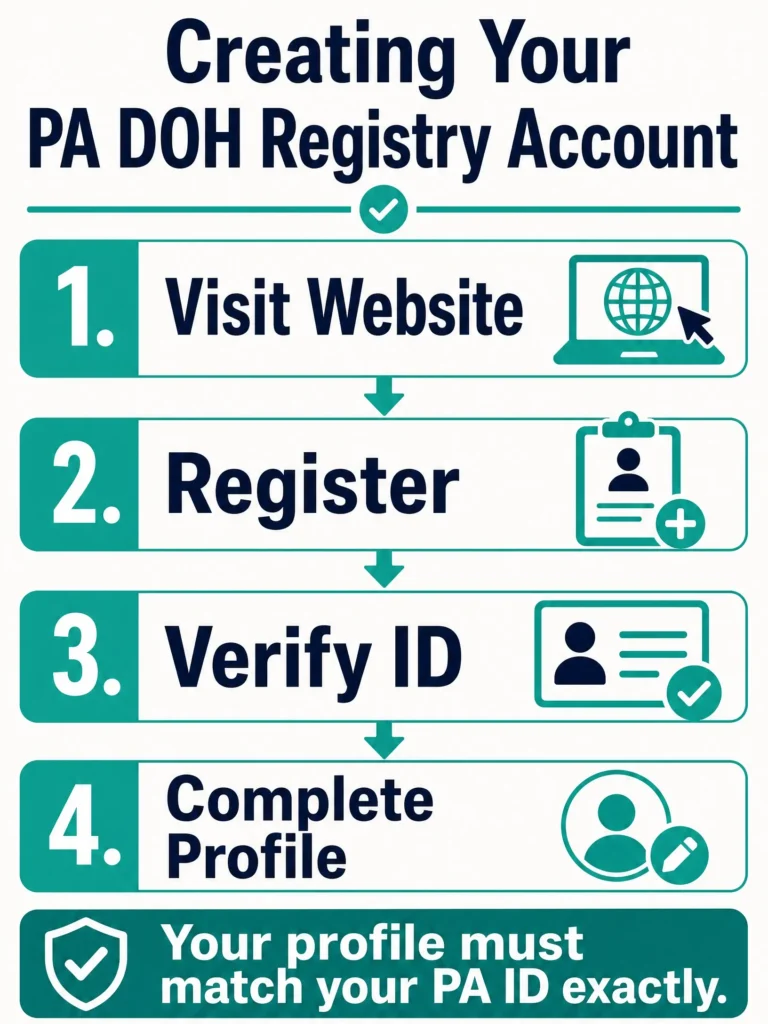
How to create your registry account?
- Go to padohmmp.custhelp.com
- Click “Register as a Patient”
- Enter your full legal name, date of birth, address, and contact information exactly as they appear on your Pennsylvania ID
- Use a personal email address you check regularly. PA DOH communications about your application status come here.
- Save your login credentials somewhere accessible. You will need them after your physician appointment.
One common mistake: using a nickname or shortened name in the registry that doesn’t match your legal ID. Use your full legal name as printed on your driver’s license or state ID, character for character.
Step 3: Get Your Physician Certification
This is the step that makes your application official. A PA-registered physician must review your qualifying condition and submit a certification directly to the PA DOH registry. You cannot certify yourself, and your regular doctor does not need to be involved unless you choose to use them.
Telehealth vs in-person:
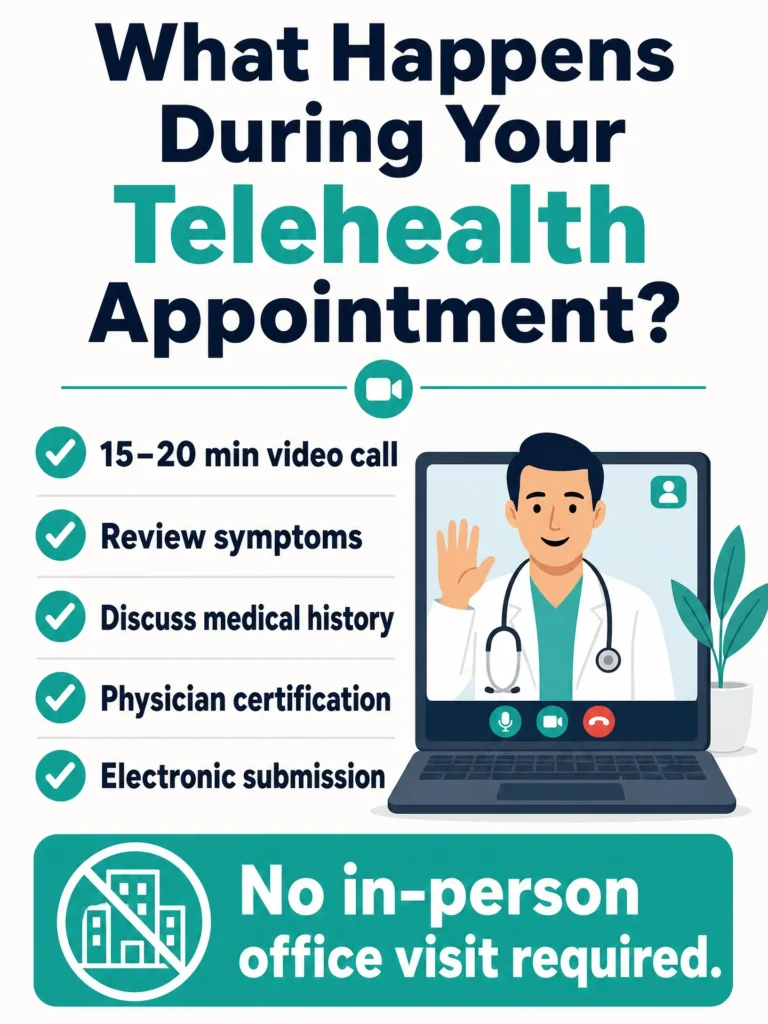
Pennsylvania fully permits telehealth physician certifications for medical marijuana. You do not need to visit a doctor’s office in person. A video call with a PA-registered MMJ physician satisfies all state requirements.
At Pennsylvania Marijuana Cards, the evaluation is conducted via secure video call with Dr. Johnathon Chance Miller, MD. Most appointments take 15 to 20 minutes. Same-day appointments are available.
What the physician evaluation covers?
- Review of your qualifying condition
- Discussion of your medical history related to that condition
- Review of any relevant prior treatments or medications
- An explanation of how medical cannabis may address your condition
- A determination of whether certification is appropriate
If the physician determines you qualify, they submit your certification directly to the PA DOH registry under your patient profile. You do not receive a paper document to submit yourself. The system is fully electronic.
What to have ready for your appointment?
- Your Pennsylvania ID
- Your PA DOH registry login credentials
- Basic information about your qualifying condition, current symptoms, and any treatments you’ve tried
- A list of current medications if applicable (important for the pharmacist consultation you’ll have at a dispensary later)
Step 4: Complete Your Registration and Pay the State Fee
Once your physician submits your certification, it appears in your PA DOH registry account. Log in and complete the following:
- Confirm your certification is showing in your account
- Review and verify your profile information one more time for accuracy
- Click to proceed with registration
- Pay the $50 annual state registration fee using a credit or debit card
After payment processes, the PA DOH will generate your medical marijuana patient ID. You will be able to access a temporary digital version of your ID through the registry portal immediately or within a short processing window.
The address-matching step: This is where most delays occur. If the address in your registry profile does not match your PA ID exactly, your card may not print correctly or may be held for manual review. If you moved recently and your ID has an old address, update your ID before completing this step.
Step 5: Receive Your Card and Visit a Dispensary
Your physical Pennsylvania medical marijuana patient ID card is mailed to the address in your registry profile. Standard delivery takes 7 to 14 business days from the payment date.
According to PA DOH timelines confirmed in 2026, the card is printed within 7 days of payment and delivered by mail. If you have not received your card within 21 days of payment, you can request a replacement at no charge through the “Profile Settings” section of your registry account.
Using your temporary digital ID:
Most Pennsylvania dispensaries accept the digital temporary ID accessible through your registry portal while you wait for the physical card. Call ahead to confirm the specific dispensary’s policy before making the trip.
At the dispensary:
Bring your physical PA MMJ card (or digital temporary ID) plus a matching Pennsylvania photo ID every visit. You cannot purchase without both. Pennsylvania dispensaries are not permitted to sell to out-of-state MMJ cardholders.
For a complete walkthrough of your first dispensary visit, what to bring, how to read the menu, and what to say to the budtender, the first dispensary visit guide covers every step.
How Much Does a PA MMJ Card Cost?
The total cost of getting a Pennsylvania medical marijuana card has two components:
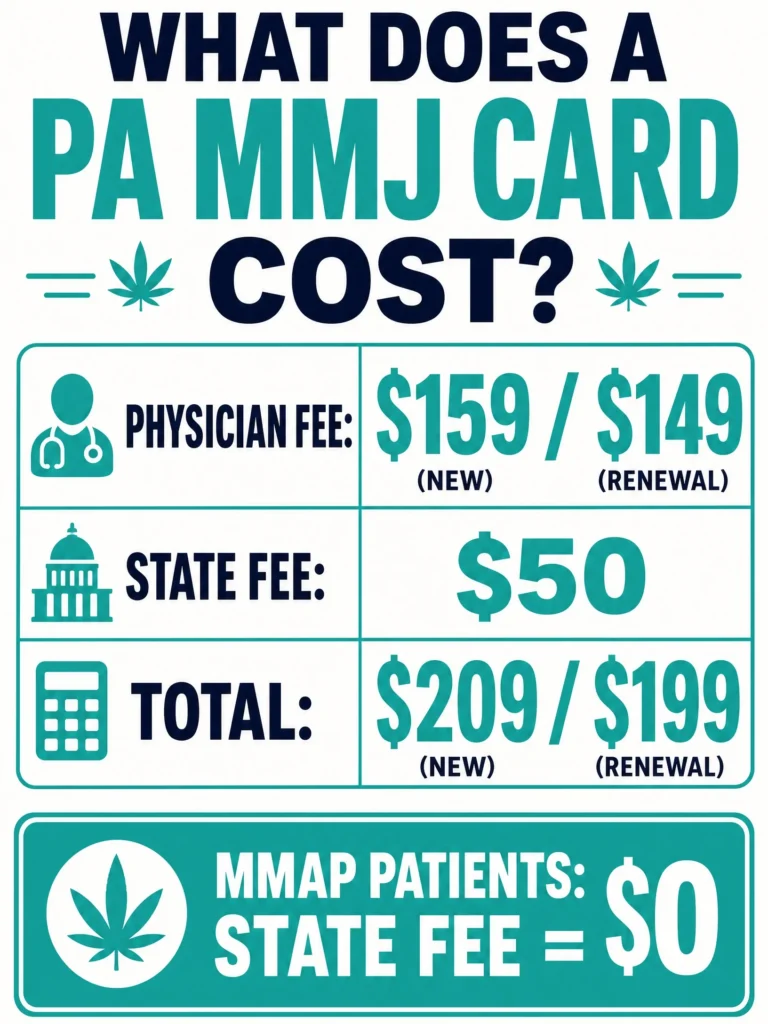
| Fee | New Patient | Renewal |
|---|---|---|
| Physician certification fee | $159 | $149 |
| PA state registration fee | $50 | $50 |
| Total | $209 | $199 |
The physician fee is paid directly to the certifying physician or certification service. The $50 state fee is paid directly to the Pennsylvania Department of Health through the patient registry portal.
These two fees are separate transactions. The physician fee is paid at or after your appointment. The state fee is paid in the registry after your certification has been submitted by the physician.
Insurance does not cover either fee. Pennsylvania MMJ certifications and card fees are out-of-pocket costs for all patients.
The MMAP Fee Waiver: How to Get the $50 State Fee Waived
Pennsylvania’s Medical Marijuana Assistance Program (MMAP) waives the $50 annual state registration fee for patients enrolled in any of the following programs:
- Medicaid
- SNAP (Supplemental Nutrition Assistance Program)
- WIC (Women, Infants, and Children)
- CHIP (Children’s Health Insurance Program)
- PACE (Pharmaceutical Assistance Contract for the Elderly)
- PACENET
If you participate in any of these programs, you do not pay the $50 state fee. You pay only the physician certification fee ($159 for new patients, $149 for renewals).
To apply the MMAP waiver, you need to provide documentation of your program enrollment during the registry registration process. The waiver is verified electronically for most programs. Contact the PA DOH helpdesk at 888-733-5595 (available 7 days a week, 7am to 9pm ET) if you have questions about applying the waiver to your account.
How Long Does It Take to Get a PA MMJ Card?
Here is a realistic timeline from starting the process to card in hand:
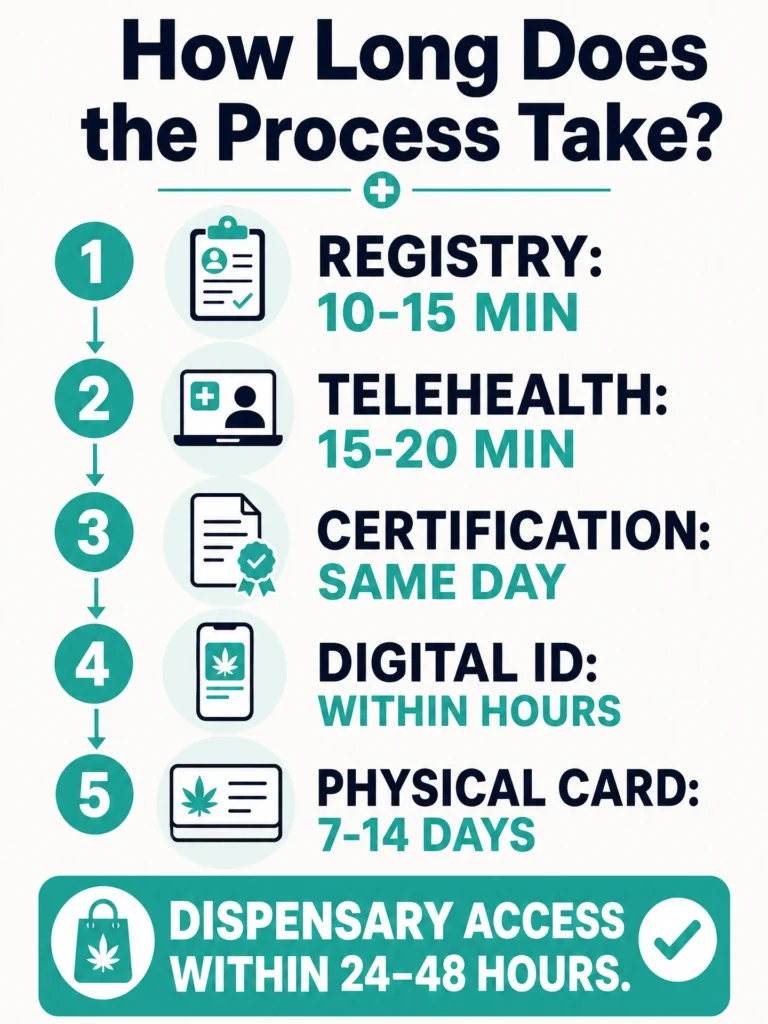
| Step | Time Required |
|---|---|
| Create PA DOH registry account | 10 to 15 minutes |
| Telehealth physician appointment | 15 to 20 minutes |
| Physician submits certification to DOH | Same day in most cases |
| Temporary digital ID accessible | Within hours of payment |
| State processes payment and prints card | Up to 7 days |
| Physical card arrives by mail | 7 to 14 days after printing |
| Total: start to physical card | Approximately 10 to 21 days |
Most patients have a working temporary digital ID within 24 to 48 hours of completing their appointment. The physical card follows within two to three weeks.
The fastest part of the process is the physician appointment itself. The longest part is waiting for the physical card in the mail.
Do You Need to Tell Your Regular Doctor?
No. Getting a PA MMJ card does not require your regular doctor’s involvement, permission, or referral. Any physician registered with the PA DOH Medical Marijuana Program can issue your certification.
That said, there are good clinical reasons to mention cannabis use to your regular doctor if you take other medications. THC can interact with blood thinners, some antidepressants, and other prescriptions through shared liver enzyme pathways. Keeping your full medication picture accurate with all providers matters for your overall care.
Pennsylvania’s Prescription Drug Monitoring Program (ABC-MAP) also includes MMJ dispensary data, meaning a physician querying the PDMP for any reason may see your dispensary activity. Many patients prefer to proactively mention their MMJ use rather than have a provider discover it independently.
For a full guide on how to navigate this conversation with your existing doctor, including practical scripts for different situations, the guide on talking to your doctor about medical marijuana in Pennsylvania covers every scenario.
Can You Get a PA MMJ Card Without a Diagnosis?
You do not need a prior formal written diagnosis to receive a physician certification. The certifying physician evaluates your condition during your appointment and makes their own clinical determination.
That said, having relevant documentation can be helpful. Previous prescriptions for condition-related medications, treatment notes from prior providers, or records of symptoms are useful to have available. If you have been managing a qualifying condition informally without formal medical records, that is still worth discussing during your appointment. The physician will ask about your symptoms, history, and what you have tried, and will make a clinical judgment based on that conversation.
If the physician determines that your condition does not meet the criteria for certification, they will inform you. You are under no obligation to purchase a certification that does not result in approval.
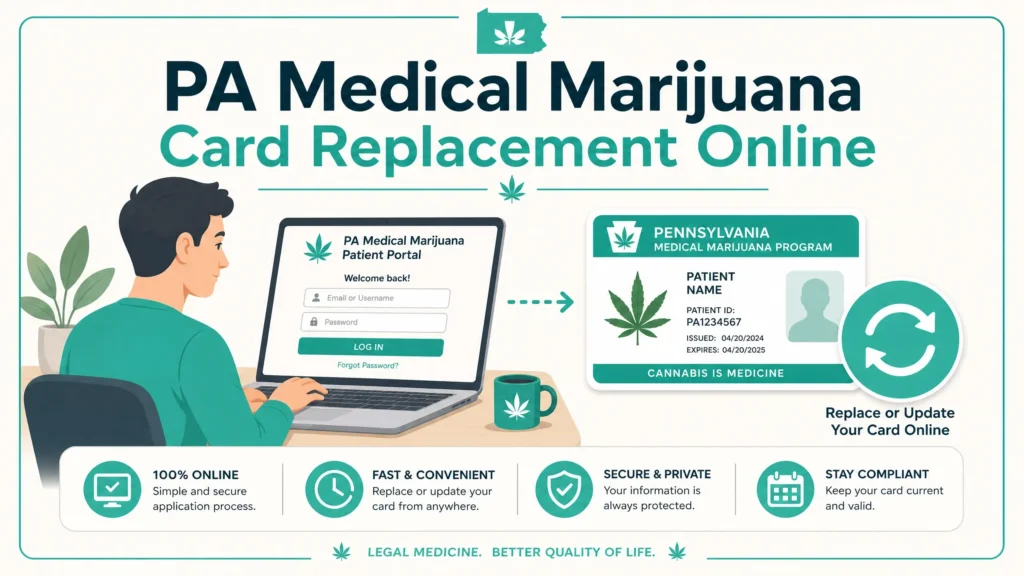
How to Renew Your PA MMJ Card
Pennsylvania MMJ cards are valid for one year from the date of issuance and must be renewed annually. The renewal process mirrors the initial certification process: you need a new physician evaluation and you pay the $50 state fee again.
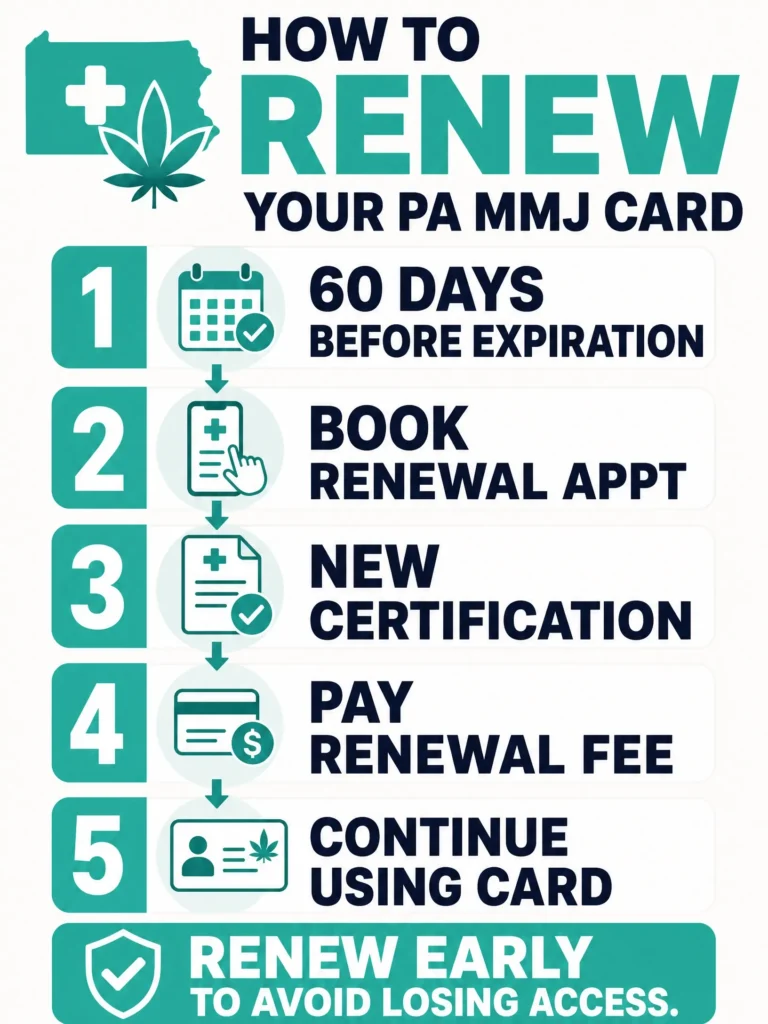
The renewal timeline to follow:
- 60 days before expiration: PA DOH sends an email reminder. This is when to schedule your renewal appointment.
- 30 to 45 days before expiration: Ideal window to complete your renewal physician appointment and pay your renewal state fee.
- Keep your existing card active until the new card arrives. Your old card remains valid until its printed expiration date.
Do not wait until your card expires to begin renewal. If your card lapses, you lose dispensary access until a new card is issued. A 30-day buffer gives you room for any processing delays.
You do not have to return to the same physician who certified you initially. Any PA-registered MMJ physician can handle your renewal. Renewal certifications at Pennsylvania Marijuana Cards are conducted via the same same-day telehealth process as new patient certifications.
| Physician Fee | PA State Fee | Total | |
|---|---|---|---|
| Renewal | $149 | $50 | $199 |
| MMAP Qualifying Patients | $149 | $0 (waived) | $149 |
What You Can and Cannot Do With Your PA MMJ Card
You CAN:
- Purchase cannabis products from any of Pennsylvania’s 186+ licensed dispensaries
- Possess up to a 90-day supply as determined by the dispensary pharmacist
- Use all legally approved product formats: dry leaf flower (vaporized only), vape cartridges, tinctures, capsules, oils, and topicals
- Designate up to two caregivers to purchase on your behalf
- Access the on-site pharmacist at any licensed PA dispensary for clinical guidance on products and dosing
- Shop at multiple dispensaries across Pennsylvania
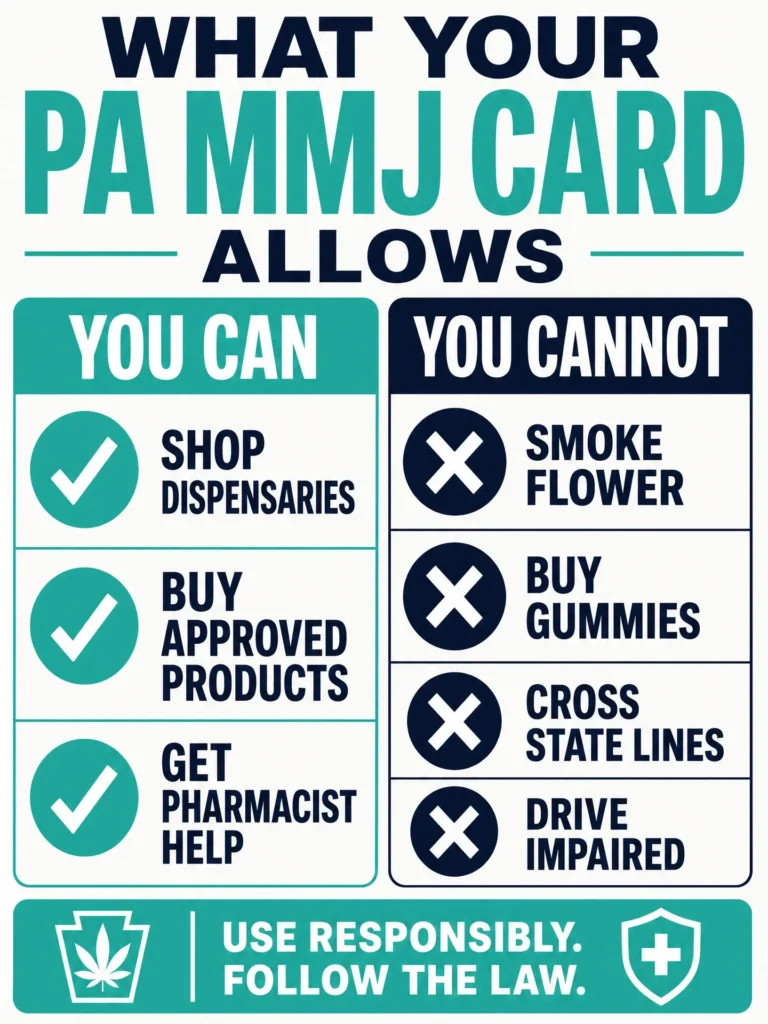
You CANNOT:
- Smoke cannabis flower (only vaporization is legal for dry leaf products)
- Purchase traditional edibles or gummies at PA dispensaries (not permitted under PA law)
- Cross state lines with your PA cannabis products, even into states where cannabis is legal
- Use cannabis on federal property
- Purchase or possess firearms while registered (federal prohibition under 18 U.S.C. 922(g)(3); check our PA medical marijuana gun laws guide for the latest on this, as the ATF Form 4473 is currently under revision)
- Drive while impaired (Pennsylvania has a per se DUI law; THC metabolites in blood can trigger a DUI charge regardless of impairment level)
Ready to Start?
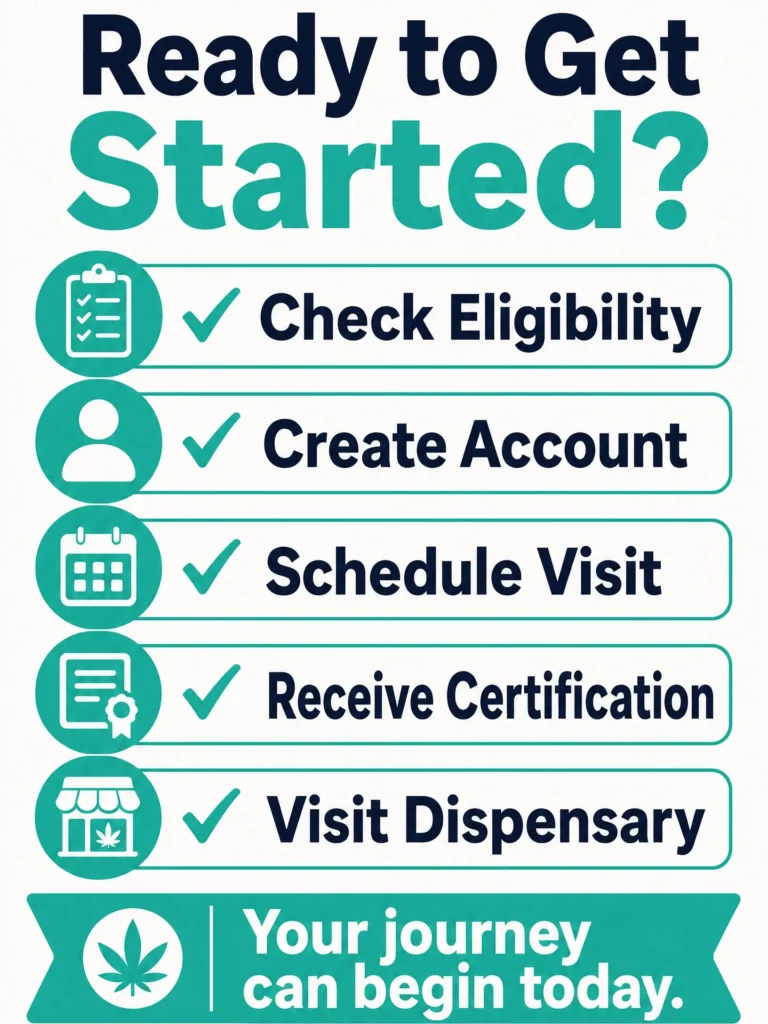
If you have a qualifying condition and want to begin the certification process today, Pennsylvania Marijuana Cards offers same-day telehealth certifications with Dr. Johnathon Chance Miller, MD. The appointment takes approximately 15 minutes. No waiting room. No office visit. Completed entirely online from anywhere in Pennsylvania.
Start your same-day certification here.
Frequently Asked Questions
Q: How do you get a medical marijuana card in Pennsylvania?
A: Getting a Pennsylvania medical marijuana card in 2026 involves four steps. First, create a patient account in the PA DOH Patient and Caregiver Registry at padohmmp.custhelp.com. Second, complete a telehealth or in-person evaluation with a PA-registered physician who will certify your qualifying condition. Third, log back into your registry account after the physician submits your certification and pay the $50 annual state registration fee. Fourth, receive your physical card by mail within 7 to 14 days. The entire process is completed online. Most patients have a working temporary digital ID within 24 to 48 hours of completing their physician appointment.
Q: How much does a Pennsylvania medical marijuana card cost?
A: A Pennsylvania MMJ card costs $209 total for new patients: a $159 physician certification fee and a $50 annual PA state registration fee, paid separately. Renewals cost $199 ($149 physician fee plus $50 state fee). Pennsylvania’s Medical Marijuana Assistance Program (MMAP) waives the $50 state fee for patients enrolled in Medicaid, SNAP, WIC, CHIP, PACE, or PACENET. Insurance does not cover either fee. Both fees are out-of-pocket costs.
Q: What conditions qualify for a medical marijuana card in Pennsylvania?
A: Pennsylvania recognizes 24 qualifying conditions under the Medical Marijuana Act (Act 16 of 2016). These include anxiety disorder, chronic pain, PTSD, cancer, epilepsy, multiple sclerosis, Crohn’s disease, Parkinson’s disease, ALS, autism, HIV/AIDS, glaucoma, Huntington’s disease, IBD, neuropathies, opioid use disorder, sickle cell anemia, terminal illness, Tourette syndrome, neurodegenerative diseases, intractable seizures, dyskinetic movement disorders, and CNS damage with intractable spasticity. Anxiety disorder is the most common qualifying condition, cited in approximately 60% of all PA MMJ certifications.
Q: How long does it take to get a PA MMJ card?
A: From start to physical card in hand, the process takes approximately 10 to 21 days. Creating a registry account takes 10 to 15 minutes. The telehealth physician appointment takes 15 to 20 minutes. A temporary digital patient ID is accessible within hours of completing payment. The physical card is printed within 7 days of payment and arrives by mail within 7 to 14 days after printing. Most patients have working dispensary access via their temporary digital ID within 24 to 48 hours of completing their physician appointment.
Q: Do you need a referral from your regular doctor to get a PA MMJ card?
A: No. A referral from your primary care physician is not required. Any physician registered with the Pennsylvania Department of Health’s Medical Marijuana Program can evaluate you and submit a certification. This is why telehealth certification services exist in Pennsylvania. You can complete the entire certification process through a PA-registered MMJ physician via video call without involving your regular doctor at all. That said, there are clinical reasons to mention cannabis use to providers managing your other medications, particularly if you take blood thinners, antidepressants, or anti-epileptic medications.
Q: Can you get a PA MMJ card online without going to a doctor’s office?
A: Yes. Pennsylvania fully permits telehealth physician certifications for medical marijuana. A video call evaluation with a PA-registered physician satisfies all state requirements. There is no requirement to visit a doctor’s office in person at any stage. The physician submits your certification electronically to the PA DOH registry, you complete registration and pay the state fee online, and your card arrives by mail. The only in-person step in the entire process is your first dispensary visit, where you present your card to purchase products.
Q: How do you renew a Pennsylvania MMJ card?
A: Pennsylvania MMJ cards are valid for one year and require annual renewal. PA DOH sends an email reminder 60 days before expiration. To renew, schedule a new physician evaluation through a PA-registered MMJ physician (this can be the same doctor or a different one), receive a new certification, then log into your PA DOH registry account and pay the $50 renewal state fee ($149 physician fee plus $50 state fee totaling $199). Continue using your current card until the new card arrives. Do not let your card expire before starting the renewal process, as a lapsed card means losing dispensary access until the new card is issued.
Medical Disclaimer
This blog post is intended for general educational and informational purposes only and does not constitute medical or legal advice. Pennsylvania Medical Marijuana Program requirements, fees, and processes are subject to change. Always verify current requirements at pa.gov or by contacting the PA DOH helpdesk at 888-733-5595. Information in this article reflects the program as of July 2026. Medically reviewed by Dr. Johnathon Chance Miller, MD.
Sources
- Pennsylvania Department of Health — Register for the Medical Marijuana Program (official PA.gov)
- Pennsylvania Medical Marijuana Act, Act 16 of 2016 — 35 P.S. §§ 10231.101 to 10231.2110
- PennsylvaniaStateCannabis.org — How to Get a PA Medical Marijuana Card (June 2026)
- Pennsylvania DOH Patient and Caregiver Registry — Official Portal
- Pennsylvania Marijuana Cards — Pennsylvania Qualifying Conditions
- Pennsylvania Marijuana Cards — PA Medical Marijuana Laws
- Pennsylvania Marijuana Cards — First PA Dispensary Visit Guide
- Pennsylvania Marijuana Cards — PA Medical Marijuana Gun Laws
- Pennsylvania Marijuana Cards — How to Talk to Your Doctor About Medical Marijuana in Pennsylvania