

CBN, or cannabinol, has earned a nickname in cannabis research circles: “the sleepy cannabinoid.”
It is a minor cannabinoid found naturally in cannabis plants, most commonly formed as THC ages and degrades over time. For years it was associated with the anecdotal observation that older cannabis felt more sedating than fresh cannabis. More recently, scientific attention has caught up with that observation.
Need a PA Medical Marijuana Card?
Get certified online in 15 minutes. 100% Money-Back Guarantee.
Get Certified Now →For Pennsylvania medical marijuana patients dealing with sleep disruption from anxiety, chronic pain, or PTSD, CBN represents a meaningful option worth exploring.
But the marketing around it runs ahead of the science in ways that every patient should understand before purchasing.
This guide covers exactly what CBN is, what the research actually shows about its sleep effects, how it compares to CBD and THC for sleep, and where PA patients can access it.
Key Takeaways
| Topic | Key Point |
|---|---|
| What is CBN? | A minor cannabinoid formed as THC degrades through exposure to oxygen, light, and heat |
| Is it non-intoxicating? | Mostly, but not completely. High doses (above 150mg) produce modest subjective effects in human trials |
| Sleep evidence | A 2024 RCT with 800+ participants found CBN improved sleep quality comparably to melatonin |
| What CBN does best | Reducing nighttime awakenings and sleep disturbance scores, not necessarily sleep onset speed |
| PA qualifying condition link | Sleep is not a standalone PA qualifying condition but is a documented benefit for anxiety, chronic pain, and PTSD patients who are qualified |
| How to find CBN at PA dispensaries | Look on the minor cannabinoid panel of your product’s COA, or ask the on-site pharmacist directly |
The most important honest caveat to carry into this guide: CBN research is still emerging. The evidence is promising but not yet conclusive. Approaching it with calibrated expectations rather than treating marketing claims as settled fact is the most useful starting position.
What Is CBN? Where It Comes From
Do You Qualify for a PA MMJ Card?
Connect with a licensed Pennsylvania state physician online from home.
CBN is short for cannabinol. It is classified as a minor cannabinoid because it appears in much smaller concentrations in cannabis plants than major cannabinoids like THC and CBD. Its origin is what makes it unique.
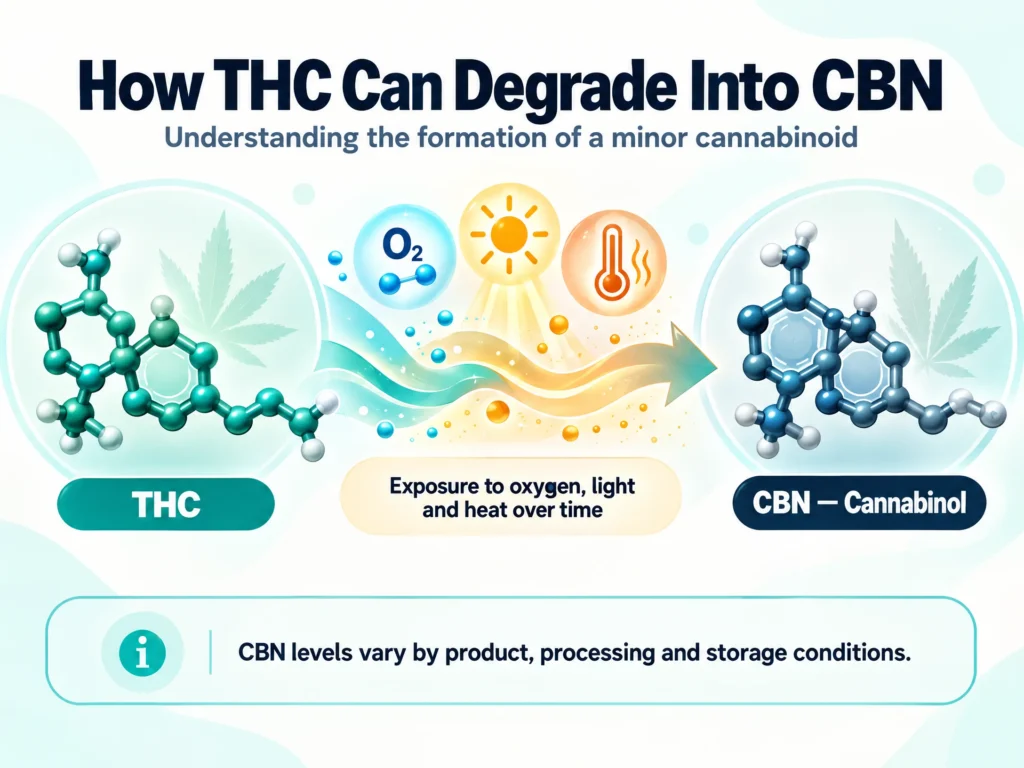
CBN is not synthesized directly by the cannabis plant. It forms as a degradation product when delta-9 THC is exposed to oxygen, light, and heat over time.
This is why aged or improperly stored cannabis has higher CBN concentrations than freshly harvested cannabis. THC slowly oxidizes into CBN through a predictable chemical process.
As Neuropsychopharmacology researchers described in their landmark 2025 study, CBN is a “minor cannabinoid used in the community in isolate products and claimed to have pro-sleep effects comparable to conventional sleep medications.”
In commercial products, CBN is typically extracted from mature hemp or cannabis, or synthesized from CBD through a chemical conversion process similar to how commercial delta-8 and delta-10 products are made.
This is relevant for PA patients because it explains why CBN concentrations vary on dispensary COAs and why some products contain meaningful CBN while most do not.
How CBN Differs from CBD and THC
CBN, CBD, and THC are all cannabinoids that interact with the endocannabinoid system, but through meaningfully different mechanisms.
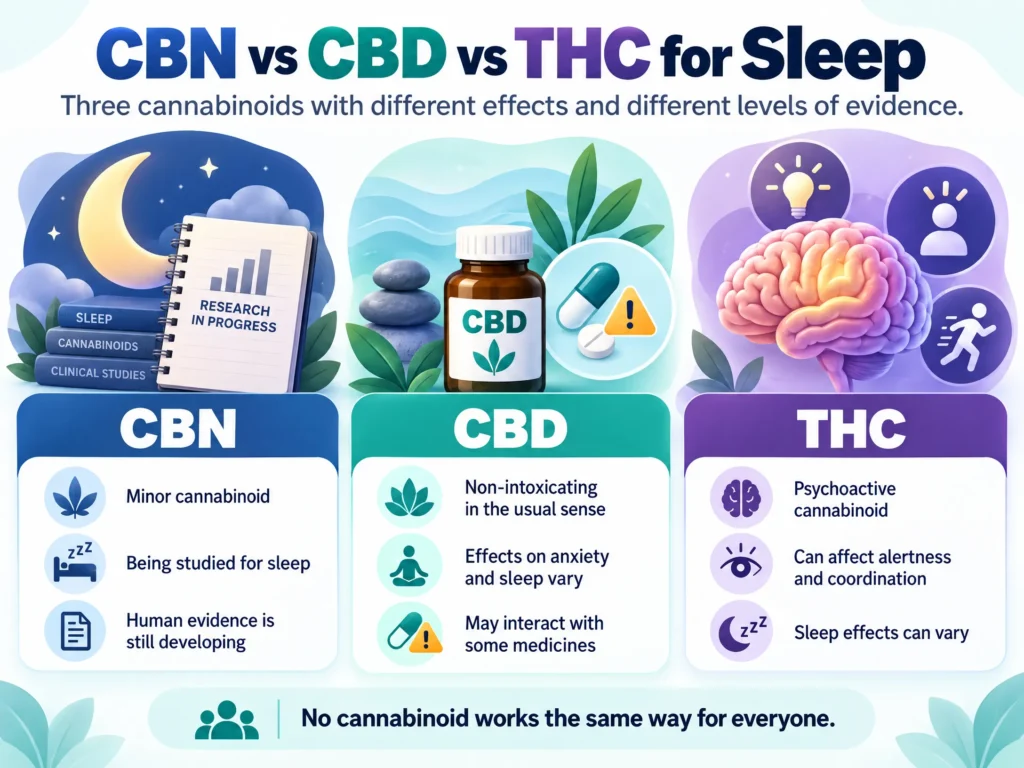
Understanding these differences helps explain why each has a different role in sleep support.
| Cannabinoid | Primary Receptor Activity | Psychoactivity | Main Sleep Mechanism |
|---|---|---|---|
| THC (Delta-9) | Strong CB1 agonist | Yes, significantly | Reduces time to fall asleep; suppresses REM with chronic use |
| CBD | CB1/CB2 modulator, 5-HT1A agonist | No | Reduces anxiety that disrupts sleep onset; supports REM |
| CBN | Weak CB1 partial agonist, weak CB2 activity | Minimal at typical doses | Reduces nighttime awakenings; both NREM and REM sleep increased in animal studies |
CBN’s weaker CB1 binding affinity compared to THC is part of why it produces less intoxication.
But it is also why CBN’s sedative mechanism appears to work differently from THC.
⚡ Fast & 100% Online PA Medical Cards
Board-Certified Doctors • 100% Money-Back Guarantee
Book Evaluation Now →Where THC essentially “overrides” the brain toward sleep through strong CB1 activation, CBN appears to work through a gentler modulation that particularly affects sleep continuity once asleep.
The Research: What Does CBN Actually Do to Sleep?
This is where the marketing and the science diverge in ways that matter for patients making product decisions.
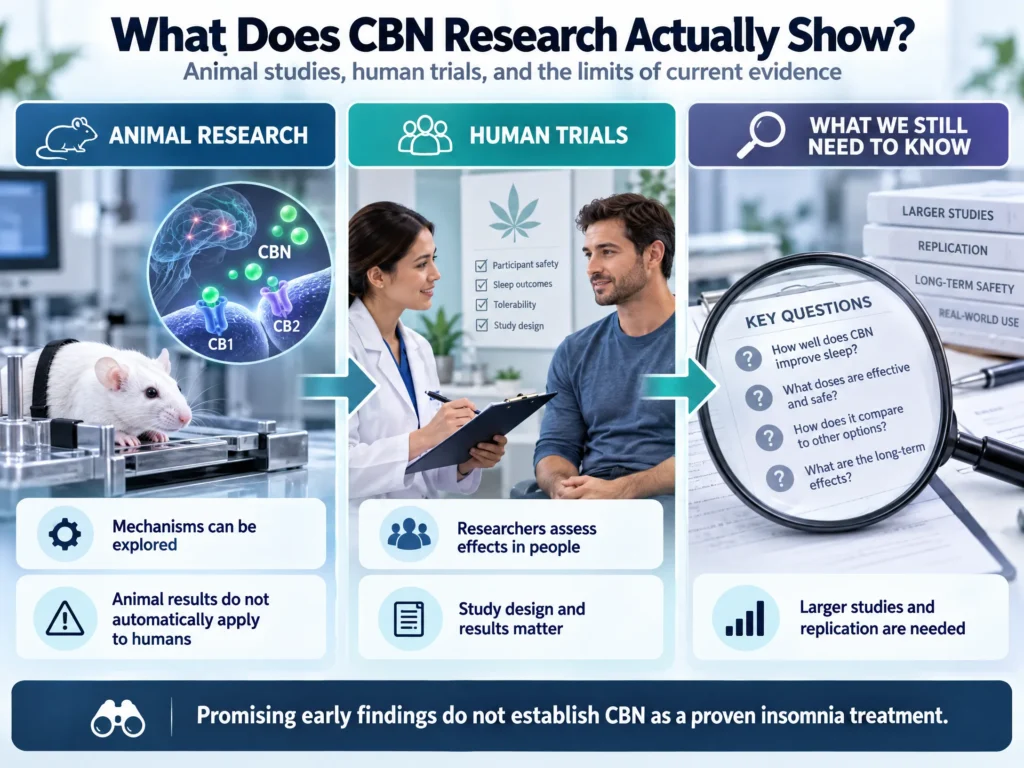
The Neuropsychopharmacology 2025 rat study
Researchers from the University of Sydney published the first objective polysomnography-based study of CBN’s sleep effects, earning CBN its “sleepy cannabinoid” nickname.
The findings were notable: CBN increased total sleep time, with CBN increasing both non-rapid eye movement (NREM) and rapid eye movement (REM) sleep.
Importantly, CBN’s active metabolite, 11-hydroxy-CBN, also contributed to its hypnotic effects, suggesting a dual-phase sleep enhancement mechanism similar to how oral THC converts to 11-hydroxy-THC.
The TruCBN 2024 randomized controlled trial (n=820)
This is the most clinically significant human study available and the one most product guides overlook.
A randomized, double-blind, placebo-controlled study assessed the safety and effects of three CBN formulations (25mg, 50mg, and 100mg) on sleep quality relative to placebo and 4mg of melatonin.
All CBN groups experienced significant improvement in sleep quality relative to the placebo group. No significant differences were found between any CBN group and the melatonin group.
In plain terms: CBN at 25 to 100mg improved sleep quality comparably to melatonin in a rigorous, properly controlled human trial.
The 2026 crossover trial in diagnosed insomnia patients
A 2026 randomized crossover trial enrolled 20 adults with physician-diagnosed insomnia disorder.
Results showed fewer nighttime awakenings and lower sleep disturbance scores at appropriate doses.
What the research does NOT show
Renewing Your PA MMJ Card?
Quick annual recertification online. No paperwork hassle.
Renew Card Online →Current evidence is weaker for reducing sleep onset latency (how quickly you fall asleep) compared to its effects on staying asleep through the night.
As marijuana.net’s June 2026 clinical summary notes: CBN may help some individuals stay asleep, but current evidence is weaker for helping people fall asleep faster.
The Honest Biphasic Finding Most Guides Skip
This is the most important nuance about CBN’s sleep effects that almost no product guide mentions.
The Neuropsychopharmacology 2025 study found evidence of biphasic effects with initial sleep suppression before a dramatic increase in sleep.
This means CBN does not simply sedate you linearly like a traditional sleep medication might.
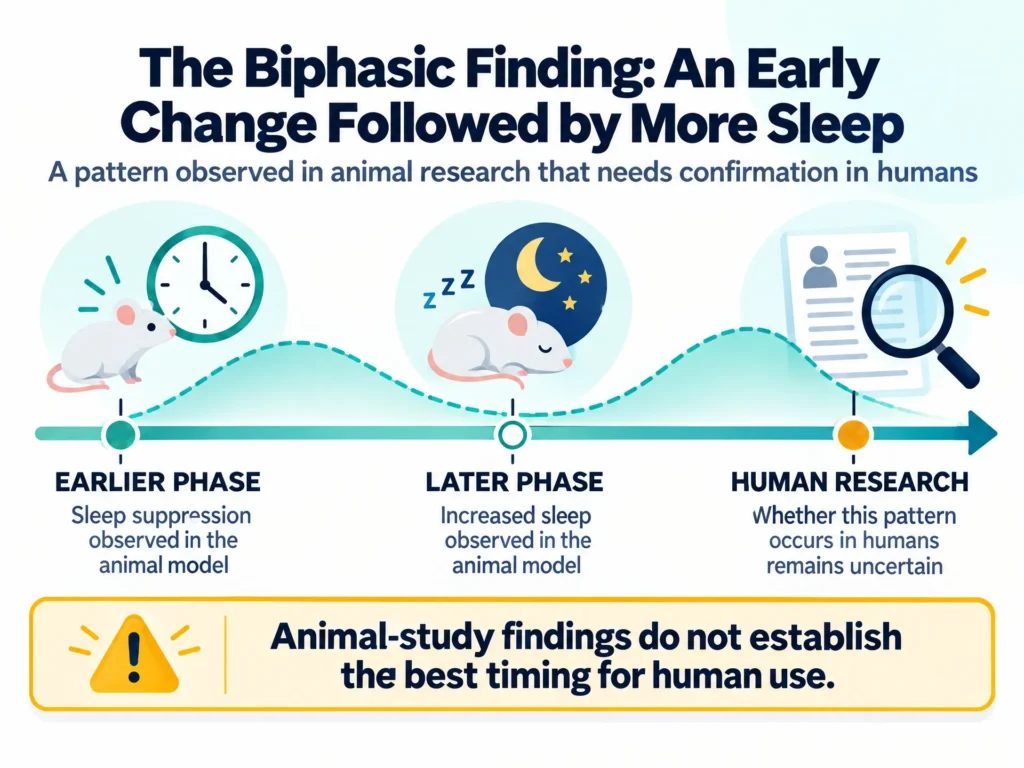
In the animal model, there was an initial phase of sleep suppression followed by a significant rebound increase in sleep duration. This biphasic pattern suggests timing matters more for CBN than for something like melatonin.
The practical implication: Taking CBN immediately at bedtime may not be optimal. Taking it 60 to 90 minutes before sleep, during the suppression phase, means the rebound sedative effect arrives closer to when you actually want to sleep.
More human research is needed to confirm whether this biphasic pattern translates clearly from rat models to humans. But the finding is worth knowing because it partially explains why some patients report CBN not working when they take it “right before bed.”
Is CBN Non-Intoxicating? The Honest Answer
Nearly every CBN product marketed today claims CBN is “completely non-intoxicating” or “non-psychoactive.”
This is an oversimplification that does not hold at higher doses.
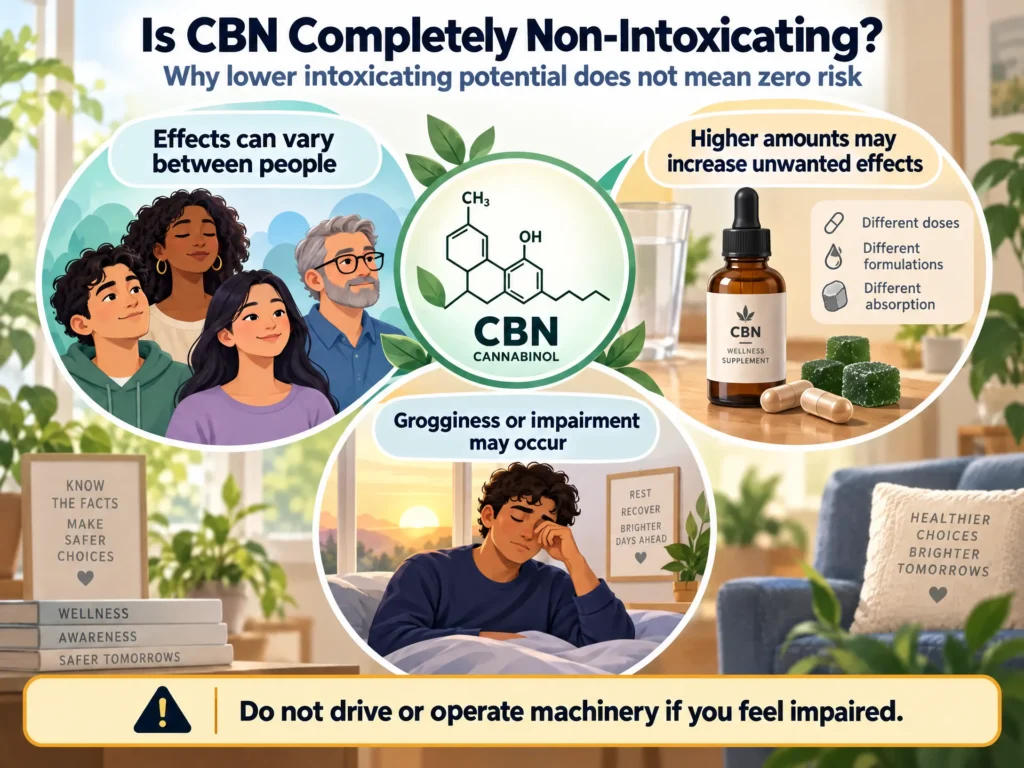
CBN is sometimes described as nonintoxicating. That description is too certain. In a recent CBN-only trial, a high study amount produced modest subjective drug effects and subtle changes on some next-day performance measures. It did not produce the same profile as THC, but the study does not justify promising that CBN can never make someone feel altered or impaired.
- At typical consumer doses of 20 to 50mg, CBN produces minimal to no noticeable psychoactive effects in most people.
- At higher doses (100mg+), some users notice mild subjective effects.
- At very high doses (300mg+), the 2026 crossover trial found performance impairment on some measures the next day.
Get Approved by a Licensed PA Doctor
Schedule your appointment in minutes. You only pay if approved.
Start Online Application →The takeaway for PA patients: CBN is significantly less intoxicating than THC, and at normal sleep-support doses (25 to 50mg) most patients will notice no meaningful psychoactivity. But the “completely non-psychoactive” marketing claim is not fully accurate at higher doses.
Do not operate a vehicle or heavy machinery after taking high-dose CBN products.
CBN vs CBD vs THC for Sleep: A Three-Way Comparison
Many PA patients are already using one of these cannabinoids for sleep or sleep-disrupting conditions. Understanding how they differ helps you decide whether adding CBN makes sense for your situation.
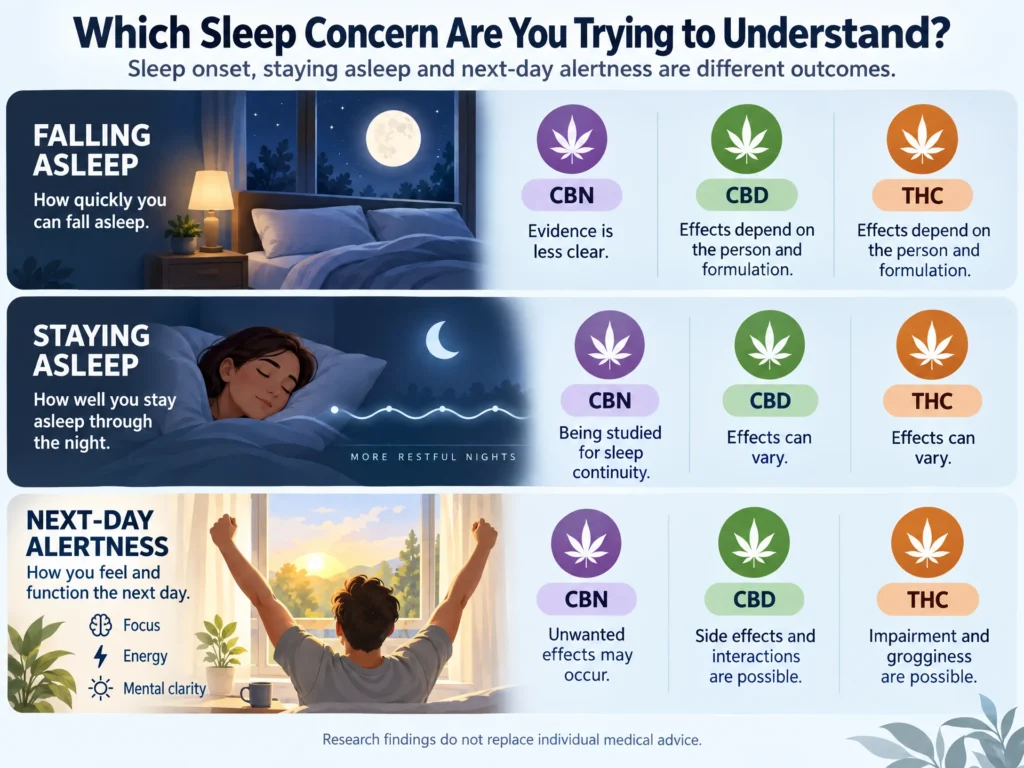
| Feature | CBN | CBD | THC |
|---|---|---|---|
| Sleep onset (falling asleep faster) | Weaker evidence | Yes, indirectly through anxiety reduction | Yes, directly reduces sleep onset latency |
| Staying asleep (nighttime awakenings) | Strongest evidence for CBN | Moderate evidence | Mixed; THC may cause awakenings with chronic use |
| REM sleep effects | Increased REM in animal studies | Generally supports REM | Suppresses REM with chronic use |
| Next-morning grogginess | Possible at high doses (100mg+) | Minimal | Common at higher doses |
| Intoxication | Minimal at typical doses | None | Yes |
| Drug test risk | Yes, produces THC-COOH metabolites | Possible with full-spectrum products | Yes |
| PA dispensary access | On minor cannabinoid panel; ask pharmacist | Yes, widely available | Yes, all dispensary products |
For patients who cannot fall asleep: THC or CBD (through anxiety reduction) are better supported for sleep onset specifically.
For patients who fall asleep but wake frequently: CBN has the most direct evidence for reducing nighttime awakenings.
For chronic pain patients: A combination of low-dose THC (to aid sleep onset) with CBN (to maintain sleep continuity) and CBD (to moderate THC’s REM suppression) may offer the most complete support.
For anxiety patients: CBD-dominant approaches with low CBN content are usually the best starting point, preserving REM sleep and avoiding any risk of THC-related anxiety. For a full anxiety-specific guide, see our THC tincture and CBD tinctures guide.
For a broader comparison of how sativa and indica products affect sleep, see our indica or sativa for sleep guide.
CBN and PA Qualifying Conditions: Who Benefits Most
Sleep is not a standalone qualifying condition in Pennsylvania’s medical marijuana program.
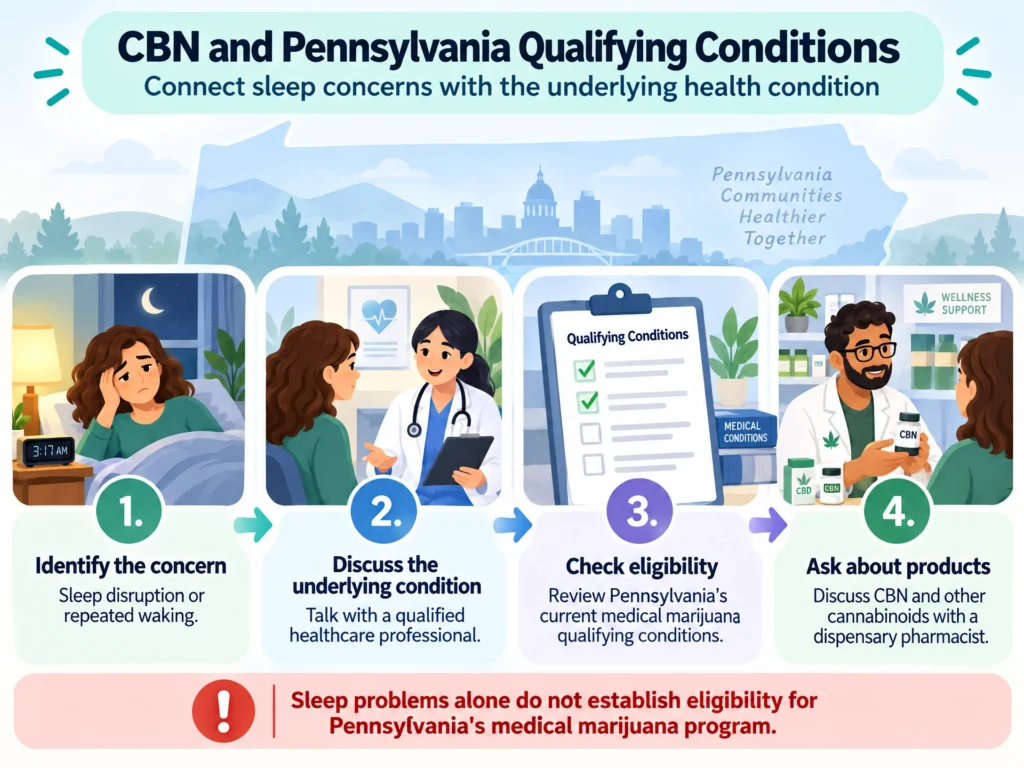
Pennsylvania recognizes 24 qualifying conditions under Act 16 of 2016. Insomnia or sleep disorders on their own are not among them.
Ready to Get Your Official PA MMJ Card?
State-certified doctor consultations online. No risk—100% refund if not approved.
Claim Your MMJ Card Online →However, sleep disruption is a documented secondary symptom of several conditions that are qualifying:
Anxiety disorders (the most common PA qualifying condition at 60% of certifications) frequently cause both difficulty falling asleep and frequent nighttime waking. CBN’s evidence for reducing nighttime awakenings is directly relevant.
Chronic pain disrupts sleep through both pain-related awakening and the hyperalert state that pain maintains. CBN combined with pain-management cannabinoids may improve overall sleep quality.
PTSD involves hyperarousal, nightmares, and fragmented sleep as core symptoms. CBN’s preservation of REM sleep (unlike THC, which suppresses REM) makes it a particularly relevant option for PTSD patients who need REM for emotional memory processing.
Cancer and its treatments frequently cause sleep disruption. CBN may offer additional support alongside existing cannabis regimens.
If sleep disruption is a significant part of your qualifying condition, discussing CBN specifically with your PA dispensary pharmacist is worth doing at your next visit.
If you do not yet have a PA MMJ card and sleep disruption is significantly affecting your quality of life through one of these qualifying conditions, check whether your condition qualifies or get certified at Pennsylvania Marijuana Cards.
The Terpene Combination That Maximizes CBN’s Sleep Effects
CBN does not work in isolation. Like all cannabinoids, it operates within the broader context of the product’s terpene profile.
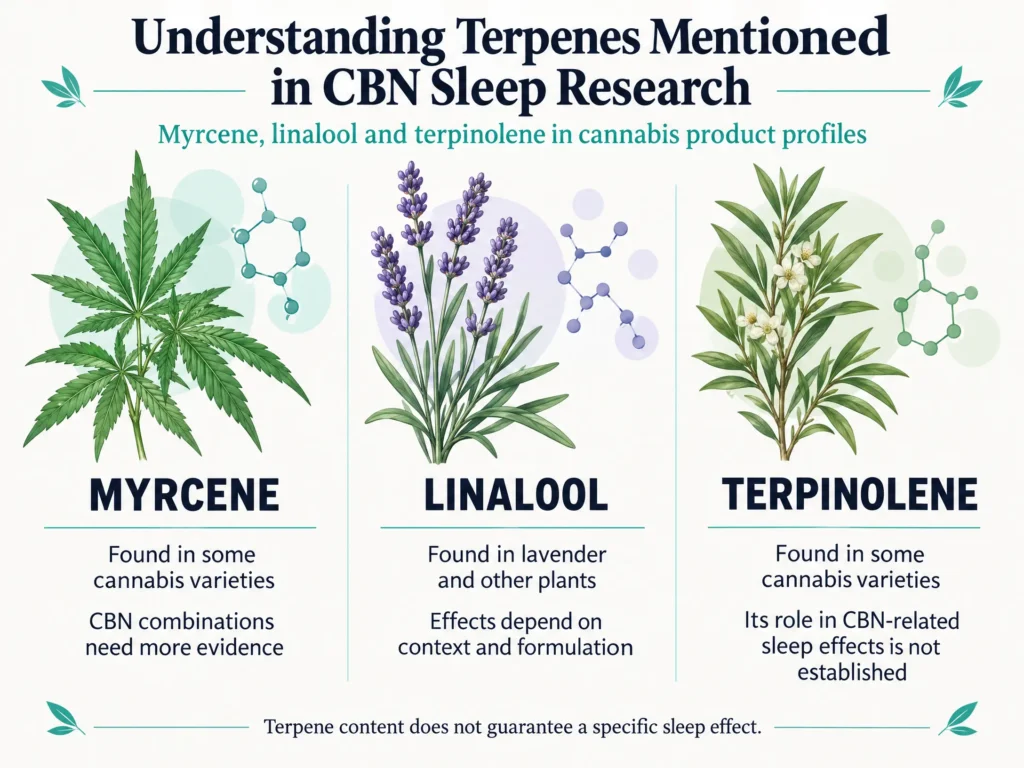
Several terpenes have documented sleep-relevant properties that complement CBN’s mechanisms.
Myrcene
The most abundant terpene in most cannabis varieties. Has documented sedative and muscle-relaxant properties. Products with dominant myrcene content tend to produce a heavier, more physically relaxing experience.
A high-myrcene, CBN-containing product is the most direct combination for sleep continuity support.
Linalool
Found in lavender and many cannabis varieties. Modulates GABA receptors, the brain’s primary inhibitory pathway.
Linalool’s calming, anxiety-reducing properties complement CBN’s sleep architecture effects particularly well for anxiety patients.
Terpinolene
Associated with sedative effects in some research. Less common than myrcene but present in certain PA dispensary products. A combination of CBN with terpinolene shows particular promise for sleep duration.
What to look for on a PA dispensary COA:
| Terpene | Target Level for Sleep | Why It Matters |
|---|---|---|
| Myrcene | 0.5% or higher | Sedative, muscle-relaxant properties |
| Linalool | 0.2% or higher | GABA modulation, reduces anxiety-driven wakefulness |
| Terpinolene | Any detectable | Associated with sedation in some research |
| CBN | 0.5mg or higher per serving | The target minor cannabinoid for sleep continuity |
For a full guide to how terpenes affect cannabis experiences, see our terpenes for anxiety guide.
How to Find CBN at Pennsylvania Dispensaries
This is where practical guidance for PA patients diverges from generic CBN content.
CBN is not in every PA dispensary product. It appears in detectable amounts in some products and is essentially absent in others.
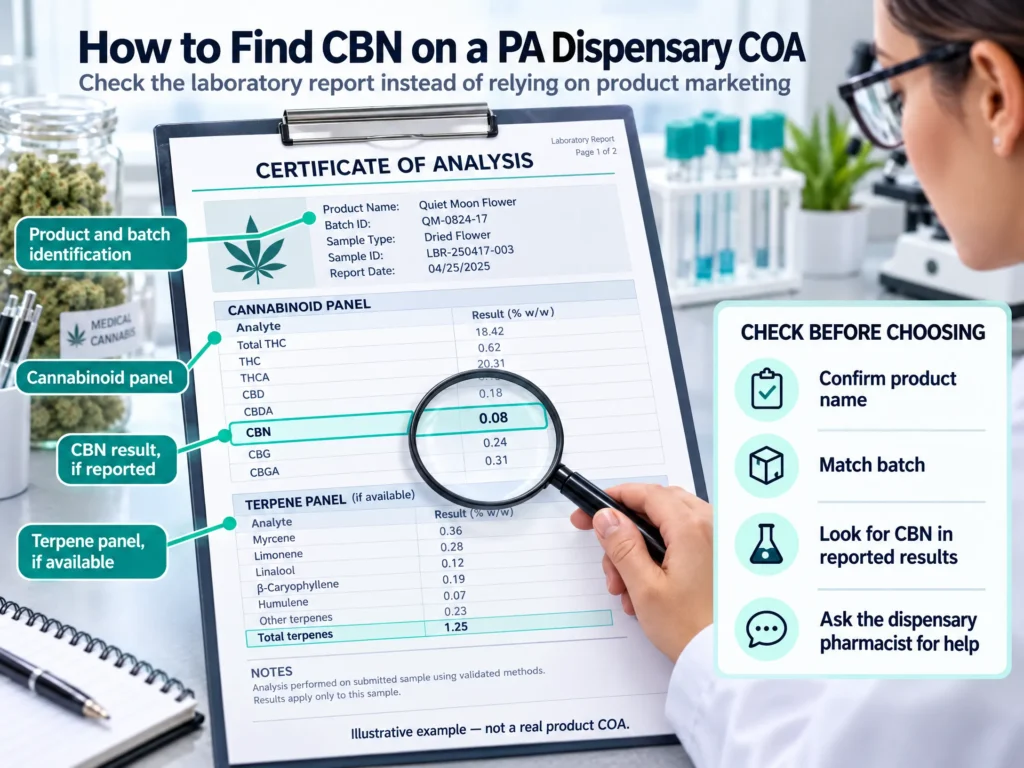
How to find CBN on a PA dispensary COA
All PA dispensary products come with a Certificate of Analysis from two independent, state-approved laboratories. The cannabinoid potency panel lists major cannabinoids (THC, THCA, CBD, CBDA) and often lists minor cannabinoids as a separate section.
Look for “CBN” in the minor cannabinoid panel. Products may show CBN at 0.1% to 1% depending on the cultivar and processing method.
As GoodRx’s sleep cannabinoid guide notes, it is best to only purchase CBN from state-regulated cannabis dispensaries, and to ask if there are any other cannabinoids in the product you’re purchasing.
Naturally higher-CBN products
Certain cultivation and curing approaches naturally produce higher CBN content. Older harvests, longer cure periods, and full-spectrum extractions from mature cannabis tend to have more CBN than freshly harvested, terpene-forward products.
Ask your dispensary budtender or pharmacist specifically: “Which of your current products has the highest CBN content on the COA?”
Dedicated CBN products
Some PA dispensaries carry products specifically formulated with added CBN isolate, typically in tincture or capsule form. These give you a more reliable CBN dose per serving than relying on naturally occurring trace amounts in flower or general-purpose tinctures.
Hemp-derived CBN products
CBN is also available in hemp-derived products without a PA MMJ card, through the same hemp retail channels that carry hemp delta-9 products. These are subject to the same November 2026 federal regulatory uncertainty around the 0.4mg per-container total THC cap under H.R. 5371. Dispensary CBN products are not affected by this deadline.
For more on reading PA dispensary lab reports, see our how to read a PA dispensary COA guide.
How to Use CBN: Dosing Guidance and Timing
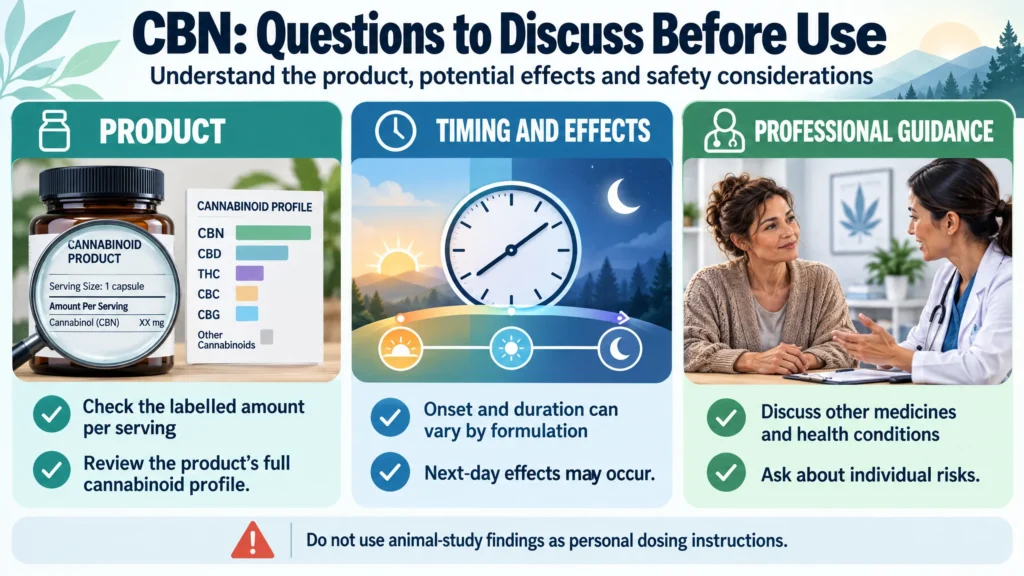
Dosing based on available research
The most well-evidenced dose range from the TruCBN 2024 RCT is 25 to 100mg per serving.
However, starting lower is sensible for new users. Begin at 10 to 25mg and assess response before escalating.
At 25mg, most patients notice no intoxicating effects and get the studied sleep continuity benefits.
At 100mg and above, some patients notice mild sedative effects that extend into the morning. Monitor for next-day grogginess and reduce dose if it occurs.
Timing
Based on the biphasic findings from the 2025 Neuropsychopharmacology study, taking CBN 60 to 90 minutes before your target sleep time may be more effective than taking it immediately at bedtime.
This allows the initial suppression phase (if it occurs in humans) to pass before the sedative rebound effect arrives.
Format
Sublingual tinctures offer faster onset (30 to 60 minutes) and more consistent absorption than capsules or oral products.
Capsules and oral CBN products have a slower onset (60 to 120 minutes) but longer duration, which may be more relevant for maintaining sleep through the night rather than sleep onset.
Combining with other sleep cannabinoids
CBN pairs well with CBD (for anxiety reduction and REM support) and with low-dose THC (for sleep onset in patients who tolerate THC).
A combination of 25mg CBN, 25 to 50mg CBD, and 2.5 to 5mg THC taken 60 to 90 minutes before bed covers sleep onset (THC), sleep continuity (CBN), and REM preservation (CBD) across the sleep cycle.
Frequently Asked Questions
Q: What is CBN and why is it called the sleepy cannabinoid?
A: CBN (cannabinol) is a minor cannabinoid that forms as THC degrades when exposed to oxygen, light, and heat.
It earned the “sleepy cannabinoid” nickname from University of Sydney researchers whose 2025 study in Neuropsychopharmacology was the first to use polysomnography to objectively document CBN’s sleep effects in an animal model. The study found CBN increased total sleep time, including both NREM and REM sleep.
The nickname reflects the most studied application of CBN and its traditional association with the sedating qualities of aged cannabis.
Q: Does CBN actually work for sleep?
A: The evidence is promising but still emerging for humans.
The most rigorous human study available is a 2024 randomized controlled trial with over 800 participants, which found CBN (25 to 100mg) improved sleep quality comparably to melatonin compared to placebo.
A 2026 crossover trial found CBN reduced nighttime awakenings. The evidence is strongest for sleep continuity (staying asleep) rather than sleep onset (falling asleep faster).
More large-scale human trials are needed before CBN can be called definitively proven as a sleep aid.
Q: Is CBN the same as CBD?
A: No. CBN and CBD are both non-intoxicating (or minimally intoxicating) cannabinoids, but they have different chemical structures, receptor activity, and primary effects.
CBD works primarily through serotonin (5-HT1A) receptors and CB1/CB2 modulation. It reduces anxiety, which indirectly improves sleep onset.
CBN works as a weak CB1 partial agonist and appears to specifically improve sleep continuity and reduce nighttime awakenings. They are complementary rather than interchangeable.
Q: Will CBN make me high?
A: At typical sleep-support doses of 25 to 50mg, most users notice no meaningful psychoactive effects. CBN is significantly less potent than THC at CB1 receptors.
However, the “completely non-intoxicating” marketing claim is not fully accurate. A human trial found high doses (above 150mg) produced modest subjective drug effects in some participants.
At normal sleep doses, intoxication is minimal. At very high doses (300mg+), some next-day performance impairment was found.
Q: Will CBN show up on a drug test?
A: Yes. CBN is metabolized into compounds that standard drug tests can detect. While drug tests primarily screen for THC-COOH, CBN and its metabolites may also trigger positive results on some tests.
If you are subject to workplace drug testing, discuss CBN use with your prescribing physician and dispensary pharmacist before starting.
Pennsylvania MMJ card protections apply to dispensary-purchased cannabis products, but only for registered patients using cannabis from licensed PA dispensaries.
Q: Can I get CBN at a Pennsylvania dispensary?
A: Yes, though not all PA dispensary products contain meaningful CBN levels. CBN appears in the minor cannabinoid panel of PA dispensary COAs.
Ask your dispensary pharmacist which current products have the highest CBN content. Some dispensaries carry dedicated CBN formulations (tinctures or capsules) with standardized doses.
CBN is also available in hemp-derived products without a card, but those products face regulatory uncertainty under federal H.R. 5371 effective November 2026.
Q: Is CBN or melatonin better for sleep?
A: The most direct comparison comes from the TruCBN 2024 RCT, which found CBN (25 to 100mg) produced sleep quality improvements comparable to 4mg melatonin. Neither was dramatically superior to the other in that trial.
They work through different mechanisms. Melatonin regulates circadian rhythm. CBN works through endocannabinoid system modulation of sleep architecture.
For patients already using cannabis for qualifying conditions like anxiety or chronic pain, CBN integrates naturally into an existing cannabinoid regimen in a way melatonin does not.
The Bottom Line
CBN earns the “sleepy cannabinoid” nickname with real evidence behind it.
The 2024 randomized controlled trial showing CBN comparably effective to melatonin is the most credible human data available. The 2025 rat polysomnography study showing increased total sleep time and both NREM and REM sleep gives it a mechanistic foundation.
What the evidence does not yet support is treating CBN as a definitive, proven sleep medication. The science is promising and the honest characterization is: CBN shows early, credible evidence of sleep benefits particularly for sleep continuity, with more research needed.
For PA patients using cannabis for anxiety, chronic pain, or PTSD, CBN represents a natural addition to consider within an existing dispensary product regimen. Your licensed PA dispensary pharmacist can look at your current product COAs and suggest where CBN fits or which products have meaningful CBN content.
If you are not yet a PA registered patient and sleep disruption is significantly affecting a qualifying condition, certification is entirely online and available same day.
This blog post is intended for general educational and informational purposes only and does not constitute medical advice. CBN research in humans is still limited. Consult your certifying physician and PA dispensary pharmacist before starting CBN or adjusting your cannabis regimen for sleep. Do not operate a vehicle after taking CBN products. Medically reviewed by Dr. Johnathon Chance Miller, MD.
Sources
- Neuropsychopharmacology 2025: A Sleepy Cannabis Constituent, CBN and Sleep Architecture in Rats
- PMC 2024: TruCBN Randomized Controlled Trial, CBN vs Melatonin for Sleep Quality (n=820)
- Sleepiverse: CBN for Sleep, What Human Trials Actually Show (February 2026)
- Marijuana.net: CBN Explained, Benefits, Effects, Sleep Research (June 2026)
- GoodRx: Is CBN Good for Sleep? Here’s What the Science Says (January 2025)
- Curaleaf Clinic: Exploring Cannabinol and Sleep, What Does the Science Say? (March 2026)
- PrestoDoctor: CBN for Sleep, Dosage, Benefits and Legality (August 2025)
- Slumber: Cannabinoid Research, CBD, CBN and THC Sleep Studies (March 2026)
- Cannabis Business Times: Sleepy Cannabis, CBN Increases Sleep
- PA Department of Health: Medical Marijuana Program