

Marijuana paranoia is one of the most commonly reported unwanted effects of cannabis, and it is also one of the most preventable.
For Pennsylvania medical marijuana patients, it deserves particular attention. Anxiety disorders are the most common qualifying condition in Pennsylvania’s MMJ program, cited in approximately 60% of all certifications. That means the majority of PA patients using cannabis are also the population most biologically predisposed to THC-induced paranoia.
Need a PA Medical Marijuana Card?
Get certified online in 15 minutes. 100% Money-Back Guarantee.
Get Certified Now →The good news: Paranoia from cannabis is not random. It has known biological mechanisms, predictable risk factors, and evidence-based prevention strategies that work. This guide covers all of them specifically for PA dispensary patients.
Key Takeaways
| Topic | Key Point |
|---|---|
| Primary cause | THC activates the amygdala, the brain’s threat-detection center, at higher doses |
| Highest risk group | Patients with pre-existing anxiety disorders (60% of PA certifications) |
| Most effective prevention | Lower doses, higher CBD ratio, and limonene or linalool-rich terpene profiles |
| PA dispensary tool | Check the COA terpene panel for limonene and caryophyllene before purchasing |
| If it happens | See our Too Much THC guide for immediate steps |
| Best product type for anxious patients | Ratio tinctures (10:1 or 5:1 CBD to THC) rather than high-THC flower or concentrates |
Pennsylvania dispensary pharmacists can review your qualifying condition and recommend specific products based on your paranoia risk profile. This consultation is free at every licensed PA dispensary.
Why THC Causes Paranoia: The Amygdala Mechanism
Paranoia from cannabis is not a personality weakness or an irrational response.
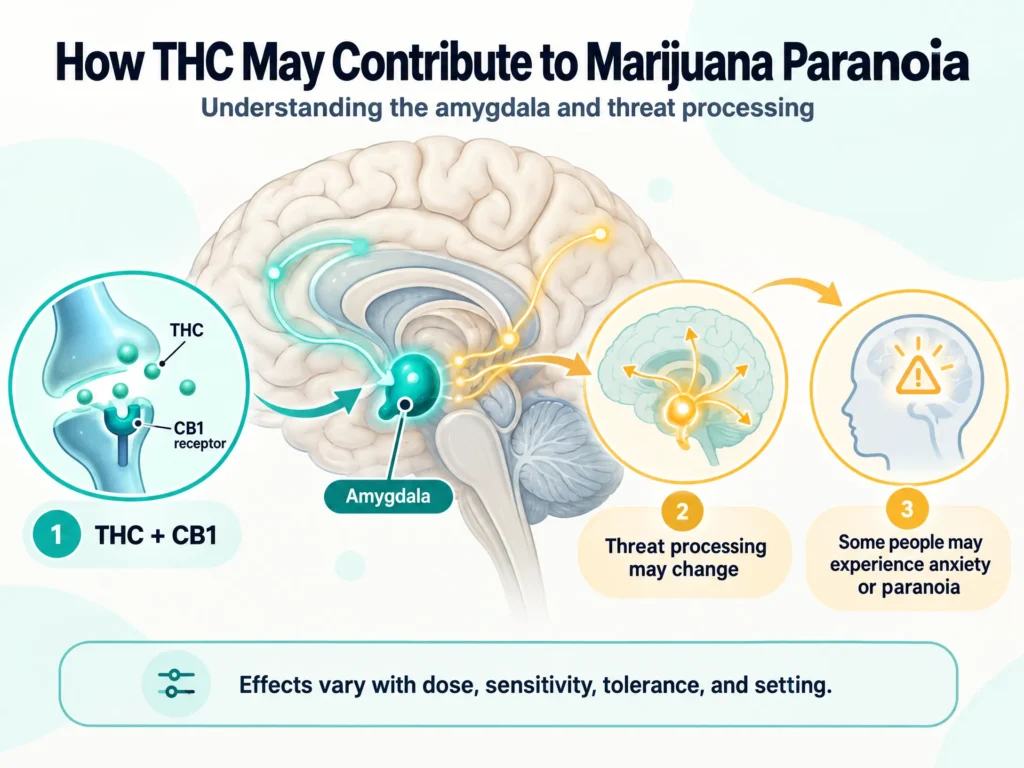
It has a specific neurological cause. THC activates CB1 receptors throughout the brain, including in the amygdala, the region responsible for processing fear and threat responses.
Do You Qualify for a PA MMJ Card?
Connect with a licensed Pennsylvania state physician online from home.
At low doses, this activation tends to reduce threat perception and create feelings of calm and relaxation.
At higher doses, the same CB1 activation in the amygdala can produce the opposite effect: heightened threat detection, hypervigilance, and the characteristic feeling that something bad is about to happen, that people are watching, or that situations are more dangerous than they are.
This is not imagined. It is a measurable neurological shift caused by excessive CB1 stimulation in a region that evolved to detect danger.
As research published in the Journal of Translational Medicine confirms, while THC can lead to feelings of anxiety, panic, and paranoia, CBD has the opposite effect. CBD acts through CB2 receptors and the TrpV1 vanilloid receptor, which can tone down CB1 activity rather than amplify it.
This is the foundational mechanism behind every practical prevention strategy in this guide.
Who Is Most at Risk in Pennsylvania?
Not everyone who uses cannabis develops paranoia. Risk is significantly shaped by individual biology, history, and the specific product used.
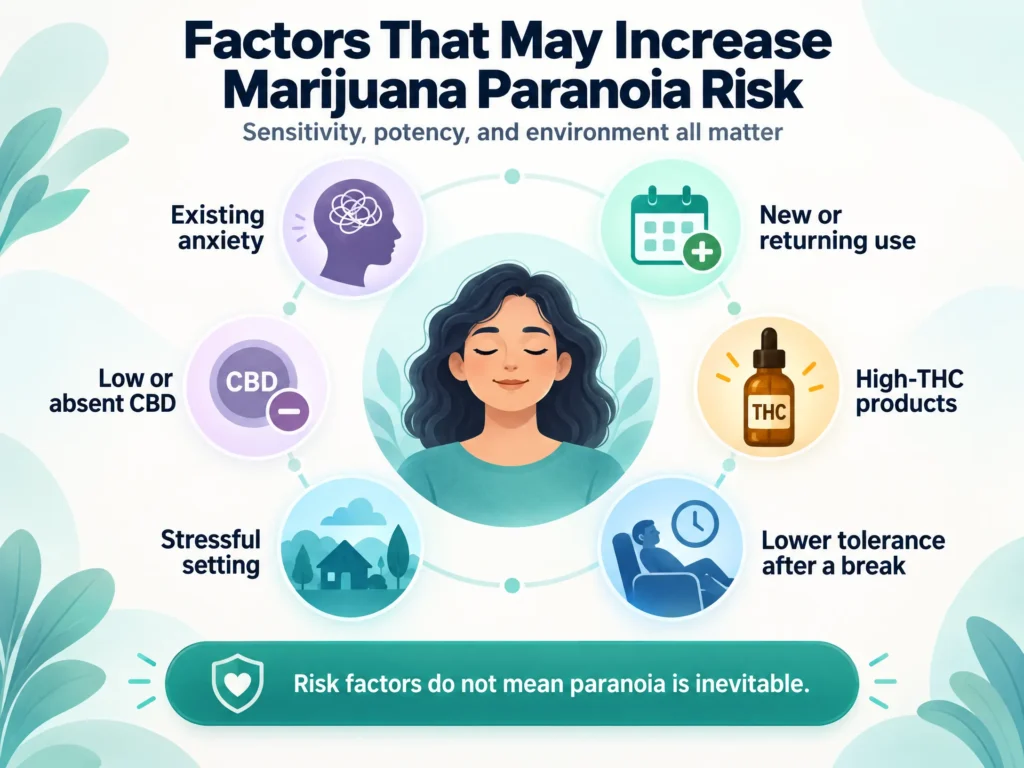
Highest risk profiles for PA patients:
| Risk Factor | Why It Increases Paranoia Risk |
|---|---|
| Pre-existing anxiety disorder | Baseline amygdala hyperactivity means THC threshold for paranoia is lower |
| New to cannabis or returning after a long break | No established tolerance; amygdala more reactive to THC stimulation |
| Using high-THC products without CBD | No CBD modulation of CB1 activation |
| Consuming in an unfamiliar or stressful environment | Anxious baseline makes amygdala activation more likely to tip into paranoia |
| Using concentrates or high-potency products | Higher doses delivered faster than flower |
| Family history of anxiety or psychosis | Genetic factors affect CB1 receptor density and sensitivity |
| Consuming alone without support | No grounding presence to interrupt paranoid thought loops |
The irony for Pennsylvania’s patient population is significant.
The most common qualifying condition in the PA MMJ program is anxiety disorder. Anxiety patients have elevated baseline amygdala activity, which means their threshold for THC-induced paranoia is lower than the general population.
This does not mean anxiety patients cannot use cannabis effectively. It means the dosing, product selection, and consumption approach need to be calibrated more carefully than for patients with other qualifying conditions.
The Dose-Paranoia Relationship: Understanding the Threshold
⚡ Fast & 100% Online PA Medical Cards
Board-Certified Doctors • 100% Money-Back Guarantee
Book Evaluation Now →THC and paranoia follow a biphasic dose-response relationship.
This means the same cannabinoid produces qualitatively different effects at different doses rather than just “more of the same.”
At low doses, THC tends to reduce anxiety and threat perception by modulating amygdala activity in a calming direction.
Above an individual threshold, the direction reverses. The same amygdala activation that felt calming becomes excessive, triggering heightened vigilance and paranoid ideation.
That threshold is different for every person. It is shaped by tolerance, body chemistry, genetics, and the presence or absence of anxiety as a baseline condition.
The practical implication: there is no universal “safe” THC dose that prevents paranoia for everyone.
There is, however, a reliable principle that applies universally: your paranoia threshold increases with gradual dose escalation and decreases when you take a break and return.
For guidance on what specific milligram amounts feel like at different tolerance levels, see our guides on is 5mg of THC a lot and is 100mg of THC a lot.
Prevention Strategy 1: Start Lower Than You Think You Need
The single most reliable paranoia-prevention strategy is consuming less THC per session than you think is necessary. This applies even to experienced patients.
A new batch of the same strain, a new product format, a product from a different grower, or simply a lower-stress week where your baseline anxiety is calmer all change where your paranoia threshold sits.
Practical starting points for PA dispensary patients:
- New to cannabis: 1 to 2.5mg THC maximum per session
- Occasional use with some experience: 2.5 to 5mg
- Regular use with established tolerance: 5 to 10mg for oral products, titrate to comfort for vaporized flower
- High-tolerance, established patients: build up to your known comfortable range but reset after any break
Renewing Your PA MMJ Card?
Quick annual recertification online. No paperwork hassle.
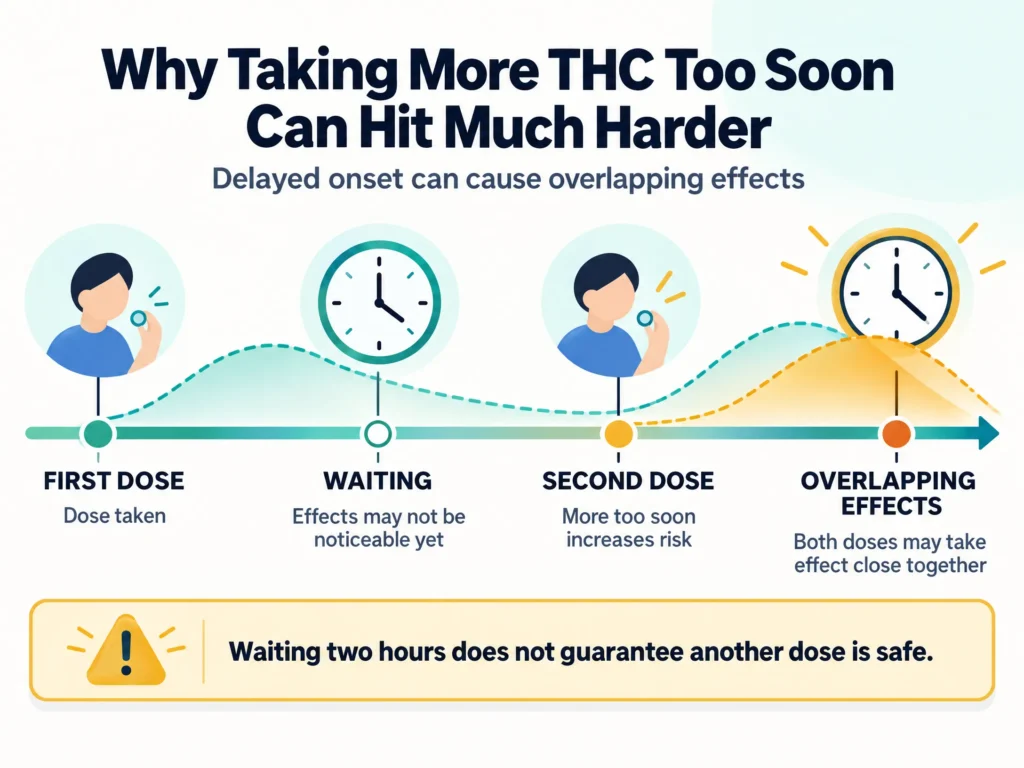
Renew Card Online →For oral products including troches and capsules, the wait time before any additional dose is a full 2 hours.
Not 45 minutes. Not 90 minutes. Two hours.
The most common mechanism behind cannabis paranoia episodes is the double-dose trap: taking more because nothing is felt yet, then having both doses arrive together at peak intensity.
Prevention Strategy 2: Choose the Right CBD Ratio
CBD is not just a softer version of THC. It works through completely different receptor pathways and has documented antagonist effects on THC-induced paranoia.
Research published in the Journal of Psychopharmacology found that CBD inhibits THC-elicited paranoid symptoms and hippocampal-dependent memory impairment.
A 2023 randomized, double-blind crossover trial published in Neuropsychopharmacology tested cannabis with four different CBD:THC ratios and found that higher CBD ratios were associated with reduced paranoid responses at equivalent THC doses.
The practical guidance for PA patients:
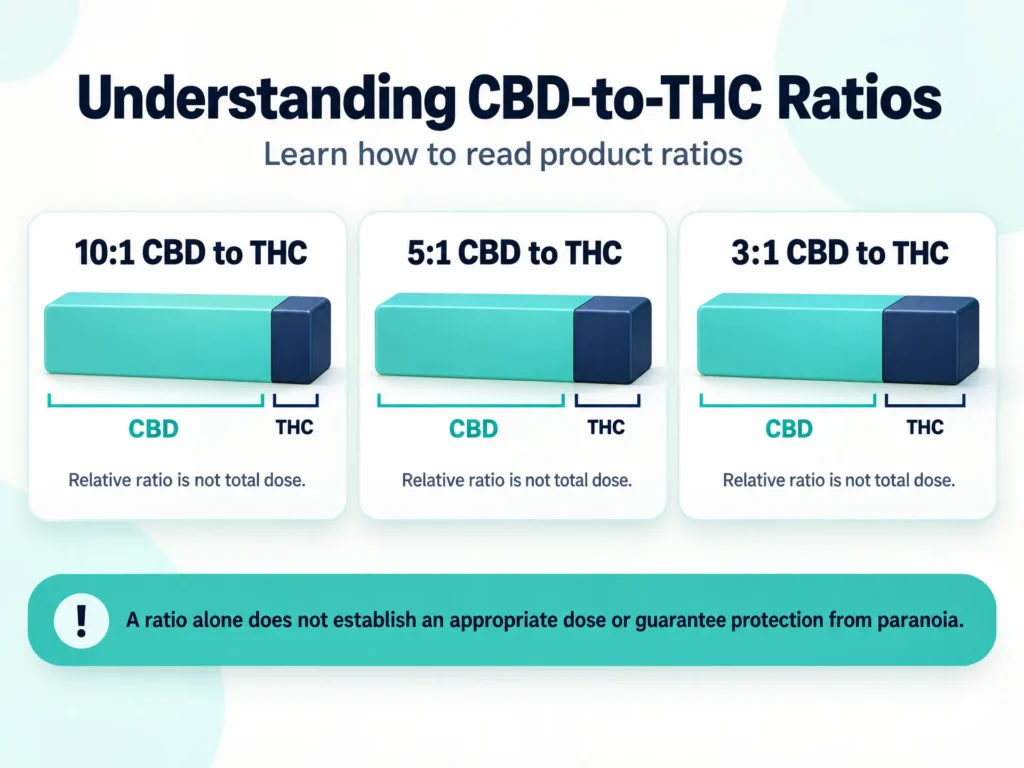
If you have an anxiety disorder or have experienced paranoia before
Start with a 10:1 or 20:1 CBD to THC ratio tincture or product. This delivers CBD’s anxiolytic 5-HT1A serotonin pathway effects alongside a trace THC amount too small to trigger significant CB1 amygdala activation.
If you have some cannabis experience and want both mood elevation and paranoia prevention:
A 5:1 or 3:1 CBD to THC ratio provides enough CBD to modulate THC’s amygdala effects while still delivering noticeable therapeutic benefits.
If you use full-spectrum flower or concentrates
Look at the CBD content on the COA. Products with even small amounts of CBD (0.5% or higher) produce measurably different paranoia profiles than THC-isolate or THC-dominant products with undetectable CBD.
Get Approved by a Licensed PA Doctor
Schedule your appointment in minutes. You only pay if approved.
Start Online Application →For a full guide to ratio tincture options at PA dispensaries, see our THC tincture guide and CBD tinctures guide.
Prevention Strategy 3: Use Terpenes to Your Advantage
Terpenes are the aromatic compounds found in cannabis that contribute to both flavor and effect. Several have documented effects on the anxiety and paranoia response to THC.
Limonene
The most directly supported terpene for paranoia prevention.
Research published in Drug and Alcohol Dependence found that d-limonene can reduce the anxiety-provoking effects of THC.
Limonene activates serotonin and dopamine receptors and has demonstrated anxiolytic effects in preclinical studies. It is found in citrus-forward cannabis strains and in many PA dispensary products labeled with notes of lemon, orange, or grapefruit.
Linalool
Found in lavender and many cannabis varieties. Linalool has documented calming and sedative properties through GABA receptor modulation.
GABA is the brain’s primary inhibitory neurotransmitter. Increasing GABAergic activity directly counteracts the anxious, hyperactivated state that THC can produce.
Products with prominent linalool content tend to feel more physically calming and are often reported as producing less paranoid responses.
Caryophyllene
A CB2 receptor agonist with anti-anxiety properties through pathways separate from THC’s CB1 activation.
Caryophyllene does not trigger psychoactivity but it does engage the endocannabinoid system directly. Products rich in caryophyllene (spicy, peppery notes on flavor) tend to produce a more grounded, less anxious cannabis experience.
Pinene
Ready to Get Your Official PA MMJ Card?
State-certified doctor consultations online. No risk—100% refund if not approved.
Claim Your MMJ Card Online →Alpha-pinene has documented effects on acetylcholine, which may help counteract short-term memory impairment from THC. Some research suggests pinene also reduces anxiety.
Pinene produces a characteristic pine or forest aroma in cannabis products.
The practical terpene profile to look for on a PA COA:
| Terpene | What to Look For on COA | Paranoia Effect |
|---|---|---|
| Limonene | 0.3% or higher in finished product | Reduces THC-induced anxiety, backed by published research |
| Linalool | 0.2% or higher | GABA-mediated calming, reduces anxious baseline |
| Caryophyllene | 0.3% or higher | CB2 anti-anxiety, grounds the experience |
| Pinene | 0.2% or higher | May reduce memory impairment and some anxiety |
| Myrcene (dominant) | Very high (>1%) without other terpenes | Increases sedation but may intensify anxiety in some patients |
For a full guide to terpenes and their effects, see our terpenes for anxiety guide.
How to Read a PA Dispensary COA for Paranoia Risk
Every product at a licensed Pennsylvania dispensary comes with a Certificate of Analysis (COA). Most patients never look at it.
For paranoia-prone patients, the COA terpene panel is one of the most useful tools available.
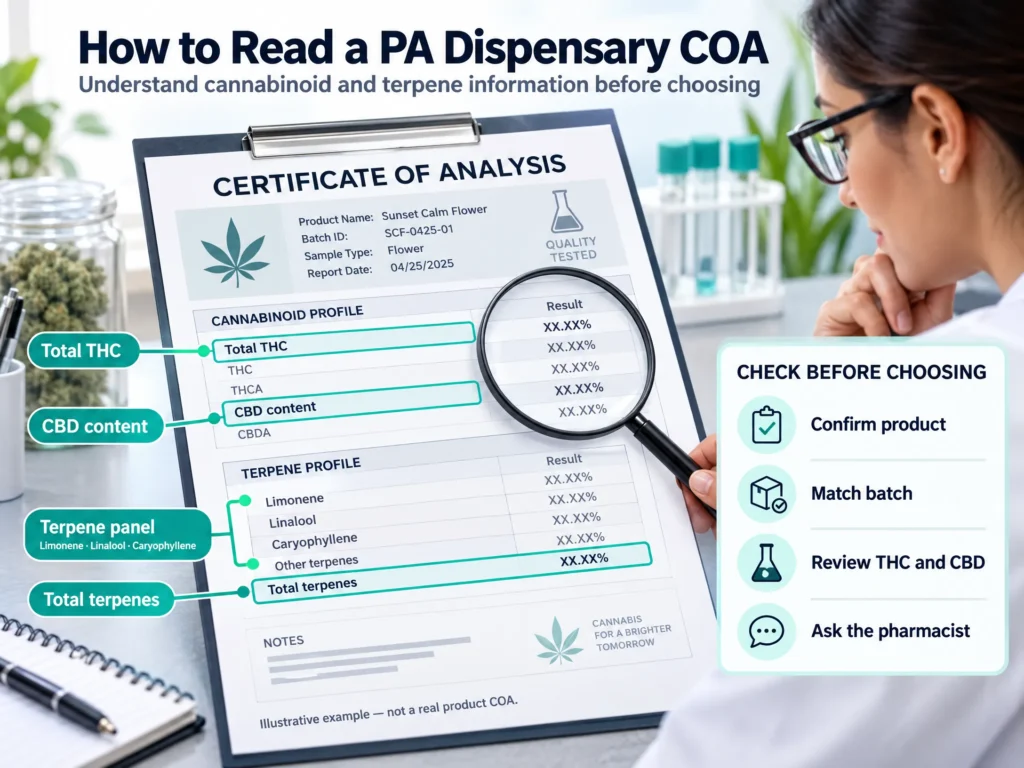
Here is a paranoia-prevention COA checklist for your next dispensary visit:
Step 1: Check Total THC
The formula is (THCA x 0.877) + Delta-9 THC. If the result is above 25% for a flower product, consider whether the potency suits your current tolerance. Higher is not always better.
Step 2: Check CBD or Total Cannabinoids for CBD content
Even trace CBD (0.3% to 1%) in a flower product meaningfully changes the paranoia profile compared to THC-isolate products.
Step 3: Check the terpene panel
Look for limonene, linalool, and caryophyllene as primary terpenes. A product with 0.3%+ limonene and 0.2%+ linalool is a meaningfully different paranoia-risk profile than a product with dominant myrcene only.
Step 4: Check Total Terpenes
A product with 2%+ total terpenes generally produces a richer, more complex effect with more natural paranoia modulation from the entourage effect than a terpene-depleted product.
For a complete walkthrough of every section of a PA dispensary COA, see our how to read a PA dispensary COA guide.
Prevention Strategy 4: Control Your Setting
THC amplifies the dominant emotional state already present when you consume. If you are anxious, stressed, or in an uncomfortable environment, THC is more likely to amplify that anxiety into paranoia.
This is the “set and setting” principle, and it is directly relevant for PA patients.
Setting adjustments that reduce paranoia risk
Use cannabis in a familiar, comfortable environment. Your home is almost always safer than a new location.
Have a trusted person nearby, especially when trying a new product or dose. A calm, sober presence provides a grounding anchor if thoughts begin to spiral.
Do not consume cannabis when you are already in an anxious, stressed, or emotionally elevated state. The baseline matters.
Reduce stimulation. Loud environments, crowds, and overwhelming sensory inputs lower the paranoia threshold. A quiet, dimly lit, calm environment raises it.
Avoid using cannabis for the first time or trying a new product before high-stakes situations: job interviews, social events with strangers, or family gatherings.
For PA anxiety patients specifically
Your baseline anxiety level is the most important environmental factor. A difficult week at work, a health scare, or a relationship conflict all lower your paranoia threshold even if your product and dose stay the same.
On high-anxiety days, reduce your dose rather than relying on your established tolerance to carry you.
Prevention Strategy 5: Know Your Tolerance State
Tolerance significantly affects paranoia risk, but not in the direction most patients assume.
Higher tolerance means less paranoia. Lower tolerance means the same dose that was comfortable before may now trigger paranoia.
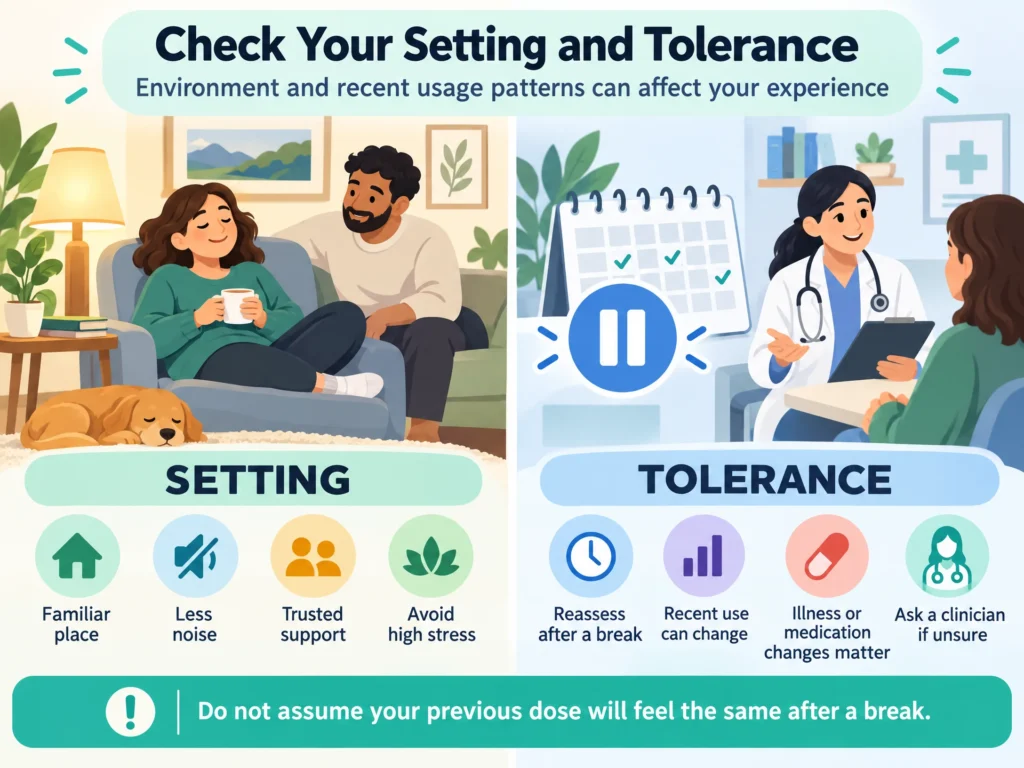
When tolerance drops without warning
A 2-week tolerance break resets CB1 receptor sensitivity. Returning to your previous dose after a break is one of the most reliable pathways to THC-induced paranoia.
A significant illness, a period of reduced use, a medication change, or even a dramatic improvement in sleep quality can shift your baseline sensitivity in ways that change your paranoia threshold.
The rule: after any break of more than 1 week, treat yourself as a new user again. Start at the beginning of your dose titration.
The PA dispensary pharmacist advantage
If your tolerance has shifted and you are unsure where to start, the licensed pharmacist at your PA dispensary can review your history and current product lineup and recommend a specific starting dose.
This is a free resource. Most patients do not use it. The ones who do avoid most of the preventable paranoia episodes.
Product Formats That Reduce Paranoia Risk at PA Dispensaries
Some product formats are inherently lower-risk for paranoia than others.
Lower paranoia risk
Sublingual tinctures with 10:1 or 5:1 CBD to THC ratio deliver precise, predictable doses with a 15 to 45 minute onset and the ability to stop at any point.
Low-potency flower (18 to 22% Total THC) with high limonene or linalool content, vaporized at lower temperatures (below 380°F), delivers slower-onset effects with more natural titration.
Microdose troches (2.5mg to 5mg per piece) allow precise, step-by-step dose building with full assessment at each step.
Higher paranoia risk
Live rosin, hash rosin, and vape cartridges at 65 to 85% THC deliver high doses very quickly. Even a single puff from a concentrate product can exceed a patient’s paranoia threshold faster than they can self-regulate.
High-THC flower (28%+ Total THC) with minimal CBD and low terpene content, especially in heavy sessions.
Oral products taken without waiting the full 2 hours, leading to the double-dose trap.
For a comparison of concentrate product formats and potency ranges, see our hash rosin vs live rosin guide and does THC percentage matter guide.
What to Do If Paranoia Hits Despite Your Precautions
Even with careful prevention, paranoia occasionally happens. Knowing the response in advance makes it significantly less severe when it does.
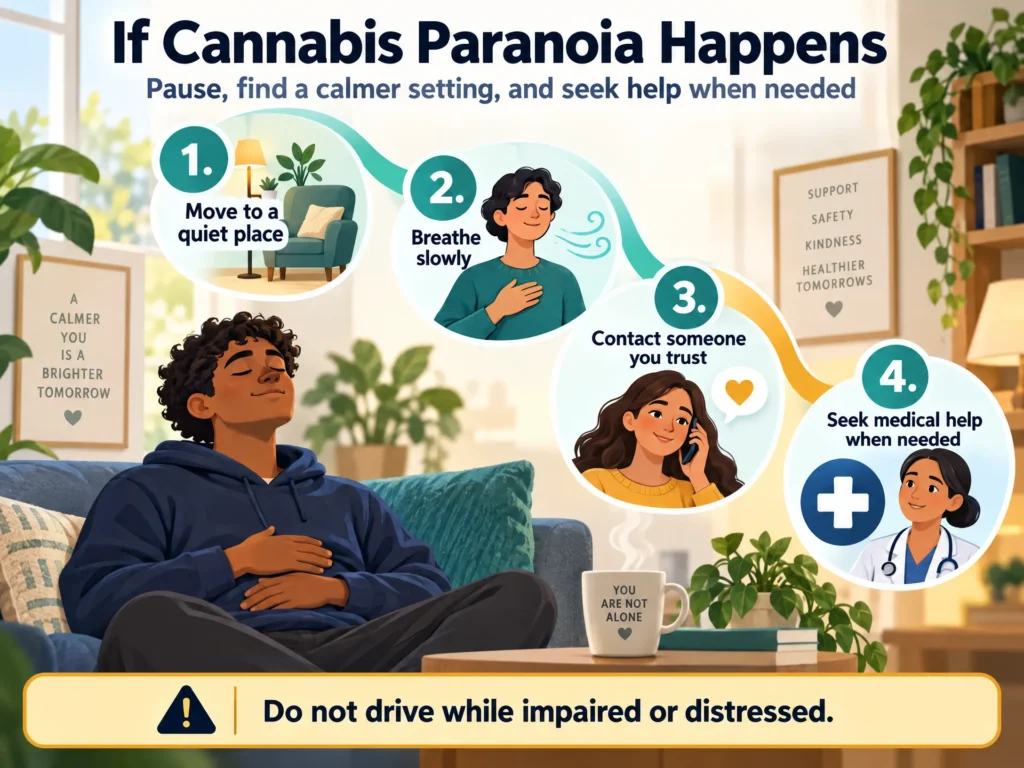
Immediate steps
Move to a quiet, familiar, comfortable space. Lie down if possible.
Remind yourself: This is THC activating your amygdala. It is temporary. It will end. You are physically safe.
Use slow controlled breathing: 4 counts in, 4 counts hold, 6 counts out. This directly activates the parasympathetic nervous system and counteracts the amygdala threat response.
Take 25 to 50mg of sublingual CBD if available. Not edible CBD, which can intensify rather than reduce THC effects.
Chew a few peppercorns if available. Beta-caryophyllene in black pepper engages CB2 receptors and may reduce THC-induced anxiety.
Have a grounding conversation with someone you trust. The social anchor interrupts paranoid thought loops more reliably than solitary relaxation techniques.
For a complete guide to managing THC overconsumption including the PA helpdesk number (888-733-5595) and when to call emergency services, see our too much THC guide.
Frequently Asked Questions
Q: Why does cannabis cause paranoia?
A: THC activates CB1 receptors in the amygdala, the brain’s threat-detection region. At lower doses this tends to reduce threat perception. At higher doses, the same activation reverses direction and produces heightened vigilance, hyperawareness, and paranoid ideation. It is a dose-dependent neurological response, not a personality trait.
Q: Who is most likely to get paranoid from cannabis?
A: Patients with pre-existing anxiety disorders face the highest risk because their amygdala is already operating at a higher baseline.
New cannabis users, patients returning after a tolerance break, and anyone consuming high-THC products without CBD are also at elevated risk.
In Pennsylvania, this is particularly relevant because anxiety disorders account for approximately 60% of all MMJ certifications.
Q: Does CBD prevent marijuana paranoia?
A: CBD has documented antagonist effects on THC-induced paranoia.
Research in the Journal of Psychopharmacology found CBD inhibits THC-elicited paranoid symptoms.
CBD works through CB2 and TrpV1 receptors rather than CB1, effectively toning down THC’s amygdala activation. Products with a 5:1 or 10:1 CBD to THC ratio produce significantly lower paranoia rates than THC-dominant products at comparable doses.
Q: Which terpenes help with cannabis paranoia?
A: Limonene has the strongest research backing, with a published study in Drug and Alcohol Dependence showing it reduces THC-induced anxiety. Linalool has documented GABA-mediated calming effects. Caryophyllene engages CB2 receptors with direct anxiolytic properties. On a PA dispensary COA, look for 0.3% or higher limonene and 0.2% or higher linalool alongside your product’s THC content.
Q: Can anxiety patients use cannabis without getting paranoid?
A: Yes, with the right approach. Anxiety patients should start with very low THC doses (1 to 2.5mg), use ratio tinctures (10:1 or 5:1 CBD to THC) rather than high-THC flower, select products with high limonene and linalool content, and consume in calm familiar settings. Gradual dose escalation over weeks rather than days allows the system to adapt. For condition-specific guidance, see our anxiety disorder and medical marijuana guide.
Q: What PA dispensary products are least likely to cause paranoia?
A: Ratio tinctures with 10:1 or 5:1 CBD to THC are the most controllable and least paranoia-prone format.
Low-potency flower with high limonene, linalool, and caryophyllene is also lower risk than THC-isolate or high-potency concentrates.
Avoid RSO, live rosin, and high-THC vape cartridges until your tolerance and paranoia threshold are well established.
Ask your dispensary pharmacist for product-specific recommendations based on your qualifying condition.
Q: Does sativa cause more paranoia than indica?
A: The sativa-indica distinction is a simplification that does not reliably predict paranoia risk. Terpene profile and THC to CBD ratio are far better predictors than the sativa-indica label. That said, many products marketed as sativa tend to have higher limonene content, which reduces paranoia risk, while heavy indica products tend toward myrcene dominance with sedation that some patients find amplifies anxiety. Judge by the COA terpene panel rather than the label. For more, see our sativa and anxiety guide.
The Bottom Line
Marijuana paranoia is predictable, preventable, and manageable.
The core strategies are consistent regardless of your qualifying condition: start with a dose lower than you think you need, choose products with meaningful CBD content and limonene or linalool-rich terpene profiles, control your environment and baseline emotional state, and know your current tolerance level before every session.
For Pennsylvania patients with anxiety disorders specifically, this is not optional guidance. The same biological sensitivity that makes anxiety a qualifying condition also makes you more vulnerable to THC-induced paranoia. The prevention strategies in this guide are the specific adjustments that make cannabis a therapeutic tool rather than a paranoia trigger.
Your licensed PA dispensary pharmacist can review your qualifying condition, current products, and dosing history to recommend the specific ratio, format, and terpene profile most likely to prevent paranoia for your individual profile.
If you are not yet a registered PA medical marijuana patient, check whether your condition qualifies or get certified at Pennsylvania Marijuana Cards.
This blog post is intended for general educational and informational purposes only and does not constitute medical advice. Individual responses to cannabis vary significantly. If you experience severe paranoia or anxiety from cannabis use, consult your certifying physician and your licensed PA dispensary pharmacist before adjusting your regimen. Medically reviewed by Dr. Johnathon Chance Miller, MD.
Sources
- Charlotte Marijuana Doctor: How to Prevent Marijuana Paranoia (February 2026)
- Royal Queen Seeds: How to Prevent and Combat Cannabis-Induced Anxiety (July 2026)
- Find Clear Choice: Managing Cannabis-Induced Paranoia (June 2025)
- PMC: Bhattacharyya et al., Cannabidiol Inhibits THC-Elicited Paranoid Symptoms, Journal of Psychopharmacology 2013
- Englund A et al.: Does Cannabidiol Make Cannabis Safer? Neuropsychopharmacology 2023
- Drug and Alcohol Dependence: D-limonene Reduces THC-Induced Anxiety
- Journal of Translational Medicine: THC, CBD, and Anxiety
- PA Department of Health: Medical Marijuana Program