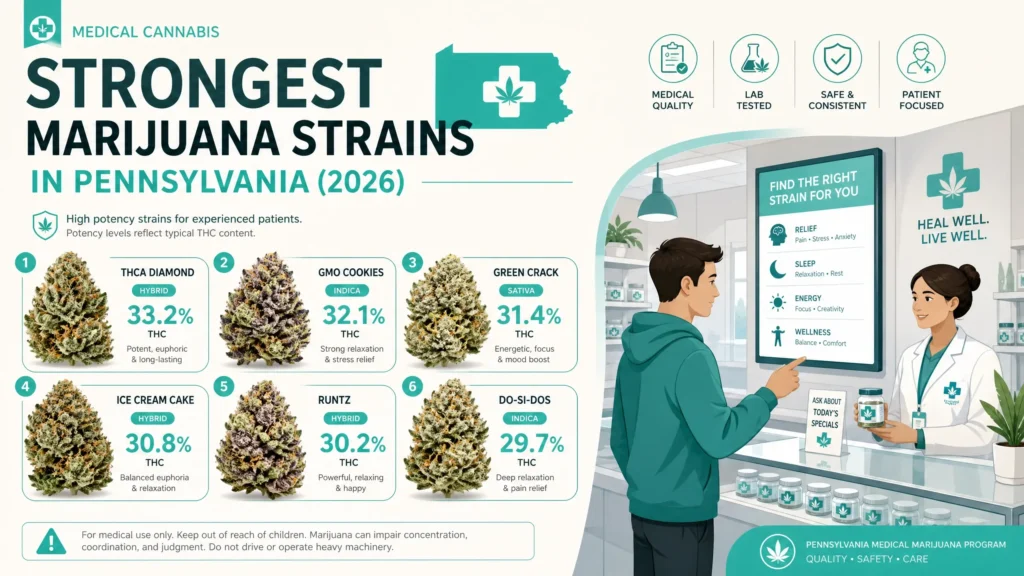
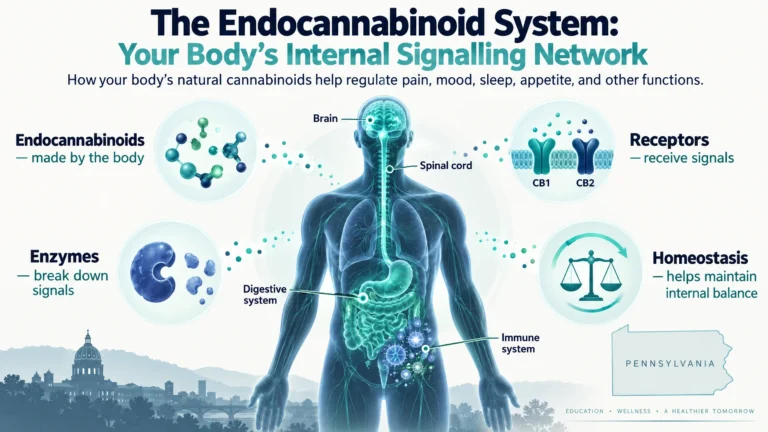

You have a biological system inside your body built specifically to interact with cannabis.
That is not a coincidence or a side effect of evolution. The endocannabinoid system (ECS) is one of the most important regulatory networks in the human body. It existed and functioned in humans for millions of years before anyone discovered the cannabis plant.
Need a PA Medical Marijuana Card?
Get certified online in 15 minutes. 100% Money-Back Guarantee.
Get Certified Now →Scientists only found it because they were trying to figure out why THC produces the effects it does.
Understanding how the ECS works is the most useful foundational knowledge any Pennsylvania medical marijuana patient can have. Every qualifying condition, every cannabis product, every dosing decision connects back to this system. This guide explains it in plain language, with the specific PA patient context that matters most.
Key Takeaways
| Topic | Key Point |
|---|---|
| What the ECS is | A biological regulatory network present in every mammal, responsible for maintaining homeostasis across dozens of body functions |
| When it was discovered | CB1 receptors were identified in 1990; the first endocannabinoid (anandamide) was discovered in 1992; CB2 in 1993 |
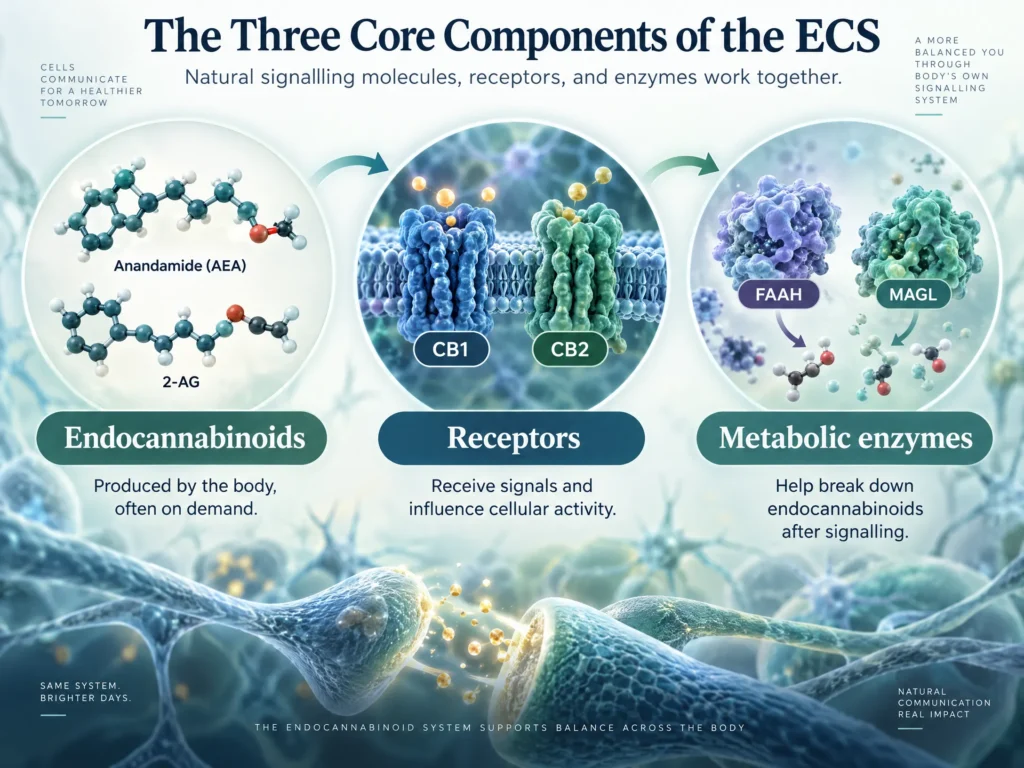
| Three core components | Endocannabinoids (your body’s own cannabinoids), receptors (CB1 and CB2), and enzymes that break them down |
| How THC works | THC is a partial agonist at CB1 receptors, mimicking anandamide but more potently and for longer |
| How CBD works | CBD primarily inhibits FAAH, the enzyme that breaks down anandamide, increasing your body’s own cannabinoid levels |
| Why it matters for PA patients | Every PA qualifying condition involves a body system regulated by the ECS: pain, anxiety, PTSD, muscle spasms, nausea, and more |
Why Scientists Discovered the ECS Because of Cannabis
The endocannabinoid system was identified in the late 1980s and early 1990s. Before that, scientists knew that THC produced biological effects. They did not know why.
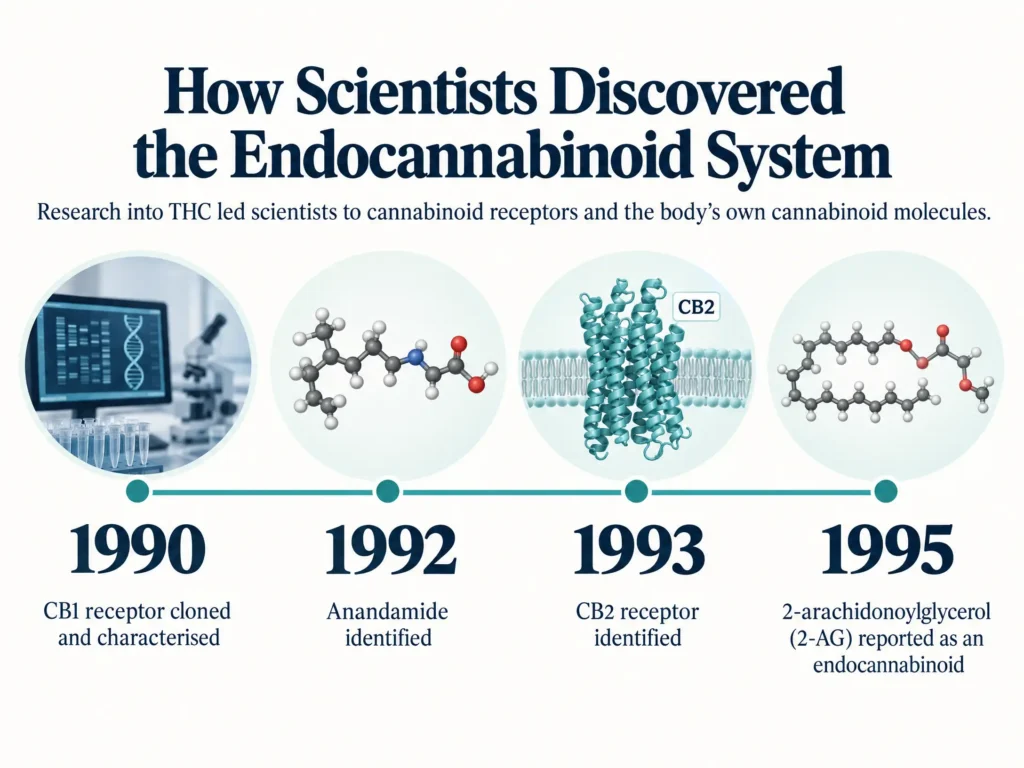
The discovery came through a systematic search for THC’s receptor. If THC produced reliable, predictable effects, the reasoning went, there must be something in the human body that it binds to. Finding that receptor would explain the mechanism.
Do You Qualify for a PA MMJ Card?
Connect with a licensed Pennsylvania state physician online from home.
CB1 receptors were cloned and characterized in 1990, published in Nature by Matsuda and colleagues. CB2 receptors followed in 1993.
But the more remarkable discovery was what came next: if the body has receptors for a plant compound, it probably produces its own natural compounds that use those same receptors. Scientists went looking and found them.
The first endogenous cannabinoid, anandamide, was identified in 1992 by Devane and colleagues. Its name comes from the Sanskrit word “ananda,” meaning bliss. The second major endocannabinoid, 2-arachidonoylglycerol (2-AG), was discovered in 1995.
As Tutela Medical’s May 2026 ECS overview states: “The discovery that the human body produces its own cannabinoid-like molecules and maintains a dedicated receptor network for them was significant. It meant that this was not a foreign system being hijacked by a plant, it was an endogenous system that plant cannabinoids happened to interact with.”
The cannabis plant did not create the ECS. The cannabis plant led researchers to find a system that had always been there.
What the Endocannabinoid System Actually Does
The ECS is primarily a homeostasis maintenance system.
Homeostasis means keeping biological processes within their optimal range despite changes in internal and external conditions. Your body temperature should stay near 37°C regardless of weather. Your blood glucose should stay within a narrow range despite varying food intake. Your immune response should activate appropriately to genuine threats and not over-activate against harmless stimuli.
The ECS helps regulate all of these processes and many more.
As a November 2025 peer-reviewed review published in the International Journal of Molecular Sciences describes: “The endocannabinoid system is a primary regulatory system in human physiology that serves to help maintain homeostasis throughout the nervous system, immune system, and gastrointestinal system.”
The specific biological processes the ECS helps regulate include:
- Pain perception and modulation
- Mood and emotional processing
- Memory formation and fear extinction
- Sleep and wakefulness cycles
- Appetite and food intake
- Immune response and inflammation
- Nausea and vomiting
- Muscle tone and movement
- Stress response and cortisol release
⚡ Fast & 100% Online PA Medical Cards
Board-Certified Doctors • 100% Money-Back Guarantee
Book Evaluation Now →This list explains something important for PA patients: the reason cannabis affects so many different conditions is not because cannabis is miraculous. It is because the ECS touches all of these systems, and cannabis compounds interact with the ECS.
The Three Core Components of the ECS
The ECS has three working parts. Understanding all three helps explain both how cannabis works and why its effects are sometimes unpredictable.
The three ECS components at a glance:
| Component | What It Is | Examples | Function |
|---|---|---|---|
| Endocannabinoids | Cannabinoids your body produces naturally | Anandamide (AEA), 2-AG | Signal imbalance; activate receptors on demand |
| Receptors | Protein structures that respond to cannabinoid binding | CB1 (brain/CNS), CB2 (immune/peripheral) | Transmit regulatory signals into cells |
| Enzymes | Proteins that break down endocannabinoids after use | FAAH (breaks down AEA), MAGL (breaks down 2-AG) | Terminate signaling; prevent continuous activation |
Component 1: Endocannabinoids
These are cannabinoid molecules your own body produces. “Endo” means within, so endocannabinoids are internal cannabinoids.
The two primary endocannabinoids are:
Anandamide (AEA): a partial agonist at CB1 receptors. Associated with mood regulation, pain modulation, and the runner’s high phenomenon. It degrades quickly in the body due to FAAH enzyme activity.
2-arachidonoylglycerol (2-AG): a full agonist at both CB1 and CB2 receptors. The most abundant endocannabinoid. Associated with immune function, appetite, and pain. A February 2025 study published in PNAS found new evidence that 2-AG is released via extracellular microvesicles, changing how researchers understand its transport through the body.
Unlike most neurotransmitters, endocannabinoids are produced on demand. Your body makes them when a specific signal indicates imbalance, uses them, and then breaks them down quickly. They do not sit in storage waiting to be released.
Component 2: Cannabinoid Receptors
CB1 and CB2 are the two primary receptors. Both are G-protein coupled receptors, meaning they work by triggering a cascade of intracellular signals when activated.
Sections 4 and 5 cover each receptor in detail.
Component 3: Metabolic Enzymes
These enzymes control how long endocannabinoids stay active.
Renewing Your PA MMJ Card?
Quick annual recertification online. No paperwork hassle.
Renew Card Online →FAAH (fatty acid amide hydrolase) breaks down anandamide. When FAAH is inhibited (by CBD, for example), anandamide accumulates to higher levels and stays active longer.
MAGL (monoacylglycerol lipase) breaks down 2-AG.
The enzyme system acts as a natural off-switch, ensuring that endocannabinoid signaling is precise and temporary rather than continuous and diffuse.
CB1 Receptors: Where They Are and What They Control
CB1 receptors are the most abundant G-protein coupled receptors in the human brain. Their distribution in the body explains why cannabis affects such a wide range of functions.
In the brain and central nervous system
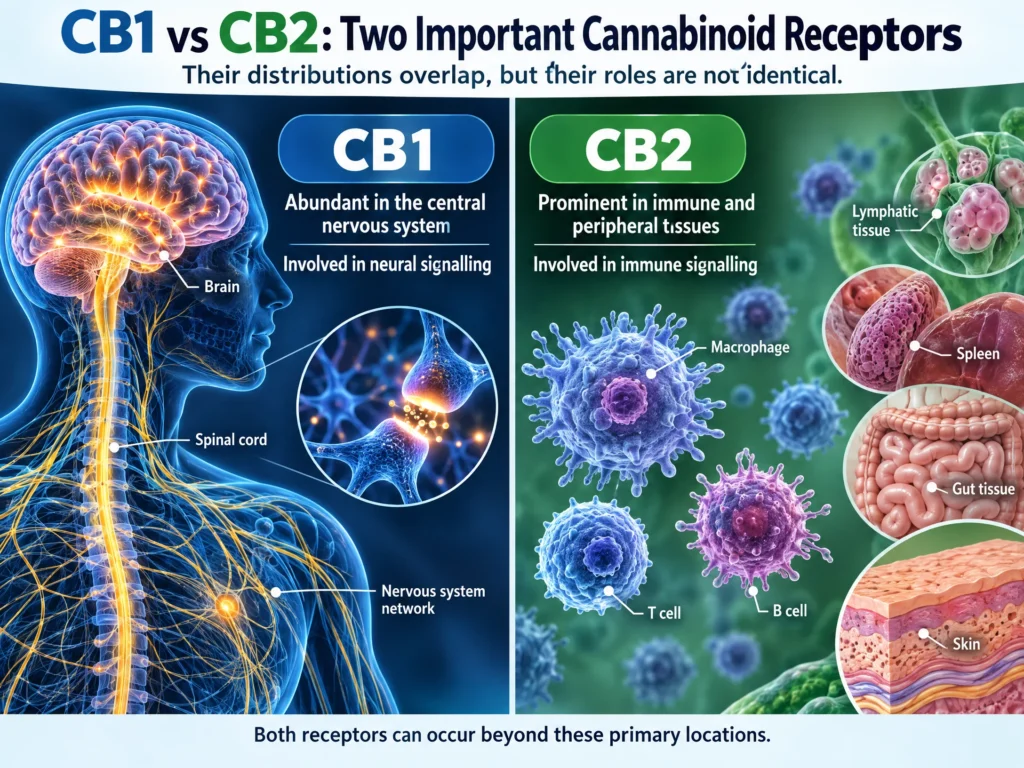
CB1 receptors are concentrated in the hippocampus (memory and learning), amygdala (fear and emotional responses), cerebellum (motor coordination), basal ganglia (movement control), and prefrontal cortex (decision-making and executive function).
This distribution explains why cannabis affects memory formation, emotional responses, coordination, and executive function when THC activates these receptors.
In the brainstem
CB1 receptors in the brainstem regulate nausea and vomiting. This is the primary mechanism by which THC reduces chemotherapy-induced nausea, it directly acts on the brainstem regions that control the vomiting reflex.
In the spinal cord
CB1 receptors in the spinal cord modulate pain signal transmission. Activating these receptors reduces the strength of pain signals traveling to the brain, which is one of the primary mechanisms by which cannabis helps chronic pain patients.
In the periphery
CB1 receptors are also found in peripheral sensory neurons, the gastrointestinal tract, and some immune tissues.
| Brain/Body Region | CB1 Concentration | PA Qualifying Condition Connection |
|---|---|---|
| Amygdala | Very high | Anxiety disorders, PTSD, fear memory processing |
| Hippocampus | Very high | PTSD (memory), Alzheimer’s disease |
| Spinal cord | High | Chronic pain, muscle spasms, neuropathic pain |
| Cerebellum | High | Muscle spasms, coordination |
| Brainstem | Moderate | Nausea and vomiting (cancer, Crohn’s) |
| Prefrontal cortex | High | Anxiety, PTSD, mood disorders |
| GI tract | Moderate | Crohn’s disease, IBD, inflammatory bowel |
The retrograde signaling mechanism is worth understanding. Most neurotransmitters flow from a sending neuron to a receiving neuron. Endocannabinoids work backwards: they are produced in the receiving neuron and travel back to the sending neuron.
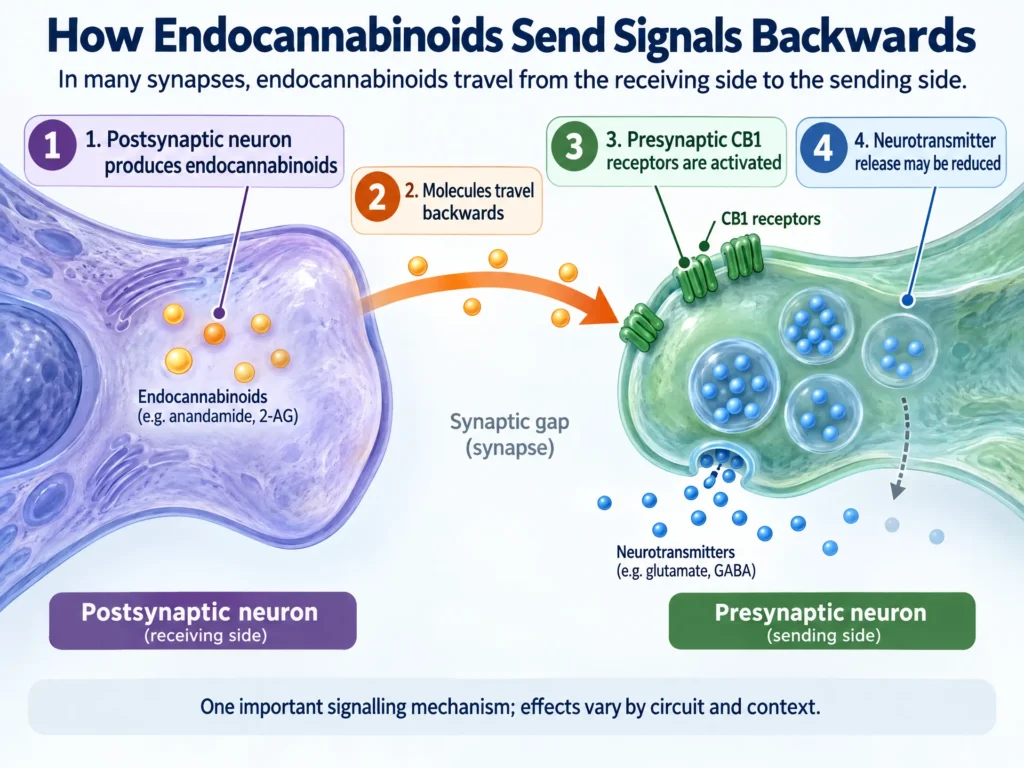
This means the ECS acts as a volume control on other neurotransmitters. When a signal is too strong (pain too intense, anxiety too high, nausea overwhelming), the receiving neuron produces endocannabinoids that travel back and turn down the output of the sending neuron.
Get Approved by a Licensed PA Doctor
Schedule your appointment in minutes. You only pay if approved.
Start Online Application →Cannabis works because THC engages this volume control system.
CB2 Receptors: The Immune System Cannabinoid Receptor
CB2 receptors have a different distribution and different function from CB1.
CB2 receptors are concentrated in immune cells, particularly macrophages and microglia (the brain’s immune cells). They are also found in the spleen, lymph nodes, gut, bone, and peripheral nervous system.
Unlike CB1 receptors, CB2 activation does not produce psychoactive effects. This is why cannabis compounds that primarily engage CB2 (such as CBD and the terpene caryophyllene) do not produce a “high.”
CB2 activation primarily modulates immune function and inflammation. When CB2 receptors are activated, they reduce the production of pro-inflammatory cytokines, the signaling molecules that drive chronic inflammation.
This is why CBD and caryophyllene-rich cannabis products have documented anti-inflammatory effects.
It is also why CB2 is particularly relevant for PA qualifying conditions with inflammatory components: Crohn’s disease, arthritis-related chronic pain, ALS, multiple sclerosis, and other inflammatory conditions.
The November 2025 PMC review also notes that CB2 receptors play a role in the microbiota-gut-brain axis, with implications for gut health conditions including Crohn’s and IBD, both of which are PA qualifying conditions.
The Extended ECS Family: Beyond CB1 and CB2
CB1 and CB2 are the primary cannabinoid receptors, but the ECS also interacts with a broader family of receptors that help explain the wider range of CBD’s effects.
TRPV1 (Transient Receptor Potential Vanilloid 1)
The same receptor that responds to capsaicin in hot peppers. CBD directly activates TRPV1, which is involved in pain and inflammation signaling. This is one of the reasons CBD has documented analgesic effects even though it does not activate CB1 strongly.
5-HT1A (Serotonin receptors)
Ready to Get Your Official PA MMJ Card?
State-certified doctor consultations online. No risk—100% refund if not approved.
Claim Your MMJ Card Online →CBD activates 5-HT1A serotonin receptors. This is the most direct explanation for CBD’s anxiolytic effects. The 5-HT1A pathway is the same one targeted by buspirone (an anti-anxiety medication) and partially by SSRIs.
This is why CBD can reduce anxiety through a mechanism completely separate from THC’s CB1 pathway.
GPR55
An orphan receptor that acts as a third cannabinoid receptor in some contexts. CBD antagonizes GPR55, which may contribute to its effects on inflammation and bone density.
PPARs (Peroxisome proliferator-activated receptors)
CBD and some other cannabinoids activate nuclear receptors called PPARs, which regulate gene expression related to inflammation, metabolism, and cell survival.
For PA patients, this extended receptor profile explains why CBD produces therapeutic effects without intoxication: it works through multiple non-CB1 pathways that regulate mood, pain, and inflammation independently.
How THC Interacts with the ECS
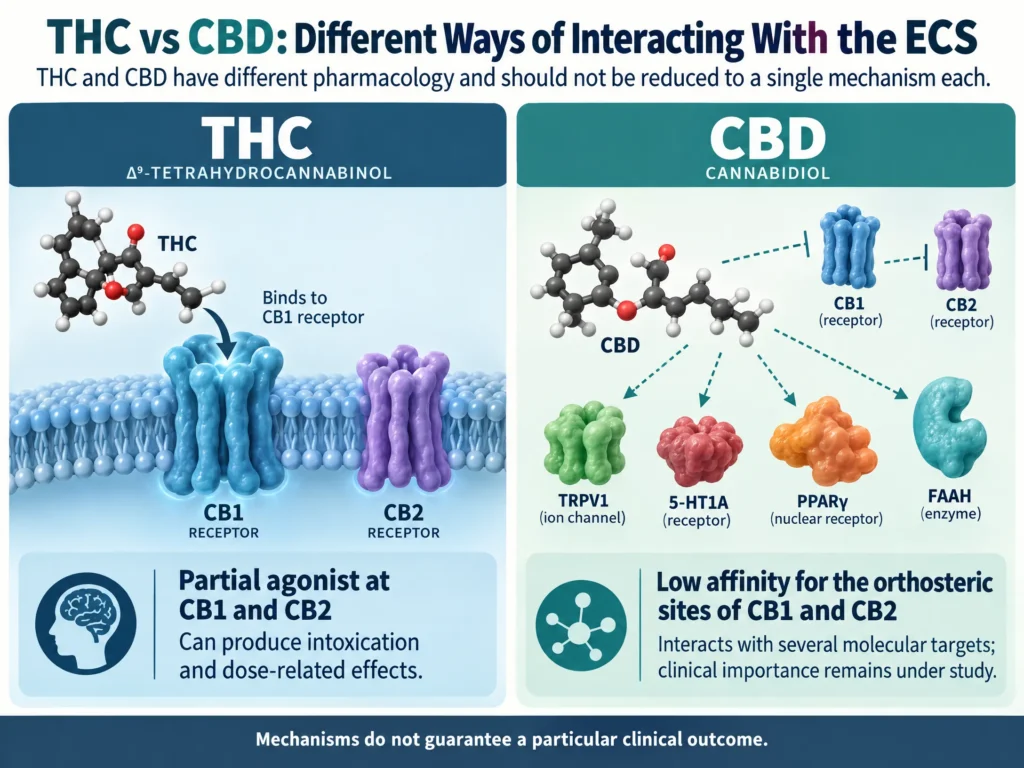
THC (delta-9-tetrahydrocannabinol) is a partial agonist at CB1 receptors. “Partial agonist” means THC binds to CB1 and activates it, but not to the maximum possible degree.
Your body’s own anandamide is also a partial agonist. THC binds more strongly and persists much longer, because FAAH breaks down anandamide quickly but metabolizes THC slowly.
This produces two important effects:
Effect 1: Amplified ECS signaling
THC essentially turns up the volume on the systems CB1 normally regulates: pain reduction, nausea suppression, mood modulation, appetite stimulation, sleep induction. This is why THC produces therapeutic benefits for pain, nausea, and sleep across PA qualifying conditions.
Effect 2: Overstimulation at high doses
Because THC is more potent and longer-lasting than anandamide, high doses can overstimulate CB1 receptors. In the amygdala, overstimulation produces the opposite of the normal calming effect: heightened threat perception, anxiety, and paranoia.
This is why THC at low doses tends to reduce anxiety and at high doses tends to increase it. The dose-response relationship is not linear.
The partial agonist implication for dosing
More THC does not always produce proportionally more effect. After a certain threshold, adding more THC may produce diminishing therapeutic returns while increasing side effect risk. This is why the research on conditions like PTSD points to specific low doses (7.5mg oral THC) rather than “as much as possible.”
For more on how THC percentage alone affects your experience, see our does THC percentage matter guide.
For understanding dose ranges, see our guides on is 5mg of THC a lot and is 100mg of THC a lot.
How CBD Interacts with the ECS: A Different Mechanism
CBD does not work the way most people assume.
CBD does not significantly bind to CB1 or CB2 receptors. It is not directly mimicking anandamide or 2-AG.
Instead, CBD works primarily through indirect mechanisms that amplify and modulate the ECS rather than directly activating it.
CBD’s primary mechanism: FAAH inhibition
CBD inhibits the FAAH enzyme that breaks down anandamide.
When FAAH is less active, anandamide degrades more slowly and accumulates to higher concentrations. This means CBD raises your body’s own anandamide levels, enhancing the ECS’s natural function rather than overriding it with an exogenous compound.
This is the key distinction between THC and CBD:
THC bypasses the ECS’s natural calibration by directly activating receptors.
CBD enhances the ECS’s own activity by preventing the breakdown of its natural signaling molecules.
CBD’s secondary mechanisms
Beyond FAAH inhibition, CBD also activates 5-HT1A serotonin receptors (anxiolytic effect), activates TRPV1 pain receptors (analgesic effect), and antagonizes GPR55 (anti-inflammatory and bone effects).
These additional pathways explain why CBD has a broader, more diffuse therapeutic profile than the targeted potency of THC.
For a full patient guide to CBD products and dosing for specific conditions, see our CBD tinctures guide.
The ECS and PA Qualifying Conditions: The Connection
Pennsylvania’s 24 qualifying conditions under Act 16 of 2016 are not random. Many of them share a common thread: they involve body systems regulated by the endocannabinoid system.
Understanding this connection helps explain why cannabis is medically recognized for such a diverse set of conditions.
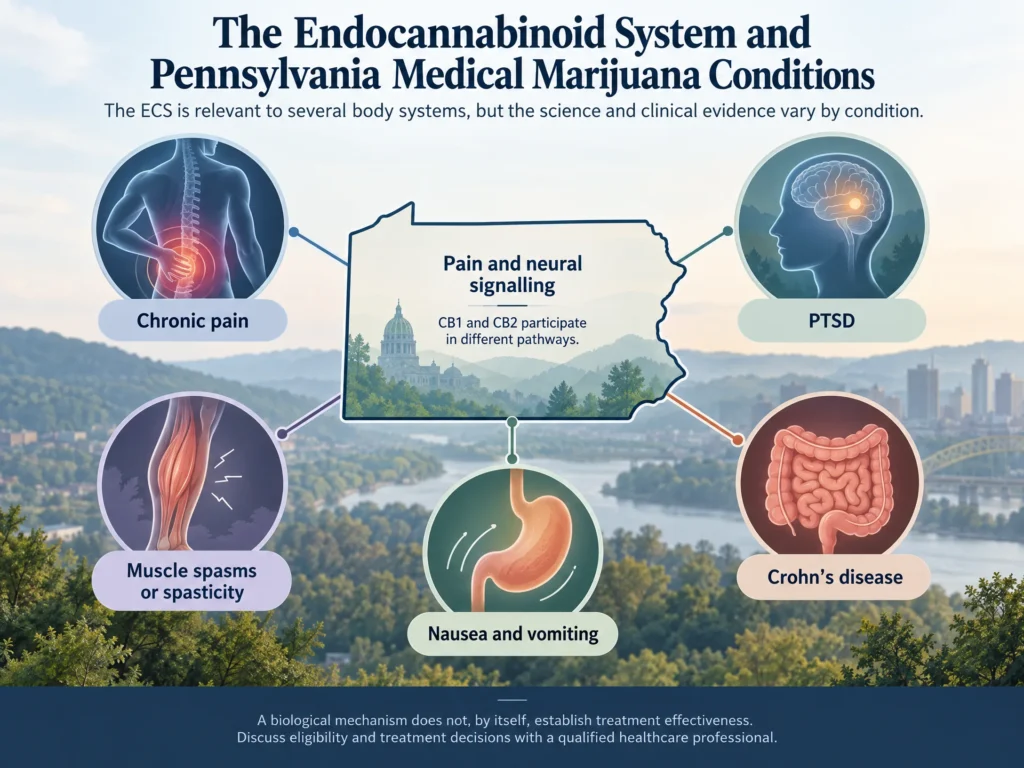
| PA Qualifying Condition Category | Primary ECS Mechanism | Key Receptor |
|---|---|---|
| Anxiety disorders | CB1 in amygdala reduces fear response; CBD activates 5-HT1A serotonin pathway | CB1 + 5-HT1A |
| PTSD | CB1 in vmPFC and hippocampus facilitates fear extinction learning | CB1 |
| Chronic pain | CB1 in spinal cord reduces pain signal transmission; CB2 reduces peripheral inflammation | CB1 + CB2 |
| Muscle spasms / spasticity | CB1 in cerebellum and spinal cord reduces excitatory glutamate firing | CB1 |
| Nausea and vomiting | CB1 in brainstem modulates vomiting reflex | CB1 |
| Crohn’s disease / IBD | CB2 in gut reduces inflammatory cytokine production; ECS-gut axis regulation | CB2 |
| ALS | CB1 and CB2 may reduce neuroinflammation and glutamate excitotoxicity | CB1 + CB2 |
| Epilepsy / seizures | CBD modulates neuronal excitability through multiple mechanisms | TRPV1 + CB1 |
| Cancer pain | CB1 in spinal cord and brain reduces pain; CB2 may modulate tumor microenvironment | CB1 + CB2 |
| Glaucoma | CB1 in ocular tissue reduces intraocular pressure | CB1 |
For condition-specific cannabis guidance, read these blogs:
- Anxiety disorder and medical marijuana in Pennsylvania
- How marijuana helps PTSD
- Medical marijuana and muscle spasms
- Best CBD tinctures for pain
- Best strain for nausea
Clinical Endocannabinoid Deficiency: A Theory Worth Knowing
One of the more intriguing ideas in ECS research is the theory of Clinical Endocannabinoid Deficiency (CED), proposed by Dr. Ethan Russo.
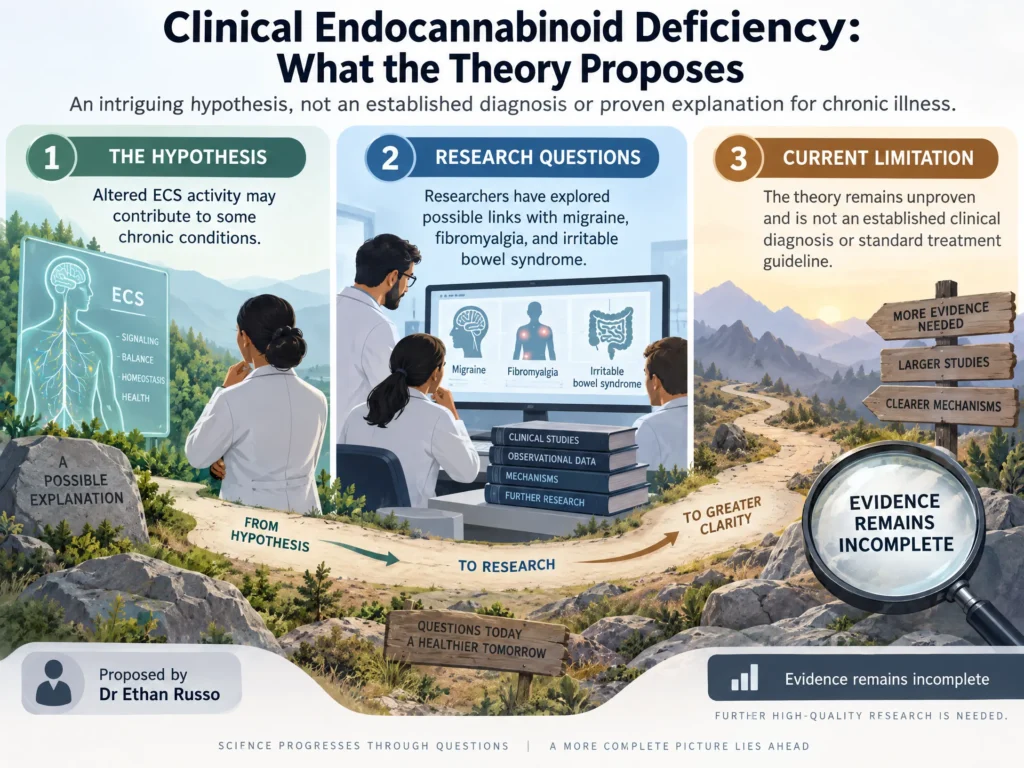
The theory proposes that some chronic conditions may be caused or worsened by underactivity of the ECS. If your body does not produce enough endocannabinoids, or if your cannabinoid receptors are not functioning optimally, systems regulated by the ECS could fall out of homeostasis.
Dr. Russo has proposed that conditions including migraine, fibromyalgia, and irritable bowel syndrome may share an underlying ECS deficiency as a common mechanism. This would explain why these conditions often co-occur and why they frequently respond to cannabis-based treatments.
CED is a hypothesis with suggestive but not yet conclusive evidence. It has not been proven, and it is not currently the basis for any clinical treatment guidelines.
But it offers a framework for understanding why some PA patients find cannabis effective for conditions where conventional medicine has produced limited results. It also points toward why lifestyle factors that support ECS function (regular exercise, stress management, and sleep quality) may interact with cannabis therapy in meaningful ways.
Exercise, for example, increases anandamide production. The “runner’s high” is now understood to be at least partially an endocannabinoid phenomenon rather than purely an endorphin effect.
What This Means for Your PA Dispensary Choices
Understanding the ECS gives you a practical framework for making product decisions at Pennsylvania dispensaries.
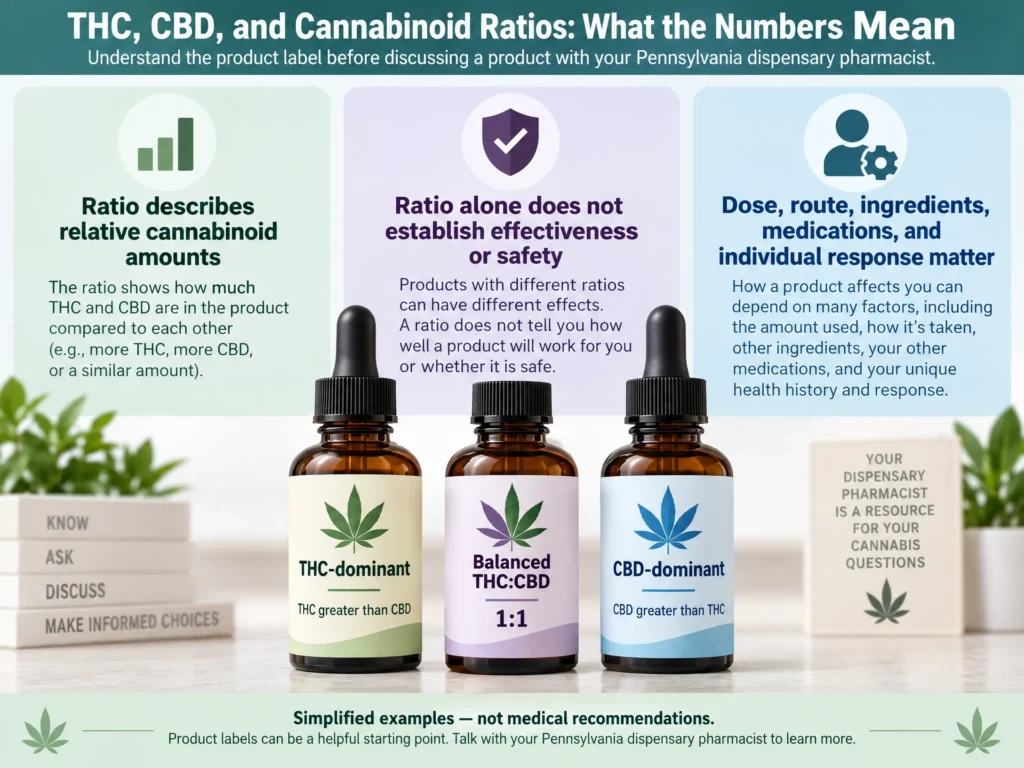
THC product decisions
Higher-THC products produce stronger CB1 activation. For conditions where direct CB1 engagement is important (pain, spasms, nausea, sleep), THC has a direct mechanism.
But because THC is a partial agonist that can overstimulate at high doses, the principle is to use the minimum effective dose rather than always seeking the highest THC percentage. More is not always better, and for anxiety-related conditions, more THC can actively worsen outcomes.
CBD product decisions
CBD enhances your own ECS function rather than overriding it. It is appropriate as a daily foundation product for patients managing anxiety, chronic inflammation, or conditions where natural ECS support is the goal.
CBD’s FAAH inhibition effect is dose-dependent. The research points to higher doses (25 to 75mg daily) for meaningful FAAH inhibition and anandamide accumulation.
Ratio product decisions
Ratio tinctures (1:1, 3:1, 5:1 CBD:THC) provide both direct CB1 activation from THC and FAAH inhibition from CBD. They also reduce anxiety risk because CBD’s 5-HT1A activation counteracts THC’s potential amygdala overstimulation.
For most PA patients managing multiple qualifying condition symptoms, a ratio product provides the most complete ECS engagement.
Terpene decisions
Terpenes also engage the ECS and adjacent systems. Caryophyllene binds CB2 directly. Linalool modulates GABA receptors. Limonene activates serotonin receptors. Full-spectrum products that retain the natural terpene profile produce richer, more modulated ECS engagement than isolate products.
How terpenes interact with the ECS and adjacent receptors:
| Terpene | Receptor Activity | ECS Connection | Effect |
|---|---|---|---|
| Caryophyllene | Direct CB2 agonist | Yes, full ECS engagement | Anti-inflammatory, calming |
| Myrcene | Indirect CB1 modulation | Entourage effect | Sedating, muscle-relaxant |
| Limonene | 5-HT1A serotonin | Adjacent to ECS | Anxiolytic, mood-elevating |
| Linalool | GABA-A receptors | Adjacent to ECS | Calming, sleep-supportive |
| Pinene | Acetylcholine, some CB1 | Adjacent to ECS | Alerting, may offset memory effects |
For terpene-specific guidance, see our terpenes for anxiety guide.
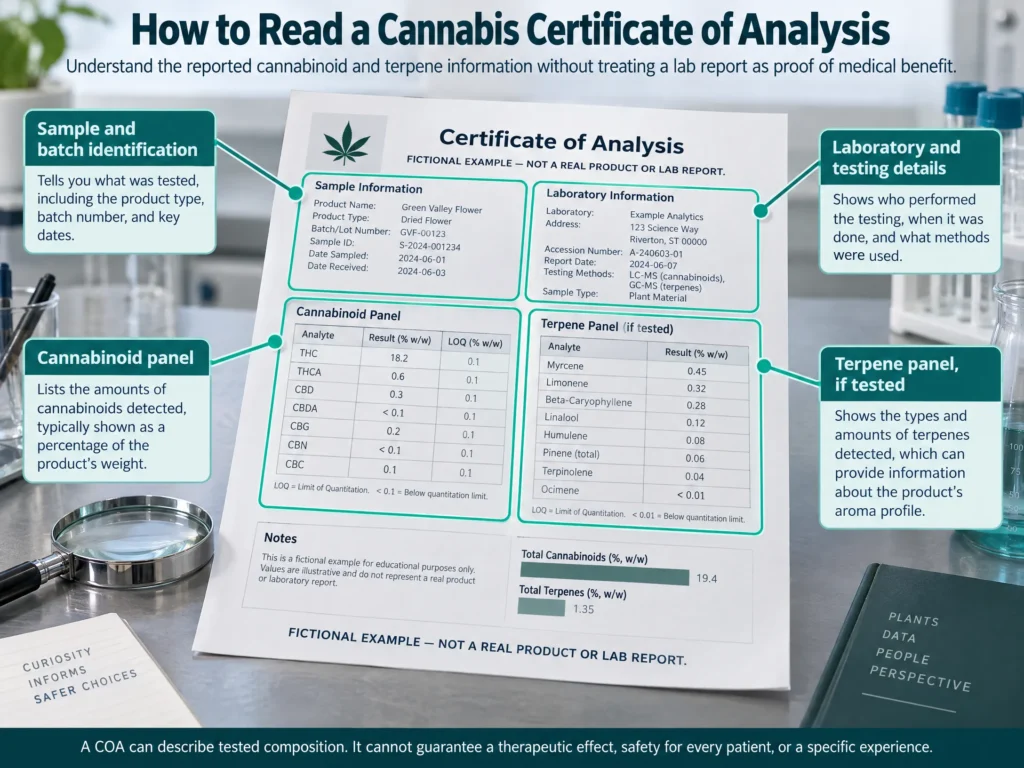
For reading your PA dispensary lab report to understand cannabinoid and terpene content, see our how to read a PA dispensary COA guide.
If you are not yet a registered PA patient and want to access pharmacist-guided, COA-verified products at licensed PA dispensaries, check your qualifying condition here or get certified at Pennsylvania Marijuana Cards.
Frequently Asked Questions
Q: What is the endocannabinoid system?
A: The endocannabinoid system (ECS) is a biological regulatory network present in all mammals. Its primary function is maintaining homeostasis, keeping biological processes within optimal ranges despite internal and external changes.
It consists of three components: endocannabinoids (anandamide and 2-AG) your body produces naturally; receptors (primarily CB1 and CB2) those molecules bind to; and enzymes (primarily FAAH and MAGL) that break endocannabinoids down after use.
The ECS regulates pain, mood, memory, sleep, appetite, immune response, nausea, and many other functions.
Q: Why does the human body have cannabinoid receptors?
A: The body does not have cannabinoid receptors because of cannabis. It has them because it produces its own cannabinoid molecules that use those receptors for regulatory signaling.
Scientists discovered the receptors in 1990 while researching how THC works. They then discovered that the body produces its own compounds for those same receptors.
Cannabis works in the human body because THC and CBD happen to interact with a regulatory system that exists independently of cannabis.
Q: What is the difference between CB1 and CB2 receptors?
A: CB1 receptors are concentrated in the brain and central nervous system. CB1 activation produces psychoactive effects and regulates pain, mood, memory, appetite, nausea, and muscle tone. THC primarily works through CB1.
CB2 receptors are concentrated in immune cells and peripheral tissues. CB2 activation modulates inflammation and immune response without psychoactive effects. CBD, caryophyllene, and other compounds engage CB2.
Both receptor types are relevant for therapeutic cannabis use, and many conditions respond best to products that engage both.
Q: How does CBD work differently from THC?
A: THC binds directly to CB1 receptors as a partial agonist, mimicking anandamide but more potently and for much longer.
CBD does not significantly activate CB1 or CB2 directly. Instead, CBD primarily works by inhibiting FAAH, the enzyme that breaks down anandamide. This increases your body’s own anandamide levels, enhancing natural ECS function rather than overriding it.
CBD also activates serotonin (5-HT1A), pain (TRPV1), and other receptors through separate pathways. This multi-target profile explains CBD’s broad therapeutic effects without significant intoxication.
Q: What is anandamide and why is it called the bliss molecule?
A: Anandamide (AEA) is the body’s primary endocannabinoid, named from the Sanskrit word “ananda,” meaning bliss, when researchers discovered it in 1992.
Anandamide is a partial agonist at CB1 receptors and plays a role in mood regulation, pain modulation, appetite, and the euphoric state associated with exercise.
It degrades quickly due to FAAH enzyme activity. CBD inhibits FAAH, effectively raising anandamide levels by slowing its breakdown.
Q: How does the ECS relate to Pennsylvania’s qualifying conditions?
A: Pennsylvania’s 24 qualifying conditions under Act 16 of 2016 include many conditions involving body systems regulated by the ECS.
Anxiety and PTSD involve CB1 receptors in the amygdala and prefrontal cortex where the ECS regulates fear responses. Chronic pain and muscle spasms involve CB1 receptors in the spinal cord that modulate pain signal transmission. Nausea involves CB1 receptors in the brainstem.
Crohn’s disease and IBD involve CB2 receptors in the gut. Epilepsy involves TRPV1 and CB1 receptors that modulate neuronal excitability. The ECS connection explains why one regulatory system therapeutically affects such diverse conditions.
Q: What is the entourage effect?
A: The entourage effect is the theory that cannabinoids and terpenes work together more effectively than any single compound alone.
THC, CBD, CBN, CBG, and terpenes like myrcene, limonene, linalool, and caryophyllene each engage different receptors and pathways within and adjacent to the ECS.
Full-spectrum cannabis products are theorized to produce more complete ECS engagement than isolated single compounds. Research support exists but remains incompletely characterized. Most clinical researchers now favor full-spectrum preparations over isolates.
The Bottom Line
The endocannabinoid system is not a quirk or a loophole. It is a fundamental regulatory network that your body uses to maintain balance across dozens of biological processes. Cannabis works because its compounds interact with this pre-existing system.
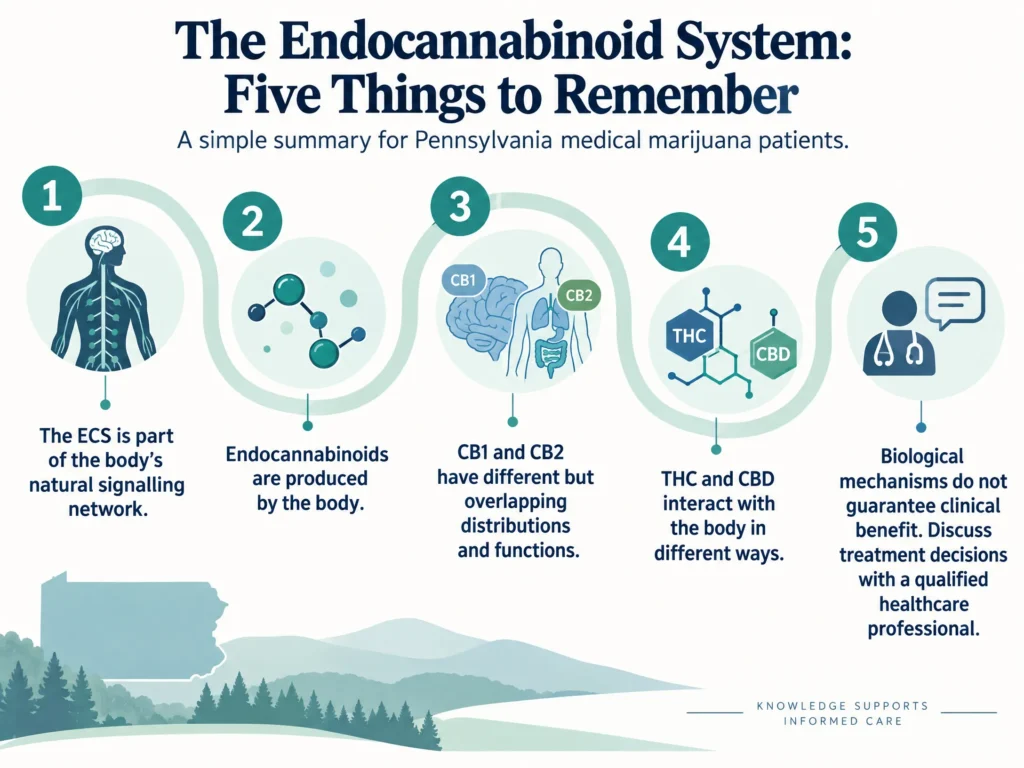
THC amplifies ECS signaling by directly activating CB1 receptors, producing therapeutic effects for pain, nausea, muscle spasms, and sleep while also producing the intoxication and potential anxiety that come with CB1 overstimulation at high doses.
CBD enhances ECS function by slowing the breakdown of your own anandamide and engaging complementary receptors (serotonin, pain, and others) without the intoxication of CB1 direct activation.
Every product you choose at a licensed PA dispensary is a decision about how to engage this system in service of your qualifying condition. The COA cannabinoid and terpene panel tells you what ECS pathways each product engages.
Understanding the ECS makes every other piece of cannabis knowledge more useful.
This blog post is intended for general educational and informational purposes only and does not constitute medical advice. The endocannabinoid system is an active area of research and our understanding continues to evolve. Consult your certifying physician and PA dispensary pharmacist before starting or adjusting any cannabis regimen for a qualifying medical condition. Medically reviewed by Dr. Johnathon Chance Miller, MD.
Sources
- PMC 2025 November: The Endocannabinoid System in Human Disease, Molecular Signaling, Receptor Pharmacology, and Therapeutic Innovation (IJMS)
- PNAS 2025 February: The Endocannabinoid 2-AG is Released and Transported via Extracellular Microvesicles
- Tutela Medical: How the Endocannabinoid System Works, 2026 Overview (May 2026)
- The Library NJ: The Endocannabinoid System Explained, Why Cannabis Works in Your Body (March 2026)
- PMC: Research Review, Endocannabinoid System in Developmental Psychopathology (2026)
- Pharmaceuticals 2025: Therapeutic Potential of CB1 and CB2 Receptors, Novel Insights (September 2025)
- MDPI IJMS 2025: ECS in Human Disease, Gut-Brain Axis Review (November 2025)
- Matsuda LA et al. 1990: Structure of a Cannabinoid Receptor and Functional Expression of the Cloned cDNA (Nature)
- Devane WA et al. 1992: Isolation and Structure of a Brain Constituent that Binds to the Cannabinoid Receptor (Science)