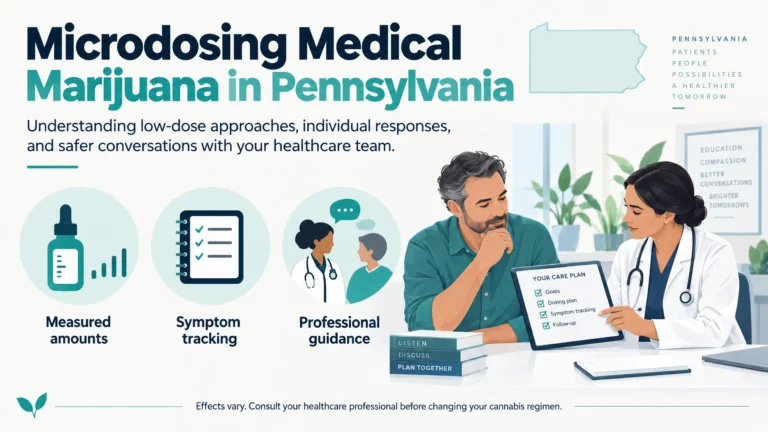

Microdosing medical marijuana means using doses small enough to produce therapeutic effects without significant psychoactivity.
It is not a compromise or a beginner’s technique. For many Pennsylvania medical marijuana patients, particularly those managing anxiety, chronic pain, PTSD, and other daily conditions, microdosing is the most clinically effective and sustainable approach available.
Need a PA Medical Marijuana Card?
Get certified online in 15 minutes. 100% Money-Back Guarantee.
Get Certified Now →The research behind it is more specific than most people realize.
A University of Chicago trial found that 7.5mg of oral THC improved mood and reduced stress while 12.5mg made things worse. An Israeli pain trial found 0.5mg to 1mg of inhaled THC delivered significant pain relief lasting 150 minutes with no cognitive impairment.
More THC is not always more therapeutic. For daily management of qualifying conditions, less is often better. Pennsylvania’s licensed dispensary system is particularly well-suited to microdosing.
The troches, tinctures, and capsules available at PA dispensaries allow milligram-level precision that was impossible with unregulated cannabis. And the on-site pharmacist at every licensed PA dispensary is an underused resource for designing a microdosing protocol matched to your specific condition and medication list.
Key Takeaways
| Topic | Key Point |
|---|---|
| What is a microdose? | 1 to 2.5mg THC per dose is the clinical definition; 5 to 10mg CBD per dose for CBD-only microdosing |
| Why microdose? | Provides symptom relief without intoxication; reduces tolerance buildup; avoids the anxiety and paranoia risk of higher doses |
| Best PA products for microdosing | Troches (dividable into quarters for 0.625mg doses), sublingual tinctures (0.25 to 0.5ml measured doses), and capsules |
| Assessment timeline | 2 to 4 weeks to stabilize at a dose; 6 to 8 weeks for full protocol assessment |
| Tolerance management | 5 days on, 2 days off, or 3 weeks on, 1 week off cycling maintains receptor sensitivity |
| Where to get a protocol | Your PA dispensary pharmacist can design a condition-specific microdosing plan at no charge |
What Microdosing Medical Marijuana Actually Means
Do You Qualify for a PA MMJ Card?
Connect with a licensed Pennsylvania state physician online from home.
Microdosing is not vague. It has a clinical definition.
According to the European Journal of Internal Medicine guideline and most current clinical protocols, a microdose is:
- THC: 1 to 2.5mg per dose
- CBD: 5 to 10mg per dose
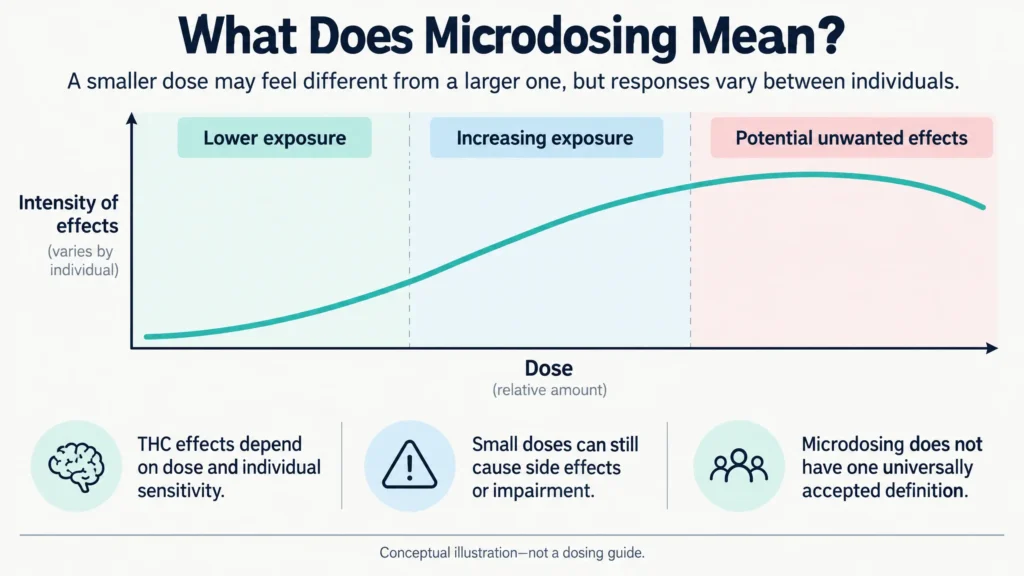
These amounts are significantly lower than what most cannabis products are marketed around. A standard recreational edible contains 10mg of THC. A single draw from a high-potency vape cartridge can deliver 5mg or more. A PA dispensary troche designed for standard use typically contains 5mg or 10mg per piece.
Microdosing means working below these common dose points, often by dividing products, using precisely measured tincture amounts, or selecting specifically formulated low-dose products.
The goal is to stay below the threshold that produces noticeable intoxication while remaining in the range where therapeutic effects on the endocannabinoid system are active.
As StrainElite’s June 2026 microdosing guide puts it: “The goal is not to feel intoxicated, it’s to feel slightly better than baseline.”
For more context on what different dose amounts feel like, see our guides on is 5mg of THC a lot and is a 10mg edible a lot.
The Research: Why Small Doses Often Work Better
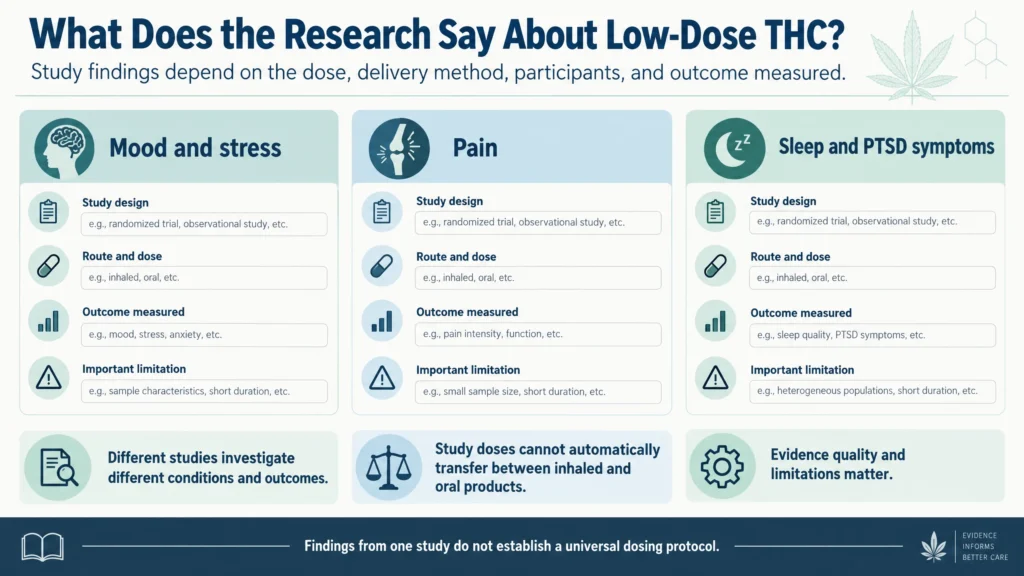
The evidence for microdosing over standard dosing is more specific than most patient guides present.
The University of Chicago stress and mood trial
A team at the University of Chicago found that 7.5mg of oral THC improved mood and reduced stress when volunteers were asked to perform a public speaking task.
By contrast, 12.5mg made outcomes worse. The study authors wrote: “We found that THC at low doses reduced stress, while higher doses had the opposite effect, underscoring the importance of dose when it comes to THC and its effects.”
⚡ Fast & 100% Online PA Medical Cards
Board-Certified Doctors • 100% Money-Back Guarantee
Book Evaluation Now →This dose-response reversal is the central finding that justifies microdosing. It shows that more THC does not simply produce more therapeutic effect. Above a certain threshold, it reverses direction.
The Israeli inhaler pain trial
Israeli researchers tested 0.5mg and 1mg doses of THC delivered by inhaler in chronic pain patients.
Both doses produced significant and rapid pain reduction. Relief lasted for up to 150 minutes. Critically, neither dose produced measurable cognitive impairment.
This is the single most compelling piece of evidence for microdosing as a legitimate pain management strategy. At doses a fraction of standard products, meaningful analgesia occurred without impairment.
The PTSD sleep study
Research on PTSD patients found that two daily doses of 5mg THC improved sleep quality, reduced nightmare frequency, and reduced anger and agitation.
While 5mg is at the upper range of what is usually considered a microdose, the scheduled twice-daily low-dose approach produced outcomes consistently superior to single higher-dose use.
Key microdosing research findings:
| Study | Dose Tested | Finding | Relevance |
|---|---|---|---|
| University of Chicago | 7.5mg vs 12.5mg oral THC | Lower dose improved mood and stress; higher dose worsened it | Dose reversal effect confirmed in humans |
| Israeli pain trial | 0.5mg and 1mg inhaled THC | Significant pain relief lasting 150 minutes; no cognitive impairment | Ultra-low doses produce meaningful analgesia |
| PTSD sleep study | 5mg THC twice daily | Better sleep, fewer nightmares, reduced agitation | Scheduled low-dose outperforms single high-dose |
| European Journal of Internal Medicine 2018 | Protocol review | 1 to 2.5mg THC / 5 to 10mg CBD defined as clinical microdose range | Evidence-based dose definition |
The hormesis principle
Cannabis microdosing follows the pharmacological principle of hormesis: where low doses of a substance produce beneficial effects and high doses produce harmful or counterproductive effects. This non-linear dose-response is now recognized as a fundamental feature of cannabinoid pharmacology, not an exception.
Who Microdosing Is Best For
Microdosing is not the right approach for every situation or every patient. Understanding who benefits most helps set realistic expectations.
Best suited for microdosing
Patients managing daily chronic conditions where consistent background symptom relief throughout the day is the goal. Anxiety disorders, chronic pain, PTSD, fibromyalgia, and inflammatory conditions fit this profile.
Professionals, caregivers, parents, or anyone who needs to maintain full functional capacity while managing a qualifying condition.
Patients who have experienced anxiety or paranoia from cannabis at standard doses and want to access therapeutic benefits without those side effects.
Renewing Your PA MMJ Card?
Quick annual recertification online. No paperwork hassle.
Renew Card Online →New PA MMJ patients with no prior cannabis experience, for whom the start-low approach is the safest introduction to the program.
Patients with high sensitivity to THC due to anxiety disorders, which represent 60% of PA MMJ certifications.
Less suited for microdosing
Patients with acute, severe symptoms that require rapid, significant relief. A breakthrough pain episode or a severe anxiety crisis may require a stronger acute dose than microdosing provides.
Patients using cannabis specifically for sleep onset, where a slightly higher THC dose for a limited nighttime period may be more effective than a sustained microdose throughout the day.
Why PA Dispensary Products Are Ideal for Microdosing
Pennsylvania’s licensed medical marijuana dispensary system creates a practical infrastructure for precision dosing that the unregulated market cannot match.
COA-verified potency
Every PA dispensary product has its potency verified by two independent, state-approved laboratories before reaching the shelf. When the label says 2.5mg per piece, that concentration has been independently confirmed.
In the unregulated market, a 2022 JAMA study found only 26% of cannabis products were accurately labeled within 10% of their claimed potency. Microdosing requires accurate labeling. Unregulated products cannot reliably provide it.
Diverse low-dose formats
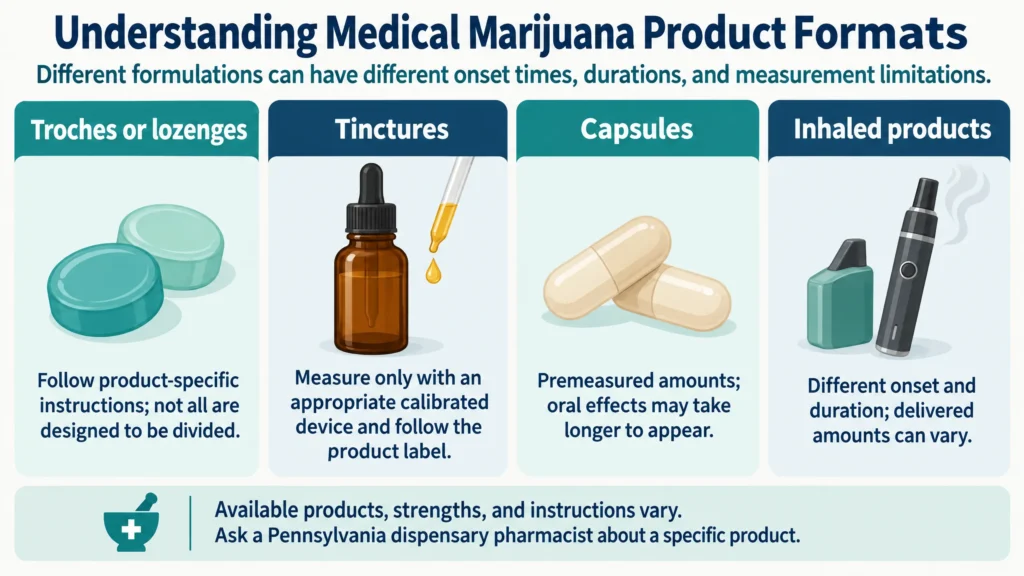
PA dispensaries carry products specifically designed for precise dosing: troches at 2.5mg and 5mg per piece, tinctures with calibrated droppers measured in 0.25ml increments, and capsules at defined milligram amounts.
These formats did not exist in meaningful form in the unregulated market.
Pharmacist consultation
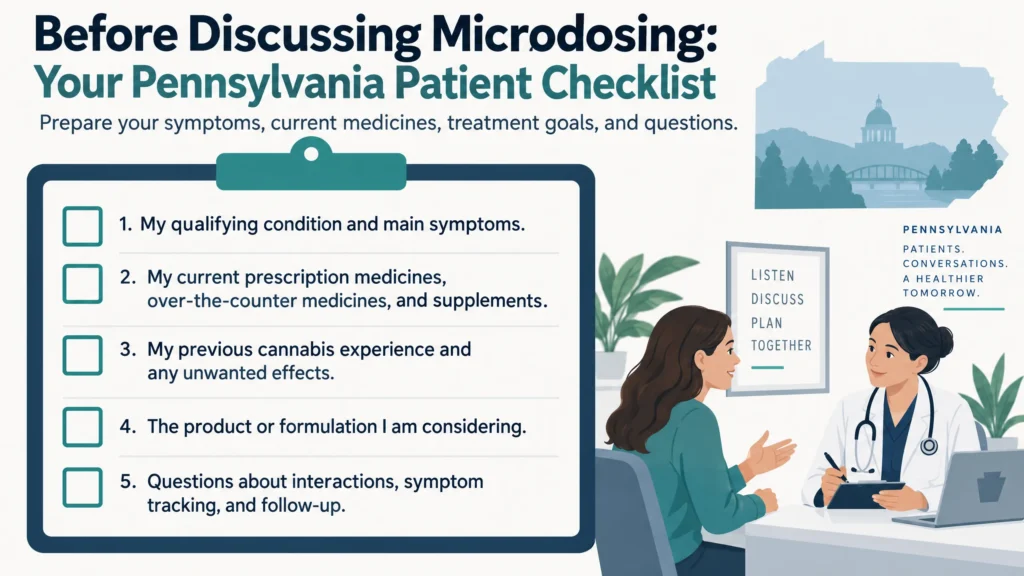
Every licensed PA dispensary is required to have a licensed pharmacist on-site. For microdosing, this resource is specifically valuable: the pharmacist can review your qualifying condition, your current medications (including any interactions with CBD at therapeutic doses), and design a starting protocol matched to your specific situation.
For more on how PA dispensary quality standards work, see our how to read a PA dispensary COA guide.
PA Troche Microdosing: The Precision Tool
Get Approved by a Licensed PA Doctor
Schedule your appointment in minutes. You only pay if approved.
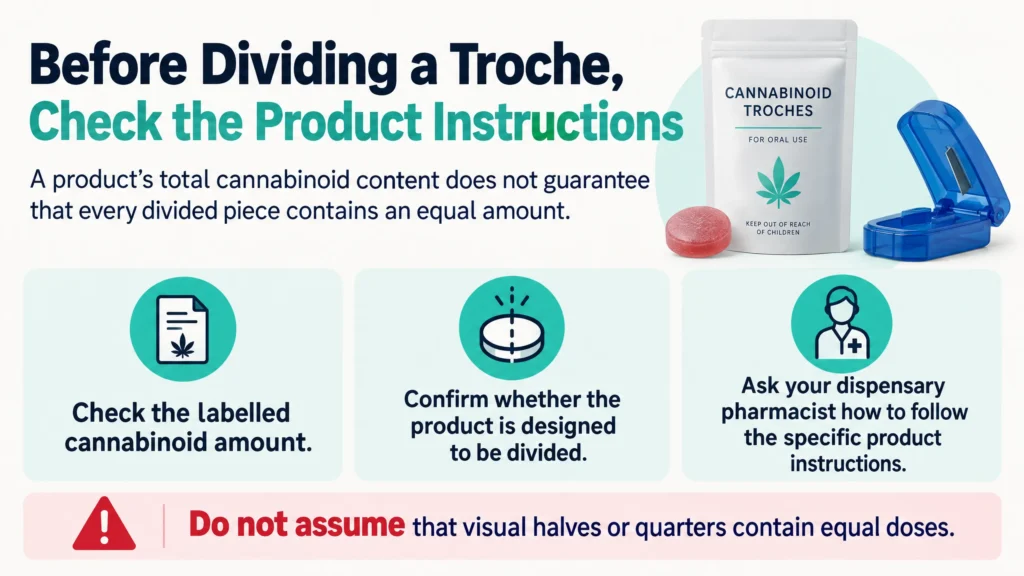
Start Online Application →Pennsylvania’s licensed dispensary troches, the soft chewable lozenges that serve as the PA equivalent of edibles, are one of the most practical microdosing tools available.
Here is why.
They are divisible
A 5mg THC troche can be physically divided into halves (2.5mg) or quarters (1.25mg). A 10mg troche can be divided into quarters (2.5mg each). Use a pill cutter rather than cutting by hand, it produces clean, equal pieces and ensures each quarter delivers a consistent dose rather than an uneven split.
This gives PA patients access to the 1 to 2.5mg microdose range without requiring a specialized product. Your dispensary pharmacist can advise on which troches in their current inventory divide cleanly.
They have predictable pharmacokinetics
When held sublingually (under the tongue without chewing), troches absorb through the mucous membrane directly into the bloodstream, bypassing first-pass liver processing. This produces onset in 15 to 45 minutes and duration of 4 to 6 hours.
When chewed and swallowed, the troche enters the digestive system and passes through the liver before reaching circulation. First-pass metabolism reduces the amount of active THC that reaches the bloodstream and slows onset significantly: 45 minutes to 2 hours, with duration of 6 to 8 hours.
For microdosing daytime management, sublingual administration produces a more predictable, faster, and shorter-duration effect.
For nighttime PTSD or sleep-disruption management, chewing and swallowing a small portion of a troche provides longer coverage through the sleep period.
Ready to Get Your Official PA MMJ Card?
State-certified doctor consultations online. No risk—100% refund if not approved.
Claim Your MMJ Card Online →Practical PA troche microdosing chart:
| Starting Troche | Division | Resulting Microdose | Route | Onset | Duration |
|---|---|---|---|---|---|
| 5mg troche | Half | 2.5mg | Sublingual | 15 to 45 min | 4 to 6 hrs |
| 5mg troche | Quarter | 1.25mg | Sublingual | 15 to 45 min | 3 to 5 hrs |
| 10mg troche | Half | 5mg | Sublingual | 15 to 45 min | 4 to 6 hrs |
| 10mg troche | Quarter | 2.5mg | Sublingual | 15 to 45 min | 4 to 6 hrs |
| 2.5mg troche | Whole | 2.5mg | Sublingual | 15 to 45 min | 4 to 6 hrs |
Ask your dispensary budtender or pharmacist which troches in their current inventory are designed for easy division and which are best kept whole.
PA Tincture Microdosing: The Flexible Tool
Sublingual tinctures are the most flexible microdosing tool because they allow continuous adjustment without wasting product.
Calibrating your dropper
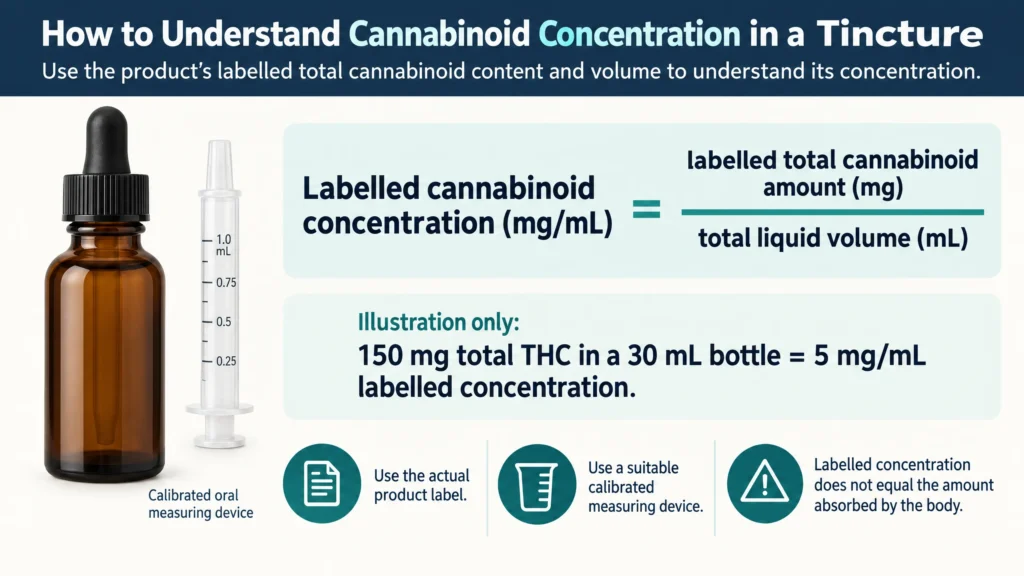
Most PA dispensary tincture droppers hold 1ml when full. Pulling the dropper to a quarter fill delivers approximately 0.25ml. Half fill delivers approximately 0.5ml.
To calculate the THC content of a specific dropper amount:
Total THC in bottle (mg) divided by total volume in ml equals mg per ml.
For example: a 30ml tincture containing 150mg total THC equals 5mg per ml. A 0.25ml draw delivers 1.25mg THC.
This level of precision is not available with any other product format.
Tincture microdosing for CBD
For CBD microdosing (5 to 10mg per dose), a 30ml tincture containing 300mg CBD equals 10mg per ml. A half-dropper (0.5ml) delivers 5mg CBD.
CBD microdosing is appropriate for patients who want ECS modulation without any THC, for patients with drug testing concerns, and for patients with very high THC sensitivity.
For a full guide to CBD tincture options at PA dispensaries, see our CBD tinctures guide.
Ratio tinctures for combined microdosing
For patients who want both THC and CBD at microdose levels, a 5:1 or 10:1 CBD:THC ratio tincture allows simultaneous microdosing of both.
A 10:1 CBD:THC tincture with 0.25ml (0.25ml of a 150mg THC in 30ml bottle) delivers approximately 1.25mg THC and 12.5mg CBD simultaneously.
This combination is particularly well-suited for anxiety patients who want THC’s mood modulation with CBD’s anxiety-modulating 5-HT1A pathway activation.
Starting Protocol: Step by Step
This protocol is derived from current clinical microdosing guidelines and adapted for PA dispensary products specifically.
Week 1: Establish your baseline
Before changing anything with cannabis, track your qualifying condition symptoms for 3 to 5 days at your current baseline. Note symptom severity in the morning, afternoon, and evening. This gives you a reference point to compare against.
Week 1 to 2: Begin at the lowest dose
Start with 1mg to 1.25mg THC sublingually once per day. For pure CBD, start at 5mg once per day.
Take your dose at the same time daily to establish a consistent blood level baseline.
Note any effects, positive or negative, in your tracking journal.
Week 2 to 3: Assess and adjust
If you notice no therapeutic benefit and no side effects at the initial dose, increase by 25% to 50%. For THC, move from 1.25mg to 1.75mg. Do not double the dose in one step.
If you notice positive therapeutic effects, hold at the current dose for at least 5 more days before considering any further increase.
If you notice any unwanted effects (mild anxiety, cognitive fogginess), reduce the dose by 25% and stay at the lower level for a full week.
Week 3 to 6: Find your minimum effective dose
Continue gradual titration until you reach a dose that produces consistent, adequate symptom relief without noticeable psychoactivity.
This is your minimum effective dose (MED). It is the cornerstone of your microdosing protocol.
Most patients settle between 1mg and 5mg THC per dose and 5mg and 25mg CBD per dose, but individual variation is significant.
Week 6 to 8: Full protocol assessment
After 6 to 8 weeks at your established dose, compare your current symptom levels to your pre-microdosing baseline. This is when meaningful assessment of whether the protocol is working becomes possible. Do not judge the protocol at 2 weeks.
Microdosing by Qualifying Condition
The microdosing starting point and approach differs meaningfully by qualifying condition.
| Qualifying Condition | Suggested THC Microdose | CBD Addition | Notes |
|---|---|---|---|
| Anxiety disorders | 1 to 2mg, once or twice daily | 10 to 20mg CBD alongside | Ratio tinctures (10:1 or 5:1) strongly preferred; avoid higher THC |
| Chronic pain | 1 to 2.5mg, 2 to 3 times daily | 25 to 50mg CBD daily | Israeli trial: 0.5 to 1mg via inhalation for breakthrough pain |
| PTSD | 2.5mg twice daily (morning and evening) | 10 to 15mg CBD alongside | Consistent with sleep improvement study; nighttime dose may be slightly higher |
| Muscle spasms | 2.5mg at onset of spasm or scheduled | 10 to 25mg CBD daily | Inhalation (vaporization) more appropriate for acute episodes |
| Nausea | 1 to 2.5mg as needed | CBD alone may be insufficient | Sublingual troches provide faster onset than capsules |
| Sleep disruption | 2.5 to 5mg at bedtime | 25mg CBN added if available | Not strictly microdose range; bedtime THC slightly higher is appropriate |
For condition-specific guides see:
Managing Tolerance: Cycling Protocols
Daily THC use, even at microdose levels, gradually downregulates CB1 receptors. This means your effective dose creeps upward over time as your receptors become less sensitive.
Cycling prevents this and maintains the effectiveness of your microdosing protocol.
Two common cycling approaches
5 days on, 2 days off: Take your microdose Monday through Friday, skip Saturday and Sunday. This maintains a weekly rhythm, is easy to track, and gives receptors a 48-hour reset window. Most appropriate for patients whose symptoms allow weekend breaks.
3 weeks on, 1 week off: Take microdoses for three consecutive weeks, then take a full week without THC. During the week off, CBD-only products can be continued without downregulation concern.
This approach produces a more complete receptor reset and is better for patients with higher baseline tolerance. Symptoms may temporarily increase during the off week; this is expected and resolves when dosing resumes.
Signs that tolerance is building
- Your established effective dose produces less relief than it did four to six weeks ago
- You find yourself thinking about increasing your dose without a specific change in symptoms
- The duration of effect from your dose is noticeably shorter than when you started
If you notice these signs, a one-week break before resuming at your previous dose is more effective than increasing the dose.
The PA Microdosing Journal: What to Track
Keeping a consistent log transforms a vague experiment into a data-driven protocol. This is especially important in the first 6 to 8 weeks when you are finding your minimum effective dose.
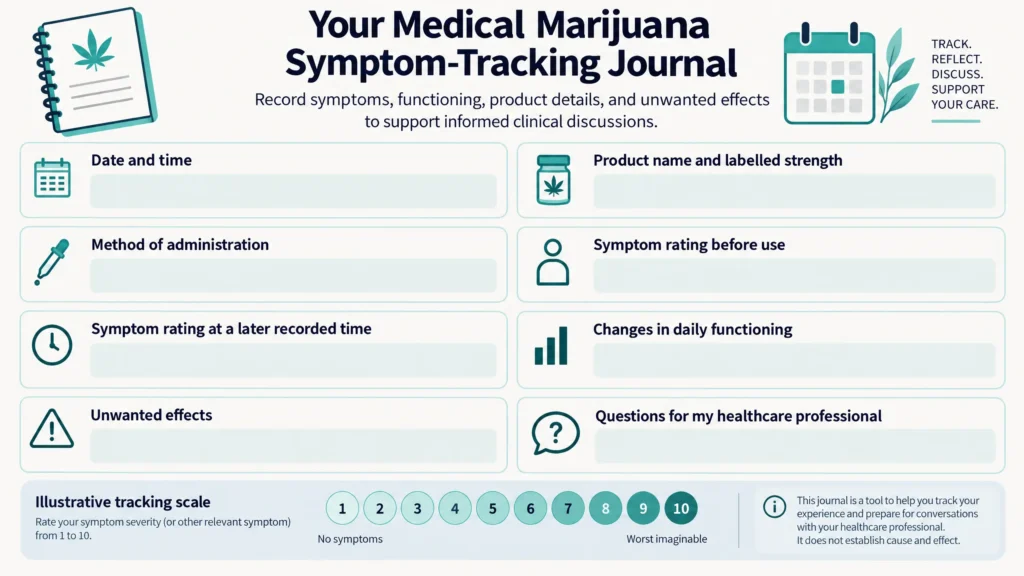
What to record for each dose?
Date and time. Product name and batch number from the PA dispensary COA (batch number allows you to identify if a specific product batch performs differently from others). Exact dose in mg (calculated from COA potency). Method of administration (sublingual, swallowed, vaporized).
What to record before and 60 to 90 minutes after?
Primary qualifying condition symptom rating on a 1 to 10 scale. Functional capacity (can you work, concentrate, have a conversation normally). Mood and anxiety level on a 1 to 10 scale. Sleep quality the following morning (for nighttime doses).
What to add weekly?
Overall trend in qualifying condition symptom severity. Whether your dose still feels adequate or has become less effective. Any side effects that have emerged or resolved.
Daily microdosing journal template
| What to Record | Details to Note | Why It Matters |
|---|---|---|
| Product and batch number | Name + batch # from COA label | Batch-specific comparison if effects change |
| Dose in mg | Calculated from COA potency, not just label | Accuracy matters for titration |
| Time taken and method | Sublingual vs swallowed; morning vs evening | Timing patterns affect protocol optimization |
| Symptom score before dose | 1 to 10 for primary qualifying condition | Baseline comparison for each dose |
| Symptom score 60 to 90 min after | 1 to 10 same scale | Confirms dose effectiveness |
| Functional capacity | Work, concentrate, drive, have conversation | Tracks impairment at current dose level |
| Sleep quality (next morning) | For evening doses; 1 to 10 | Critical for PTSD and sleep-disruption patients |
The batch number tracking is unique to PA dispensary patients. Licensed dispensary products include a batch number on the label that corresponds to the specific COA filed with the PA Department of Health. If a particular batch seems less effective or produces unexpected effects, your pharmacist can pull that batch’s COA and compare potency and terpene data.
When to Involve Your PA Dispensary Pharmacist
Every licensed PA dispensary is required by state regulation to have a licensed pharmacist on-site during business hours. This resource is free and underused by most patients.
For microdosing specifically, the pharmacist consultation is worth scheduling for:
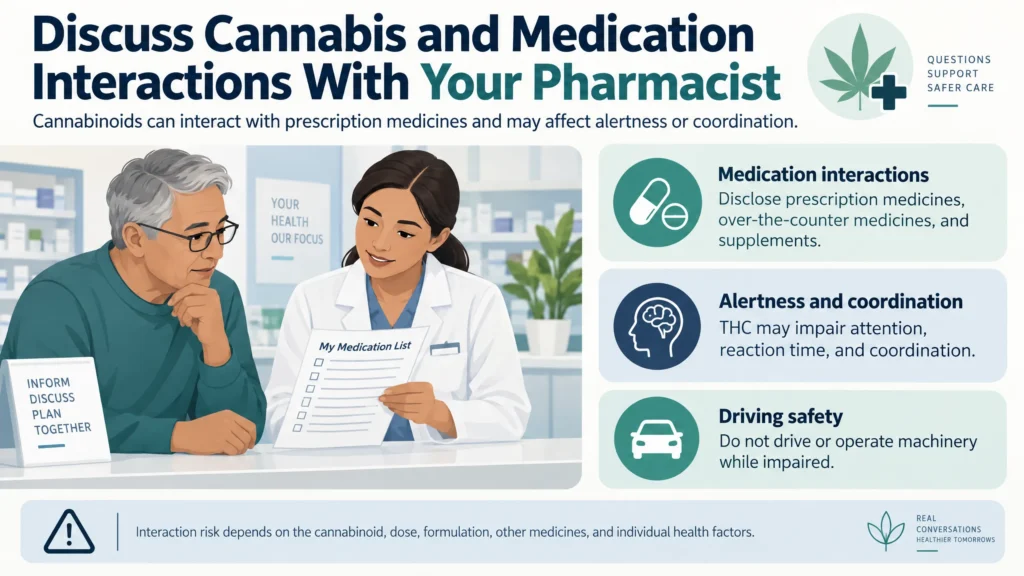
Initial protocol design. Tell the pharmacist your qualifying condition, your medication list, your cannabis experience level, and your goals.
They can recommend specific products from the current inventory that match microdose precision needs, advise on ratio selection, and identify any drug interactions relevant to your situation. CBD at therapeutic doses does interact with several common anxiety and pain medications.
After 4 to 6 weeks without adequate results. If your titration has not produced the expected symptom improvement, the pharmacist can review your journal data and suggest whether the issue is dose, product format, timing, or terpene profile.
When switching products. Different batches of the same product can have meaningfully different terpene profiles even at similar THC percentages. When a product you rely on is unavailable, the pharmacist can identify an equivalent from a different cultivator using COA data comparison.
When medication changes happen. New prescriptions can affect CBD metabolism through CYP450 enzyme interactions. A pharmacist review when your prescription medication list changes protects your microdosing protocol’s effectiveness and safety.
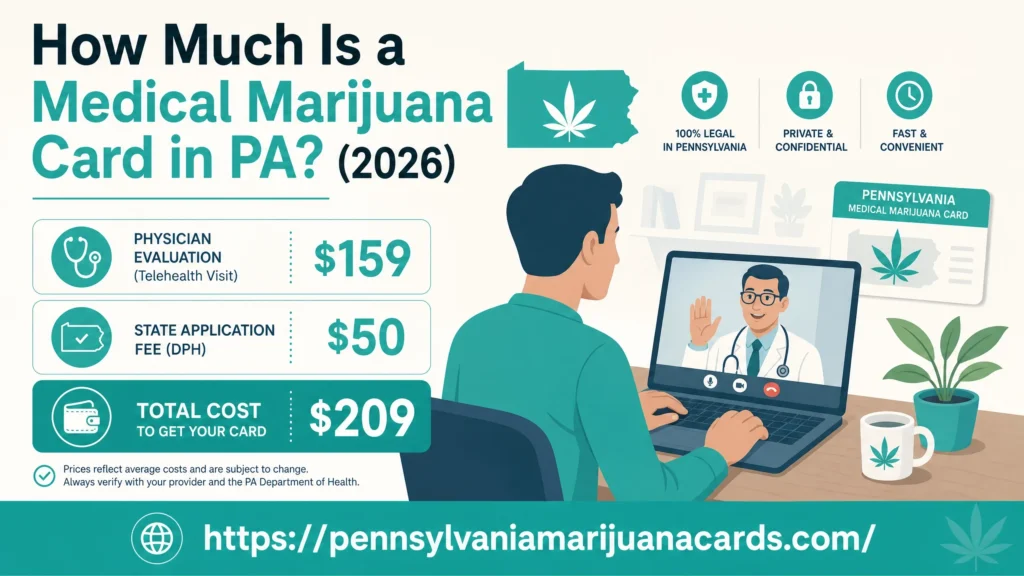
If you are not yet a registered PA patient and want to access pharmacist-guided microdosing at licensed PA dispensaries, check whether your condition qualifies here or get certified at Pennsylvania Marijuana Cards. New patient certification is $159 plus the $50 state fee, with the fee waived through MMAP for Medicaid, SNAP, WIC, CHIP, PACE, and PACENET enrollees.
Frequently Asked Questions
Q: What is a microdose of medical marijuana?
A: A microdose is a sub-perceptual amount of cannabinoids that produces therapeutic effects without significant psychoactivity.
Clinically, a microdose of THC is 1 to 2.5mg per serving, and a microdose of CBD is 5 to 10mg per serving, based on European Journal of Internal Medicine guidelines.
These amounts are significantly lower than standard dispensary doses, which typically range from 5mg to 10mg THC per piece for troches and higher for vape products.
Q: Why would a smaller dose work better than a larger one?
A: Because of the biphasic dose-response relationship of cannabinoids. THC at low doses activates CB1 receptors in a calming, pain-reducing, mood-elevating direction. At higher doses, the same activation can produce anxiety, paranoia, and cognitive impairment.
A University of Chicago trial found that 7.5mg oral THC improved mood and stress response while 12.5mg worsened it.
For daily management of chronic conditions, the goal is sustained therapeutic effect within the beneficial phase of the dose-response curve, not maximum THC blood levels.
Q: What PA dispensary products work best for microdosing?
A: PA dispensary troches and sublingual tinctures are the most practical microdosing tools.
Troches can be divided into halves or quarters for 1.25mg to 2.5mg doses. Tinctures with calibrated droppers allow measurement to 0.25ml increments, delivering precise milligram amounts calculated from the COA potency data.
Vaporized flower is less precise for microdosing because individual draws vary in delivery, but it provides the fastest onset for acute symptom episodes.
Q: How long does it take for microdosing to work?
A: Individual doses take 15 to 45 minutes via sublingual administration.
For the microdosing protocol to show full benefits for ongoing condition management, allow 2 to 4 weeks of consistent daily dosing for effects to stabilize and 6 to 8 weeks for a complete protocol assessment.
Most patients who report microdosing not working stopped within the first two weeks, before stable blood levels and ECS calibration were established.
Q: Will I build tolerance to microdoses?
A: Yes, over time. Daily THC use at any dose level gradually downregulates CB1 receptors. Cycling protocols (5 days on, 2 days off, or 3 weeks on, 1 week off) prevent significant tolerance buildup.
CBD does not produce the same receptor downregulation as THC and does not require the same cycling approach.
Signs that tolerance is building include your established effective dose producing less relief, shorter duration of effect, or an impulse to increase your dose without a specific change in symptom severity.
Q: Can I microdose cannabis alongside my prescription medications?
A: With physician and pharmacist oversight.
CBD at therapeutic doses (above 25mg daily) inhibits CYP2C9 and CYP3A4 liver enzymes that metabolize many common medications including SSRIs, benzodiazepines, blood thinners, and several pain medications. THC can add CNS depression when combined with sedating medications.
Bring your complete medication list to your PA dispensary pharmacist before starting. This consultation is free at every licensed PA dispensary.
Q: Is microdosing only for new cannabis patients?
A: No. Microdosing benefits both new and experienced patients, though for different reasons.
New patients use microdosing to safely discover their therapeutic range without risking anxiety or overwhelming psychoactivity. Experienced patients use it to maintain therapeutic effects with less product, preserve receptor sensitivity, and manage conditions requiring daytime functionality.
Some experienced patients cycle between microdosing during the day and slightly higher doses at night for sleep support.
The Bottom Line
Microdosing medical marijuana in Pennsylvania is a precision-based approach to cannabinoid therapy that is more clinically supported, and more practically feasible with PA dispensary products, than most patients realize.
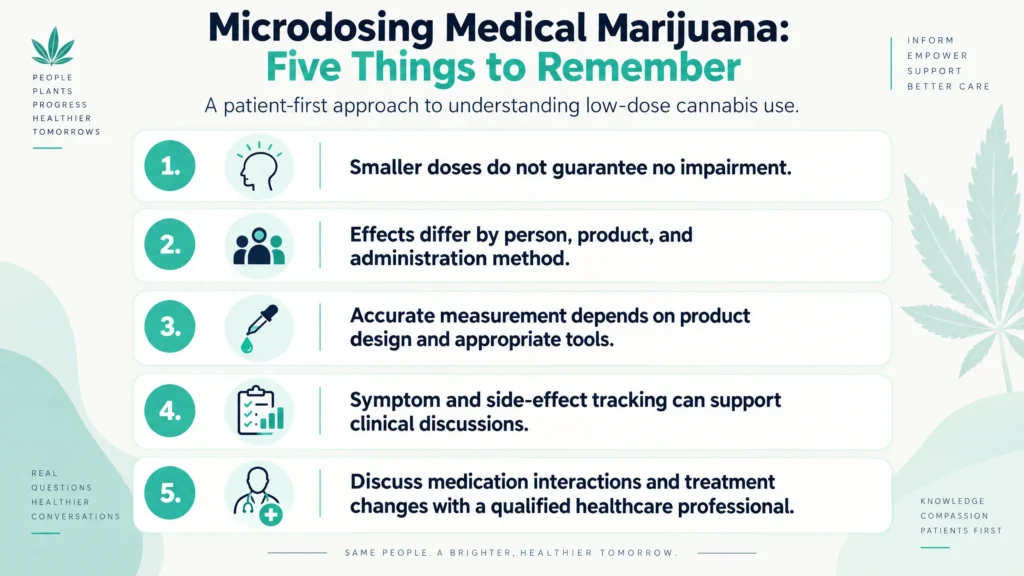
The research is clear: lower doses are not weaker doses. For daily management of chronic qualifying conditions, 1 to 2.5mg of THC with 5 to 25mg of CBD, calibrated carefully over 6 to 8 weeks, can produce consistent therapeutic benefit while preserving cognitive function, maintaining receptor sensitivity, and avoiding the tolerance escalation that comes with standard-dose daily use.
PA dispensary troches, tinctures, and the free pharmacist consultation available at every licensed dispensary make the practical execution of a microdosing protocol achievable for any registered patient.
This blog post is intended for general educational and informational purposes only and does not constitute medical advice. Cannabis interacts with many common prescription medications, particularly at CBD doses above 25mg daily. Always disclose your complete medication list to your PA dispensary pharmacist before starting a microdosing protocol. Do not drive or operate machinery after any cannabis dose until you are fully confident it does not affect your function. Medically reviewed by Dr. Johnathon Chance Miller, MD.
Sources
- Recovered.org: Benefits and Risks of Microdosing THC (March 2025, updated July 2026)
- StrainElite: Cannabis Microdosing, The Science of Low-Dose THC (June 2026)
- CompCare MD: The Rise of Microdosing Cannabis, Benefits Without the High (April 2026)
- Genesis CBD: Microdosing Cannabinoids, 2026 Guide (April 2026)
- Ubucha: Cannabis Microdosing Therapeutic Protocols and Benefits 2026 (August 2026)
- CannaMD: Medical Cannabis Microdosing Protocols and Therapeutic Benefits
- CannaMD: How to Microdose Marijuana (August 2025)
- Bachhuber MA et al., European Journal of Internal Medicine 2018: Therapeutic dosing of cannabis
- University of Chicago: Oral THC Dose and Stress Response Study
- Aviram J, Samuelly-Leichtag G. Efficacy of Cannabis-Based Medicines for Pain Management, 2017
- PA Department of Health: Medical Marijuana Program