
If your current PA dispensary products are not working as well as they used to, you have almost certainly built cannabis tolerance. Your products have not changed. Your condition has not changed. Your CB1 receptors have changed.
The good news: cannabis tolerance is reversible. PET brain imaging studies show CB1 receptors begin recovering within 48 hours of stopping THC and return to near-normal density by 28 days. You do not need to stop permanently. You need a strategy.
Need a PA Medical Marijuana Card?
Get certified online in 15 minutes. 100% Money-Back Guarantee.
Get Certified Now →This guide covers the science behind why tolerance develops, how long recovery actually takes at each stage, and three practical approaches for PA dispensary patients, including one that does not require stopping cannabis entirely.
Key Takeaways
| Topic | Key Point |
|---|---|
| What causes tolerance | CB1 receptor downregulation: THC causes receptors to reduce in number (desensitization) then pull inside cell walls (internalization) |
| How fast recovery starts | PET imaging shows CB1 receptor density begins recovering within 48 hours of stopping THC |
| Full reset timeline | Near-complete receptor normalization by 28 days of abstinence |
| Alternative to full break | PA dispensary product rotation strategy: cycling between high-THC, ratio, and CBD-dominant products |
| Return dose rule | Come back at half your pre-break dose or less, your restored receptors make the same amount hit significantly harder |
| CBD during a break | CBD does not cause significant CB1 downregulation, CBD-only products can continue during a tolerance break without resetting progress |
Why Tolerance Develops: The CB1 Downregulation Mechanism
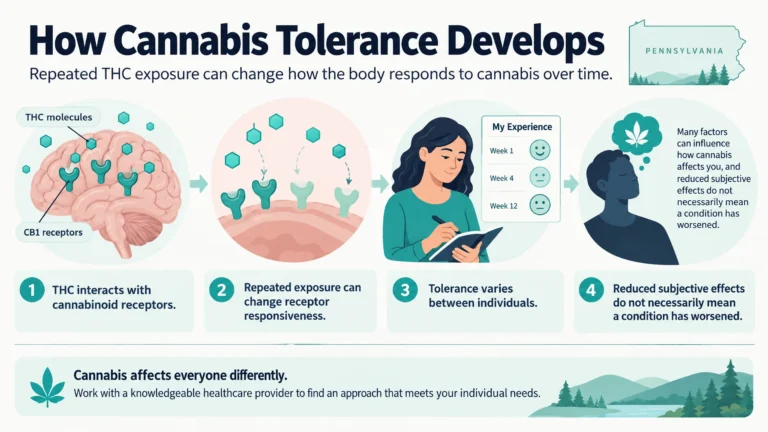
Cannabis tolerance develops because of a specific, measurable biological process: CB1 receptor downregulation.
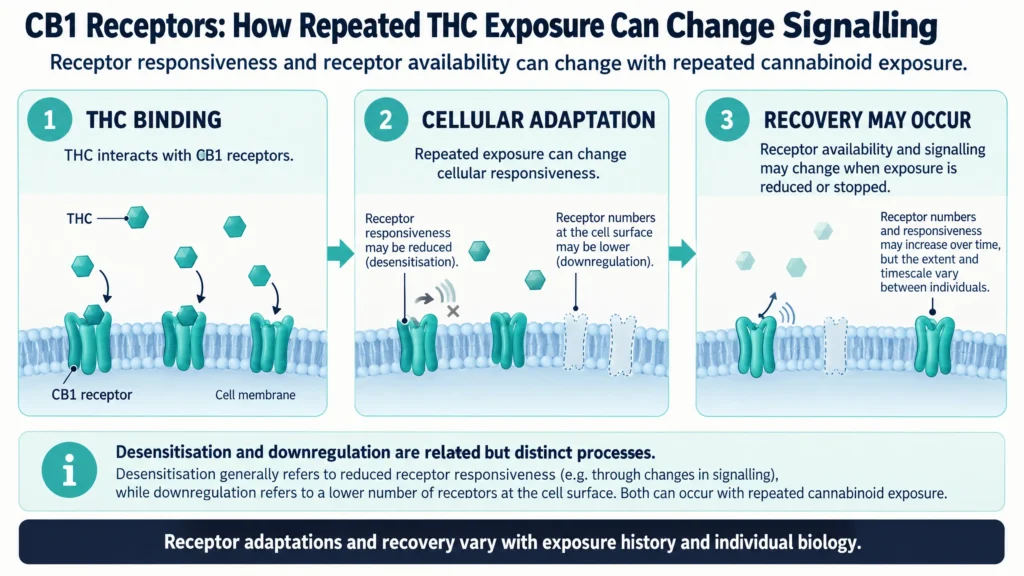
THC is approximately 10 times more potent at CB1 receptors than the body’s own endocannabinoids (anandamide and 2-AG). When THC repeatedly floods the CB1 system, the brain detects that its receptors are being overstimulated.
The brain’s response is homeostatic adaptation: reduce the target to reduce the signal.
Do You Qualify for a PA MMJ Card?
Connect with a licensed Pennsylvania state physician online from home.
A landmark 2012 PET imaging study published in Molecular Psychiatry, conducted by researchers at the US National Institute of Health, measured this process directly. Daily cannabis users had approximately 20% fewer CB1 receptors available in key brain regions compared to non-users.
With fewer CB1 receptors to bind, the same dose of THC produces less effect. That is tolerance in biological terms.
Tolerance develops faster when:
- Products have higher THC concentrations
- Dosing frequency is daily or multiple times daily
- Consumption is via vaporization or inhalation (faster peak blood levels) rather than oral
- No cycling or breaks are built into the regimen
For PA dispensary patients, the shift from flower (typically 18 to 28% THC) to concentrates (65 to 85% THC) is one of the most common accelerators of rapid tolerance development.
Two-Phase Tolerance: Desensitization Then Internalization
CB1 receptor downregulation happens in two distinct phases.
Understanding both explains why a 48-hour break gives partial relief but a full 28-day break is needed for complete reset.
Phase 1: Desensitization
Existing CB1 receptors become less responsive to THC binding. The receptor is still present at the cell surface but its downstream signaling efficiency is reduced. Less cellular response per THC molecule attached.
This phase begins quickly, within days to weeks of regular daily use.
A 48-hour break begins reversing desensitization. Receptors already at the surface start recovering their responsiveness. This is why even a short break produces noticeable improvement.
Phase 2: Internalization
With prolonged daily exposure, CB1 receptors are physically pulled inside the cell wall.
⚡ Fast & 100% Online PA Medical Cards
Board-Certified Doctors • 100% Money-Back Guarantee
Book Evaluation Now →Internalized receptors are completely unavailable for THC binding. They cannot be accessed from outside the cell. No amount of THC or endocannabinoid can activate a receptor that is inside the cell rather than on the surface.
This phase takes longer to reverse. The receptor must be re-expressed at the cell surface through a protein synthesis process that takes days to weeks.
This two-phase process explains the PET imaging timeline: early benefits from reversing desensitization, complete benefit requiring internalized receptor re-expression.
The PET Imaging Recovery Timeline
Brain imaging studies provide the most objective available data on how long tolerance reversal actually takes.
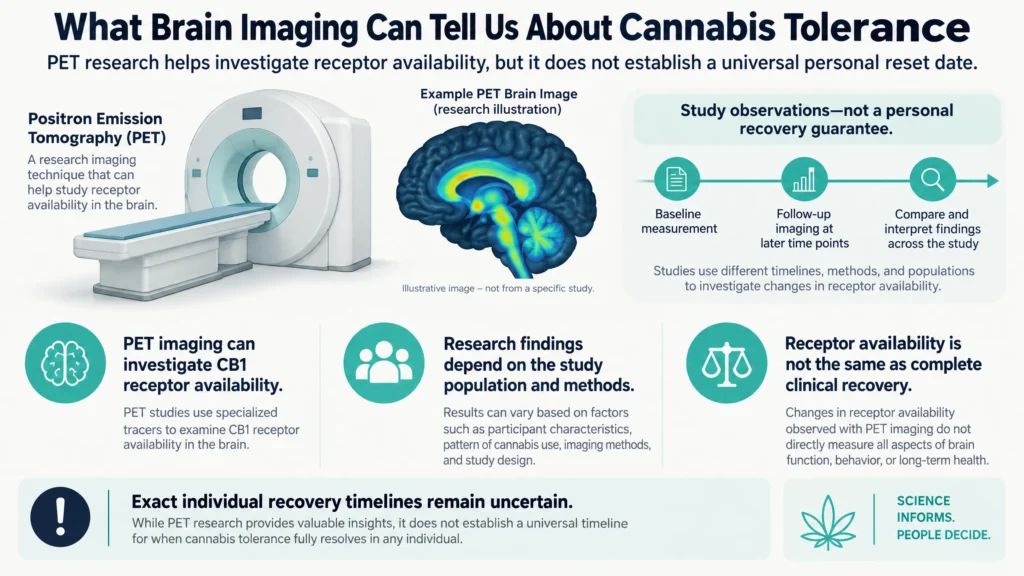
The D’Souza et al. 2016 study, published in Biological Psychiatry: Cognitive Neuroscience and Neuroimaging, used PET imaging to track CB1 receptor density changes during abstinence in daily cannabis users.
The findings provide a recovery calendar:
| Break Duration | CB1 Receptor Recovery | Expected Effect Change |
|---|---|---|
| 48 hours | Recovery begins, desensitization starts reversing | Noticeable improvement in product effectiveness |
| 1 week | Meaningful recovery, approximately 50% of the gap closed | Products feel more effective at current dose |
| 2 weeks | Substantial recovery | Most patients report returning to near-baseline effectiveness |
| 28 days | Near-complete receptor normalization | Full reset for most patients |
As Wavy8’s April 2026 science summary states: “The science gives us a clear framework: meaningful recovery begins at 48 hours, substantial improvement by 2 weeks, and near-complete receptor reset by 4 weeks.”
Important qualifier: This timeline reflects research on chronic daily users. Patients who use cannabis less frequently, in lower doses, or with regular cycling already built in will see faster recovery.
The hippocampus and cerebellum caveat: The 2012 Molecular Psychiatry study found that the hippocampus (memory) and cerebellum (motor coordination) showed faster and more widespread receptor downregulation than other brain regions. This means memory and coordination-related tolerance effects may develop more quickly and take longer to fully resolve than other tolerance effects.
The Therapeutic Tolerance Paradox
This section covers research that most tolerance break guides completely ignore, and it is important context for PA medical marijuana patients.
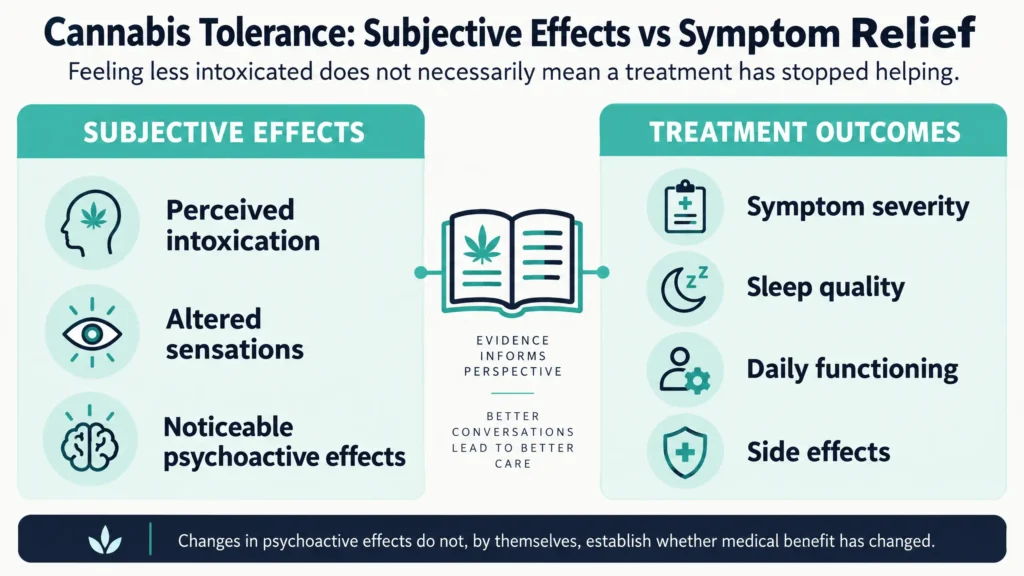
A 2025 study by Stith and colleagues examined how medical cannabis patients actually respond to tolerance over time. The finding was striking: patients typically increase their dose by only about 0.6% per session when tolerance begins reducing effectiveness. That is less than one-tenth of what would be needed to maintain therapeutic parity.
Renewing Your PA MMJ Card?
Quick annual recertification online. No paperwork hassle.
Renew Card Online →Most medical patients simply accept declining efficacy rather than actively managing it.
An endocannabinoid science review published January 2026 called this pattern the “tolerance deepening spiral”: as patients chase therapeutic relief with slightly higher doses, they accelerate CB1 downregulation, which further reduces effectiveness.
But the same research identified a meaningful counterpoint.
Tolerance reduces subjective psychoactive effects more than it reduces therapeutic effects. A 2026 study from the Philadelphia College of Osteopathic Medicine followed 137 medical cannabis patients for 12 months and found sustained sleep quality improvements throughout the study period, even as patients reported tolerance to psychoactive effects.
This suggests that for some therapeutic applications, particularly sleep and chronic pain management, tolerance to the “high” develops faster than tolerance to the therapeutic benefit.
For PA medical patients, the practical takeaway: tolerance to psychoactive effects is not the same as loss of therapeutic value. But actively managing tolerance through the strategies below preserves both.
Three Strategies for PA Dispensary Patients
There is no single best approach to managing cannabis tolerance. The right strategy depends on how long you have been developing tolerance, how severe it is, and whether your qualifying condition allows for a period of reduced or eliminated THC use.
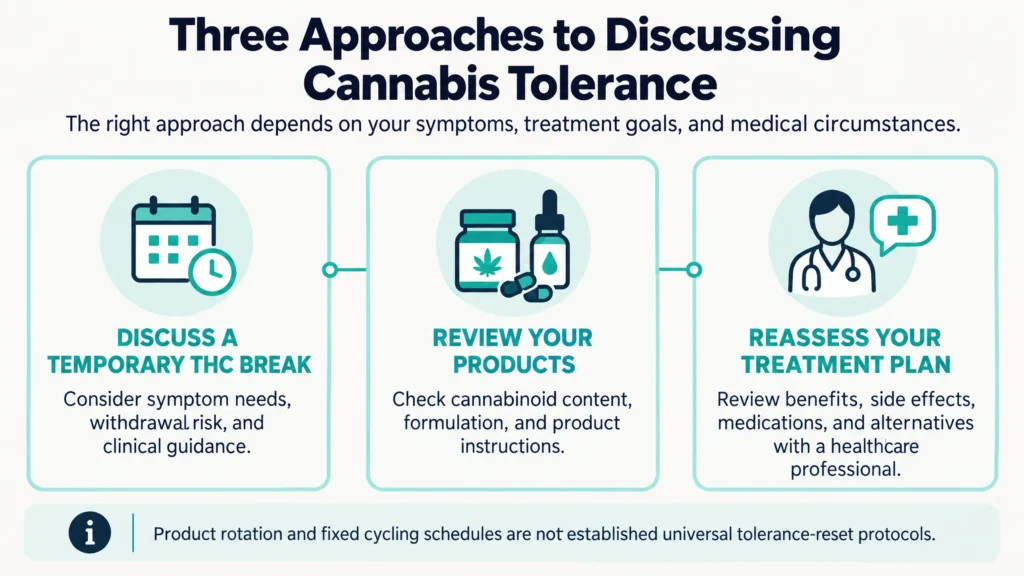
Strategy 1: Complete tolerance break Best for patients with significant, long-standing tolerance who can manage their qualifying condition symptoms through a break period. Produces the most complete receptor reset.
Strategy 2: PA product rotation Best for patients who cannot stop cannabis entirely due to symptom management needs. Rotates between product types to reduce receptor downregulation without complete abstinence.
Strategy 3: Microdose maintenance Best for patients with mild tolerance who primarily need to prevent further escalation rather than achieving a full reset. Dramatically reduces daily THC intake while maintaining ECS engagement.
Your PA dispensary pharmacist can help identify which strategy best matches your qualifying condition, symptom severity, and medication situation. This consultation is free at every licensed PA dispensary.
Strategy 1: The Complete Tolerance Break
Get Approved by a Licensed PA Doctor
Schedule your appointment in minutes. You only pay if approved.
Start Online Application →A complete tolerance break means stopping all THC-containing cannabis products for a defined period.
CBD-only products can continue without resetting progress. CBD does not cause significant CB1 receptor downregulation and will not delay the tolerance reset process.
Choosing your break duration:
| Your Tolerance Profile | Minimum Break | Recommended Break |
|---|---|---|
| Mild (using 2 to 3x per week, recent development) | 3 to 4 days | 1 week |
| Moderate (daily user, 3 to 6 months) | 1 week | 2 weeks |
| Significant (daily heavy user, 6+ months) | 2 weeks | 4 weeks |
| Severe (concentrates daily, 1+ year) | 4 weeks | 4 weeks minimum |
During your break:
Continue CBD-dominant tinctures if you use them for your qualifying condition. CBD’s 5-HT1A serotonin pathway and FAAH inhibition mechanisms continue providing anxiolytic and analgesic benefit without affecting CB1 receptor recovery.
Increase exercise if physically possible. Exercise increases natural anandamide production and supports ECS function during the period when THC is absent.
Expect vivid dreams in the first 1 to 2 weeks. THC suppresses REM sleep. When THC is removed, REM rebounds sharply and dreams become unusually vivid. This is temporary and expected.
Expect some sleep disruption in the first week, particularly if you were using cannabis primarily for sleep. This is the most common withdrawal symptom and usually resolves within 7 to 10 days.
For more detail on CBD tinctures you can continue during a break, see our CBD tinctures guide.
Strategy 2: The PA Product Rotation Method
This strategy is specifically designed for PA dispensary patients whose qualifying condition symptoms require ongoing cannabis use and who cannot complete a full tolerance break.
Ready to Get Your Official PA MMJ Card?
State-certified doctor consultations online. No risk—100% refund if not approved.
Claim Your MMJ Card Online →Product rotation works by cycling through different cannabinoid profiles that engage CB1 receptors differently, reducing the continuous high-THC stimulation that drives receptor downregulation.
A three-phase rotation cycle:
Phase 1 (Week 1 to 2): Reduce THC concentration
Switch from your current high-THC product to a 3:1 or 5:1 CBD:THC ratio product at a similar dose. The higher CBD content partially counteracts CB1 overstimulation while maintaining therapeutic benefit. THC blood levels drop, beginning partial CB1 recovery.
Phase 2 (Week 3 to 4): CBD-dominant phase
Shift to a 10:1 CBD:THC or CBD-only product. THC intake drops to near-zero or trace amounts. CB1 receptors continue recovering. CBD maintains ECS engagement through FAAH inhibition and 5-HT1A pathway activation.
Phase 3 (Week 5 to 6): Gradual THC reintroduction
Return to a lower-THC product than your starting point. If you were using a 25% THC flower product before the rotation, return to a 15 to 18% product rather than your previous high-THC product. Build back up gradually.
What to look for on the COA:
For this strategy to work, you need to know exactly what you are switching between. Your PA dispensary COA’s cannabinoid panel shows THC, THCA, CBD, and other cannabinoid percentages. As covered in our how to read a PA dispensary COA guide, the total THC formula (THCA x 0.877 + delta-9 THC) tells you the actual potency after decarboxylation.
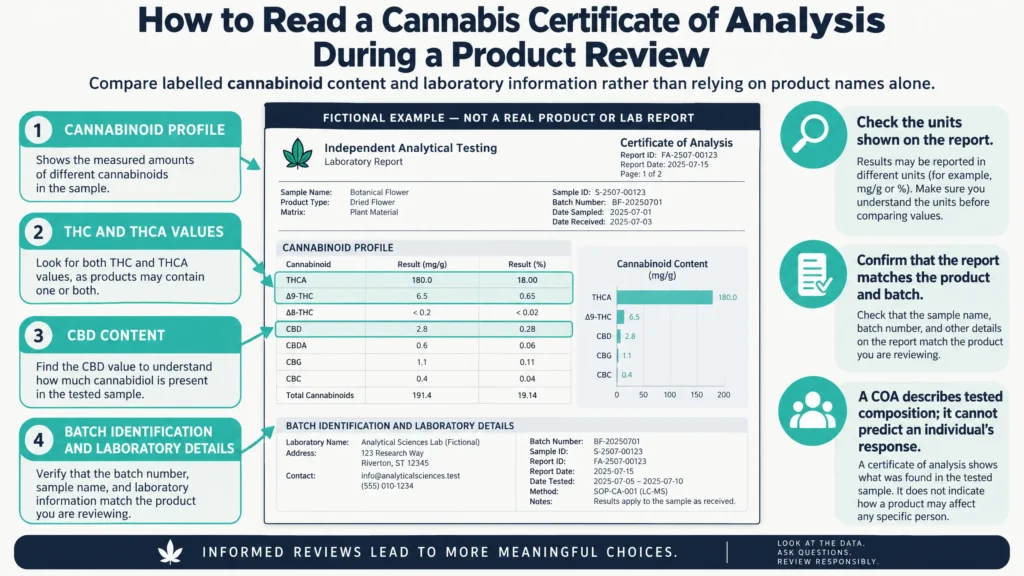
The rotation strategy requires this information to be effective. Your dispensary pharmacist can identify specific products in the current inventory that fit each phase of the rotation.
Strategy 3: Microdose Maintenance
For patients whose tolerance is mild or recent, or who use cannabis preventively rather than for acute symptom management, microdose maintenance prevents tolerance from deepening without requiring a full break.
Microdosing maintains CB1 receptor sensitivity by keeping THC blood levels low enough that the homeostatic downregulation signal is not consistently triggered.
The target dose range: 1 to 2.5mg THC per serving, once or twice daily. At these levels, CB1 receptors receive gentle engagement rather than the sustained high-concentration activation that drives downregulation.
For PA patients whose tolerance has already developed significantly, microdosing alone will not reset existing receptor changes. It maintains the current level rather than reversing it.
Combining microdose maintenance with a 48 to 72 hour break every two weeks provides partial reset cycles that accumulate over time for patients who cannot do a full break.
For a complete guide to implementing a microdosing protocol with PA dispensary products, see our how to microdose medical marijuana guide.
What to Expect During a Tolerance Break
Knowing what to expect reduces the chance of abandoning a break before meaningful recovery occurs.
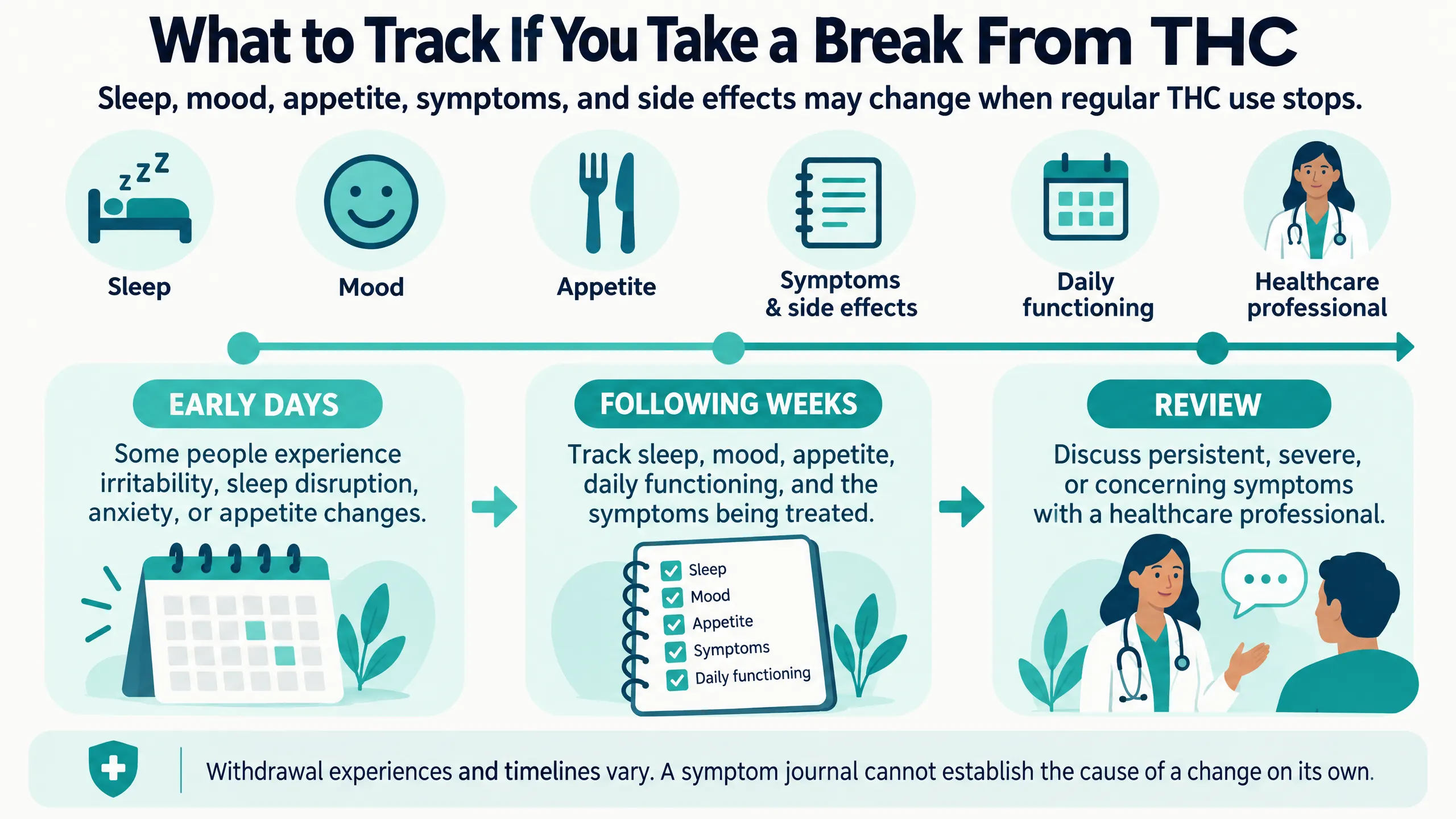
What to expect during a tolerance break, day by day:
| Period | Common Experiences | What Is Happening |
|---|---|---|
| Days 1 to 3 | Irritability, mild anxiety, sleep disruption, appetite changes | Withdrawal peaks; body recalibrating without THC |
| Days 4 to 7 | Symptoms ease; vivid dreams appear; some mood improvement | REM rebounds; CB1 recovery underway |
| Days 8 to 14 | Sleep normalizes; qualifying condition symptoms may resurface | Meaningful CB1 recovery; genuine condition visibility |
| Days 15 to 28 | Near-full receptor normalization; natural mood and appetite return | Complete CB1 resensitization for most patients |
Days 1 to 3
The most challenging period. Withdrawal symptoms, where they occur, peak in this window. Common symptoms include irritability, mild anxiety, decreased appetite, and sleep disruption. Not everyone experiences these; severity correlates with how heavily and how long cannabis was used.
These symptoms are temporary and represent the body recalibrating. They are the downside of the break that produces the receptor reset on the other side.
Days 4 to 7
Most withdrawal symptoms begin to ease. Sleep often improves. Vivid dreams appear as REM rebounds. Some patients report improved baseline mood compared to their pre-break baseline, as chronic THC had been muting natural reward signaling.
Days 8 to 14
CB1 recovery is meaningful at this point. If symptoms return during this period, they reflect genuine qualifying condition need rather than withdrawal. This information is diagnostically useful: it shows which symptoms are tied to the condition versus which were masked by cannabis use.
Days 15 to 28
Near-complete receptor normalization occurs during this period. By day 28, most patients are at or near full CB1 receptor density.
For PA patients managing chronic qualifying conditions: use this period to note which symptoms are most prominent without cannabis. This is valuable information to bring to your next dispensary pharmacist visit or physician appointment, as it clarifies the specific therapeutic burden cannabis is carrying.
The Return Protocol: How to Come Back Safely
The return to cannabis after a tolerance break is the moment of highest risk for unintentional overconsumption.
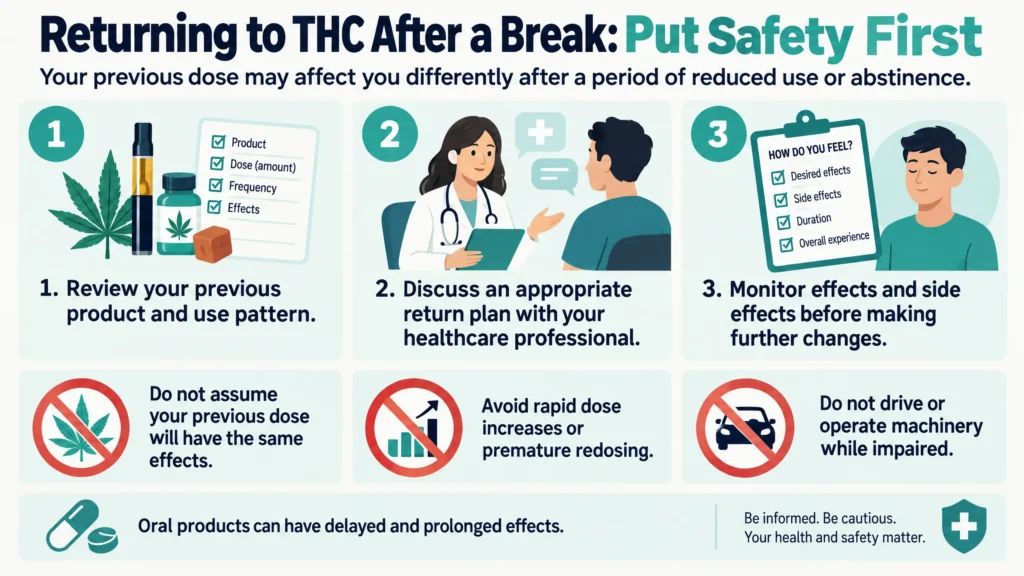
Your CB1 receptors have reset. They are fully sensitive again. The dose that barely produced an effect before your break will produce significantly stronger effects now.
This is the goal, and it is also the hazard.
The return rule: come back at half your pre-break dose or less.
If you were taking a 10mg troche before your break, return with a 5mg troche. If you were using a 25% THC flower product, return with a 15 to 18% product for the first week.
First return session protocol
Take the reduced dose at home. Do not drive for the rest of the day. Have a sober adult present if possible. Assess the effect fully before considering any additional dose. Remember the 2-hour rule for oral products: do not redose until 2 hours have passed.
Building back up
Increase dose by no more than 25% per week for the first 2 to 4 weeks after returning. This gradual re-titration maintains the benefit of the reset while keeping you within manageable effect ranges.
For guidance on what different dose levels feel like, see our guides on is 5mg of THC a lot and is 100mg of THC a lot.
For the COA reading needed to identify THC content in the products you are returning to, see our how to read a PA dispensary COA guide.
The PA Dispensary Pharmacist’s Role
For PA medical marijuana patients managing tolerance as part of a long-term treatment strategy, the on-site pharmacist at your licensed PA dispensary is the most practical clinical resource available.

What a pharmacist can do for tolerance management:
Review your current product history and identify which formats are most likely to be driving rapid tolerance development (typically concentrates and high-potency vape cartridges).
Identify specific current inventory products for each phase of the PA rotation strategy based on actual COA data, not just label descriptions.
Recommend CBD-dominant products for the break phase that are appropriate for your qualifying condition and do not interact with your current medications.
Note any drug interactions that may be relevant when CBD doses increase during a THC break (CBD inhibits CYP450 enzymes that process several common medications).
Flag if any products you are considering for return dosing have significantly higher potency than your pre-break products.
Tolerance prevention cycling schedules
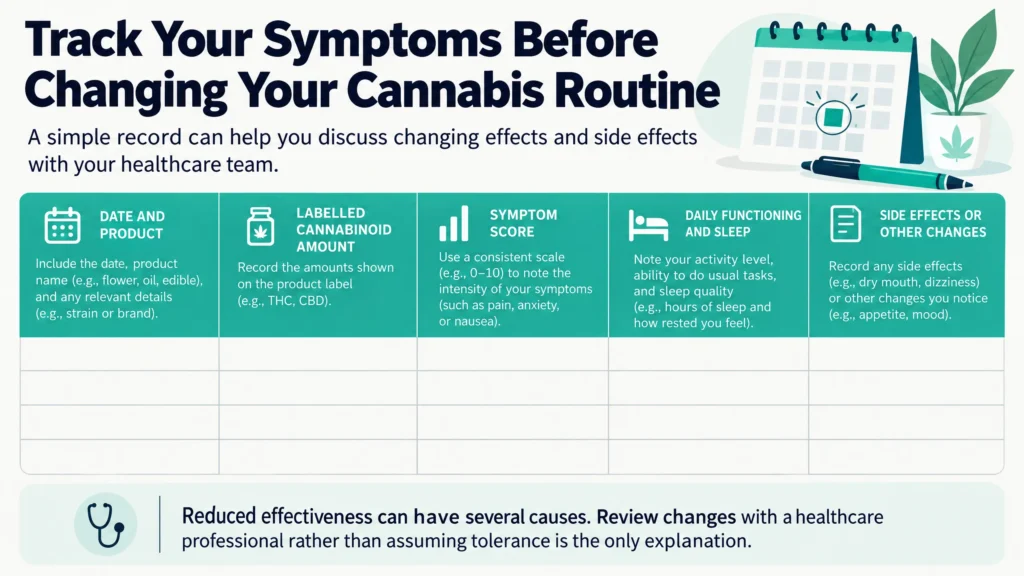
| Schedule | On Period | Off Period | Best For |
|---|---|---|---|
| Weekly cycle | Monday to Friday (5 days) | Saturday to Sunday (2 days) | Moderate daily users; easy to track |
| Monthly cycle | 3 weeks THC use | 1 week CBD-only or abstinence | Heavy daily users; more complete monthly reset |
| Rotation cycle | 2 weeks high-THC | 2 weeks ratio 2 weeks CBD-dominant |
|
| Microdose maintenance | Daily low-dose (1 to 2.5mg) | No true break needed | Mild users; prevents escalation |
This consultation is free and available during business hours at every licensed PA dispensary.
Frequently Asked Questions
Q: How long does it take to reverse marijuana tolerance?
A: CB1 receptor recovery follows a specific timeline confirmed by PET imaging studies. Recovery begins within 48 hours of stopping THC. Meaningful improvement occurs by 1 to 2 weeks.
Near-complete receptor normalization takes approximately 28 days for daily heavy users. Patients who use less frequently or have built tolerance over a shorter period reset faster. Mild tolerance may resolve significantly within 3 to 7 days.
Q: Can I reverse tolerance without stopping cannabis completely?
A: Yes, through the PA dispensary product rotation strategy.
Cycling from high-THC products to ratio products (3:1 CBD:THC) and then to CBD-dominant products over a 4 to 6 week cycle achieves partial but meaningful CB1 recovery without complete abstinence.
This approach is particularly valuable for PA patients whose qualifying condition symptoms require ongoing cannabis management. The partial reset is less complete than a full break but better than dose escalation.
Q: Does CBD cause tolerance?
A: No, not significantly. CBD does not cause meaningful CB1 receptor downregulation because it does not directly activate CB1 receptors.
CBD works primarily by inhibiting FAAH (the enzyme that breaks down anandamide) and through 5-HT1A serotonin pathway activation. These mechanisms do not trigger the homeostatic adaptation that produces tolerance.
CBD-only products can be continued during a THC tolerance break without resetting progress. This is why CBD-dominant products are recommended as the bridge product during both complete breaks and rotation cycles.
Q: Why are my PA dispensary products less effective than they used to be?
A: Most likely because of CB1 receptor downregulation from regular THC use. This is normal and expected with consistent cannabis use. It does not mean your condition has worsened or the products have changed.
The 2025 Stith research found medical patients typically increase doses by only 0.6% per session when tolerance develops, far less than needed to maintain therapeutic effect.
Most patients accept declining effectiveness without taking active steps to reset it. A planned tolerance break or product rotation protocol addresses the root cause rather than chasing it with higher doses.
Q: What happens to my qualifying condition symptoms during a tolerance break?
A: Symptoms may return or worsen during the break, particularly in the first 1 to 2 weeks. This is expected and temporary.
It also provides diagnostically useful information: symptoms that return strongly during a break reflect genuine qualifying condition burden that cannabis was addressing.
This information helps calibrate your return dosing and your discussion with your PA certifying physician about the role cannabis plays in your overall treatment plan.
Q: How do I prevent tolerance from building again after a reset?
A: Several evidence-based approaches work together.
Maintain a regular cycling schedule (5 days on, 2 days off, or 3 weeks on, 1 week off) to prevent receptor downregulation from establishing. Keep doses at the minimum effective level rather than the maximum tolerable level.
Alternate between higher-THC sessions for acute symptom needs and CBD-dominant sessions for maintenance. Avoid high-potency concentrates as daily-use products. Revisit your protocol with your dispensary pharmacist every 2 to 3 months.
The Bottom Line
Cannabis tolerance is a biological process with a biological solution.
CB1 receptors downregulate in response to chronic THC exposure. They upregulate during abstinence. The science on this is specific, well-documented, and actionable.
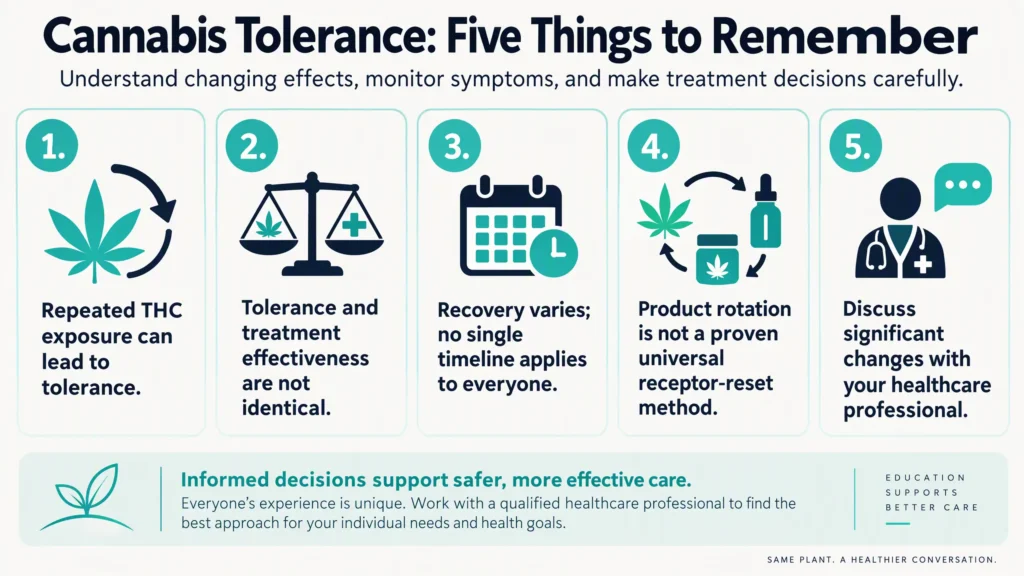
For PA medical marijuana patients, the strategies above offer a range of approaches from full 28-day breaks to CBD-supported rotation cycles that maintain therapeutic coverage. The right choice depends on your qualifying condition, symptom severity, and how much tolerance you have accumulated.
What does not work is the pattern the 2025 Stith research identified: accepting declining effectiveness and slowly escalating doses without addressing the underlying receptor situation. That path leads to higher costs, higher side effects, and deepening tolerance.
Active management, informed by your COA data and guided by your PA dispensary pharmacist, keeps cannabis working for the conditions it qualified you to treat.
This blog post is intended for general educational and informational purposes only and does not constitute medical advice. Patients managing qualifying conditions with medical marijuana should consult their certifying physician before making significant changes to their cannabis regimen, particularly if they take other medications whose metabolism may be affected by changes in CBD intake. Medically reviewed by Dr. Johnathon Chance Miller, MD.
Sources
- Hirvonen J et al. 2012: Reversible and Regionally Selective Downregulation of Brain CB1 Receptors in Chronic Daily Cannabis Users (Molecular Psychiatry)
- D’Souza DC et al. 2016: Rapid Changes in Cannabinoid 1 Receptor Availability After Abstinence from Cannabis (Biological Psychiatry: Cognitive Neuroscience and Neuroimaging)
- Endocannabinoid Science Education: The Medical Cannabis Paradox, How Tolerance Threatens Long-Term Therapeutic Success (January 2026)
- Wavy8: Weed Tolerance Break Guide, The Science of CB1 Receptor Recovery (April 2026)
- RethinkTHC: The Complete Guide to Cannabis Tolerance Breaks (March 2026)
- Compassionate Certification Centers: Tolerance Breaks and Medical Marijuana, How to Reset Your Receptors (January 2026)
- Ivy Hall Dispensary: Cannabis Tolerance, Why It Builds Up and How to Reset It (June 2026)
- Sensiseeds: Weed Tolerance Break Guide, Duration, Withdrawal, and Best T-Break Methods (January 2026)
- PMC: Cannabis Tolerance and CB1 Receptor Research Review
- PA Department of Health: Medical Marijuana Program