
When you walk into a Pennsylvania dispensary for the first time, you are handed a menu with dozens of products, each listing numbers and names that probably do not mean much yet.
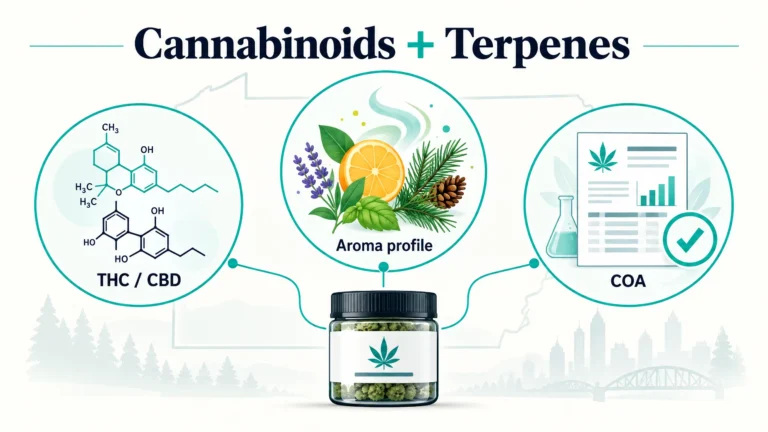
THC 24%. CBD 0.4%. Myrcene 1.2%. Limonene 0.6%. Caryophyllene 0.4%. Total Terpenes 2.8%. This guide makes those numbers readable in about ten minutes. Cannabinoids and terpenes are the two categories of compounds that determine how a cannabis product affects you.
Need a PA Medical Marijuana Card?
Get certified online in 15 minutes. 100% Money-Back Guarantee.
Get Certified Now →Understanding both gives you a framework for choosing products that match your qualifying condition and your goals. It also lets you have a more useful conversation with your PA dispensary pharmacist and budtender.
Replacing “what’s your strongest indica?” with questions based on actual cannabinoid and terpene data produces answers that predict your experience.
Key Takeaways
| Topic | Key Point |
|---|---|
| Cannabinoids | The active compounds in cannabis (THC, CBD, CBN, CBG, etc.) that interact directly with your endocannabinoid system |
| Terpenes | Aromatic compounds that shape the character of the cannabis experience and have independent pharmacological effects |
| The entourage effect | The theory that cannabinoids and terpenes work better together than alone, supported by emerging research but not fully proven |
| The three-number framework | For PA dispensary beginners: check Total THC%, CBD ratio, and dominant terpene, these three numbers predict your experience better than the indica/sativa label |
| The COA | Your PA dispensary’s Certificate of Analysis shows all cannabinoid and terpene data verified by two independent labs, the authoritative source for every number on a product |
| Where to go deeper | Every major terpene and cannabinoid covered in this guide has a dedicated blog on this site, linked throughout |
What Are Cannabinoids?
Cannabinoids are the active compounds in cannabis that interact with your body’s endocannabinoid system (ECS).
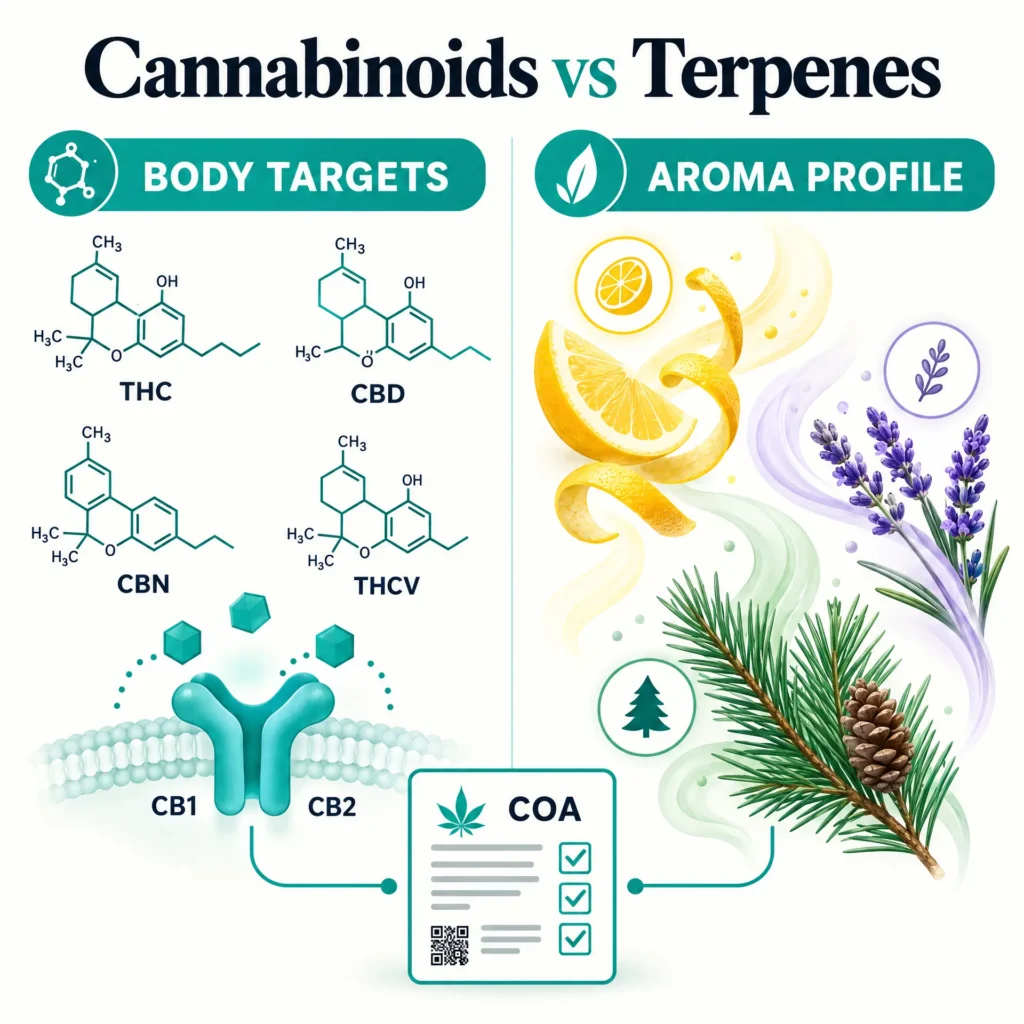
Your ECS is a regulatory network present in every mammal. It uses two primary receptor types, CB1 (concentrated in the brain and nervous system) and CB2 (concentrated in immune tissue), to maintain homeostasis across pain, mood, sleep, appetite, and immune function.
Do You Qualify for a PA MMJ Card?
Connect with a licensed Pennsylvania state physician online from home.
Cannabis contains more than 100 identified cannabinoids. Most are present in trace amounts. A handful are therapeutically significant and appear on your PA dispensary COA.
The key distinction within cannabinoids
Psychoactive cannabinoids activate CB1 receptors in the brain and produce a “high.” THC is the primary example. THCP and delta-8 are others.
Non-psychoactive cannabinoids modulate the ECS through mechanisms that do not produce intoxication. CBD, CBG, and CBN are in this category.
Major cannabinoids at PA dispensaries at a glance
| Cannabinoid | Psychoactive? | Primary Effect | Appears On COA? |
|---|---|---|---|
| THC (delta-9) | Yes | Pain, nausea, sleep onset, mood elevation | Yes, listed as delta-9 THC and THCA |
| CBD | No | Anxiety, inflammation, pain (via FAAH and serotonin) | Yes, listed as CBD and CBDA |
| CBN | Minimal at typical doses | Sleep continuity, mild sedation | Yes, minor cannabinoid panel |
| CBG | No | Anti-inflammatory, neuroprotective | Yes, minor cannabinoid panel |
| THCV | Low dose: no; High dose: mild | Appetite suppression, focus | Rarely at PA dispensaries |
| THCP | Yes, potent | Same as THC but more potent | Very rare; trace amounts only |
For a full explanation of how the endocannabinoid system works and why it matters for every qualifying condition, see our endocannabinoid system guide.
THC: The Primary Psychoactive Cannabinoid
THC (delta-9-tetrahydrocannabinol) is the compound most people associate with cannabis. It produces the psychoactive “high” through CB1 receptor activation.
What THC does?
At lower doses (1 to 5mg), THC reduces anxiety, relieves pain, suppresses nausea, and elevates mood. At higher doses, the same CB1 activation can reverse these effects, producing anxiety, paranoia, and cognitive impairment.
This biphasic dose-response is why higher THC percentage does not always mean better outcomes for medical patients.
THC on the PA dispensary COA
You will see both THCA and delta-9 THC listed separately. THCA is the raw, non-psychoactive precursor in unheated cannabis. When you vaporize flower, heat converts THCA to active delta-9 THC through a process called decarboxylation.
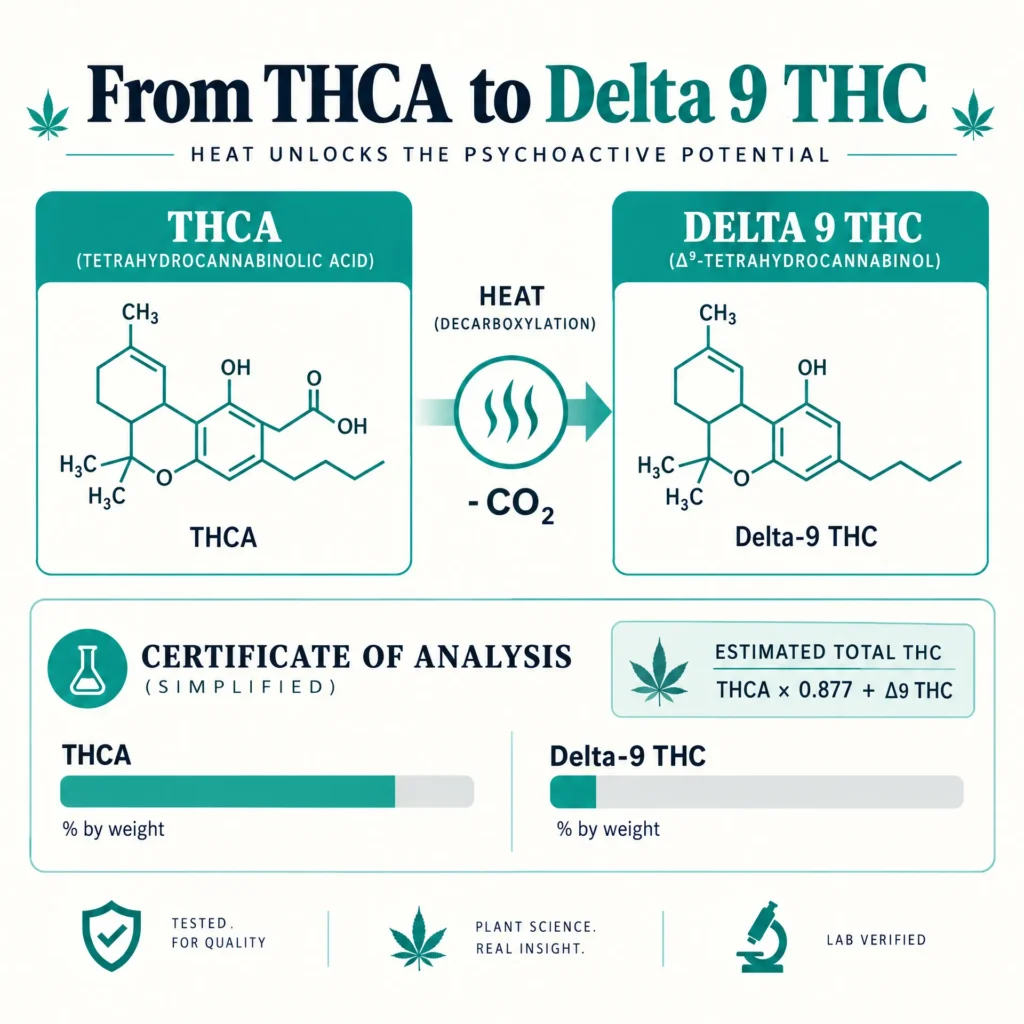
Total THC (what actually reaches your bloodstream) is calculated as: (THCA × 0.877) + delta-9 THC.
A product showing 25% THCA and 0.2% delta-9 THC has approximately 22% total THC after vaporization.
⚡ Fast & 100% Online PA Medical Cards
Board-Certified Doctors • 100% Money-Back Guarantee
Book Evaluation Now →For detailed guidance on what THC percentage actually means for your experience, see our does THC percentage matter guide.
CBD: The Non-Intoxicating Counterpart
CBD (cannabidiol) is the second most abundant cannabinoid in most cannabis products and the most clinically studied non-psychoactive compound in the plant.
What CBD does?
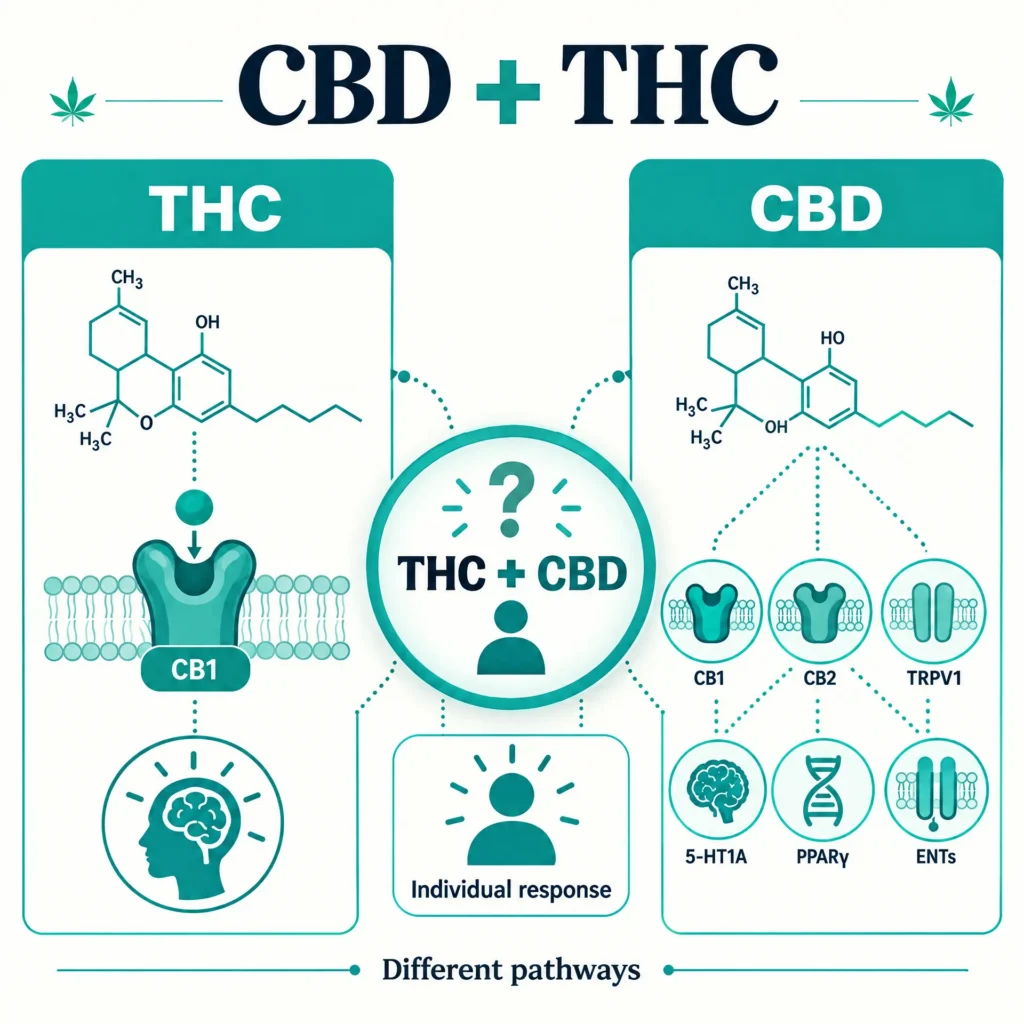
CBD does not directly activate CB1 receptors. Instead, it works primarily by inhibiting FAAH, the enzyme that breaks down anandamide (your body’s own endocannabinoid). This raises natural anandamide levels, enhancing the ECS’s own regulatory function.
CBD also activates serotonin (5-HT1A) receptors, which explains its documented anxiolytic effects. And it activates pain (TRPV1) receptors, contributing to analgesic effects independent of the ECS.
CBD and THC together
CBD moderates THC’s psychoactive effects at CB1 receptors. A product with significant CBD alongside THC produces a noticeably different, generally less anxious and less intoxicating experience than the same THC amount with no CBD.
This is why ratio tinctures (5:1, 3:1, or 1:1 CBD:THC) are often the best starting products for PA patients new to cannabis or with anxiety qualifying conditions.
For a full guide to CBD products at PA dispensaries, see our CBD tinctures guide.
Minor Cannabinoids: CBN, CBG, THCV and Others
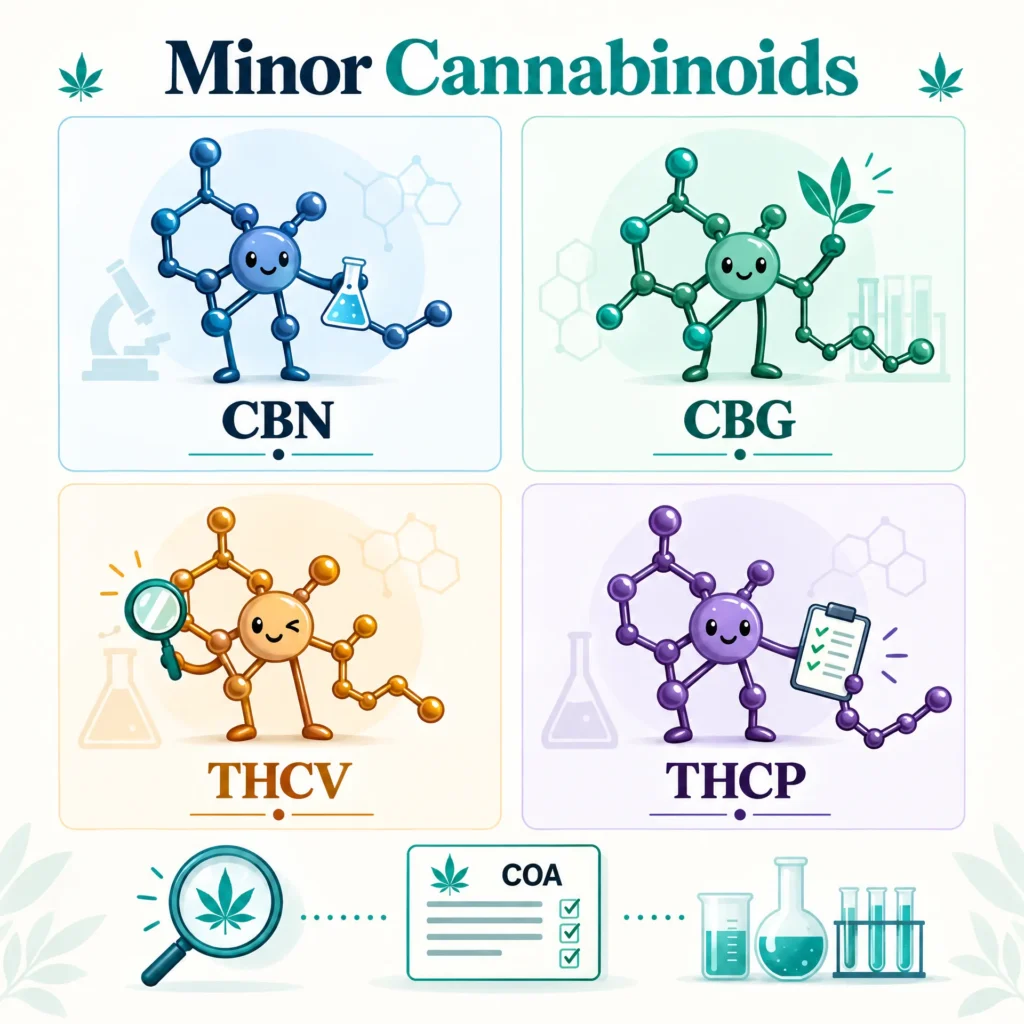
Beyond THC and CBD, several minor cannabinoids appear in PA dispensary products and on COAs.
| Cannabinoid | Full Name | Primary Effect | PA Dispensary Availability | Our Guide |
|---|---|---|---|---|
| CBN | Cannabinol | Sleep, mild sedation, may reduce nighttime awakenings | Present on COA minor panel; some dedicated products | CBN Sleep Guide |
| CBG | Cannabigerol | Anti-inflammatory, neuroprotective, some analgesic activity | Present in small amounts in most full-spectrum products | Dedicated guide available |
| THCV | Tetrahydrocannabivarin | Appetite suppression at low doses, mild psychoactivity at higher doses | Some PA dispensary strains; look on COA | Not yet at PA dispensaries in high concentrations |
| THCP | Tetrahydrocannabiphorol | More potent CB1 activation than THC; trace amounts in some products | Very rare at PA dispensaries | THCP vs THC Guide |
| Delta-8 THC | Delta-8-tetrahydrocannabinol | Milder psychoactivity than delta-9 THC | NOT available at PA licensed dispensaries; sold at hemp shops | Delta-9 vs THC Guide |
| HHC | Hexahydrocannabinol | Similar to delta-8; semi-synthetic | NOT at PA licensed dispensaries; hemp market only | HHC vs THC Guide |
The PA dispensary difference for minor cannabinoids:
Licensed PA dispensaries test for and report minor cannabinoids on product COAs. The hemp market does not consistently do this. For patients interested in specific minor cannabinoid content (CBN for sleep, CBG for inflammation), PA dispensary COA data is the most reliable source available.
What Are Terpenes?
Terpenes are aromatic compounds found throughout the plant kingdom. They give lavender its calming scent, lemons their bright citrus kick, pine forests their fresh air, and black pepper its spice.
Renewing Your PA MMJ Card?
Quick annual recertification online. No paperwork hassle.
Renew Card Online →Cannabis produces more than 150 terpenes in the same resin glands that produce THC and CBD.
They do two things relevant to cannabis patients.
First: they determine aroma and flavor. The characteristic smell of any cannabis product is almost entirely determined by its terpene profile. Earthiness, citrus, pine, diesel, berry, floral, spice: all terpene signatures.
Second: they have independent pharmacological effects. Terpenes interact with neurotransmitter receptors, enzyme pathways, and membrane channels beyond the cannabinoid receptors. Linalool activates GABA receptors. Limonene activates serotonin receptors. Caryophyllene directly binds CB2 receptors as the only terpene known to do so.
As Weed.com’s April 2026 terpene guide states: “If cannabinoids like THC, CBD, and CBN are the engines powering the cannabis experience, terpenes are the steering wheel, shaping the direction, nuance, and personality of every strain.”
How terpenes appear on PA dispensary COAs:
Every licensed PA dispensary product’s COA includes a terpene panel showing individual terpene percentages. Products with total terpene content above 1.5 to 2% are considered terpene-rich and show the strongest potential for terpene-mediated effects. Products below 0.5% total terpenes are relatively terpene-depleted and will express fewer terpene effects.
The Six Most Important Terpenes at PA Dispensaries
These six terpenes account for the majority of terpene content in most PA dispensary products. They are the ones most worth knowing for effect prediction.
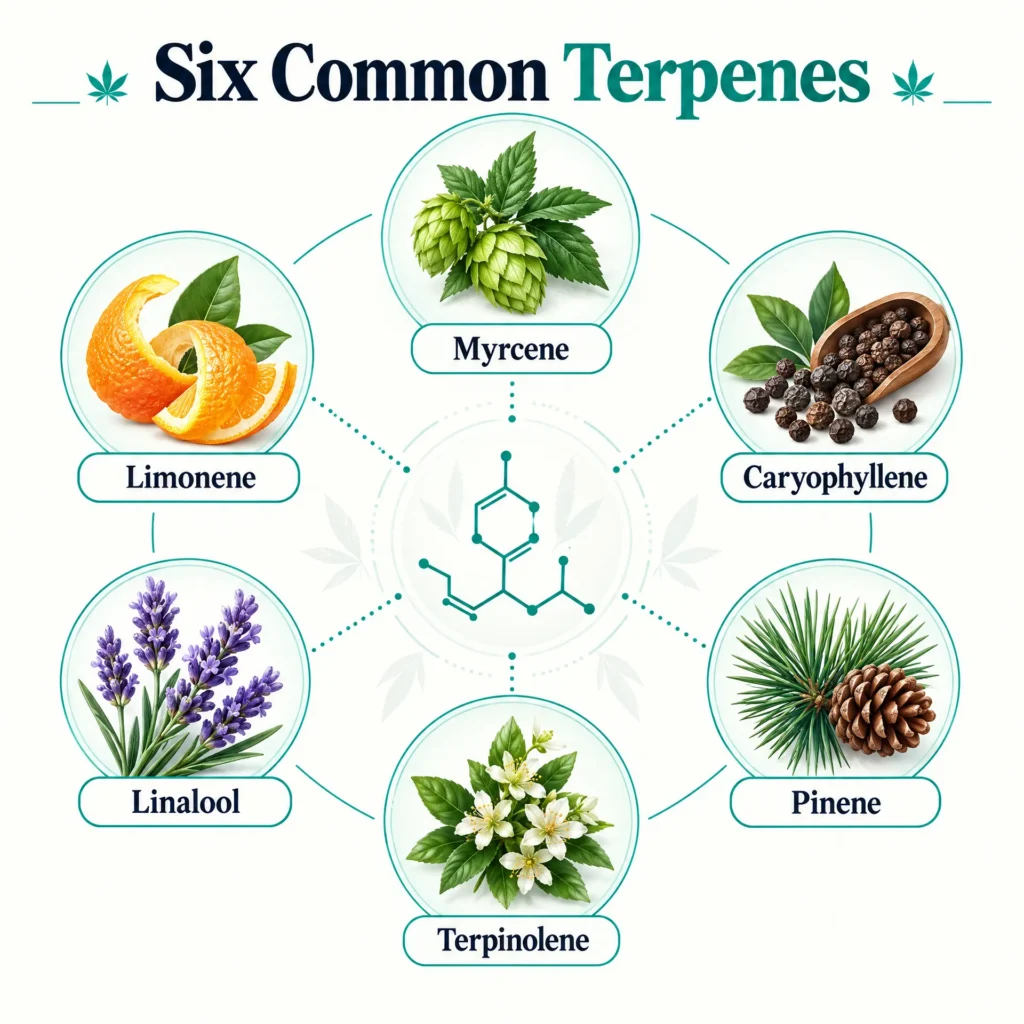
Myrcene
The most abundant terpene in most cannabis varieties. Earthy, musky, herbal aroma. Associated with sedating, physically relaxing effects and enhanced cannabinoid absorption. Products with high myrcene (above 0.5%) tend to feel heavier and more physically sedating regardless of THC percentage.
Best for: sleep, pain, muscle relaxation, heavy physical relaxation.
See our full indica or sativa guide for how myrcene dominance explains the “indica” stereotype.
Limonene
Get Approved by a Licensed PA Doctor
Schedule your appointment in minutes. You only pay if approved.
Start Online Application →Citrus aroma: lemon, orange, grapefruit. Activates serotonin (5-HT1A) and dopamine receptors. Research published in Drug and Alcohol Dependence found limonene reduces THC-induced anxiety. Associated with mood-elevating, stress-relieving, anxiolytic effects.
Best for: anxiety, depression, stress, daytime use, mood elevation.
See our terpenes for anxiety guide for the clinical detail.
Caryophyllene
Spicy, peppery, woody aroma. The only terpene known to directly bind cannabinoid receptors (CB2). Has documented anti-inflammatory effects through CB2 activation without psychoactivity. Associated with grounding, physically calming effects with pain and inflammation benefit.
Best for: chronic pain, inflammation, muscle spasms, balanced daytime use.
Also the basis of the “sniff black pepper for cannabis anxiety” folk remedy, which has genuine pharmacological support.
Linalool
Floral, lavender aroma. Modulates GABA-A receptors, the brain’s primary inhibitory pathway. Has documented sedative and anxiolytic properties in multiple studies. Associated with calm, anxiety-reducing, sleep-supporting effects.
Best for: anxiety, sleep, general calm, PTSD, stress.
Pinene (Alpha and Beta)
Fresh pine, earthy forest aroma. May counteract short-term memory impairment from THC through acetylcholine mechanisms. Associated with alerting, clear-headed effects. May partially offset cognitive effects of higher-THC products when present at meaningful concentrations.
Best for: daytime use where mental clarity is needed, patients concerned about cognitive effects of THC.
Terpinolene
Ready to Get Your Official PA MMJ Card?
State-certified doctor consultations online. No risk—100% refund if not approved.
Claim Your MMJ Card Online →Herbal, sometimes floral aroma with slight citrus or pine notes. Associated with uplifting, occasionally energetic effects. The least sedating major terpene. Found in products often marketed as “sativa” types.
Best for: creative tasks, social settings, daytime focus, patients who found myrcene-dominant products too heavy.
Quick terpene reference:
| Terpene | Aroma | Primary Effect | Look For on COA |
|---|---|---|---|
| Myrcene | Earthy, musky | Relaxing, sedating, physical | 0.5% or higher |
| Limonene | Citrus | Mood-elevating, anxiolytic | 0.3% or higher |
| Caryophyllene | Spicy, pepper | Anti-inflammatory, grounding | 0.3% or higher |
| Linalool | Floral, lavender | Calming, sleep-supporting | 0.2% or higher |
| Pinene | Pine, fresh | Alert, clear-headed | 0.2% or higher |
| Terpinolene | Herbal, fresh | Uplifting, energetic | 0.2% or higher |
The Entourage Effect: What the Science Actually Says
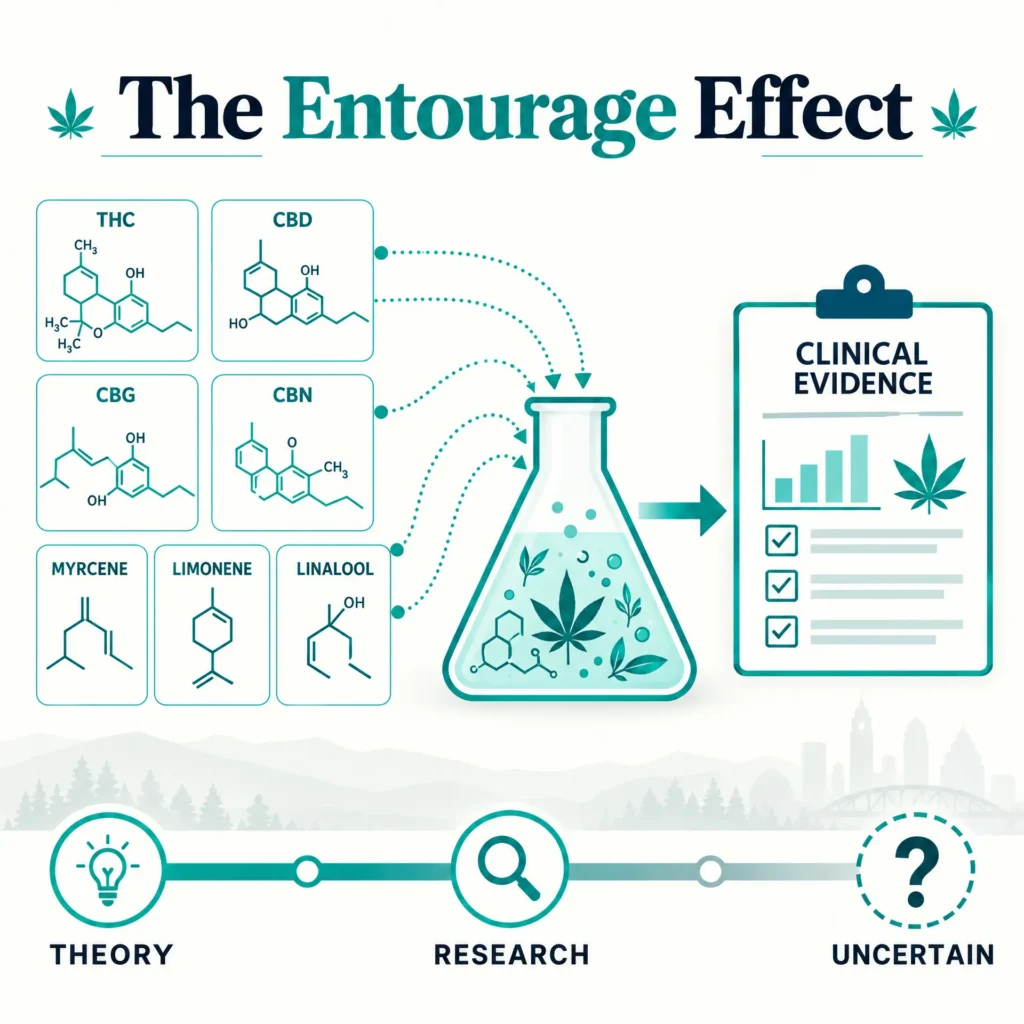
The entourage effect is the theory that cannabinoids and terpenes work better together than in isolation. It is one of the most cited concepts in cannabis education, and it deserves an honest assessment rather than uncritical acceptance.
What the research supports
Specific cannabinoid and terpene combinations have demonstrated synergistic effects in some studies.
CBD and THC together consistently produce different experiences than either alone, which is the most reproducible entourage effect finding. Caryophyllene’s direct CB2 binding alongside THC’s CB1 binding creates real dual-pathway engagement.
Linolool’s serotonin activation alongside cannabinoid ECS activity represents a real multi-system interaction.
What the research does not yet fully support
A 2024 systematic review published in Cannabis and Cannabinoid Research (Simei et al.) found that evidence for broad synergy between all cannabinoids and terpenes as a unified system is still limited. Many entourage effect claims in cannabis marketing significantly outrun the available clinical evidence.
The honest practical position
Full-spectrum products retain the natural cannabinoid and terpene profiles of the original plant. They consistently show stronger and more nuanced effects in patient reports than isolate products at equivalent THC doses.
Whether this is the entourage effect, the combined effects of multiple pharmacologically active compounds, or expectation bias has not been definitively established.
The practical guidance for PA patients: Favor full-spectrum products and read the terpene panel on the COA. The evidence for specific terpene effects (linalool for GABA modulation, limonene for serotonin activation, caryophyllene for CB2 binding) is considerably stronger than the evidence for broad, whole-plant synergy.
The Three-Number Framework for PA Dispensary Beginners
Instead of asking “is this an indica or sativa?”, PA dispensary beginners can use three numbers from the product’s COA to predict their experience more accurately.
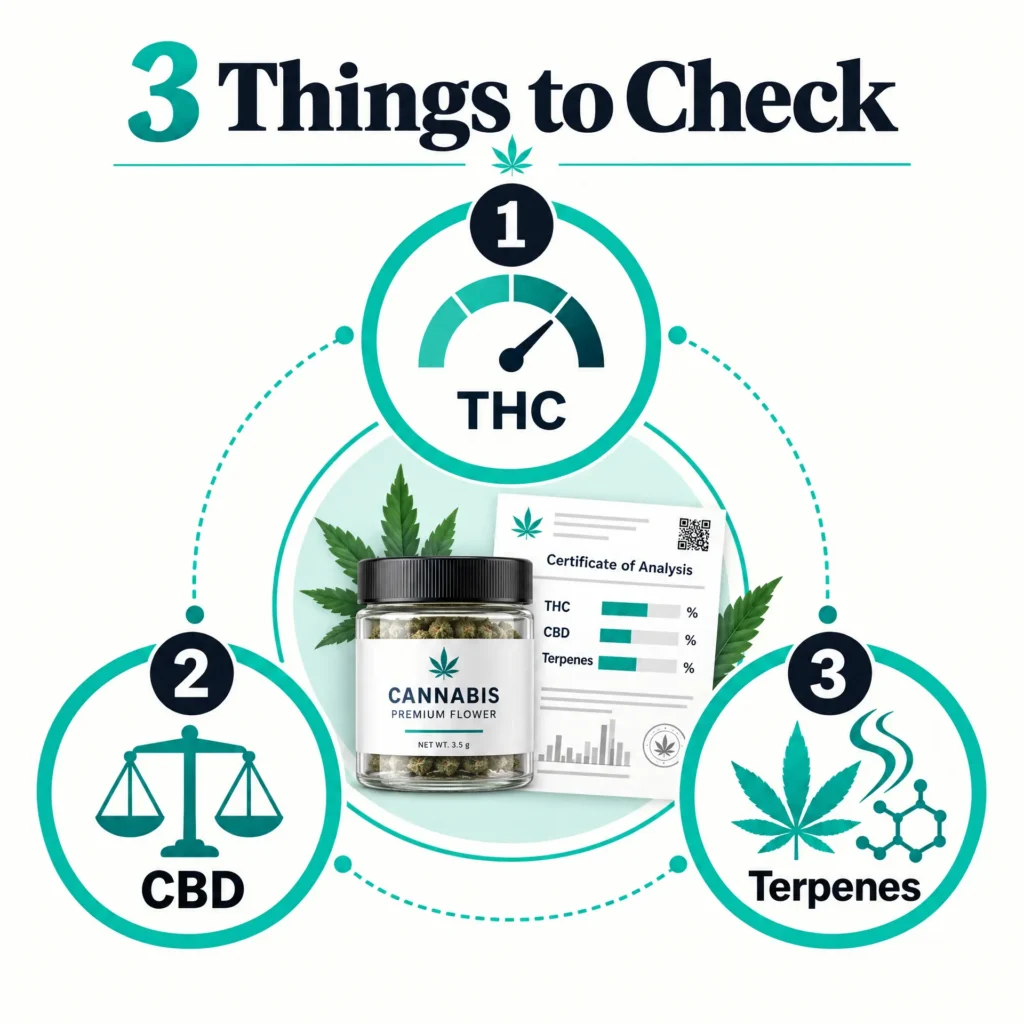
Number 1: Total THC%
Calculate or look up (THCA × 0.877) + delta-9 THC. This is the actual potency after decarboxylation.
Below 15%: lower potency, gentle introduction. 15 to 22%: moderate potency, suitable for most patients with some experience. 22 to 28%: higher potency, experienced patients. Above 28%: high potency, use with significant experience and respect for the dose.
Number 2: CBD% or CBD:THC ratio
If the product has meaningful CBD content (above 1%), the experience will be notably different from a THC-only product at the same THC percentage. CBD moderates psychoactivity, reduces anxiety risk, and adds anti-inflammatory and anxiolytic effects through separate pathways.
0% CBD: full psychoactive THC effect 0.5 to 1% CBD: some moderation Above 2% CBD: significant moderation (ratio product territory) 10:1 CBD:THC or higher: minimal psychoactivity, CBD-dominant therapeutic effect
Number 3: Dominant terpene
The highest-percentage terpene on the COA terpene panel. Use the table in Section 6 to match the dominant terpene to an effect profile.
Dominant myrcene + high THC + no CBD = relaxing, heavy, potentially sedating. Dominant limonene + moderate THC + some CBD = mood-elevating, less likely to produce anxiety. Dominant caryophyllene + ratio CBD:THC = anti-inflammatory, grounded, lower anxiety risk.
Three-number framework: example product comparisons:
| Product A | Product B | Product C |
|---|---|---|
| Total THC: 24% | Total THC: 20% | Total THC: 18% |
| CBD: 0.1% | CBD: 5% (3:1 ratio) | CBD: 18% (1:1 ratio) |
| Dominant terpene: Myrcene 1.2% | Dominant terpene: Limonene 0.8% | Dominant terpene: Caryophyllene 0.6% |
| Experience: Heavy, relaxing, sedating | Experience: Uplifting, mood-elevating, lower anxiety | Experience: Grounded, anti-inflammatory, minimal intoxication |
| Best for: Pain, sleep, muscle relaxation | Best for: Anxiety, daytime mood, PTSD | Best for: Chronic pain, inflammation, beginners |
These three numbers together predict the character and intensity of the experience more reliably than any label description.
How to Read Cannabinoids and Terpenes on a PA Dispensary COA
Every licensed PA dispensary product must be tested by two independent, PA Department of Health-approved laboratories. The result is a Certificate of Analysis (COA) that is the authoritative source for every claim on the product label.
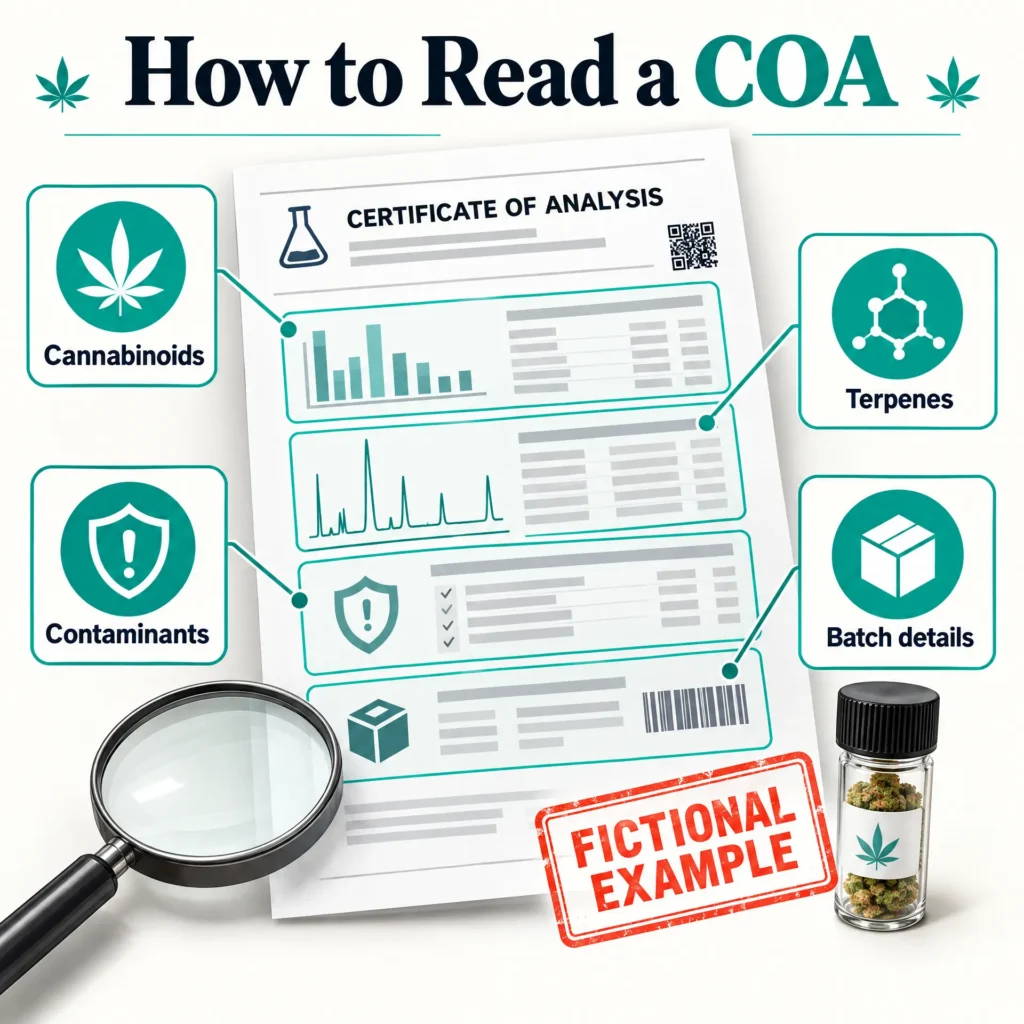
Here is where to find cannabinoid and terpene data on the COA:
Cannabinoid panel (usually page 1):
Lists THCA, delta-9 THC, CBD, CBDA, CBN, CBG, and other cannabinoids with their percentages. To calculate total psychoactive THC: (THCA% × 0.877) + delta-9 THC%. This is the number that matters for potency assessment.
Terpene panel (usually page 2 or 3):
Lists individual terpene names and percentages. The highest-percentage terpene is dominant. Total terpene content sums all individual terpenes.
Total terpene content below 0.5%: terpene-light product, limited terpene-mediated effects expected. 1 to 2% total terpenes: moderate terpene richness. Above 2% total terpenes: terpene-rich product, full terpene profile likely to contribute meaningfully.
Contaminant panels (usually final pages):
Pesticides, heavy metals, mycotoxins, microbials, and residual solvents. These should show ND (Not Detected) or values below regulatory limits.
For a full walkthrough of every section of the PA dispensary COA with real numbers and what they mean, see our how to read a PA dispensary COA guide.
Questions to Ask at Your PA Dispensary
Armed with cannabinoid and terpene knowledge, here are the questions that will get you useful answers at any PA dispensary.
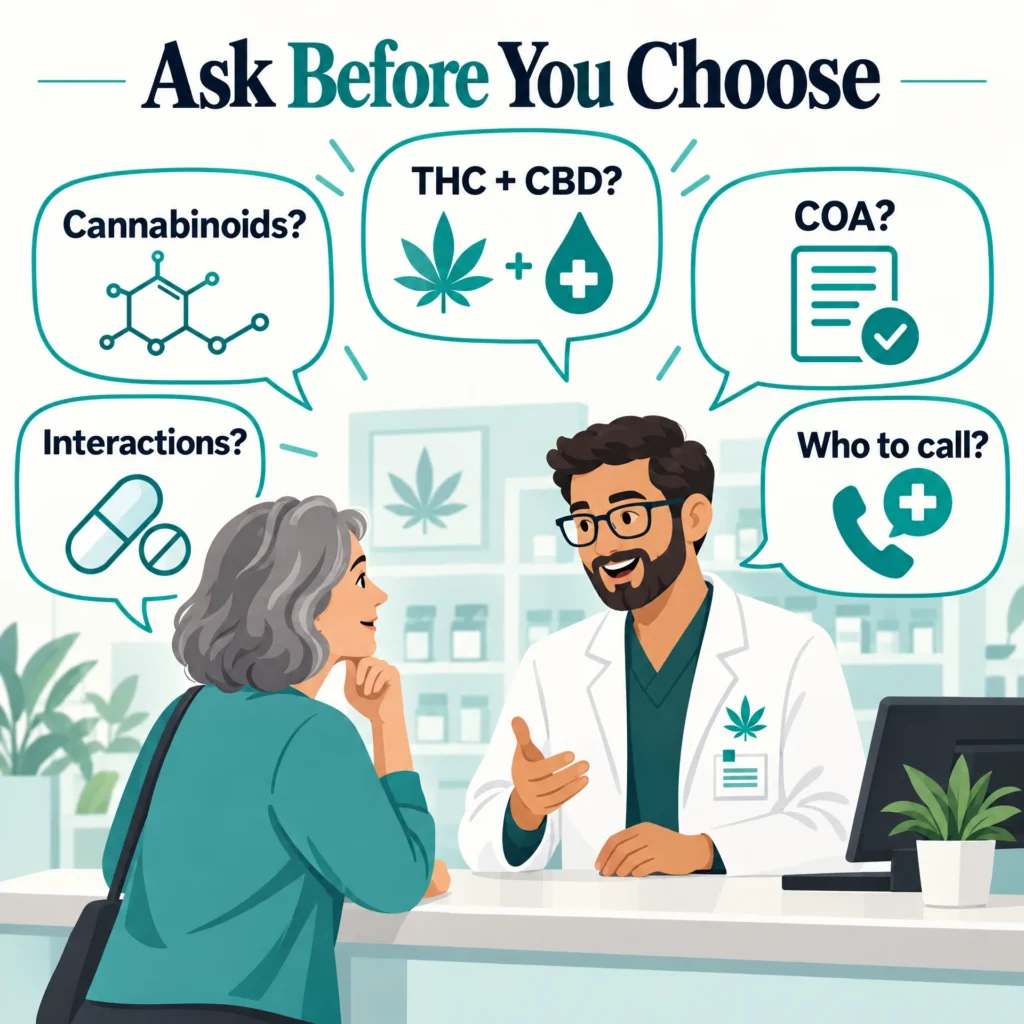
Instead of: “What’s your strongest indica?” Ask: “I’m looking for evening pain relief without a lot of head effect. Can you show me something with dominant myrcene and at least some CBD content?”
Instead of: “What gets you the most high?” Ask: “I have an anxiety qualifying condition. What do you have with dominant limonene or linalool and a high CBD ratio?”
Instead of: “What do you recommend?” Ask: “Can I see the COA for that product? What’s the dominant terpene and the total THC after decarboxylation?”
Instead of: “Is that indica or sativa?” Ask: “What’s the total terpene percentage on that product? And is that myrcene or terpinolene dominant?”
Before buying any new product, consider asking
“Does this product have a smell sample I can check?” If your dispensary has sniffers or vials, smelling the product is the most direct terpene assessment available. The aroma profile directly reflects the terpene content.
At your first visit
Ask to speak with the dispensary pharmacist about your specific qualifying condition. They can review your medication list, condition history, and cannabis goals to recommend a specific product and dose rather than leaving you to navigate the menu alone.
Frequently Asked Questions
Q: What is the difference between cannabinoids and terpenes?
A: Cannabinoids are the pharmacologically active compounds in cannabis (THC, CBD, CBN, CBG, etc.) that interact directly with the body’s endocannabinoid system through CB1 and CB2 receptors. Terpenes are aromatic compounds that give cannabis its distinctive smells and have independent pharmacological effects through serotonin, GABA, and other receptor pathways.
Both categories appear on PA dispensary COAs and together determine how a product affects you. Cannabinoids drive the core therapeutic and psychoactive effects. Terpenes shape the character, direction, and nuance of the experience.
Q: What does the terpene percentage on a COA mean?
A: The terpene percentage on a PA dispensary COA shows how much of each terpene compound is present in the product, measured as a percentage by weight. A product with 1.2% myrcene has 12mg of myrcene per gram of product. Total terpene content above 2% indicates a terpene-rich product where terpene-mediated effects are more likely to be noticeable. Below 0.5% total terpenes, the product has relatively little terpene content and effects will be driven primarily by the cannabinoid profile. Individual terpene thresholds for effect: look for the dominant terpene at 0.3% or higher for meaningful pharmacological contribution.
Q: Is the entourage effect real?
A: Partially, and honestly. Specific cannabinoid and terpene combinations have demonstrated synergistic effects in research. CBD and THC together consistently produce different experiences than either alone. Caryophyllene’s direct CB2 binding alongside THC’s CB1 binding creates genuine dual-pathway engagement.
However, a 2024 systematic review in Cannabis and Cannabinoid Research found evidence for broad, whole-plant synergy across all cannabinoids and terpenes simultaneously is still limited. Most marketing claims for the entourage effect outrun current clinical evidence.
Full-spectrum products are still recommended over isolates, but for verified specific compound interactions rather than proven total-plant synergy.
Q: What terpenes are best for anxiety?
A: Limonene has the strongest research support for reducing THC-induced anxiety specifically. A study in Drug and Alcohol Dependence found d-limonene reduces THC-induced anxiety symptoms. Linalool has documented GABA receptor modulation producing calming effects. Caryophyllene’s CB2 activation has anxiolytic properties without psychoactivity. On a PA dispensary COA, look for products where one or more of these terpenes is dominant (above 0.3%) alongside a meaningful CBD percentage or ratio. Avoid products with very high myrcene alone and no CBD if anxiety is your primary concern. For full anxiety-specific terpene guidance.
Q: How is a PA dispensary COA different from what you find on a hemp product?
A: PA dispensary COAs are issued by two independent, PA Department of Health-approved laboratories that are prohibited from having common ownership with the dispensaries or growers whose products they test.
Hemp product COAs are voluntary, single-lab, and have no state oversight or mandatory standard. Research has found significant label inaccuracy in hemp products, while PA dispensary products are required to match their COA-verified concentrations.
For cannabinoid and terpene data to be reliable for product selection decisions, the PA dispensary COA is the gold standard available to Pennsylvania patients.
Q: What should I look for on a PA dispensary COA as a beginner?
A: Three numbers tell you the most: Total THC% (calculated as THCA × 0.877 + delta-9 THC), CBD% or CBD:THC ratio (determines moderation of psychoactive effects), and dominant terpene (the highest-percentage terpene on the terpene panel).
Start with these three and you have a more accurate product prediction than any indica/sativa label provides.
If the contaminant panels show anything other than ND (Not Detected) for pesticides, heavy metals, or mycotoxins, that is a concern worth raising with the dispensary pharmacist.
The Bottom Line
Cannabinoids determine what cannabis does. Terpenes determine how it feels. The THC percentage tells you intensity. The CBD percentage or ratio tells you how much moderation is present. The dominant terpene tells you the direction: relaxing, uplifting, calming, grounding, alerting.
Those three numbers, available on every PA dispensary product’s COA, replace the entire indica/sativa/hybrid guessing game with information that actually predicts your experience.
Pennsylvania’s licensed dispensary system provides COA-verified data for every product and on-site pharmacist consultation to help you interpret it. That combination of information access and professional guidance is not available in any other cannabis market format.
This blog post is intended for general educational and informational purposes only and does not constitute medical advice. Individual responses to cannabinoids and terpenes vary significantly. Cannabis products should be selected in consultation with your PA dispensary pharmacist, particularly if you take prescription medications that may interact with CBD at therapeutic doses. Medically reviewed by Dr. Johnathon Chance Miller, MD.
Sources
- Weed.com: The Ultimate Terpene Guide 2025 Edition (April 2026)
- PrestoDoctor: THC vs Terpenes, Understanding the Entourage Effect (August 2026)
- PrestoDoctor: Cannabis-Derived Terpenes 2025 Guide (December 2025)
- Verdi Cannabis: Cannabis for Beginners Complete Guide 2026 (March 2026)
- Simei JLQ et al. 2024: Does the Entourage Effect in Cannabinoids Exist? Cannabis and Cannabinoid Research 9(5):1202-1216
- Mello Cannabis: Cannabis Terpenes Guide (July 2026)
- Curio Wellness: What Are Cannabis Terpenes? A Beginner’s Guide (July 2026)
- NJ Cannabis Regulatory Commission: Terpenes Explained (March 2026)
- PA Department of Health: Medical Marijuana Program