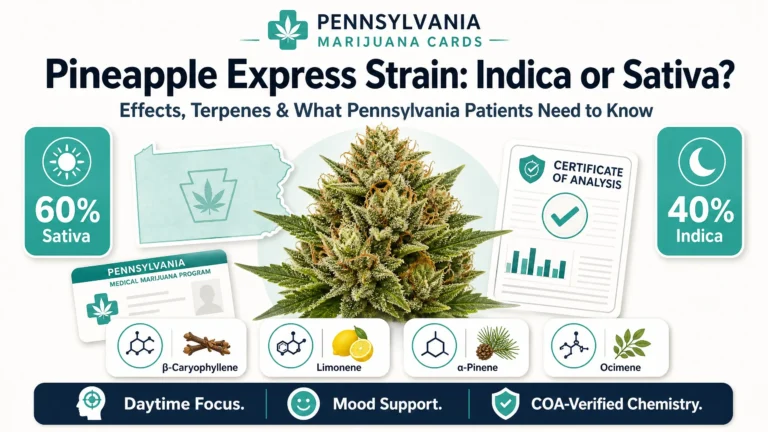

Pineapple Express is a sativa-dominant hybrid 60% sativa, 40% indica, bred from Trainwreck crossed with Hawaiian.
For Pennsylvania medical marijuana patients, it stands out as one of the most clinically distinct cultivars on dispensary menus: a daytime-appropriate strain with a limonene-dominant terpene profile backed by human clinical research on anxiety and mood.
Need a PA Medical Marijuana Card?
Get certified online in 15 minutes. 100% Money-Back Guarantee.
Get Certified Now →A valid PA MMJ card under Act 16 of 2016 is required to access it at any of the state’s 186+ licensed dispensaries.
⚡ Quick Answer
Pineapple Express is a sativa-dominant hybrid (60% sativa / 40% indica), bred from Trainwreck × Hawaiian, with THC ranging from 18–25% and a terpene profile led by caryophyllene, limonene, and pinene.
- Genetics: Trainwreck × Hawaiian (developed by G13 Labs)
- THC range: 18–25%; CBD: less than 1%
- Dominant terpenes: β-caryophyllene, limonene, α-pinene (and ocimene in some batches)
- Primary reported effects: uplifting, energizing, mood-elevating, creative with mild body relaxation
- Best used for: anxiety, depression, fatigue, stress, chronic pain all recognized PA qualifying conditions
- Legal PA consumption: vaporization, tinctures, capsules, topicals smoking is prohibited under Act 16
For Pennsylvania residents: A valid PA MMJ card under Act 16 of 2016 is required to purchase this strain. New patient certification costs $159 (physician fee) + $50 (state fee).
Key Takeaways
- Pineapple Express is nothing like what the 2008 movie portrayed. The real strain was developed by G13 Labs before the film was released, and its clinical terpene profile makes it a legitimate daytime medical option, not a recreational novelty.
- Limonene is the most clinically significant terpene here: A 2024 Johns Hopkins human trial confirmed that d-limonene directly reduces THC-induced anxiety in live subjects, making Pineapple Express one of the few high-THC strains with peer-reviewed anxiety-buffering data.
- Alpha-pinene may counteract THC-related memory impairment: This terpene inhibits acetylcholinesterase through the same mechanism used by certain dementia medications, giving Pineapple Express a cognitive clarity profile that most sativa-dominant strains cannot claim.
- PA’s per se DUI law applies even to daytime users: THC metabolites remain detectable in blood long after psychoactive effects resolve; your PA MMJ card is not a legal defense under 75 Pa.C.S. § 3802(d).
- Anxiety is the #1 qualifying condition in Pennsylvania’s MMJ program — cited in over 68% of all certifications; Pineapple Express’s limonene-pinene combination is among the most pharmacologically relevant terpene profiles for this patient population.

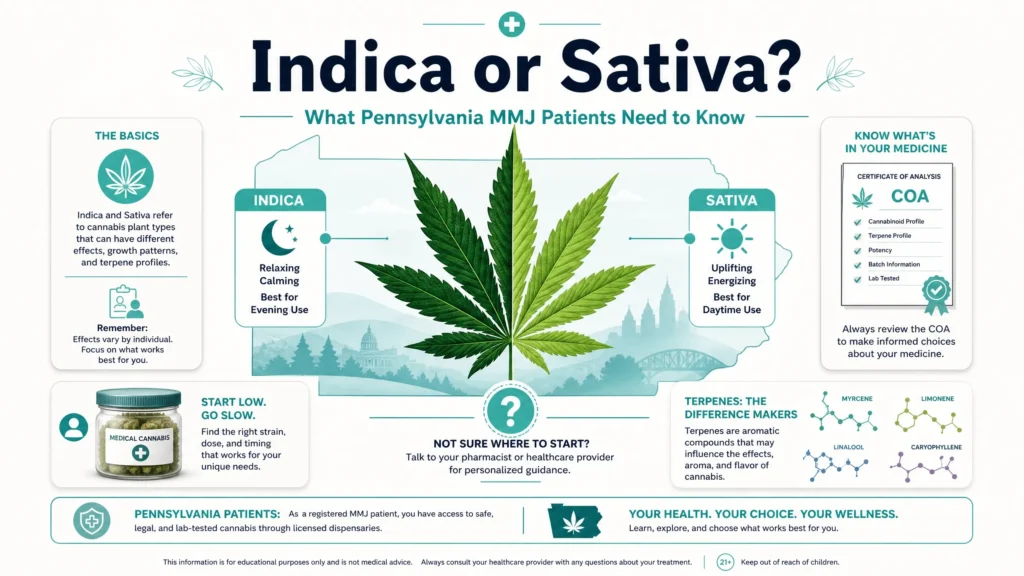
Is Pineapple Express Indica or Sativa?
Pineapple Express is a sativa-dominant hybrid, classified as approximately 60% sativa and 40% indica. It’s parent strains, Trainwreck and Hawaiian are both sativa-leaning cultivars known for cerebral, energizing effects.

Trainwreck contributes potent mental stimulation and uplift; Hawaiian brings the tropical terpene expression and mood-brightening character that defines the strain’s aroma and flavor.
The result is a cultivar that sits meaningfully apart from the indica-dominant strains that dominate many PA dispensary menus.
Where indica-dominant hybrids like Ice Cream Cake lean toward sedation and evening use, Pineapple Express is designed for functional, daytime therapeutic application, clarity without couch-lock, energy without anxiety-inducing overstimulation.
Do You Qualify for a PA MMJ Card?
Connect with a licensed Pennsylvania state physician online from home.
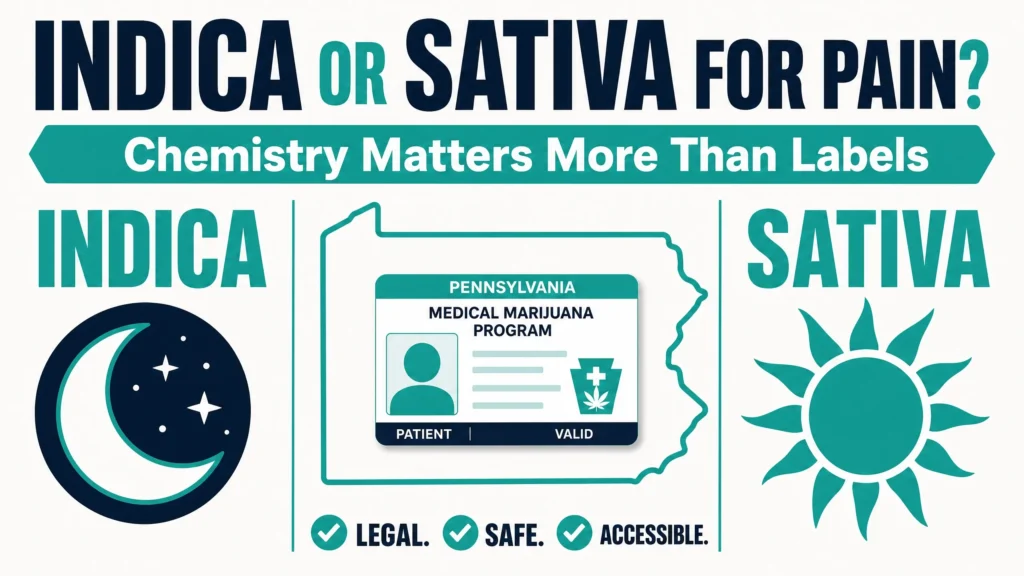
However as cannabis researcher Ethan Russo established in his landmark entourage effect review in the British Journal of Pharmacology (2011), the indica/sativa label alone is a pharmacologically unreliable predictor of individual effects.
What actually determines your experience is the full chemical profile: THC percentage, CBD content, and most critically, the terpene profile on that specific batch’s Certificate of Analysis.

🔬 COA Alert: Pineapple Express batches vary meaningfully in terpene ratios. Some cuts lean limonene-dominant with a brighter, more mood-elevating character. Others show higher caryophyllene with more body-relaxing and anti-inflammatory properties. Always request the batch-specific COA from your PA dispensary, not a generic product sheet, before purchasing.
Cannabinoid Profile
| Cannabinoid | Typical Range | What This Means for PA Patients |
|---|---|---|
| THC | 18–25% | Moderate to high potency — start low and titrate |
| CBD | Less than 1% | Minimal buffering — strongly THC-dominant |
| THC:CBD Ratio | ~25:1 to 50:1 | THC-led with limited CBD counterbalance |
| CBG | Trace (~1%) | Minor contribution; some anti-inflammatory potential |
THC at 18–25% places Pineapple Express in the moderate-to-high potency range.
Unlike Ice Cream Cake or other high-THC indicas, Pineapple Express’s sativa-leaning terpene profile, particularly its limonene content, provides a natural internal buffer against THC-induced anxiety.
That said, new patients or those with anxiety sensitivity should always begin with the minimum effective dose.
CBD is present only in trace amounts, meaning this strain offers minimal cannabinoid-level THC buffering.
Patients who need stronger symptom control with reduced psychoactivity should discuss balanced THC:CBD options with their dispensary pharmacist.
Terpene Profile
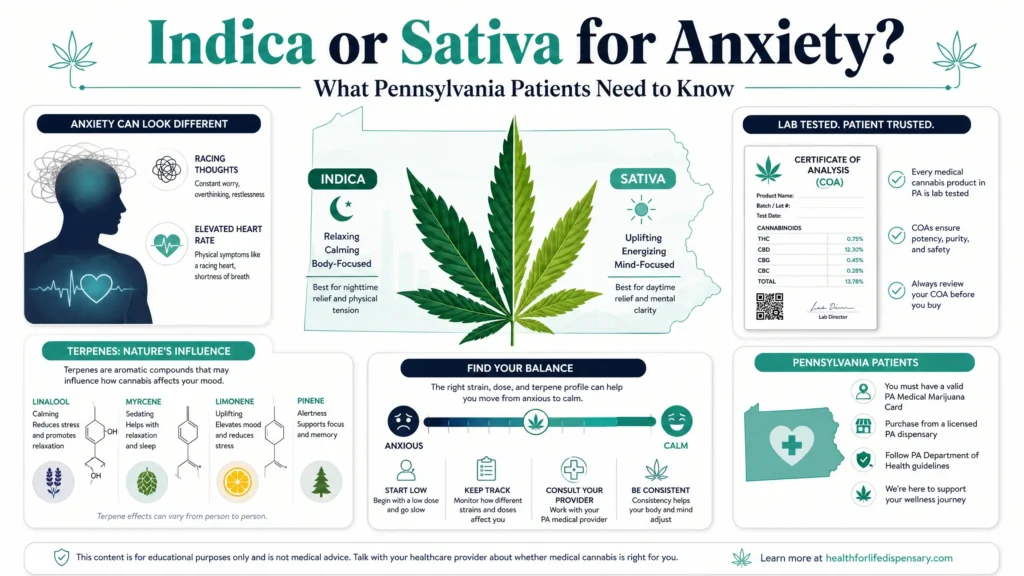
Pineapple Express carries one of the most pharmacologically interesting terpene combinations in the sativa-dominant category: β-caryophyllene, limonene, α-pinene, with ocimene appearing in some batches.

Together, these terpenes deliver the tropical aroma the strain is famous for and three distinct, peer-reviewed therapeutic mechanisms that go far beyond flavor.
| Terpene | Aroma | Primary Effects | Evidence Level |
|---|---|---|---|
| β-Caryophyllene | Peppery, spicy, warm | Anti-inflammatory, analgesic via CB2 | Strong — multiple PubMed studies |
| Limonene | Citrus, bright tropical | Mood-elevating, anxiolytic, THC-anxiety buffer | Strong — 2024 Johns Hopkins human trial |
| α-Pinene | Fresh pine, resinous | Alertness, focus, potential THC memory-impairment counteraction | Moderate — preclinical and mechanistic data |
| Ocimene (some batches) | Sweet, herbaceous | Uplifting, antimicrobial | Preliminary |
β-Caryophyllene — The Anti-Inflammatory Foundation
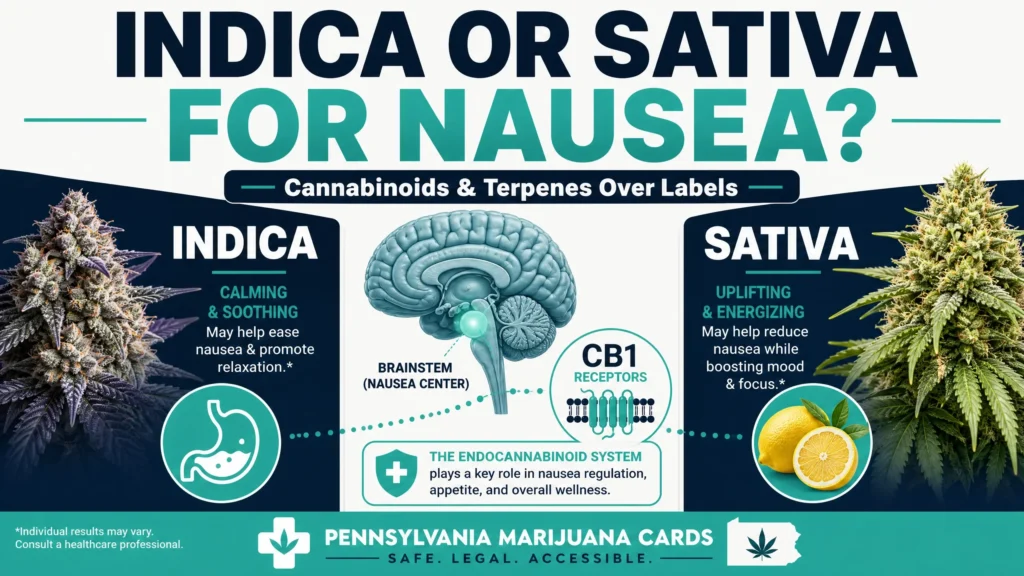
β-Caryophyllene is the only terpene that directly activates cannabinoid receptors specifically the CB2 receptor expressed in immune tissue and peripheral pain pathways.
⚡ Fast & 100% Online PA Medical Cards
Board-Certified Doctors • 100% Money-Back Guarantee
Book Evaluation Now →Research published in Frontiers in Pharmacology (2025) via PubMed confirmed its analgesic and anti-inflammatory action through CB2 activation, reducing inflammatory cytokines in neuropathic pain models.
For PA patients managing chronic pain or inflammatory conditions, caryophyllene’s presence in Pineapple Express adds meaningful therapeutic depth beneath the strain’s uplifting sativa profile.
Limonene — The THC-Anxiety Buffer With Human Trial Data
Limonene is the defining terpene of Pineapple Express both for its tropical flavor and for its clinically documented anti-anxiety properties.

In a 2024 study published in the Journal of Drug and Alcohol Dependence (Johns Hopkins Medicine), researchers confirmed that vaporized d-limonene significantly reduced subjective THC-induced anxiety in human participants and the effect increased as limonene dose increased.
This is the first human trial to confirm this mechanism, and it is directly relevant to Pennsylvania’s patient population: over 68% of PA MMJ certifications cite anxiety disorder as the qualifying condition (Drake et al., Annals of Internal Medicine, July 2025).
Earlier mechanistic research published on PubMed (Song et al., 2021) identified limonene’s anxiolytic mechanism: regulation of dopaminergic and GABAergic activity in the striatum via adenosine A2A receptors.
A 2024 study in the European Journal of Neuroscience further demonstrated that d-limonene reduced depression-like behavior in animal models through anti-neuroinflammatory pathways.
For PA patients managing anxiety or depression, this makes Pineapple Express’s limonene content clinically significant, not just aromatic.
α-Pinene — The Cognitive Clarity Terpene
Alpha-pinene may be Pineapple Express’s most overlooked clinical asset. Research suggests that α-pinene inhibits acetylcholinesterase, the enzyme that breaks down acetylcholine, a neurotransmitter critical for memory and attention.

This is the same pharmacological mechanism used by several FDA-approved medications for cognitive impairment. Importantly, this mechanism may directly counteract one of THC’s most common side effects: short-term memory impairment caused by CB1 activation in the hippocampus.
For PA patients who need daytime symptom management but cannot afford cognitive dulling, those managing pain while working, or anxiety patients who remain professionally active, pinene’s presence in Pineapple Express is worth discussing with a dispensary pharmacist.
Renewing Your PA MMJ Card?
Quick annual recertification online. No paperwork hassle.
Renew Card Online →Pinene’s alertness-promoting and potential anxiety-reducing properties are reviewed in Frontiers in Psychiatry (2021).
💡 Entourage Effect Note: Limonene buffers THC-induced anxiety from the top down. Caryophyllene addresses inflammation and pain from the bottom up via CB2. Pinene preserves cognitive clarity in the middle. Together, these three terpenes create a uniquely functional daytime profile that would not be predicted by the THC percentage alone.
Therapeutic Effects
Pineapple Express’s sativa dominance produces a distinctly different therapeutic arc from indica-dominant strains.

Rather than a two-phase sedating sequence, it delivers a sustained functional state that most patients describe as productive and mood-elevated without heaviness.
The Pineapple Express therapeutic experience in medical context:
- Rapid onset — effects typically perceived within 2–10 minutes via vaporization
- Immediate cerebral clarity and mood elevation
- Reduction in anxious or racing thoughts (limonene-mediated)
- Increased motivation, creative thinking, and sociability
- Mild-to-moderate body relaxation running throughout — not sedation
- Appetite stimulation without overwhelming sedative effect
- Duration: typically 2–3 hours via vaporization
Who Should Use Caution
The following PA patient populations should approach Pineapple Express carefully:
- Patients with significant THC sensitivity — the sativa-dominant, cerebral nature can feel overstimulating at higher doses
- Patients using it in the evening — the energizing profile may interfere with sleep for some individuals; an indica-dominant alternative may be more appropriate
- Patients with cardiovascular conditions — cannabis can temporarily elevate heart rate; consult your treating physician before use
- New or low-tolerance patients — always begin with the minimum available dose regardless of the strain’s reputation for being “manageable”
What Medical Conditions Is Pineapple Express Used For?

Anxiety Disorder
Anxiety disorder is Pennsylvania’s most commonly certified MMJ qualifying condition, cited in over 68% of all certifications as of July 2025 (Drake et al., Annals of Internal Medicine).
Pineapple Express occupies a unique position for PA anxiety patients: its limonene content carries the only terpene with human trial-confirmed THC-anxiety buffering data, making it one of the few high-THC strains where the internal chemistry partially addresses the anxiety risk created by THC itself.
This does not eliminate the risk of THC-induced anxiety at high doses but it makes Pineapple Express meaningfully different from high-THC strains without this terpene profile.
Visit the Anxiety Disorder qualifying condition page for full certification information.
PTSD
PTSD is a recognized Pennsylvania qualifying condition, and Pineapple Express addresses two of its most debilitating symptom clusters: hyperarousal and mood dysregulation.
The limonene-driven mood elevation and caryophyllene’s anti-inflammatory action may help reduce the heightened arousal state common in PTSD, while the strain’s daytime-appropriate profile allows patients to remain functional.
Get Approved by a Licensed PA Doctor
Schedule your appointment in minutes. You only pay if approved.
Start Online Application →Unlike heavily sedating indica strains that may worsen dissociation or emotional blunting, Pineapple Express’s uplifting character may support engagement and social functioning during daytime hours.
Learn more at the PTSD qualifying condition page.
Severe Chronic and Intractable Pain
Pineapple Express is not the strongest option for severe pain, and PA dispensary pharmacists will generally recommend indica-dominant or higher-THC alternatives for patients with significant pain burden.
However, for patients managing mild-to-moderate chronic pain who need to remain functional and alert during the day, those managing neuropathic discomfort, tension, or inflammatory pain without sedation, Pineapple Express’s caryophyllene content and uplifting profile may offer a clinically useful middle ground.
Review the Severe Chronic or Intractable Pain qualifying condition page for certification eligibility.
Neurodegenerative Diseases
Pennsylvania recognizes neurodegenerative diseases including Alzheimer’s as a qualifying condition.
Alpha-pinene’s acetylcholinesterase-inhibiting mechanism, the same mechanism used by certain dementia medications, makes Pineapple Express’s terpene profile scientifically interesting in this context.
Research is preliminary, and clinical evidence in humans remains limited; patients and caregivers should discuss this carefully with a physician.
See the Neurodegenerative Diseases qualifying condition page for full program details.
Pineapple Express at Pennsylvania Dispensaries
Pineapple Express is one of the most widely recognized strain names in cannabis, and it appears on menus at dispensaries across Pennsylvania’s 186+ licensed locations as of July 2026.
Ready to Get Your Official PA MMJ Card?
State-certified doctor consultations online. No risk—100% refund if not approved.
Claim Your MMJ Card Online →Availability varies by location, batch rotation, and product format.

Available Product Formats in PA
| Format | Onset Time | Duration | Best For |
|---|---|---|---|
| Vaporized flower | 2–10 minutes | 2–3 hours | Rapid symptom onset, dose titration |
| Vape cartridge | 2–10 minutes | 2–3 hours | Discreet daytime use, portability |
| Tincture (sublingual) | 15–45 minutes | 3–6 hours | Consistent longer-acting dosing |
| Capsule/pill | 30–90 minutes | 4–8 hours | Sustained daytime symptom management |
| Topical | Local onset | 1–4 hours | Localized pain; no psychoactive effect |
Note: Edibles in food form like gummies, chocolates, baked goods are not approved for sale in Pennsylvania under current Act 16 regulations. Some troches (dissolvable wafers) may be available; ask your dispensary pharmacist.
COA Guidance for PA Patients
Not all Pineapple Express products perform the same way. The strain name is widely used across multiple cultivators, and terpene profiles shift meaningfully between growers and harvests.
When reviewing a batch-specific COA for Pineapple Express, look for:

- Limonene as a dominant terpene — its prominence is what drives the strain’s anxiety-buffering and mood-elevating character
- Pinene present in the profile — even at low concentrations, pinene contributes meaningfully to cognitive clarity
- Caryophyllene percentage — higher caryophyllene content indicates stronger anti-inflammatory and pain-relevant properties
- Total terpene percentage — higher overall terpene expression generally correlates with more expressive therapeutic effects
Describe your symptoms to your dispensary pharmacist rather than requesting Pineapple Express by name.
Tell them you are looking for something uplifting and functional for daytime use, and that you respond well to limonene-dominant profiles.
This gives them the clinical language to match you with the best available batch.
Pennsylvania Legal Notes
✅ Valid PA MMJ Card Required
Cannabis remains illegal for recreational use in Pennsylvania as of July 2026. All dispensary purchases require a valid patient card issued under Act 16 of 2016.
Cards are valid for one year from issuance and require annual renewal.
🚫 Smoking Is Prohibited Under PA Law
Act 16 explicitly prohibits smoking cannabis in any form, no joints, no pipes, no other combustion methods. Legal consumption methods include vaporization of flower or oil, sublingual tinctures, capsules, and topicals.
This applies to Pineapple Express flower just as it does to every other product sold in PA dispensaries.
⚠️ PA Per Se DUI Law — Especially Critical for Daytime Users
This warning is especially important for Pineapple Express patients. Because this strain is designed for daytime use and because patients may feel functional and alert within a few hours, there is a significant risk of underestimating impairment for driving purposes.

75 Pa.C.S. § 3802(d) imposes a per se DUI standard for any detectable amount of THC metabolites in blood, regardless of whether you feel impaired, and regardless of your MMJ card.
The Pennsylvania Superior Court confirmed in Commonwealth v. Stone (2022) that a valid PA MMJ card is not a legal defense to a per se DUI charge.
THC metabolites remain detectable in blood for hours to days after use. Do not drive after using any cannabis product, even a daytime sativa strain where the psychoactive effects feel resolved.
💊 Getting Certified in Pennsylvania
PA MMJ certification is available entirely via telehealth through pennsylvaniamarijuanacards.com.
| Fee | Amount |
|---|---|
| Physician certification (new patient) | $159 |
| PA state registration fee | $50 |
| Total — new patient | $209 |
| Physician certification (renewal) | $149 |
| PA state registration fee | $50 |
| Total — renewal | $199 |
ℹ️ MMAP Fee Waiver
Patients enrolled in Medicaid, SNAP, WIC, CHIP, PACE, or PACENET may qualify to have the $50 state registration fee waived through Pennsylvania’s Medical Marijuana Access Program (MMAP).
How to Choose the Right Pineapple Express Product
- Request the batch-specific COA before purchasing. Confirm limonene leads or features prominently in the terpene profile. A batch dominated by myrcene instead will behave far more like a sedating indica than the functional sativa most patients seek from this strain.
- Match the THC percentage to your experience level. Pineapple Express ranges from 18% to 25% depending on the cultivator. New patients or those with THC sensitivity should target batches at the lower end of this range. More experienced patients may tolerate higher-THC batches with the confidence that limonene provides internal anxiety buffering.
- Choose the right format for your symptom timing. For rapid anxiety or mood management during the day, vaporized flower or a vape cartridge offers the fastest onset and easiest dose control. For sustained daytime symptom management — chronic pain, fatigue, or sustained mood support — a tincture or capsule provides longer duration with more consistent delivery.
- Start with the minimum effective dose. Even sativa-dominant strains can produce overstimulation or anxiety at high doses, particularly for new patients. A single small inhalation followed by a 15-minute wait is the correct starting protocol.
- Schedule your sessions with PA’s DUI law in mind. Pineapple Express is appropriate for daytime use — but do not use it before driving. Plan your sessions around times when you have no driving responsibilities for the remainder of the day, even if the psychoactive effects feel fully resolved.
💡 Pro Tip: Tell your dispensary pharmacist you are looking for daytime symptom management, uplifting, functional, and appropriate for anxiety or mood and that you are specifically interested in limonene-dominant products.
This gives them precise clinical criteria to work with, regardless of what Pineapple Express batches are currently in stock.
Frequently Asked Questions
Q: Is Pineapple Express indica or sativa?
A: Pineapple Express is a sativa-dominant hybrid, classified as 60% sativa and 40% indica. It was bred by G13 Labs from Trainwreck and Hawaiian, both sativa-leaning parent strains. This genetic makeup produces the strain’s characteristically uplifting, energizing, and mood-elevating effects that make it suitable for daytime therapeutic use. That said, the 60/40 ratio means it also carries meaningful indica relaxation, enough for mild body comfort and pain relief without sedation. Individual experience varies significantly by batch terpene profile; always confirm the COA before purchasing from a PA dispensary.
Q: What terpenes are in Pineapple Express?
A: The dominant terpenes in Pineapple Express are β-caryophyllene, limonene, and α-pinene, with ocimene appearing in some batches. Limonene is the defining therapeutic terpene of this strain, a 2024 Johns Hopkins human trial confirmed it directly reduces THC-induced anxiety in live subjects. β-Caryophyllene directly activates CB2 receptors for anti-inflammatory and analgesic effects. α-Pinene may counteract THC-related memory impairment by inhibiting acetylcholinesterase, supporting cognitive clarity. Terpene ratios vary meaningfully between batches and cultivators, always request the batch-specific COA from your PA dispensary.
Q: What is Pineapple Express good for medically?
A: Pineapple Express is most commonly associated with anxiety relief, depression, fatigue, stress, and mild-to-moderate chronic pain, all recognized qualifying conditions under Pennsylvania’s Act 16 of 2016. Its limonene-dominant terpene profile makes it particularly relevant for anxiety patients, with peer-reviewed human data supporting limonene’s ability to reduce THC-induced anxiety. Its daytime-appropriate, non-sedating profile distinguishes it from indica-dominant strains and makes it useful for patients who need symptom relief while remaining functional. Clinical evidence in humans remains preliminary for most applications; discuss suitability with your certifying physician.
Q: How much THC does Pineapple Express have?
A: Pineapple Express typically tests between 18% and 25% THC, with the range depending on the cultivator, growing conditions, and harvest timing. Most batches available at Pennsylvania dispensaries fall in the 20–22% range, though higher-testing cuts exist. CBD content is minimal under 1%, meaning this is a THC-dominant strain with limited cannabinoid-level self-buffering. The limonene terpene content provides some functional anxiety buffering, but patients new to high-THC products should still start at the lowest available dose and titrate slowly.
Q: Is Pineapple Express available at Pennsylvania dispensaries?
A: Yes, Pineapple Express is available at dispensaries across Pennsylvania’s 186+ licensed locations as of July 2026, though availability varies by region and batch rotation. Unlike some dessert-named strains, Pineapple Express does not fall under the PA DOH’s food-reference naming restriction (it references a weather phenomenon, the tropical moisture system rather than a dessert product), so it typically appears under its common name. Check your dispensary’s online menu or call ahead to confirm current availability. A valid PA MMJ card under Act 16 of 2016 is required for all purchases.
Q: Can I get a PA medical marijuana card to access Pineapple Express?
A: Yes, Pennsylvania residents qualifying under any of the 24 recognized conditions in Act 16 of 2016 can obtain a medical marijuana card through a telehealth certification. Conditions most relevant to Pineapple Express’s typical use include anxiety disorder, PTSD, severe chronic pain, and neurodegenerative diseases. The entire process is completed via telehealth, no in-person visit required. New patient total cost is $209 ($159 physician fee + $50 PA state registration fee). Begin at pennsylvaniamarijuanacards.com.
Q: Is Pineapple Express good for anxiety?
A: Pineapple Express has a stronger evidence base for anxiety management than most sativa-dominant strains, specifically because of its limonene content. A 2024 Johns Hopkins human trial confirmed that d-limonene significantly reduces THC-induced anxiety in human subjects, making Pineapple Express one of the few high-THC products where the internal terpene chemistry partially offsets the most common anxiety risk. Earlier PubMed-indexed research (Song et al., 2021) confirmed limonene’s mechanism: regulation of dopamine and GABA via adenosine A2A receptors. Anxiety disorder is Pennsylvania’s most commonly certified qualifying condition, cited in over 68% of all PA MMJ certifications.
Medically reviewed by Dr. Johnathon Chance Miller, MD (License #MD474783). This content is for educational purposes only and does not constitute medical advice. Cannabis affects individuals differently. Consult a licensed healthcare provider before using cannabis for any medical condition. Pennsylvania medical marijuana patients must follow all state laws regarding legal methods of consumption. Smoking cannabis is prohibited under PA law. Do not drive after consuming cannabis. THC metabolites remain detectable in blood after psychoactive effects resolve, Pennsylvania’s per se DUI law applies regardless of MMJ card status.
Sources
- Russo EB — Taming THC: the entourage effect in cannabis, British Journal of Pharmacology, 2011
- Johns Hopkins Medicine / ScienceDaily — D-limonene reduces THC-induced anxiety in humans, Journal of Drug and Alcohol Dependence, April 2024
- Song et al. — Limonene anxiolytic activity via dopaminergic and GABAergic neuronal function, Phytomedicine, PubMed, 2021
- Alkanat et al. — D-limonene reduces depression-like behaviour via anti-neuroinflammatory mechanism, European Journal of Neuroscience, June 2024
- Bagher AM — β-Caryophyllene alleviates neuropathic pain via CB2 receptor activation, International Journal of Molecular Sciences, PubMed, May 2025
- Frontiers in Psychiatry — Pinene and linalool as novel therapeutics for brain health, 2021
- Drake et al. — Anxiety disorder certifications in PA MMJ program, Annals of Internal Medicine, July 2025 — DOI: 10.7326/ANNALS-25-01037
- Pennsylvania Department of Health — Medical Marijuana Program
- Pennsylvania Act 16 of 2016 — Medical Marijuana Act
- 75 Pa.C.S. § 3802(d) — Pennsylvania per se DUI statute