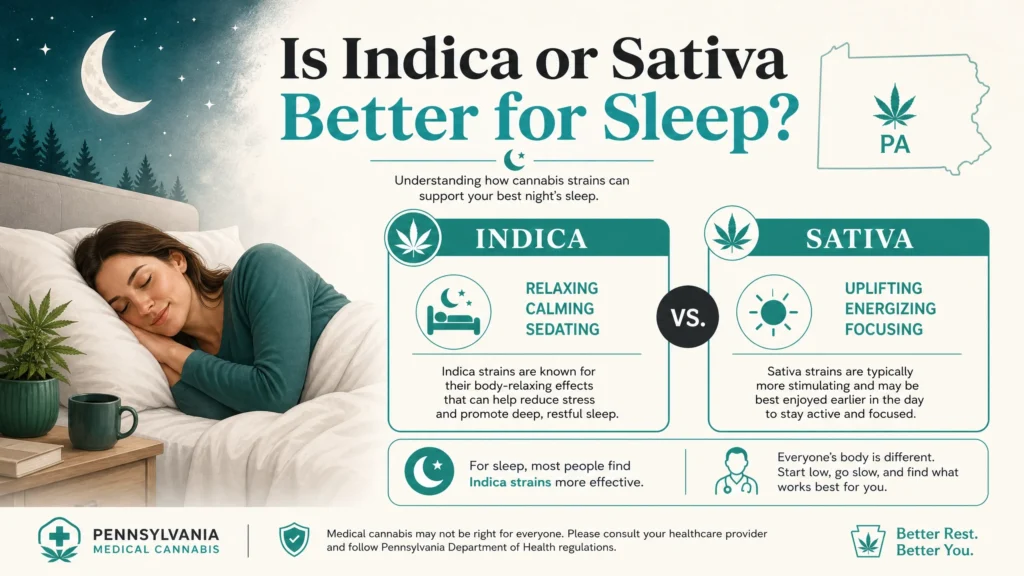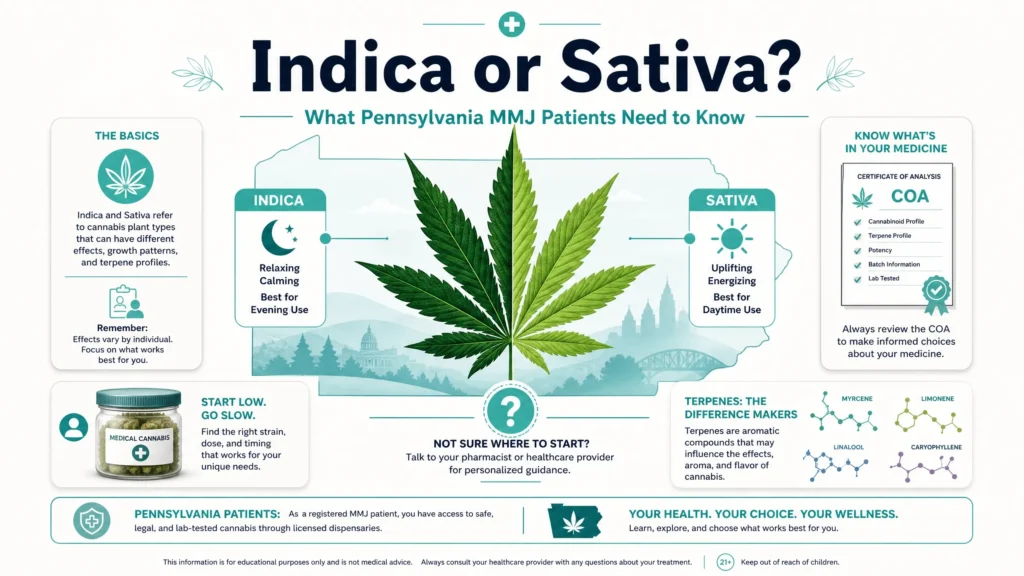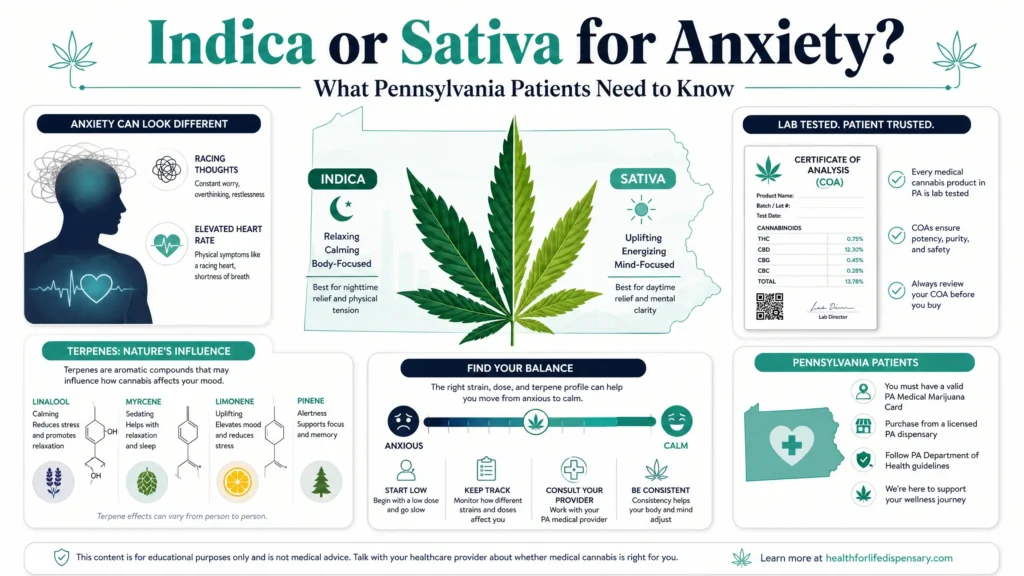
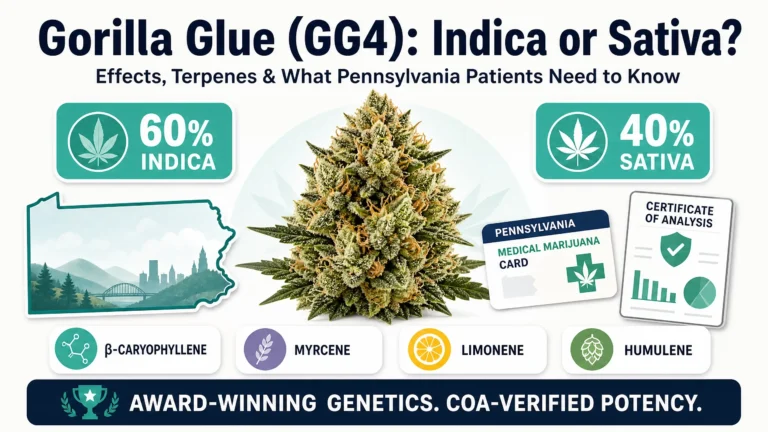

Gorilla Glue formally known as GG4 or Original Glue, is an indica-dominant hybrid, classified as approximately 60% indica and 40% sativa.
Bred from a three-way cross of Chem’s Sister, Sour Dubb, and Chocolate Diesel by GG Strains LLC, it is one of the most award-winning and THC-potent cultivars available at Pennsylvania’s 186+ licensed dispensaries.
Need a PA Medical Marijuana Card?
Get certified online in 15 minutes. 100% Money-Back Guarantee.
Get Certified Now →For certified PA MMJ patients, it represents a high-potency evening and nighttime option with a clinically significant terpene profile targeting pain, insomnia, muscle spasms, and anxiety.
⚡ Quick Answer
Gorilla Glue (GG4 / Original Glue) is an indica-dominant hybrid (60% indica / 40% sativa), bred from Chem’s Sister × Sour Dubb × Chocolate Diesel, with THC ranging from 18–32% and a terpene profile led by β-caryophyllene, myrcene, limonene, and humulene.
- Genetics: Chem’s Sister × Sour Dubb × Chocolate Diesel (GG Strains LLC)
- THC range: 18–32%; CBD: less than 1%
- Dominant terpenes: β-caryophyllene, myrcene, limonene, humulene
- Primary reported effects: heavy body relaxation, euphoria, couch-lock, sedation, appetite stimulation
- Best used for: chronic pain, insomnia, muscle spasms, anxiety, PTSD, all recognized PA qualifying conditions
- Legal PA consumption: vaporization, tinctures, capsules, topicals smoking is prohibited under Act 16
For Pennsylvania residents: A valid PA MMJ card under Act 16 of 2016 is required to purchase this strain. New patient certification costs $159 (physician fee) + $50 (state fee).
Key Takeaways
- You will not find it labeled “Gorilla Glue” at most PA dispensaries: A 2015 trademark lawsuit by the Gorilla Glue adhesive company forced GG Strains LLC to rename the strain; PA dispensaries list it as GG4, Original Glue, or simply GG — same genetics, compliant name.
- GG4’s indica/sativa ratio tells only half the story: The real driver of its famously heavy effects is myrcene, its most abundant terpene, which a 2025 UCLA study confirmed attenuates neuropathic pain via CB1 receptors; this makes GG4’s therapeutic depth far greater than its classification suggests.
- Humulene — GG4’s fourth terpene — acts as a natural appetite suppressant: This is the opposite of what most high-THC cannabis strains produce, making GG4’s metabolic terpene profile unique among popular PA dispensary cultivars.
- THC up to 32% makes this one of Pennsylvania’s most potent dispensary products: The PA DUI per se threshold is any detectable THC in blood, and GG4’s high potency means metabolites persist significantly longer than lower-THC strains.
- GG4 delivers two distinct phases: A sativa-like cerebral euphoria opens the experience before a deep indica body sedation takes over; this sequence consistently surprises first-time users who expect immediate couch-lock.
Is Gorilla Glue Indica or Sativa?
Gorilla Glue is an indica-dominant hybrid, consistently classified as 60% indica and 40% sativa across its phenotypes.

It’s three parent strains, Chem’s Sister, Sour Dubb, and Chocolate Diesel, each contribute sativa lineage, which is why the genetic split is closer to balanced than a traditional indica. But the strain’s terpene expression, particularly its dominant myrcene content pushes the functional experience firmly toward the heavy-bodied, sedating end of the cannabis spectrum.
This gap between genetic classification and functional effect is exactly what Ethan Russo described in his landmark entourage effect research in the British Journal of Pharmacology (2011): the indica/sativa label does not reliably predict patient experience.
What predicts experience is the terpene and cannabinoid profile on the specific batch COA in front of you. Two GG4 batches from different PA cultivators can feel meaningfully different based on which terpenes dominate in that harvest.

🔬 COA Alert: GG4 is one of the most widely cultivated strains in Pennsylvania, but terpene ratios shift between growers and harvests. A myrcene-dominant batch will feel deeply sedating and body-heavy. A caryophyllene-dominant batch may feel more balanced.
Always request the batch-specific Certificate of Analysis (COA), not a generic product sheet, before purchasing at your PA dispensary.
The Name Explained: GG4, Original Glue, and Why PA Dispensaries Use Different Labels
Do You Qualify for a PA MMJ Card?
Connect with a licensed Pennsylvania state physician online from home.
This is one of the most confusing strain naming situations in the entire PA MMJ market and every patient deserves a clear explanation.
In 2015, Gorilla Glue #4 won multiple High Times Cannabis Cup awards and became one of the most searched cannabis strains in the world.

The strain’s surge in popularity caught the attention of the Gorilla Glue Company, the adhesive manufacturer, which filed a trademark complaint against GG Strains LLC for trading on its registered brand name.
The legal resolution cost GG Strains LLC over $250,000 in rebranding expenses.
The strain was officially renamed and can no longer be marketed as “Gorilla Glue” in commercial contexts. The legally compliant names now used are:
| Name You May See | What It Means |
|---|---|
| GG4 | Original Gorilla Glue #4 — most common dispensary label |
| Original Glue | GG Strains LLC’s official rebranded name |
| GG or Gorilla’d | Shorthand used by some dispensaries and cultivators |
| Gorilla Glue | Still used informally by patients — but rarely on PA dispensary menus |
The genetics, terpene profile, and effects are identical regardless of the label. When you ask your PA dispensary pharmacist for Gorilla Glue and they point you to “GG4” or “Original Glue”, that is the same strain.
Always confirm by asking about the three parent strains: Chem’s Sister, Sour Dubb, and Chocolate Diesel.
Cannabinoid Profile
| Cannabinoid | Typical Range | What This Means for PA Patients |
|---|---|---|
| THC | 18–32% | Extremely wide range — batch COA is essential before dosing |
| CBD | Less than 1% | Negligible CBD buffering — strongly THC-dominant |
| THC:CBD Ratio | ~25:1 to 100:1+ | One of the most THC-dominant profiles available in PA dispensaries |
| CBG | Trace | Minor contribution; some anti-inflammatory potential |
GG4’s THC range of 18–32% is one of the widest of any commonly dispensed strain in Pennsylvania.
A batch testing at 18% and a batch testing at 32% will produce dramatically different patient experiences, even with the same consumption method and dose.
This makes the batch-specific COA not just useful but essential before any GG4 purchase.
⚡ Fast & 100% Online PA Medical Cards
Board-Certified Doctors • 100% Money-Back Guarantee
Book Evaluation Now →CBD is present only in trace amounts.
PA patients who need cannabinoid-level modulation of THC’s effects, particularly those with anxiety sensitivity, should discuss whether a balanced THC:CBD product might be more appropriate before selecting GG4.
It’s high-THC profile makes it one of the most effective options for severe pain and intractable insomnia, but one of the least appropriate starting points for THC-naive patients.
Terpene Profile
GG4’s terpene combination, β-caryophyllene, myrcene, limonene, and humulene, is one of the most pharmacologically layered profiles across any strain in Pennsylvania’s dispensary system.

Each terpene addresses a distinct therapeutic target, and together they create the signature effect that has made this strain a multi-award winner since 2014.
| Terpene | Aroma | Primary Effects | Evidence Level |
|---|---|---|---|
| β-Caryophyllene | Peppery, spicy, diesel | Anti-inflammatory, analgesic via CB2 | Strong — multiple PubMed studies |
| Myrcene | Earthy, musky, herbal | Sedative, muscle relaxant, neuropathic pain relief via CB1 | Strong — 2025 UCLA PubMed study |
| Limonene | Citrus, bright | Mood elevation, stress relief, THC-anxiety buffering | Strong — 2024 Johns Hopkins human trial |
| Humulene | Earthy, woody, hoppy | Anti-inflammatory, appetite suppression | Moderate — preclinical data |
β-Caryophyllene — The CB2 Pain Terpene
β-Caryophyllene is GG4’s most pharmacologically distinctive terpene, the only terpene in cannabis that directly binds cannabinoid receptors.
It acts as a selective CB2 receptor agonist, targeting the peripheral immune and pain pathways without the psychoactive effects associated with CB1 activation.
A 2025 PubMed-indexed study (Bagher, International Journal of Molecular Sciences) confirmed β-caryophyllene significantly reduced inflammatory cytokines and neuropathic pain markers through CB2 activation.
For PA patients managing neuropathies or chronic pain, caryophyllene’s presence in GG4 adds meaningful clinical depth.
Myrcene — The Deep Sedation Engine
Myrcene is the terpene most responsible for GG4’s legendary couch-lock. It is typically the most abundant terpene in cannabis and has well-established sedative, muscle-relaxant, and analgesic properties across preclinical models.

Crucially, a 2025 UCLA study published in Pain (Alayoubi et al., PubMed) confirmed that myrcene dose-dependently attenuated neuropathic pain hypersensitivity in animal models by engaging CB1 receptors, without producing direct CB1 activation itself.
Renewing Your PA MMJ Card?
Quick annual recertification online. No paperwork hassle.
Renew Card Online →This mechanistic finding positions myrcene as a genuine pain-relevant terpene with a CB1-adjacent mechanism distinct from THC.
Myrcene’s sedative properties are further supported by research cited in Russo’s entourage effect review (British Journal of Pharmacology, 2011), which identified myrcene as producing sedation, muscle relaxation, and analgesia synergistically with THC.
A 2022 study in Nutrients (McDougall & McKenna) demonstrated myrcene reduced joint pain and inflammation in arthritis models.
For PA patients managing pain and insomnia, myrcene is the most clinically significant component of GG4’s terpene stack.
Limonene — The Euphoria Bridge
Limonene provides GG4’s opening cerebral euphoria, the mood-lifting, energetic first phase that precedes the myrcene-driven body sedation.
A 2024 Johns Hopkins human trial (Journal of Drug and Alcohol Dependence) confirmed d-limonene significantly reduces THC-induced anxiety in human subjects.
For PA patients using GG4’s extremely high THC content, limonene’s anxiety-buffering mechanism is an important safety feature within the strain’s own chemistry, though it does not eliminate THC anxiety risk at very high doses.
Humulene — The Counter-Intuitive Appetite Terpene
Humulene is GG4’s most surprising terpene because it does the opposite of what most people expect from cannabis.

While THC typically stimulates appetite, humulene is one of the only terpenes studied for appetite suppression, working via IL-8 pathways in the central nervous system to reduce food intake.
Research published in the European Journal of Pharmacology demonstrated that humulene combined with β-caryophyllene produced anti-inflammatory effects comparable to the corticosteroid dexamethasone in animal models.
Humulene also adds GG4’s distinctive earthy, woody, hoppy aroma character, the same compound that gives craft beer its signature herbal depth.
💡 Entourage Effect Note: These four terpenes interact synergistically rather than additively. Myrcene deepens THC’s sedation. Caryophyllene targets peripheral pain via CB2.
Limonene moderates THC-induced anxiety. Humulene extends anti-inflammatory action through separate enzyme inhibition pathways. The full profile together creates GG4’s signature effect, one that no single-cannabinoid or single-terpene product can replicate.
Therapeutic Effects
Get Approved by a Licensed PA Doctor
Schedule your appointment in minutes. You only pay if approved.
Start Online Application →GG4 produces one of the most consistently described two-phase therapeutic experiences in the PA dispensary system. Understanding this sequence is essential for appropriate dosing and timing.

Phase 1: The Sativa Opening (first 10–30 minutes)
- Cerebral euphoria and mood elevation — limonene-mediated
- Mental lightness and reduction in anxious or racing thoughts
- Mild creative or introspective quality
- This phase surprises many patients who expect immediate sedation
Phase 2: The Indica Takeover (30–90+ minutes)
- Progressive, heavy full-body relaxation
- Muscle relaxation and tension release — myrcene-mediated
- Deep sedation and couch-lock — the defining GG4 characteristic
- Appetite stimulation (partially moderated by humulene)
- Sleep onset for many patients, especially at higher doses
Total duration: 3–5 hours via vaporization; 4–8 hours via capsule or tincture.
Who Should Use Caution
GG4 requires careful consideration for the following PA patient populations:
- New or low-tolerance patients — THC up to 32% makes this one of the most potent strain options in the PA system; it is not appropriate as a first cannabis experience
- Anxiety disorder patients — despite limonene buffering, the very high THC content creates meaningful anxiety risk at higher doses; discuss with your dispensary pharmacist before selecting
- Patients with daytime obligations — the deep sedation of Phase 2 makes GG4 functionally incompatible with driving, operating machinery, or any cognitively demanding task
- Patients on medications with sedative properties — myrcene’s sedation may compound drug interactions; consult your treating physician
What Medical Conditions Is GG4 Used For?

Severe Chronic and Intractable Pain
GG4 is among the most pharmacologically comprehensive options in the PA dispensary system for chronic pain.
It’s terpene stack addresses pain through three distinct, overlapping mechanisms: β-caryophyllene via CB2 receptor activation for inflammatory and neuropathic pain, myrcene via CB1-adjacent pathways for neuropathic hypersensitivity (confirmed in 2025 UCLA research, Pain journal), and high-THC content for central pain modulation.
A June 2025 PMC review of cannabis terpenes in chronic pain syndromes identified β-caryophyllene and myrcene specifically as the most clinically relevant terpenes for pain management.
PA patients certified under Severe Chronic or Intractable Pain will find GG4 one of the most discussed options with dispensary pharmacists for this qualifying condition.
PTSD
PTSD is a recognized Pennsylvania qualifying condition, and GG4 addresses two of its most disabling symptom clusters: hyperarousal and sleep disruption.
Ready to Get Your Official PA MMJ Card?
State-certified doctor consultations online. No risk—100% refund if not approved.
Claim Your MMJ Card Online →The limonene-mediated mood elevation in Phase 1 helps reduce hypervigilance, while the heavy myrcene-driven sedation of Phase 2 supports sleep onset, a critical need for most PTSD patients.
PA dispensary pharmacists frequently discuss GG4 for evening PTSD symptom management. Visit the PTSD qualifying condition page for full certification guidance.
Anxiety Disorder
Anxiety disorder is Pennsylvania’s most commonly certified qualifying condition, cited in over 68% of all PA MMJ certifications (Drake et al., Annals of Internal Medicine, July 2025). GG4’s use for anxiety requires important nuance.
It’s limonene content provides THC-anxiety buffering, and its deep relaxation profile addresses the physical tension component of anxiety effectively.
However, its very high THC content up to 32%, makes it potentially counterproductive for anxiety-prone patients at higher doses. GG4 for anxiety is typically most appropriate for experienced PA patients with well-established THC tolerance.
Review the Anxiety Disorder qualifying condition page for more information.
Neuropathies
Pennsylvania recognizes neuropathies as a qualifying condition, and GG4’s dual-terpene approach to neuropathic pain, β-caryophyllene via CB2 and myrcene via CB1-adjacent engagement, makes it one of the most pharmacologically relevant cultivars for this patient population.
The 2025 UCLA study in Pain specifically confirmed myrcene’s effectiveness in neuropathic pain models, adding fresh peer-reviewed support to what PA dispensary pharmacists have observed anecdotally for years.
Visit the Neuropathies qualifying condition page for certification information.
Multiple Sclerosis
Pennsylvania recognizes Multiple Sclerosis as a qualifying condition, and GG4’s myrcene-driven muscle relaxation is particularly relevant for the spasticity and pain burden that many MS patients carry.
Patient reports across AllBud (as recently as July 2025) cite GG4 specifically for MS-related symptom management.
See the Multiple Sclerosis qualifying condition page for program details.
GG4 at Pennsylvania Dispensaries
GG4 / Original Glue is one of the most consistently stocked cultivars across Pennsylvania’s 186+ licensed dispensaries as of July 2026, though availability varies by location, cultivator, and batch rotation.

⚠️ Critical Dispensary Name Alert
“Gorilla Glue” will rarely appear on Pennsylvania dispensary menus. Following the trademark settlement, most dispensaries stock this strain under one of these labels:
| What You Ask For | What the Dispensary Shows You |
|---|---|
| Gorilla Glue | GG4, Original Glue, or GG |
| GG4 | Correct — this is the strain |
| Original Glue | Correct — this is the strain |
Always confirm with your budtender that the product’s parent strains are Chem’s Sister, Sour Dubb, and Chocolate Diesel.
That verification confirms you have the authentic GG4 genetics not one of the many GG-named hybrids or spin-offs (GG1, GG5, Gorilla Cookies, Gorilla Zkittlez) that share partial lineage.
Available Product Formats in PA
| Format | Onset Time | Duration | Best For |
|---|---|---|---|
| Vaporized flower | 2–10 minutes | 3–5 hours | Rapid pain or anxiety relief, dose control |
| Vape cartridge | 2–10 minutes | 3–5 hours | Consistent delivery, convenient evening use |
| Tincture (sublingual) | 15–45 minutes | 4–7 hours | Longer, sustained pain and sleep management |
| Capsule/pill | 30–90 minutes | 5–8 hours | Nighttime insomnia, sustained pain relief |
| Topical | Local onset | 1–4 hours | Localized inflammation; no psychoactive effect |
Note: THC-infused edibles in food form, gummies, chocolates, baked goods are not approved for sale in Pennsylvania under current Act 16 regulations.
COA Guidance Specific to GG4
GG4’s wide THC range (18–32%) makes batch-specific COA review more important for this strain than almost any other on a PA dispensary menu. When reviewing a GG4 COA, prioritize:

- THC percentage — calibrate your starting dose to the specific batch, not your experience with a previous GG4 product
- Myrcene as a dominant or co-dominant terpene — confirms you are getting the sedating, pain-relevant terpene profile that defines authentic GG4
- Caryophyllene percentage — higher values indicate stronger anti-inflammatory and neuropathic pain relevance
- Total terpene percentage — a well-cured, high-terpene batch will deliver a richer and more consistent therapeutic experience than a low-terpene one
Tell your dispensary pharmacist your symptoms and goals, specifically that you are seeking evening pain management, sleep support, or muscle tension relief, rather than requesting GG4 by name.
This approach consistently surfaces the most appropriate current inventory for your needs.
Pennsylvania Legal Notes
✅ Valid PA MMJ Card Required
Cannabis remains illegal for recreational use in Pennsylvania as of July 2026. All dispensary purchases require a valid patient card issued under Act 16 of 2016. Cards are valid for one year and require annual renewal.
🚫 Smoking Is Prohibited Under PA Law
Act 16 explicitly prohibits smoking cannabis in any form. Legal consumption methods include vaporization of flower or oil, sublingual tinctures, capsules, and topicals.
No joints, no pipes, no combustion of any kind, this applies to GG4 flower just as it does to every other product on a PA dispensary menu.
⚠️ PA Per Se DUI Law — Especially Critical for High-THC Strains Like GG4
This warning carries extra urgency for GG4 patients. With THC levels reaching up to 32%, GG4 produces some of the highest blood THC concentrations of any commonly dispensed strain in Pennsylvania.

75 Pa.C.S. § 3802(d) imposes a per se DUI standard for any detectable amount of THC metabolites in blood, not a threshold level, not a measure of impairment, but any detection. Your PA MMJ card is explicitly not a legal defense.
The Pennsylvania Superior Court confirmed in Commonwealth v. Stone (2022) that a valid MMJ card provides no protection against a per se DUI charge.
Higher-THC products like GG4 produce longer-persisting metabolite detection windows. Do not drive for the remainder of any day you use GG4, even if the psychoactive effects feel fully resolved hours later.
💊 Getting Certified in Pennsylvania
PA MMJ certification is available entirely via telehealth through pennsylvaniamarijuanacards.com.
| Fee | Amount |
|---|---|
| Physician certification (new patient) | $159 |
| PA state registration fee | $50 |
| Total — new patient | $209 |
| Physician certification (renewal) | $149 |
| PA state registration fee | $50 |
| Total — renewal | $199 |
ℹ️ MMAP Fee Waiver
Patients enrolled in Medicaid, SNAP, WIC, CHIP, PACE, or PACENET may qualify to have the $50 state registration fee waived through Pennsylvania’s Medical Marijuana Access Program (MMAP).
How to Choose the Right GG4 Product?

- Request the batch-specific COA before any purchase. For GG4 specifically, the THC range (18–32%) and terpene shifts between batches are wide enough to produce meaningfully different experiences. The COA is not optional for this strain — it is essential.
- Start at the lowest THC percentage available. If your dispensary carries GG4 batches at both 20% and 28% THC, start with the lower batch and titrate across multiple sessions before moving to higher-potency options. The difference between these two batches is not subtle.
- Match the format to your therapeutic goal. For acute evening pain relief or anxiety management, vaporized flower or a vape cartridge provides the fastest onset and most precise dose control. For sleep support and sustained overnight pain management, a capsule or tincture taken 60–90 minutes before bed provides longer, more consistent duration.
- Plan your session around your evening schedule — with the DUI law in mind. GG4 is an evening and nighttime strain. Use it after all driving responsibilities are completed for the day, and do not plan any driving the following morning without allowing adequate time for metabolite clearance.
- Start with a single minimum dose and wait. For vaporized flower, one small inhalation followed by a 20-minute wait is the correct starting protocol for GG4, regardless of prior cannabis experience. The two-phase effect means the full experience takes time to develop — and the sedating Phase 2 can arrive with unexpected intensity.
💡 Pro Tip: Tell your dispensary pharmacist you are looking for an evening or nighttime product targeting pain, muscle tension, or sleep and that you want to confirm myrcene is a dominant terpene in the available batch.
This gives them precise criteria to work with, ensuring you receive the authentic GG4 terpene experience rather than a GG-named hybrid with a different profile.
Frequently Asked Questions
Q: Is Gorilla Glue strain indica or sativa?
A: Gorilla Glue (GG4 / Original Glue) is an indica-dominant hybrid, classified as 60% indica and 40% sativa. Despite this near-balanced genetic split, the strain’s terpene profile led by myrcene, produces functional effects that sit firmly in the heavy-bodied, sedating category that most patients associate with indica-dominant cultivars. The effect arc moves from an initial sativa-like cerebral euphoria to a deep indica-dominant body sedation within 30–90 minutes. This two-phase experience is one of GG4’s most distinctive characteristics. Batch terpene profiles vary, always request the COA from your PA dispensary.
Q: What terpenes are in Gorilla Glue?
A: The dominant terpenes in GG4 are β-caryophyllene, myrcene, limonene, and humulene. β-Caryophyllene activates CB2 receptors for anti-inflammatory and analgesic effects. Myrcene, the most abundant terpene, drives GG4’s sedation and muscle relaxation; a 2025 UCLA study in Pain confirmed myrcene attenuates neuropathic pain via CB1-adjacent mechanisms. Limonene provides the opening mood elevation and buffers THC-induced anxiety. Humulene is GG4’s most counter-intuitive terpene, it acts as an appetite suppressant, partially moderating the munchies effect that most cannabis patients expect. Terpene ratios vary by batch and cultivator; always confirm with the COA.
Q: What is Gorilla Glue good for medically?
A: GG4 is most commonly associated with chronic pain, insomnia, muscle spasms, PTSD, and anxiety, all recognized qualifying conditions under Pennsylvania’s Act 16 of 2016. Its three-terpene approach to pain (β-caryophyllene via CB2, myrcene via CB1-adjacent pathways, high-THC via central modulation) makes it one of the most pharmacologically comprehensive pain options available in PA dispensaries. Its sedating myrcene profile supports sleep onset and maintenance. Clinical evidence for most of these applications remains primarily preclinical; discuss specific symptom suitability with your certifying physician.
Q: How much THC does Gorilla Glue have?
A: GG4 typically tests between 18% and 32% THC, making it one of the widest-ranging and potentially most potent cultivars available at Pennsylvania dispensaries. Most batches fall between 20% and 26%, but premium cuts and some concentrates test at the high end of this range. CBD is present only in trace amounts (less than 1%). The variation between batches makes it critical to check the THC percentage on the specific product COA before purchasing, do not rely on memory of a previous GG4 experience to calibrate your dose.
Q: Is Gorilla Glue available at Pennsylvania dispensaries?
A: Yes, GG4 / Original Glue is available at dispensaries across Pennsylvania’s 186+ licensed locations as of July 2026, though it will almost never appear under the name “Gorilla Glue” due to the trademark settlement with the adhesive company. Ask for it by its compliant names: GG4, Original Glue, or GG. Confirm the genetics with your budtender (Chem’s Sister × Sour Dubb × Chocolate Diesel) if you are uncertain. A valid PA MMJ card under Act 16 of 2016 is required for all purchases. Check your dispensary’s online menu or call ahead to confirm current availability and batch THC percentages.
Q: Can I get a PA medical marijuana card to access Gorilla Glue?
A: Yes, Pennsylvania residents qualifying under any of the 24 recognized conditions in Act 16 of 2016 can obtain a medical marijuana card through a telehealth certification. Qualifying conditions most relevant to GG4’s therapeutic profile include severe chronic pain, PTSD, anxiety disorder, neuropathies, and multiple sclerosis. The entire certification process is completed via telehealth, no in-person visit required. New patient total cost is $209 ($159 physician fee + $50 PA state fee). Begin at pennsylvaniamarijuanacards.com.
Q: Is Gorilla Glue good for sleep and insomnia?
A: GG4 is one of the most consistently cited strains for insomnia management in Pennsylvania’s MMJ system, and its terpene profile supports this reputation scientifically. Myrcene’s sedative mechanism, enhanced sleep onset via GABA-A receptor activity and documented hypnotic effects in preclinical models, drives the strain’s sleep-inducing properties. High-THC products shorten sleep latency for many patients, though chronic nightly use of high-THC cannabis may affect REM sleep architecture over time. GG4 for insomnia is best delivered via capsule or tincture 60–90 minutes before bedtime to maximize the sedating Phase 2 overlap with intended sleep onset. Insomnia alone is not a listed PA qualifying condition, but it frequently accompanies PTSD, chronic pain, and anxiety disorder, all of which qualify for PA MMJ certification.
Medically reviewed by Dr. Johnathon Chance Miller, MD (License #MD474783). This content is for educational purposes only and does not constitute medical advice. Cannabis affects individuals differently. Consult a licensed healthcare provider before using cannabis for any medical condition. Pennsylvania medical marijuana patients must follow all state laws regarding legal methods of consumption. Smoking cannabis is prohibited under PA law. Do not drive after consuming cannabis. THC metabolites remain detectable in blood after psychoactive effects resolve, Pennsylvania’s per se DUI law applies regardless of MMJ card status.
Sources
- Russo EB — Taming THC: entourage effect, British Journal of Pharmacology, 2011
- Alayoubi M et al. — Myrcene attenuates neuropathic pain via CB1 receptors, Pain, UCLA, PubMed, March 2025
- McDougall JJ & McKenna MK — Anti-inflammatory and analgesic properties of myrcene in arthritis, Nutrients/IJMS, PMC, 2022
- Bagher AM — β-Caryophyllene alleviates neuropathic pain via CB2, IJMS, PubMed, May 2025
- Johns Hopkins Medicine — D-limonene reduces THC-induced anxiety in humans, Journal of Drug and Alcohol Dependence, April 2024
- PMC — Phytochemical modulators of nociception: cannabis terpenes in chronic pain syndromes, August 2025
- European Journal of Pharmacology — α-humulene and β-caryophyllene anti-inflammatory effects comparable to dexamethasone
- Drake et al. — Anxiety disorder certifications in PA MMJ, Annals of Internal Medicine, July 2025 — DOI: 10.7326/ANNALS-25-01037
- Pennsylvania Department of Health — Medical Marijuana Program
- Pennsylvania Act 16 of 2016 — Medical Marijuana Act
- 75 Pa.C.S. § 3802(d) — Pennsylvania per se DUI statute