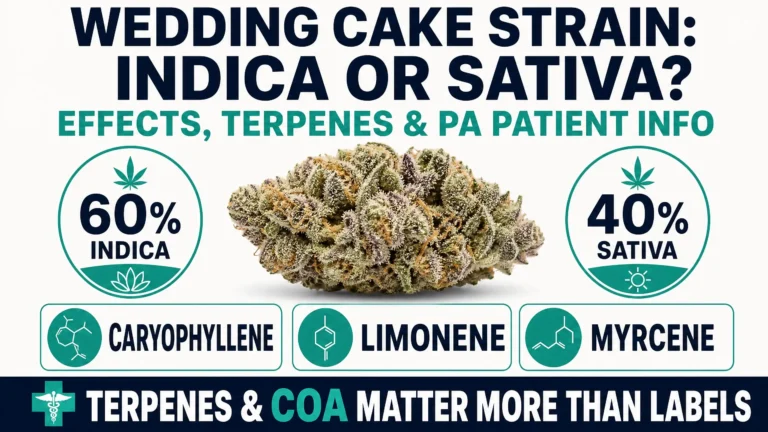

Wedding Cake also known as Triangle Mints #23 and Pink Cookies, is one of the most widely available and frequently asked-about strains at Pennsylvania dispensaries.
It is an indica-dominant hybrid (approximately 60% indica / 40% sativa), bred by Seed Junky Genetics from Triangle Kush and Animal Mints parents.
Need a PA Medical Marijuana Card?
Get certified online in 15 minutes. 100% Money-Back Guarantee.
Get Certified Now →Understanding its terpene profile, not just its indica/sativa label, is what determines whether it is the right choice for your qualifying condition.
⚡ Quick Answer
Wedding Cake is an indica-dominant hybrid strain (approximately 60% indica / 40% sativa), bred by Seed Junky Genetics from Triangle Kush × Animal Mints genetics.
For Pennsylvania residents: A valid PA medical marijuana card under Act 16 of 2016 is required to purchase Wedding Cake at any licensed PA dispensary.
Key Takeaways
- The indica/sativa label tells you less than you think: Wedding Cake’s therapeutic character is driven by its beta-caryophyllene and limonene terpene ratio, which varies batch to batch; the COA is your actual guide
- Limonene in Wedding Cake may actively reduce THC-induced anxiety: A 2024 Johns Hopkins clinical trial found that limonene significantly reduced feelings of anxiety and paranoia when co-administered with THC (Drug and Alcohol Dependence, DOI: 10.1016/j.drugalcdep.2024.111267)
- High-THC strains like Wedding Cake (22–27%) carry elevated anxiety risk for new patients: The PA dispensary pharmacist protocol of “describe your symptoms, not the strain name” applies here more than most
- PA DUI law does not recognize your MMJ card: THC metabolites from a Wedding Cake vape session remain detectable in blood long after effects resolve; Pennsylvania’s per se statute (75 Pa.C.S. § 3802(d)) applies regardless
- Batch variation is significant: Two jars labeled “Wedding Cake” from the same dispensary can have meaningfully different terpene ratios; always request the COA for the specific batch number before purchasing
Is Wedding Cake Indica or Sativa?
Wedding Cake is classified as an indica-dominant hybrid, carrying roughly 60% indica and 40% sativa genetics.

Seed Junky Genetics, the Southern California breeder credited with developing this strain, created it from Triangle Kush (indica-dominant) crossed with Animal Mints (balanced hybrid).
The strain won Best Hybrid Flower at the SoCal High Times Cannabis Cup and was named Leafly’s Strain of the Year in 2019.
Why the Indica/Sativa Label Is Only a Starting Point
For Pennsylvania medical marijuana patients, the indica/sativa classification is pharmacologically unreliable as a standalone guide.

Do You Qualify for a PA MMJ Card?
Connect with a licensed Pennsylvania state physician online from home.
As neurologist and cannabis researcher Dr. Ethan Russo demonstrated in his foundational 2011 paper in the British Journal of Pharmacology, the entourage effect, the interaction between cannabinoids and terpenes, determines the actual therapeutic character of a given batch far more than its genetic heritage.
Two products labeled “Wedding Cake” at the same PA dispensary can produce meaningfully different effects if their terpene ratios differ across cultivation batches.
Always request the Certificate of Analysis (COA) for your specific batch number, not a generic product sheet, before purchasing.
🔬 COA Callout: Ask your dispensary pharmacist for the batch-specific COA. Look for the terpene section, not just the THC percentage. The ratio of beta-caryophyllene to myrcene is what determines whether that particular batch leans toward relaxation and mood elevation or deeper sedation.
Cannabinoid Profile
| Cannabinoid | Typical Range | Clinical Significance |
|---|---|---|
| THC | 22–27% | High potency; start-low protocol strongly advised |
| CBD | <1% | Minimal moderating effect on THC intensity |
| CBG | Trace amounts | Under investigation for anti-inflammatory potential |
| CBC | Trace amounts | Minor entourage contribution |
| THC:CBD Ratio | ~25:1 or higher | Significant psychoactive profile; high-THC caution applies |
What This Means for PA Patients
Wedding Cake’s low CBD content means patients do not benefit from the moderating effect that higher-CBD strains can provide.
This makes it a poor first choice for new MMJ patients and those with anxiety as their qualifying condition unless they have prior tolerance to high-THC products.
For patients managing conditions like chronic pain, PTSD, or multiple sclerosis where higher-THC products may be therapeutically appropriate, Wedding Cake’s cannabinoid profile may align well.
Always start with the lowest available dose and titrate slowly. Your PA dispensary pharmacist can recommend appropriate starting formats, typically a low-dose edible or fractional vaporization dose.
Terpene Profile
Wedding Cake’s therapeutic identity is defined by three dominant terpenes. The ratio between them varies across batches, which is why the COA matters.

Beta-Caryophyllene — The Foundation Terpene
Beta-caryophyllene is the dominant terpene in most verified Wedding Cake batches. It produces the strain’s characteristic peppery, spicy aroma notes, also found in black pepper and cloves.
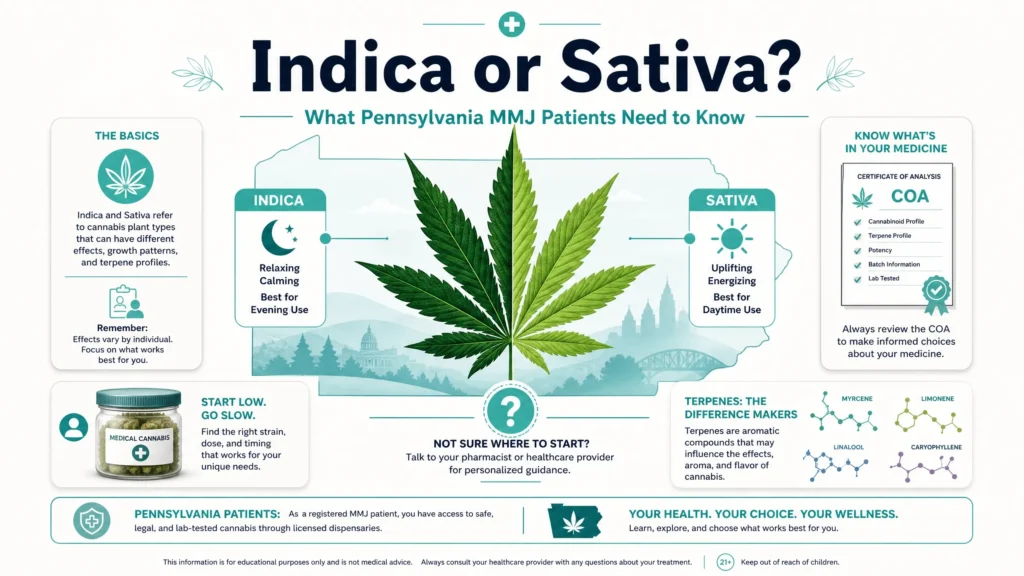
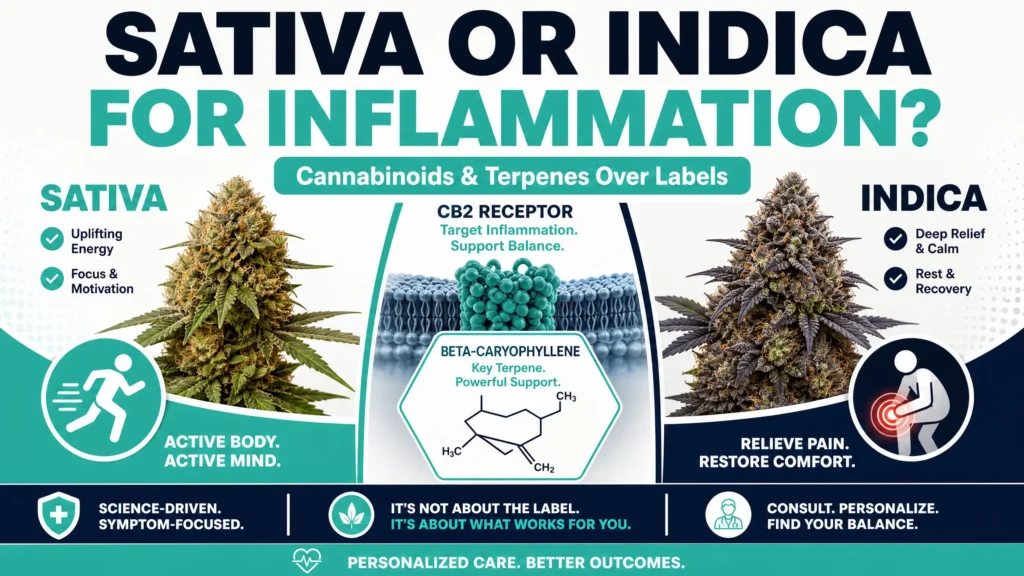
What makes beta-caryophyllene pharmacologically significant is its unique ability to directly activate CB2 cannabinoid receptors, the only dietary terpene known to do so.
⚡ Fast & 100% Online PA Medical Cards
Board-Certified Doctors • 100% Money-Back Guarantee
Book Evaluation Now →Research published in PMC (NIH) documents beta-caryophyllene’s anti-inflammatory effects via CB2 and PPAR receptor interaction.
A 2024 review in PubMed further highlighted its immunomodulatory and anti-inflammatory properties with specific therapeutic potential for managing anxiety and depression.
Earlier pain research published in European Neuropsychopharmacology demonstrated that beta-caryophyllene reduced both inflammatory and neuropathic pain responses in animal models.
PA Relevance: Patients managing chronic pain, neuropathies, or inflammatory conditions may find batches with elevated beta-caryophyllene content particularly relevant.
Ask your dispensary pharmacist to compare COA terpene levels across available batches.
| Evidence Area | Finding | Source |
|---|---|---|
| Anti-inflammatory | CB2 receptor activation reduces pro-inflammatory cytokines | PMC/NIH (2020) |
| Neuropathic pain | Reduced thermal hyperalgesia and mechanical allodynia | European Neuropsychopharmacology (2013) |
| Anxiety/Depression | CB2-mediated immunomodulatory potential | PubMed (2024) |
Limonene — The Anxiety-Modulating Terpene
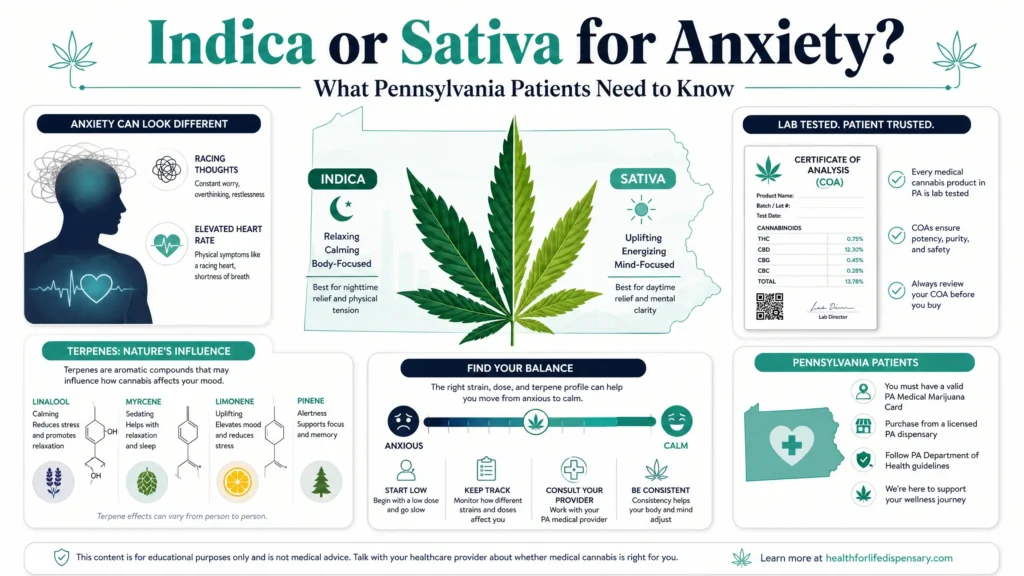
Limonene provides Wedding Cake’s citrus, bright top-note aroma. In medical cannabis, its role is increasingly supported by clinical evidence.
A landmark 2024 study from Johns Hopkins Medicine, published in Drug and Alcohol Dependence (DOI: 10.1016/j.drugalcdep.2024.111267), provided the first empirical clinical evidence that d-limonene significantly reduced THC-induced anxiety and paranoia in human participants, in a dose-dependent manner, without altering other desired effects of THC.
This finding has direct clinical relevance for PA patients whose primary qualifying condition is anxiety disorder, the most commonly cited condition, appearing in over 68% of all Pennsylvania MMJ certifications according to Drake et al., Annals of Internal Medicine, July 2025.
Batches of Wedding Cake with a higher limonene ratio may be preferable for anxiety patients compared to batches where myrcene dominates.
A PMC review also notes that limonene boosts serotonin and dopamine signaling, contributing to its anxiolytic and mood-elevating properties.
Myrcene — The Sedation Driver
Myrcene is the terpene most directly associated with Wedding Cake’s physical sedation and “couch-lock” potential at higher doses. It is also the most abundant terpene in cannabis generally.
Renewing Your PA MMJ Card?
Quick annual recertification online. No paperwork hassle.
Renew Card Online →Research published in PMC confirms that myrcene is well-documented for anxiolytic and sedative effects, with studies showing it prolongs sleep time and increases non-REM sleep cycles.
A PMC review on cannabis terpenes notes that strains with myrcene content above 0.5% are associated with sedative “couch-lock” effects, while lower myrcene concentrations produce more energetic profiles.
PA Relevance: For patients managing insomnia as a secondary symptom of their qualifying condition, common in PTSD, chronic pain, and multiple sclerosis, higher-myrcene batches of Wedding Cake may align with therapeutic goals. For daytime anxiety management, lower-myrcene batches may be more appropriate.
Entourage Effect Summary

💊 Entourage Effect Callout: The combined interaction of beta-caryophyllene (CB2 anti-inflammatory), limonene (anxiety reduction), and myrcene (sedation and analgesia) creates Wedding Cake’s characteristic therapeutic profile.
No single terpene produces these effects in isolation. This is why the terpene section of the COA, not the THC percentage should guide your PA dispensary purchase decision.
Therapeutic Effects
Wedding Cake’s effects are typically multi-phase, reflecting its hybrid genetics.
Reported therapeutic effects (medical framing):
- Mood elevation and stress reduction — often attributed to the limonene and beta-caryophyllene interaction
- Physical relaxation and muscle tension relief — driven primarily by myrcene and beta-caryophyllene’s CB2 activity
- Appetite stimulation — clinically relevant for patients managing cancer treatment-related anorexia
- Sleep support at moderate-to-higher doses — particularly relevant for high-myrcene batches
Who Should Use Caution
- New MMJ patients — Wedding Cake’s 22–27% THC range is among the higher end of available PA dispensary products; new patients should begin with lower-THC options
- Anxiety disorder patients without prior tolerance — paradoxically, high-THC products can worsen anxiety at doses exceeding individual tolerance, despite limonene’s moderating effect
- Patients subject to drug testing — THC metabolites remain detectable long after psychoactive effects resolve
- Anyone who needs to drive — PA’s per se DUI statute applies regardless of MMJ card status
What Conditions Is Wedding Cake Used For?

Anxiety Disorders
Anxiety disorders are the most commonly cited qualifying condition in Pennsylvania MMJ certifications, referenced in over 68% of all certifications per Drake et al., Annals of Internal Medicine, July 2025.
Wedding Cake’s limonene content makes it one of the more clinically interesting high-THC strains for anxiety patients, with the important caveat that high-THC products require careful titration.
Patients certified under PA’s anxiety disorder qualifying condition should discuss specific batch COA data with their dispensary pharmacist before selecting Wedding Cake. Lower-dose vaporization or micro-dosing edible formats are advisable starting points.
Severe Chronic and Intractable Pain
Beta-caryophyllene’s CB2 receptor activity and myrcene’s analgesic properties make Wedding Cake a frequently recommended dispensary option for patients certified for severe chronic or intractable pain.
Evening or nighttime use aligns best with the strain’s sedative arc, minimizing functional impairment during daytime hours.
PTSD
PTSD patients frequently report sleep disruption, hyperarousal, and intrusive anxiety as primary symptom burdens.
Get Approved by a Licensed PA Doctor
Schedule your appointment in minutes. You only pay if approved.
Start Online Application →Wedding Cake’s terpene profile, particularly higher-myrcene batches, may address both the sleep and anxiety components simultaneously.
Daytime use is not advisable for most PTSD patients given the sedation potential at typical dispensary doses.
Neuropathies
Beta-caryophyllene’s documented activity in neuropathic pain models, including reduction of thermal hyperalgesia and mechanical allodynia, makes Wedding Cake relevant for patients certified under PA’s neuropathies qualifying condition.
Topical formats containing Wedding Cake terpene profiles may be worth discussing with a dispensary pharmacist for localized neuropathic symptoms.
Wedding Cake at Pennsylvania Dispensaries
Wedding Cake is one of the more consistently available strain profiles across Pennsylvania’s 186+ licensed dispensaries (July 2026), though specific product availability varies by location and batch.

Available Product Formats
| Format | Onset Time | Duration | Best Suited For |
|---|---|---|---|
| Vaporized flower | 5–15 minutes | 2–3 hours | Dose titration, rapid relief |
| Vape cartridge | 5–10 minutes | 1.5–2.5 hours | Portability, consistent dosing |
| Live resin concentrate | 5–10 minutes | 2–3 hours | Experienced patients; high potency |
| Tincture (sublingual) | 15–45 minutes | 3–5 hours | Predictable dosing, flexible intake |
| Edible / capsule | 45–120 minutes | 4–8 hours | Extended relief, sleep support |
| Topical | Localized only | Variable | Localized pain, no psychoactive effect |
COA Guidance
Always request the batch-specific COA, not a generic product data sheet. Confirm:

- Terpene percentages (beta-caryophyllene, limonene, myrcene levels and ratios)
- THC and CBD exact percentages for the specific batch number
- Third-party laboratory verification (mandatory under PA DOH regulations)
Dispensary Pharmacist Recommendation
Pennsylvania dispensary pharmacists are trained clinical professionals. Describe your symptoms and qualifying condition, not the strain name.
This approach yields far more useful guidance than asking “do you have Wedding Cake?”
A pharmacist who understands your symptom burden can identify which specific Wedding Cake batch (if available) has the terpene ratio most aligned with your therapeutic goals or recommend an alternative product better suited to your condition.
Pennsylvania Legal Notes

Valid PA MMJ Card Required
Cannabis remains illegal for recreational use in Pennsylvania as of July 2026. Wedding Cake is accessible only to patients holding a valid card issued under Act 16 of 2016. Cards are valid for one year and require annual renewal.
Smoking Is Prohibited Under PA Law
Ready to Get Your Official PA MMJ Card?
State-certified doctor consultations online. No risk—100% refund if not approved.
Claim Your MMJ Card Online →Act 16 explicitly prohibits smoking as a consumption method. Legal methods for Wedding Cake in Pennsylvania:
- Vaporization of flower or concentrate
- Edibles and capsules
- Tinctures
- Topicals
⚠️ PA DUI Law — Critical Warning
75 Pa.C.S. § 3802(d) — Pennsylvania’s per se DUI statute makes it illegal to drive with any detectable amount of THC metabolites in blood, regardless of MMJ card status or impairment level.
The PA Supreme Court confirmed in Commonwealth v. Stone (2022) that a valid MMJ card does not constitute a defense to a DUI charge. THC metabolites remain detectable in blood well after psychoactive effects from Wedding Cake have fully resolved. Do not drive after consuming any cannabis product.
PA Certification — Getting Your Card
Patients who qualify under one of Pennsylvania’s 24 recognized qualifying conditions can complete the certification process entirely via telehealth.
| Fee | Amount |
|---|---|
| Physician certification (new patient) | $159 |
| PA state registration fee | $50 |
| Total — new patient | $209 |
| Physician certification (renewal) | $149 |
| PA state registration fee | $50 |
| Total — renewal | $199 |
MMAP Fee Waiver: Patients qualifying for Medicaid, SNAP, WIC, CHIP, PACE, or PACENET may have the $50 state fee waived.
Get your PA MMJ card via telehealth →
How to Choose the Right Wedding Cake Product?

- Request the batch-specific COA first. Confirm the terpene profile matches your therapeutic goal — higher limonene for anxiety-forward management, higher myrcene for sleep and pain-dominant profiles.
- Verify the THC percentage for your tolerance level. New patients should avoid products above 15–18% THC regardless of strain name; 22–27% is appropriate only for patients with established tolerance.
- Choose the right delivery format for your condition. Vaporization offers rapid onset and easier dose control; edibles offer longer duration for sleep support and extended pain relief.
- Start with the minimum effective dose. Wedding Cake’s high THC can produce adverse effects — heightened anxiety, rapid heart rate, disorientation — at doses exceeding individual tolerance.
- Describe your symptoms to your dispensary pharmacist, not the strain name. Ask them to compare terpene COA data across available Wedding Cake batches and comparable alternatives if Wedding Cake is unavailable.
💡 Pro Tip: PA dispensary pharmacists can legally discuss terpene profiles and qualifying condition relevance with patients. This is a clinical conversation use it. Mention your PA DOH-registered qualifying condition by name, describe your primary symptoms, and ask for batch-level COA comparison.
Frequently Asked Questions
Q: Is Wedding Cake indica or sativa?
A: Wedding Cake is an indica-dominant hybrid, carrying approximately 60% indica and 40% sativa genetics. It was bred by Seed Junky Genetics in Southern California from Triangle Kush and Animal Mints parent strains. For Pennsylvania patients, the indica/sativa classification is a starting point only, the strain’s beta-caryophyllene, limonene, and myrcene terpene ratios determine its actual therapeutic character, and these ratios vary meaningfully between cultivation batches. Always request the batch-specific COA from your PA dispensary to confirm the terpene profile before purchasing.
Q: What terpenes are in Wedding Cake?
A: The dominant terpenes in Wedding Cake are beta-caryophyllene, limonene, and myrcene, though alpha-humulene and linalool are also commonly present in smaller amounts. Beta-caryophyllene is the most pharmacologically distinctive, it is the only dietary terpene known to directly activate CB2 cannabinoid receptors, contributing anti-inflammatory and pain-modulating effects. Limonene has clinical evidence for reducing THC-induced anxiety. Myrcene drives the strain’s sedative and relaxing qualities. The ratio between these three terpenes varies batch to batch, which is why COA review is essential.
Q: What is Wedding Cake good for medically?
A: Wedding Cake’s terpene profile is most commonly associated with anxiety relief, chronic pain management, PTSD symptom support, and sleep assistance. Beta-caryophyllene’s CB2 receptor activity has research support for inflammatory and neuropathic pain. Limonene’s anxiety-modulating effects have direct clinical backing from a 2024 Johns Hopkins University trial. Myrcene contributes sedative and analgesic properties. Pennsylvania dispensary pharmacists most frequently recommend Wedding Cake-profile products for patients managing anxiety disorders, severe chronic pain, PTSD, and neuropathies, all recognized PA MMJ qualifying conditions.
Q: How much THC does Wedding Cake have?
A: Verified dispensary COA data consistently places Wedding Cake’s THC between 22–27%, with some premium indoor phenotypes approaching 30% in recent 2025 grows. CBD content is minimal, typically below 1%. This makes Wedding Cake a high-potency product. New patients and those without prior cannabis tolerance should begin with significantly lower-THC products and titrate upward only after establishing individual sensitivity. The absence of meaningful CBD means there is no built-in cannabinoid moderator in this strain’s profile.
Q: Is Wedding Cake available at Pennsylvania dispensaries?
A: Wedding Cake is among the more consistently available strain profiles across Pennsylvania’s 186+ licensed dispensaries (July 2026), though specific batch availability varies by location and grows in rotation. It is available in multiple formats at most major PA dispensary chains, including flower for vaporization, vape cartridges, live resin, tinctures, and edibles. Because terpene ratios vary across batches and cultivators, patients should request batch-specific COA data rather than assuming all Wedding Cake products are equivalent.
Q: Can I get a PA medical marijuana card to access Wedding Cake?
A: Yes, Pennsylvania residents who qualify under one of the 24 recognized serious medical conditions can obtain a PA MMJ card via telehealth and purchase Wedding Cake products at licensed PA dispensaries. The most commonly certified qualifying conditions, including anxiety disorders, chronic pain, PTSD, and neuropathies, are all conditions for which Wedding Cake’s terpene profile may be therapeutically relevant. New patient certification costs $209 total ($159 physician fee + $50 state registration). Start the telehealth certification process here.
Q: Is Wedding Cake good for anxiety?
A: Wedding Cake can be appropriate for anxiety patients, but requires careful patient selection and dose control. The limonene terpene in Wedding Cake has clinical evidence from a 2024 Johns Hopkins trial showing it reduces THC-induced anxiety in a dose-dependent manner. However, Wedding Cake’s 22–27% THC is at the higher end of available products, and high-THC cannabis can paradoxically worsen anxiety at doses exceeding individual tolerance, particularly in treatment-naive patients. Anxiety disorder patients should discuss Wedding Cake’s batch-specific COA with their dispensary pharmacist, consider low-dose vaporization for initial titration, and may benefit from products with a higher limonene-to-myrcene ratio.
Medically reviewed by Dr. Johnathon Chance Miller, MD (License #MD474783). This content is for educational purposes only and does not constitute medical advice. Cannabis affects individuals differently. Consult a licensed healthcare provider before using cannabis for any medical condition. Pennsylvania medical marijuana patients must follow all state laws regarding legal methods of consumption. Smoking cannabis is prohibited under PA law. Do not drive after consuming cannabis. THC metabolites remain detectable in blood after psychoactive effects resolve, Pennsylvania’s per se DUI law applies regardless of MMJ card status.