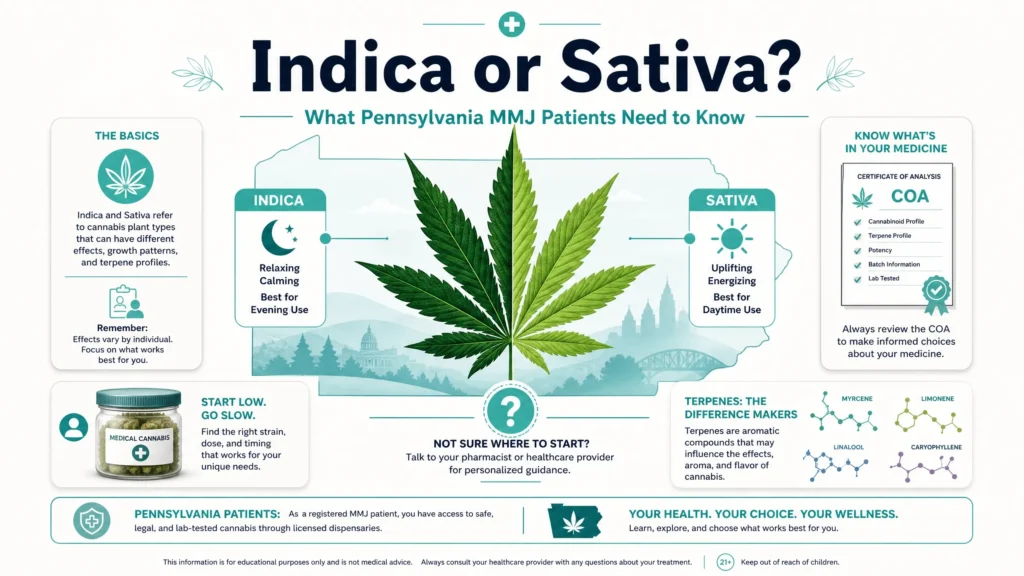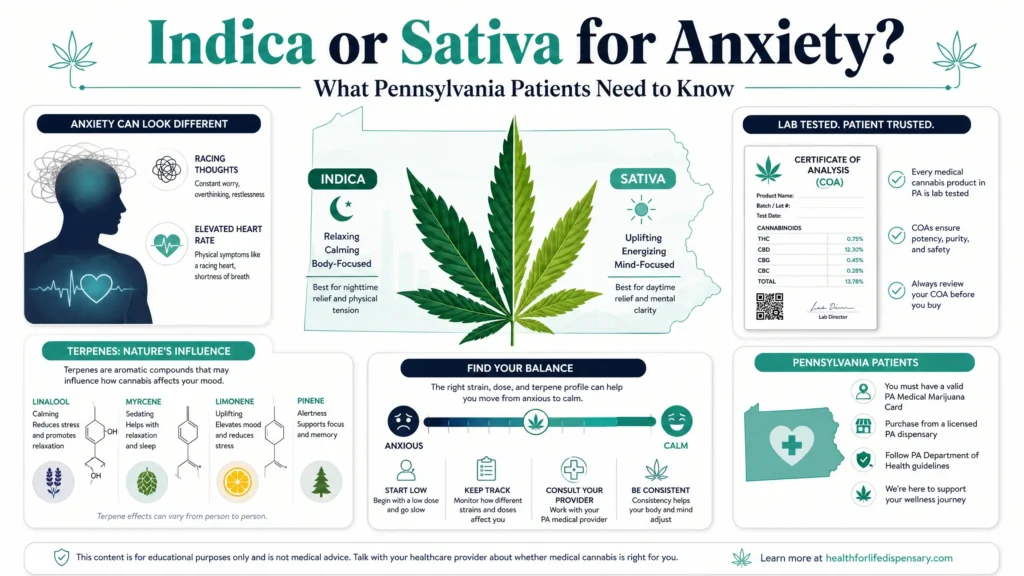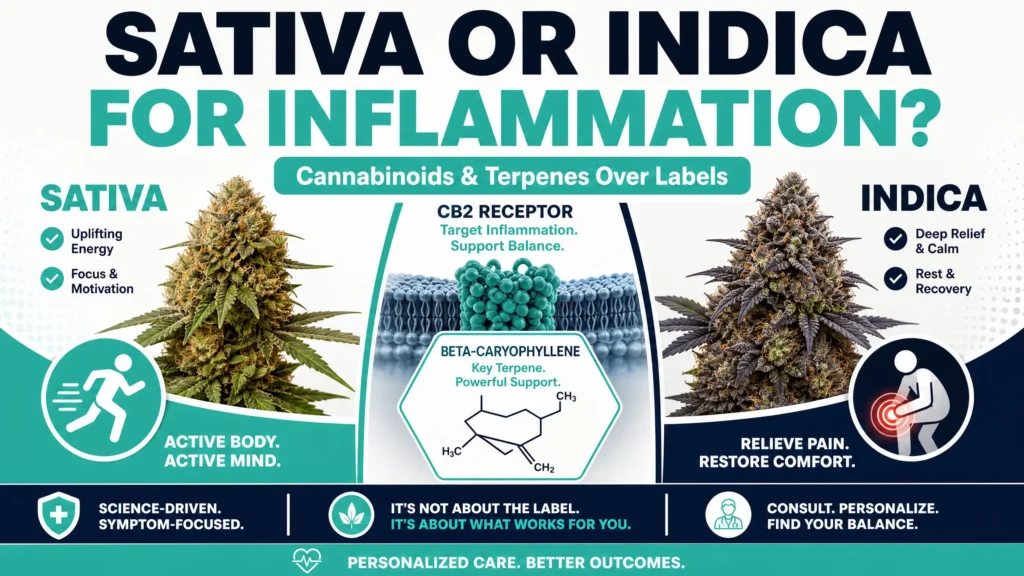
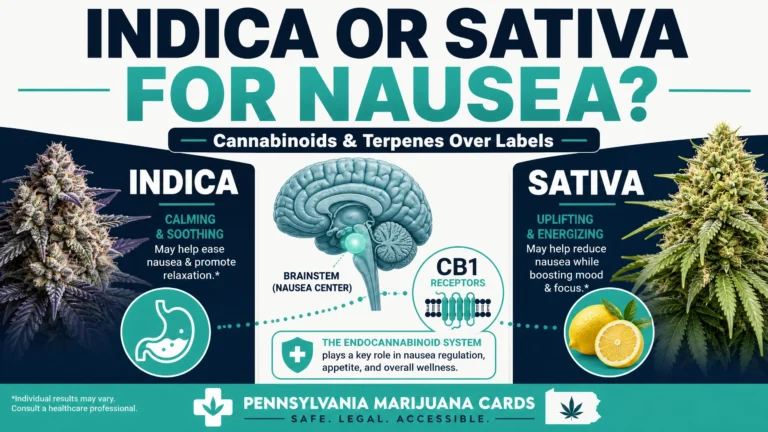

Patients searching “indica or sativa for nausea” are asking the right question, but the indica/sativa label cannot answer it.
Antiemetic effect in cannabis is driven by cannabinoid activity at CB1 receptors in the brainstem and by specific terpenes that modulate serotonin pathways, none of which are predicted by whether a product is labeled indica or sativa.
Pennsylvania’s mandatory COA terpene labeling gives patients far better data than any marketing category.
⚡ Quick Answer
Neither indica nor sativa reliably predicts nausea relief, THC’s CB1 receptor activity and the terpene limonene are the most clinically relevant factors for antiemetic effect.
For Pennsylvania residents: a valid MMJ card is required to access cannabis at any of PA’s 186+ licensed dispensaries — recreational cannabis remains illegal as of July 2026.
Key Takeaways
- Edibles are the worst delivery format for active nausea: delayed onset and GI absorption variability make them unreliable precisely when nausea is most severe; vaporization is the clinically preferred method for CINV patients
- Limonene — not indica or sativa — is the terpene that matters most for nausea: It modulates the same serotonin receptor pathway targeted by prescription antiemetic medications like ondansetron
- THCV offers antiemetic effect with a cleaner psychoactive profile: relevant for chemotherapy patients who need nausea relief without heavy cognitive impairment during treatment days
- Three separate PA qualifying conditions cover nausea: cancer, Crohn’s Disease, and IBD each qualify independently under Act 16, and nausea is a documented symptom in all three
- PA chemotherapy patients face a specific DUI risk on treatment days: THC metabolites remain detectable in blood long after medicating for pre-treatment nausea, and Pennsylvania’s per se DUI law carries no MMJ card exemption
Why the Indica/Sativa Label Fails Nausea Patients
The indica/sativa classification was developed to describe cannabis plant morphology, growth patterns, leaf shape, flowering cycles.
It was never a pharmacological system, and decades of commercial cultivation have blurred even the botanical distinctions beyond reliability.
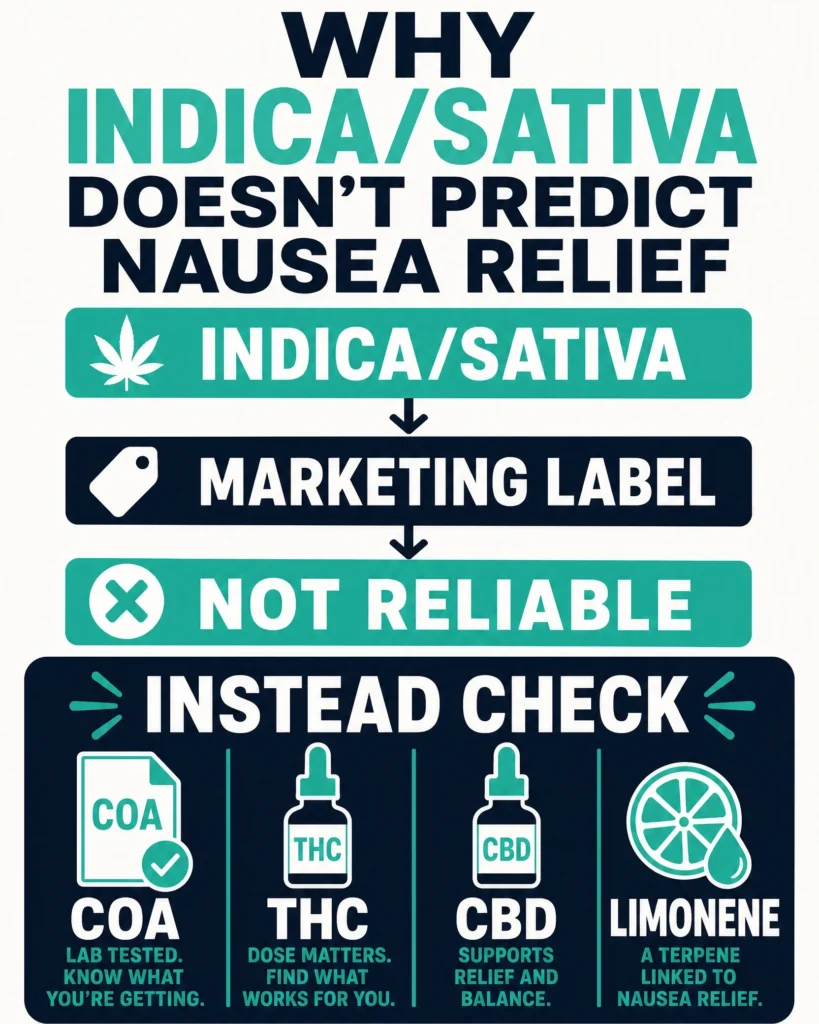
What determines antiemetic effect is cannabinoid activity at specific receptor sites and terpene interactions with serotonin and dopamine pathways, none of which are captured by a label that originated in 18th-century botanical taxonomy.
As Ethan Russo’s landmark 2011 research in the British Journal of Pharmacology demonstrated, therapeutic cannabis effects emerge from the full chemical profile acting together, what researchers call the entourage effect.
Two products both labeled “sativa” at a Pennsylvania dispensary can have completely different terpene profiles and produce completely different effects in a nausea patient. One may be rich in limonene with meaningful antiemetic potential.
The other may be limonene-poor and provide minimal nausea relief despite the same label.
What Pennsylvania’s Labeling System Gives You Instead
Pennsylvania’s Department of Health updated its dispensary product labeling requirements in 2025 to require full terpene profiles on every product’s Certificate of Analysis.
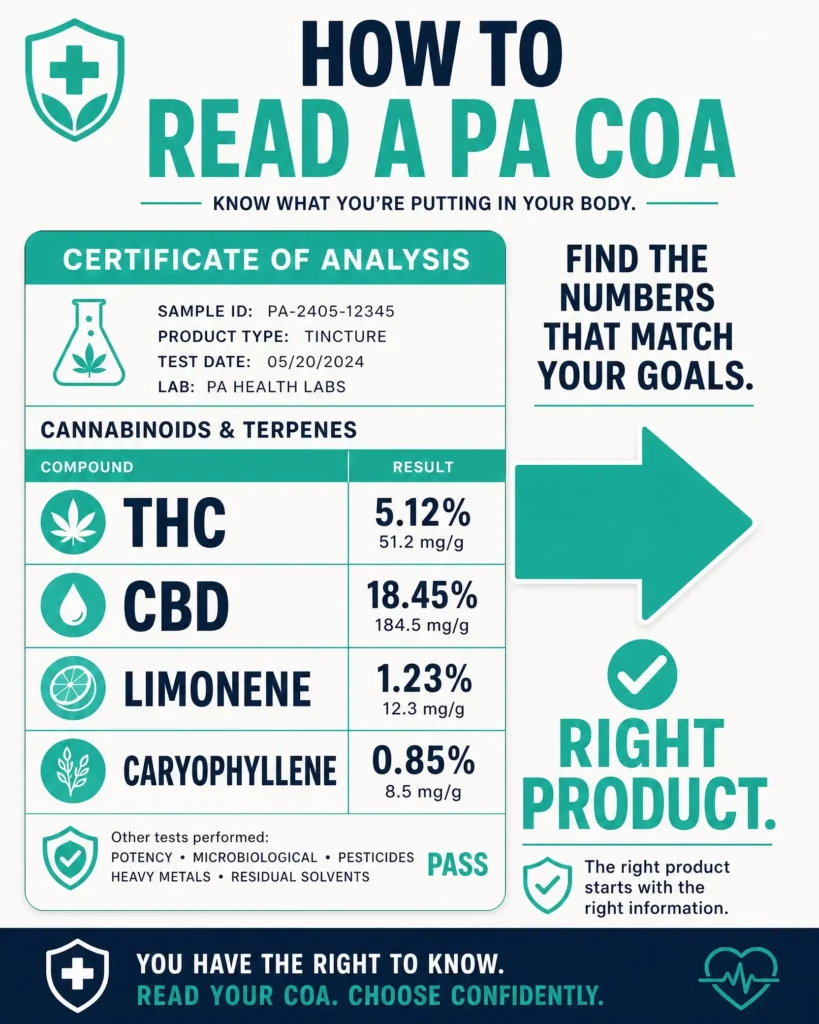
Every batch sold at PA’s 186+ licensed dispensaries must disclose its complete terpene panel, giving patients the actual pharmacological data that the indica/sativa label was never designed to provide.
📋 PA Dispensary Rule: Request the batch-specific COA, not the general product description sheet. Terpene profiles vary between batches of the same product. The COA is the document that matters.
How Cannabis Reduces Nausea — The CB1 Mechanism
Understanding why cannabis works for nausea requires a brief look at how nausea is generated in the first place.
The brainstem contains a structure called the area postrema, sometimes called the “chemoreceptor trigger zone”, that detects circulating toxins and coordinates the vomiting reflex.
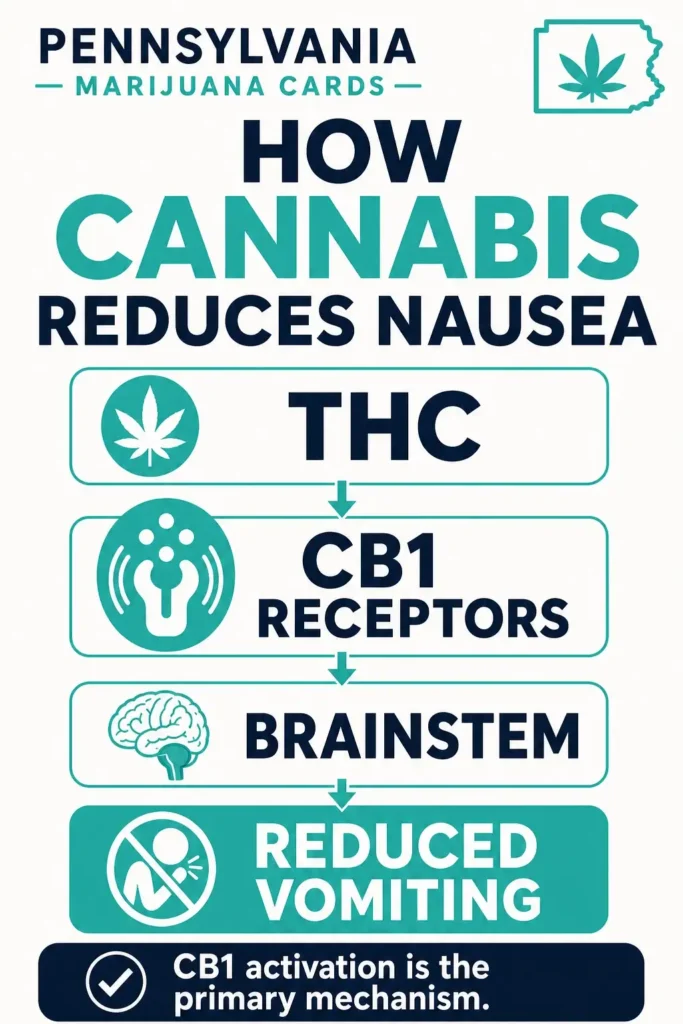
CB1 cannabinoid receptors are densely expressed in the area postrema and the nucleus tractus solitarius, both critical nodes in the nausea-vomiting pathway.
THC and other cannabinoids suppress nausea by activating these CB1 receptors, inhibiting the pro-emetic signaling that triggers vomiting.
This is the same mechanism leveraged by FDA-approved cannabinoid medications dronabinol (synthetic THC) and nabilone, both of which are prescribed for chemotherapy-induced nausea and vomiting (CINV).
CB1 activation is the primary antiemetic mechanism and it is present in any cannabis product with sufficient THC regardless of whether that product is labeled indica or sativa.
The label is irrelevant to this receptor-level interaction.
CBD’s Supporting Role in Nausea
CBD does not directly activate CB1 receptors at standard doses.
However, preclinical research suggests CBD modulates nausea through serotonin 5-HT1A receptor activation, a separate antiemetic pathway. At lower doses, CBD’s 5-HT1A activity appears to reduce nausea.
At very high doses, this effect may reverse. For nausea patients, a moderate THC product with meaningful CBD content is often better tolerated than high-THC-only formulations, particularly for patients sensitive to psychoactive effects during chemotherapy treatment days.
The Terpenes That Matter Most for Nausea Relief
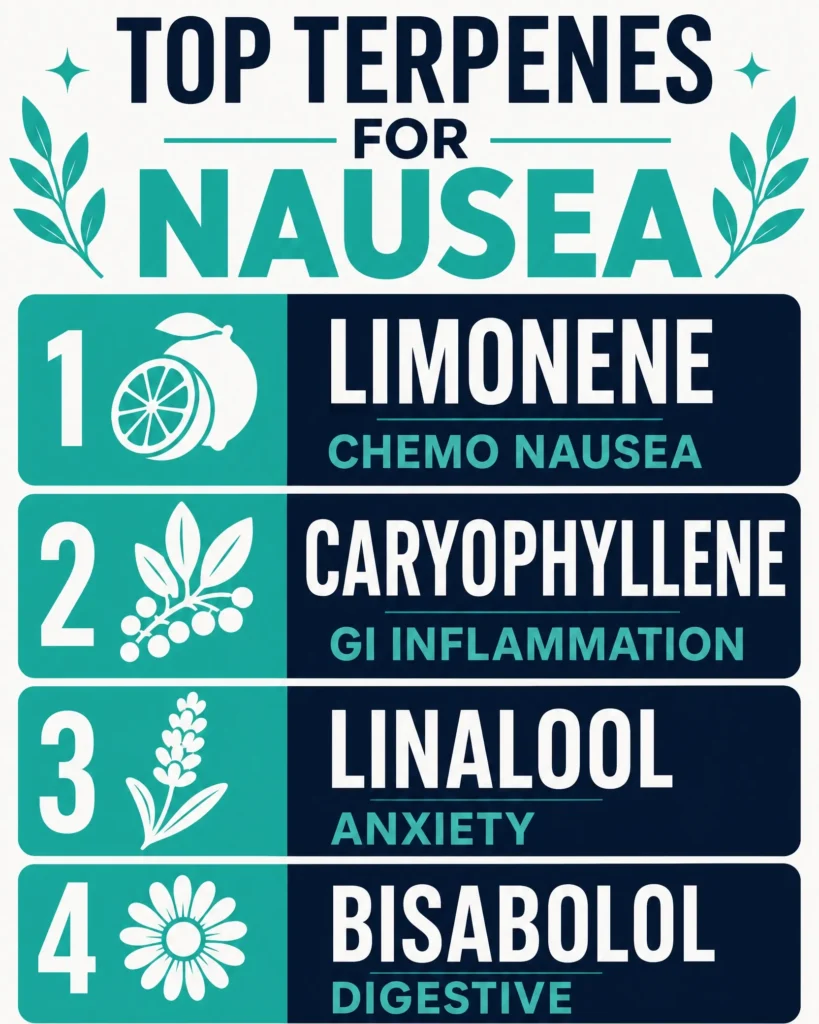
Limonene — The Most Nausea-Relevant Terpene
Limonene is a citrus-scented terpene found in both indica- and sativa-labeled cannabis products.
It is the most clinically relevant terpene for nausea patients because it modulates serotonin (5-HT) and dopamine pathways, the same neurotransmitter systems targeted by the most commonly prescribed antiemetic medications.
Ondansetron, the most widely used prescription antiemetic for chemotherapy patients, works primarily through 5-HT3 receptor antagonism.
Limonene’s serotonin pathway activity positions it as a complementary terpene for CINV patients already familiar with serotonin-based antiemetic mechanisms.
This does not mean limonene replaces ondansetron, it means patients seeking cannabis adjunct therapy for nausea should prioritize limonene-rich products over any indica/sativa label.
THCV — Antiemetic Effect With a Cleaner Profile
Tetrahydrocannabivarin (THCV) is a minor cannabinoid present in some cannabis cultivars that has attracted research interest for its antiemetic potential.
Preclinical studies indicate THCV produces antiemetic effects through CB1 receptor modulation, similar to THC — but with a shorter duration and reportedly reduced psychoactive intensity.
For chemotherapy patients who need nausea relief on treatment days but want to remain as cognitively present as possible, high-THCV products represent an emerging option worth discussing with a dispensary pharmacist.
THCV is not present in all cannabis products.
Check the cannabinoid panel on the COA, not all PA dispensary products will list it, but its presence or absence is a COA data point, not a label characteristic.
Ginger Terpenes — Bisabolol and the Broader Antiemetic Terpene Family
| Terpene | Mechanism | Nausea Relevance | Evidence Level |
|---|---|---|---|
| Limonene | 5-HT and dopamine pathway modulation | Direct antiemetic pathway | Moderate — preclinical + mechanistic |
| Beta-caryophyllene | CB2 receptor agonism | Anti-inflammatory; nausea from IBD/Crohn’s | Strong — CB2 mechanism well-established |
| Linalool | GABA-A modulation | Nausea with anxiety component | Moderate — preclinical |
| Alpha-bisabolol | Anti-inflammatory | GI inflammation-driven nausea | Preliminary |
| Myrcene | Cannabinoid synergy, sedation | Nausea with sleep disruption | Preliminary |
Cannabinoid Profiles for Different Types of Nausea
Nausea is not a single condition.
The most effective cannabinoid profile differs significantly depending on what is causing the nausea and matching profile to cause is more important than any indica/sativa classification.
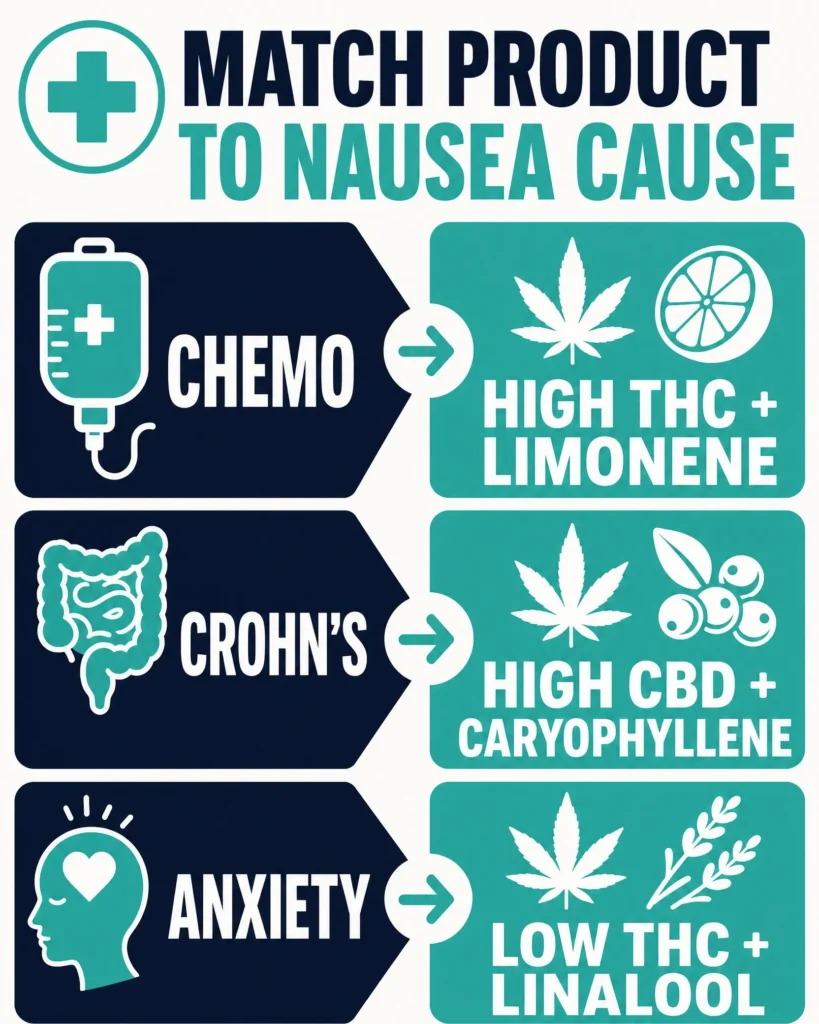
| Nausea Type | Primary Mechanism | Suggested Cannabinoid Approach | Key Terpene Target |
|---|---|---|---|
| Chemotherapy-induced (CINV) | CB1 trigger zone activation | Moderate-to-high THC; CBD for anxiety | Limonene |
| Opioid-induced | GI motility and CB1 | Balanced THC:CBD | Beta-caryophyllene |
| IBD / Crohn’s related | GI inflammation | Higher CBD, moderate THC | Beta-caryophyllene |
| Anxiety-induced | Serotonin / stress response | Lower THC, higher CBD | Linalool, limonene |
| Morning / chronic nausea | Mixed GI + CNS | Low-dose THC microdose | Limonene |
Why High-THC Products Are Not Always Best for Nausea
At low to moderate doses, THC produces meaningful antiemetic effect through CB1 activation.
At high doses, THC can paradoxically worsen nausea and trigger cannabinoid hyperemesis syndrome in susceptible heavy users, a rare but important clinical consideration.
Treatment-naive patients and those using cannabis medically for the first time should start with the lowest available THC dose and increase slowly under dispensary pharmacist guidance.
For cancer patients undergoing chemotherapy, the clinical goal is adequate CB1 activation for antiemetic effect, not maximum THC percentage.
A moderate-THC, limonene-rich product often outperforms a high-THC, limonene-poor product for nausea specifically.
Which Delivery Format Works Best When You’re Nauseated
This is the most practically important section for active nausea patients and the one most frequently overlooked on recreational cannabis sites.
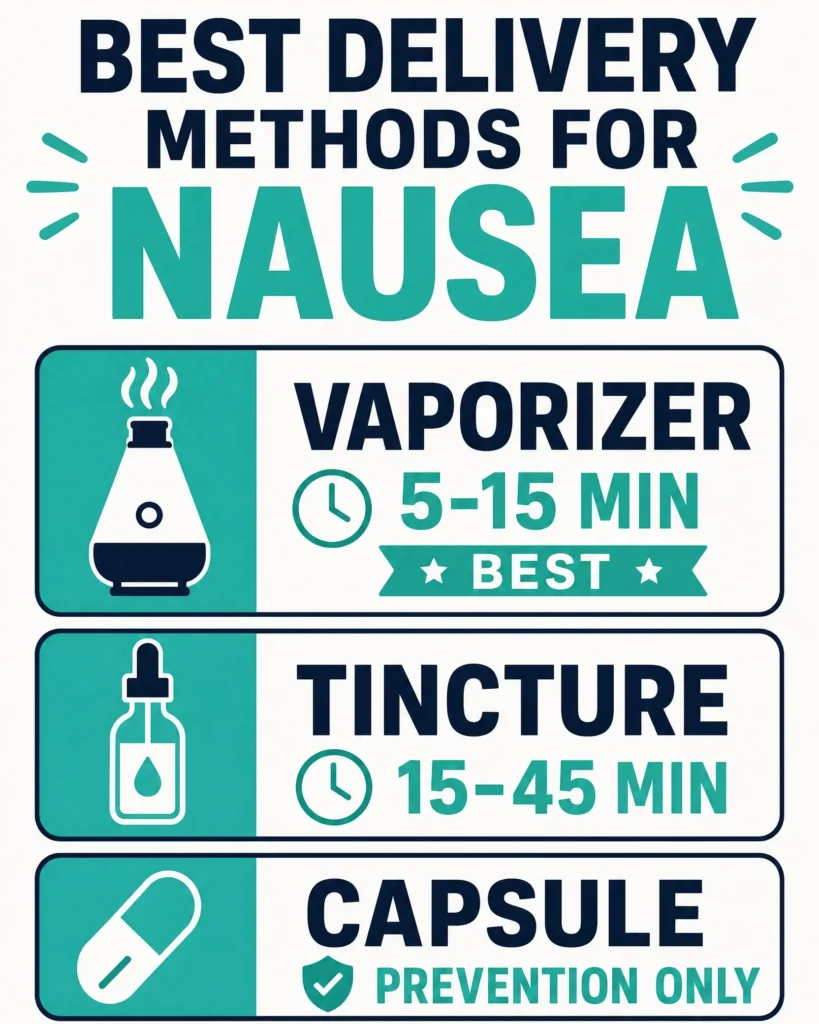
Edibles are poorly suited to active nausea episodes. When nausea is present, gastric motility slows and GI absorption becomes unpredictable.
An edible that normally takes 60–90 minutes to absorb may take 3–4 hours or absorb incompletely, when the GI system is compromised by chemotherapy or severe nausea.
Patients who take an edible during active nausea, feel no effect, take more, and then experience a delayed double dose are presenting a well-documented clinical pattern.
| Format | Onset Time | Best For Nausea? | Notes |
|---|---|---|---|
| Vaporization (oil/flower) | 5–15 minutes | ✅ Yes — first choice for active nausea | Fast onset; controllable dose; bypasses GI |
| Sublingual tincture | 15–45 minutes | ✅ Yes — good second option | Absorbed under tongue; partial GI bypass |
| Capsule / tablet | 45–90 minutes | ⚠️ Limited — for prevention only | Use before nausea onset, not during |
| Edible | 60–120+ minutes | ❌ Avoid during active nausea | Unpredictable GI absorption when nauseated |
| Topical | Local only | ❌ Not relevant for nausea | No systemic antiemetic effect |
💡 Pro Tip: Many CINV patients use a two-format strategy, a long-duration capsule or tincture taken before a chemotherapy session for baseline protection, and a fast-onset vaporizer available for breakthrough nausea during or after treatment.
PA Qualifying Conditions That Cover Nausea
Nausea is not listed as a standalone qualifying condition under Pennsylvania’s Act 16 of 2016.
However, three major qualifying conditions include nausea as a primary or prominent documented symptom and patients with these diagnoses have a clear, direct path to MMJ certification.
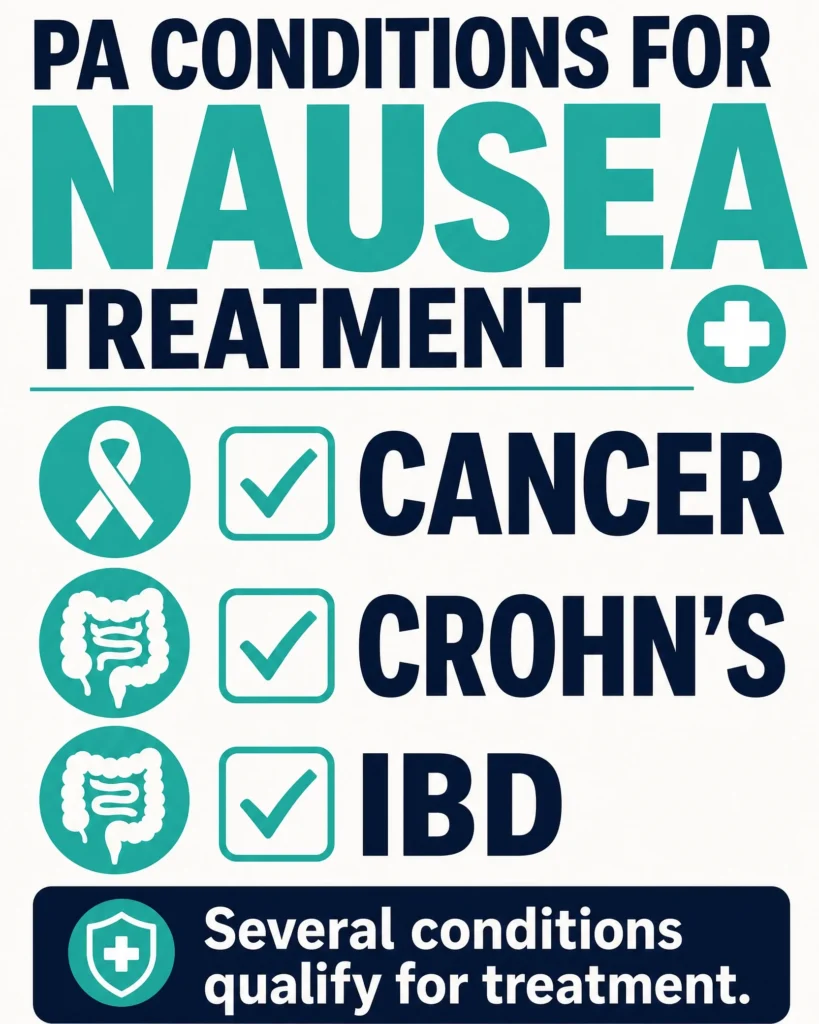
Cancer
Cancer is a named qualifying condition under Act 16, and chemotherapy-induced nausea and vomiting is one of the most common and debilitating side effects of cancer treatment.
Pennsylvania MMJ certification for cancer patients covers the full symptom burden, nausea, pain, appetite loss, and anxiety, without requiring separate qualification for each.
Crohn’s Disease
Crohn’s Disease qualifies under Act 16 as a standalone condition.
Nausea is a frequent and disabling symptom of active Crohn’s disease, particularly during flares. Beta-caryophyllene’s CB2-mediated anti-inflammatory activity makes it especially relevant for Crohn’s-related nausea driven by GI inflammation.
Inflammatory Bowel Disease
IBD qualifies separately from Crohn’s Disease under PA law, covering ulcerative colitis and other inflammatory bowel conditions where nausea is a documented component.
Patients with IBD-related nausea can pursue certification under this category.
Patients uncertain about which qualifying condition applies to their diagnosis should review Pennsylvania’s full qualifying conditions list before scheduling a certification appointment.
Pennsylvania Legal Notes Every Patient Must Read
A Valid PA MMJ Card Is Required
Cannabis remains illegal for recreational use in Pennsylvania as of July 2026. Accessing cannabis products for nausea management without a valid card issued under Act 16 of 2016 is a criminal offense, regardless of medical need or diagnosis.
Smoking Is Prohibited
Act 16 explicitly prohibits smoking cannabis in Pennsylvania.
Legal consumption methods include vaporization, oral tinctures, capsules, edibles, and topical application. For nausea patients, vaporization is both the legally compliant and clinically preferred fast-onset method.
⚠️ The DUI Risk Chemotherapy Patients Are Not Being Told About
This warning is particularly critical for cancer patients who medicate before chemotherapy appointments and then travel to treatment centers.
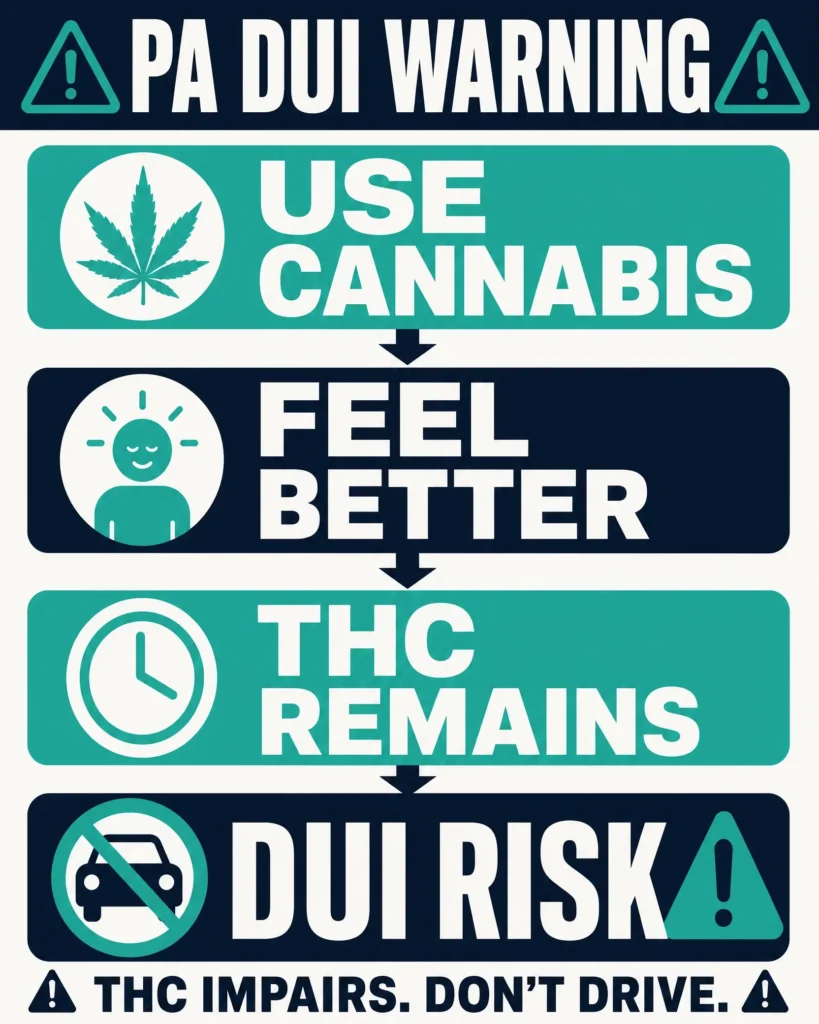
Pennsylvania operates under a per se DUI standard under 75 Pa.C.S. § 3802(d), any detectable THC metabolite in blood constitutes a DUI, regardless of actual impairment or MMJ card status. In Commonwealth v. Stone (2022), Pennsylvania courts confirmed that a valid MMJ card provides no DUI defense.
A patient who vaporizes cannabis for pre-chemotherapy nausea at 7 AM and drives to a treatment center at 9 AM may have detectable THC metabolites in blood despite feeling fully alert.
Arrange transportation on treatment days or discuss dosing-to-driving timing with your certifying physician.
Getting Certified in Pennsylvania
Telehealth certification is available statewide through pennsylvaniamarijuanacards.com.
| Fee | Amount |
|---|---|
| Physician certification (new patient) | $159 |
| PA state registration fee | $50 |
| Total — new patient | $209 |
| Physician certification (renewal) | $149 |
| PA state registration fee | $50 |
| Total — renewal | $199 |
Patients qualifying for Medicaid, SNAP, WIC, CHIP, PACE, or PACENET may have the $50 state fee waived through Pennsylvania’s MMAP program.
How to Choose the Right Nausea Product: 5 Steps
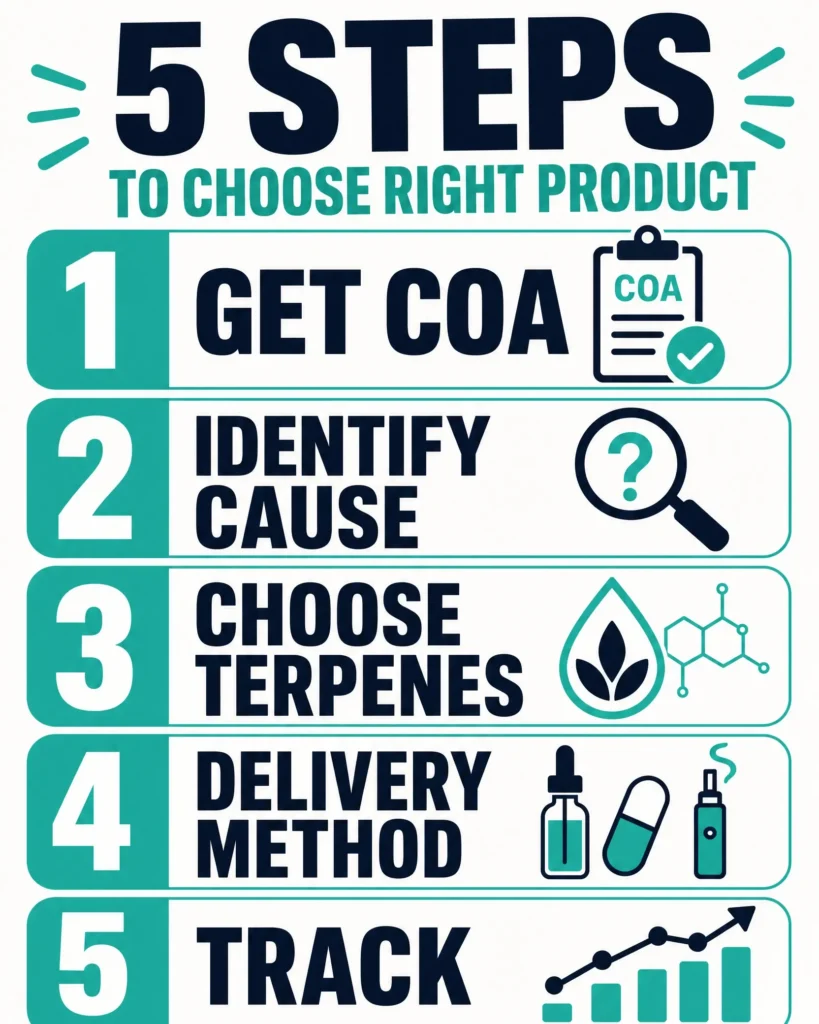
- Pull the batch COA — ignore the indica/sativa label entirely. Ask your dispensary pharmacist for the Certificate of Analysis for the specific batch you are considering. Look at the terpene column and the full cannabinoid panel — not the marketing description.
- Identify your nausea type and match the cannabinoid profile. CINV responds well to moderate-to-high THC with limonene. IBD and Crohn’s nausea responds better to higher CBD with beta-caryophyllene. Anxiety-driven nausea calls for lower THC and linalool-dominant products.
- Select your delivery format based on when nausea occurs. For nausea that strikes unpredictably or during active episodes, vaporization is the only format with fast enough onset to be clinically useful. For prevention before a known trigger (chemotherapy session, morning routine), a tincture or capsule taken 30–60 minutes before provides better baseline coverage.
- Start at the lowest available dose. Treatment-naive patients are particularly susceptible to THC-induced nausea at high doses — the opposite of the intended effect. Begin low, assess at 30 minutes for vaporized products, and adjust only after multiple sessions establish your baseline response.
- Describe your symptoms precisely to the dispensary pharmacist. “I have chemotherapy-related nausea and I need something that works within 15 minutes without heavy sedation” gives a pharmacist everything needed to match you to the right COA profile. Asking for “a good sativa for nausea” does not.
💡 Pro Tip: Keep a simple symptom log, nausea severity before dosing (0–10), product used, dose, onset time, and relief duration. Two weeks of this data is more useful than any online recommendation, and it gives your certifying physician actionable information at your next visit.
Frequently Asked Questions
Q: Is indica or sativa better for nausea?
A: Neither indica nor sativa reliably predicts antiemetic effect, because nausea relief from cannabis is driven by THC’s activation of CB1 receptors in the brainstem and by terpenes that modulate serotonin pathways, neither of which are determined by the indica/sativa label. The most clinically relevant factors are THC content, CBD ratio, and limonene concentration, all of which are visible on a product’s Certificate of Analysis. Pennsylvania law requires full terpene COA disclosure on all dispensary products, giving PA patients access to this data at the point of purchase. Ask your dispensary pharmacist to help you read the terpene panel rather than selecting by label.
Q: What terpenes help with nausea?
A: Limonene is the most nausea-relevant terpene, due to its activity on serotonin and dopamine pathways that parallel the mechanisms of prescription antiemetic medications. Beta-caryophyllene is particularly relevant for nausea driven by GI inflammation, as in Crohn’s Disease or IBD, through its direct CB2 receptor activity. Linalool addresses nausea that has a significant anxiety component through GABA-A modulation. These terpenes appear in products across the indica/sativa spectrum, which is precisely why COA data, not marketing labels, should guide nausea product selection.
Q: Does Pennsylvania recognize cancer nausea as a qualifying condition?
A: Yes, cancer is a named qualifying condition under Pennsylvania’s Act 16 of 2016, and chemotherapy-induced nausea and vomiting is among its most documented symptoms. Crohn’s Disease and Inflammatory Bowel Disease also qualify independently under Act 16, both of which include nausea as a primary symptom. Patients with these diagnoses can pursue MMJ certification directly. A full list of qualifying conditions is available at pennsylvaniamarijuanacards.com.
Q: Why shouldn’t I use edibles for nausea?
A: Edibles are poorly suited to active nausea because they rely on GI absorption, which is significantly slowed or impaired when nausea is present, particularly in chemotherapy patients whose GI motility is already compromised. Onset can extend from the typical 60–90 minutes to 3–4 hours or longer, leading patients to redose and experience a dangerously delayed double effect. Vaporization bypasses the GI tract entirely and produces onset within 5–15 minutes, making it the preferred delivery format for active nausea. Tinctures absorbed sublingually offer a useful middle option for patients who cannot vaporize.
Q: Can I get a PA medical marijuana card for chemotherapy nausea?
A: Yes, cancer qualifies directly under Pennsylvania Act 16 of 2016, and telehealth certification is available statewide. New patients pay a $159 physician certification fee plus a $50 PA state registration fee ($209 total). Renewals are $149 plus the $50 state fee ($199 total). Patients qualifying for Medicaid, SNAP, WIC, CHIP, PACE, or PACENET may have the $50 state fee waived through the MMAP program. Certification is available through pennsylvaniamarijuanacards.com.
Q: Will my MMJ card protect me from a DUI if I drive to chemotherapy after medicating?
A: No, a Pennsylvania MMJ card provides no protection under the state’s per se DUI law. Under 75 Pa.C.S. § 3802(d), any detectable THC metabolite in blood constitutes a DUI regardless of impairment level or card status, a standard confirmed in Commonwealth v. Stone (2022). Cancer patients who medicate for pre-treatment nausea and then drive to their chemotherapy center are at legal risk under this statute. Arrange alternative transportation on treatment days or consult your certifying physician about timing.
Q: Is smoking cannabis legal for nausea management in Pennsylvania?
A: No, smoking cannabis is explicitly prohibited under Pennsylvania’s Act 16 of 2016, even for patients with terminal illness or active chemotherapy. Legal consumption methods include vaporization, sublingual tinctures, capsules, and edibles. For nausea specifically, vaporization is both the legally compliant method and the clinically preferred delivery format, providing fast onset through pulmonary absorption while avoiding the GI absorption variability that makes edibles unreliable during active nausea episodes.
Medically reviewed by Dr. Johnathon Chance Miller, MD (License #MD474783). This content is for educational purposes only and does not constitute medical advice. Cannabis affects individuals differently. Consult a licensed healthcare provider before using cannabis for any medical condition. Pennsylvania medical marijuana patients must follow all state laws regarding legal methods of consumption. Smoking cannabis is prohibited under PA law. Do not drive after consuming cannabis. THC metabolites remain detectable in blood after psychoactive effects resolve, Pennsylvania’s per se DUI law applies regardless of MMJ card status.
Sources
- Russo EB. Taming THC: potential cannabis synergy and phytocannabinoid-terpenoid entourage effects. Br J Pharmacol. 2011
- Parker LA, et al. Regulation of nausea and vomiting by cannabinoids. Br J Pharmacol. 2011
- Rock EM, et al. Cannabidiol, a non-psychotropic component of cannabis, attenuates vomiting and nausea-like behaviour. Br J Pharmacol. 2012
- Cho JH, et al. Limonene and its anti-nausea, serotonin pathway activity. Biomolecules. 2020
- Rock EM, et al. THCV and antiemetic effects — preclinical review. Psychopharmacology. 2013
- Cannabinoid hyperemesis syndrome — clinical review. StatPearls. 2023
- Gertsch J, et al. Beta-caryophyllene is a dietary cannabinoid. PNAS. 2008
- Pennsylvania Department of Health — Medical Marijuana Program
- Pennsylvania Act 16 of 2016 — Medical Marijuana Act
- 75 Pa.C.S. § 3802(d) — Pennsylvania per se DUI statute
- Drake DF, et al. Medical marijuana certifications by qualifying condition. Annals of Internal Medicine. July 2025. DOI: 10.7326/ANNALS-25-01037