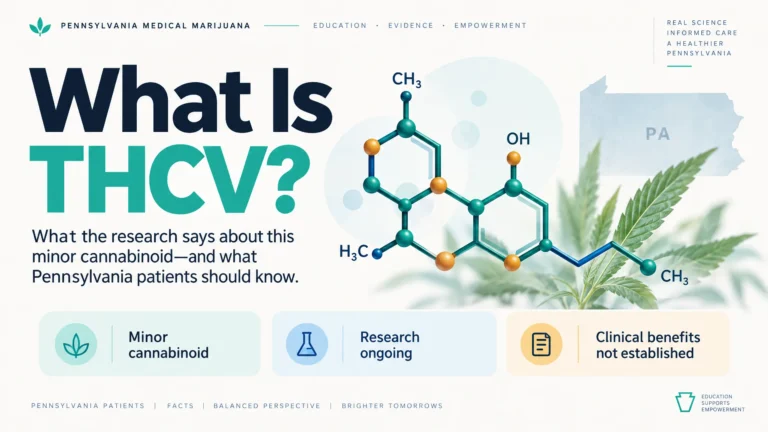

THCV (tetrahydrocannabivarin) is the minor cannabinoid that does the opposite of what THC is famous for. THC stimulates appetite. THCV suppresses it.
THC activates CB1 receptors to produce a high. THCV, at typical doses, blocks CB1 receptors and produces no significant psychoactive effect. THC causes the munchies. THCV has earned the nickname “skinny pot” in research circles for its appetite-suppressing and metabolic effects.
Need a PA Medical Marijuana Card?
Get certified online in 15 minutes. 100% Money-Back Guarantee.
Get Certified Now →For Pennsylvania medical marijuana patients, THCV is not yet a mainstream dispensary product. It appears in trace amounts in most PA dispensary products and in meaningful concentrations only in specific strains or dedicated formulations.
But the March 2025 AIMS Neuroscience systematic review confirmed it has one of the most interesting pharmacological profiles in the cannabinoid family, with implications for weight management, type 2 diabetes, neuroprotection, and epilepsy that extend far beyond the appetite angle.
This guide explains what THCV is, what the research shows, and the practical information PA dispensary patients need before seeking it out.
Key Takeaways
| Topic | Key Point |
|---|---|
| What THCV is | A minor cannabinoid occurring naturally in cannabis, structurally similar to THC but with a shorter side chain that produces opposite receptor effects |
| Primary mechanism | CB1 receptor antagonist (blocker) at typical doses vs CB1 agonist (activator) like THC, produces appetite suppression rather than stimulation |
| Psychoactivity | Non-psychoactive at typical doses; may produce mild psychoactive effects at very high doses |
| Strongest evidence | 2025 AIMS Neuroscience systematic review confirmed appetite suppression, glucose regulation, and insulin sensitivity improvements in preclinical and preliminary human research |
| Drug test warning | THCV can produce a positive result on standard THC urine drug screening tests |
| PA dispensary availability | Rare in most products; look for 0.5% or higher on the minor cannabinoid panel; Durban Poison lineage strains tend toward higher THCV |
What Is THCV and Where Does It Come From?
THCV is tetrahydrocannabivarin, a naturally occurring phytocannabinoid found in cannabis plants.
Do You Qualify for a PA MMJ Card?
Connect with a licensed Pennsylvania state physician online from home.
It is structurally similar to THC but with one critical molecular difference: a shorter propyl side chain (three carbon atoms) rather than THC’s pentyl side chain (five carbon atoms). This seemingly small structural difference produces dramatically different receptor interactions.
THCV is classified as a minor cannabinoid because it occurs in much smaller concentrations than THC or CBD in most cannabis varieties.
Its concentration in cannabis depends heavily on genetic lineage. THCV occurs in significantly higher concentrations in cannabis plants with African landrace genetics, particularly strains originating from Central and Southern Africa. The Durban Poison strain from South Africa is the most well-known Western cannabis variety with consistently elevated THCV content.
Modern PA dispensary strains bred from Durban Poison lineage or containing African landrace genetics are more likely to show meaningful THCV on their COA than hybrid strains bred primarily from OG or Kush genetics.
THCV is a naturally occurring compound in the cannabis plant. It is not a synthetic or semi-synthetic cannabinoid derived through chemical conversion processes like delta-8 THC or HHC. This distinction matters for safety and for PA dispensary purchasing, where all products are tested for potency and contaminants by two state-approved labs.
THCV vs THC: The Key Differences
Understanding how THCV differs from THC clarifies what to expect from any product containing significant THCV content.
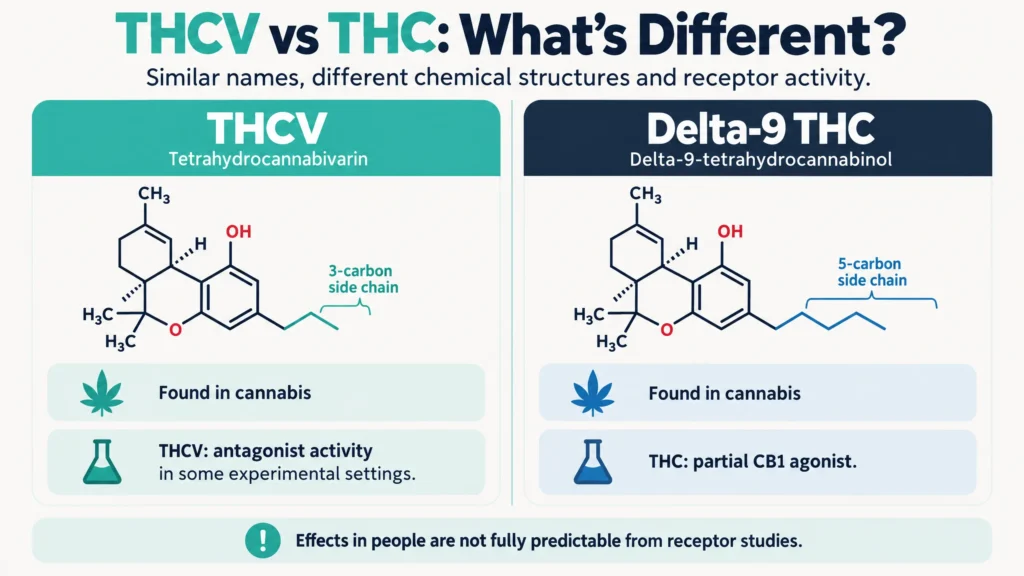
| Feature | THC (Delta-9) | THCV |
|---|---|---|
| Receptor action | CB1 agonist (activator) | CB1 antagonist (blocker) at typical doses |
| Psychoactivity | Yes, significantly | Non-psychoactive at typical doses; possible mild effects at very high doses |
| Appetite effect | Stimulates appetite (munchies) | Suppresses appetite |
| Duration of effects | Several hours | Shorter duration than THC |
| Body weight effect | Associated with weight gain with regular use | Associated with weight loss and metabolic improvement |
| Blood sugar | No specific benefit; may increase blood sugar | Improves insulin sensitivity and glucose regulation in research |
| PA dispensary prevalence | Very high; present in nearly all products | Low; minor cannabinoid panel; rare to find above 0.5% |
| Drug test result | Yes, positive | Yes, can produce positive THC drug test |
Minor cannabinoid comparison: THCV among PA dispensary cannabinoids:
| Cannabinoid | CB1 Action | Psychoactive? | Primary Benefit | Find on COA |
|---|---|---|---|---|
| THCV | Antagonist (blocker) at typical doses | No (typical doses) | Appetite suppression, metabolic, neuroprotective | Minor cannabinoid panel |
| CBN | Weak partial agonist | Minimal | Sleep, mild sedation | Minor cannabinoid panel |
| CBG | Weak partial agonist / antagonist | No | Anti-inflammatory, neuroprotective | Minor cannabinoid panel |
| THCA | Precursor to THC (unheated) | No in raw form | Anticonvulsant, anti-inflammatory | Cannabinoid panel (listed as THCA%) |
| CBDV | Minimal CB1 | No | Anticonvulsant (emerging) | Minor cannabinoid panel |
| THCP | Strong agonist (30x THC potency) | Yes, potent | Highly potent CB1 activation | Trace amounts only |
For more context on how different cannabinoids vary in effect, see our guides on delta-9 vs THC, delta-11 vs delta-9, and what is THCP vs THC.
How THCV Works: The CB1 Antagonist Mechanism
The molecular mechanism behind THCV’s appetite-suppressing effect is well-characterized and directly explains why it produces opposite effects from THC.
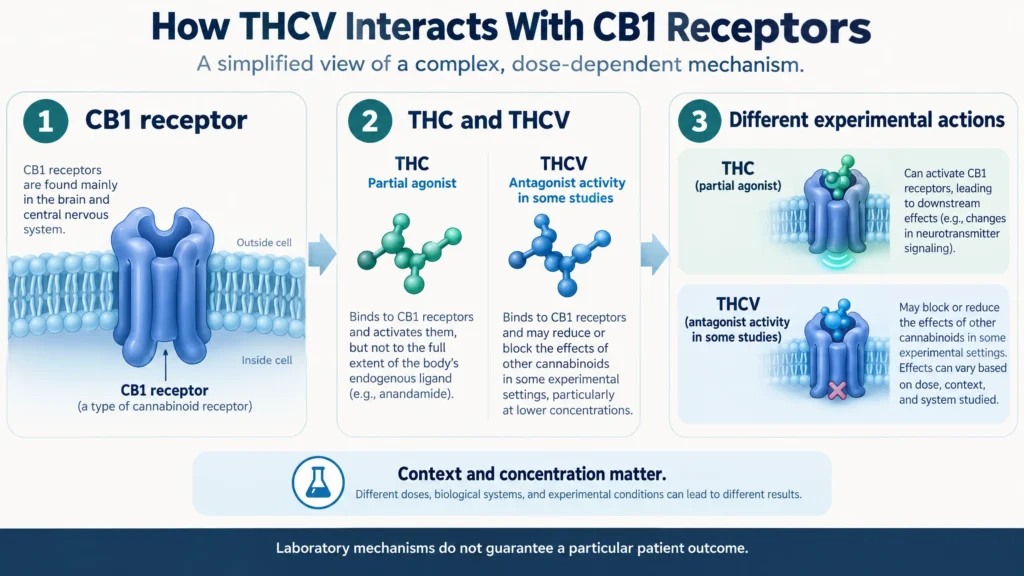
THC binds to CB1 receptors as an agonist. This means it activates the receptor, triggering the downstream signals that increase appetite, produce euphoria, and cause the classic effects of cannabis intoxication.
⚡ Fast & 100% Online PA Medical Cards
Board-Certified Doctors • 100% Money-Back Guarantee
Book Evaluation Now →THCV binds to CB1 receptors as an antagonist at typical therapeutic doses. This means it occupies the CB1 receptor without activating it and prevents other compounds (including THC and endogenous anandamide) from activating it.
The result of CB1 antagonism in the hypothalamus and limbic system is appetite suppression and reduced reward-driven eating behavior.
This mechanism is similar to rimonabant, a CB1 blocker drug that was developed in the 2000s as an obesity treatment. Rimonabant showed effective weight loss results but was withdrawn due to psychiatric side effects (depression, suicidal ideation). THCV’s partial rather than complete CB1 antagonism may produce a better safety profile than full CB1 blockers.
The dose-dependent switch
An important nuance that most guides miss: THCV is a CB1 antagonist at low to moderate doses, but at very high doses it can act as a partial CB1 agonist, producing some THC-like effects.
This means more THCV is not simply more appetite suppression. Very high doses can shift toward mild psychoactivity and reduce the appetite-suppressing benefit. The therapeutic window for THCV’s metabolic effects appears to be in the moderate range.
Additional receptors
Beyond CB1, THCV also acts as a partial agonist at CB2 receptors, engages GPR55 receptors, activates 5-HT1A serotonin receptors, and interacts with TRPV2 channels. These additional receptor interactions contribute to THCV’s broader therapeutic profile beyond appetite suppression.
What the 2025 Research Shows
A March 2025 systematic review published in AIMS Neuroscience (PMC12011981) is the most current and comprehensive summary of THCV research available.
The review examined THCV’s effects across preclinical and human studies for metabolic disorders including obesity and type 2 diabetes.
Appetite and weight
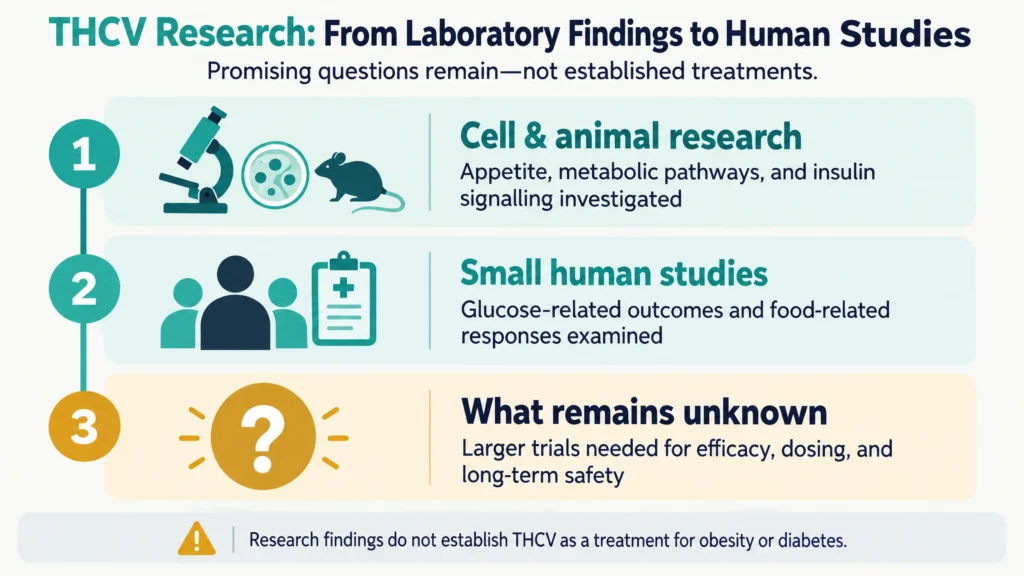
Animal models revealed THCV’s potential to suppress appetite, prevent hepatosteatosis (fatty liver), and improve metabolic homeostasis.
THCV produced hypophagic effects in both fasted and non-fasted animal models, meaning appetite reduction occurred regardless of prior food intake state.
Metabolic effects
THCV improves insulin sensitivity, promotes glucose uptake, and restores insulin signaling in metabolic tissues. Additionally, THCV reduces lipid accumulation and improves the mitochondrial activity in adipocytes and hepatocytes.
Renewing Your PA MMJ Card?
Quick annual recertification online. No paperwork hassle.
Renew Card Online →These findings suggest THCV affects metabolism at the cellular level, improving how fat cells and liver cells process energy beyond the appetite suppression effect alone.
Human trials
Preliminary human trials support these findings, thereby showing that THCV may modulate appetite and glycemic control, though larger-scale studies are necessary to confirm its clinical efficacy and safety.
The honest qualifier from the review authors: the evidence is promising and mechanistically consistent, but larger human trials are needed before THCV can be considered clinically proven for metabolic disorders.
For PA patients interested in THCV’s metabolic potential, the current evidence supports a trial with realistic expectations. It is not a substitute for diet, exercise, or prescribed diabetes medications. It is a potentially useful adjunct with a sound biological mechanism behind the reported benefits.
The THCV and CBD Combination: More Effective Together
One of the most clinically significant findings in the THCV literature is that combining THCV with CBD produces better metabolic outcomes than either compound alone.
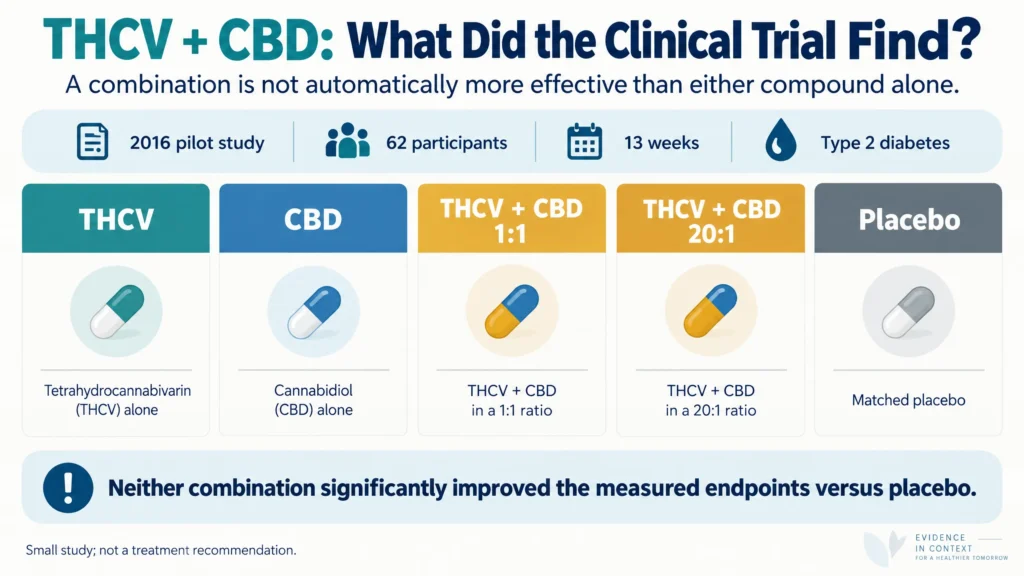
Research examining the THCV plus CBD combination found reductions in abdominal circumference, LDL cholesterol, blood pressure, and blood sugar compared to placebo, outcomes that neither compound alone produced as consistently.
The proposed mechanism: THCV provides direct CB1 antagonism for appetite suppression and metabolic effects. CBD adds 5-HT1A serotonin pathway activation, FAAH inhibition (raising natural anandamide), and CB2 partial agonism that may complement THCV’s CB2 activity in immune and metabolic tissues.
For PA dispensary patients, this finding has practical implications.
A product with both meaningful THCV and CBD content is likely to produce better metabolic outcomes than one with high THCV alone.
When selecting PA dispensary products for THCV’s metabolic benefits, seek products with both THCV (0.5%+ on minor cannabinoid panel) and meaningful CBD content (listed on the cannabinoid panel). A full-spectrum tincture or capsule from a Durban Poison lineage cultivar with a COA showing both cannabinoids is the most evidence-aligned approach.
For CBD tincture guidance relevant to combination products, see our CBD tinctures guide.
THCV for Diabetes: The GW Pharmaceuticals Clinical Trial
Get Approved by a Licensed PA Doctor
Schedule your appointment in minutes. You only pay if approved.
Start Online Application →The most rigorous human evidence for THCV comes from a clinical trial conducted by GW Pharmaceuticals, the company that also developed Epidiolex.
Published in Diabetes Care, the trial tested THCV at 5mg twice daily in patients with type 2 diabetes.
The results: THCV reduced fasting plasma glucose and improved pancreatic beta-cell function compared to placebo. These are clinically meaningful outcomes for T2D management.
The dose used (5mg twice daily) is achievable from PA dispensary products with meaningful THCV content, though precision dosing from dispensary products requires COA-guided calculation rather than simple label reading.
Important caveats
This trial was small and represents early-stage evidence. T2D is not a PA qualifying condition by that name, though it frequently co-occurs with chronic pain, anxiety, or other qualifying conditions.
THCV should not replace prescribed diabetes medications. Any changes to diabetes medication regimens should involve the prescribing physician.
CBD has documented CYP450 enzyme interactions with many diabetes medications including metformin, sulfonylureas, and insulin. If adding THCV alongside CBD, inform your treating physician and PA dispensary pharmacist about all medications.
THCV Beyond Appetite: Neuroprotection and Anticonvulsant Properties
THCV’s profile extends beyond the weight management story that dominates most coverage.
Neuroprotection in Parkinson’s disease models
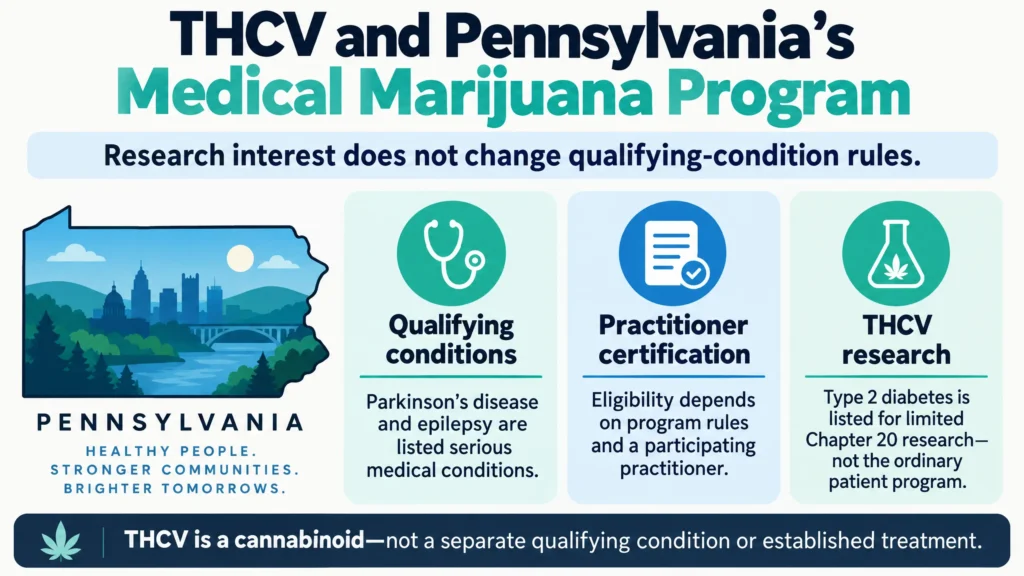
Preclinical research has shown THCV’s neuroprotective effects in animal models of Parkinson’s disease. THCV appears to protect dopaminergic neurons from degeneration through CB2 activation and anti-inflammatory pathways.
Parkinson’s disease is one of Pennsylvania’s 24 qualifying conditions. For PA Parkinson’s patients, THCV represents an additional minor cannabinoid of potential relevance beyond the CBD and THC mechanisms typically discussed for this condition.
Anticonvulsant properties
Ready to Get Your Official PA MMJ Card?
State-certified doctor consultations online. No risk—100% refund if not approved.
Claim Your MMJ Card Online →The 2025 Frontiers Acta Biochimica Polonica systematic review covering cannabinoids in epilepsy specifically identified THCV alongside CBD, CBDV, and THCA as cannabinoids with anticonvulsant potential.
THCV’s anticonvulsant mechanism may involve both CB1 antagonism (which reduces neuronal excitability) and its TRPV channel interactions.
For PA epilepsy patients already using CBD-dominant products, a full-spectrum product that retains meaningful THCV may provide additive anticonvulsant potential through complementary mechanisms.
Anti-inflammatory effects
Through CB2 partial agonism and other pathways, THCV has demonstrated anti-inflammatory properties in preclinical studies. This is relevant for PA qualifying conditions with inflammatory components including chronic pain, arthritis, and Crohn’s disease.
THCV vs Delta-8, Delta-9, THCP, and Other Cannabinoids
As the cannabinoid marketplace expands, PA patients encounter a growing alphabet of compounds. THCV’s position in this landscape matters for understanding what it is and is not.
THCV vs THC (delta-9)
Naturally occurring vs naturally occurring. Opposite receptor effects at typical doses. THCV suppresses appetite; THC stimulates it. THCV is not psychoactive at typical doses; THC is. Both occur naturally in cannabis and are found in PA dispensary products.
For a full comparison of THC variants, see our does THC percentage matter guide.
THCV vs delta-8 THC
Delta-8 is a semi-synthetic cannabinoid produced through chemical conversion of CBD. It is not available at licensed PA dispensaries and faces increasing regulatory restriction. THCV is a naturally occurring phytocannabinoid that appears in PA dispensary products at trace to moderate concentrations.
THCV vs THCP
THCP (tetrahydrocannabiphorol) is a very potent CB1 agonist, approximately 30 times more potent than THC at receptor binding. THCV does the opposite, blocking CB1 rather than activating it. These are mechanistically opposite compounds despite similar-sounding names.
THCV vs delta-11 THC
Delta-11 is a metabolite of delta-9 THC produced during digestion. THCV has no metabolic relationship to delta-11. They are separate compounds with separate mechanisms.
How to Find THCV at Pennsylvania Dispensaries
This is where THCV’s theoretical promise meets PA dispensary reality. THCV is difficult to find in meaningful concentrations at most PA dispensaries.
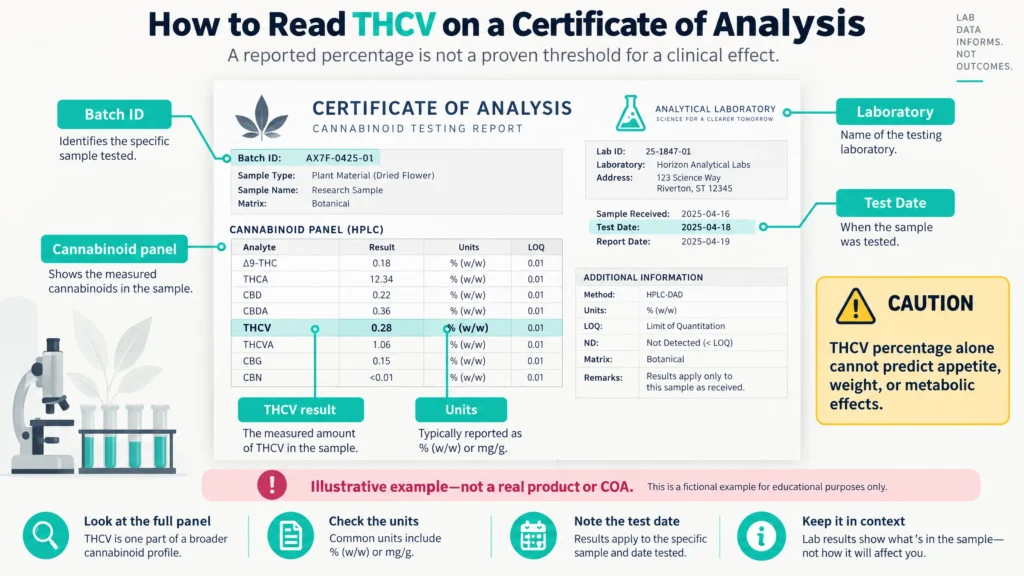
THCV on the PA dispensary COA: what the numbers mean
| THCV Reading on COA | What It Means | Expected Effect |
|---|---|---|
| 0% or ND (not detected) | Below detection; negligible THCV | No meaningful THCV contribution to effect |
| 0.1 to 0.4% | Trace amounts; common in most products | Minimal pharmacological contribution |
| 0.5 to 0.9% | Meaningfully elevated; higher than average | Moderate THCV contribution; may notice appetite effect |
| 1.0% or above | High THCV; specialized strain or formulation | Significant THCV contribution; clearest appetite effects |
| Dedicated THCV product | Concentrated THCV added to tincture/capsule | Precise dosing; most evidence-aligned approach |
Why THCV is rare in PA dispensary products?
Commercial cannabis cultivation has largely focused on maximizing THC content for recreational markets and CBD content for medical markets. THCV-rich African landrace genetics have not been widely incorporated into most commercial breeding programs.
Dedicated high-THCV strains do exist but are not consistently stocked at every PA dispensary. Availability varies significantly by dispensary, season, and cultivator.
Where to look?
The minor cannabinoid panel on the PA dispensary COA is where THCV appears. On most products, THCV reads as 0% or below the limit of quantification (LOQ). Products showing THCV above 0.5% are meaningfully elevated. Products showing 1% or above are high THCV by current commercial standards.
Strains with Durban Poison genetics in their lineage are the most reliable source of higher THCV at PA dispensaries. Ask your dispensary pharmacist or budtender specifically about the genetic lineage of their current flower offerings and which products show the highest THCV on recent batch COAs.
The pharmacist inquiry
The on-site pharmacist at every licensed PA dispensary can pull COA data from current inventory and identify which products show meaningful THCV content. This is the most efficient path to finding THCV in PA. A direct question like “Which of your current products shows the highest THCV on the minor cannabinoid panel?” will get you the most useful answer.
Dedicated THCV formulations
Some PA dispensaries carry tinctures or capsules specifically formulated with extracted or concentrated THCV alongside CBD. These products, when available, provide more reliable and consistent THCV dosing than relying on naturally occurring trace amounts in flower.
For reading the minor cannabinoid panel on your PA dispensary product, see our how to read a PA dispensary COA guide.
The Drug Test Warning: What PA Patients Must Know
This warning appears in the research literature on THCV and is critical for any PA patient subject to workplace drug testing.
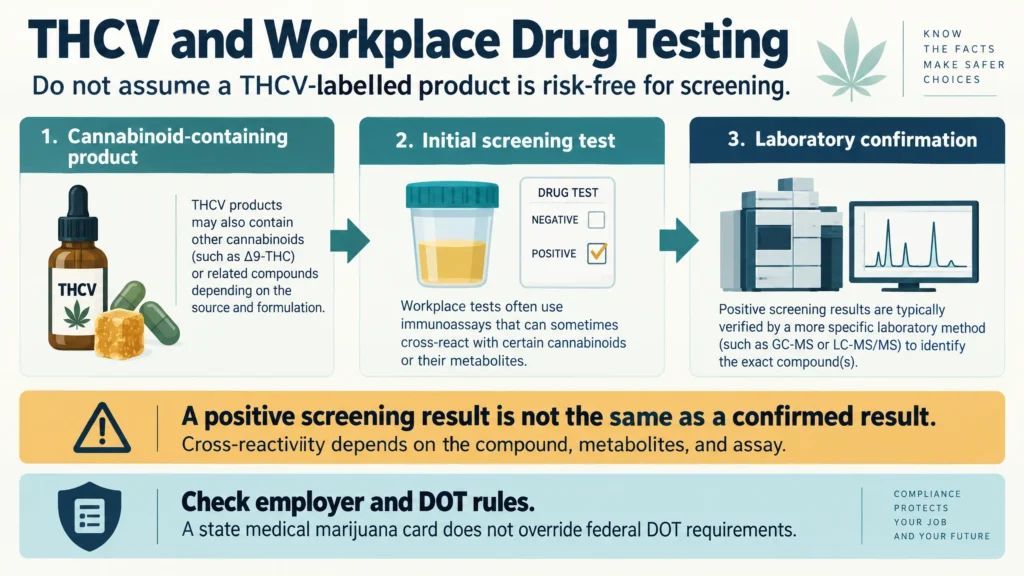
THCV can produce a positive result on standard THC urine drug tests.
Standard urine drug screens test for THC-COOH, a metabolite produced when the body processes THC. Because THCV is structurally similar to THC, its metabolites can trigger a positive response on standard immunoassay drug screens.
This is particularly relevant for:
PA patients in safety-sensitive industries where DOT drug testing applies. PA CDL holders, who face a federal 50ng/mL urine THC threshold with no state card protection. PA patients in professions with zero-tolerance drug policies.
A PA MMJ card provides legal protection for registry patients using dispensary-purchased cannabis products, but that protection applies to certain employment and legal contexts, not to DOT/federal transportation testing where federal law supersedes.
For any PA patient subject to drug testing who is considering THCV products, a conversation with your employer’s occupational health provider and your dispensary pharmacist before starting is strongly recommended.
If you are already an MMJ-registered PA patient curious about your employment rights and drug testing context, see our PA MMJ card and employment rights guide.
Frequently Asked Questions
Q: What is THCV?
A: THCV (tetrahydrocannabivarin) is a minor cannabinoid found naturally in cannabis plants, structurally similar to THC but with a shorter molecular side chain that produces opposite receptor effects.
At typical doses, THCV acts as a CB1 receptor antagonist (blocker), suppressing appetite and producing no significant psychoactive effect. At very high doses, THCV can shift toward mild CB1 activation and some psychoactive effects.
THCV also engages CB2 receptors, 5-HT1A serotonin receptors, GPR55 receptors, and TRPV2 channels, giving it a broader pharmacological profile than its appetite suppression reputation suggests.
Q: Does THCV really suppress appetite?
A: The evidence is compelling but still predominantly preclinical.
The March 2025 AIMS Neuroscience systematic review confirmed that THCV suppressed appetite in both fasted and non-fasted animal models and showed improvements in insulin sensitivity, glucose regulation, and lipid accumulation in metabolic tissues. A GW Pharmaceuticals clinical trial found THCV at 5mg twice daily reduced fasting plasma glucose in type 2 diabetes patients.
However, large-scale human trials confirming clinical efficacy for weight loss have not yet been completed. THCV should be viewed as a promising adjunct for metabolic conditions, not a proven standalone weight loss treatment.
Q: How is THCV different from THC?
A: The key differences are receptor action, psychoactivity, and appetite effect.
THC activates CB1 receptors (agonist), producing psychoactivity and appetite stimulation. THCV blocks CB1 receptors (antagonist) at typical doses, producing no significant psychoactivity and instead suppresses appetite.
THCV has a shorter molecular side chain than THC, which is the structural reason for its opposite receptor activity. Both can produce a positive result on standard THC drug tests.
Q: Can I find THCV at Pennsylvania dispensaries?
A: THCV is available at some PA dispensaries but is not consistently stocked at all. On most PA dispensary product COAs, THCV reads as 0% or below detection on the minor cannabinoid panel.
Products showing THCV at 0.5% or higher are meaningfully elevated; 1% or above is considered high THCV. Strains with Durban Poison genetics tend toward higher THCV.
Ask your dispensary pharmacist which current products show the highest THCV on recent batch COAs. Some PA dispensaries carry dedicated THCV tinctures or capsules with concentrated THCV alongside CBD.
Q: Will THCV make me fail a drug test?
A: Yes, potentially. THCV is structurally similar to THC, and its metabolites can trigger positive results on standard immunoassay urine drug screens that test for THC-COOH.
PA CDL holders face federal DOT drug testing standards where a PA MMJ card provides no protection.
If you are subject to any form of workplace drug testing, consult with your employer’s occupational health provider and your dispensary pharmacist before using THCV products.
Q: Is THCV safe?
A: THCV appears to have a favorable safety profile in available research. The 2025 systematic review noted no significant adverse effects in animal models at therapeutic doses. The GW Pharmaceuticals human trial at 5mg twice daily found acceptable tolerability.
The main safety considerations are the drug test cross-reactivity, the dose-dependent shift toward psychoactivity at very high doses, and potential interactions with diabetes medications if THCV is taken alongside CBD.
If you are managing type 2 diabetes with prescribed medications, inform both your physician and dispensary pharmacist before adding THCV.
The Bottom Line
THCV is the minor cannabinoid with the clearest mechanistic case for appetite suppression and metabolic benefits in all of cannabis pharmacology.
Its CB1 antagonist mechanism directly opposes THC’s appetite-stimulating effect at a receptor level. The 2025 systematic review confirms this mechanism translates to preclinical and preliminary human evidence for appetite suppression, improved insulin sensitivity, glucose regulation, and lipid metabolism.
Finding meaningful THCV at PA dispensaries requires knowing where to look: the minor cannabinoid panel of the COA, Durban Poison lineage strains, and a direct question to your dispensary pharmacist.
The drug test warning is real and should not be overlooked for any PA patient subject to workplace screening.
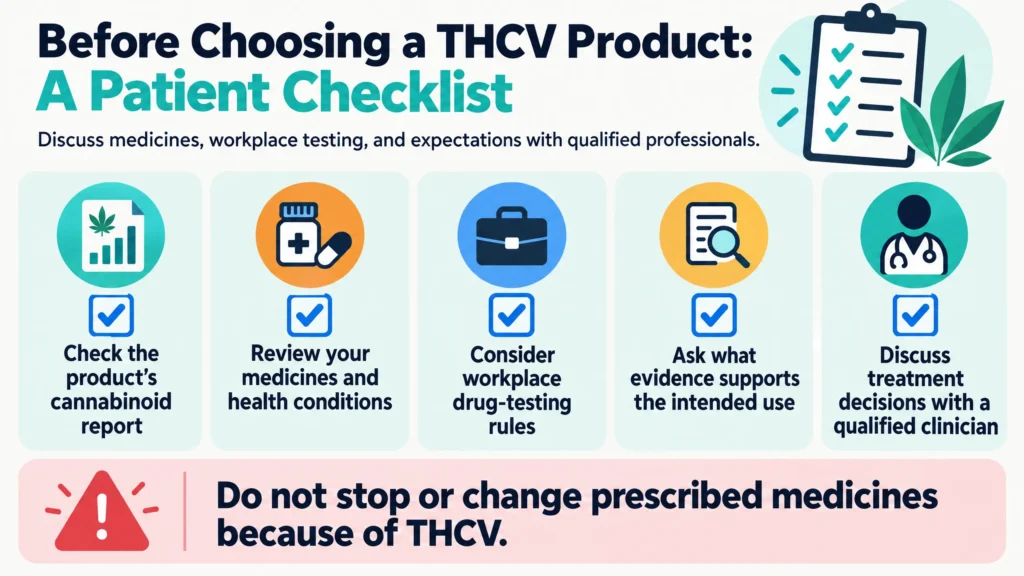
THCV across PA qualifying conditions:
| Qualifying Condition | THCV Relevance | Mechanism | Evidence Level |
|---|---|---|---|
| Obesity / metabolic disorder | High: appetite suppression, metabolic improvement | CB1 antagonism reduces appetite signaling | Preclinical strong; human preliminary |
| Type 2 diabetes (via chronic pain) | High: glucose regulation, insulin sensitivity | Improves beta-cell function and insulin signaling | Human trial (GW Pharmaceuticals) |
| Parkinson’s disease | Moderate: neuroprotection | CB2 activation, anti-inflammatory | Preclinical only |
| Epilepsy / seizures | Moderate: anticonvulsant | CB1 antagonism reduces neuronal excitability | Preclinical; identified in 2025 systematic review |
| Chronic pain (inflammatory) | Moderate: anti-inflammatory | CB2 partial agonism reduces inflammatory cytokines | Preclinical; mechanism consistent |
If the research continues to develop as the preclinical evidence suggests, THCV may become one of the more clinically significant minor cannabinoids in the PA dispensary system. For now, it warrants attention from patients managing weight, diabetes-related conditions, and the qualifying conditions where metabolic function plays a role.
This blog post is intended for general educational and informational purposes only and does not constitute medical advice. THCV is not a substitute for prescribed diabetes or obesity medications. THCV can produce positive results on standard THC drug tests. Patients subject to workplace drug testing should consult with their employer’s occupational health provider before using THCV products. CBD at therapeutic doses interacts with several diabetes medications through CYP450 enzyme pathways. Always disclose all cannabis product use to your prescribing physician and PA dispensary pharmacist. Medically reviewed by Dr. Johnathon Chance Miller, MD.
Sources
- AIMS Neuroscience / PMC 2025: The Role of THCV in Metabolic Disorders, Systematic Review (March 2025)
- Recovered.org: THCV, Origins, Effects, and Risks (March 2025)
- Centre for Medicinal Cannabis Substack: Tetrahydrocannabivarin, The Less Well Known Cannabinoid with Many Potentials
- Sechat: THCV, How the Cannabinoid Can Assist in Healthy Weight Loss (October 2025)
- Diabetes Care: GW Pharmaceuticals THCV Clinical Trial, Type 2 Diabetes
- Frontiers Acta Biochimica Polonica 2025: Cannabinoids in Epilepsy, THCV Anticonvulsant Evidence
- PA Department of Health: Medical Marijuana Program