
Depression is one of the most common reasons people seek medical marijuana in states where it qualifies as a standalone condition. Pennsylvania does not list depression by name among its 24 qualifying conditions under Act 16 of 2016.
But for most PA patients with depression, that does not close the door. Depression and anxiety co-occur in 60 to 80% of cases. Anxiety disorder is Pennsylvania’s most common qualifying condition, cited in 60% of all MMJ certifications. For PA patients with comorbid depression and anxiety, the qualifying pathway through anxiety disorder is both clear and well-supported.
Need a PA Medical Marijuana Card?
Get certified online in 15 minutes. 100% Money-Back Guarantee.
Get Certified Now →The research picture for cannabis and depression is also more developed than most guides present. A January 2026 study in the Journal of Affective Disorders followed 698 treatment-resistant depression patients using medical cannabis over 24 months and documented sustained, clinically meaningful improvements in depression, anxiety, sleep quality, and health-related quality of life.
This guide covers the evidence, the biology, the PA qualifying pathway, and the practical guidance every PA patient with depression needs before making dispensary choices.
Key Takeaways
| Topic | Key Point |
|---|---|
| PA qualifying pathway | Depression is not a standalone qualifying condition; most PA depression patients qualify through comorbid anxiety disorder, PA’s #1 qualifying condition |
| Strongest evidence | January 2026 Journal of Affective Disorders study: 698 treatment-resistant depression patients showed sustained improvements in depression, anxiety, sleep, and quality of life over 24 months of cannabis use |
| Serotonin mechanism | CBD activates 5-HT1A serotonin receptors independently of CB1/CB2, the same pathway targeted by buspirone; low-dose THC increases serotonin neuronal activity |
| The THC paradox | Low-dose THC increases serotonin and has antidepressant effects; higher doses cause serotonin to drop below baseline (McGill University), mirroring what happens with anxiety |
| Critical drug interaction | CBD inhibits CYP2D6 and CYP3A4, which metabolize most SSRIs and SNRIs; combining CBD with antidepressants without physician oversight raises risk of elevated medication blood levels |
| CBG for depression | Cannabigerol (CBG) inhibits GABA reuptake and shows antidepressant-like effects in animal models; appears on PA dispensary COAs as a minor cannabinoid worth checking |
Does Depression Qualify for PA Medical Marijuana?
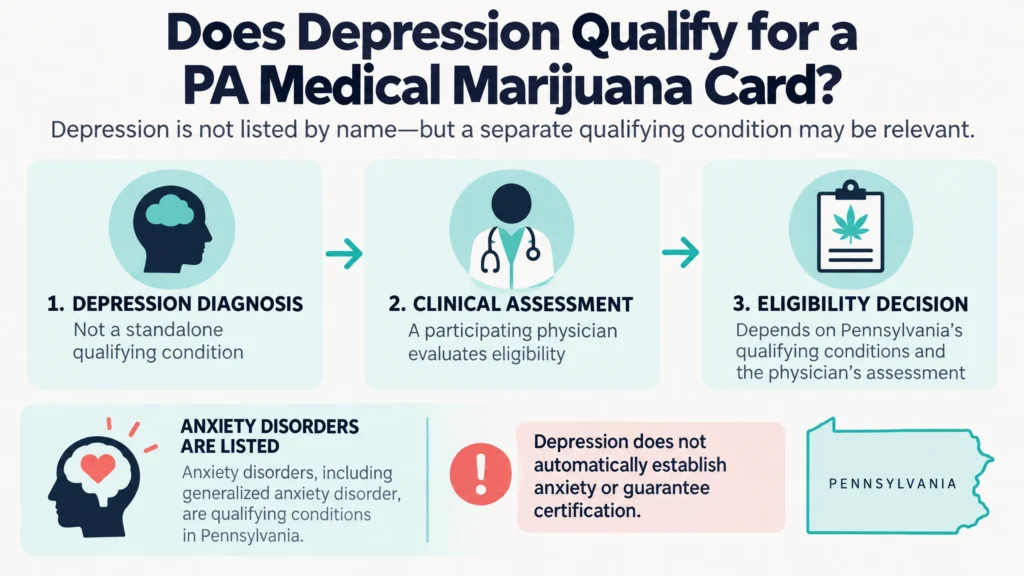
Not as a standalone diagnosis.
Pennsylvania’s 24 qualifying conditions under Act 16 of 2016 do not include major depressive disorder, persistent depressive disorder (dysthymia), or any depression-specific diagnosis by name.
Do You Qualify for a PA MMJ Card?
Connect with a licensed Pennsylvania state physician online from home.
This does not mean PA patients with depression cannot access medical marijuana. It means the qualifying pathway runs through a different condition on the list, which for the overwhelming majority of depression patients is anxiety disorder.
The Qualifying Pathway Most PA Depression Patients Actually Use
Anxiety disorder is explicitly listed among Pennsylvania’s 24 qualifying conditions. It accounts for approximately 60% of all PA MMJ certifications, making it by far the most common qualifying condition in the program.
The clinical co-occurrence of depression and anxiety is well-documented. Research consistently finds that 60 to 80% of patients with a primary depression diagnosis also meet criteria for an anxiety disorder. The two conditions share overlapping neurobiology, frequently present together, and are often treated together.
For a PA patient with depression, the certification appointment involves the certifying physician reviewing the complete picture. If the patient has documented anxiety alongside their depression, whether in a primary care record, a psychiatrist’s notes, or a therapist’s documentation, anxiety disorder provides the qualifying pathway.
How to approach PA MMJ certification with depression
| Your Situation | What to Bring | Qualifying Pathway |
|---|---|---|
| Depression + diagnosed anxiety disorder | Both diagnosis records | Anxiety disorder (explicit PA qualifying condition) |
| Depression + anxiety symptoms, no separate diagnosis | Depression records + description of anxiety symptoms | Certifying physician assesses anxiety presentation |
| Depression only, minimal anxiety | Depression records | Limited; physician may still certify if anxiety symptoms present |
| Treatment-resistant depression | Records of failed treatments | Strengthens case for anxiety + depression combined |
| Depression + chronic pain | All diagnosis records | Chronic pain is also a PA qualifying condition; multiple pathways |
Practically, this means:
Coming to a certification appointment with documentation of both conditions if possible. A depression diagnosis alone can still support a certification if the physician determines that anxiety is also present as a significant symptom cluster, even without a separate formal anxiety diagnosis on file.
What helps at the appointment: describe the anxiety symptoms that accompany your depression. Rumination, worry, physical tension, sleep disruption, and difficulty concentrating are symptoms that overlap between depression and anxiety and support the anxiety disorder qualifying picture.
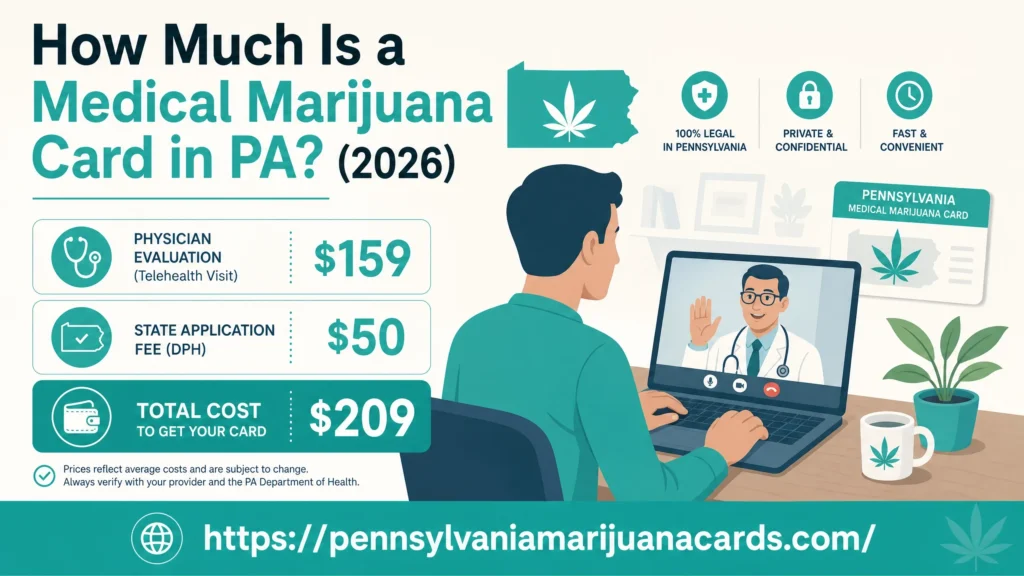
New patient certification at Pennsylvania Marijuana Cards is $159 plus the $50 state registration fee. MMAP-qualifying patients (Medicaid, SNAP, WIC, CHIP, PACE, PACENET) have the $50 fee waived.
Get certified online at Pennsylvania Marijuana Cards.
How Cannabis Affects the Depressed Brain: Three Mechanisms
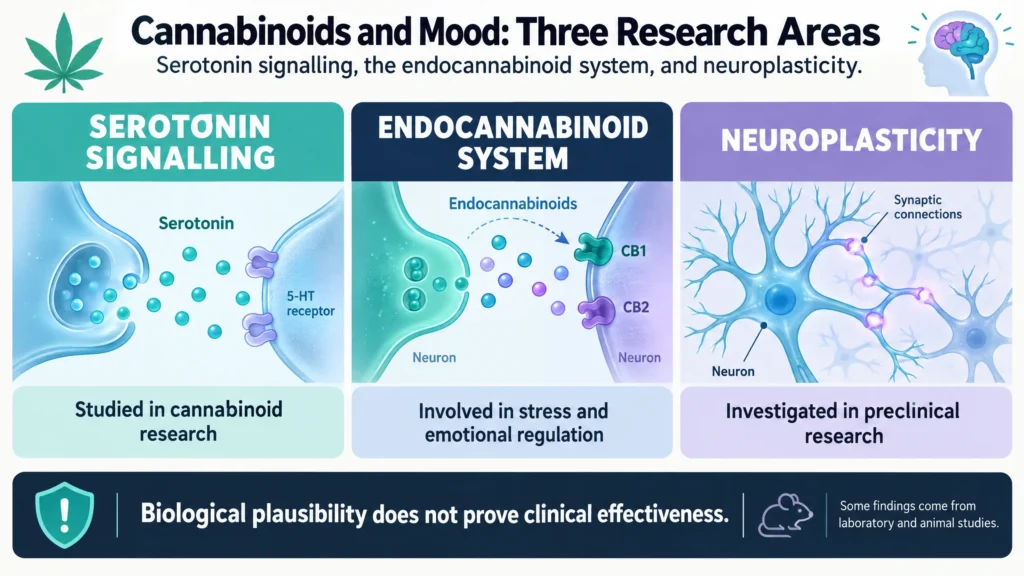
Cannabis’s potential antidepressant effects work through three distinct biological pathways.
Mechanism 1: CBD and the 5-HT1A serotonin receptor
⚡ Fast & 100% Online PA Medical Cards
Board-Certified Doctors • 100% Money-Back Guarantee
Book Evaluation Now →The primary mechanism connecting cannabis to depression is CBD’s direct activation of 5-HT1A serotonin receptors.
Serotonin deficiency is the most widely accepted biological model of depression. SSRIs (fluoxetine, sertraline, escitalopram) work by blocking serotonin reuptake, increasing available serotonin in synapses. Buspirone, an anti-anxiety medication with antidepressant properties, works directly on 5-HT1A receptors.
CBD activates 5-HT1A receptors directly, increasing serotonin pathway activity through the same receptor type that buspirone engages. This is why CBD’s antidepressant potential is mechanistically grounded, not just observational.
Research by Sales et al. (2018) confirmed that CBD’s antidepressant-like effect in animal models is dependent on brain serotonin levels, demonstrating the mechanism rather than just the association.
Mechanism 2: Endocannabinoid tone and mood regulation
The endocannabinoid system regulates stress response, emotional processing, and mood baseline through CB1 receptor signaling in the prefrontal cortex, hippocampus, and amygdala.
Depression is associated with reduced endocannabinoid tone, meaning lower natural levels of anandamide and 2-AG. This reduction impairs the system’s ability to modulate negative emotional states.
THC directly activates CB1 receptors, temporarily restoring signaling in these mood-regulating circuits. CBD inhibits FAAH (the enzyme that breaks down anandamide), raising natural anandamide levels and indirectly supporting endocannabinoid tone without direct psychoactivity.
Mechanism 3: Neuroplasticity and BDNF
Both CBD and THC promote the release of BDNF (brain-derived neurotrophic factor), a protein that supports the growth and survival of neurons, particularly in the hippocampus.
Hippocampal neurogenesis deficits are consistently found in major depression. Antidepressants including SSRIs and ketamine produce antidepressant effects partly through BDNF promotion. Cannabis engaging the same pathway provides a convergent mechanism relevant to depression’s biological basis.
Three cannabis mechanisms relevant to depression:
| Mechanism | Compound | How It Works | Timeline |
|---|---|---|---|
| 5-HT1A serotonin receptor activation | CBD | Directly activates serotonin receptors, same as buspirone; raises serotonin pathway activity | Builds over days to weeks with consistent dosing |
| Endocannabinoid tone restoration | CBD + low-dose THC | CBD inhibits FAAH, raising anandamide; THC activates CB1 in mood-regulating circuits | THC: acute; CBD FAAH inhibition: gradual |
| BDNF and neuroplasticity | CBD + THC | Promotes brain-derived neurotrophic factor release supporting hippocampal neurogenesis | Accumulates over weeks to months |
For a full explanation of how the endocannabinoid system works in mood regulation, see our endocannabinoid system guide.
The Low-Dose THC and Serotonin Finding: McGill University
Renewing Your PA MMJ Card?
Quick annual recertification online. No paperwork hassle.
Renew Card Online →A study from McGill University’s Department of Psychiatry provided the first direct evidence that cannabis can increase serotonin neuronal activity, but with a critical dose-dependent reversal.
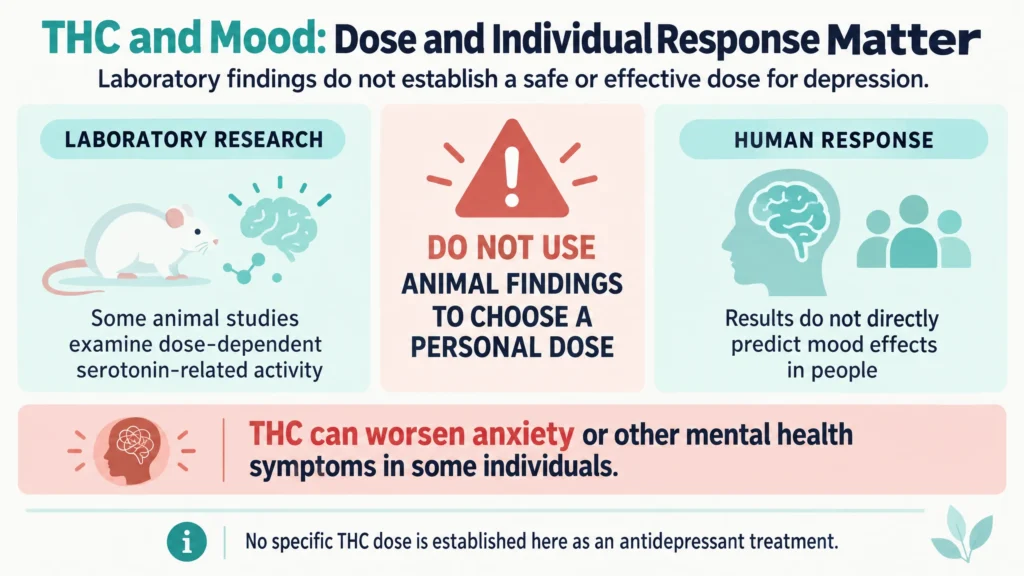
The research found that at low doses, synthetic cannabinoids produced an antidepressant effect alongside increased activity in serotonin-producing neurons.
But as lead researcher Dr. Gabriella Gobbi explained: “Low doses had a potent antidepressant effect, but when we increased the dose, the serotonin in the rats’ brains actually dropped below the level of those in the control group. So we actually demonstrated a double effect: at low doses it increases serotonin, but at higher doses the effect is devastating, completely reversed.”
This finding maps directly onto what clinical cannabis practice observes with depressed patients. Low-dose THC produces mood elevation and serotonin pathway activation. Moderate to high-dose THC produces the opposite.
For PA patients with depression, this is the most important single piece of research to understand. The goal is the lowest dose that produces therapeutic benefit, not the highest-THC product on the PA dispensary menu.
This mirrors the biphasic dose-response for anxiety covered in our terpenes for anxiety guide and the general THC dose principles in our does THC percentage matter guide.
The 2026 Journal of Affective Disorders Study: 698 Patients, 24 Months
Published in January 2026, this study represents the largest and longest longitudinal evidence available specifically for cannabis in treatment-resistant depression.
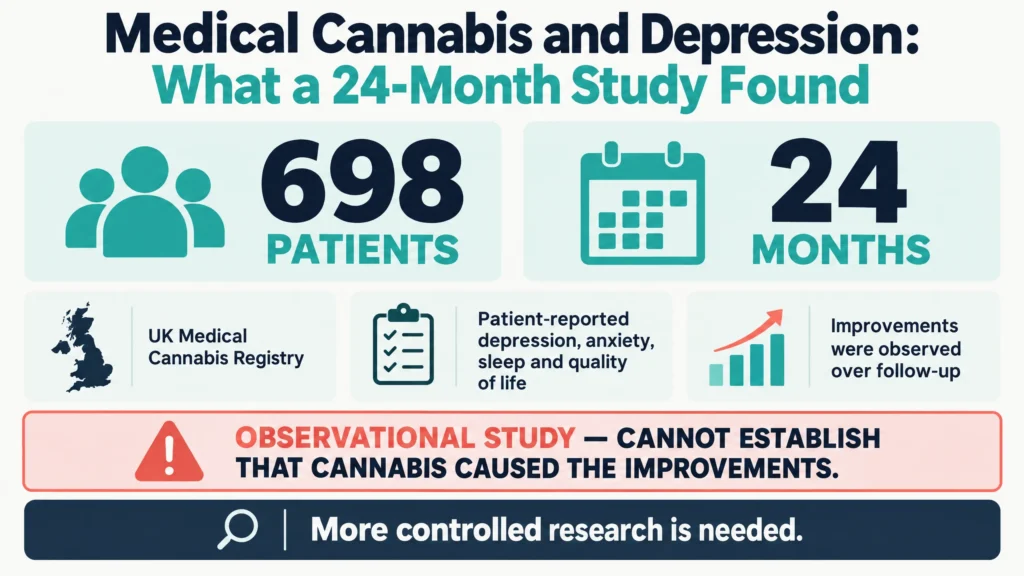
British investigators enrolled 698 patients from the UK Medical Cannabis Registry, all of whom had depression that had not adequately responded to conventional pharmaceutical treatment. Outcomes were measured at baseline and at 1, 3, 6, 12, 18, and 24 months using validated instruments: PHQ-9 (depression), GAD-7 (anxiety), the EQ-5D-5L (quality of life), and a single-item sleep quality scale.
What the study found?
Patients showed sustained and clinically meaningful improvements in depression scores, anxiety scores, sleep quality, and overall health-related quality of life across the full 24-month observation period.
The most dramatic improvements occurred in the first three months and were maintained thereafter, not diminishing over time.
Patients with the most severe depressive symptoms at baseline showed the greatest overall improvement.
Get Approved by a Licensed PA Doctor
Schedule your appointment in minutes. You only pay if approved.
Start Online Application →Adverse events were infrequent and predominantly mild to moderate. Older patients and those receiving higher CBD doses had a somewhat greater risk of adverse events.
What this means for PA patients?
This is observational registry data, not a randomized controlled trial. Patients were self-selected and not randomized to cannabis vs placebo. The evidence is meaningful but not definitive.
The 24-month sustained benefit is significant because it suggests tolerance does not reduce antidepressant effects over time in the way that some patients experience with SSRIs.
The finding that the most severely depressed patients showed the greatest improvement is particularly relevant for PA patients whose depression has not responded adequately to antidepressant medications.
The 2024 Review of 156 Studies: What the Broader Evidence Shows
A mid-2024 review published out of Budapest examined 156 studies on cannabis and depression globally.
The review identified two consistent themes relevant to PA patients:
THC and CBD both play defining roles in effectiveness for depression. Neither compound alone produces the most stable antidepressant benefit. CBD’s moderating effect on THC is critical. As the analysis described it, CBD’s presence transforms THC’s potential mood effect from a “rollercoaster rush into a more stable sense of wellbeing.”
The ratio matters more than the total THC percentage. Products with meaningful CBD content alongside THC produce more stable antidepressant effects than high-THC products with little or no CBD. This is consistent with the McGill serotonin finding: CBD’s presence prevents THC from reaching the dose threshold where serotonin drops below baseline.
This finding directly supports using ratio products (CBD:THC of 3:1 or 5:1) rather than high-THC flower for PA patients managing depression.
CBG: The Underexplored Cannabinoid for Depression
Most cannabis and depression discussions focus on CBD and THC. CBG (cannabigerol) deserves attention for depression specifically.
Ready to Get Your Official PA MMJ Card?
State-certified doctor consultations online. No risk—100% refund if not approved.
Claim Your MMJ Card Online →CBG is often called the “mother cannabinoid” because CBGA is the chemical precursor from which other cannabinoids develop. It appears in small amounts on most PA dispensary COAs in the minor cannabinoid panel.
CBG’s relevance to depression comes from two mechanisms:
GABA reuptake inhibition. CBG inhibits the reuptake of GABA, increasing GABA availability in synapses. GABA is the brain’s primary inhibitory neurotransmitter, reducing neural overactivity associated with anxious, depressed, and ruminative states. This is a complementary mechanism to CBD’s serotonin pathway activation.
Antidepressant-like effects in animal models. Preclinical research has demonstrated CBG’s antidepressant-like behavior in standard forced swim test models, suggesting it engages mood-relevant biological pathways independent of CBD.
For PA patients with depression who are already using CBD-dominant products without complete symptom relief, a product with meaningful CBG content (0.3% or higher on the minor cannabinoid panel) may add a complementary mechanism worth exploring.
A full overview of CBG and other minor cannabinoids is in our beginners guide to cannabinoids and terpenes.
Sleep as the Intermediary: Why Nighttime Is Often the First Win
Depression and poor sleep are bidirectionally linked.
Disrupted sleep worsens depressive symptoms. Depressive symptoms worsen sleep quality. For many patients with depression, poor sleep is both a symptom and a driver of the condition.
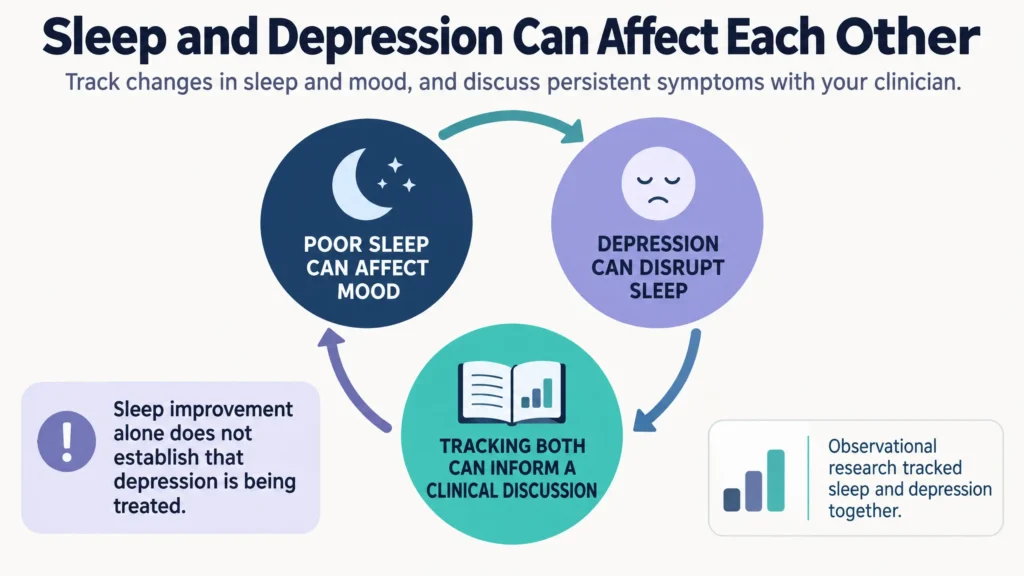
The January 2026 registry study specifically measured sleep quality alongside depression and anxiety scores, and improvements in sleep occurred alongside mood improvements across the 24-month observation period.
Cannabis’s most consistent and well-documented effect relevant to depression is improved sleep onset. Low to moderate doses of THC reduce sleep onset latency. CBD promotes sleep continuity without suppressing REM sleep to the degree that THC does at higher doses.
For PA depression patients, nighttime sleep restoration is often the most immediately observable benefit of cannabis use and the one that most clearly bridges to secondary mood improvement.
A low to moderate THC tincture (5 to 10mg THC alongside meaningful CBD) taken 60 to 90 minutes before bed may produce:
Sleep onset improvement within the first one to two weeks. Secondary reduction in next-day mood burden from better rest. Gradual stabilization of the sleep-mood cycle that reinforces over time.
For PA patients whose depression is significantly worsened by insomnia, a CBN product may add further sleep benefit through a complementary mechanism. See our CBN cannabinoid sleep guide for more on CBN’s specific sleep mechanisms.
For daytime use addressing the anxiety component of depression, our THC tincture for anxiety guide covers the low-dose daytime approach.
Antidepressant Drug Interactions: The Most Important Safety Section
This section covers the most clinically significant safety issue for the most common PA depression patient scenario: someone already taking prescription antidepressants who wants to add cannabis.
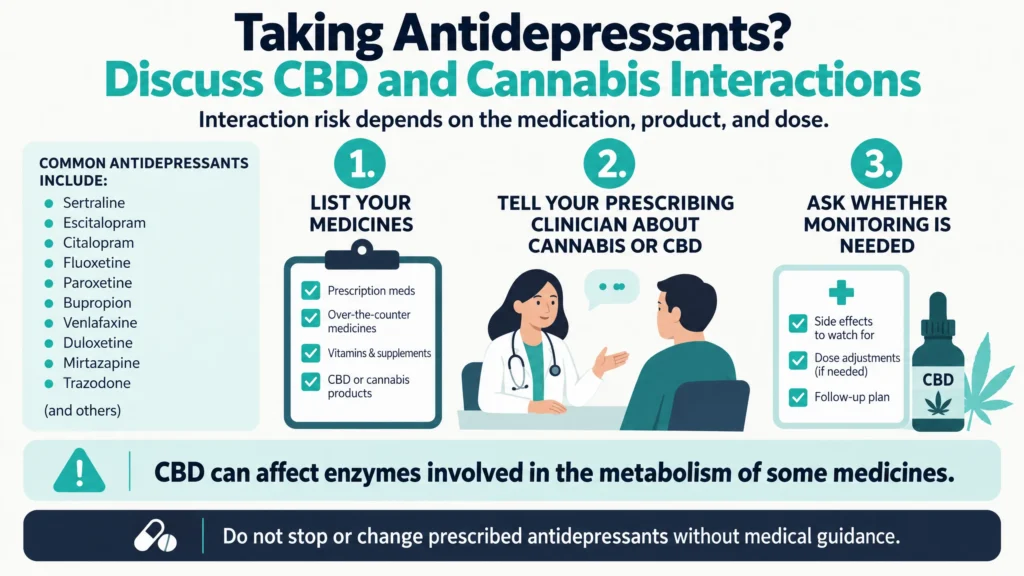
CBD at therapeutic doses (above approximately 25mg daily) significantly inhibits CYP2D6 and CYP3A4, liver enzymes that metabolize most antidepressant medications.
| Antidepressant Class | Common Medications | Interaction Risk | What Can Happen |
|---|---|---|---|
| SSRIs | Fluoxetine (Prozac), sertraline (Zoloft), escitalopram (Lexapro), paroxetine (Paxil) | Moderate to high; CYP2D6 inhibition | CBD raises SSRI blood levels; risk of serotonin syndrome at high CBD doses |
| SNRIs | Venlafaxine (Effexor), duloxetine (Cymbalta) | Moderate; CYP2D6 and CYP3A4 | Elevated SNRI levels; monitor for side effects |
| TCAs | Amitriptyline, nortriptyline | Moderate to high | CYP2D6 inhibition raises TCA levels significantly |
| MAOIs | Phenelzine, tranylcypromine | High caution | Cannabis-MAOI interactions poorly studied; avoid combination without specialist oversight |
| Bupropion (Wellbutrin) | Bupropion | Moderate; CYP2B6 pathway | Bupropion also lowers seizure threshold; combined CNS effects require monitoring |
| Mirtazapine (Remeron) | Mirtazapine | Lower direct interaction | Both have sedating properties; additive sedation possible |
Serotonin syndrome risk
Serotonin syndrome is a potentially serious condition caused by excessive serotonin activity in the brain. Symptoms range from agitation, tremor, and diarrhea in mild cases to hyperthermia and seizures in severe cases.
CBD’s 5-HT1A activation combined with an SSRI’s serotonin reuptake inhibition creates additive serotonin pathway activity. At typical CBD doses used for depression (25 to 100mg daily), this combination is generally considered low risk but not zero risk, particularly at higher CBD doses.
The required action for any PA patient on antidepressants
Disclose cannabis use to your prescribing psychiatrist or primary care physician before starting. The dispensary pharmacist at every licensed PA dispensary can review your full medication list and flag specific interaction concerns. This is a free service at every visit and is the most important consultation step for any depressed patient already on medications.
PA Dispensary Product Guidance for Depression Patients
Given the evidence and the biological mechanisms, here is the product approach most consistent with the research for PA depression patients.
PA dispensary product approach by depression symptom profile:
| Primary Symptom | Product Type | Cannabinoid Target | Terpene Priority | Timing |
|---|---|---|---|---|
| Low mood, anhedonia | CBD-dominant tincture (10:1 or 5:1) | CBD for 5-HT1A; CBG for GABA | Limonene 0.3%+ | Morning daily |
| Anxiety-driven depression | CBD-dominant tincture with low THC | CBD 5-HT1A + CB2; minimal THC | Caryophyllene 0.3%+ | Morning daily |
| Depression + insomnia | 3:1 CBD:THC tincture (5-10mg THC) | THC for sleep onset; CBD for REM quality | Linalool 0.2%+ or myrcene | 60-90 min before bed |
| Treatment-resistant (failed SSRIs) | Start with CBD-dominant; discuss with physician | CBD + CBG combination; check minor cannabinoid panel | Limonene + caryophyllene | Daily consistent dosing |
| Depression + chronic pain | Ratio tincture (3:1 or 5:1) or topical + tincture | CBD anti-inflammatory (CB2) + mood | Caryophyllene dominant | Morning + evening |
For daytime mood support
A CBD-dominant tincture (10:1 or 5:1 CBD:THC) taken in the morning provides 5-HT1A serotonin pathway activation throughout the day with minimal psychoactivity. CBD’s antidepressant effects build with consistent daily dosing rather than being immediate.
Terpene priority for depression: limonene (mood-elevating, serotonin pathway) and caryophyllene (CB2 anti-inflammatory, reducing neuroinflammation associated with depression). Look for these on the COA terpene panel at 0.3% or higher.
For terpene guidance relevant to depression’s anxiety overlap, see our best strains for stress relief guide.
For nighttime sleep restoration
A ratio tincture (3:1 CBD:THC, 5 to 10mg THC) taken 60 to 90 minutes before bed addresses the sleep component of depression. Keep the THC component low and consistent.
For the comorbid anxiety-depression presentation:
PA patients with both anxiety and depression (the most common scenario) benefit from a product approach that addresses both dimensions. A limonene-dominant or caryophyllene-dominant daytime tincture addresses the anxiety component without sedation. A linalool-containing bedtime product addresses the calming needed for sleep and tension. The CBN blog covers the sleep-specific layer.
What to check on the COA?
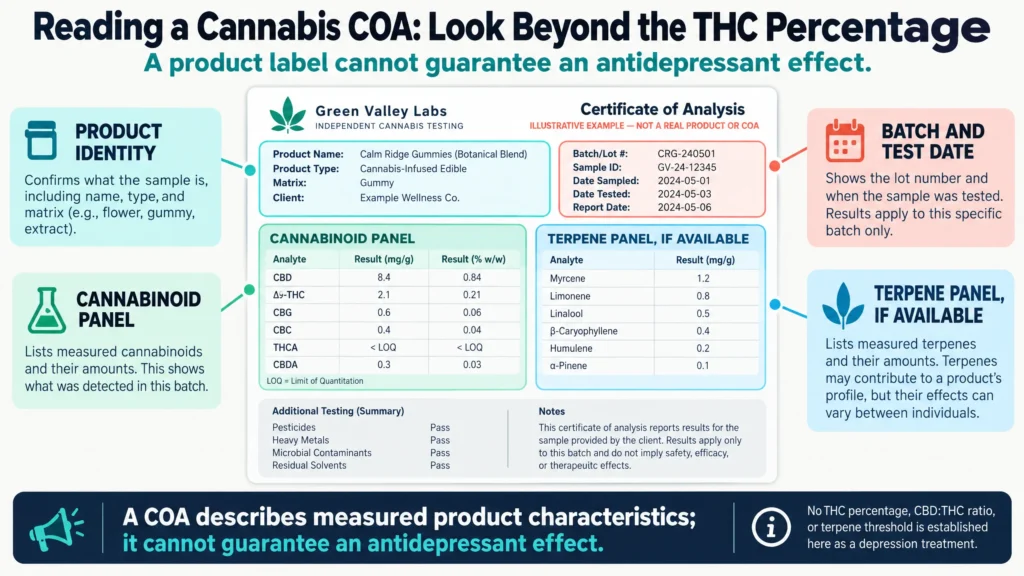
Total THC under 18% for any inhalable product. CBD content confirmed on cannabinoid panel (not just label claim). CBG percentage in minor cannabinoid panel (look for 0.3%+). Dominant terpene: limonene or caryophyllene for daytime, linalool for evening.
For reading the PA dispensary COA, see our how to read a PA dispensary COA guide.
Frequently Asked Questions
Q: Does marijuana help with depression?
A: The evidence is growing and mechanistically sound but does not yet support cannabis as a first-line treatment for depression.
The strongest available human data is a January 2026 study of 698 treatment-resistant depression patients using cannabis over 24 months, which showed sustained clinically meaningful improvements in depression, anxiety, sleep quality, and health-related quality of life.
CBD activates 5-HT1A serotonin receptors (the same pathway as buspirone) and raises anandamide levels. Low-dose THC increases serotonin neuronal activity (McGill University). Above individual dose thresholds, THC reverses these benefits and worsens depression.
Q: Does depression qualify for PA medical marijuana?
A: Not as a standalone diagnosis. Depression is not listed among Pennsylvania’s 24 qualifying conditions under Act 16 of 2016.
However, anxiety disorder is the most common PA qualifying condition at 60% of certifications, and 60 to 80% of depression patients have comorbid anxiety. For most PA patients with depression, the qualifying pathway runs through anxiety disorder.
At your certification appointment at Pennsylvania Marijuana Cards, describe both your depression and your anxiety symptoms. New patient certification is $159 plus the $50 state fee, waived for MMAP-qualifying patients.
Q: What is the best cannabis product for depression?
A: The evidence most strongly supports CBD-dominant ratio products for stable antidepressant benefit.
A 5:1 or 10:1 CBD:THC tincture taken daily provides 5-HT1A serotonin pathway activation with minimal psychoactivity. The 2024 review of 156 studies found CBD’s moderating effect on THC is critical for stable antidepressant effects rather than mood instability.
Terpene priorities for depression: limonene (mood-elevating) and caryophyllene (CB2, neuroinflammation). For the sleep component, a 3:1 CBD:THC tincture at 5 to 10mg THC at bedtime addresses the most immediate observable benefit.
Q: Can cannabis make depression worse?
A: Yes, under specific circumstances.
High-dose THC causes serotonin to drop below baseline levels (McGill University), directly worsening the neurotransmitter deficit central to depression. Long-term heavy daily cannabis use is also associated with increased depression risk through CB1 receptor downregulation and reduced endocannabinoid tone over time.
For PA patients managing depression with cannabis, the goal is the minimum effective dose using CBD-dominant products, consistent daily use rather than high-dose episodic use, and regular check-ins with a mental health provider.
Q: Is it safe to use cannabis if I already take antidepressants?
A: With physician and pharmacist oversight, yes, but disclosure is essential.
CBD at therapeutic doses inhibits CYP2D6 and CYP3A4, which metabolize most SSRIs, SNRIs, and TCAs. This can raise antidepressant blood levels, increasing both efficacy and side effect risk. Combined serotonin pathway activity from CBD and SSRIs creates a theoretical serotonin syndrome risk at higher CBD doses.
Before adding any cannabis product, disclose your complete antidepressant medication list to your certifying physician and your PA dispensary pharmacist. Do not reduce or discontinue prescribed antidepressants without psychiatrist guidance.
The Bottom Line
The research on cannabis and depression is more developed than most patient guides reflect, and the January 2026 UK registry study (N=698, 24 months) is the most compelling human evidence yet for cannabis in treatment-resistant cases.
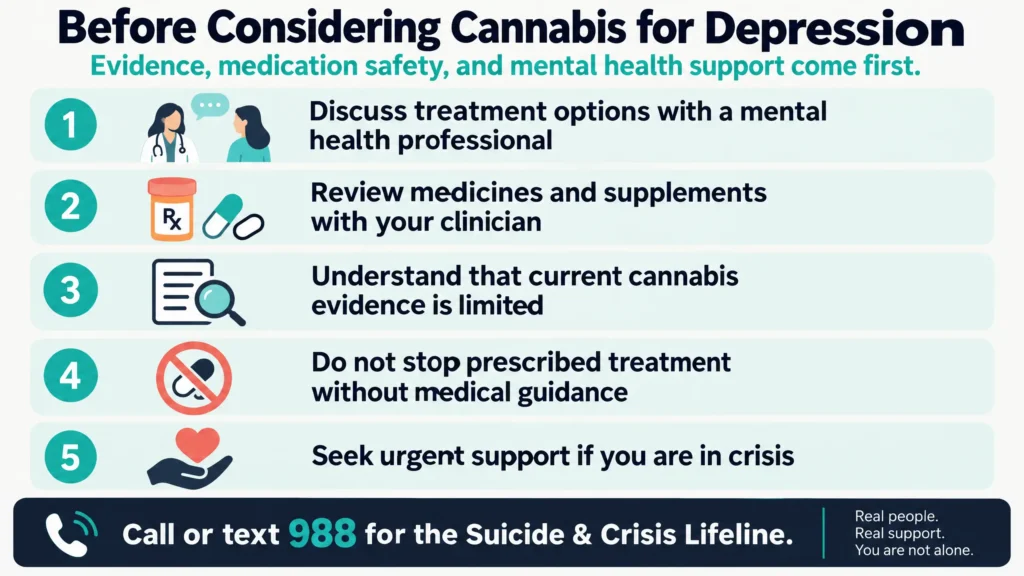
For PA patients, the qualifying pathway is almost always through comorbid anxiety disorder. The product approach is CBD-dominant ratio tinctures with limonene or caryophyllene for daytime and low-dose THC for nighttime sleep restoration.
The antidepressant drug interaction table in Section 9 is essential reading for anyone already on antidepressant medications.
Cannabis will not replace antidepressants or therapy for major depression. But for PA patients whose depression has not responded fully to conventional treatment, the evidence now supports it as a meaningful adjunct with a genuine biological basis.
This blog post is intended for general educational and informational purposes only and does not constitute medical advice. Cannabis should not replace prescribed antidepressants or psychiatric treatment. CBD interacts with most SSRIs, SNRIs, TCAs, and other antidepressants through CYP2D6 and CYP3A4 enzyme pathways; disclose all cannabis use to your prescribing physician before starting. If you are experiencing a mental health crisis, contact the 988 Suicide and Crisis Lifeline (call or text 988). Medically reviewed by Dr. Johnathon Chance Miller, MD.
Sources
- Journal of Affective Disorders / NORML January 2026: Cannabis Provides Sustained Relief for Treatment-Resistant Depression, UK Medical Cannabis Registry, N=698, 24 Months
- Labroots February 2026: Study Points to Efficacy of Medical Cannabis in Managing Depression, UK Registry Data
- Releaf UK 2024: Can Medical Cannabis Help With Depression?, Review of 156 Studies
- McGill University / Journal of Neuroscience: Cannabis Increases Serotonin at Low Doses, Reversal at High Doses
- CED Clinic / Hanf Magazin 2026: Cannabis Depression Studies, Evidence and Research Assessment
- FAPESP Brazil: Phytocannabinoids in Treatment of Depression, CBD Serotonin Mechanism
- Sales AJ et al. 2018: Antidepressant-Like Effect Induced by CBD is Dependent on Brain Serotonin Levels
- GoodRx 2025: CBD for Depression, Evidence Summary
- PA Department of Health: Medical Marijuana Qualifying Conditions